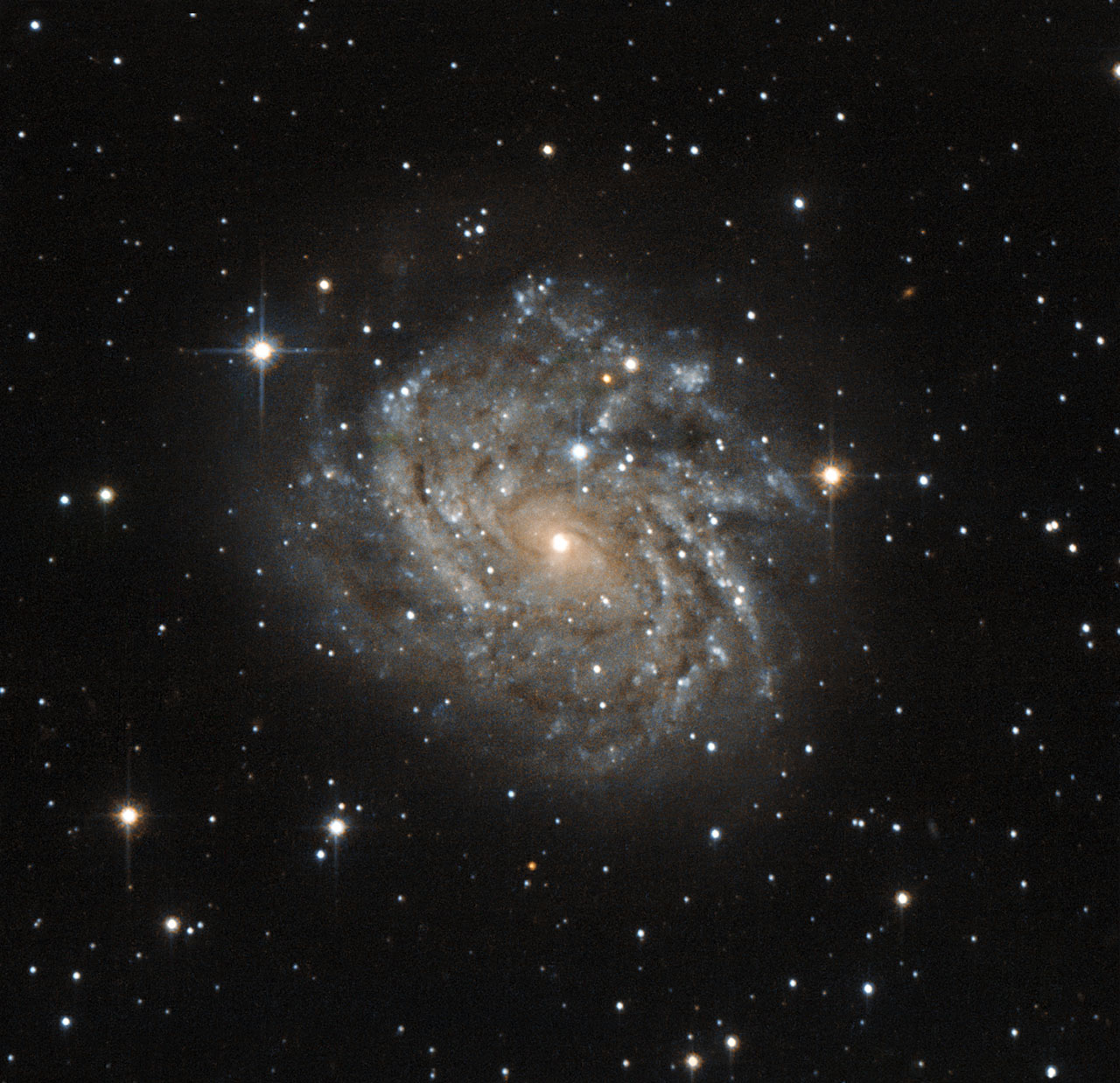
So, we are talking about planets outside of our solar system, exoplanets, and whether we might find among them a so-called “Goldilocks Zone”—a place on the planet where the amount of sunshine, atmosphere, and water could sustain human-like life. A side question would be whether such a planet could sustain any type of life. But, for the sake of this series of articles, we are discussing only human life.
It seems to me, the biggest factors in the presence of a Goldilocks Zone are the location away from its star and movement relative to that star and how those impact the planet’s surface temperature.
A just-right temperature is the most obvious need. But that’s a fairly wide range. With environmental adaption and bodily protection, humans live from the lower polar regions to the hot deserts. Not the coldest parts of the poles, and not the very hottest, dryest deserts, but close to them. As I say, that’s a pretty good range, indicating that humans are adaptable in a broad range of temperatures. That means we should have a pretty good chance of finding a suitable exoplanet, right?
Not so fast. On Earth, part of what determines the temperature is the Earth’s rotation. If it didn’t rotate, not much of the world’s surface would be habitable. The tropics would be out, for without 12 hours rotated away from the sun’s rays, the temperature would be too hot. I don’t know just how much Earth’s own Goldilocks Zone would shrink, but I would think it would shrink significantly.
Then, what about the tilt of Earth’s axis, that thing that gives us seasons? This results in a change in temperature between winter and summer, but does it also impact average temperature? Good question. And if the tilt impacts the Goldilocks Zone, does the wobble of the tilt also have an impact?
Then, what about the elliptical nature of Earth’s orbit? We aren’t always the same distance from the sun. Does that have an impact? I’m not sure it does, but it’s one more factor in Earth’s movements relative to the sun to think about.
Another obvious factor in maintaining temperature is the atmosphere. The heat from a star would radiate away at those parts of the planet not receiving sunlight except that the atmosphere holds some heat in. We know this because of how much colder it gets on a clear winter night compared to a cloudy winter night. And does the amount of moisture in the atmosphere affect this? I think it does.
What else is involved? I suspect the color of the planet makes a difference. Certain colors will reflect heat; certain other colors will absorb heat. And does the color of the Earth’s oceans, i.e. the reflection vs. absorption factor of the color of major water bodies, (not the heat retaining factor) affect the overall temperature? I suspect so.
One other factor occurs to me, which is the temperature of the inner core of the planet. Earth’s core is molten, covered with a thin, colder crust. Some of this inner heat finds an exit via volcanos, but it seems to me that some of this heat, perhaps just a little, must move up through the crust. I kind of suspect this is a minor factor, or maybe an Earth scientist will tell me it is no factor at all. If so, fine; I stand corrected.
All of this tells me that the factors that determine Earth’s temperature are very complicated. Distance. Rotation speed. Rotation angle. Orbit shape. Surface color. Interior temperature. Some of these factors are obviously major, some perhaps minor.
And temperature is not the only factor in a planet’s ability to have a Goldilocks Zone. The next couple of posts will discuss other possible factors in an exoplanet that may affect support of human lfe.