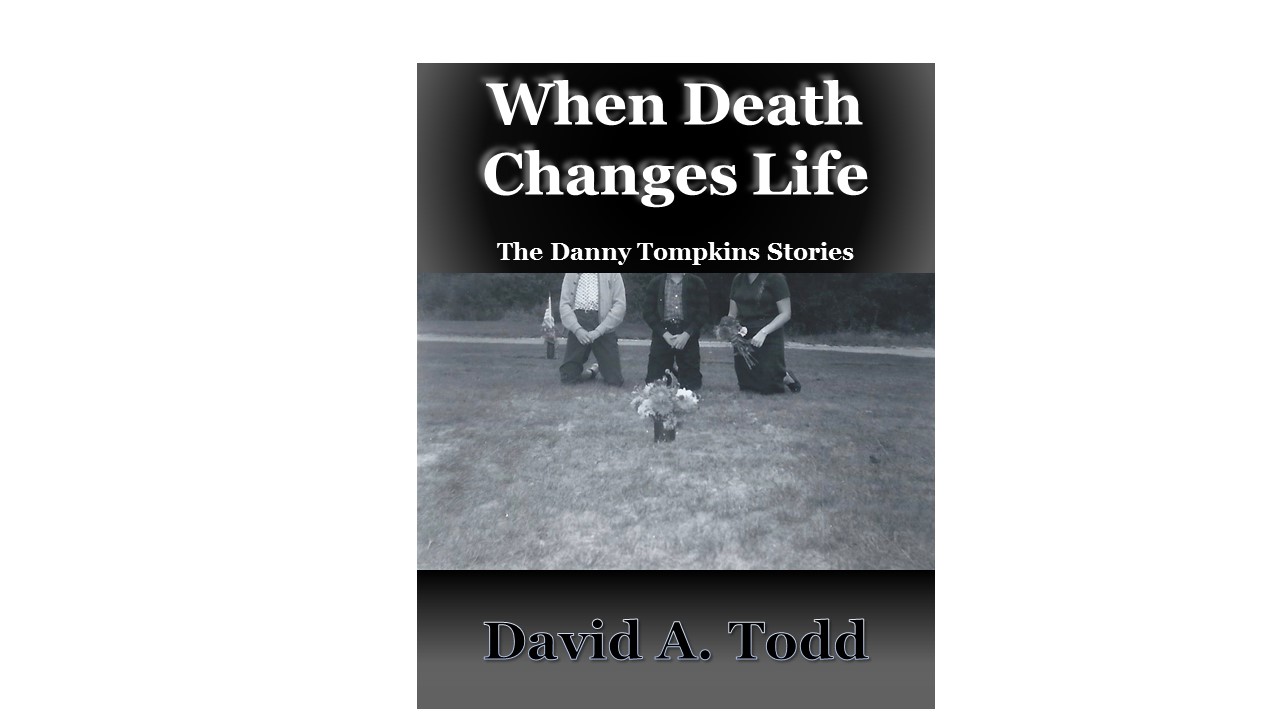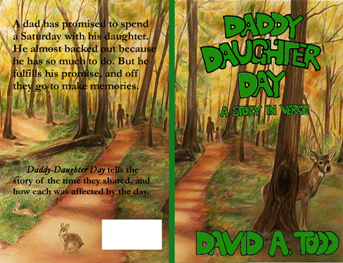
In the full cover, the photo and text is not out of center. This Amazon photo of the cover is, though.
About a month ago, I wrote about the projects I had on my to-do list and what I might tackle next, what would come after that. I have no shortage of projects in some stage of thinking through.
So after thinking through my projects list, and after having finished my income taxes, I spent a little time at paperwork reduction, then jumped into my list. The first item that seemed best to me was revisions to my book The Saudi Years in Letters. This promised to be the shortest of my projects, and it truly did go quickly.
First, I loaded the recently found letters into the book and formatted them. That added around 16 pages to the document. Next, I proofread the book using Word’s text-to-speech read-back feature. I was able to go through the book in three or four days. I probably could have done it all in a day and a half except for the concentration fatigue. Proofreading caused me to flag four letters to check against the originals. That took only an hour to do.
That brought me up to formatting the overall book. I had to do that page by page, making sure to have text and photos in right relation to each other, eliminating excessive white space and adding white space where needed. This took a day of work and eliminated about five pages from the file. I uploaded the new text file to Amazon without re-doing the cover. Alas, the extra pages from the extra letters were a few too many for the existing cover to work, so I had to re-do the cover. Fortunately , I was able to re-size the cover and upload the book to Amazon in about an hour.
So the project is finished, right? Not quite. As I went through the on-line layout checking of the book, I saw that it would be possible to add six to eight photos without having to reformat anything. Should I do it? That would mean finding the right boxes in storage closets (not impossible), going through the photos, making selections, scanning and formatting. A day or two of work, most likely.
I decided not to do that right now. If I let the book go out to my kids and grandkids, the intended audience, with a little extra white space, I’d say no big deal. I’ll take a few weeks to work on something else, then maybe come back to this.
Will I ever finish reading this poem, one of the major parts of Lewis’s book? Doubtful, but not impossible.
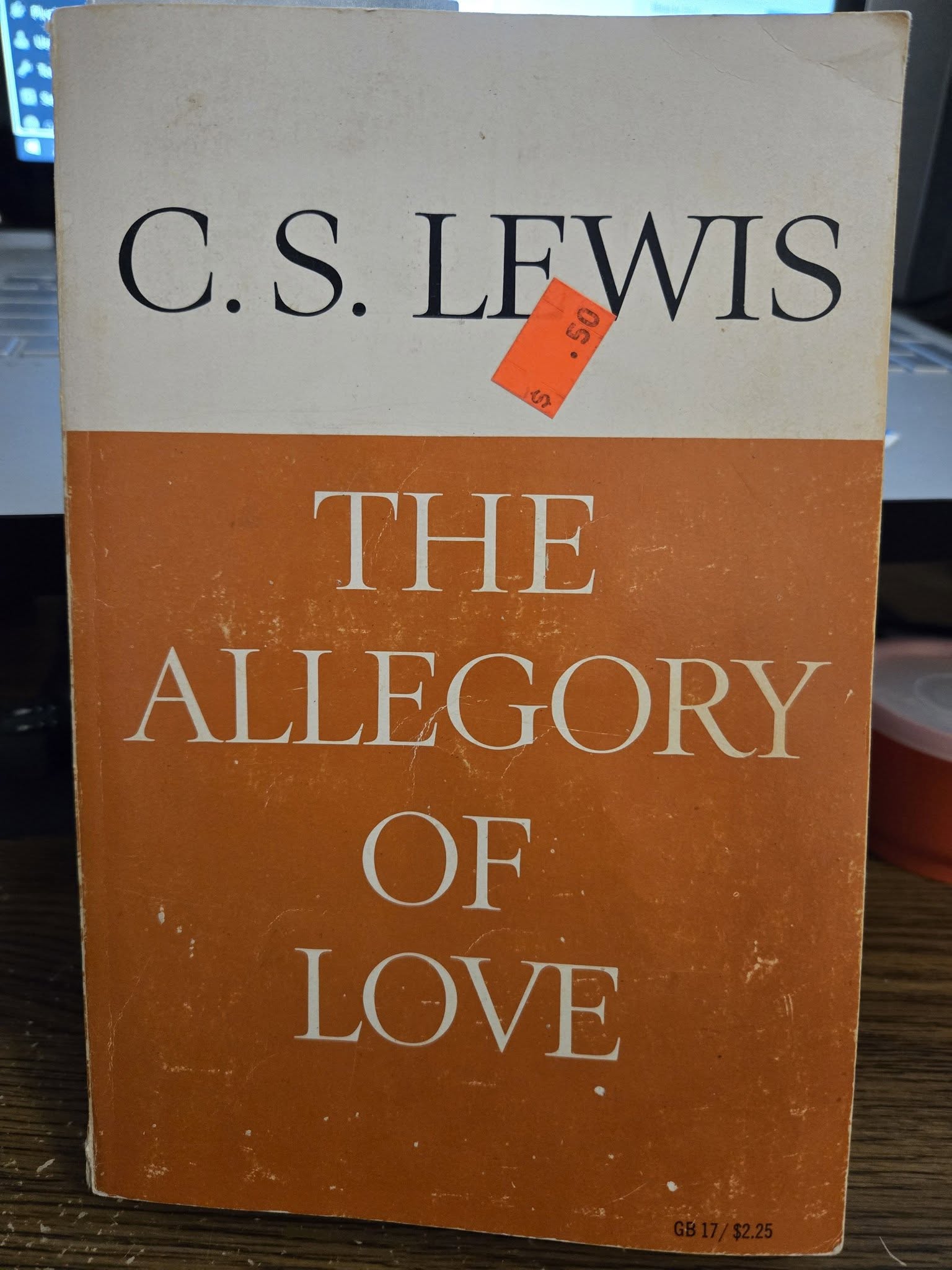
A while back, I posted about reading The Allegory of Love by C.S. Lewis and having a difficult time with it. In that post, I said I was about 1/3 through the book but was setting it aside for a while due to not really getting anything out of it. I put it back on the shelf, for it to await my picking it up again.
I did that very thing a couple of weeks ago, and read more or less the second 1/3 of it. While I maintain it’s clearly an academic book not intended for an engineer like me, I have to say I had an easier time with this 1/3 than the first 1/3. Lewis had moved in his discussion from works embedded deep in the Middle Ages, with a generous sprinkling of much older works known only to the most anal of academics, to works of the later Middle Ages to almost of the Renaissance. And from authors heard of only by experts to authors we of the 21st Century might actually have heard of.
People know about Chaucer. I’ve actually read some of the Canterbury Tales—not in the original olde English, but in a modern “translation.” But Lewis did not deal with the Canterbury Tales in this book, but another of Chaucer’s long works, Troilus and Criseyde. This is a poem dealing with courtly love, right along with the subject of Lewis’s academic work.
As it turns out, I’ve read part of Troilus and Criseyde, back in the days when I was actively writing poetry. I don’t remember much about it, didn’t blog a review, and don’t remember if it’s still on one of my bookshelves. But at least I had heard of it, which to me was progress. Here’s a sample of some of Lewis’s analysis in the part I most recently read.
Successful panegyric is the rarest of all literary achievements, and Chaucer has compassed it. I believe in the ‘gode faire Whyte’, as I have never believed in Edward King, or Arthur Hallam, or Clough.
Not easy to understand, but easier than what one encounters in the earlier parts of The Allegory of Love.
Once again, having reached a stopping point but not wanting to abandond Lewis’s book, I put it on the shelf to await a more opportune time. I picked the next book for reading, which turns out not to be what I expected. But I won’t blog about it until after 504 pages set in 10 pt font.
Or interest due to our time living in the region, but not a keeper.
As I mentioned in a prior post, my wife and I don’t read many of the same books. I rarely recommend a book I’ve read to her, and when I do, she rarely reads it. She recommends books to me more often, and when she does, I seldom read it. One she did recently and that I read was The Rise of Babylon: Signs of the End Times by Charles H. Dyer with Angela Elwell Hunt (1991, updated 2003). First, a little about how we happened to have this book.
My sister Norma sent this to our dad in March 1991. It was one her church in Indiana was studying. Lynda and I were relatively newly returned from Kuwait (in July 1990), Iraq had invaded Kuwait (Aug 2, 1990), and the USA had led the coalition that liberated Kuwait (Jan-Feb 1991). Hence, the book had family interest. We must have taken this from Dad’s house upon his death in 1997, but tucked inside it was a letter from Norma to Dad transmitting the book, along with a photo of Norma. I have no way of knowing if Dad ever read the book or not. Since Lynda read the paperback before me, it had the signs of having been used.
I read this over about a 10-15 day period ending a week or so ago. I found it to be an easy read, helped along by excellent layout and typesetting. Dyer wrote this between the waning days of the Iran-Iraq war (which was 1980-88) and the invasion of Kuwait on 2 Aug 1990, although with a few changes to reflect its publication in Jan 1991. Dyer had, on several occasions, been in Iraq in the second half of the 80s as a guest of the government to witness how Iraq, at the instigation of then-leader Sadaam Hussein, was working on rebuilding the ancient city of Babylon. I believe Dyer’s intention was to demonstrate how Hussein’s intentions for Babylon were a movement to the end times as predicted in the Bible.
While the book is informative and interesting, I don’t think Dyer achieved that aim. He tried to do too much in one small-ish book. He started with the pre-biblical history of Babylon from various extra-biblical sources. That was well done, though a bit short of detail for my historically minded mind. He also failed to give a simple list of the ancient sources, forcing his readers to make their own list from the handful of footnotes and other research. But what the book contains, assuming it is a faithful extraction from the ancient chronicles, is good.
Dyer then gets into the Old Testament era, dealing with people groups and mentions in the historical and prophetic books. Once again, there is almost too much there for a book of this length. I felt that the treatment was shallower than I wanted.
The last part of the book was based on mentions in Revelation, and how judgment will yet fall on Babylon, how the ancient ruins Hussein was desperately wanting to rebuild to his own glory, touting himself to be the new Nebuchadnezzar, would be annihilated before the return of Jesus foretold in Revelation. Once again, I felt that this part of the book was shallow. Dyer presents his case (interpretation of the prophecies) well, but not in enough depth to allow me to really sink my teeth into it.
I read the 1991 version of the book, which must have been written mostly before the events of 1990. The 2003 updates might be interesting to read. But, I repeat that the book is trying to accomplish too much in too little space. Either a larger book or two volumes or more references to other sources would have been most helpful. I must say though that the book has spurred me on to want to do more research, so in this sense it succeeds.
Yet, from me it has earned only 3-stars. It is already in the donation box, and our over-stuffed bookshelves are just a little thinner.
This year, filling out my taxes was worse than normal.
At the moment, I still don’t feel at home at our new house. At least in part, this is because I don’t feel like we’ve gotten into a rhythm yet. Daily tasks are a mixture of the old routines brought here, trying to finish unpacking and finding a place for things, and doing tasks that are one of a kind.
One of the latter has been dealing with Lynda’s eye infection. That has required four appointments with a new eye doc, with one more to go. Another one-of-a-kind task has been setting up autopay on our new utilities and cancelling the old. That’s about done now, with a few glitches along the way. Learning to use an unfamiliar range top, unfamiliar streaming service, stores with things in unfamiliar places, all of these are making life difficult.
But the big task that has been a weight around my neck has been the income taxes. I was able to complete my home business taxes calculated in March and the partnership forms filed by the March 15 deadline. Then other things got in the way. I finally got back on our personal income taxes last week, mainly last weekend.
And to my horror, I owed over $1800 in additional taxes! How could this be? Every year since I’ve retired, the amount withheld had been enough that I never owed much, sometimes even got a little back. What happened this year? Had the law changed a lot? Or had I missed something? Or did my spreadsheet have an error?
Then I realized: I had made more money this year than normal in our stock trading business. Despite trading only about six months of the year, a new way of trading of my own design had been successful, and the profits proved it. To test the theory, I took a little time to re-figure my taxes with no business profits included. Sure enough, the IRA withholdings were about right with the taxes owed. That makes sense. Make more money, don’t pay in taxes as you go along, expect to have to pay more at the end.
On Tuesday, I was able to get the tax forms filled out, printed, signed, copied, and the painful check written. I wrote it on the business account, since after all that was the cause.
Of course, then I had to do my Arkansas taxes. Those are normally easier. My spreadsheet fills in all the blanks. I just need to verify that I’ve entered the data correctly and make sure the forms didn’t change since last year. I completed those forms on Wednesday and mailed them Thursday. Since they owe me, I don’t think Arkansas will object to my being a day late.
Having this done for another year feels like a great weight having fallen off my shoulders. I think now I will feel comfortable moving on to other things. On Thursday I tackled the family budget. That was after Wednesday was filled with church activities and dealing with the potential sale of our house in Arkansas. Friday will be setting up my files for next year and entering data for the start of the year. Saturday will be a mix of work around the house, looking at the status of my writing projects and maybe getting a little done on one. Also Saturday I have an author even, the Stacks N’ Snacks adult book fair at Brazoswood High School for two hours in the afternoon. I’m looking forward to that.
This was the paperback version I read, 10 to 15 pages most days.
As I’ve said before on this blog, I enjoy reading letters. I bought a number of books of letter collections, used whenever I find them. Some of these are keepers, already read or waiting to be. Others are “nice to have to read once things” that will go in the donation box once read. The only thing keeping me from reading books in either category is time.
I recently decided to take time to read The Letters of Vincent Van Gogh, which I bought a number of years ago at a used bookstore. I’m not an artist, don’t care a whole lot about art, but I do care about letters and knew Van Gogh was famous (or perhaps infamous), so figured his letters would be interesting to read. Thus, after finishing another book, I scanned the bookshelves in my new office and this one jumped out at me. Perfect, I thought. An interesting read then a slight reduction in my library.
Van Gogh’s famous self-portrait.
And that’s the way it turned out to be. First, I learned that all the letters in my paperback copy—340 pages set in 10 pt font, so a bit hard to read—were to his brother Theo, and it was an edited collection, not comprehensive. An editor selected the ones he thought best. There were a lot of them, representative of the full range of Van Gogh’s adult life. Normally, I prefer to read correspondence, the back and forth between two letter writers. But I’ll take letters, all outgoing, and find good reading in them.
That’s what these letters were. They mostly dealt with Van Gogh’s artist career. Theo was also involved in art, but as a dealer for an art brokerage house. Van Gogh mentioned a large number of contemporary artists and discussed their techniques and results. He did a lot of comparing himself to them. Sometimes he mentioned various masters of the past.
Much of his discussion had to do with what paintings or drawings he was working on at the moment. Since I don’t know a lot about his paintings, I’m sure some he discussed are famous. A student of Van Gogh as an artist would no doubt enjoy hearing what he thought of his own work at he produced it. He wrote about his techniques, problems he had procuring models, about finding lodging and space for a studio, about trying to get colors and perspective right. Fascinating stuff to this duffer on art.
Occasionally, Van Gogh spoke about family. He was thankful for Theo’s financial support, which was the only way he could do his art. Vincent sometimes mentioned other family members (parents, siblings, uncles, aunts), but less so than I would have expected in letters between brothers—unless the editor decided not to include mainly family letters.
About the demons that troubled Van Gogh his last couple of years, demons that led him to commit suicide at age 37, the letters say relatively little. The same about the famous incident with his ear. Included was a memoir of Vincent’s life written by Theo’s wife.
If you are into art, or a fan or student of Van Gogh, you likely would enjoy it. I did. But, even though I feel good rating it 3.5-stars, it’s not a keeper. To the donation box it goes, according to plan.
Trying to remember why I started spot-reading this.
I have e-books on my cell phone to read at odd moments, such as waiting rooms. I have them as Kindle books, Nook books, and Google Books. Different books on each service, more books than I’ll ever to be able to read in this lifetime.
Document one of four in this discussion.
I recently had one of those odd moments and went looking for something to read. My choices at the top of the Nook and Google reading stacks didn’t excite me. I had just finished a book on Kindle in the previous odd moment. The next book in line was titled WTJ+53.2. What the heck is that? I wondered. Opening it, I found it was an issue of the Wesleyan Theological Journal, probably Vol. 53 No. 2. You might wonder what I, a layman, is doing with a theological journal on my phone. I actually scan that journal’s archives about once a year, and once in a while have found nuggets applicable to what I was teaching in adult Sunday school class or to support something in one of my books. So it’s a good thing to have to browse or read in one of my odd moments.
Document three in the chain.
I opened the book. I had previously opened Vol 53 No 2 to an article and read approximately 1/3 through it. The article was “Miracles, Theodicy, and Essential Kenosis: A Response to John Sanders” by Thomas J. Oord, [Oord 2018]. I had/have never heard of Sanders, but I recognized Oord’s name from a news story, so must have decided to download and read this article. I finished the 21-page article about a week ago, and am just now setting down my thoughts.
It is Oord’s response to an article by Sanders titled “Why Oord’s Essential Kenosis Model Fails to Solve the Problem of Evil While Retaining Miracles” in Vol. 51 No. 2 [Sanders 2016] of the same journal. Sanders had critiqued Oord’s book The Uncontrolling Love of God: An Open and Relational Account of Providence [Oord 2015]. Oord says in his 2018 article that in his 2015 book he referred to Sanders’ 2007 book, The God Who Risks [Sanders 2007]. Oord doesn’t say his book is in response to Sanders but does mention devoting a chapter to Sanders 2007. So this is the progression of documents being discussed:
Sanders 2007: The God Who Risks (book)
Oord 2015: The Uncontrolling Love of God (book)
Sanders 2016: Oord’s Essential Kenosis (article)
Oord 2018: Miracles, Theodicy, etc. (article)
This reminded me of engineering journals and how they did things. They would publish an article and invite discussions. People would write in discussions (either criticism or agreement), then the author would have a “closure”, which was a refutation of the various discussions or once in a while acknowledgement that the writer (of a discussion) had something valuable to say. I participated in that process once, in the late 1970s, early in my career. A journal published an article on wastewater treatment processes that seemed off the mark. I wrote a discussion on it, but, due to my relatively junior status, elected to mail it directly to the author rather than to the journal for publishing. The author called me, was very angry that someone would dare to question him, and kept saying, “You don’t know sh— from Shinola.” I let the matter drop. Somehow my boss got wind of it and gave a copy of the original article and my discussion to our chief process engineer. He said my discussion was spot on, that the author didn’t know what he was talking about, that he would handle this, and that the journal he had previously respected and published in had obviously gone downhill.
All I’ve read in this progression is Oord 2018. On the first page were the words ontological, epistemic, theodicy, and of course kenosis. Not one of those words was ever defined in my engineering classes. I doubted that I would ever have to use one of them teaching adult Sunday school. I doubt they’ve been used in the SS teacher’s books I’ve studied from. I should have abandoned the article and closed the book right there. But I read on, struggling all the way with the concepts I barely understood and through Oord’s many uses of the current buzzword “I affirm…” I even re-read the first third of Oord 2018, since there had been a long time lag between my initial and final reading of the article.
I have no expertise in the areas of Oord’s and Sanders’ back and forth, so obviously can’t engage in polite discussion of them as I tried to with the s–S guy. But after 35 years of adult Sunday school teaching and administration, I think I have a little expertise in churchmanship and my own Christian walk. Here are my conclusions, for what they are worth.
I find nothing in Oord 2018 that will help me live a better Christian life.
I find nothing in Oord 2018 that will help me teach others to live a better Christian life.
I find nothing in Oord 2018 that is the least bit encouraging or uplifting.
Based on this one article, I conclude WTJ obviously isn’t intended for a layman like me and will look for some other scholarly journal to fill my odd reading moments. I also wonder, though haven’t yet so concluded, if those involved in WTS aren’t wasting their time. To be fair, the world they live in, move in, and have their being in doesn’t seem to be my world. Most likely someone gets good help from reading this.
While kenosis might be essential (or unessential, taking it to the opposite logical conclusion), it is most likely none of these four documents are and I won’t be looking for the three I’ve not read.
I’m not an idiot. BS and MS degrees. Nine Bible study books written and self-published. A dozen other Bible studies developed and taught. Close to two dozen engineering articles presented at conferences or published. But I’ll be danged if I can see any reason to waste time on the stuff of this article.
This will certainly be task one, making needed additions and corrections.
As I reported in my last post, my 8-volume Bible study is done. I suppose nothing is ever done for the self-published writer, because there’s always things to do (improve covers, check for formatting errors, fix the dreaded typos once found). But I can lay all that aside for a while and move on to more pressing items.
I hope I get back to this series fairly soon.
But what’s next? I’ve been thinking that through for some time and have been developing a mental to-do list. Monday evening I started writing the items down. Let me list them here. It’s a combination of revising existing works, completing long-planned works, and trying to figure out if anything that’s been keeping my brain from resting is worth pursuing. I’ll give the list as bullet points.
Do my income taxes. The deadline approacheth. I started on this yesterday. Looks like I owe the IRS.
Make additions and corrections to the book of letters from our years in Saudi Arabia. I added the recently found letters on Tuesday and re-formatted the chapter. I need to check the formatting of the entire book, then re-publish.
Make additions and corrections to the book of letters from our years in Kuwait. That will include adding a lot more photos.
Put together the book of my father-in-law’s service in WW2. This includes syncing up his war letters with his war journal, and finding enough photos to add a little spice. I started on this on Wednesday, loading the first 20-odd letters into a file. On Thursday I proofread them and made corrections. I can see that I’m going to have to do this differently.
Write/publish book three in The Forest Throne series, tentatively titled You Can’t Change The Past.
Write/publish book four in The Forest Throne series, tentatively titled Lost In Time.
Decide if I want to do any more books in the Documenting America series. Ideas for more books have been refusing to leave me alone, but they take a lot of research and writing.
Decide if I want to write a book with the tentative title Nature: The Artwork of God. That’s another thing that’s taking up brain space.
Get a start on a couple of essays I’d like to write and publish.
That’s enough for both short-range and medium-range planning. I’ll have to see how it goes.
The series is finished. Time to make a few tweaks and move on to something else.
Well, it’s done. My Bible study series A Walk Through Holy Week. On Saturday I typed a few edits from my last read-through, formatted the book for Kindle and print, created the e-book cover, and uploaded the e-book to Amazon. By the end of the day, it was approved and live for sale. This volume actually goes beyond Holy Week and covers the Easter season up to the Ascension.
I suppose I should say it’s “almost done”. I still have to create the print book cover and upload it. That’s hopefully a one-hour task today. Then there will be creating and uploading improved covers for the entire series, because the covers right now could be much better. But new covers can wait for a long time if need be.
I declare the eight-volume series done. The final word count for all eight books is somewhere between 320,000 and 330,000. Of course, total sales thus far for Volumes 1-7 is zero, so I don’t have great hopes for calling the series a success.
Now, it’s time to figure out what to do next. A plan is beginning to gel and will be the subject of a future post or two.
The worst part of moving, apart from downsizing to a house about 1/3rd of what we had, apart from going from a mostly rural area to a fully developed city subdivision, is trying to establish routines.
I am a creature of routine. Give me the same thing to do every day and I’ll be happy. Up at 6:30, work on writing, stock trading from 8:15 to 8:45, breakfast at 9:00, more work in the office (writing or household budget), reading at noon, lunch at 1:00, etc. I like routine.
Alas, my routines were stolen by our move from Arkansas to Texas. For the first two weeks I did nothing but move and unpack boxes. At the two-week mark I was able to resume stock trading with a partially set-up office. Then a crisis of missing medications that took a few days to work out. Then I was able to resume my writing work, more editing at present as I’m trying to get previously written works ready for publication.
I’m slowly getting routines established. My reading place is now the screened patio instead of the sunroom. The Dungeon has been replaced by an office, now mostly fully set-up in the 3rd bedroom. My evening reading place is sprawled out on the living room floor while we are without easy chairs. Tuesday this week I was able to get the minivan registered. That’s one big, non-routine item I had facing me. Now I can concentrate on re-establishing routines.
Not so fast. On Wednesday I went through a pile of mail and worked on changing addresses, filing documents, and learning to use my bank’s remote depositing feature. Oh, yes, and using PayPal to pay a bill for the first time.
Routine is returning, though more slowly than I would like. I’ve figured out when I need to have outgoing mail for the mail carrier to pick it up. I’ve started to learn when local utility bills are debited. How long it takes to get to church to know when to leave home to be on time. I’m not sure when I’ll be ready to reestablish a routine for posting here, but I’m working on it.
Catherine and Peter never should have married. This is the story of how Catherine dealt with it.
My wife and I don’t read many of the same books. Even our Bible study and devotional books are different. That’s one of the reasons our home library is so large. I’m trying to pay more attention to what she’s reading (to be a dutiful husband) and at least consider reading books she recommends to me. One of those was Imperial Highness by Evelyn Anthony.
This historical novel, first published in 1983, is closer to a biography than a novel; yet it meets the technical definition of a novel. It’s about Princess Catherine, of a somewhat lesser German principality, who at age 16 married the future tzar of Russia. It was an unhappy marriage, as the tsarevitch was hard to get along with and the two teenagers were ill-suited for each other.
Anthony paints a very unhappy picture of Catherine’s life. Both partners found love in the arms of others and rarely saw each other except at official court functions. Spoiler alert: Catherine does a better job of winning public opinion to her and winds up as empress, deposing her husband after his mother’s death.
This is a good, relatively short read. It’s difficult for me to pigeonhole it as to genre. Consider it biography masquerading as historical fiction. It’s worth reading if you like that kind of book.
I give it 4-stars. I’ll never read it again, but I might do some other research on Catherine. It’s not a keeper, however, and I rise from my office chair right now to put it in the donation box.