Continuing our discussion about the Goldilocks Zone—that area of a planet where conditions are just right to sustain life, especially human-like life—I move now from conditions on the planet itself to things in the planet’s neighborhood. I’ve already discussed the general concept of a Goldilocks Zone and factors affecting the temperature, which must be just right for human life to thrive.
The first of two things off the planet to discuss is gravity. Gravity? you say. Isn’t that on the planet? Well, yes, it is. Perhaps “off the planet” is not the best term. Anyone who has taken fundamental science in school has learned about gravity: the pull two objects exert on each other. It holds air close to Earth, creating the atmosphere we need for life. It’s what keeps our feet firmly planted on Earth, and why we can’t jump off of it. It’s why we fall if we lose our balance.
But we know it takes two bodies to gravitationally tango. This is demonstrated by the tides, which have been shown to be related to the moon’s gravitational tug on earth. Those tides are variable based on the lunar cycles.
I’m not saying we need a moon-ocean connection for human life to form but simply using the moon as an example of something in the neighborhood that affects our gravity. I’m trying to talk through the likelihood of another planet being out there somewhere in the Milky Way or another galaxy being able to sustain human life. Some people believe, given the number of galaxies and stars out there, the existence of finding other life-sustaining planets is a virtual certainty, including planets where human-like life could have developed. I’m simply talking through that scenario.
The Goldilocks Zone concept, as I’ve seen it presented, is usually posed as a question of temperature and nothing else. But could gravity play a factor? What if you had a planet with the moon’s gravity. If it could hold an atmosphere in place, could humans live in only that little gravity? Could human life have developed in only that little gravity? I sort of doubt it. Some different kind of life would have developed. You wouldn’t see a bunch of Armstrongs and Aldrins bounding around. But will wait for scientific experts to weigh in.
What about other celestial objects, such as the sun and other planets? Obviously the sun plays a big roll, its gravity holding Earth in orbit. Could you find a planet with a sun, say, three times the mass of ours, and place a planet in orbit around it so that a Goldilocks temperature could exist, would the gravity properties be such that human life could exist? Or what if the planet were twice as big as Earth? Same question. Would that planet hold so much air in place that the atmospheric pressure would be too great for humans to live in it?
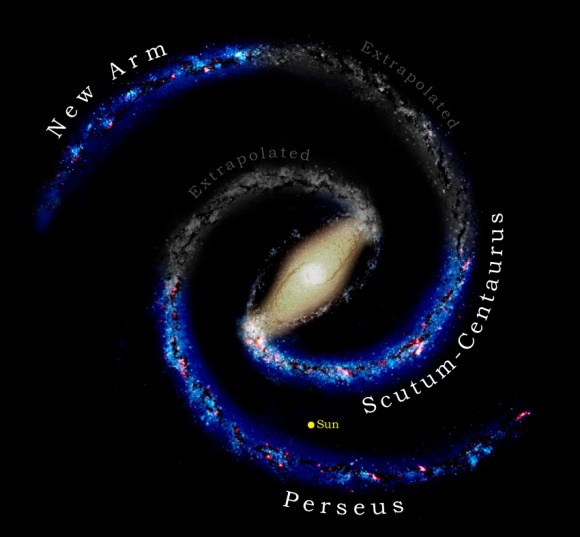
Let’s go a little farther afield in the celestial neighborhood. What about a planet rotating around a star near the center of our galaxy. Would all the other stars around it combined exert so much gravitational force that it would be so different from ours that human life couldn’t exist? or not develop in the first place? I realize we are talking about four or five light years between stars. But what if you had bunches and bunches of stars?
I’m asking questions I don’t know the answers to. I suspect scientists, somewhere on Earth, understand gravity so much they can tell what conditions are an a supposed planet twice Earth’s size rotating a sun thrice our sun’s size in a celestial neighborhood 100 times more cluttered than ours. What are the “G” forces on a human at that equator, and could they exist there in that gravity if the temperature were right?
We have learned from long-term periods in space that it’s almost impossible for humans to maintain muscle mass and tone in Zero G, even with lots of exercise. What will happen on a theoretical exoplanet with G forces so foreign to our bodies? A biologist might—or might not—be able to answer that question.
The next post in this series will discuss one more celestial neighborhood factor in the presence of a Goldilocks Zone.