All posts by David Todd

Trying to Plan, Not Really Succeeding

Yesterday morning, at the start of my business day, I saw on my desk a sheet of paper titled “2017 Priorities, as of 10 Jan 2017”. When I wrote that I mean writing priorities. That’s what was on the sheet, the things I planned to write and publish in 2017. It’s now close to two months later. I knew that wasn’t still accurate, as the things to be done early in the year are behind schedule, and thus the things I intended to do later in the year may not get done. So, I decided to re-write it.

Now, these are written on the back of the small sheets I tear off my Dilbert desk calendar each day. I’m not talking about something real formal here. On the 10 January sheet, I had seven numbered items originally, written in approximately the order I wanted to complete them, but without dates or deadlines. The I realized I forgot the thing that was to be number 1, so I squeezed it in between 1 and 2 and numbered it 0. The I realized two other items I’d left off, one for early in the year, one for later. So I wrote them at the end and used appropriate arrows to show where they would come in.

I re-wrote it and put everything in order. #1 is my first priority, #2 is my second priority, all the way down to #10. I don’t really expect to get to all 10 items in 2017, but I’ll work my way down the list and see how far I can get.

Then, I realized I’m working on something right now that wasn’t on the other list. It’s a discussion of a scholarly paper someone wrote and is soon to present at a conference, a religious paper at a religious conference. So I wrote that at the end, without a number. I don’t really know what I’m going to do with that; perhaps nothing. But it’s taking my writing time, so I should have included it.

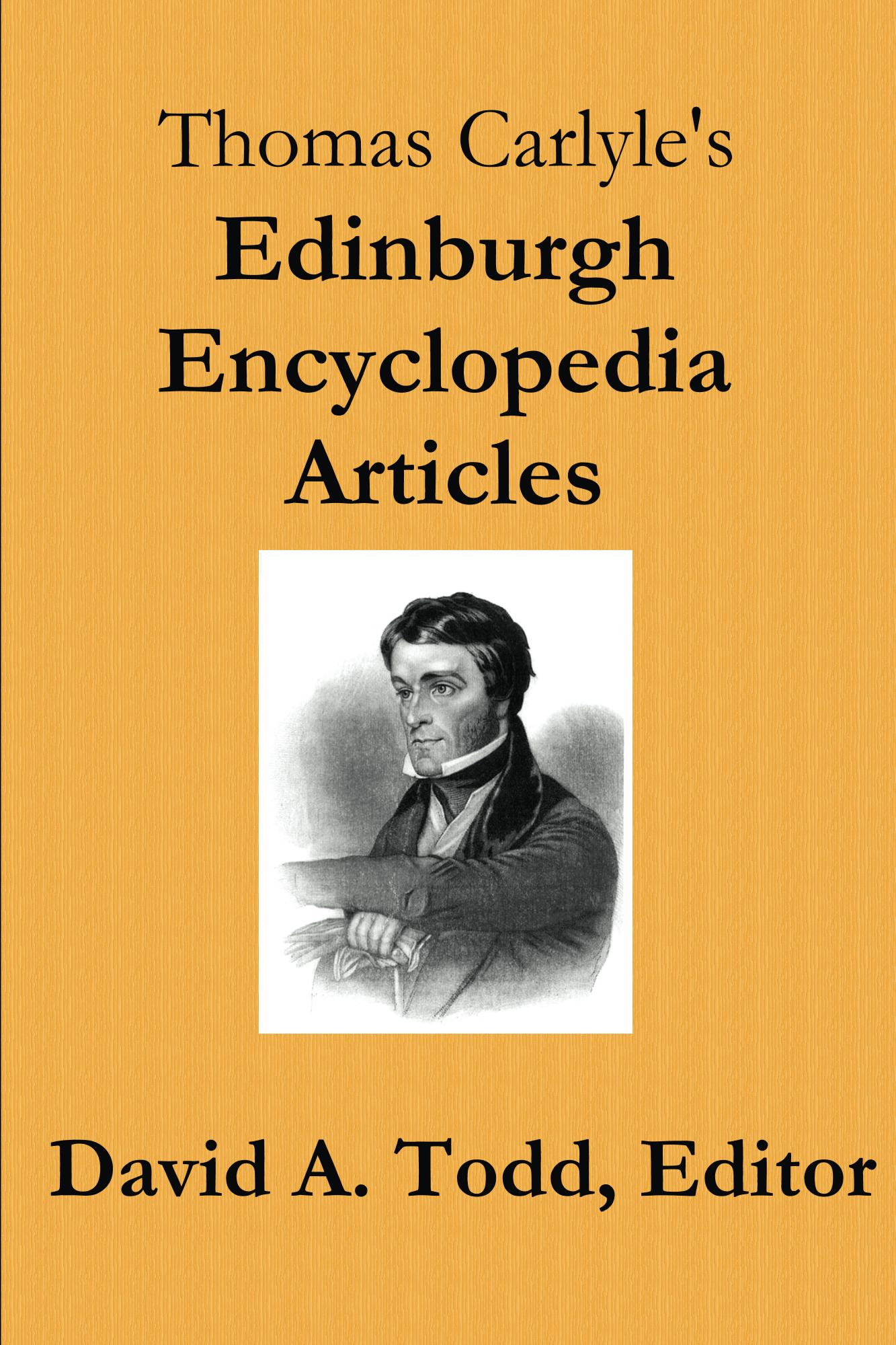
Then, while I was looking at that paper at academia.edu, I decided to do a search on Thomas Carlyle. I immediately found a scholarly paper that is germane to my item #8, Thomas Carlyle’s “Chartism” Through The Ages. I took time to download and read the paper, and write an e-mail to the author. #8 is kind of far down the road to be doing anything on it right now, but since I was at that site, and since it came up, I did the brief bit of research.

Now, I’ve learned over the year that, whenever I ratchet up my writing time, or even just plan to ratchet up my writing time, something in life blows up and the plan can be trashed. Without going into details, that what happened by noon today.

So, what is my writing plan? Right now I have no idea. Maybe things will clarify in a week or two.
Still Weary, But Will Write On

My last post, on Feb. 23, was written in Atlanta, Georgia. I was there for a conference, the Environmental Connection 17 conference put on by the International Erosion Control Association. For the first time in years, I didn’t submit a technical paper for presentation. So I was just an attendee, renewing old connections, making new ones, and encouraging one of our younger engineers who did present a paper, his third.

The flights out, via Dallas-Fort Worth, went well. We had a long enough layover in Dallas that it was enjoyable. We got easy transportation to the hotel. The walk from the hotel to the conference center, over two elevated walkways, was just about right. The Wednesday activities were good. Jim Cantore of The Weather Channel gave the keynote address. I went to some technical sessions on things I wasn’t familiar with, and broadened my perspectives. All was well.

But something happened on Wednesday, not at the conference, that wasn’t good. I won’t go into details here. Let’s just say it threw me for a loop. It so affected me I wasn’t able to sleep that night in the hotel. I tossed and turned, and finally got up and read. It was well after 2:00 a.m. when I finally went back to bed, though I’m not sure when I fell asleep.

The next day I made that post. I made it from my company smart phone, the first text-intensive post I’ve made from it. That was something new for me. During the day, the situations that caused me to lose sleep somewhat resolved themselves. By the end of the day, Thursday, I was doing much better emotionally. I blew off the social gatherings at the conference, went back to the hotel, and spent the rest of the day editing my novel in manuscript. I made significant progress on it.

I wish I knew why I let things affect me so. Part of the problem is that I engage in two activities that can put you on the emotional roller coaster. One is writing; the other is stock trading. Stock trading is going well this year. I’ve had a lot more winners that losers, and I’m earning at a rate that I like. Writing is also going okay, though I still get no sales. At this time I’m not ready to put money into advertising, so I’ll likely have low sales.

Once my book is ready and I publish it, I’m sure I’ll get some sales of it, and perhaps of others at the same time. Before I publish it, however, I really need to correct and re-publish Doctor Luke’s Assistant, because it comes before Preserve The Revelation in the series. I made all the corrections to the DLA master file, formatted it for print, uploaded it, and had CreateSpace check it. Alas, it had many formatting errors, all due to lack of recognition (or user error) of inserted section breaks and having the wrong page on the wrong leaf. I was working on that last weekend, but hadn’t finished it. That will be a tomorrow task.

A day-after-tomorrow task will be re-reading PTR in manuscript. I had enough edits on this round, my second round of edits, that I believe I need a third round. This will delay publishing, but I’m having that delay anyway due to the DLA problems. Alas.

One good thing did come of this trip. When I was packing Monday evening and Tuesday morning, I had to decide on what reading matter to bring with me. I have several books on Google Play and on my Nook, so I didn’t need to bring any print book. But at the last minute I stuck in the Civil War volume of the Annals of America. , just in case I wanted to read that. It’s research for my next book, whereas everything on my electronic devices is for family history, research for later books, or recreation. On the first flight I pulled out AoA and read the entire flight. I did the same on the next flight, and in the hotel room the first night. I often have trouble focusing on the entries in this book, but on this trip I didn’t. I was able to focus on each article I read, making marginalia, finding great quotes, and possibly adding to my civil war book. It was a good choice. Not sure why I could focus this time when I’ve had trouble doing so most times, but I’m glad for the result and won’t question it.

Life is an emotional rollercoaster. Sometimes I don’t handle it very well. Wednesday was one of those days. I’ve recovered (mostly), and am ready to plow ahead. Hopefully my Friday post will be an author interview. Next Monday, maybe I’ll be able to report good things about DLA and PTR.

Weary

Every time I start thinking about being able to devote more time to writing, something in my life blows up. Some days I grow so weary in well-doing I don’t see much reason to care. That’s where I am right now.

Maybe all will seem better in a few days. I hope so.

Right now I have six works in progress, and don’t give a you know what whether I finish them or not.

 I won’t be posting on Friday this week. Maybe not for a while.

Round 1 is Done; Bring on Round 2

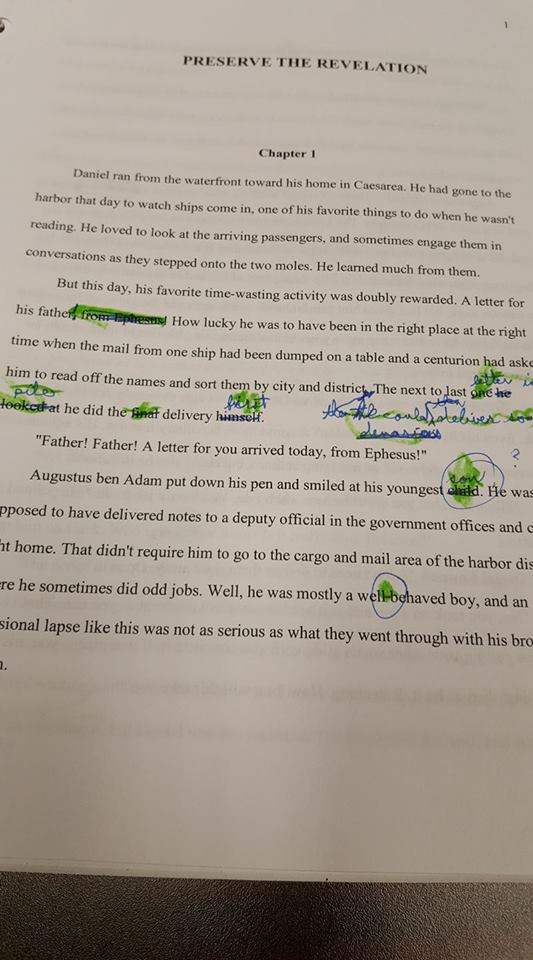
The first page in the manuscript of "Preserve The Revelation", with my edits.
The first page in the manuscript of “Preserve The Revelation”, with my edits.

No, that’s not of a prize fight. That’s rounds of edits in my novel Preserve The Revelation.

Though, I’m not sure but that thinking about novel writing, or maybe any book writing, might not be better described in terms of a boxing match. In this corner is The Manuscript, in rough draft. It needs much work to be able to win the fight. It’s rough around the edges, maybe even in the middle. It has great potential, but can it be molded into a quality work?

In the other corner, is Mild-Mannered Author. He thinks he can win this fight and make Manuscript do anything he thinks it should. But does he know his characters? Does he manage conflict in a way that keeps the reader engaged and turning pages? Does he know scenes and sequels; or, if he doesn’t know that writing technique, does he intuitively grasp the principle behind it and pace the book according to it? Does he understand the Magic Paragraph, and does he space these throughout the book? Can he even find his notes from the conferences where those concepts were taught?

This was my first novel; but, if plans work out, it will actually be the second in the series, and "Preserve The Revelation" will be the fourth.
This was my first novel; but, if plans work out, it will actually be the second in the series, and “Preserve The Revelation” will be the fourth.

How many rounds will this take? For the prequel to this, Doctor Luke’s Assistant, I think I went through four rounds. That was my first novel, and should take longer to craft to perfection, right? If that took four rounds, surely this one will take only two.

I e-mailed a copy of the Word file to my next beta reader, asking him to have it back to me by March 1. I’ll print a clean copy of it tomorrow, to take with me as I travel this week. I’ll be on a plane to Atlanta on Tuesday, to attend the annual conference of the International Erosion Control Association there from Wednesday through Friday, returning home late on Friday. I’m hoping in those days to get all the way through it myself. I’ll hole up in my hotel room for three nights and read-away. With luck, I’ll have my second round of edits done and typed by the time I get comments back from my beta reader.

That means, if two rounds of edits will really be enough, I’ll have the book ready to publish some time around March 4. I’ll take three or four days to format for e-book and print, and publish them. The cover is well underway. The cover photo is chosen and approval to use received, and needed artwork on it is commissioned and will shortly begin.

There’s many a slip, but it could happen on this schedule. I’m starting to get excited.

Shifting Gears in the Morning

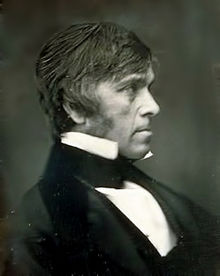
Thomas_Carlyle_daguerreotype,_1848Since August 2016, in the mornings, after I get to work, get my coffee, fix my breakfast half-sandwich, and have my devotional time, I’ve been working on my bibliography of Thomas Carlyle’s compositions. I had done a lot of work on it before, and had almost all of his known works entered. But I wasn’t sure of their composition order; nor did I know whether there were other works that prior bibliographers missed.

I started work on this at least five years ago, but laid it aside when other items pressed. Then I worked on it from late 2014 to about September 2015, but laid it aside again. From August 2016 until this week, my morning routine has included a half hour with Thomas Carlyle. During these months I made significant progress. I had, back in 2014-15, done the main entries, then researched in his letters to put in order those compositions up to around 1830. Since August till last week I was up to 1841. I had moved from his years of writing mainly magazine articles to mainly books. So the compositions were fewer, and the research easier.

I know I’ve written about this before, but bear with me while I go through it again.

This work is tentatively titled Thomas Carlyle: A Chronological Bibliography of His Compositions—or something close to that. I want to get his works into the order they were written. His first bibliography, published the year of his death (1881), had his articles grouped by magazine, and his books chronological by publication date. But it missed a lot of his unattributed pieces. The next one, published in  1928 by Isaac Dyer, picked up most of those unattributed works, but arranged them alphabetically. He also had a chronology, but it didn’t include every composition.

From 1963 through 1965, G.B. Tennyson published a book and some related magazine articles on Carlyle. In these he included chronological bibliographies, of his prose and his poems, for the period up to the publishing of Sartor Resartus in 1834 (but going to 1840 with the poems). Then, in 1989, Rodger D. Tarr published what is seen as the definitive bibliography of Carlyle. It is arranged chronologically by date of publication, though contains many notes to help establish a chronology.

My first book on Thomas Carlyle, published 2014

So, I’ve found these four bibliographies of Carlyle’s works. What need is there of another? Perhaps none. But none of them were what I wanted for my Carlyle research. I wanted to know the order he wrote things in to try to determine the changes in his writings and tie those to the events he was part of. I think I found one such key event, and I’m working on a book about it. But, to be certain, I needed to know the order in which he wrote everything. Not finding what I wanted, I decided to produce it myself.

I think I’m around 70% done with the bibliography. So why stop now, you ask? I’m just too busy. When I look at my writing/publishing to do list for 2017, and try to establish some priorities based on publishing, the bibliography is low on the list, and will likely be for two or three years. Other things are more important. In a future blog post I’ll again go through my 2017 plans, and update my readers on where I stand with them.

In fact, I’m not sure I’ll ever publish the bibliography. I don’t know that it has much commercial potential. Carlyle scholars are few. Those interested in his works may be a few more, but still not many. No, I’ll work on other stuff for a while. Maybe in six months or a year the urge to finish this will resurface, and I’ll get at it again. But for now, Carlyle and his works will have to lay dormant to me.

Mourning—It Never Gets Easier

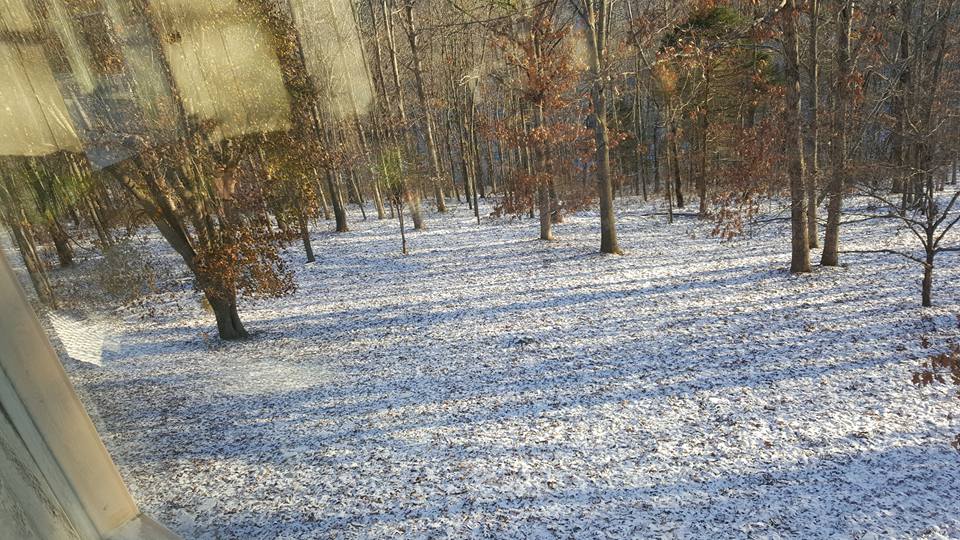
Snow is always beautiful, but not always enjoyable. It can be deadly with the right combination of circumstances.

Feb 10, 1948.  A beautiful, Spring-like day in southwestern Kansas. That evening, three young people headed from Meade to Fowler, adjacent towns between Dodge City and Fowler in Meade County, to attend a dinner among friends. Alas, weather predictions being what they were in 1948, they didn’t know a massive blizzard was just over the horizon. It started snowing while they were eating dinner. Later, around 10 p,m., the three decided to drive the 10 miles back to Meade. They didn’t make it; all three perished in the blizzard.

Saturday just passed was the 69th anniversary of when the first of the bodies was found. I think. Records aren’t clear, memories of things that old are few and fading. Most likely the three died on the 11th, though their bodies might not have been found until the 12th or 13th.

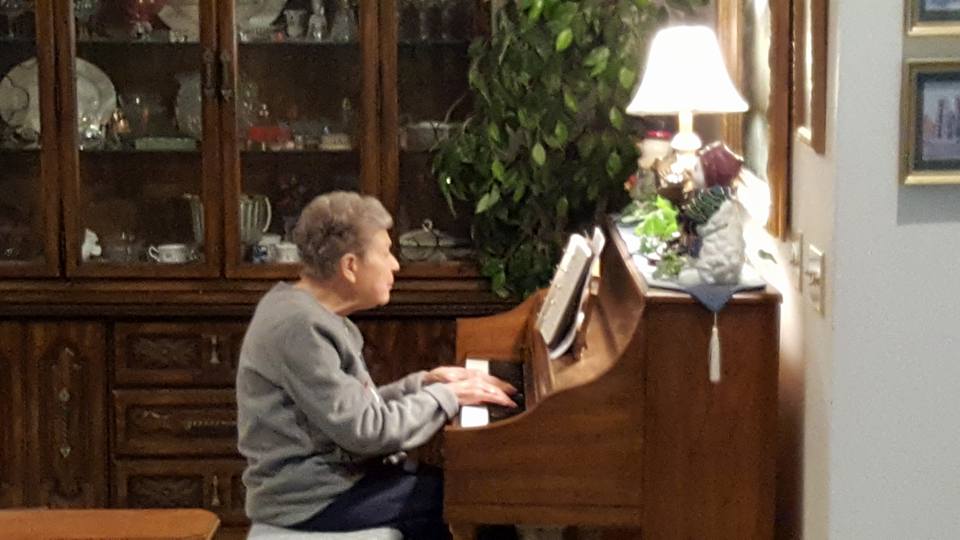
Esther, almost 69 years later.

Two of those who died are the younger sisters of my mother-in-law, Esther Barnes. I had heard bits and pieces of the story over the years. About 18 months ago I asked Esther if she would talk with me about it, and let me write the story for the Meade Historical Society website. She said yes, and I interviewed her in our house over a couple of days.  It took me a few months to complete and sent to the Historical Society for them to upload. You can read it here. If for some reason that link doesn’t work for you (looks funny to me), try this for the index and click through to the story.

When I interviewed Esther it was 67 years after the event. I knew it would be painful for her, and it was. But she gave me the details she knew about, most of which she heard from someone. She lived in Fowler at the time, newly married and with a 9 month old son. They had no phone, so she only heard about it days later as the news got around.

Two of her three sisters are gone, but she has her grandchildren and great-grandchildren.

Saturday was the 69th anniversary of that event. At the supper table, Esther said, “I still think about the girls,” by which she meant the sisters. Several times during our meal she teared up. 69 years, and still the mourning goes on.

I understand this. It’s been 51 years since my mother’s death, and I still think of her most days, and wonder what life would have been like if she hadn’t had the terrible illnesses and died from them at age 46. It certainly would have been different. Yes, the years have deadened the mourning some, but it’s still there.

I’m not sure there’s really a point to this post. It’s just something that I want to share.

Oh, if you get to the Meade Historical Society site, you’ll notice the article is listed at the “Buzzard of 1948”. I just notice that, and will ask them to fix it. If you read the article there, you’ll find a number of typos and an some awkward formatting. I remember fixing those, so I must have sent them the wrong file, because I remember fixing those items. Just suffer through them. I’ll find the right file and send it for re-uploading.

Book Review: The Civil War

The damaged cover is an inducement to not keeping it.

As part of my research for Documenting America: The Civil War Edition, I picked up a used copy of The Civil War, by Harry Hanson. Originally published in 1961, my paperback copy dates from 1991. The book is about 650 pages, with a dozen maps and a fair index.

My overall recommendation: If you must read a book about the Civil War, I think you can do better than this. However, if you like battles and details about military conflict, you might like this.

I picked this up used (like so many of my books) for $1.00, thinking it might be a good reference for my book. About four or five months ago I started reading it, but laid it aside. When I picked it up again in December, I started reading where the bookmark was, in the chapter on the Monitor and the Merrimack. I continued on, through endless battles.

That’s what this book mostly was, the battles—between the Union and the Confederacy, and between the Union generals and their superiors. Much time was given to McClelland’s difficulties with Lincoln, Stanton, and Halleck. Once McClelland was given the book, the battles became between his successors and their commander-in-chief.

The battles are interesting, of course, but the book bogged down on them, focusing on them, almost to the exclusion of politics and other national issues. The materials I’ve gleaned from the Annals Of America have been much more useful for my book. When reading of battles, it becomes impossible to keep the generals straight, except for the few top dogs. So I was reading about some battle, an important battle, and how Brigadier General Smith pushed back Major General Jones’ division, with the help of General White’s cavalry and Colonel Black’s artillery. But which side was which of these on? At the beginning of the battle description the author gave the main units for each side, and who their generals were, but remembering all of them by the time you get a few pages into the description was impossible; at least for me it was.

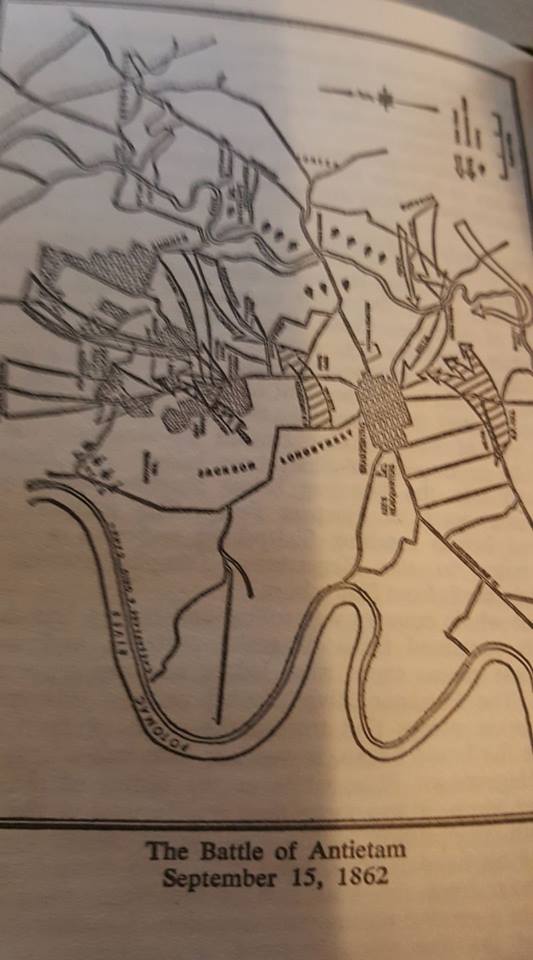
The Battle of Shiloh mapThe paperback has a few maps, none of which are particularly readable.  A map with the units and their commanders on it would have been most helpful. Even just a simple map with cities and the location of armies would have been good. But the book didn’t have that.

When I got to the end of the book, I went back to the beginning to refresh myself on the Introduction/Preface/Forward—whatever was in the book. When I did so I discovered I hadn’t started from the beginning. I must have skipped the first few chapters and gone right into the battles. Silly me. So I read those chapters, which were about everything that happened before Fort Sumter. They were actually pretty good.

So, if I go to Amazon or Goodreads and rate this book, what will I give it? Certainly not better than 3 stars. It’s not a bad book; just not what I was looking for or needed for my research, not did I think it was a good general history of the war and the times. If I need to know something about a battle, I can go to Wikipedia (don’t laugh; for things like battles it’s actually quite accurate and useful, with good maps on the screen) for everything I need, supplemented by my two encyclopedias. So, I won’t be keeping this book, nor rereading it. Into the yard sale stack it will go.

Editing and Busyness Consumed Me

I had a certain blog post scheduled for today. Often I write my Monday post on Sunday and schedule it for posting Monday morning. This weekend, however, was extremely busy. I won’t go into details. Suffice to say I had a long list of chores to accomplish. I got all but two of them done. One I might do tonight; the other will have to wait till next weekend, when I’m home in the daylight.

My computer time was limited to trading accounting on Friday evening, and household budgeting on Saturday morning. I read blogs, kept up on Facebook and e-mail, but otherwise I didn’t go near the computer.

What took my time was editing. Of my completed novel Preserve The Revelation. I got a little done on this last Wednesday and Thursday (or was it just Thursday?). My goal was to get to page 200 in it, having gone through just page 30 as the weekend started. I figured if I could get to page 100 on Saturday, I had a good chance of making my goal. Alas, when I went to bed Saturday night I was a little short, maybe around page 90 to 95.

So Sunday, after church and lunch, I went to our sunroom, with a mug of coffee, my smart phone, and the notebook with the manuscript. Reading carefully, I spent about 3 hours out there and got a lot done. I even made two batches of Chex Mix, keep the door to inside open so I could hear the oven timer go off and know when to stir it. I felt good about where I was by supper time, but I was still 30 page short of my goal.

I didn’t watch the Super Bowl, not wanting to jinx the Patriots. I kept up on things on Facebook, saw they were losing big time, so kept on editing while a Harry Potter movie was on the television. Later, of course, I learned the Patriots tied it in regulation and won in overtime. I went to the kitchen television and spent close to an hour watching the post game ceremony, the interviews, and the highlights.

That took me to about 10:45, still a little short of my goal. That’s about the time I start getting ready for bed these days, but last night decided to stay up a little late and get some more pages done. I did one more chapter, finishing after 11 at page 201. I made my goal. The manuscript is 293 pages, so I’m getting near the end of the first round of edits. I’ll shoot for 30 pages a night, and hope to finish Wednesday.

So I never got my intended blog post written. It’s a book review, and will take more time than this post will. I’ll do that for Friday, and push others back. I’m happy to do so. Happy at the end of this weekend, with a bunch of work done, my manuscript much farther along, and the Patriots again the NFL Champions.

I Love Editing

Editing is something writers either love or hate. Editing leads to revisions. If you’re in love with your words, changing them might be difficult. Even looking at them when you know the result will be changes can be difficult.

At least, I’ve heard that from other writers. For me, I don’t find it to be so. I enjoy the editing process. I like to read what I wrote and see if I can make it better. Most of the time, good editing means cutting words from the document, making it tighter and shorter. Alas, my first editorial pass in anything I’ve written usually increases the words in it. That’s because I realize I haven’t explained something in the plot well, or didn’t touch on a character’s emotions, so I add words. That’s okay, so long as during the second pass through a document I find a way to cut words.

Not the final cover; just a trial one I was working on

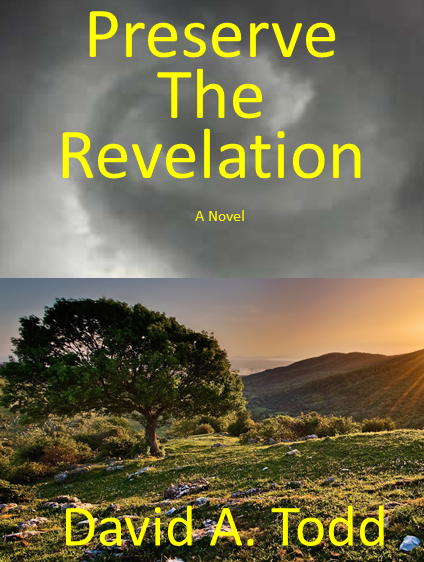
Wednesday evening I began the process of editing Preserve The Revelation. I finished writing it on January 14th. I wanted to pick it up right away and get to editing. But they say the best thing a writer can do is let the book sit for a while. So I let it sit two weeks and three days. I worked on it each of the last two nights, getting through 29 double-spaced pages.

It’s interesting to read what you wrote several months ago. Since I had only a basic plot outline when I started, not a list of each plot element and scenes, the day I started the book I knew how it would end, including the ending conflict, but not how I was going to get there. One of the things I’m editing for is consistency of plot, and whether I have enough references to what might happen in the future. I’m pretty sure I didn’t set up the main conflict well enough. I’m not sure I have enough about the characteristics of all the main characters. This will all have to be added. Then, on another pass, I’ll see about tightening up the text.

Meanwhile, at the office, I spend about half an hour each morning working on a non-fiction book, Thomas Carlyle Chronological Composition Bibliography. I’m past the midpoint of his career, to the point where his works are well known, and the research will be easier. So I’ve shifted my focus a little. Four days I research and add to the text. One day, Friday, I edit. The last two Fridays and today I went through about 20 pages. Today, on my noon hour, I decided to type the edits I have marked. I didn’t quite make it, but I made a significant dent in the typing needed. Since I have no deadline on this book (in fact, I’m not sure I’ll ever publish it), I can take this slowly.

This weekend I hope to edit close to 200 pages in Preserve The Revelation. I don’t know if I’ll make it, but if not I should come close. So long as I don’t get distracted in the times I’ve set aside for that purpose, I should be good.

Why do I enjoy editing so? I’ve helped others to edit their books. I think, if I fail as a writer, I would find it almost as enjoyable being an editor. I guess there’s no understanding why, at times. There just is.

My USA Non-fiction History Series

On January 23, I wrote about the fiction series I’m developing of Christian church history. I recently completed the first draft of the second book in that series, and hope to publish it in about a month.

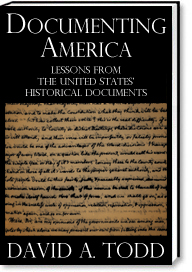
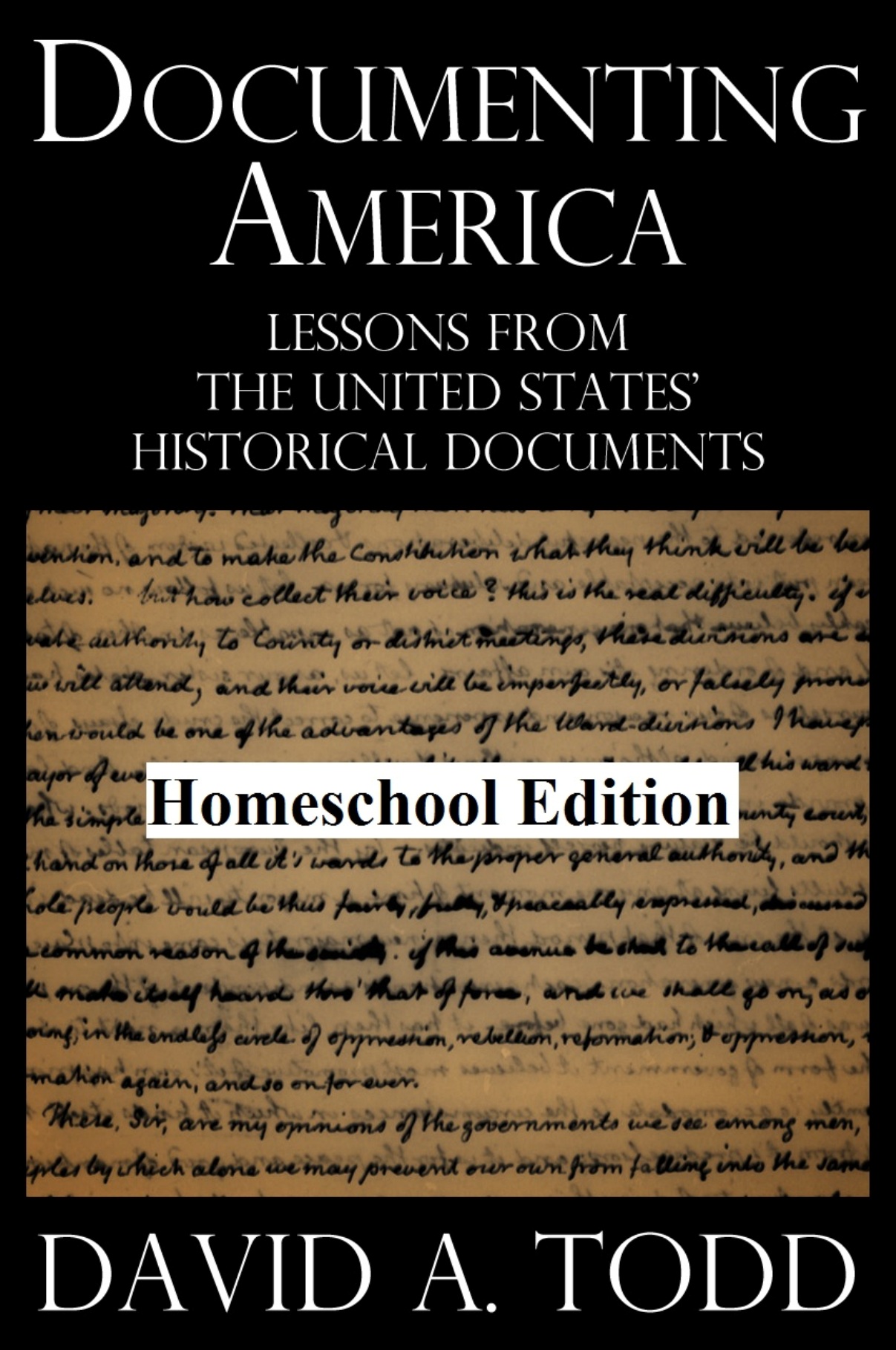
Cover - Corrected 2011-06Another series of book-length works that I’m actively working on is my Documenting America series. I have one book out in it, titled Documenting America: Lesson’s from the United States’ Historical Documents. I published this as an e-book in May 2011. I was still learning the ropes of self-publishing, and had only a short story published. I wanted to get a longer work out, but my first novel wasn’t ready, I didn’t think. I wondered what I could do next, and realized I had this book about half done. So I decided to finish and publish it. I added the print book later that year.

I realized I had something here, something that could be expanded. Let me back up a moment, and tell how I came upon the idea for this series. Back around 1998 we—my wife and I—were shopping at Helping Hands, our local thrift store. I saw in the book section a 20 volume set titled The Annals of America. Published by the Encyclopedia Britannica people, it took documents from US history and re-published them. It only cost $25 for the 20 volumes, so I bought it, at the time not thinking beyond the pleasurable reading it would give me.

Then our local newspaper developed a program for guest editorials. I realized I could take an item from the Annals—all of which are outside of copyright—and build them into editorials. I would excerpt the document, write a little commentary about it, and show how it relates to an issue we deal with today. The problem would be doing all of that in 750 words. But I managed to do that, and had four of these editorials published.

Thinking about jump-starting my then-new publishing career, I thought I could develop this into a regular newspaper column. I began writing more. Then I realized the newspaper industry was dead, or close thereto, and learned that self-syndication is a very difficult path. I had written about seventeen of these editorials, however. These became the starting point on the first Documenting America. I fleshed it out to thirty chapters. It was nice not having the word limitation that newspaper columns had.

E-book Cover full size for Home School EditionI wasn’t ready with a lot of new material, but realized DA could be made into a homeschool text, so I went ahead and did that, and published it in 2012. I haven’t sold many of those, though the original DA is my second highest selling book.

I also realized, as I found more and more sources for historical documents, that there was no end to the books I could write in this style. A friend who read the first one in advance of publication said he couldn’t see what aim I was trying to achieve. I thought about this, and decided it was to help people discover these historical documents, and start reading them. We get history filtered, when we can get it unfiltered in original documents.

I don’t know how well I achieved that with Documenting America and the homeschool edition, but they are out there; people have read them; a few have commented. I’m happy with what I developed. Perhaps someday it will catch on better.

As I said, there’s no end to the books I could write along these lines. Back around 2013 I began work on what I intended to be the second (or third) in the series: Documenting America: Civil War Edition. I was hoping to have this out during the sesquicentennial of the Civil War, which was 2011 to 2015. Alas, I didn’t make it. The busyness of life got in the way. Plus, I was finding it difficult to write the book I wanted to. It was hard to wade through documents, except them, and tie them to an issue of today. I got the book about 40% done, I figure. All events and chapters are identified. A dozen chapters are written, requiring only editing. Four more chapters are started, and three more have the document entered and almost excerpted. My hope is to have this finished and published by May.

After that, who knows? I could take any era in US history and do one of these books. Or, I could base them around key people in our history. Or, I could do them on topics, such as slavery, religion, education, defense, foreign affairs. I played around with titles once, and was up to forty before I had to think hard.

Titles are easy to come by; books a lot harder. Still, I can see myself trying to get one of these out a year, and building up a nice set of books. Will they sell? Who knows? And, I doubt if I’ll ever get forty written. If I did ten or twelve, I’ll feel like I accomplished something.