Category Archives: self-publishing

Putting My Book Sales in Perspective

While I’ve been working hard on my two works-in-progress, my second novel In Front of Fifty Thousand Screaming People and my non-fiction political book The Candy Store Generation, I have neglected many things. Family finances are behind. Accounting for my writing business and Lynda’s stock trading business are behind. Clean-up of papers around the house is behind.

Part of this is I’m not doing any marketing for my published books. Save for the occasional blog post into which I insert a link to one of them, or for the similar post on Facebook, I’m not doing anything to sell books.

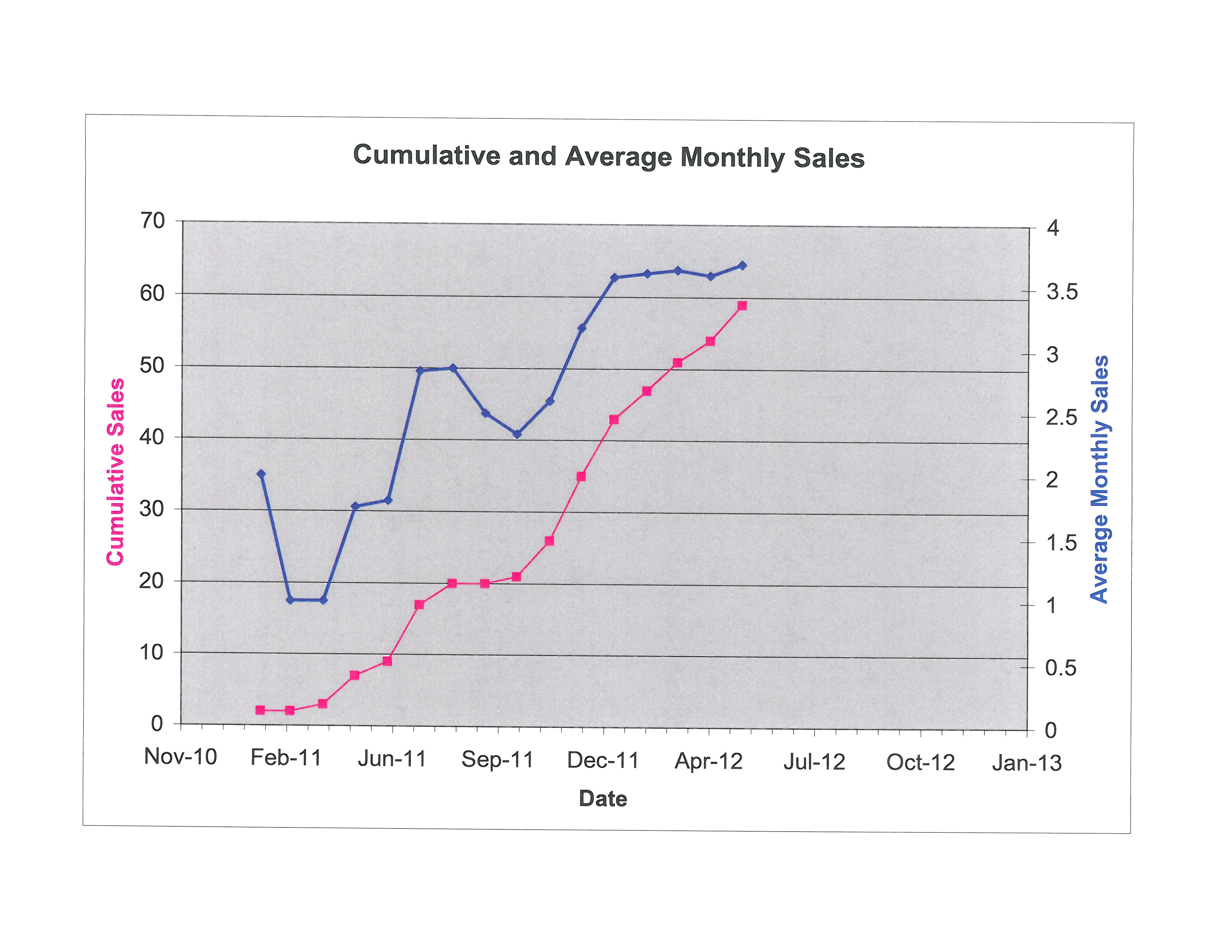
So naturally I anticipate my sales will languish. The chart I insert here shows how my sales have been so far, since I began e-self-publishing in January 2011.

The chart shows book sales continuing, but the average graph shows no increase in sales for a few months. In fact, my sales per month in 2012 are:

  • January – 8
  • February – 4
  • March – 4
  • April – 3
  • May (through 22nd) – 5

That’s 24 sales for the year. Not terribly impressive, is it? Four titles available, three of them since January, and only 24 sales.

To put this in perspective, however, by this time last year I had 7 sales. That was for only four months of actually having books actively listed, and only one book (a short story) for the first three of those months. But still, 24 books vs. 7 books. While I’m not cracking the bestseller lists, clearly something is going right.

Put in this perspective, I have more hope for going on. By August I hope to have eight or nine titles for sale. That’s not really a stretch. I could do it by July if I put my mind to it, but August seems quite firm. If the new items sell at the same rate as the old items (1.2 sales per title per month), I would end up the year selling around 90 books. I’m still not writing home about that.

But everyone who has been in the e-self-publishing industry says that your sales per title per month goes up as you publish more. Sales of one book will help promote sales of another. This is assuming your book don’t absolutely stink. For whatever faults my books have I don’t think they absolutely stink.

Will the bump from having more titles available result in a bump in average sales per title per month? I’m hoping so. Meanwhile, with my third sale this month yesterday of “Mom’s Letter”, now making 11 of that title this year and 20 overall, I’m on a roll.

Don’t feel much like writing tonight

The wife is gone to Oklahoma City, helping our daughter and son-in-law out with those two precious grandsons of ours.

The taxes are filed. I completed my income taxes a couple of weeks ago. I also do my mother-in-law’s taxes, and completed those last night and today made the copies, had her sign them, and put them in the mail. My stuff is filed, and her’s is organized for filing. My tax spreadsheets are in better shape than they ever have been, and a few clicks will put them in the 2012 taxes folder, ready for next year.

So, with the quiet at home, and with my major non-writing projects out of the way, I should be kicking butt on word count. Yet, I find myself unable to write tonight. Don’t even feel like writing this post. I feel kind of deflated over the whole publishing thing. Writing is still a joy, but not having a single sale for about six weeks is the pits. Having blog page views tank is the pits.

Obviously I’m doing something wrong, but I don’t know what. Over at the indie writers Facebook page they are advising me to do “tag swaps”, that is asking people to tag my books with certain keywords and with me reciprocating.  None of these people have read each other’s book, mind you. One writer says, “Please tag my book with the tag “teenage grief”, and the other writer believes that’s what the book is about, and makes the tag. These tags are used in search engines, I guess. If 50 people tagged your book with “teenage grief” and someone searchers for that, your book will pop up as number one.

To me that seems like gaming the system. Yet, that’s what you’re supposed to do, they say, to get noticed by Amazon’s search engines. I have to decide if it’s unethical, regardless of being allowed by Amazon’s Terms of Service. My gut is telling me not to do it.

Today I was served with a subpoena to give a deposition in a lawsuit related to the time I was city engineer (by contract) for Centerton. The deposition is next Wednesday, which isn’t a lot of time to prepare, given the reams of documents and drawings to review for this troubled project. I spent a lot of the day reading old correspondence (2004-2007) on the project, and the problems associated with the project made me sad.

So writing is making me sad today, and engineering is making me sad today. I’d drive down to Wal-Mart and pick up a half-gallon of ice cream and eat the whole thing as comfort food, but that would spike my blood sugar, which would just make me sad.

Oh, and it didn’t help that I was the only one who showed up for writers group last night.

A Balanced Discussion on Self-Publishing

Literary agent Rachelle Gardner made two excellent posts recently about traditional publishing vs. self-publishing; or, as I sometimes call them, publisher-financed publishing vs. author-financed publishing.

6 Reasons Authors Still Want Publishers

6 Reasons Authors Self-Publish

The two posts have generated close to 300 comments. Most of them have been civil. It is a good conversation on the subject.

Long-Term Thinking

Lately, on the writing blogs I read, a number of posts have dealt with the business side of writing. Literary agent Chip MacGregor has had several posts lately about treating writing as a business, and how to generate income streams. His focus so far (I don’t think he’s finished with the topic) has been on things other than books. He’s talked about how a writer can be proactive with seeking and even creating writing gigs that generate income with writing that is shorter than book length. He gives hints of how to beat the bushes and make a living off writing. In other words, he’s talking to someone who isn’t tied to a day job while chasing the writing dream.

Rachelle Gardner, also a literary agent, has addressed business issues of late. Both she and MacGregor are thinking of the author published with a “traditional publisher”, not self-publishing.

The Passive Guy, at his Passive Voice blog, frequently deals with writing business issues, especially from the legal sense. He’s normally more focused on independent authors, although yesterday he had a summary of a post on “The Daily Beast” blog post where author Jodi Picoult gave this advice to new authors: “Do not self-publish.”

Yesterday Dean Wesley Smith published a post on streams of writing income, but focused more . He divided the author’s outlook into short-term and long-term. In the latter he put many, many streams of income, thinking mostly of books. On the short-term chart he showed only three revenue streams, all related to e-book self-publishing.

So what’s writer to do? Those who are most invested in the traditional publishing industry say don’t self-publish. The long-term approach demands that you submit, submit, submit to traditional publishers, and gather a basketful of rejections. Picoult says she had over 100 on her first novel. Those who have turned away from traditional publishing say the long-term approach is to write, write, write. Forget about submitting (which takes a lot of time to research and do). Write as many works as you can as quickly as you can. Polish them to some minimum level of quality that a reader demands, and get them out there for purchase. Over the long-term these will generate income.

It seems that both of these camps are talking from a basis of success. Picoult has been on the bestseller lists for a long time, even hitting number 1. She graduated college in 1987, and her debut novel was published in 1992. That’s a relatively short time to accumulate over a hundred rejections, finally have an acceptance, and go through the year-long (or longer) process of manuscript submission, editing, line editing, typesetting, printing, warehousing, distributing, and the beginning of actual sales.

While I don’t fully discount Picoult’s advice, I take note that she broke into traditional publishing over 20 years ago (her acceptance must have been in 1990 or 1991). The industry has changes since then. Drastically changed. The barriers to entry are so much higher than when Picoult broke through. The gate keepers have increased in number, and the gates are smaller. The literary agents are mainly invested in the traditional publishing industry, which is where they make their money.

Smith and Joe Konrath push the long view of e-self-publishing. They are invested in that. They are also concerned with a writer making a decent wage from their words. They aren’t looking to coach a writer into producing the next bestseller. And they realize a significant amount of luck enters in, whether you self-publish or are traditionally published.

I’m comfortable in my decision to e-self-publish, and have book-length works also available in paper. Would I still consider a deal with a traditional publisher if one fell in my lap? Probably, but I’m not taking time away from writing to seek one.

Legitimate or Illegitimate?

Last night, after trying to balance the checkbook and finding it $52.13 off in an undiscoverable place, I went back to working on my income taxes. Most everything is calculated, with the help of spreadsheets, and I’m at the point of filling out forms. My writing business Schedule C is done, ready to print. On our stock trading business partnership return I had only depreciation to calc then I was ready to fill out the forms.

Last night I did the depreciation—really easy. I filled out most of the form 1065 (for partnerships), but came to a place in the form I’ve skipped over before, but which I decided this year I’d better read the instructions and see if I’m supposed to be filling it out. It has to do with capitalization and balance sheet sorts of things. Since this is just a partnership between me and the wife, I’ve never worried about that. I didn’t feel like reading the instructions last night, so decided to pull off of it, and hopefully do it tonight.

Looking for something to do, I started looking at my Yahoo inbox, and discovered I’d never listened to a webinar I signed up for. It was a free webinar back in January, an interview of Jerry B. Jenkins by Terry Whalin. I found that the links were still good, and since I signed up for it I had access. In less than a minute I had the speakers cranked up and was listening.

Most people know that Jerry Jenkins was author, along with Tim Lahaye, of the Left Behind series. Those books sold over 60 million copies (I think 14 books in the series). Jenkins has written many other books, and claims over 175 to his credit.

Part of the reason for the seminar, and its being free, was to promote Jenkins’ The Christian Writer’s Market Guide for 2012, which he took over from Sally Stuart. I’ve had a copy of this in the past, and it is an excellent resource. I’m not buying it anymore since I’m not submitting books to publishers or agents, and I’m not actively seeking freelance assignments in the Christian market, but anyone who is doing those things in an active way should probably buy a copy of the book.

About 25 percent of the 70 minutes was essentially ads for the book, though they weren’t distasteful. The rest of the time was responding to questions that readers had sent in. Whalin read the questions and Jenkins gave answers from his vast knowledge of writing and publishing. I’m not sure I learned anything new, but it was interesting to listen.

One problem was how Jenkins described the self-publishing business, or rather how he described the “traditional” publishing business, and the implication for what that meant for self-publishing. He encouraged writers to not rush to self-publish, but try long and hard to be published with “a legitimate publisher”.

The writing world has been in a bit of a struggle of what to call publishers who publish most of the books in this country, the kind that you have to submit to and hope they select your work. Some call them “royalty paying” publishers. But that doesn’t really work, because even self-publishing companies pay royalties. Some call them “traditional” publishers. But that doesn’t really work, because what is “traditional” now wasn’t many years ago. In the days of Wordsworth, Burns, Lamb, Irving, and even up to Mark Twain, most writers were self-publishers, paying for the publication through pre-sales as subscriptions. So what is traditional? It changes all the time.

Some have settled on the term “legacy” publishers, I suppose thinking that these companies help a writer to build a legacy. I don’t care for that much, but I suppose it’s not too bad. You could call them “advance-paying” publishers. But advances are starting to go away, so that might not work. You can’t call them “commercial” publishers, because self-publishing companies are also commercial publishers. So, the writing world has a terminology dilemma.

Jenkins called them “legitimate” publishers. Since he said that while trying to steer writers away from self-publishing, that means he must thing self-publishing is “illegitimate” publishing. That stuck in my craw. Jenkins is essentially saying that self-publishing is illegitimate. Maybe that’s not what he means, but that’s what he said.

I don’t view self-publishing as being illegitimate. Sure, for a long time I resisted self-publishing, but I think that was as much a cost thing as it was a stigma thing. Since so many self-published books are poorly written, un-edited, poorly designed, and badly assembled (in the print versions), many people shun self-published books. And rightly so. I’ve read some self-published books that were awful. The story-telling was good, but the writing craft lacked, and the printing quality was certainly sub-par. But I’ve read books published by “legitimate” publishers that had too many typos and had less than stellar story-telling.

I’m not sure where I’m going with this post, other than to tell what happened. Despite this unfortunate use of terms, Jenkins is obviously a successful writer, and to be that you have to be a good writer. Maybe with time he will come to see that self-publishing is not illegitimate. At the Between the Lines blog last week, when the self-publishing vs. whateveryouwantocallit publishing debate came up, one commenter said,

After sending a hundred queries and waiting for months to get back rejections of our work, self-publishing seems the last hope. We do it, not because our work was rejected, but because it was never looked at. A huge wall appears that says, “Keep Out! We have too many queries already!”

Self-publishing is a salvage mission for the disheartened looking for some tiny oasis of hope. Unfortunately, the oasis is most often a mud puddle on a drying sidewalk.

Unfortunately, to some extent I concur with those sentiments. Meanwhile, I’m going to try to think of a name for that other publishing path.
End of the Legacy Deal Dream?

As I alluded in my last post, I don’t have any submittals out with a traditional publisher right now, nor with any agent. I say that based on information given on an agent’s website.

Back in January I submitted In Front of Fifty Thousand Screaming People to a literary agent. I had pretty much decided this would be may last attempt at a legacy deal for this work, and probably for any work. I never met this agent, but we’ve interacted some on-line via blogs and e-mails. Based on these contacts and on her statement of what she represents, I felt that she would be the best agent for this work and for my career in general.

Alas, more than sixty days have passed since I submitted my query letter, and I have not received a response. The agent’s website says that no answer within sixty days means “we aren’t interested”. So it appears she isn’t interested. Maybe my query was poorly written. Maybe her representation needs aren’t what I thought they were. Maybe she has a similar book and author she’s already representing. No problem; a tacit no is a no.

I’m not going to send her an e-mail and withdraw my submittal. If I receive an e-mail in a few days saying she’s interested, I won’t stand on a sixty day statement. But I know that’s highly unlikely.

So I’ve made up my mind: I’m not going to submit it again. I’ve submitted it to one editor and five agents, each saying no. The traditional publishing route says I’ve only just started. I should gather a basket full of rejections, continuing to seek an acceptance. After all, many best sellers have had fifty or more rejections (e.g. Harry Potter, the Chicken Soup series). I’ve only just started. Persevere! Don’t give up so quickly.

I’m not giving up. I’ve just decided to seek a different path to success. The traditional path is broken for most writers. Success that way is still possible, but highly improbable. Recent (last two years) events have shown that alternate paths are available. E-books are quickly overwhelming print books, Internet purchasing grows while brick & mortar store sales stagnate. The ease of self-publishing, both e- and print, causes a writer to more carefully consider all options.

I’m rambling. I’ve said all this before, as have many proponents of self-publishing, and you all are tired of it. I hope to have Fifty Thousand Screaming People self-published by May.

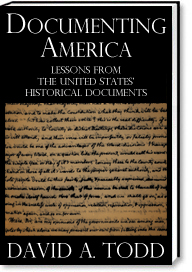
Kindle Sales of “Documenting America”

Last week I posted about sales of “Mom’s Letter,” and how I had some in early March. Since then I had one more, making 3 in March, 6 in 2012, and 15 over all. My total royalties for it are $5.65, some paid, some accrued and waiting for the next payout. So that’s less than I would have received had I placed the short story in a literary journal, but more than I would have earned if it never placed at all. In fact, I don’t know if I’ve earned enough to cover the postage to the places I mailed it to, all of whom rejected it.

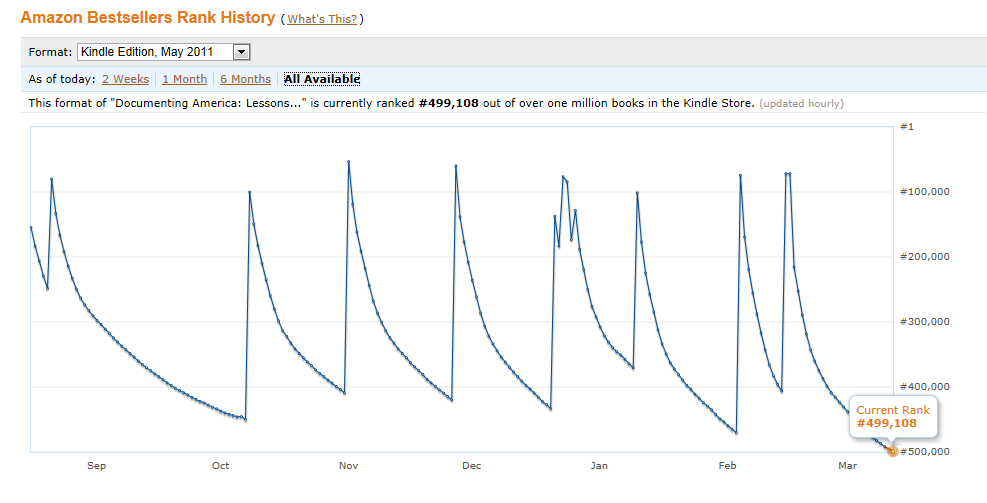
But the subject of this post is really Documenting America. I ran the sales graph for it this morning from Amazon Author Central, for all available data. Here it is.

As I hope shows on this graph, the most recent sale was in mid-February; the highest ranking was 53,121 in early November, and the current rank (as of the hour in which I pulled this chart; it’s updated hourly) is 499,108.

As I mentioned before, I’m not all that concerned about ranking. I’m more interested in sales and royalties. This chart does show, however, the power of a single sale when you’re way down the list.

Someday I’ll have enough sales that I won’t worry about this stuff, or at least won’t bore you, my faithful readers, with it. But it’s new enough to me that I want to do it at the moment.

News Flash: A fellow author just contacted me to say she bought a copy of “Mom’s Letter” today, which isn’t yet showing on the charts. Woohoo!

Finally, a payout

I have recently returned from a road trip to Las Vegas. And no, that’s not where I received the payout. I didn’t gamble at all while there. I attended and presented three offerings at Environmental Connection 12, the annual conference of the International Erosion Control Association. Lynda and I made a road trip out of it, with vacation days wrapped on both sides of the conference, and with stops in Oklahoma City and Santa Fe, New Mexico. On the way back we were at our second grandson’s first birthday party.

No, the payout was from Amazon. While on the trip, I received an e-mail saying that $10.97 of accumulated royalties were being paid to my account,  reflecting sales from the start of my self-publishing with them through December 2011, and that I could expect that amount to be transferred to my bank account within five business days.

Woo hoo! Finally, a payout. I had been uncertain if the threshold for payment was $10 or $20, but I thought $10. Payout is supposed to be two months after you reach the payout threshold, and will come monthly so long as you meet it. That certainly beats the twice-a-year payout of legacy publishers, paid about six months after the end of the period.

So far in 2012 I’ve accumulated $3.48 in revenues, including a sale yesterday. That brings my total revenue earned (from on-line sales and self-sales) to $50.12, with total sales being 48. These are still far from earth-shattering numbers, but I’m not complaining given the limited promotion I’ve done.

Over the next few days I’ll post some more information about my sales, including some nifty graphs from Amazon’s Author Central. Despite being the also-ran among also-rans, I’m a firm believer in being honest.

One Year of Self-Publishing

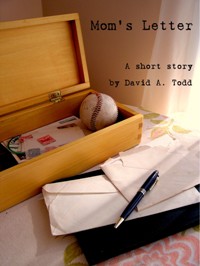
Yesterday was the one year anniversary of my first self-publishing piece. My short story “Mom’s Letter” first went live on Amazon as a Kindle book. Since it’s just a short story, I don’t have a print version available. As follow-ups to this, Documenting America went live on May 2, 2011, and “Too Old To Play” went live on January 26, 2012. Documenting America is also available as a print book.
So what have I learned in a year?

I learned that I can’t produce new works and format them as e-books as quickly as others seem to be able to do. Dean Wesley Smith says the self-published author should try to have something new published every couple of weeks. I don’t have enough hours in the day to do that.

I learned that I have to personally sell just about every book sold. I sold a Documenting America yesterday and mailed it today. Personally sold a couple of copies in January. General marketing has so far resulted in a few sales at best. Targeted group marketing has resulted in a few sales at best. I don’t know how long this will go on and when, if ever, these catch a buzz and take off. Maybe when I hit some number or titles that result in critical mass for sales.

Requests for people to review the books have resulted in zero reviews. I gave a few copies of DA away to people who said they would read it and write reviews. So far that has resulted in no reviews and, I assume, no reads. Any reviews that now appear on Amazon are unsolicited. The few contacts I made to web sites to review DA have gone unanswered. 100% unanswered. Ah, well, no one said this business was easy. At times I think I should just stick with engineering.

I learned that I’m not hitting the best seller list any time soon. Here’s where my books currently stand on the Amazon sales list (I won’t call it the “best seller” list).

  • Documenting America – Kindle: 411,488
  • Documenting America – Print: 4,107,954
  • Mom’s Letter – Kindle: 549,047
  • Too Old to Play – Kindle: 427,066

But I do have some sales. So far, here’s what I’ve sold, electronic and print.

  • Mom’s Letter – 12
  • Documenting America – 30
  • Too Old To Play – 3
  • for a total of 45

So, I’m not giving up. I have a work-in-progress that, if I finish, I self publish. I have my first completed novel waiting only on formatting and a cover. I have my second completed novel now on its 36th day with an agent. If it’s a pass, I self publish. And the ideas still flow.

One Book at a Time

Today I attended a meeting at the City of Centerton, Arkansas—a simple preconstruction conference for a small project at First Baptist Church in Centerton, to add a baseball/softball field on vacant land next to the church. The contractor is a man who used to work for us; the engineer is one I’ve worked with for a long time.

As I drove to the meeting, I saw that I had two copies of Documenting America in the pick-up. When I got to City Hall I took a copy of the book. Upon seeing my contractor friend, I asked him, “You got a spare $10.90? I think you’ll like this,” and I handed him a copy of the book. He said he would take a copy, but that he didn’t have any money on him at the moment. His coworker also looked interested.

It was during the meeting that he said he didn’t have the money right then. So I took the book from him and gave it to the engineer, saying, “Maybe you’d like this.” She seemed impressed that I’d published a book, and said she wanted to buy one for her husband. When I told her it was available as an e-book for 1/5th the price, she said that’s how she’d buy it. I hope she follows through.

So I gave the book back to my contractor friend, and said he could pay me later. I kiddingly reminded him that I have to sign off on the project, and that he needed to pay me before I did the final inspection.

That’s the way book sales seem to go these days: one sale at a time, mostly at my efforts. Writing is a hard business, the sale of one’s writings harder yet. Yesterday “Too Old To Play” went live at the Kindle store. So far I have two e-sales of it, and it stands about 58,500 in the Kindle store, but will sink fast unless there are more sales. I’m okay with the start. The two sales probably came from people I know, somewhere, who bought it in response to my notices on my blogs, on Facebook, at Ozark Writers League, or at Christian Authors Book Marketing Strategies. I’d be shocked if they were bought by strangers who stumbled upon the title at Amazon.

So my sales and revenue for January 2012 stand at 7 and $6.36 respectively, with 3.5 days left in the month. I’m okay with that. I might get a boost on Monday Jan 30, when “Mom’s Letter” will be the featured short story at the Short Story Symposium. That may generate some sales, and if any of those buyers go to my Amazon page and see I have another short story in the series…who knows? I reached out to TSSS in late December, and am pleased it worked out.

One book at a time. That appears to be the rule in these early days in the brave new world of eSP—e-self-publishing. Will it ever move beyond that? I hope so.