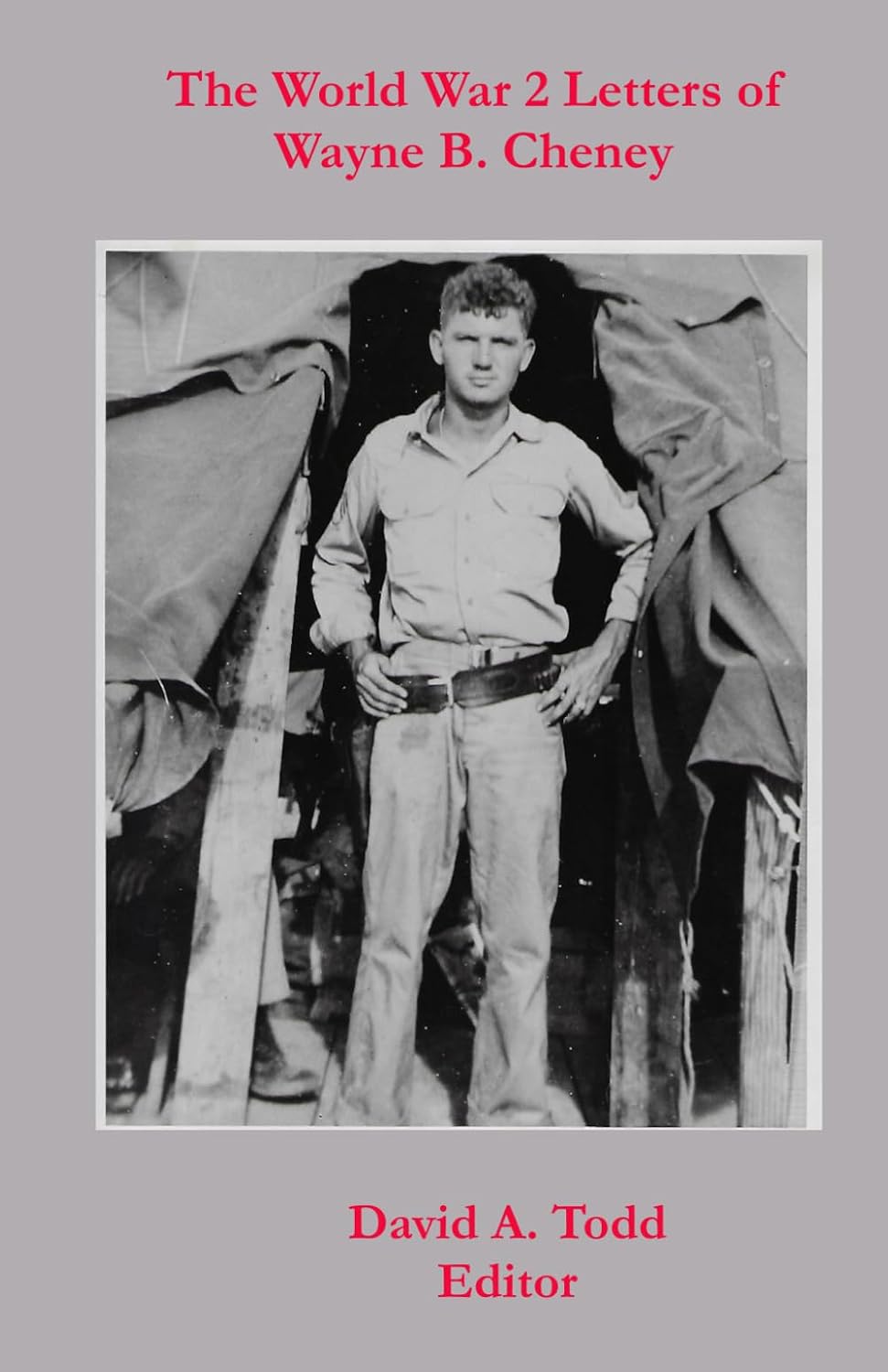
Last week, actually around June 13, I finished my latest book project. It is The World War 2 Letters of Wayne B. Cheney. He was Lynda’s dad—my father-in-law, of sorts. He and Lynda’s mom divorced long before I came into the family.
Like many soldiers, Wayne wrote letters home, and received many in return, both from family members, townsfolks, and other armed forces personnel. He wasn’t able to keep most of the incoming letters, given how his base kept changing in the South Pacific. But his parents kept most of the ones he wrote home. When Wayne died in 1996, we brought those letters to our house. There they sat in a green plastic bin, moved from Bentonville to Bella Vista in 2002.
It was about this time last year that I decided the time had come to do something with them. I decided to transcribe them, put them into book form for easier reading by family members, then donate the letters themselves to some worthy institution.
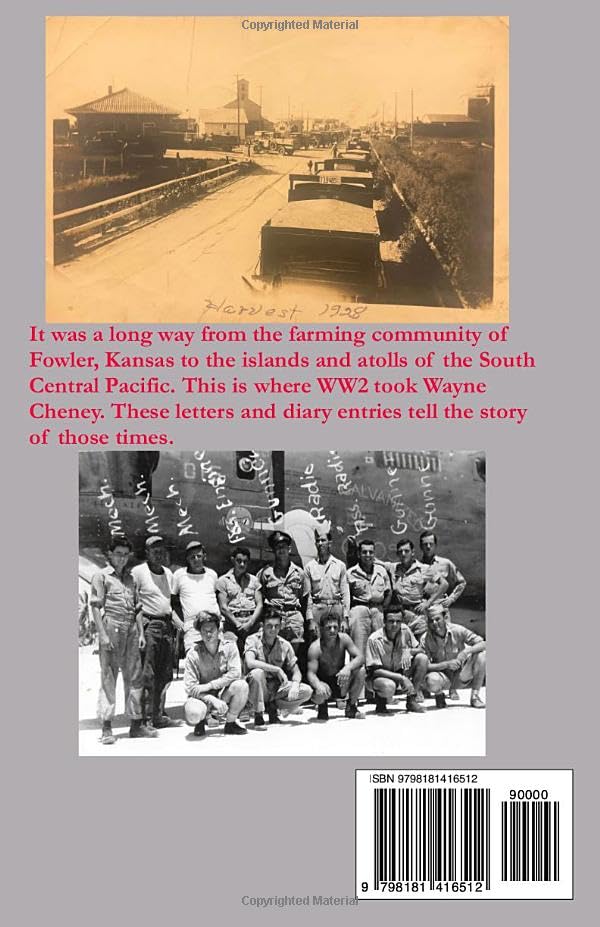
Wayne enlisted in the fall of 1942 at age 18. He was hoping to get on the ground crew in the Army Air Forces, but instead found himself in school to become an air gunner. He was assigned at nose gunner in B-24 Liberators and saw action in the South Pacific. He was either based on or participated in bombing missions over some of the famous islands in the war history, such as Kwajalein, Eniwetok, Truk, Tarawa. His time there was over when the war had moved on to Iwo Jima and Okinawa.
In addition to the letters, Wayne wrote a war diary. He transcribed parts of this over the years, but only the parts dealing with actual combat. He mixed that with later explanations of what his modern impressions were about what was going on in 1942-1945. I did a full transcription of the diary, interspersing the entries with the letters.
Actually, the letters are not exciting stuff. Subject to forward base censorship (and occasionally running afoul of the censors), he couldn’t write a lot about what he was doing in the war effort. So there was lots about doing laundry, rigging something in his barracks, who he received letters from, talk about what must be happening on Kansas farms.
This book is not a commercial project, and I doubt anyone except immediate family members will be interested. Maybe someday a great-grandkid will ask about what their ancestor did in that war they covered in history class and someone will pull a copy of the book off the shelf. But should anyone else be interested in this small piece of WW2 history, it’s available on Amazon.
Fair warning: I have not yet received my proof copy, so I haven’t been able to go through an actual book to make sure the photos and print came out okay. That’s because I had the proof copy sent to the wrong address. Still waiting for it to be forwarded.