A while back, I posted about reading The Allegory of Love by C.S. Lewis and having a difficult time with it. In that post, I said I was about 1/3 through the book but was setting it aside for a while due to not really getting anything out of it. I put it back on the shelf, for it to await my picking it up again.
I did that very thing a couple of weeks ago, and read more or less the second 1/3 of it. While I maintain it’s clearly an academic book not intended for an engineer like me, I have to say I had an easier time with this 1/3 than the first 1/3. Lewis had moved in his discussion from works embedded deep in the Middle Ages, with a generous sprinkling of much older works known only to the most anal of academics, to works of the later Middle Ages to almost of the Renaissance. And from authors heard of only by experts to authors we of the 21st Century might actually have heard of.
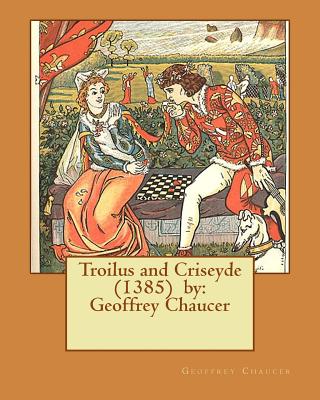
People know about Chaucer. I’ve actually read some of the Canterbury Tales—not in the original olde English, but in a modern “translation.” But Lewis did not deal with the Canterbury Tales in this book, but another of Chaucer’s long works, Troilus and Criseyde. This is a poem dealing with courtly love, right along with the subject of Lewis’s academic work.
As it turns out, I’ve read part of Troilus and Criseyde, back in the days when I was actively writing poetry. I don’t remember much about it, didn’t blog a review, and don’t remember if it’s still on one of my bookshelves. But at least I had heard of it, which to me was progress. Here’s a sample of some of Lewis’s analysis in the part I most recently read.
Successful panegyric is the rarest of all literary achievements, and Chaucer has compassed it. I believe in the ‘gode faire Whyte’, as I have never believed in Edward King, or Arthur Hallam, or Clough.
Not easy to understand, but easier than what one encounters in the earlier parts of The Allegory of Love.
Once again, having reached a stopping point but not wanting to abandond Lewis’s book, I put it on the shelf to await a more opportune time. I picked the next book for reading, which turns out not to be what I expected. But I won’t blog about it until after 504 pages set in 10 pt font.