Book Review: All The King’s Men

This isn't the cover to the edition I read. Surprisingly, I couldn't find an on-line photo of that cover.
This isn’t the cover to the edition I read. Surprisingly, I couldn’t find an on-line photo of that cover.

It’s probably a dangerous act to review a Pulitzer Prize winning book. But that’s what I’m going to do. Some years ago my son gave me a copy of All The King’s Men by Robert Penn Warren. Published in 1946, it won the Pulitzer in 1947, and was made into a movie in 1949 and again in 2006. I haven’t seen either movie.

Alas, I didn’t like the book. I would almost say I hated it, but that would be too strong. If I were going to review it on Amazon, I’d rate it only 2-stars.

Sacrilege! This book was judged by a panel of experts to be the best novel in 1946. On the back cover of the copy I have, it says many judge it to be the best novel ever on American politics.

Maybe so, but that doesn’t mean I have to like it. The book opens in a very complicated manner. Jack Burden, the protagonist, is working for someone called “Boss.” We learn Boss is the governor of the unnamed Southern state, Willie Stark. Willie was a small town lawyer who became governor. They are being driven by a driver called Sugar Boy, a stutterer who seems to be uneducated, but can drive fast and expertly. The present in the book is sometime during the Great Depression, when Willie is somewhere beyond his first term as governor. Those in know say Willie Stark is patterned after Huey Long, once governor of Louisiana. What I know about Long, I can see that in Stark.

Herein lies my biggest problem with the book. What is the time frame? It starts in one year, jumps back to some time I could never figure out, jumps forward but not to the time it started at, jumps back again but not to where it did the first time. By the end of the first chapter, which is at least 60 pages long (as are all the chapters in the 650 page book), I was so confused I set it aside, not sure if I would pick it up and read it or not.

In the author’s defense, I must say that I often read in distracting circumstances, and I did so for most of this book. The TV is on. The phone rings, and even if it doesn’t produce a conversation, it takes me out of the reading for a short while. People are wanting my time, I have a to-do list that’s so long I know I shouldn’t be reading, etc. But that first chapter…I felt as if I was on a rollercoaster, or the Wildcat back at Rocky Point Park, a ride I hated—and never rode it again after the first time. As an author, I understand how flashbacks are effective, and flash forwards are too. But backwards—half-forwards—half-backward—somewhere I don’t know where…well, this just leaves me with whiplash, and a queasy stomach.

This was especially so because of the long chapters. I can’t dedicate a large enough chunk of time to reading to read a 60 or 70 page chapter in one sitting. I’m lucky to get 10 pages done, and I usually set that as an evening’s goal. But with the first ten pages leaving me hopelessly confused, the next ten pages not clarifying anything, and the third ten leaving me wondering why I was reading it, it’s a wonder I kept on.

Often, when I finish a book, I go back and reread the first chapter. I’ve found that authors often have clues in the first chapter as to what will come. Or, something confusing in the first chapter will have been clarified later, and by re-reading it I have a better understanding of the book as a whole. I should probably do that with this one: if not the whole first chapter, at least the first twenty or thirty pages. But, I don’t think I have the strength.

I appreciate the gift of this book, but it’s not a keeper. Before I toss it into the garage sale pile, I’ll check with my son to see if he wants it back. If not, goodbye Willie and Jack. Goodbye Sugar Boy, and love interest Ann Stanton. I’d like to say it’s been good knowing you, that I was entertained and enlightened by your antics. But I wasn’t.

The Ecology on the Lot Next Door

We have a rock yard, with two maples and one oak, and with forest on three sides. Leaf removal is never-ending for two months in the fall.

We live in a mostly forested area. The hills of Bella Vista, they tell us, were once cleared to allow for cattle grazing. However, once the land was bought up for residential properties (seen as a retirement community), the forest came back. If a lot is vacant, the forest will soon take over.

The part of Bella Vista I live in is mostly unbuilt. The hills are steep; building is expensive; the space between lots, back to back, is enormous. Hence, even if every lot were built on, the forest would be in the gullies behind. From our back lot line to the back lot line on the other side of the gully is probably 800 feet. No one’s built on those lots yet, so we look out our back deck onto endless forest and hills.

That big oak has been down for around 10 years. Too big to saw for wood, it rots away in it's ecology.
That big oak has been down for around 10 years. Too big to saw for wood, it rots away in it’s ecology.

On our street, only four lots out of about 28 have been built on. South of us are three empty lots before the next house. North of us is one lot before another house. Across from us…well, there are no houses on the other side of the street at all. So we are surrounded by forest.

On the lot north of us, about 50 feet from our lot line, a large tree fell over about 10 years ago, a tree maybe 60 inches in caliper (20 inches diameter). I should say that the whole area has mostly second growth forests due to the prior clearing. Or, maybe it’s just how the soil is. It’s very thin topsoil due to the steepness of the slopes. Rocky. Not the type of soil you did in to plant a tree. So the trees grow easily, but never develop strong roots. The average life of a tree in these parts is probably 20 to 30 years. Then, a good windstorm will knock it over, and the saplings will grow and take it’s place. This is what happens all around us, and the woods are littered with deadfall, typically trees not even 8-inches diameter.

But, occasionally, a tree will be able to take root and live to a good age. We have a few older ones, especially along the route the old county road followed before the developer moved in. This old tree lived to well over 60 years, I reckon. But when it fell, it left a crater behind—not from the impact of falling, but from where the roots had been. A hole maybe four feet deep and eight feet across, on the slope, with the tree roots and soil between them up in the air.

The root crater is already hard to see, being filled with leaves—not naturally filled, but deliberately filled, by me.

So what will happen to this small tree crater in a world without human activity? Rainwater will collect in it, reducing the run-off down the slope, reducing erosion. Slowly the dirt will detach from the roots and fall to the ground, making a sort of dam on the downhill side, where the tree fell. This will further reduce run-off. Forest animals will have a source of water as the area dries between rains. The crater will be a leaf catcher, and slowly fill in. The tree trunk will rot away, giving habitat for snakes, bugs, even smaller bugs, and who knows what. With that large of a trunk, it will be around a long time. In the crater and near the downed trunk will be a good place for new trees to get their start.  One last thing: The hole in the leaf canopy left by the tree has resulted in more light getting through to the forest floor, and much more underbrush is growing in this area.

But, enter mankind—me. My first thought when the tree fell was: Firewood! However, sawing a 20-inch oak trunk is no fun, even if you had a chainsaw. Plus, I don’t have a wood fireplace and hence have no place to burn, except maybe in a fire pit, which I don’t have at present. So, I let the trunk stay. When a new neighbor moved to the house on the other side of the lot, several years after it had fallen, he asked me if I had any claim on the tree, because he would sure like to cut it up. I told him it was his, but he never has.

The thing I am doing, however, is disposing of leaves in the crater. We have two maples and one oak in our front yard, and thus have many leaves to take care of in the fall. I blow them downhill until the piles are too large to blow, at which time I pick them up and move them to the woods. A few years back my wife suggested we not just dump them right next to the yard, but move them aways into the woods to reduce the chance they’ll blow right back on us. This sounded like work to me, but not a bad idea, so the leaves go off into the woods: about 150 feet on the lot to the south, or 50 feet on the lot to the north, right to where the downed tree is.

For the last four years I’ve been taking the leaves to the crater and dumping them in it. One Saturday I’ll fill the crater to overflowing. The next Saturday they will have settled under their own weight, and I’ll fill it to overflowing again. Week after week, for two months, I fill the crater. Now, after four years of this, the crater is pretty much gone, filled in by man, accelerating the natural process. At the height of leaf removal season, the crater is so filled I dump lots of leaves right around it, on the underbrush. Once I started doing this, the underbrush doesn’t grow as much as it did for a few years, having less access to sunlight.

Obviously, I’m causing the crater to fill in faster than natural processes would. Those leaves are being converted to new soil, year after year. This year, or perhaps next, I will declare the crater filled. No more water catching. No more water source for forest critters between rains. Less underbrush creating root structure to hold the soil in place.

In other words, my leaf depositing is speeding up natural processes. It seems to me I’m not doing anything worse than that. The forest will be essentially unchanged years from now when I lay down my leaf blower and rake. A few critters may have to look elsewhere for water. Thus their contribution to the local ecology will be reduced. We’ll see less deer and chipmunks.

All in all, this aging environmentalist doesn’t really see a problem with his ecology-changing activities. I hope I’m not overlooking something. Maybe someday, I’ll figure out how to make a book or story about this.

Hard to get Blogivated

Yes, look at the title. I created a new word: blogivated. Here’s what I propose for a dictionary definition:

blogivated (n): anxious to write a blog post; full of ideas for blog posts; willing to use valuable time to write blog posts

Today, I’m not very blogivated. Actually, I should say tonight I’m not very blogivated, because I’m writing this on Thursday evening to post Friday morning.

This is how the final print cover came out. Better than the draft, I think.

Why not, you ask? I could say busyness is distracting me, and it would be true. As I’ve written recently, I’m super busy at home, and a bit busier than normal at the office. In situations like those, it’s hard to concentrate on blogging.

And yet, to some extent the dam has broken. I feel a number of things have broken free, and I’m able to see through to a less-busy time. Some of these have been writing related. As I reported before, I was able to pull together the print cover for Headshots. It was accepted by CreateSpace on the first submittal; I ordered my proof copy, which hopefully will be here Friday. Assuming it’s good, I could authorize publication tomorrow. That would be great.

First cut at the e-book cover. It's better than I expected for a first cut. I think I'm learning.
First cut at the e-book cover. It’s better than I expected for a first cut. I think I’m learning.

In trying to decide what to do next, I worked some on four different works over the last month. I wrote and typed a few pages in Adam Of Jerusalem, the prequel of Doctor Luke’s Assistant. I pulled together the Danny Tompkins stories together into one volume, edited them, and on Thursday even pulled together an e-book cover. It’s not final, but it’s actually ahead of schedule. I worked a little on a genealogy book, titled Stephen Cross of Ipswich. I’m sure I’ll publish it, and after the work I did this week on it, I have an idea of how much effort it’s going to take. I also worked a little more on Thomas Carlyle: Chronological Composition Bibliography. I have no immediate plans for this one, but will hopefully, someday, publish it, perhaps next year.

All of that is progress. I still have many things to do. Such as purchasing a newer van. Such as selling my pick-up. Such as replacing our dishwasher. Such as making trips to OKC and KC in the next month. Such as preparing to teach Life Group this week. Such as filing financial papers, on which I’m a bit behind (though checkbook and budget is up-to-date). Such as arranging for repairs in The Dungeon from the faulty dishwasher before we quit using it. Yes, plenty to do, still.

But the real answer as to why I can’t get blogivated right now is I feel like my blogging has been fragmented lately. I have had, or perhaps I should say I haven’t taken time, to plan out some posts. I try to stay three to four posts ahead in planning what to blog about. Right now, and for the last month or even longer, I’ve had no plan. The day before Monday and Friday comes, and I have to think about a blog post and write it. As you know, some days I’ve not done a real post, just a “sorry for not posting today.” I should have said, “Sorry for not being blogivated today.”

Tonight, when leave The Dungeon (remember, I’m writing this Thursday evening), I believe I’ll work on a blog schedule. Just knowing what I’ll be posting and when should help me to be blogivated more than I am now. Yes, that’s what I’ll do.

Still Learning Book Covers and G.I.M.P.

A print book cover is much more difficult than an e-book cover. You have to consider the quality of the graphics, and having things in exactly the right place is extremely important.

As I’ve mentioned before on the blog, I hate dealing with book covers. I should just hire this done, to someone with more artistic talents who is also learned in graphic arts programs. Alas, I don’t want to have my writing activities indebted to the family budget, so I’m on a pay-as-you-go basis. Right now, that means that, with a few exceptions, I make my own covers.

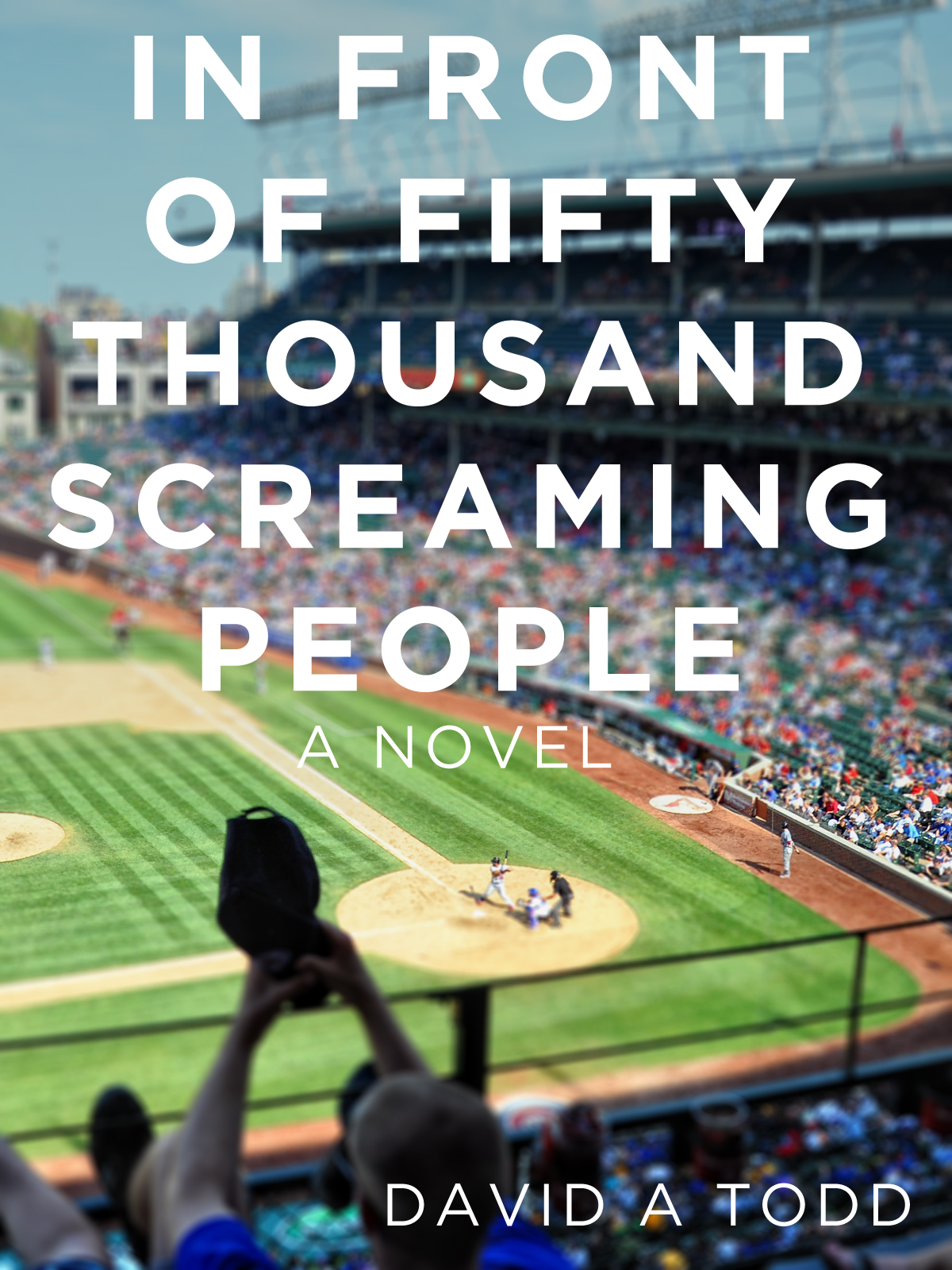
Here's the print book cover for "In Front of Fifty Thousand Screaming People". I want the "Headshots" to be as good as this, which was a cover I did based on the e-book cover my son did.
Here’s the print book cover for “In Front of Fifty Thousand Screaming People”. I want the “Headshots” to be as good as this, which was a cover I did based on the e-book cover my son did.

But I hate it. That also means I have to use a free graphics arts program, rather than expensive programs such as Photoshop or Illustrator. That means G.I.M.P. I believe I’ve also written about hating G.I.M.P. I hate it because it is difficult to use. That’s partly because I don’t understand some of the graphic arts terms, but also because the documentation is poor. I’ve found some third-party help with G.I.M.P., such as article, or videos on YouTube. But, to be honest, they all do their thing by assuming the reader/watcher know more than I do. They’ll say “after you’ve selected the layer” or some such thing, assuming I know how to select a layer, when I don’t. It’s maddening.

Here's the e-book cover for "Headshots". I wanted to improve the font some, and, of course, add the spine and back cover, making it all the right size in the right place at a good quality.
Here’s the e-book cover for “Headshots”. I wanted to improve the font some, and, of course, add the spine and back cover, making it all the right size in the right place at a good quality.

In terms of creating the cover for a print book, however, I’m starting to get more comfortable with the whole process. I didn’t say I was proficient, or that I enjoyed it, or was good at it; just that I was more comfortable. I have come to learn the basic steps needed: figure the exact size of the cover wrap; create a canvas that size; create a “size overall” layer; create a front cover layer; create a back cover layer; create a spine box layer; position these where they need to go; add words and graphics to each. Piece of cake, right?

Several times I’ve gotten something to work, but didn’t really know how I did it, and thus couldn’t replicate it for the next cover, or even for another part of the cover I was working on. For the last cover I asked one of our landscape architects at work to help me to understand what I had to do to move layers into the right place: centered, left, right, whatever. We got it to work, but didn’t really know why—or at least I didn’t.

Here's what I've got so far. I still need to improve the font on the front. But, overall, not bad. I'm not unhappy.
Here’s what I’ve got so far. I still need to improve the font on the front. But, overall, not bad. I’m not unhappy.

Last Friday, I was working on the cover for the print edition of Headshots. I want to have it out for the end of baseball season, which is fast approaching. I had begun this cover about three weeks ago, but got bogged down and left it. I started on the noon hour, but had little luck, so was continuing into the afternoon (guess I’ll charge that time to vacation). I went to the break room for coffee, and ran into our corporate CADD trainer, who I supervise. He asked how it was going, and I said “Great if I could figure out how to use G.I.M.P.” He said that was something he could help me with.

Back to my office we went, and I said I was having trouble 1) placing layers where I want them, which G.I.M.P. calls “Align” or “Distribute”; and 2) filling a layer with color. He showed me how to do the latter, though I don’t think I remember it today; I’ll see at noon. But he couldn’t figure out the G.I.M.P. commands for alignment. He’s a wiz at graphic arts, so I didn’t feel too bad.

But while he was there, I tried something. I wanted to center the “spine box” layer on the “overall size” layer. That assures that the spine will be in the right place. I tried something. I made the Align command active. Then I chose “Active Layer” as the target. Now, the program doesn’t say that drop down menu is to select the target, but when you hover the mouse over it, the words “Select target” appear. Then I went to the list of layers on a side panel and chose “Overall size”. Then I moved the mouse over the spine box on the canvas and clicked it. At that point the arrows in Alignment command box went from grayed-out to active. Aha! I clicked center, and poof! the spine box moved to the center of the overall size, just like magic.

I quickly wrote those steps out, so I wouldn’t forget them. Then I did “undo” several times, until the spine box was back out of position (I saved the file first). I looked at the list of instructions I’d written, and followed them. Again, the spine box moved to the right place. It didn’t seem like magic that time. It seemed almost logical, and replicatable.

I have a long way to go on creating covers. The graphic arts program is the mechanics. I’m slowly but surely getting to know that. The whole artistic thing—what looks good, what looks professional, what will attract a buyer to a book—is something I have to still work on. But I’m getting there. I’m almost at the point of knowing enough to be dangerous.

Getting Things Done

It’s really hard for me to sit down and write when I have other things to do. I don’t really want to bore my readers with all that I have to get done right now, but it’s a substantial list. Some of them major. There’s one, two, or even possibly three weekend trips coming up. Although, my wife has said she really doesn’t want to go to the 50th reunion of her high school class, so maybe scratch one of those trips—unless she changes her mind at the last minute.

The schedule for one trip is finally set. Although, we have to make arrangements for Lynda’s mother, who can’t really be left alone much any more. We started the process, but haven’t heard back yet. I’m formulating a plan b, just in case.

I’m still dealing with the IRS over the 2015 tax year and the ID theft we encountered. I have more than $1000 refund due that hasn’t been paid. I thought this was taken care of more than a year ago. Alas, not. I started the ball re-rolling on Wednesday, and it looks like maybe this time it will happen, and I’ll have my money before the end of the year. I hope so, because…

…getting a new car is another big thing we need to do. I started looking in mid-August, which got Lynda going, since she was afraid I’d make a deal on it, a deal she probably wouldn’t like. We are in agreement on what to get (though she’s a bit more restrictive than me), and which old vehicle to trade or sell. So this ball is rolling. Fortunately, we have a spare vehicle right now, and can afford to wait a while if needed.

Then, we were having a leak from the kitchen down to The Dungeon. I couldn’t tell what it was, or even where it was since there aren’t any pipes above where the leak was. I had the plumber come out Tuesday, and he isolated the problem as the dishwasher. It’s 30 years old, and we knew we were going to have to change it. Today I went to Lowe’s, where we got the replacement fridge from, and began the process of looking. The cost won’t be as bad as I thought it might. Although, there’s that finished ceiling to repair.

Add in a few things such as the genealogical research I’m obsessed over right now (soon to be at a wrapping up point, for now), trying to finish reading a difficult book (and finally being down to near the end of it), being asked by a friend to read another difficult book (and making early progress on it), trying to get an e-book ready for publication, and stumbling on making the print book cover (but maybe having figured out a way), and four or five other things, and, well, I just haven’t felt like writing.

Wednesday I felt awful. I think it was tension building up over all these balls needing to be pushed or juggled, one or the other. Getting the IRS thing taken care of Wednesday didn’t do much for me. Even getting the one weekend trip scheduled and the other (potentially) cancelled didn’t do much. I was dragging at work and at home. Finally, yesterday, getting a couple of minor things done, things not even significant enough to mention here, and the weight seemed to lift off me. I also stopped by Lowes and started looking for the dishwasher.

Just as it was an accumulation of things-to-do that built up, causing the stress, so it was the adding up of getting a few things done that relieved it to a large extent. I feel like I can see light at the end of my tunnel.

I’m still not going to write yet. I want to get the one book finished, and the e-book published in print, before I’ll spend any significant time on writing. But, at least last night and today, I know I’ll get there. It also helped to sell a couple of books yesterday!

I Moves and Clicks the Mouse

In looking back on my posts, I see it’s been quite a while since I wrote anything about research. When I did, it was mostly in connection with books I was writing. Yes, books do require research, even if you’re writing about a contemporary topic, but certainly if the novel is set somewhere in the past, or if you’re writing non-fiction. In actual fact, however, I see that some of my recent posts included discussion of research, so I’ve gone back and edited their categories to include it.

My research of late, however, is of a different kind: genealogy. I finished research for Documenting America: Civil War Edition in June. Before that I had research for Preserve The Revelation, which I finished around April, while I was writing it. Both of those involved pleasant research—research that was fulfilling.

But I never completely give up on my genealogy research. I’m always looking for that elusive ancestor. Several posts ago I wrote something about this: how I never could get information about my maternal grandfather; about how I thought I had finally found him. I still haven’t gone the route of seeking confirmation through DNA testing. That’s something I will eventually do. Meanwhile, I’m 99.99% certain that the man I found is indeed my grandfather.

Found, not in the sense of him being alive, but in the sense of learning who he was, where he was, and confirming what little family lore I had. That has involved research. Since I’m not in a position of traveling, my research has been on the internet.

As I mentioned many years ago, research has tentacles. You research one thing and find it or learn it, but that only leads you to look at two other things. Then research and find those two things, and suddenly your research to-do list have five more things on them. Except, since it’s all a matter of looking for reliable sources on the internet, and steering away from unreliable sources, the research tends to go so fast you don’t even mess with a to-do list. You just move the mouse and click.

As I said, my current research has mostly to do with my grandfather. Born in 1882 (based on my research; some sources say 1881, some 1883; the most reliable say 1882), I’m finding tons about him. One of his sons, a half-brother to my mother, had written a family history based on interviews with his dad (my grandfather). One interesting item was that he had been in the militia in Canada before going on active duty in WW1. This family history, however, said that he was called up with the militia to take part in a peace-keeping action due to a violent strike, this taking place on Vancouver Island. The town he mentioned was Ladysmith.

Could this be true? If grandfather told it to his son, you’d think it would be true, end of story. Confirmation is nice, however, so I decided to look for history about this peace-keeping action. Who knows but that his name may show up in some official record. I usually start with Wikipedia. Much maligned, I find it is mostly reliable. Like any source, confirmation is always advisable. I looked for such things as “Ladysmith-strike” and “Canada strikes 1913”, and found nothing. I did find a page for Ladysmith, however, that included this entry:

Ladysmith has been notable in the history of the labour movement with significant unrest and violence during the major strikes of the 1913–1914 era. During this time militia were dispatched to put down unrest and protect property.

That’s sort of confirmation, but it was given in Wikipedia without any source citation. I decided to look for newspapers. Several large databases of digitized newspapers exist. They are all behind paywalls, and I have no access to them. I find, however, that some of the databases give a snippet of text with them. I hoped for that for a 1913 newspaper on Vancouver Island. I remembered I had already found one newspaper, the full edition as picture and text, at archive.org. I found it while searching for grandfather’s third marriage, which I found in a newspaper out of Victoria BC. Might more of it be on-line?

I went to my browsing history, found the paper I’d already seen, and brought it up. Following links at archive.org, I discovered that many editions of the newspaper on-line, including all issues between 1912 and 1918. Bingo! I searched through 1913, and found the stories about the labor strike (International Mine Workers, representing the coal laborers), the violence associated with it, unsuccessful police attempts to quell it, and finally calling up the militia in early August 1913—exactly the time given in my uncle’s family history.

I have much more to read in these newspapers, including going back to 1911 for some items. This will take much more time than I have right now. Hopefully these newspapers will still be there when I retire.

But I had another success. I wanted to find out more about grandfather’s first wife, the one who divorced him before he married (maybe married, that is) my grandmother in St. Lucia during the war. After many mouse movement, many clicks, and following my intuition, I found information on her birth, found her in the census, found a marriage index for her and grandfather’s wedding, found evidence that they were indeed divorced during the war (just as grandmother told me), and even found a record of her death, in Taft, California, in 1938.

I discussed this with my half-sister, who seemed surprised that I had been able to find that much. I told her “I just moves and points the mouse and the magic happens.” Sometimes I think that’s true. To some extent, it might be my ability to reason things out, anticipate the most likely outcome, and focus on that till I find success.

For whatever the reason, I’m glad for it.

Lazy on Labor Day

Yes, it’s true. I’ve had a very lazy weekend. We’ve been watching television and reading. We dog-sat for our neighbors, so I did a fair amount of walking with the little fellow. I did almost no writing, save for a page or two of manuscript in my family memoir. Yesterday was church. Though they cancelled life groups for the day, I didn’t get the memo, and so prepared to teach and came on time. About eight other people didn’t get the memo either, so we had a combined class.

Today we went to two auto dealerships, looking at newer used cars. We are ready to trade in my truck for a late-model van. That will become Lynda’s vehicle, and I’ll drive the old van until it wears out. We saw some nice cars. Just too early to pull the trigger today.

Back to routine tomorrow. I’m ready for it.

Thinking Of My Next Writing

What to write next?

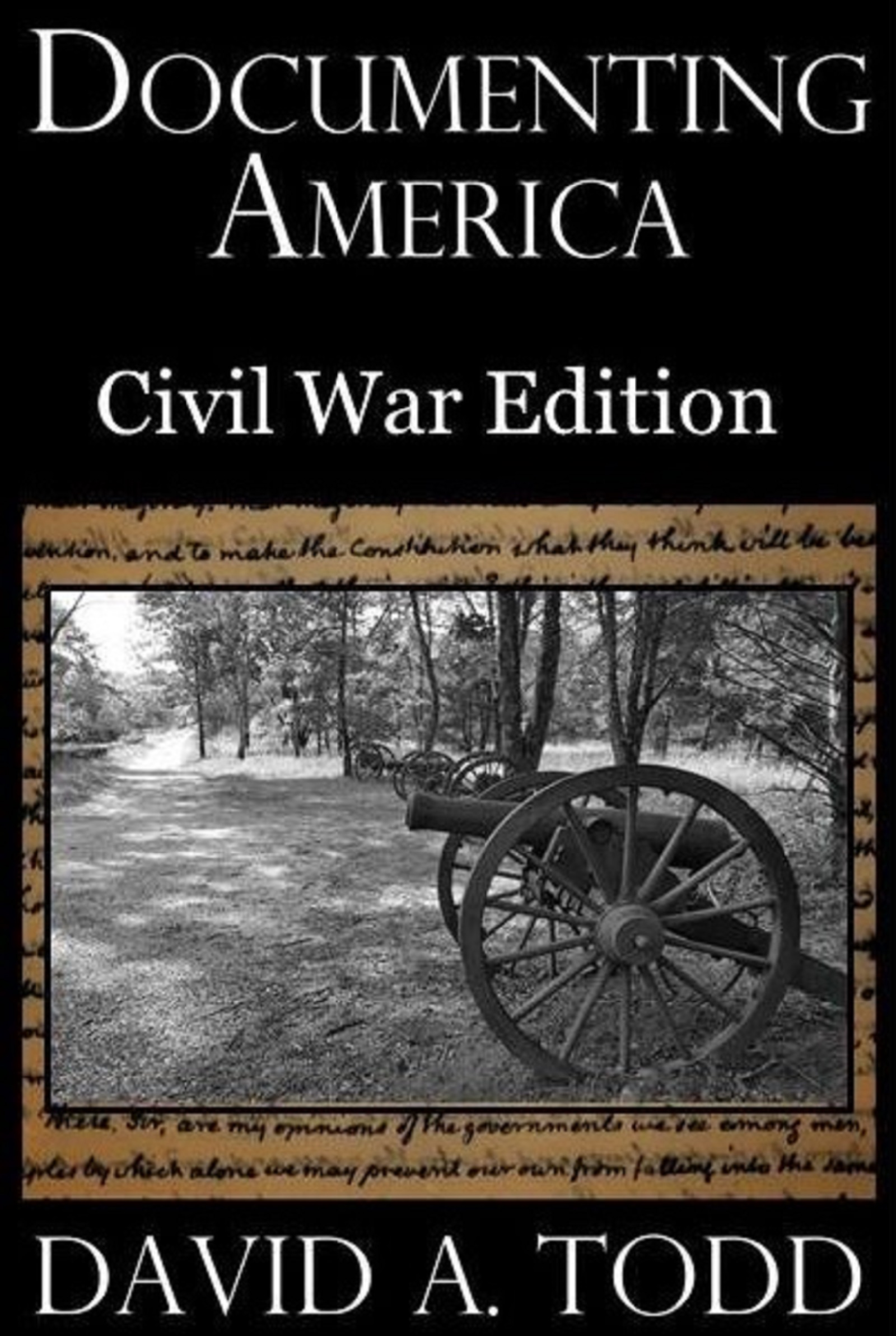
Sales haven't been "robust". Not even steady. But it's already at #10 on my list of books as to total sales.
Sales haven’t been “robust”. Not even steady. But it’s already at #10 on my list of books as to total sales.

I finished writing Documenting America: Civil War Edition in June, published it as an e-book in July, and as a print book in August. Sales haven’t been great, but better than lots of what I’ve published. Then, in August, I began work on another novel. It’s a prequel to Doctor Luke’s Assistant, tentatively titled Adam Of Jerusalem. I wrote two nights in manuscript. Later, when I typed it, I was surprised I had over 1,300 words.

Meanwhile, I have several other books that I’ve started. Here’s the full list and approximate degree of completion, without explanation of what each one is. It includes one I’ve not mentioned previously on this blog

  • The Gutter Chronicles, Volume 2: about 20% done
  • Thomas Carlyle’s Chartism Through The Ages: about 50% done
  • Thomas Carlyle: A Chronological Composition Bibliography: about 60% done
  • Stephen Cross of Ipswich (a family history): about 75% done
  • Adam Of Jerusalem: <5% done

Any of these will make a fine place to direct my efforts. At the same time, two as of yet unstarted items are on my radar, and are consuming brain power, coming into focus.

  • the next short story in the “Sharon Williams Fonseca: Unconventional CIA agent” series
  • the next book in the Documenting America series, most likely on the Constitution

Either of those would be good also.

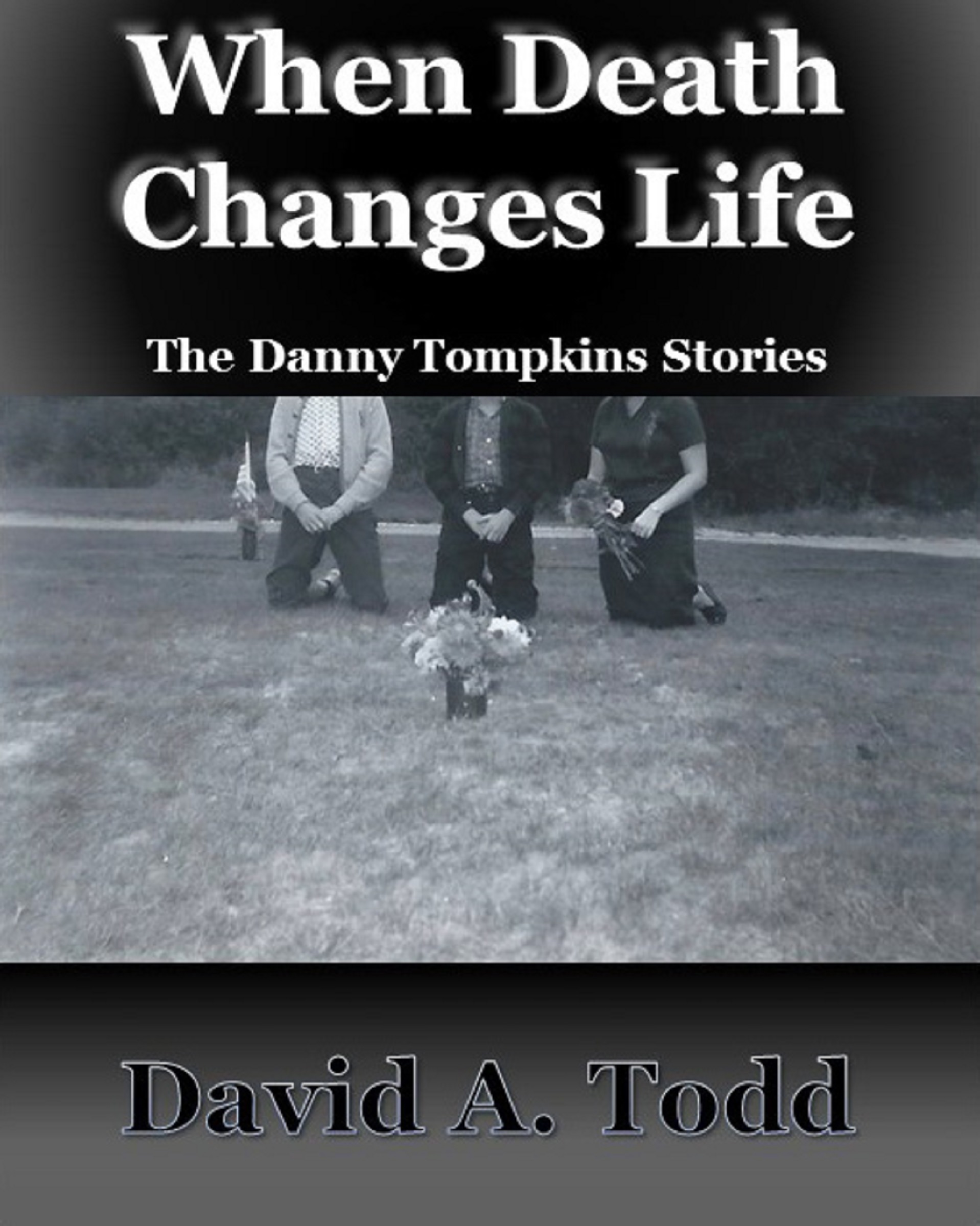
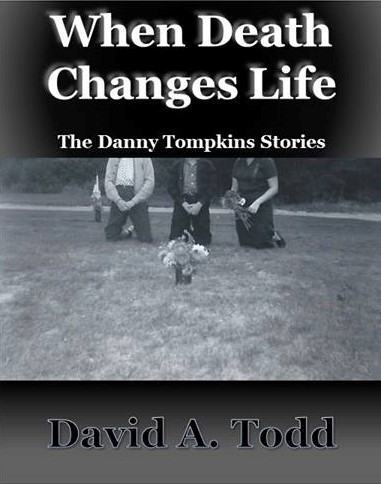
The cover theme has been black and white. A graveyard featured in this one, and will on the combined volume.

However, I believe, instead of any of these, that my next writing/publishing project will be to collect the six Danny Tompkins short stories into one volume and publish it, both as an e-book and print book. The stories aren’t selling on their own (the six having had 39, 9, 10, 4, 4, and 1 sale respectively from first to last). Perhaps they’ll sell better as a volume. This has been on my radar for a while. A problem was what to call it. The Danny Tompkins Stories was not a good title. I’ve been thinking about this, and finally came up with what I think is a good one:

When Death Changes Life

That matches the theme of the stories, which is teenage grief at the loss of a parent, and adult dealing with the old grief. I’ve even thought about a cover for it, a cover that will fit the theme of the individual covers but will be different, no just re-using one of the others. On Wednesday I did a quick check of how large a print book of these will be. With title, copyright page, and author’s works, if should run around 70 pages. True, that’s small, but large enough for a print book. I suppose the e-book will sell for $2.99 and the print book for $5 or $6. Maybe, at those prices, I’ll be able to get a little traction with it.

Author | Engineer