Our political commentary tends to be exaggerated. If the other side is elected, the apocalypse will quickly be upon us. If the Democrats take control of Congress, we will quickly be overrun with illegal immigrants and militant Muslims. If Republicans maintain control of Congress, our democracy [sic; republic] will soon disappear. Send us money so we can run ads and convince the electorate to vote for us.
Part of this exaggerated, apocalyptic rhetoric has to do with our immigration system. All politicians say it’s broken. They also say elect me and I can fix it. But they’ve been saying this since at least the 1980s, maybe since the post-WW2 refugee crisis. Occasionally the system is altered and we see temporary improvement. But a few years later and we always seem to be right back where we were, with an immigration system approaching chaos. That’s certainly where we are now.
How did we get here? And what does that say about our world, our nation, and perhaps ourselves? How do I approach this? Describe where we are today and work backwards? Or start where we were after WW2 (or why not go back to the immigration floods of the early 1900s or mid-1800s?). And do I make this post general or specific? “Scholarly” or familiar?
Well, I have no special expertise on immigration, so it can’t be scholarly. But I am an observer, and I’m able to see how what has happened in one area of life also happens in another area. That allows me to set up certain over-arching principals that seem to govern society at large.
It will take a while to set this up, so stick with me for a while if you can.
I first noticed the principal of overwhelmed systems—call it bureaucratic infrastructure if you like—after the 2001 attack on the USA by Moslem terrorists who hijacked airplanes on Sept. 11 and used them as weapons against us. In response, Americans made a huge amount of charitable donations to help people affected by the mini-apocalypse. The government also appropriated and spent a lot of money in the 9/11 aftermath. Organizations that were used to receiving and spending a million dollars a year suddenly had $10 or $20 million to deal with. A government used to sending 1000 tons of materials overseas suddenly had to send 100,000 tons. The charitable and governmental infrastructure simply wasn’t there to handle it.
It’s just money, you say. Put it in the bank, then write the check and send the aid where it needs to go. Alas, it’s not that simple. A person qualified to handle a million dollars may not be qualified to handle $10 million. A government agency set up to deliver that tonnage to an overseas port (such as in Saudi Arabia or Kuwait) may not be ready to deliver a hundred times the tonnage to a landlocked nation (such as Afghanistan). The charities handling post-9/11 issues were severely criticized at the time (think Bill O’Reilly) for the poor job they were doing with allegations of fraud in handling the donations. As was the government for the work it had to do. The same thing happened after the massive charitable outpouring following the Haitian earthquake. Maybe also after the 2004 tsunami. The criticism was probably just. The performance giving rise to the criticism was predictable.
The same thing has happened to our immigration system. It requires an infrastructure of courts, judges, clerks, lawyers, means of assimilation, housing. Most of that is provided by government; some is private sector. It all worked reasonably well when we had a limit on the number of immigrants admitted each year and a quota system as to where they came from.
But the large increase in immigrants during the Obama years, refugees from Haiti in (probably) Bush and Obama years, and the flood of immigrants during the Biden years broke the system. We didn’t have enough administrative clerks to take down immigrants’ information and then to know where they went. We didn’t have enough housing in place (remember the forced transporting of immigrants to use empty NYC hotel rooms?). We didn’t have enough courts, judges, law clerks, or immigration lawyers to handle the massive increase.
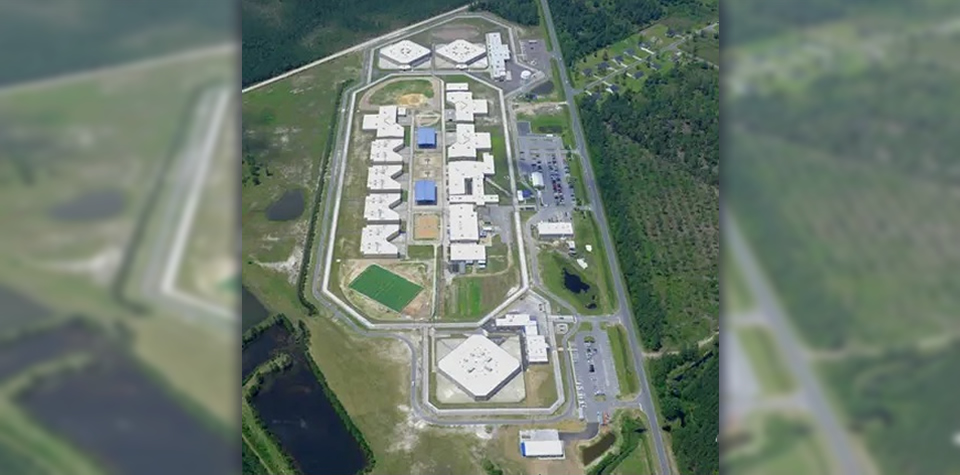
We might seem to be a big country, but we were set up to handle fewer than a million immigrants per year and were simply overwhelmed with multiple millions. So what did we get? I guess we got camps, where lots of immigrants are temporarily housed, where conditions are poor, where women and children are next to gang members, while we try to sort out 20 million immigrants with a system built to handle a million. It takes time. But these are not internment camps as much over-the-top rhetoric states. They are housing camps poorly assembled and probably poorly run by an overwhelmed government agency.
So what have we done by allowing these immigrants to come in without proper paperwork, with inadequate means of following up? Have we made their lives better? We might have done better if we hadn’t had a feeble-minded president followed by an infantile megalomaniac president. Both have made mistakes, though of a different kind. I assume the civil servants working under them are competent. They are simply overwhelmed.
Let’s not think we are doing a good thing by taking in more immigrants than we are prepared to handle. We are harming, not helping, them.
Alas, this post has grown too long to handle discussion of what I believe are overarching conditions that the immigration issue is a symptom of. Perhaps another time.