The Biden administration opened the southern border to accept a vast number of immigrants outside the standard quota amounts. Obviously the physical and bureaucratic infrastructures didn’t grow enough to handle them. I’m not sure the systems have grown enough to handle the prior immigrant floods from before the Trump years.
But that brings up a good question. How much do you increase the size of the bureaucratic systems and facilities to handle a temporary flood? If you develop too much to handle what is truly a temporary spike, you have wasted money and provided very little benefit. But if the increase in needs is going to be with us a while, it’s time to increase our capacity to handle needs.
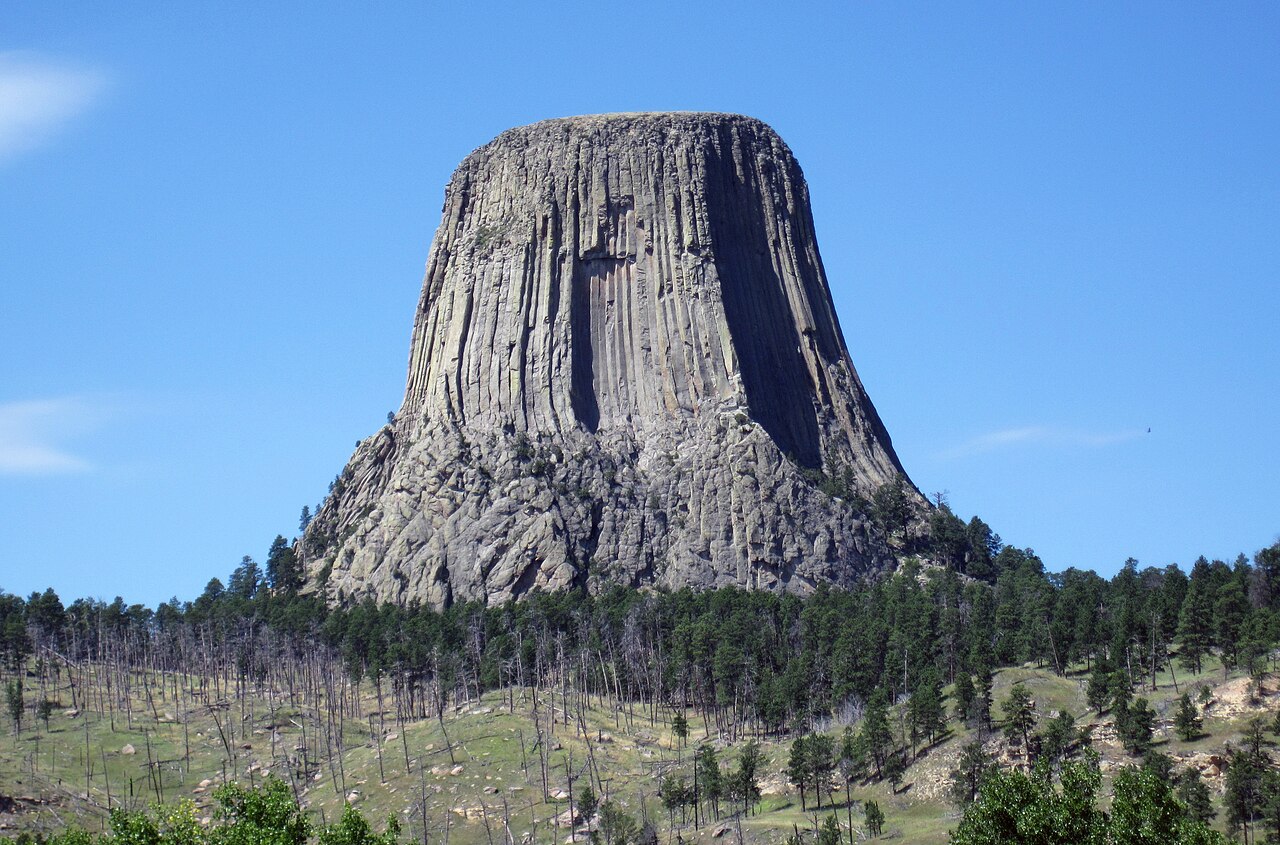
This of it like you’re driving across the Great Plains and in the distance you see the land rise ahead of you. What kind of formation is that? It could be what geologists call a “needle’. A very high but narrow piece of land that sticks up, created by erosion of everything around it. Or it could be a knob. It might be just as high as the needle, but it’s bigger around. Just looking at it from afar it looks shorter than a needle, but it could in fact be taller, the breadth of the formation fooling you.
Next you have the mesa. This is a much wider high landform. You might not be able to see from end to end. After that comes the plateau, a broad landform, the extent of which usually can’t be seen from the ground. The height of a plateau can be deceptive, as there’s no adjacent lower ground to compare to (except at the beginning of the formation).
What does all this have to do with immigration? Is the spike in immigration to the country like one of these landforms? A needle—that is, of extremely short duration but perhaps very high? A knob—a little longer in duration? A mesa—something that, if you climb up it and keep traveling, you’ll be on it for a while? Or a plateau—an increase in elevation that appears to be permanent?
Because, the response you make to the spike in immigration will be different depending on what you are facing.
You really can’t respond to a spike like a needle. It’s extremely temporary. If you climb up it and traverse it you’ll be descending before you know it. This might be like one of the group of several thousand immigrants who came on foot across our border with Mexico. If it happens one time, you can’t really plan for it.
Responding to a knob-like spike is harder. Maybe the situation in Haiti was like this, with the response being temporary protective status. That might have gotten us up the knob but not across it.
The mesa came when those groups of immigrants came one after the other from Mexico. We had no idea if were facing a needle, knob, mesa, or plateau. Hence, our response appeared to be more or less inaction, when in fact we were desperately trying to find housing, food, and medical care for these immigrants.
Response to a plateau-type spike in immigration requires some serious work on our part. It can’t be done in a day, though it might come one quickly, appear to be a needle-like spike, but turn into something else.
That is what I think has happened to our immigration system. The spikes we thought would be needle-like, hence needing no real response, turned out to be either a mesa or a plateau. The immigrants came, with government approval, that approval being either expressed or via neglect. Our system was overwhelmed. Immigrants who came at the beginning of the mesa were not properly processed and hence are being processed now. Our system still isn’t big enough to handle the spikes from past years. Inadequate housing. Lack of medical care. Lack of support in terms of employment. No one to help them become Americans in fact and culture.
So I’m giving the current immigration officials somewhat of a pass in terms of their performance and blaming past officials whose failure to understand just what unfettered immigration meant resulted in their approval for the immigration spike. I hope, for the immigrants’ sake, we build up enough of a system to document everyone. I hope, for the taxpayers’ sake (both current taxpayers and future taxpayers who will have to pay off related borrowing) that we develop efficient systems just large enough to handle the mesa, and maybe an occasional needle or knob, and not a plateau that will perhaps never come, or, if it comes, never again reduce to former baseline levels.
great truth to this