All posts by David Todd

Don’t feel much like writing tonight

The wife is gone to Oklahoma City, helping our daughter and son-in-law out with those two precious grandsons of ours.

The taxes are filed. I completed my income taxes a couple of weeks ago. I also do my mother-in-law’s taxes, and completed those last night and today made the copies, had her sign them, and put them in the mail. My stuff is filed, and her’s is organized for filing. My tax spreadsheets are in better shape than they ever have been, and a few clicks will put them in the 2012 taxes folder, ready for next year.

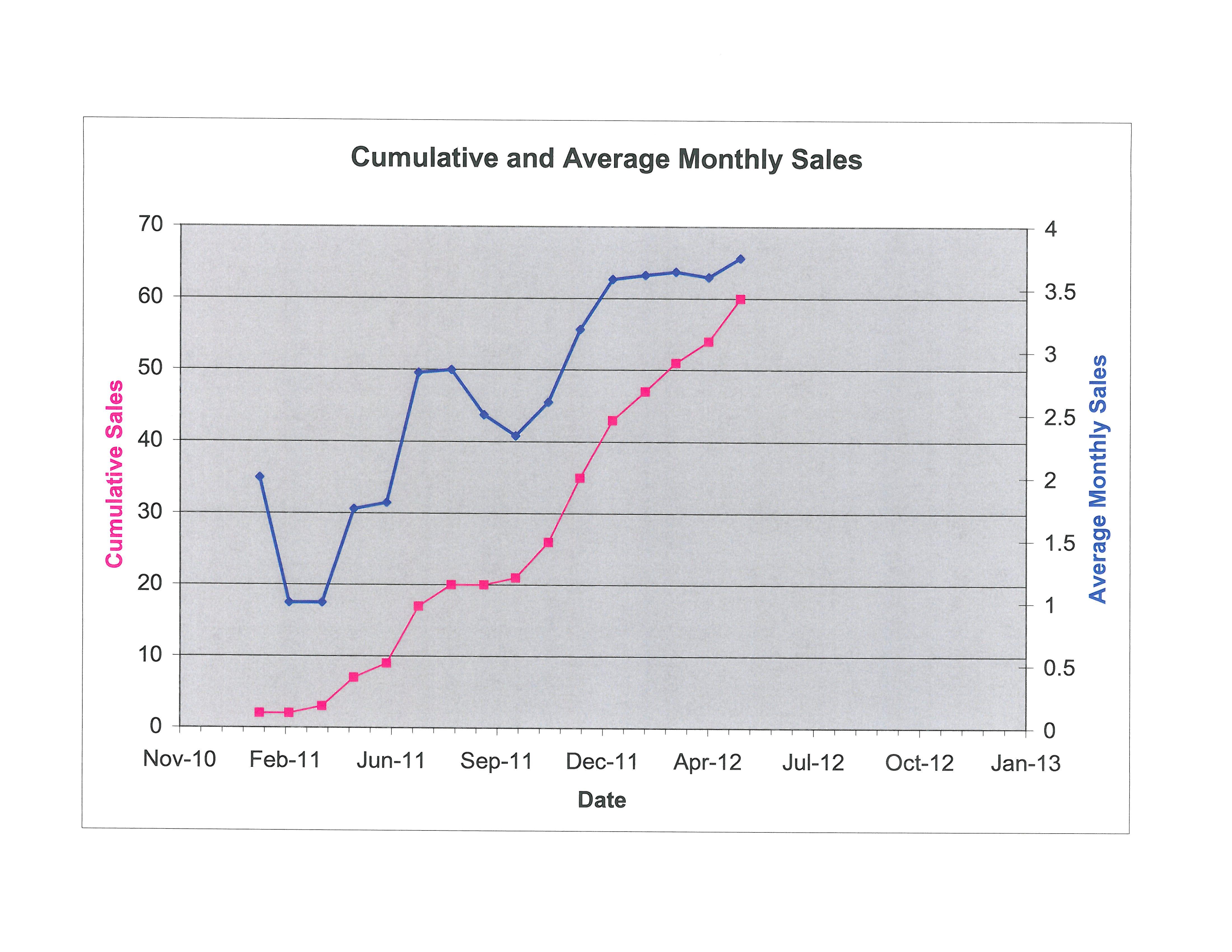
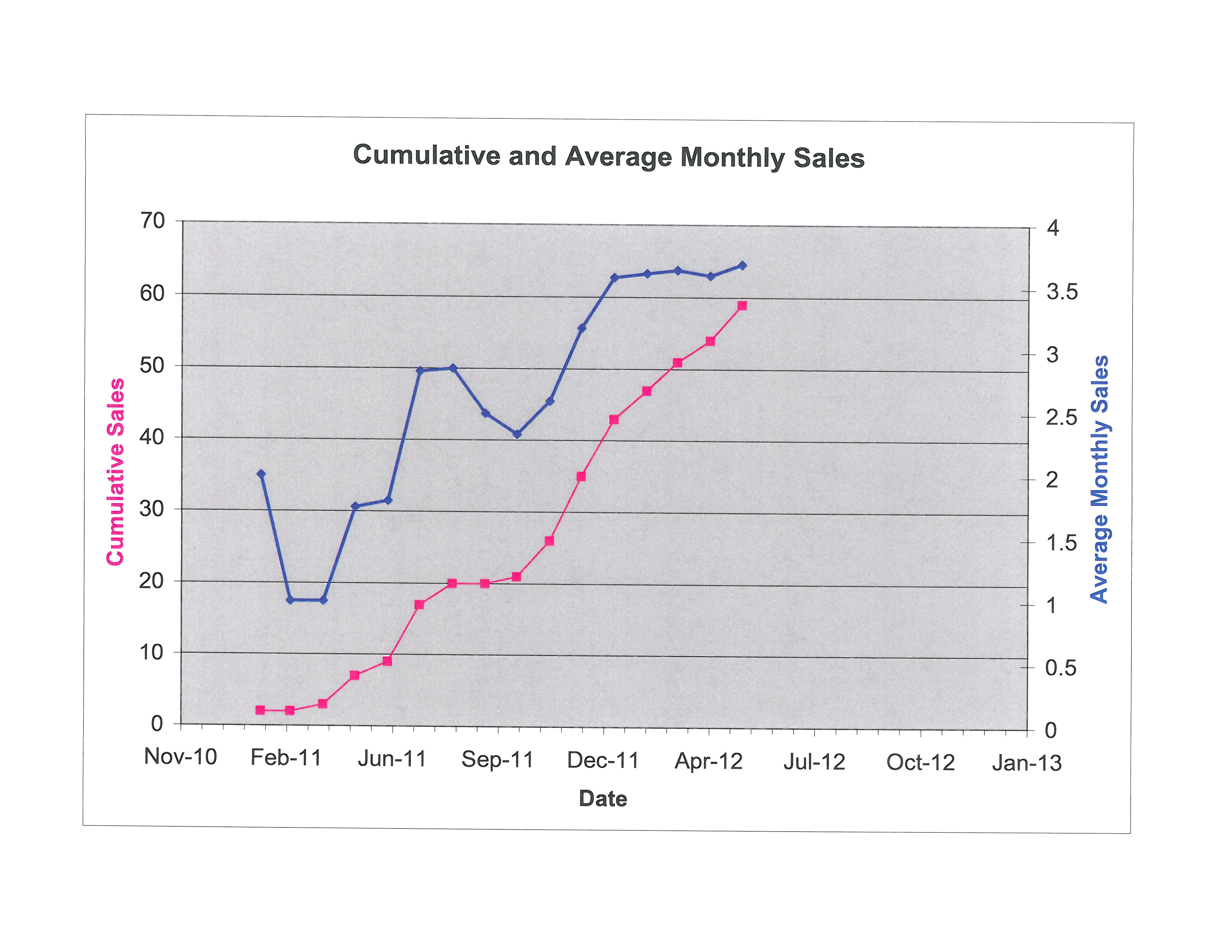
So, with the quiet at home, and with my major non-writing projects out of the way, I should be kicking butt on word count. Yet, I find myself unable to write tonight. Don’t even feel like writing this post. I feel kind of deflated over the whole publishing thing. Writing is still a joy, but not having a single sale for about six weeks is the pits. Having blog page views tank is the pits.

Obviously I’m doing something wrong, but I don’t know what. Over at the indie writers Facebook page they are advising me to do “tag swaps”, that is asking people to tag my books with certain keywords and with me reciprocating.  None of these people have read each other’s book, mind you. One writer says, “Please tag my book with the tag “teenage grief”, and the other writer believes that’s what the book is about, and makes the tag. These tags are used in search engines, I guess. If 50 people tagged your book with “teenage grief” and someone searchers for that, your book will pop up as number one.

To me that seems like gaming the system. Yet, that’s what you’re supposed to do, they say, to get noticed by Amazon’s search engines. I have to decide if it’s unethical, regardless of being allowed by Amazon’s Terms of Service. My gut is telling me not to do it.

Today I was served with a subpoena to give a deposition in a lawsuit related to the time I was city engineer (by contract) for Centerton. The deposition is next Wednesday, which isn’t a lot of time to prepare, given the reams of documents and drawings to review for this troubled project. I spent a lot of the day reading old correspondence (2004-2007) on the project, and the problems associated with the project made me sad.

So writing is making me sad today, and engineering is making me sad today. I’d drive down to Wal-Mart and pick up a half-gallon of ice cream and eat the whole thing as comfort food, but that would spike my blood sugar, which would just make me sad.

Oh, and it didn’t help that I was the only one who showed up for writers group last night.

A Balanced Discussion on Self-Publishing

Literary agent Rachelle Gardner made two excellent posts recently about traditional publishing vs. self-publishing; or, as I sometimes call them, publisher-financed publishing vs. author-financed publishing.

6 Reasons Authors Still Want Publishers

6 Reasons Authors Self-Publish

The two posts have generated close to 300 comments. Most of them have been civil. It is a good conversation on the subject.

Generational Traits, Chapter 2

I may be on shaky ground with this chapter. I’m not a sociologist, nor did I take any university level classes on this. The closest I came to that is sitting in on a couple of lectures Margaret Mead gave at the University of Rhode Island in 1970. Of course, had I taken any, that would have been at least 38 years ago, and they might not do me any good now. Maybe it’s better that I didn’t have any of those courses, and instead had to do my study now.

Actually, finding references, both scholarly and popular, on how one generation differs from another is easy. There is no end to the books written about the Baby Boomers. I found a couple of those references, and from them was able to extract some of the dominant characteristics of the Boomers, the Greatest Generation, the one in between them (often called the Silent Generation), and a little bit about Generation X and Generation Y.

One thing I have tried to do, however, is to consider the fundamental reasons why the Boomers are the way they are—or I should say the way we are, since I’m one of them. So I sort of approach this chapter not just from characteristics but from changes in the world that I think caused those changes. Will this work? Will learned readers laugh me out of the publishing world?

I hope not. After all, I’ve observed the Boomers at close range. I sort of know why we are the way we are. And I don’t know that, in this chapter, I’m saying anything controversial. I’m just trying to give some causes to the Boomer traits, because I think these causes are important to understand how the Boomers are leading this country into oblivion.

Children in a Candy Store, Chapter 1

The entire basis for The Candy Store Generation is an impression I got during the 2000 presidential campaign debates, specifically the first debate. George W. Bush and Al Gore argued about what to do with the Federal budget surplus that was just about to become a reality.

The whole thing seemed absurd to me. The surplus was a projection only at that point, a projections by the Congressional Budget Office. How well had they done in the past? I thought it was absurd to plan to spend a surplus you didn’t actually have yet. It seemed I was the only person who thought it absurd, because I heard no news coverage saying it was absurd. No on with whom I was acquainted said it was absurd. I couldn’t get any interest from anyone about it.

The image that struck me was the Bush and Gore were like children in a candy store, with a lot more money than they expected. And I realized they were both Baby Boomers, the first time in history that two Boomers faced each other at the presidential level. I further realized they very well represented their generation. The vast majority of Boomers were children in candy stores, spending recklessly, unmindful of the future.

So I renamed the Baby Boomers, “The Candy Store Generation”, and decided to write a book.

Next post will be about Chapter 2.

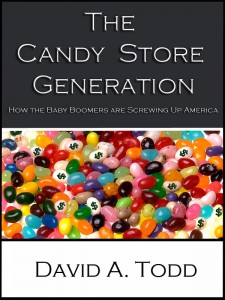
The Candy Store Generation

Over the weekend I added close to 2,000 words to The Candy Store Generation. That might sound like a lot, but it’s well below the total I wanted to complete. Sunday afternoon and early evening wound up going mostly to editing chapters already completed and making friends on Facebook. Consider that platform building.

I was able to finish one chapter, polish another, and begin to expand a third, one for which I had only about 500 words written. For those who are interested, I think I should give the table of content and where I stand on each.

  1. Children in a Candy Story – mostly complete
  2. Generational Traits – mostly complete
  3. The Clinton Years, the Bush Years – mostly complete
  4. Boomer Congress – mostly complete
  5. Boomer Corporations – close to complete; need some more research
  6. The O.P.M. of the People – close to complete; needs another example
  7. The Panic of 2008 – completed this last weekend
  8. The Wisdom of Thomas Jefferson – well along, maybe close to complete
  9. The View from Nancyland – started; less than 1/4 written
  10. Courts Supreme and Inferior – not yet started
  11. The Wisdom of James Otis – well along; haven’t looked at in over a month
  12. Are We a Socialist Nation? – well along; perhaps half done
  13. The Next Decade – not yet started
  14. Had Enough – well along; perhaps half done

So, there’s where I stand with it. Over the next few posts I think I’ll discuss several of the chapters and what I’m trying to say with them.

An excerpt from “The Candy Store Generation”

I recently completed work on chapter 5 of The Candy Store Generation, which is titled, “Boomer Corporations”. Here are a couple of paragraphs from it.

What could we expect from a bunch of Boomer corporate officers? Let’s see: We’ve said that Boomers are the first of the instant generations. In Congress they don’t seem to be able to manage money. They were the first generation to grow up on debt and it doesn’t seem to bother them in the least. They would have seen moderate use of debt by the Greats and the Silents, and would have little history or understanding of both the good and bad sides of debt. They would have to learn for themselves.

As an instant generation, the Boomers would be want quick solutions to problems as they developed. They had watched thousands of murders on television, with the guilty being found and punished within 60 minutes (less commercial time). They had watched thousands of relationships damaged and repaired in 30 minutes (less commercial time). So when confronted with a massive problem of corporate loss of liquidity and ability to extend their debt, they wanted an instant solution. The result was an appeal to the government by a bunch of Candy Store corporate executives. And who was in charge of the government? The Candy Store Generation.

Long-Term Thinking

Lately, on the writing blogs I read, a number of posts have dealt with the business side of writing. Literary agent Chip MacGregor has had several posts lately about treating writing as a business, and how to generate income streams. His focus so far (I don’t think he’s finished with the topic) has been on things other than books. He’s talked about how a writer can be proactive with seeking and even creating writing gigs that generate income with writing that is shorter than book length. He gives hints of how to beat the bushes and make a living off writing. In other words, he’s talking to someone who isn’t tied to a day job while chasing the writing dream.

Rachelle Gardner, also a literary agent, has addressed business issues of late. Both she and MacGregor are thinking of the author published with a “traditional publisher”, not self-publishing.

The Passive Guy, at his Passive Voice blog, frequently deals with writing business issues, especially from the legal sense. He’s normally more focused on independent authors, although yesterday he had a summary of a post on “The Daily Beast” blog post where author Jodi Picoult gave this advice to new authors: “Do not self-publish.”

Yesterday Dean Wesley Smith published a post on streams of writing income, but focused more . He divided the author’s outlook into short-term and long-term. In the latter he put many, many streams of income, thinking mostly of books. On the short-term chart he showed only three revenue streams, all related to e-book self-publishing.

So what’s writer to do? Those who are most invested in the traditional publishing industry say don’t self-publish. The long-term approach demands that you submit, submit, submit to traditional publishers, and gather a basketful of rejections. Picoult says she had over 100 on her first novel. Those who have turned away from traditional publishing say the long-term approach is to write, write, write. Forget about submitting (which takes a lot of time to research and do). Write as many works as you can as quickly as you can. Polish them to some minimum level of quality that a reader demands, and get them out there for purchase. Over the long-term these will generate income.

It seems that both of these camps are talking from a basis of success. Picoult has been on the bestseller lists for a long time, even hitting number 1. She graduated college in 1987, and her debut novel was published in 1992. That’s a relatively short time to accumulate over a hundred rejections, finally have an acceptance, and go through the year-long (or longer) process of manuscript submission, editing, line editing, typesetting, printing, warehousing, distributing, and the beginning of actual sales.

While I don’t fully discount Picoult’s advice, I take note that she broke into traditional publishing over 20 years ago (her acceptance must have been in 1990 or 1991). The industry has changes since then. Drastically changed. The barriers to entry are so much higher than when Picoult broke through. The gate keepers have increased in number, and the gates are smaller. The literary agents are mainly invested in the traditional publishing industry, which is where they make their money.

Smith and Joe Konrath push the long view of e-self-publishing. They are invested in that. They are also concerned with a writer making a decent wage from their words. They aren’t looking to coach a writer into producing the next bestseller. And they realize a significant amount of luck enters in, whether you self-publish or are traditionally published.

I’m comfortable in my decision to e-self-publish, and have book-length works also available in paper. Would I still consider a deal with a traditional publisher if one fell in my lap? Probably, but I’m not taking time away from writing to seek one.

My Kingdom for an Internet Connection

I’m writing this at 10:07 AM, Central Time, at my computer in my office at work, taking a short break from what has been an intense morning of work so far.

Tonight is our biweekly meeting of the BNC Writers. Normally between meetings I send out two e-mails to the group: one at about the midpoint between meetings, just saying high and updating everyone on what’s going on in the writing world, and reminding them of our next meeting; and one the night before reminding them of the specifics of the meeting. Last night when I went to bed, as soon as my head hit the pillow, I realized I hadn’t sent the e-mail. No problem, I thought. I’ll send it first thing in the morning.

But this morning, after my devotional time, after I printed my first-of-the-month forms, I discovered I could not connect to the Internet. Not a big deal, I thought. Our e-mail seemed to be working, so it must just be a modem or router needs resetting. As soon as the IT department gets in they’ll take care of it.

But I still couldn’t connect at 08:30 when I went into a one-on-one training meeting on floodplain modeling with a young engineer. When I was back at my desk after that meeting, at 09:30, it still wasn’t available. An e-mail from our IT guy said it was external. Sprint is having issues, and had not given us an ETF: Estimated Time of Fixing. I saw him about 09:45 and he said it’s a major issue for Sprint. They mentioned problems in Fort Worth TX and maybe even on the west coast. So this is not going to be solved any time soon.

Great. The one day in fifty when it’s imperative I send an outside e-mail first thing in the morning and we don’t have the stinking Internet available. And, I e-mailed a client late on Friday, after he’d left the office, telling him I’d completed a task and asking for instructions on what I should do with some documents on Monday morning. It’s some stuff his lawyers need concerning a lawsuit. Since the Internet is down, only our internal e-mail is working, not our external, and I don’t have his instructions. Guess I’ll have to use the telephone.

When I made my to-do list for today, I figured I’d use some time on the noon hour to begin my research into corporate leader ages, data required for Chapter 4, “Boomer Corporations”, for my book The Candy Store Generation. That research will require the Internet. Will it be available to me? It’s now 10:35, and that little circle on Internet Explorer is just spinning ad nauseum. Still no Internet.

Oh well, I could always walk during the noon hour. I could drive the two miles to the Bentonville Public Library, ignore the librarian who wouldn’t add my book to the shelves and use their computers—calling ahead first, or course, to see if they are on Sprint and thus out of service. I could read some in The Federalist Papers, which will serve both for research and promotion for a couple of books. I could work on the formatting needed for Volume 7 of the letters of John Wesley. I could pull up a study document I downloaded a few months ago concerning the Harmony of the Gospels, and read and/or print a few more pages to supplement what I’ve done with it so far.

But none of those are what I want to do. So I’m an unhappy camper right now. Which is 10:40, and the Internet is still down. If you are reading this, you will know that Internet service finally returned, and I just cut and pasted this into my blog.

P.S. I came home at 8:15 PM after writers group. An e-mail I had sent to the house from the office (with this text) was in my inbox, so I guess Sprint/ATT fixed their problem.

Still Working on “The Candy Store Generation”

I just spent the last hour reading and skimming The Candy Store Generation. Tomorrow night is writers group, and I’ll present the next chapter, titled “Boomer Congress”. Well, I’ll present at least the first part of it, about six or seven pages. Any more than that and I’d be hogging the time. The chapter is fourteen pages long, when formatted for editing as it is now. It includes a number of graphs that demonstrate the condition of our national finances. This chapter is “complete.” I could always edit it some more, look for better graphs, and find more to say.

The next chapter is titled “Boomer Corporations”. I’ve written only 332 words on this chapter. The premise is that our large corporations are being run by Baby Boomers. The Silent Generation has mostly retired, though a few hang on in corporate board rooms. The Greatest Generation is long gone from the corporate world, with almost no one still involved in running companies.

Boomers were in charge of corporations—and we could expand that to businesses, whether they were corporations, partnerships, or sole proprietorships—in 2008 when the great panic hit. In September 2008 the credit markets locked up for some reason. Conventional wisdom it was the poor status by the two mortgage giants, Fanny Mae and Freddie Mac, that put pressure on banks, causing them to realize their balance sheets were not what they should be. Suddenly they said they had no cash to loan.

Panic ensued in the business world. A couple of large banks failed. A.I.G., which provided business insurance to these big banks, was squeezed. Coincidentally, the nation was at the beginning of a recession. Would it be mild or severe? The auto industry in the USA was also being squeezed. Dropping sales and no credit put them in a bad spot. Gas prices had been high, further suppressing the economy.

At the same time we were in the midst of the presidential campaign, Obama vs. McCain. Obama had been in the lead, but McCain had edged ahead in the polls based on his post-convention bump. Then came The Panic of 2008. Business needed a solution, and they needed one fast. Or so they said. To whom did they turn?

To the government, of course. What more could you expect of a bunch of Baby Boomer CEOs, COO, CFOs? Children raised on debt had based their business model on borrowing. When they couldn’t borrow, they couldn’t go on. So the banks and related financial corporations, who had managed their businesses badly, ran to the government for a bailout. Though the problem was of their making, they looked for a rich uncle who could bail them out. No rich uncle in sight, or none big enough and rich enough to bail out the entire banking system and almost the entire auto industry, the government was the next best thing.

This is the essence of the chapter that I’m about to write. I need to do some research into this. I plan to use the Dow 30 Industrials as the sample group, and track the three or four top corporate officers from 1970 through 2010, finding our who they were, when they were born, and calculate their average age/birth year at various times. That’s what I did with the “Boomer Congress” chapter.

Will my research show that the Boomers were in charge of corporate America during the Panic of 2008? I think so, and I’m basing a fair amount of the book’s conclusions on that. Now is the time to do the research to back up what my gut tells me.

One reason for “The Candy Store Generation”

A colleague posted this on Facebook:

…we have the Tea party types…people with stunted
social consciousness and the need to find a mouthpiece that justifies their
greed.

Let me get this straight. “Tea party types” are people with stunted social consciousness who are greedy. That’s their motivation for holding the government to account for following the highest law of the land (a.k.a. The Constitution) and for being fiscally responsible with money the populace has entrusts them with. This is what qualifies as greed? As stunted social consciousness?

No. I think it’s greedy to demand a check from the government, a.k.a. your neighbors, when you are able to work. Recent television shorts have shown people who brag about scamming the welfare system. I realize that’s not a scientific sampling of those on welfare, but it’s an indications.

I know people who have physical or mental disabilities who can’t work. They would like to work, but the hand they were dealt in life prevents them from doing so. Their families are not financially able to support them. For these, a safety net is required. And we provide that, both a public safety net and private charities.

But we have a huge mass of people who are able-bodied, and smart enough, who choose not to work. They have learned that the government will give them a check if only they can convince the government that they can’t work. I don’t know how large a group this is, but I think it is as large as those who have a legitimate need of a safety net.

America is quickly dividing into two nations: those who receive a check from the government, and those who pay taxes so that others can receive a check from the government. A long time ago, when maybe 1 percent of the population needed a safety net and 99 percent paid the taxes, this was easy. But recently it has been reported that close to half the population receives a check from the government. Is this true?

If so, it means 50 percent are paying the taxes so that 50 percent can receive a check. If this is true, it is not sustainable for a long period of time. I’m not sure it’s sustainable for a short period of time. And while I believe that those who don’t pay income taxes because of law income actually do pay taxes through the goods and services they purchase, I don’t see how any clear thinking person can believe it’s a good thing for 50 percent of the people in the United States to be receiving a check from the government.

So I’m writing The Candy Store Generation to address some of these points. I personally feel a big part of the problem is the Baby Boomers, who are currently in charge of the government, business, and institutions. We seem to think ourselves privileged, and haven’t a clue as to what good government is. I don’t know if America can survive us.