All posts by David Todd

My Thomas Carlyle Studies Continue, Slow but Sure

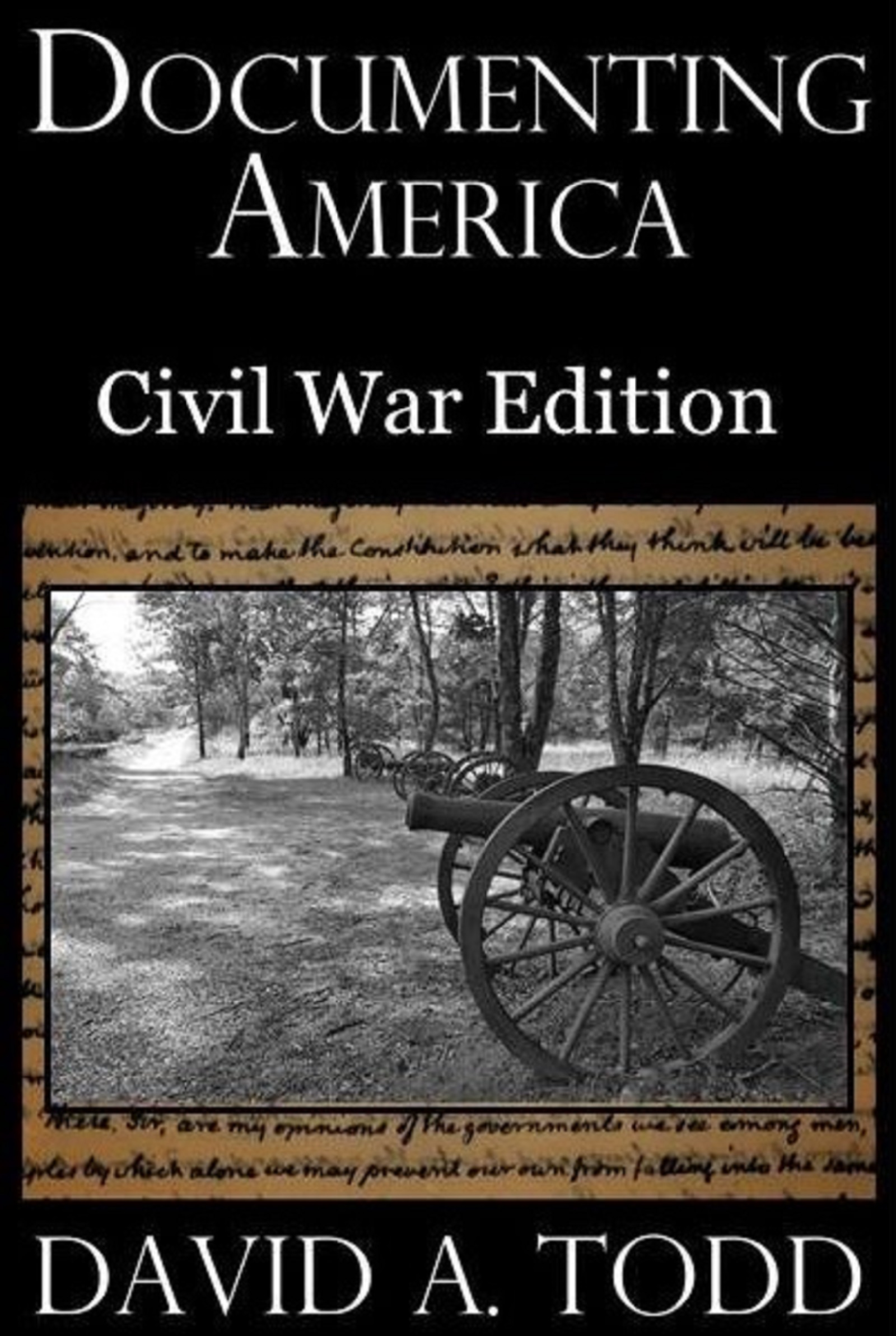
My first book on Thomas Carlyle, published 2014

It’s been a while since I’ve written anything for An Arrow Through The Air about Thomas Carlyle and my studies about his life and writing career. I’ve published one book about him, a compilation of the articles he wrote in the early 1820s for The Edinburgh Encyclopedia. I’ve sold a whopping nine copies of it.

How to explain my fascination with Carlyle? He is a most complex character. Raised in southeast Scotland by strict religious parents who we’d consider to be peasants, he studied for the ministry, then briefly for the law, before settling on literature as a way to earn his bread. The encyclopedia articles were his writing apprenticeship of sorts. From there he did mostly translations for a while, with commentary sprinkled amidst the words of others. Thence it was magazine articles for most of the next six years, though with some book writing.

Finally, he broke out into books, and obtained success. He was significantly helped by Ralph Waldo Emerson, who published his books in the USA and sent handsome royalty checks back across the pond. England noticed his success in America, and began to demand his books. By 1840 he had achieved a measure of financial success.

The biggest disappointment for those who like Carlyle has to be his embrace of race-based slavery. He was quite upset that Great Britain was in the period of emancipation of all slaves in the empire. It was passed by Parliament in 1833 and would become final in 1848. By 1849 Carlyle was writing and publishing pamphlets in support of slavery.

How awful that is. How could he do that? His belief that work was the highest and best thing mankind could do, and that since slavery was guaranteed work it was good, caused him to be blinded by such concepts as freedom and justice. My question is: How did this happen? And when? My Carlyle studies are for the purpose of answering this question. What caused him to land on the dark side of this issue in history?

I have two more Carlyle books in the works:

  • Thomas Carlyle: A Chronological Composition Bibliography
  • Carlyle’s Chartism Through the Ages

Both of these are on the shelf for now. The second one is perhaps 70 percent complete, though I don’t know that for sure. My two essays to close the book are yet to be written. And I have to check with several Carlyle authors to gain permission to reprint essays of theirs. The first one is less far along, maybe 50 percent. Yet, this one I continue to plod along on, that plodding purposefully quite slow.

I have the format of the Bibliography established, and am reasonably satisfied that I have all, or darn near all, of his known compositions for the years up to 1842/3 entered and documented as to composition dates. I have a few things to make more sure of, such as how to handle the notebooks he used in 1822 to about 1833, but I’m fairly happy with how that part is shaping up. So I still need to add his later works, from 1843 through his death in 1881.

The good news is this is the period of his life when his writings were mostly all published, and the dates of composition are fairly well known. I got past the hard part, the years before 1834. But, that doesn’t mean everything falls into place without research. Publication dates are known and documented; composition dates still need to be established for some items. To do this, I’m working my way through Carlyle’s letters, wherein he often mentions what his work(s)-in-progress is/are.

Right now I’m reading one letter a day, from the Carlyle Letters Online, a database of Duke University. Or, if in a given day he includes a short note, I might read a couple or three letters. I do this in my quiet time when I arrive early at my office, after my devotions, and before I work up the day’s to-do list. So I read maybe 10 to 15 letters a week, taking 5 to 10 minutes of my time every workday. I’m currently in July 1843. Carlyle had just finished a magazine article and went on a holiday (without Jane, his wife, who it appears didn’t want to go) to Wales and Scotland.

The days I’m reading now, he is between compositions. I could skip them, but have elected not to. I feel they give insight into the man, and could be useful for all of my Carlyle writings, either those in progress or something in the future that I don’t yet foresee.

This is, for the most part, satisfying the need I have to be working on something that would be considered intellectual rather than simple entertainment, or even popular education. I don’t say that to be snobbish. I just want to work on things that really expand my mind. I have more to say about that, but this post is already long. I’ll save that for a future post, perhaps my next one.

Multitasking—Or Distracted?

Not the Sunday just passed, nor the two before that, but I think if was the one before that. July 8th, I guess. I was in the sanctuary of the church, now called the Worship Center. I sat alone as my wife was ill and couldn’t come to church that day. After teaching the first lesson in a new series in Life Group, which went fairly well, I thought. It was then on to the sanctuary.

The music was good, mostly the typical modern songs that struggle to speak to me. But it was good. The time came for Pastor Mark’s sermon. He’s in a sermon series titled “Please Disturb”, the idea being that we should invite God in to disturb the things we really don’t want disturbed, such as our prayer life, our future, our story (yesterday’s topic). It’s been a good series.

That particular Sunday, as the pastor was speaking, my mind was also thinking about my writing, and the many things I want to write for the Christian market. I searched in my Bible and found a sheet of paper to write on. I pulled out my pen and, as the pastor continued to speak, I began listing things I’ve written for this market and things I want to write. I started with non-fiction books, all of which are somewhere in the future. I listed five, though I believe the last time I went through this exercise I had six. Not sure which one I’ve forgotten.

I then went on to Bible studies and small group studies. I had seven listed that I’ve already taught. I have notes on them, but they are not even close to being in publishable form. Then there’s two I’ve actually started some research and organization on; then added four more that I know I want to develop, teach, and write. That’s twelve all together; some which are developed and taught, some not.

I then listed the Church history novels I’ve written, am writing, and plan to write. That’s nine works in a series. Add all of those up and they come to 26 works. Of these: two are published; one is a work-in-progress; one has a couple of chapters written before being set aside for a time; six have been fully developed but not written; two have some research started; and fourteen are plans or dreams.

All this I wrote while Pastor Mark was preaching about inviting God to disturb us. I actually felt that I was able to hear what Mark was saying, and understand it. My notes took no more than ten minutes to write. They were then out of my head. The rest of the sermon wasn’t multi-tasking; it was solely devoted to the sermon.

Maybe. Also on this piece of paper, written below the list of works I want to write, is a note that says “conflict for AoJ”. This is my work-in-progress, Adam of Jerusalem. I’m about to enter the middle of the novel. I know what I want with the ending; I knew what the beginning needed to be; but the middle was a mystery to me. I had one event planned, but I needed a whole lot more. What would I fill the middle with?

On this sheet of paper are five conflicts, five events that can all be written to lead to where I intend to go with the ending. I don’t know when I wrote these. Was it during the same sermon, or was it another time? I’m not sure.

But, as I look at those notes, it seems to be a good plan. Each of the five events can link together, and can flesh out this middle portion of the book.

Yesterday, in church, during the sermon, I found this sheet of paper. I took a minute to read it, then tucked it back into my Bible. I didn’t have to do anything more on it. I listened to the sermon without feeling the need to multi-task. I think I’m going to leave this in my Bible. It will be there whenever I need it during church, allowing me to concentrate on the sermon without feeling the need to multi-task.

Book Review: Frost: A Literary Life Reconsidered

A book to keep in my library.

Robert Frost being my favorite poet, I’m always on the lookout for books by or about him. Back in July 2010, in Carver, Massachusetts, I visited Books & More, a bookstore there, and picked up Frost: A Literary Life Reconsidered, by William H. Pritchard. It was a used copy, costing me $3.5 plus tax, even though the price sticker on the book was $5.00. Must have been a sale. Of course, when this hardback came out in 1984, it probably cost $5 or a little less (the bookstore cut off the original price from the jacket.

My Frost collection isn’t very large. I have his latest collected poems, from about 1970 (posthumously), a smaller collection that fits nicely in a glove box, and…I think that’s it, along with this one. I’ve read some other stuff on him from libraries. As the title promises, this isn’t a simple biography. Each chapter, dealing with phases in Frost’s life, is divided in two parts. The first tells us what he was doing, where he was living, what his life was like at that point. The second half tells us what he was writing or publishing, complete with analysis of what he was achieving. In fact, the “what” of his writing was more in the first half of the chapters, and the second half was almost all analysis.

Pritchard treats every Frost poem as if it were something about Frost himself. It seems Pritchard must think poetry is always autobiographical, but told through metaphor and simile. Whatever poem he’s talking about, he takes it quatrain by quatrain, or couplet by couplet, quoting the lines, then letting us know what the poem is really saying. Which, of course, is about Frost. I suppose at times he doesn’t say that a given poem is autobiographical, but rather, gives us insight into Frost’s mind right then. Frost’s first book of poems, A Boy’s Will, published in England while Frost was living there, sounds autobiographical. And the poems within it have what I recognize as autobiographical possibilities. The first poem, “Unto My Own”, for example, starts

One of my wishes is that those dark trees,
So old and firm they scarcely move the breeze,
Were not, as ’twere, the merest mask of gloom
but stretched away unto the edge of doom.

Yes, I can see that as Frost speaking of himself, perhaps even about his temporary “escape” to England; or maybe about his escape to the Great Dismal Swamp in a pique of unrequited love (from his future wife) when he was a young adult. But I would never be dogmatic about it and say “this has to be about Frost himself.” Why must poems be autobiographical? Not all of mine are. Some are, true, but I have purposely looked for subjects that are not about me. Even my poetry book Daddy-Daughter Day, is not autobiographical. It doesn’t tell the story of a day I spent with my daughter (pity; though we did have enough good times to make up the equivalence). It is a generic story of a day a dad and his daughter spend together. I wrote it to be generic to suit a wider audience.

But I’m getting away from Frost and the book. As could be expected, the book is essentially chronological (except for the first chapter. Without going much into his pre-writing days, Pritchard shows Frost as the reluctant farmer, then the expat, then the shameless self-promoter, then the university poet-in-residence (it’s hard to call him a professor), and finally the aged poet. He also follows the books that correspond to each era in Frost’s life, taking five to ten poems from each for his analysis. I’m impressed by Pritchard’s compact language, as he gets a lot in those 280 some pages.

Is it a good book? Yes, I’d say so. Worth reading for a Frost devotee? Yes again. Enjoyable? Yes and no. I enjoyed the biographical parts much more than the analysis parts, and found myself reading the latter without truly comprehending what Pritchard was saying. Keep it in my library or dump it? I will keep it for now. Some of my reading was in a distracted state, and someday I’ll want to read it at leisure with more concentration. And, as I’ve read less than half of Frost’s published to this point in my own literary life, I may find the analysis parts to be more enjoyable some years from now.

Major Tasks Done – Minor Tasks Pending

May 1st arrived this year, with me overwhelmed by several major tasks that needed to be taken care of. These were sapping my brain power, even making me unable to concentrate on many other things needed.

One task was finding a new family car. We decided to do this almost a year ago, but had trouble finding the one we wanted. We finally found something close, though at a dealer in Oklahoma City. Since we have multiple trips there to help our daughter’s family move, that worked out well. We bought the new van on May 18. Our oldest grandson named it the Silver Dragon, a name that I guess will stick. One main task out of the way. The actual completion of this task was held up in a paperwork mix-up by the dealership. That was completed the week before last, and the vehicle is legal.

A second main task was selling my now-not-needed pick-up. I didn’t want to advertise it until we had the new car. Even then I was slow to do so. But I mentioned to a colleague in another engineering company it was for sale. He spread the word, and one of his co-workers wanted it for his son. The deal was concluded, then he moved out of state and said he didn’t need it. I was getting ready to advertise it when his daughter contacted me, saying she wanted it based on her dad’s recommendation. She picked it up two weeks ago. Task #2 out of the way.

The biggest task was finding a new living situation for my mother-in-law. She’s lived with us for 2 1/2 years. Her care was beginning to increase, and she and my wife didn’t get along all that well. For her sake, we needed to find her a place to live—not a nursing home, though, as she wasn’t in need of that much care.  My wife looked around, and found a room available at an assisted living facility just a little over a mile from our house. She moved there around May 15, and seems to be happy and acclimating well. Task #3 out of the way. Obviously my numbering scheme is in relation to the order of them in this post, not in terms of importance or of completion.

Scheduling a trip to see our son in Chicago, and actually doing that, which we hadn’t done in many years was another major task. We did that last weekend, taking six days including drive time and a day in Springfield IL on the return trip. We had a great time, and our son seemed to as well. Another major task completed, but I don’t want it to appears it was a “task”, as the word carries negative connotations. It was something we wanted to do and did it, something that, once done, allowed me to concentrate on other things.

One other task was the paperwork following my auto accident in February. That’s not actually complete, but the main work of it is. I settled with the other guy’s insurance company for an amount (less than I hoped for). We’re just waiting for some late medical bills to come in, after which it will all be settled.

Which brings me to minor tasks. One of those is semi-major, working out a dispute between my company and a client, on a project I took over for someone else who has since left the company. The negotiations are about over. Now we’re at the point where we have to have the corrections constructed at the site. That will require me to travel to Minneapolis once or twice. That’s a significant task, but is doable, and I have help within the company.

I have a few maintenance tasks around our property, and tasks related to de-cluttering. I’m pleased, in general, with how they’re going. Still plenty to do, but I see progress being made.

Which brings me down to today. Yesterday afternoon I went to The Dungeon after church and lunch. It had been over ten days since I’d written a blog post. I decided that, rather than work on my novel, I should take time to write a real post. So I worked on this. I hope this is the first step in getting back to regular blogging. Monday and Friday are my posting days. See you on Friday, I hope, with a substantial post.

Writing a Little

Once again I’m a day late with my Monday post. Or, since I didn’t make a post last Friday, perhaps I’m four days late with Friday’s post.

No matter. I’m here now, with several things I could write about. News has come that all the boys and their coach have been rescued from that flooded cave in Thailand, a monumental achievement. President Trump has picked a new nominee for the Supreme Court, which will be worth discussing once I know more about him. The animosity of the political left and right for each other is growing, though, seemingly, more so on the Left than the Right. Any of these would be worth a post.

I thought, however, to just say briefly that I haven’t abandoned my writing, though it seems difficult to both carve out time and apply my mind to it. Last night was a good example. I went to The Dungeon around 7:30 p.m., intending to either write a post here or add a few hundred words to my novel. I did neither. I have a little clean-up of my work area to do, which I did. That took four minutes at most.

I then sat at my computer and…couldn’t write. My brain felt fuzzy. I believe my blood sugar was high, the result of a filling supper on the heals of snacking at work in the afternoon. I couldn’t write, neither the post nor the novel.

Such is life. Finding writing time is difficult, as I’ve written about before. Finding writing time when my mind is both focused and creative is even more difficult. This spring and summer I’ve had four major, personal tasks/items I had to take care of, the kind of things that weigh the mind down (at least mine). The third of those was completed Saturday with the sale of my pickup. The fourth and last is as good as finished (aftermath of the February auto accident); only a little paperwork to do.

And, our summer travel plans are set, with a trip to Chicago to see our son scheduled, and a trip to West Texas to see our daughter and family scheduled. At work, plans for my retirement are well underway, and people are starting to step up to take things off my plate onto theirs. So, my mind should be less burdened than at any time for the last six months, maybe longer.

So why couldn’t I write last night? Maybe it wasn’t the burdens; maybe it really was high blood sugar causing a fuzziness in my head. Either way, I did a little on-line reading, realized the fog wasn’t going to clear, and went back upstairs to watch tv and then read in two different books. Got to bed around 11:15 p.m., and slept well.

Today, here I am, ready to get my office work done, and feeling much better. With the burdens slowly lifting (I have a whole host or secondary tasks that are contributing to the burdened mind), I think I’ll be writing again soon.

2nd Quarter Book Sales

I find it hard to believe we are halfway through the year 2018, and that the second quarter has ended. My title remaining till retirement now stands at 5 months and 29 days. The closer it gets the more I’m looking forward to it.

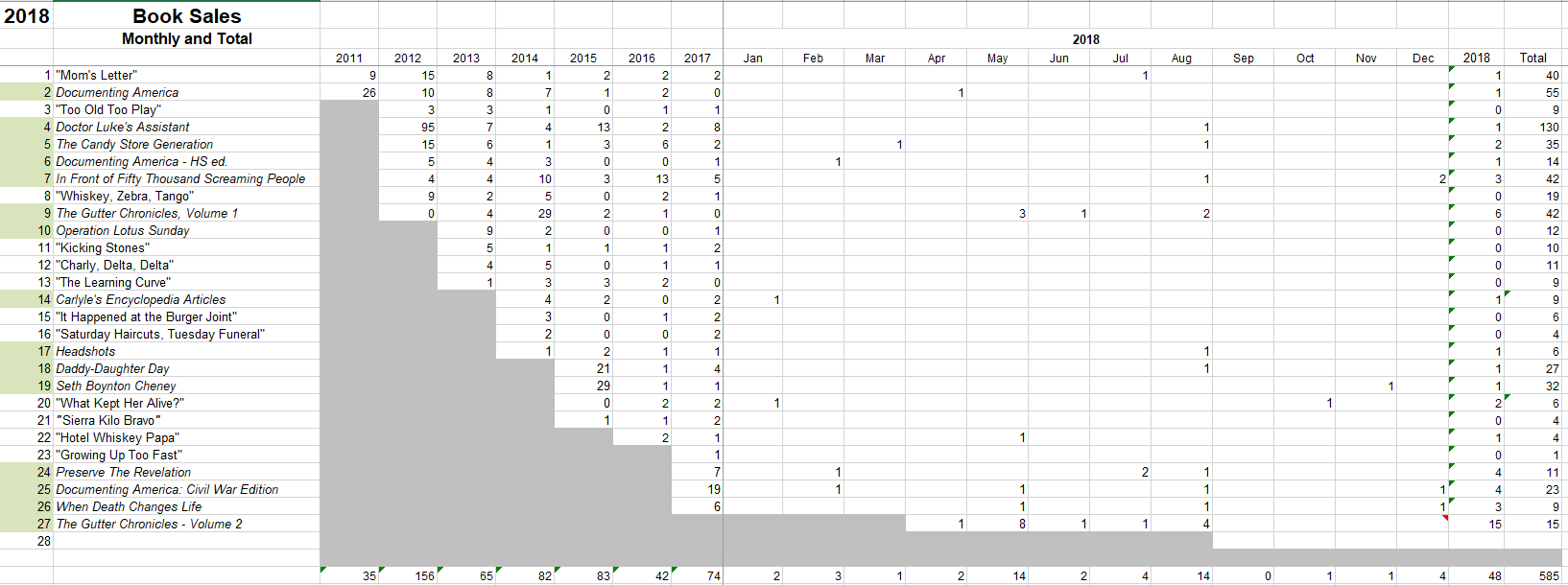
But with the end of the second quarter it’s time to report book sales. They were definitely better than in the first quarter. Here’s the table.

Not the greatest quarter, but an improvement over the last.

After a first quarter of only 6 sales, the second quarter has 18. Ten of these were of my latest book, The Gutter Chronicles, Volume 2, which I published this quarter. Four more sales were of The Gutter Chronicles, Volume 1. So the second in the series dragged the first along, at least a little.

I created and made the cover for this one; so, if it doesn’t work, I’ll gladly take the blame.

During this quarter, I did almost no promotion. A couple of Facebook posts was it, along with an in-house e-mail to the company that told all that the second volume was available for pre-order. I did a little looking at Amazon ads, but wasn’t able to spend the time studying to know if it was right for me.

So, into a new quarter, still plugging along, though slower these days. Multi-tasking isn’t working very well for me. In a future post, maybe on Friday, I’ll talk about my current writing.

The following two pics are smaller versions of the above two, for linking at Absolute Write.

to link to at Absolute Write

Can’t See the Trees for the Forest

You usually see that statement turned the other way: Can’t see the forest for the trees. I take that to mean the tasks that must be done are keeping you from seeing the larger, strategic picture.

I put it the other way: Can’t see the trees for the forest. My meaning is the strategic picture is so solid, so dominating, that it’s hard to see the individual tasks necessary to be completed so as to reach that strategic goal.

I don’t really want to get into the specifics, the tasks that I have to do. Most of them have nothing to do with writing or my specific work-in-progress, although that writing project, as well as research beginning for the next project, are in the mix. I have all these tasks to do. Together they make a forest. I can’t tell which one needs to be chopped down first. I can’t see the trees for the forest.

Retirement from my day job, the career of civil engineering I’ve spent over 44 years in, is just 6 months and 2 days away. I am so looking forward to that. No, it won’t be difficult to lay my “tools” down after so long. I have other tools I’ve already picked up, and will be quite happy spending time writing that I currently spend dealing with careless contractors, trying to transfer knowledge to the youngin’s, and tying up an hour or more of time just getting from point a to point b every morning and evening.

But, until then, the forest will continue to overwhelm me. I have resigned myself to that. The two additional books I had hoped to publish this year may not even be one book. I hate that, but have to live with it. I just hope I don’t become like Charles Lamb, who couldn’t wait to retire from his clerk’s job so he could write full time, but then, after retirement, wrote very little. Was it the clerk’s job that kept him going? Is it my civil engineering job that keeps me going, focused on the competing quest?

I’ll know soon.

Once Again, Busyness Descends

It’s Friday, my normal day for posting. Yet here I am with nothing prepared. I lost time last night to having to run to the pharmacy to get a new prescription for my mother-in-law, who was supposed to start on it last night. I wanted to spend a half hour blackberry picking, which I did. In that half hour I probably could have pulled together a post, but the exercise and solitude did me good.

I hope the weekend gives me some time to prepare a real post for Monday. I hope.

Prose or Poetry?

After a very busy week writing in my work-in-progress, a novel, I had two not-so-busy weeks. Each week I added words, even having a couple of days with a what I consider a good word count. However, I could have done better. Still, Adam Of Jerusalem now sits at over 25,000 words. I’m close to 1/3 through, depending on what the final word count turns out to be. I’m shooting for 80,000, though not sure it will be that high.

But, I find my mind turning away from the novel to…poetry. No, I’m not writing some new poetry, but am thinking of submitting some to a magazine or two.

I have never completely left poetry while concentrating on prose. I still monitor the poetry critique board at Absolute Write and post a critique from time to time. I’m currently reading a book on Robert Frost (will post a review in due course), so that has increased my interest.

So when I saw an internet post about a magazine that is dedicated to short poems, and that the submittal deadline for their next issue is the end of this month, I took notice. For the last ten to twelve years almost all the poems I’ve written are short ones: haiku, cinquains, a rhyming quatrain or two. Some of these I think are pretty good, especially the haiku.

So, I’ve made up my mind to make a submittal to this magazine. My main problem is I haven’t done a good job of keeping track of what poems I’ve written for the last decade. Most of them are on one of two places at the house, I think; though a few may be hiding in the pages of the blue folder I carry from home to work and back each day, with whatever papers I think I need.

Tonight I start the process of finding my short poems, preparing them for a proper file, and deciding what to submit. The mag says it wants ten poems, submitted by e-mail by 30 June. I should have no problems meeting that deadline, so long as I get started tonight. Possibly I’ll report back in Friday’s post whether I’m on track or not.

A Bad Review

It’s not an exaggeration to say that writers live and die based on reviews. I think this applies equally to trade-published and self-published authors. Although, the trade publisher has channels to solicit reviews from professional reviewers, whereas the self-publisher is unlikely to have such a network and must rely on the reviews posted by readers on Amazon and similar sites.

Most of us take time (some of us a little, some a lot) to encourage people to review our books after they read them. Alas, few do. I understand that. It takes time for a person to go to Amazon, find the book’s page, and enter a review. Sometimes people don’t want to leave a review if it’s negative, remembering that Mom said, “If you can’t say anything nice don’t say anything.” I get it.

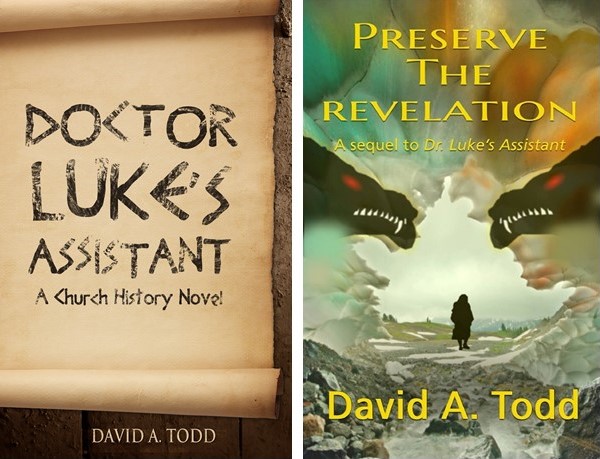
Out since 2012, I’ve sold more copies of “Doctor Luke’s Assistant” than any of my books.

Thus, I was excited to find a site that reviews Christian books. Not all my books are overtly Christian, but some are. Interviews and Reviews is the site, run by a woman author who is a member of an internet writing group with me. I checked over the site, saw it was legit, and submitted Doctor Luke’s Assistant as a means of getting my toe wet. It took some time before any of their reviewers set a request for the book. I submitted on April 10, 2018, and one reviewer finally asked for a copy on April 27.

After that, I didn’t hear anything. Books are supposed to stay in the reviewing rotation for a month (plus one extra month if no one requests it). Since DLA is a large book, I knew it would take the reviewer time. Then, on June 5, I received a request for it from a second reviewer. I contacted Amazon, arranged for a copy to be sent, and felt good.

Then I checked the home page of I&R, and saw that a review of DLA had been posted! I went there right away, only to find it was…two stars. That’s two out of five stars, the same review system as Amazon uses. Needless to say, I was sad to see this. Here’s a link to the review.

I don’t fault the reviewer if she didn’t like it. All books cannot appeal to all readers. The gist of her review is this:

…instead of a compelling historical fiction novel, I found the book was mainly a comparison of some of the Gospels and an exploration of what methods might have been used in Luke’s research. What little plot there was existed mainly in the latter half of the book, and even there it was thinly scattered and not used to its full advantage.

That’s rather stinging.

I took a little time to cry over it (not literally), then got past it. I’m sharing it to a wider audience, not to seek sympathy or offsetting reviews, but rather to continue in making my works public and not glossing over anything.

It’s not like I’m the only person to ever receive a negative review. While I was going through some saved links today to see which were still valid and which weren’t, I came across Thomas Babington Macaulay’s review of Robert Southey’s Colloquies on the Progress and Prospects of Society. The review was published in the Edinburgh Review in 1829, when Southey was poet laureate of England. Would Macaulay treat Southey with due respect because of his position? No! Here’s how the review began.

It would be scarcely possible for a man of Mr. Southey’s talents and acquirements to write two volumes so large as those before us, which should be wholly destitute of information and amusement.

Now that is hard-hitting. Yet, Macaulay is far from done.

Yet we do not remember to have read with so little satisfaction any equal quantity of matter, written by any man of real abilities.

Let’s look at one more criticism.

It is, indeed, most extraordinary, that a mind like Mr. Southey’s, a mind richly endowed in many respects by nature, and highly cultivated by study, a mind which has exercised considerable influence on the most enlightened generation of the most enlightened people that ever existed, should be utterly destitute of the power of discerning truth from falsehood. Yet such is the fact.

I could go on, but this would only become repetitive.

I guess I don’t have it so bad. My reviewer ascribed kind motives to me and didn’t question my abilities, only my outcome. And, DLA was my first novel. Hopefully I’m getting better at it.