As I’ve mentioned in other posts, I’m soon to retire: at the end of the month, the end of the year, the day I turn 67. That will be my last day in the office. To say I’m looking forward to retirement would be the understatement of the last decade.
But, during this last month or two, I find myself very unsettled. What will my retirement look like? I’ll write more books, study more genealogy, write those family histories I’ve been gathering, write the Bible studies I’ve developed and taught, and work on the clutter accumulated during 45 years of adulthood, almost 43 years of marriage. There’s no doubt I’ll keep busy. Plus, my company has asked me to enter into a contract with them for limited services, averaging not more than 10 hours per week. So I’ll keep my hand in civil engineering.
My unsettledness has come from not knowing what to do in my last two months as a fulltime employee. And, my problem hasn’t been at work, where I’ve stayed busy. The problem has been at home. A year ago, in the evenings, after supper and a little conversation with Lynda, I would head to The Dungeon, and would work on one of my avocational pursuits for a couple of hours, coming upstairs to leave a little time to read before going to bed.
The last two months, however, I decided to forego my time in The Dungeon and just sit upstairs with Lynda, watching television, talking, and perhaps doing a few things. Actually, now that I think about it, this has been going on for at least four months. My reasoning: It won’t be long before I’ll have the daytime hours to do these things. Let them go for a while. Whether retirement really gives me all the time I need for all the things I’d like to do is yet to be seen
So, I was only able to do one editing pass through my novel, taking it from first draft to second draft. I’ve done some genealogy work upstairs, including filing or discarding loose papers. To multitask while watching TV, I’ve been doing crossword puzzles, clipped years ago from newspapers (when we still took the paper) by Lynda for my use. They are coming in handy now. I’ve done quite a few, and have many more to do as well.
This will all change. Today I’m working my 5th-to-last day. I work all this week, take next week off as a combo of holidays and vacation, then work Monday Dec 31. at 5:00 p.m. I will walk out in triumph, thinking back on a career well-spent, and thinking ahead to a retirement full of creative and fulfilling pursuits.
For some time I’ve been aware of Fletcher Prouty, and that he had a story to tell in the JFK assassination. He was mentioned in Oliver Stone’s movie JFK (Donald Sutherland’s character “X”). He’s been in other books or articles about the assassination. Yet, I’d never read anything he actually wrote about it.
A disappointing read, though it will stay in my library for a while.
So, when I was at Barnes & Noble one time and saw his book JFK: The CIA, Vietnam, and the Plot to Assassinate John F. Kennedy, I naturally bought it. I had it for close to a year before it found its way to the top of the reading pile, a pile I haven’t had much success at reducing recently.
Alas, I was disappointed in it. All this time hoping he wrote about the assassination, only to find his book was barely worth reading.
First, his story. Prouty was in the Army Air Corps in WW2, having a variety of assignments during the war and right after. During the Cairo and Teheran conferences in late 1943, he was pilot for delegations attending the conference, particularly the Chinese delegation—all except for the Chinese leader, Chiang Kai Shek and his wife. He starts his narrative there, saying decisions made at the Cairo conference had implications in Vietnam and later. The Cold War, he said, started at Cairo and Teheran, when the USA and England teamed with the Chinese in silent battle against the USSR.
Then, he says he was aware that, when the Japanese surrendered, all the war materiel being accumulated on Okinawa had to go somewhere, and it was all taken to Hanoi to help Vietnam, then one country and led by Ho Chi Mihn, in its war against the lingering French colonists. That materiel would eventually be used against the USA.
The problem, Prouty said, was the US intelligence services, first the OSS then the CIA, ventured far outside the field of intelligence gatherings into covert operations. In Vietnam, those operations were keeping things fomenting in a country that was, at best, loosely a country in fact, so that attention would go there. The domino theory of nations falling to the communists was but a smokescreen for the CIA’s real work, says Prouty.
It’s all tied in to the military-industrial complex that Eisenhower warned us about. The CIA keeps things roiling in different parts of the world. The USA needs to be prepared, so keeps buying military hardware. Industrialists thus profit, and taxpayers lose. That sort of makes sense, but I don’t believe he fully makes the case.
My father-in-law took this photo in Houston TX on Nov 21, 1963, the day before the assassination. He snuck in with the press photographers.
As I’m reading, I’m wondering how this ties to the JFK assassination. Prouty finally gets to that. He makes a big deal about a National Security Memorandum which shows that Kennedy was withdrawing from Vietnam, a slow withdrawal from our troop strength of 16,000 down to none over a three year period. This went against what the CIA, by this time a strong power in the government, wanted. So they assassinated Kennedy, who had said in casual conversation he was going to break the CIA into a thousand pieces.
Prouty doesn’t make his case well. Oh, he talks about this agent and that, this operation and that, showing how they weren’t meant to do anything but promote unrest in Vietnam. But he doesn’t say how the CIA accomplished the assassination. How was Oswald involved, or was he involved at all, if it was a CIA plot? Who were the shooters, and how did they get away unseen? How is it that the Warren Commission uncovered none of this? An enquiring reader wants to know.
Prouty’s book is poorly written. The NSM mentioned earlier is covered over and over in the book. Each time Prouty gives us the full story about it. He’ll say something like “…as covered in NSM #268, which concerned troop withdrawals from Vietnam by the end of 1964…” He does this over and over. It’s as if he doesn’t trust his readers to read about this NSM the first time and understand what it covered thereafter throughout the book. He does this over and over, acting as if his readers were two yea- olds who needed to have the same thing explained to them many times. He does this with many things in the book.
He had some important things to say, but, having finished the book back in August of this year, those important things are already fading from my memory. And that’s not a good testimony for a non-fiction book.
If I could talk with the author, I would say, “Mr. Prouty, sir, you blew it. You had a good story to tell—at least I think you do, but you got off in the weeds and didn’t trust your readers. Hence, I can’t recommend your book.”
Who should read this? Only die-hard Kennedy assassination researchers and students who want to leave no related book unread.
This book will stay on my shelf, with other Kennedy books. I might even read it again, in my retirement, and see if I can glean more and better information from it. For right now, it’s going to get a mere two-stars from me on an Amazon and Goodreads review.
On Nov. 7, 2018, my mother-in-law, Esther May (Moler) Cheney Barnes left this world and entered her heavenly dwelling. She had been ill for some time, with her physical condition rapidly deteriorating in the two weeks prior to her death. She was 93 years old.
Esther grew up in Meade Kansas, a rural area southwest of Dodge City. As a child and teenager during the Great Depressions, she had memories of hard times and dust storms. She graduated high school in 1943, went to junior college, then was pressed into service teaching, as there was a shortage of teachers.
With her children, around 1950
In 1946 she married Wayne Cheney of nearby Fowler Kansas. They had three children (one of whom died shortly after childbirth) and Esther miscarried at least twice. She and Wayne divorced around 1953. Esther remarried in 1986, to Chester Barnes. Chester had five children, three of whom were by his first wife; he and she divorced and he wasn’t close to the children. He had two daughters by his second wife, and these became like additional daughters to Esther.
She was city clerk for the City of Meade for 35 years, retiring in 1988. Her starting salary was $0.99 per hour. She had a difficult life as a single mom. For some time she and the children lived with Esther’s parents in Meade. Esther paid rent to them, however. It was a difficult life, with the three of them sharing a bedroom, Esther working her main job plus other jobs such as babysitting and washing to help make ends meet. She got through it, however. And her children grew up to become responsible adults.
In her later years; she still played occasionally
Esther was a rock-solid Christian. She was saved at a very early age, before memories carried into adulthood, and lived a consistent Christian walk after that. She joined the Church of the Nazarene (the church of her parents and grandparents), and, wherever she lived, this was her home church. Despite her financial hardships, she was a faithful tither. Her ministries in the church were pianist, organist, choir member, board member, and Sunday school teacher.
In 1988 she and her second husband retired to Benton County Arkansas, where Chester had been given a few acres. There they had a retirement farm where they raised cattle, ostriches, and emus. In 1996 they left this farm for full retirement in Bentonville. Chester died in 1999, and Esther was a widow for her last 19 years. She gradually “downsized”, from her house to an apartment to an independent living apartment to living with us for a few years, then finally to an assisted living facility in Bella Vista, about a mile from our home. It was there that she seemed happiest.
Wither her two oldest great-grandchildren, Ephraim and Ezra
Esther leaves a good legacy for her family. She knew her two grandchildren and four step-grandchildren. She knew four great-grandchildren, and enjoyed them being part of her life when they came for a visit.
Our family will miss her. At the same time, we are rejoicing that she has reached her heavenly home, safe in the arms of Jesus.
My intent had been to post my 3rd Quarter sales results today. Alas, I’m not going to. My mother-in-law, age 93, has taken a turn for the worse. We will have to move her to a hospice care facility today. Not sure how close her death is. And I’m to make my last of four trips to Minneapolis tomorrow, up and back in a long day. I’ll have to see if I can even go.
Turning an infiltration pond, which didn’t infiltrate, into a filtering pond.
My last post was on September 11. At that time, I was planning for trips to Minnesota to oversee a construction project. That the trips would happen was sure, but the timing was unknown. The first one could happen in a day; it could wait a week or more. I couldn’t order tickets, couldn’t plan my schedule.
During this waiting period, I let blogging go. I even let most of my writing go. Otherwise, I kept to my normal schedule and tasks.
Finally the schedule became clear. I made three trips to Minneapolis and watched the re-construction of two stormwater ponds. The main work was on Saturdays (since it was at an active childcare facility) with prep work done on Thursday and Friday. Each time I flew up for the prep work and flew back on Sunday. I decided I’m too old to rush to get to the airport, return a rental car, and rush to a plane.
Sometimes it got messy.
It’s almost over. I have one trip next week, on election day, for a final inspection. That should be it, unless they pay me to go up next summer to check on how the vegetation is doing.
That’s over. But getting back to the disciplines I set aside for a while has been hard. My weight is up, my blood sugar is up, and my writing time is down. I’m also getting closer to that magic last day of work, December 31st this year, knowing I’ll have oodles of writing time on the flip side. That’s made my motivation lag.
It looked good once it was done.
The one good thing I did was write in hotel rooms while I was out of town. I was able to finish my novel-in-progress, Adam Of Jerusalem. That was a good thing. I’m now reading it aloud and editing as I go. It’s clunky, and will need significant editing. I don’t believe I’ll publish it this year.
So, hopefully you’ll see me back to my regular Monday and Friday posting. Hopefully my posts will be meaningful. And hopefully I’ll hang on to writing in the 1 month and 29 days of working life I have left.
This one is a keeper. It’s not perfect by any means, but it’s a keeper.
Some time ago (meaning at least a year) I picked up a copy of Mark Lane’s Plausible Denial: Was the CIA Involved in the Assassination of JFK? The price on the dust jacket is $22.95, but I know I didn’t pay that for it. It was published in 1991. I imagine I got it at a thrift store for a couple of bucks.
Was it a good purchase? Absolutely yes, so long as the price was under $5.00. I’ve read a lot of Kennedy assassination books. And I’ve known of Mark Lane for a long time. He was first into the market, in 1964, with a book-length critique of how the assassination investigation was being handled. Rush To Judgment is highly thought of by those who are convinced that the Warren Commission got it wrong.
The book is about a trial that was held in 1985, when E. Howard Hunt, former CIA agent of Watergate fame, sued the organization Liberty Lobby for an article that appeared in 1978 in their magazine Spotlight, the article saying that Hunt was in Dallas the day Kennedy was killed. The issue had been tried before, in 1981, with a verdict for Hunt and an award of $650,000.
But that verdict was set aside on a technicality. In the re-trial, Lane represented Liberty Lobby. The jury returned the opposite result this time: Liberty Lobby didn’t defame Hunt by publishing the article.
Lane’s approach was different than the first trial. First he had to set aside a ruling that the defense agreed Hunt wasn’t in Dallas that day. This he did successfully. Then he argued a strategy that Hunt almost certainly was in Dallas that day. Or, if he wasn’t, he couldn’t remember exactly where he was when he first learned about the assassination, and the memories of his three children, who at the time were old enough to carry those memories with them to adulthood, were aghast at what their dad might have done.
Lane’s conclusion: Hunt wasn’t with his children in the hours after the assassination. Where was he? Lane argues “in Dallas”. Doing what? Probably not pulling the trigger, but somehow superintending or aiding in the conspiracy to kill the president.
Lane, a practicing attorney at the time, goes somewhat deeply into the legal issues, the rules of evidence, the effect first trial decisions had on the second, nuances of depositions and cross-examinations. It was a little long for my liking, but not excessively long. I think Lane could have ditched about twenty pages of legal processes without hurting the book.
I found Plausible Denial informative. I learned a number of things I didn’t before. I’ve known for a long time that the CIA has been suspected of taking out the president, but didn’t really know why people thought that. Thanks to this book, I do now.
Lane’s argument to that: Hunt was CIA (before and after working at the White House for Chuck Colson); he was well-versed in covert operations; if Hunt was in Dallas that day but didn’t have a reason to be there such that he needs to hide the fact, then it must be a CIA operation. Lane makes the case much better in his 384 pages than I have in this paragraph.
On Amazon, I will give this book 4 stars. One star is removed for the excess legal discussion, and for the lack of sources. Some of Lane’s discussion comes off as speculative rather than factual. Still, it’s a good book.
Who should read it? If you’ve not read anything about the JFK assassination, this is NOT the book to start with. Any number of other books would be better. But this could be third or fourth on your list.
For me, this is a keeper, along with my other books on the subject (which includes Rush To Judgment, which I’ve yet to read). I will likely read it again during my retirement, when I will put my JFK library in a pile and read them back-to-back.
I’m writing this Thursday evening, and will schedule it to post on Friday, my normal blogging day.
Although, if you’ve missed four consecutive, normal blogging days, can you say you have a regular blogging day? I hope so, and I hope to be back on a more-or-less normal schedule going forward.
You ask “What has kept you too busy to blog?” A number of things, which have taken both body and brain power. Around the time of my last blog I was assigned to help with a quick turnaround project at work. It was right up my alley: writing the scope of a water and wastewater masterplan for a downtown district, and us getting paid to do it. This was made more difficult, however, when a key player in the larger project of which this forms a part turned in his resignation. He’s still here, but a greater burden fell on his main assistant, and other work she was doing for which I was assisting fell back to me. So that tied me up.
Then, I’m managing our project manager training program, which is being taught mostly by others. But I’ve had to do a lot of paperwork with it, juggling class schedules and teachers. I wouldn’t quite say it’s a nightmare, but definitely a bad dream.
Time outside the office has been taken up by yardwork and moving my mother-in-law into her permanent assisted living quarters (from a temporary, respite one). That included helping my wife through quite an adventure of buying a used table. Perhaps someday that will be a story to tell. I might even adapt it for the next volume of The Gutter Chronicles.
Speaking of books, I continue to make progress on my work-in-progress, Adam Of Jerusalem. Two weekends ago, after helping my wife get on the road to visit the daughter, son-in-law, and grandkids, I managed to add just over 3,100 words on one long day. Then, last weekend, Labor Day weekend, I set a goal of adding 10,000 over Friday to Monday. I did that. Sticking to my chair, minimizing breaks, and working through previously uncertain plot lines, I quit at 3:00 p.m. Monday having added 10,100 in four days. That puts me at 48,400 words. The book is running a little short, so I have only 22,000 to go.
All these things have left me quite brain dead in the evenings. Two evenings recently I had evening meetings, and didn’t get home in time to do much.
So, what does the near future look like? This weekend I hope to add 6,000 words. That will take me about through the sagging middle and at the brink of the ending action. Rain is forecast for Friday-Saturday, so I think I’ll have fewer distractions.
Alas, I have trips scheduled. A warranty project requires me to be in Minneapolis two consecutive Thursday-Saturdays. That may be next week and the week after, or it may delay a week. At least one time I’ll fly up on Wednesday and back on Sunday. Plus, I’m supposed to fly to West Texas next weekend for a family thing and drive back with my wife on Monday or Tuesday. That part is a little iffy right now, due to the Minnesota thing.
That means lots of distractions, lots of body and brain energy that might keep me away from my self-appointed blog duties. I have a book review to do, two writer interviews I’m waiting on, and a handful of other things to write about. No shortage of topics; just shortage of energy and gumption.
We’ll see, though. Tonight, I feel much better in both body and mind. Maybe I can power through this and get some things done on the road. That would be really nice. I’d love to get AOJ published before the end of the year. That window is slowly closing, but I’ll keep hoping for now. And hope for the future is what keeps us busy today.
About a week ago I remembered that I was right about the time of an anniversary—within a day or two of it. It got me thinking about all the things that have happened in the Augusts of my life. That’s not to say all momentous things happened in August. I met the woman I would marry in May, and we were married in January. Our children were born in January and April. All but one of our various moves happened in other months. Yes, the entire calendar is filled with important things, spread out.
But, it seems to me that August has claimed more than its fair share. Several of these events are wrapped around my genealogy research, so are not really a result of outside causes.
Here they are, in the order they occurred.
August 19, 1965: My mom died. I was 13.
August 2, 1990: Iraq invaded Kuwait, which was my expatriate home. We were in the USA on vacation at the time, and couldn’t go back as a family, though both Lynda and I got to go back, recover some things of our life there, and say goodbye.
August 26, 1997: My dad died, at age 81.
August 1998: I don’t remember the exact date of this one; it was toward the end of the month. Using clues I found when we cleaned out Dad’s house after his death, I made contact with my mom’s family. She was an only child and supposedly had no cousins. In fact, on her mom’s side, she was one of 11 first cousins plus 5 step-first cousins. I had my first phone calls with them in August, and met the first ones in November.
August 13, 2005: I was contacted by one of Lynda’s cousins, a first cousin once removed, to share genealogy information. I had this woman’s name in a file based on what Lynda’s dad left behind, but had no idea how to contact her. She found me based on my posts on various genealogy internet sites. This was a branch of the family I had little information on. Now I have it complete.
My half-sister and me in Branson, MO; Oct 2014
August 11, 2014: A cousin in New York—one of those 11 first cousins of my mom discovered in 1998—contacted me, saying she had been contacted by a woman who had been adopted at birth but who, DNA testing revealed, was related. Looking at the data, it appeared my mother was her mother. I talked with the woman the next day and we began the process of confirming what the data suggested. Sure enough, DNA confirmed she was my half-sister. That confirmation came on September 1, 2014. Missed August by a day.
August 2015: No longer able to live on her own, my mother-in-law came to live with us.
August 2017: I’m not sure the exact date, but probably before August 10, using DNA triangulation, I was able to determine with great certainty who my mother’s father was. Before that I had a name, given me by my not-always-truthful grandmother, but had reached a dead end confirming it. That confirmation came when three of us had certain common relatives on 23andme. That allowed me to know what to search for, and in a matter of two hours I had found many official documents about my grandfather, including his World War 1 Canadian military record. That gave me 13 new first cousins (well, half-first-cousins, but let’s not be picky) and numerous other relatives. I haven’t put together the full list of my mom’s first cousins. DNA confirmation of this information came several months later.
So there’s the list. I don’t know how they strike you, but to me they are all momentous events.
But, am I over-thinking this? Might I not find, if I searched my life, that each month would have it’s collection of momentous events? Perhaps. For now, however, I’ll stick with August as the pivotal month in many of the years of my life.
Yes, I’m late for my Monday post. I like to post around 7:30 a.m., yet here it is after 8:30 p.m. Hey, at least it’s still my posting day. Except, of course, I didn’t post anything for Friday. So maybe someone could say this is very late for Friday’s post.
What keeps me from making my posts regular and on time? Up until a few months back I would write my Monday post on Sunday afternoon, and schedule it to post on Monday. I didn’t do that yesterday, as I wanted to get back to work on my novel. Then, Monday morning before work, I continued to work on a certain writing project, the research for it, which I do a little on every morning before I start my day. That keeps me from writing before I start work, and getting to a post during the day isn’t always possible. I’m laying that research project aside after this week, so maybe I’ll have mornings for blogging.
I suppose I have some lethargy and brain tiredness. Now only 4 months and 17 days from retirement, I find myself busier at work than I’ve been in a dozen years. Our engineering group is short handed and they need me to step away from training and do some work on projects. Plus the intensity of the work leaves me mostly brain dead at the end of the day. There’s no way I can come home on Thursday and write a post and schedule it for the next day. My brain power isn’t there.
I’m not sure what it would take to get back to a regular blogging schedule, which I was able to do fairly well in 2017. 2018 isn’t working for me, however. 2019 will be my first year of retirement. Hopefully I’ll find the time and brain power coming together at the same time, and will blog twice a week. Plus work simultaneously on two works-in-progress; plus pick up old abandoned projects and see what to do with them; plus start a newsletter and try to build a mailing list.
Last Friday I did some cleaning in my office. It is somewhat of a mess, and I figure I’d better get it organized before my retirement in a mere 4 months and 25 days. Every week I’ve been taking something home, reducing the amount I’ll have to bring home the last week or day. It’s working. I see much less I’ll have to take care of in the months and weeks ahead.
So on Friday last, I was going through little piles of paper on my desk, mostly the back of sheets from my Dilbert desk calendar, which I use as note paper. One of those had some notes I’d made on some Bible passages, three to be precise. I looked at them, trying to remember why I’d made those so many months ago, and what I was trying to tell my future self, meaning me right now.
I soon understood. These were some biblical insights I had that I thought could be turned into a Bible study. Yes, I saw it clearly. Three passages, three insights, three lessons. The start of a Bible study for our Life Group at church; the start of a Bible study book.
Now, I’ve written about this before, how these ideas come to me of things to write about. Often they are book titles that I can’t leave, which, in my mind, I flesh out into plot (for a novel) or outline (for non-fiction). Since I’m so busy while still working, and since I can’t possibly fit anything into my writing schedule for the next decade or two, I usually document the idea by writing it, hopefully somewhere where I’ll find it again, and in a form I can understand, then try to put it out of my mind. If I didn’t do that I think I’d go crazy.
I found this one, and after a bit of thought understood what I had written and why. I pondered it a while. I’m always looking for something for Life Group curriculum, as I’m more or less in charge of that for the class. This looked like a good one. Three weeks isn’t really enough for a good lesson series, so I thought more about it, and easily came up with a half dozen more lessons on the theme. I felt like I then had something, stuck the paper, and a larger sheet newly generated, into my carry-home folder. That night I looked at it some more. I thought of how, if we did that series beginning in October or early November, I could tie some Christmas lessons into the them. I added those, making twelve lessons. Two more came to mind, making fourteen.
The experts these days say your lesson series should be a matter of about six weeks, or a little more. Fourteen lessons would work for Baby Boomers, but not for later generations. But, our class is a bunch of Baby Boomers. so the longer series should be okay.
Now, the questions to be asked are:
When do we start this series?
If Sept 9, which is the earliest day needed, can I get enough done to make that happen?
If it runs through Dec 16 as we would need it to, what do I do with it then? Should I immediately turn it into a printed Bible study? Or should I “shelve” it for the moment, to returned to when I have a more opportune time?
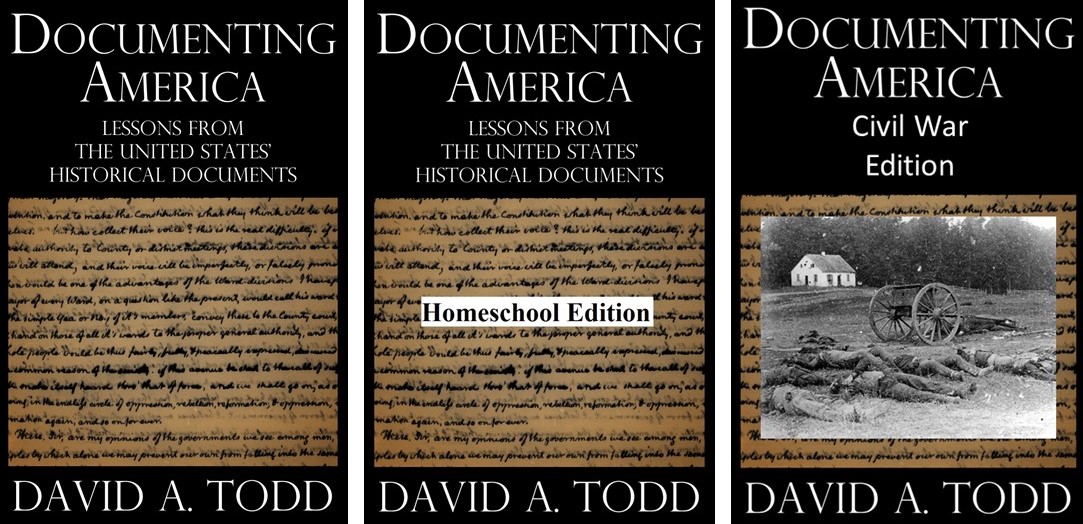
Enquiring people, including the author of this post, want to know. If I do this, what do I do with my publishing schedule? I’m so far behind on my novel-in-progress, and I’ve laid aside my research into the next Documenting America book. Do I totally trash the schedule and move the Bible study into first place on the writing list?
I have a few days to decide. For sure it’s something I’ll develop (at least a short-ish version if not the long one) and teach, along with my co-teacher. And, some day, I’ll expand into a published Bible study. But for now, what to do, what to do?