Category Archives: America

The Gray Cells Are Activating

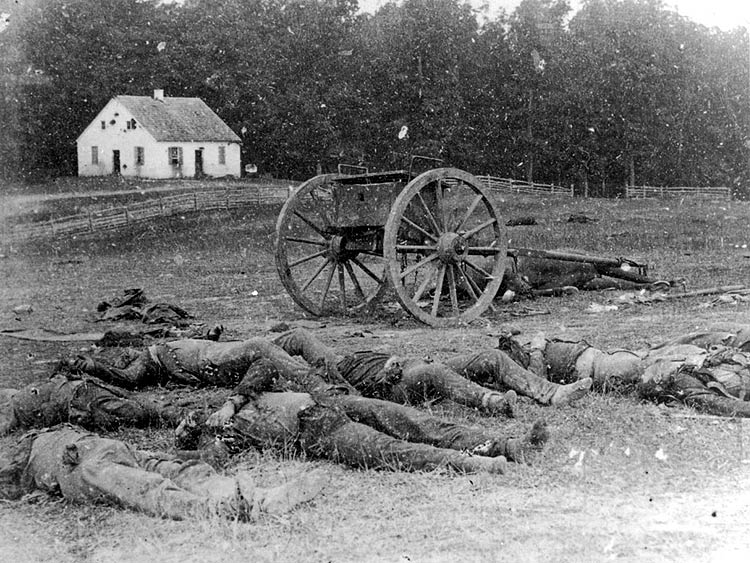
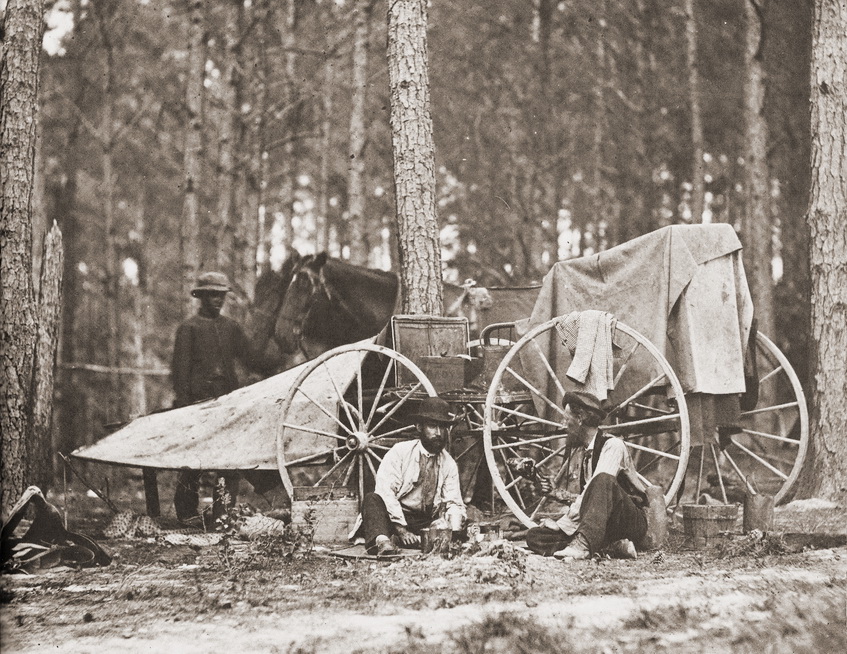
Mathew Brady did such a good job of capturing the Civil War in photos.

I’m in a bit of a slow period right now. Documenting America: Civil War Edition, is done. That is, the writing and editing of the master document are done. Today at noon, I went through my last mark-up of the manuscript, to see if I missed anything. I hadn’t. I thought I made a couple of notations where I wanted to add a couple of sentences, or perhaps paragraphs, but nothing showed on the manuscript. Apparently, such things were on my mind when I last read it, but I didn’t mark them on paper. Now, to re-read the entire work to find them seems too daunting to me. No, it will go to publication just as it is.

So what’s left? I need to create, from the master file, three separate files: one for Kindle, one for Smashwords, and one for CreateSpace (the print edition). I believe I will start to do that tonight. I could have done that anytime in the last week, but I wanted to wait for that one last flip through the marked-up manuscript. That now done, I’m ready to go on.

But, I’m really not ready. For some reason, the shift from writing to publishing tasks always seems to be a roadblock to me. I’d love to be able to turn this over to someone, pay them to do it. Alas, I don’t make enough on sales to afford that, so I won’t.
Cover - Corrected 2011-06What’s involved with publishing, you ask, that’s so daunting? To each of the three publishing files, I have to add a Table Of Contents. I don’t need to do this for fiction, but for a non-fiction work such as this I do. For the print version, that means inserting bookmarks in the text and cross-references to the bookmarks in the TOC. It’s not hard; just feels like busywork. For the e-book files, I have to add hyperlinks in the TOC to the beginning of each chapter, having first inserted bookmarks there, and then add hyperlinks at the end of each chapter back to the TOC, after first having inserted a bookmark there. Again, it’s not all that hard, but feels like busy work.

Next is putting information on the copyright page. It varies slightly for the three different versions. Next is adding a list of my published works to each version. For the print book, this goes in front, on the back of the half-title page (something you don’t use in an e-book). For the e-books it goes in back. And, for each version, it’s different since the list is really links to sales pages: Kindle links for the Kindle version, Smashwords links for that version. I have master files of these links on my computer at home, and can just insert them into the publication files. Normally I have to do a minor update to each file to add whatever my most previous publication was.

That gets me up to the cover. Sometimes I have another person help me with it, or even do the cover for me. This time, however, I’m determined to do make the cover myself. The cover of Documenting America: Lessons From the United States’ Historical Documents, established a series theme, a theme I like. I suppose it could be called a series brand. I’m going to use that theme, changing the text just a little, and superimposing a Civil War era photo over the old document text, leaving some of the text showing around the outside. This, I think, is something I can do, both for the e-books and the print book.

Print book covers are harder, because you have to have dimensions matched to the print size of the book. So, before I do the print cover, I’ll have to re-format the print publication file to the right size page, adjust the margins to a proper size for the smaller page, and check to make sure headers/footers are correct, and there’s no stray blank pages I don’t want. I then will know the thickness of the print book, and can finalize the cover.

Oh, yeah, at this point I also need to strip the headers/footers out of the e-book files. Running headers/footers have no meaning on an e-book, which has free-flowing text.

This isn't the cover—just a temporary mock-up graphic for this post. the final may be close to this, or somewhat different.
This isn’t the cover—just a temporary mock-up graphic for this post. the final may be close to this, or somewhat different.

A final step for the print book cover is to write some back cover copy. I don’t know that I do a very good job on this. How do you condense your 70,000 word book into a couple of paragraphs? Or, rather than condensing, what do you write that will make people take notice and want to read the book? Once I figure that out, I might get more sales.

Then, and only then, do I get to upload the three files to their respective sites. Actually, the e-book steps will most likely come together quicker, and I’ll have them done about a week before I have the print book done. I struggle with graphic arts software so much, that could actually take longer than a week.

But this post was supposed to be about gray cells starting to be activated. By that, I meant that ideas for specifics in the next book are starting to flow. However, since publishing tasks took me so many words to describe, I’ll have to save more on the gray cells for another time.
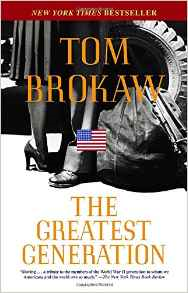
Book Review: The Greatest Generation

I'm glad I finally pulled this from my reading pile and read it. Time well spent
I’m glad I finally pulled this from my reading pile and read it. Time well spent

Back in 2012, when I was writing The Candy Store Generation, I went looking for books about generational identity. Of course I was familiar with Tom Brokaw’s The Greatest Generation. As I did my study, I found that just about everyone had adopted Brokaw’s appellation to that bunch of Americans born between 1900 and 1924. Some extend it all the way to 1939 or so, but Brokaw is clearly talking about those who experienced the Great Depression and led the effort in World War 2, or who fought in it. Yes, many born after 1924 also fought in it, as teenagers. I wouldn’t argue against including them.

As I was studying, I picked up a used copy of TGC, read enough of it to be able to pull some information from it, then set it aside and went back to higher priority stuff on my reading pile. After finishing A Generation of Sociopaths, I decided the more opportune time had come. I found TGC in my reading pile, and went through it in a little more than two weeks.

It’s an excellent book, and its place in the history of America’s story won’t be enhanced or diminished because I review it. The reading is easy, and Brokaw does a good job of weaving short bios of men and women who served in the war into the war story itself. He doesn’t stop there. He tells us something of their lives before and after the war. In some cases  the post-war story was much longer than the description of the war service.

I do have a few criticisms, however. Almost everyone described in the book was an officer. A few began as enlisted men, then were promoted in the ranks. I would have liked to have learned something more about the experiences of the dogfaces in the battle line. Then, the field of journalism is over-represented among the stories. In the part about famous people who served in the war, such as politicians and CEOs, he pulls almost half of them from the ranks of famous journalists. I suppose that’s understandable, given that Brokaw is a journalist. He would of course have more contacts in his own field, and would have an easier time getting those stories, and a greater interest in them. Still, knowing more about a few policemen, construction workers, bus drivers, and factory workers would have been nice.

One the other hand, Brokaw does a nice job of covering issues of racial prejudice, in the country and the military, as well as the limited opportunities for women to serve. He does this in a non-critical way, yet makes it clear he wishes it had been otherwise, and is glad that progress has been made in both areas. I thought this part of the book was very, very well done.

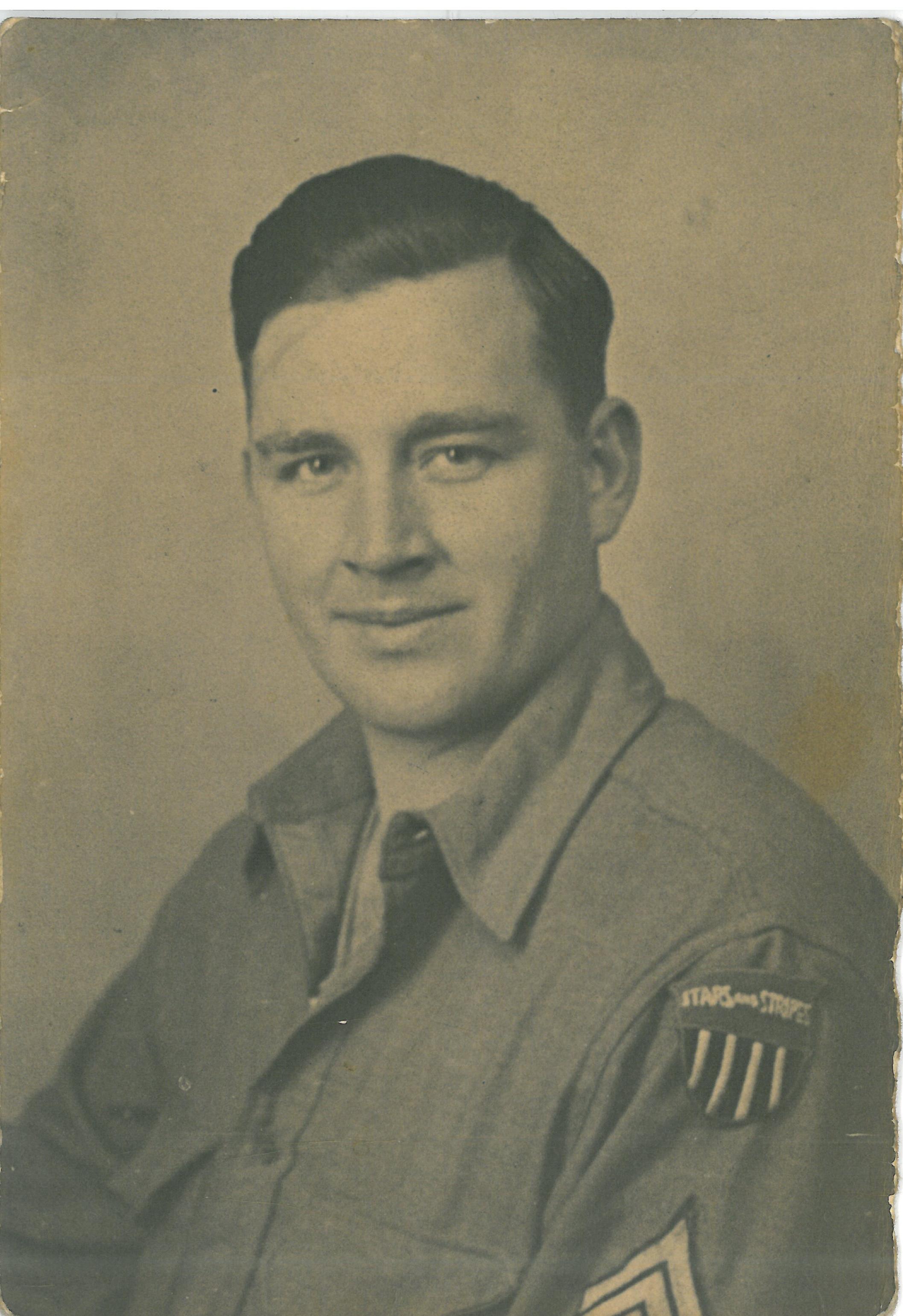
Thinking again about the officers vs enlisted men, or the famous vs the obscure, I offer up my dad as an example. He started out the war as a dogfaced private. Shipped first to England then to North Africa, he wasn’t in the first wave. He was scheduled to be in the invasion of Italy, but was pulled off the LSI in Tunis at the last minute to go work the Stars and Stripes, setting type for them—his pre-war occupation. His service the rest of the war was for his fellow soldiers, getting the news to them, helping them to keep up morale.

A wartime portrait, probably 1944. HIs "Stars & Stripes" insignia shows.
A wartime portrait, probably 1944. HIs “Stars & Stripes” insignia shows.

Dad was closely associates with Bill Mauldin, the cartoonist. For a good amount of time they were in the same S&S office, I think in Italy, but for sure in southern France, and at the end of the war. Mauldin is famous for his Willie & Sam cartoons, of two common privates who found humor in war situations. It’s said that General Patton didn’t like those cartoons, for they showed soldiers who were not our best. Yet, the S&S brass must have realized the soldiers loved them, for the cartoons continued.

My dad played a part in this, as Mauldin often had Dad pose for him. Most likely another soldier was involved as well. I can’t look at a Willie & Sam cartoon and help but wonder, “Did Dad pose for that one? Is that a drawing of Dad?” Dad spoke of Bill often, yet I don’t believe they had contact after the war. After Dad died in 1997, I thought of trying to find Mauldin to let him know, but never did. He died in 2003, the same age as Dad.

I’ve rather gotten off the track here, haven’t I? This is supposed to be about TGC, not my dad. I thought of it because, in the last chapter, Brokaw touches on Mauldin’s work at S&S during the war. That made me think of Dad, and since I was already thinking Brokaw had somewhat shortchanged the enlisted man, made me further think it would have been nice to have had Dad’s story in that, or one of the other 8 million like him.

If you haven’t read TGC, I recommend you do so. It will give you a greater appreciation for those who came before us, and in some cases were our parents. I’m starting to reduce my library, and am being more selective about the books I keep. This one I’m keeping, however. Hopefully Lynda will want to read it. I don’t expect I’ll read it again, but you never know.

On Confederate Civil War Monuments

After I published "Documenting America: Lessons From the United States' Historical Documents", I also published a home school edition of it.
After I published “Documenting America: Lessons From the United States’ Historical Documents”, I also published a home school edition of it.

The book I’m currently writing, Documenting America: Civil War Edition, is currently sitting on a chair in our kitchen, waiting for me to get back to it. I finished it about ten days ago, and I’m letting it sit a while, giving me space and perspective, before I start the editing process. I anticipate the editing will take two or three weeks. Then publishing tasks can begin.

Meanwhile, the Civil War is back in the news. Several Civil War monuments are being removed in the City of New Orleans. These are monuments to Confederate leaders, such as Robert E. Lee, Confederate General. This follows several other places where similar monuments have been removed.

I have mixed feelings about this. Since the reason the states that formed the CSA withdrew (i.e. seceded) from the USA was because they wanted to preserve slavery, those monuments are in essence to those who wanted to preserve slavery. Those descended from slaves naturally are appalled that, in the 21st Century, we are still honoring those who enslaved their ancestors. Those who weren’t descended from slaves, but who align with those who brought pressure for abolition, are also appalled. I think I understand their concerns.

On the other hand, some say those monuments don’t mean the same today as they did when they were first erected. Now, they are simply recognition of those who loved their country, even if their views of what that country did were misguided. They say: Would you also removed monuments to George Washington and Thomas Jefferson, both slave owners from the south? They have a good point. Washington and Jefferson didn’t take part in rebellion. Oh, wait, they did: rebellion against England. But, that was a good rebellion, working for a government that would protect the natural rights of man, a.k.a. God-given rights. So that’s different.

It won't belong before I start work on the cover for this next "Documenting America" book. I hope to get a good photo from a nearby Civil War battle field.
It won’t belong before I start work on the cover for this next “Documenting America” book. I hope to get a good photo from a nearby Civil War battle field.

I have a different view of it. Those monuments have become history books in their own right. By destroying the monuments, we are destroying history books, and trying to expunge history. Is this a good thing?

At one time I thought, “History is history. It is what it is: just a bunch of facts, and dates, and actions by people that happened, and are passed down to those who didn’t experience them.” Then I started writing about history. And I read much by others, both history books and how-to-write-history books. And I learned that how a historical event is treated in a book depends on how the writer does his research and puts the book together. Facts are facts, but you can ignore some and over emphasize others. You can twist some into your opinion mold and make them say something different than what another writer will say about the same fact.

So history isn’t really history. All history is interpretation of what happened in the past. Sometimes it comes with an agenda. Sometimes it comes with a preconceived notion that the historian has been able to make sure you see in the work, causing you to think “Oh, sure, it’s obvious that’s how it was.” However, if you read a book by Historian A instead of Historian B, you would get a completely different picture. I wish it wasn’t so. I wish history was history. But, alas, it’s not.

Back to the Confederate monuments. They represent a dark time in our history, a time when a few white people thought they had the right to enslave a bunch of black people, and to go fetch more black people through an illegal trade. The monuments were meant to honor that dark time. Now we know better. Why not use that to our advantage, keep the distasteful monuments, and use them for a different purpose?

Imagine this, with the monuments still standing. You’re in New Orleans, with your young children or grandchildren. You come across the monument of Robert E. Lee. Your child asks, “Who’s that man up on that horse?” What a great teaching moment that is. “He’s a man who thought it was okay to enslave people simply because they were of a different race. He might have been a good man at heart, but his actions were to perpetuate a way of life that had one race the masters and one race the slaves. This monument was once put up to honor him, but now we know it’s here to help us to never forget just how evil that practice was.”

Now THAT would be a great moment. That would be a great monument. Turn its purpose on its head and make it mean the exact opposite of what it was intended for 140 years ago, or whenever it was erected. How much better that would be than removing it.

The old cliché goes, those who don’t learn history are doomed to repeat it. Well, those who expunge history won’t learn from it. As a result, we may not learn the evils of slavery as we should. Slavery won’t return, I don’t think, but what other evil practice may happen as a result of us not having that history before us, right in our face, forcing us to confront that dark past?

It’s something to think about.

Patriotism vs Nationalism

I’m going to write and post this, but it will be far from complete, and I’ll have to follow-up with supplemental posts in due course. I write this during the wave of very vocal public opinion after San Francisco 49er quarterback Colin Kaepernick refused to stand for the national anthem during a preseason game a week or two ago. Public opinion seems to be against what Kaepernick did, but you can hear voices on the opposite side, ranging from “no big deal” to “he did the right thing.”

For a while now I’ve thought about this. By that I mean long, long before Kaepernick decided to exercise his First Amendment rights with apparent disregard for what impression it would make and effects it could have. Or perhaps he did think them through, though some of his comments since then make me think he didn’t. I’m thinking back to the flap when then-presidential candidate Barack Obama didn’t wear a U.S. flag lapel pin. There was some outrage at the time, but it all blew over; most people won’t remember it without prompting.

My thoughts at the time were that I wasn’t particularly concerned with outward gestures that people define as patriotism. I’m concerned with actual acts of patriotism. I’m concerned with people living their lives as a patriots, not mindlessly participating in rote ceremonies that have become mostly without meaning.

Don’t get me wrong: I always respect our flag, and think about what it stands for every time I’m involved in a ceremony. Heck, I remember a time at URI, gotta be 44 years ago at least, because I  was living on campus. It was a very cold winter day. I was dressed in my surplus U.S. Navy bridge coat, the one I had my brother get when Cranston High School East declared them surplus, having bought true warm-up jackets for the football team. It was a heavy, heavy coat, but it sure kept me warm. It was late in the day and I was heading across the quadrangle, in the direction away from the dorms (so maybe I was going to an evening class or exam). Wherever the flag pole was on the quad (seems like maybe it was a flagpole close to Bliss Hall), they were striking the colors for the evening. I don’t remember who was doing it; I don’t think it was a formal ceremony, just someone taking the flag down. I stopped, took off my red and black hunter’s hat, and stood at attention with my hand over my heart, until the flag was down and folded and being carried away to overnight storage. I doubt too many people ever did that in the URI quad.

So the flag is important to me, and that wasn’t a meaningless gesture on my part. But, I have to say, that respect for the flag is not patriotism. It’s nationalism. What’s the difference, you wonder? My desk dictionary has a slight variation in the definition of the two. Patriotism is listed as a synonym for nationalism, but not the other way around. Nationalism includes this alternate definition: excessive, narrow, or jingoistic patriotism. Oh, that’s not nice. The definition it give for patriotism is: love and loyal or zealous support of one’s own country. Yeah, I like that.

So is standing for and singing the national anthem, with your hand over your heart—or if you can’t sing just being quiet and respectful—an act of patriotism, or of nationalism? If it’s done for show, or because you’re supposed to do it, or merely because people are expecting you to do it, then it’s at best nationalism, and at worse mindlessness. The best you can say about it is it can be an example to others, and perhaps encourage others to learn to respect and love their country.

So what is patriotism? In a previous post I mentioned that my dad was a patriot, and I gave reasons why I thought he was. However, I’m going to hold off on completing these thoughts. I want to take time to properly develop them. Perhaps it will be my next post, or even one or two after that.

The Flattery Continues

Well, that short piece (real short piece, had to be under 50 words) I wrote back in 2004 for American Profile magazine continues to have legs. I wrote about this before. Yesterday, on a whim I decided to check for it again, so I searched for the phrases “ethics before law” and “law before gain”.

On the former I got over 4,500 Google hits. However, these reduced to just three pages upon clicking through them. The latter had 567 hits, which reduced to seven unique ones upon clicking through. A good number of these were to my quote, or rather to my quote unattributed.

One of those is a discussion on a Yahoo message board (second reply, discussed more several posts down, and the bad language is not my fault). Interesting that this was quoted in a discussion on Islam and whether Moslems can be good citizens.

So the flattery continues, sort of. I seem to have crafted a good phrase. I thought it was good at the time of writing; the legs prove it is.

Now, to be a successful, published writer, I just have to duplicate the quality of this a few tens of thousands of times. Piece of cake.

A Broken Society

Several things have hit me lately that demonstrate just how broken our society is. I’m not thinking about politics, and whether or not it’s better that a Democrat or Republican won the presidency earlier this month. I’m not thinking about the economy and the Panic of 2008, although clearly if a depression hits us we will potentially see much more brokenness than we do now.

No, I’m thinking of the brokenness of individual lives.

Two events are giving rise to this. On November 7, in Oklahoma City, Jeremy Moore was murdered by gunshot. I can’t remember if I met Jeremy or not. He was our son-in-law’s roommate for some of his college time, and was in his and our daughter’s wedding party. So I know I saw Jeremy, but may never have met him. Why was he murdered? The circumstances were he was delivering pizza as a second job, trying to support his girlfriend and their nine-day old child, having just bought a house and about to make their first payment. He took a delivery to a certain apartment complex. The apartment turned out to be empty, and someone(s) was waiting in the shadows and gunned him down. Police don’t know the reason; possibly robbery, though everyone knows (or should know) delivery men carry almost no money; possibly gang related—not that Jeremy was in a gang, but that he was the random target of someone who had to kill someone as a gang initiation; possibly simple depravity, someone out for kicks. My son-in-law blogged about it a couple of times here.

The other event was learning yesterday that a young couple in our church in Bentonville are getting a divorce. This couple was one that got the “cart before the horse” in terms of intimacy, but yet had married, had two children, and had become fairly regular attenders at church, even linking in with a life group, and having loving, supportive parents from at least one side. I know the pressure on young couples is great these days, and the chances of failure of any marriage is around 50 percent, but this was one couple which, despite a start with questionable circumstances, I really thought was going to make it.

One young widow and fatherless child due to a tragedy; two children in a broken home due to whatever the circumstances were, but also a tragedy. This is emblematic of the brokenness of our American society. I have heard, but have not verified, that statistics show children are least at risk when they grow up with a mother and a father in a loving home, not even necessarily a Christian home. This gives me pause to wonder: what is the church doing, and what am I doing, to interrupt this brokenness? Maybe my concern about politics—who gets elected, what policies they represent, how they will protect American sovereignty—is misplaced. As would be the church’s. Maybe I should just be thinking about what I and my church can do to help prevent tragedies such as these two.

Something to think about.

Forty-Five years ago yesterday: Kennedy Assassination

I meant to write this yesterday, but a day full of activity in advance of Thanksgiving, and all the company we will have, gave me no time at the computer.

John F Kennedy was assassinated 45 years ago yesterday, November 22, 1963. I was in 6th grade at the time, in Mrs. Fisk’s class in dear old Dutemple Elementary School. The first word that we heard was that the president had been shot. This came from a snotty girl in the class, and how she heard it I don’t know–obviously from some adults, probably the teacher. A few minutes later she came over to say the governor of Texas had shot the president. Before school was out at 3 PM Eastern Time, we had the correct news. I don’t remember a whole lot about my reaction. I was not very politically aware as a 6th grader, as neither of my parents were all that politically active or interested.

Put me in the camp of skeptics as far as the official version of the events goes: the Warren Commission conclusion that the president was killed by Lee Harvey Oswald acting alone. Sorry, but I don’t buy it. I have read way too much about the evidence and actions of the various players, and believe that Kennedy was killed by some sort of conspiracy. The police work was so shoddy, and the forensics so botched–from the autopsy to the ballistics to the interrogations–that there is no way Oswald ever would have been convicted had he lived to face a trial. The doubt of his guilt is way beyond reasonable.

I don’t know that I want to get into my theory today. I may never post or publish it, save in papers in my file folders. I do want to mention one interesting family anecdote related to this. My late father-in-law, Wayne B. Cheney, was a paper gatherer, and an amateur photographer of some ability. He took many photos of local sports events in Fowler, Kansas before he moved to Amarillo in his latter days. In 1963 he was living in Longview, Texas (he was divorced from my mother-in-law), and had a lot of interests, had lots of contacts with people. He lived a quiet life, but not an isolated life.

I mentioned he was a paper-gatherer. It fell to Lynda and me to go through those papers after he died, along with all the photographs. One 8×10 glossy photo was among the many in the boxes. It was of JFK and various people. I don’t have it in front of me, so I will summarize what Wayne wrote on it: In November 1968 [sic], when I lived in Longview, a friend asked me to take her to Houston for [I can’t remember the reason]. While there, president Kennedy was there, and I was able to get close enough to snap this picture. Obviously he got the year wrong, for Kennedy died in November 1963. But could this be true? It would have been like Wayne to have given someone a ride from Longview to Houston; he would have had his camera with him; raised in a Kansas Democrat farm family he would have wanted to see Kennedy. I don’t know any other time during his presidency that Kennedy was in Houston. So, assuming Wayne was writing the truth, that he actually took that photo (I still have to look for a negative among his papers/photos), this picture would have been shot Nov 21, 1963 during that fateful trip. What is amazing is how close he was able to get to the president.

I may hunt that photo up and enter the exact caption he wrote on it, but I don’t think I’ll post it, just in case Wayne really didn’t take it. He never mentioned it to me before he died.

Just an interesting anecdote. Then again, maybe I’ve got a semi-valuable gem in that box.

The People Have Spoken

The election on November 4 was a clear signal, I believe, from the American people. They don’t like the job the Bush administration has done, and John McCain was not seen as a better alternative. Hence Barak H. Obama is our president-elect. I hope he has a successful presidency, and that my fears of an 8-year economic slowdown/recession/depression about to take place as a follow-up to the Panic of 2008 (which I believe will happen regardless of who had been elected president) will not happen.

I notice the Democratic gains in the Senate were about in line with expectation, while the gains in the house were a bit below expectation. Still, the gains were clear. That is surprising given Congress’ low approval rating as determined by pollsters, but is further evidence of backlash against Bush.

While some non-professional pundits are saying this is the end of the Republican party, I think that death certificate is pre-mature.

The main negative I have heard in the last two days is that potential Republican hopefuls for 2012 are already making plans to head to Iowa. How sad we must be in a perpetual election cycle.

Everybody’s Busy

American life is an incredible journey of rushing from one good activity to another. At least, that’s the whirlwind I’m in, and the one others are in based on my recent attempts at making contact. I suppose the greatness of America has something to do with it. We are blessed with incredible freedom and abundant wealth, both augmented by the world’s most advanced technology and relatively cheap transportation (even with gasoline at $3.559).

Because of that, we load up our lives running here and there: activities, trips, and travel–hopefully good things that will enhance our lives and the lives of those within our reach. That includes the whole world nowadays. So when a new, good activity comes up, it must be denied access to our schedule, or something else must give way, be it sleep or relaxation or whatever.

If an old friend from school days contacts you, offering re-acquaintance, what to drop to add that? If long lost relatives discover you, how do you work into the schedule time to build new relationships? If someone you mentored decades ago goes out of his way to find you and attempts correspondence, how will you respond? Interesting questions, for which I have no ready answer.

For me, what gives first is the mundane household chores: balancing the checkbook, paying the bills on time, planning next month’s finances, replacing a light bulb, replacing a broken lamp globe, sweeping the driveway, timely washing the dishes, filing the ridiculous number of papers all my activities seem to generate, etc. Next comes a shortening of quiet and devotional time, and leisure–avocations are not always leisure. Shortening may eventually become elimination.

For others, what gives might just be the new activity, for the comfort of current routine ultimately trumps change for most people.

Michelle says: It takes a family

Yes, that was the underlying message of Michelle Obama last night at the Democratic party’s convention, to the delegates, staff, media, nation, and world: It takes a family to raise a child, and that family consisting of both a father and mother, and if it happens, cooperating siblings, all working on their own initiative, all dedicated to the task at hand, working diligently, loving totally.

I thought the tribute she paid to her dad was touching, how he worked at a “filtration plant”–by which I assume she means a water treatment plant, and how he continued to do so even after he was physically diminished by disease. He altered his routine, taking longer to get ready for work, so that he could continue to support his family, which he saw as his duty, so that his wife could be a stay-at-home mom. Michelle praised he mother for that, and seemed to feel having that mom at home was important to her upbringing.

The relationship between Michelle and her brother (didn’t catch his name) also seemed important, based on their dovetailing testimonies. She influenced him to stay with coaching, and he influenced her to pursue public service as opposed to a Big Law partnership. Any parent would be proud to have such children, and feel that they had done something right in their raising.

Look at what was absent in Michelle’s speech concerning the influences in her life: neighbors, neighborhood, extended family, government programs. She mentioned her neighborhood, the south side of Chicago, but did so in almost derogatory language. You got the sense that the neighborhood would have pulled her down if the family hadn’t propelled her up. It appears, from Michelle’s words, that the government had no influence at all, either positive or negative.

A last impression I got was the positive influence Michelle has on her husband and children. As stable and positive as her raising was, Barack’s was turbulent: absent father, mother who seemed unstable, frequent moves, raised by a racist grandmother, experimentation with mind-altering drugs. Maybe Michelle helped her husband settle down and end the wild days of his youth. She is likely having that same influence on their daughters.

So, thank you Michelle, for that positive message, exactly what this nation needs to hear today, and echoing that of Bob Dole in 1996: To raise a child, it doesn’t take a village; it takes a family.

By the way, Michelle, have you discussed this with Senator Clinton?