Category Archives: book reviews

Continued: “The Control of Nature”

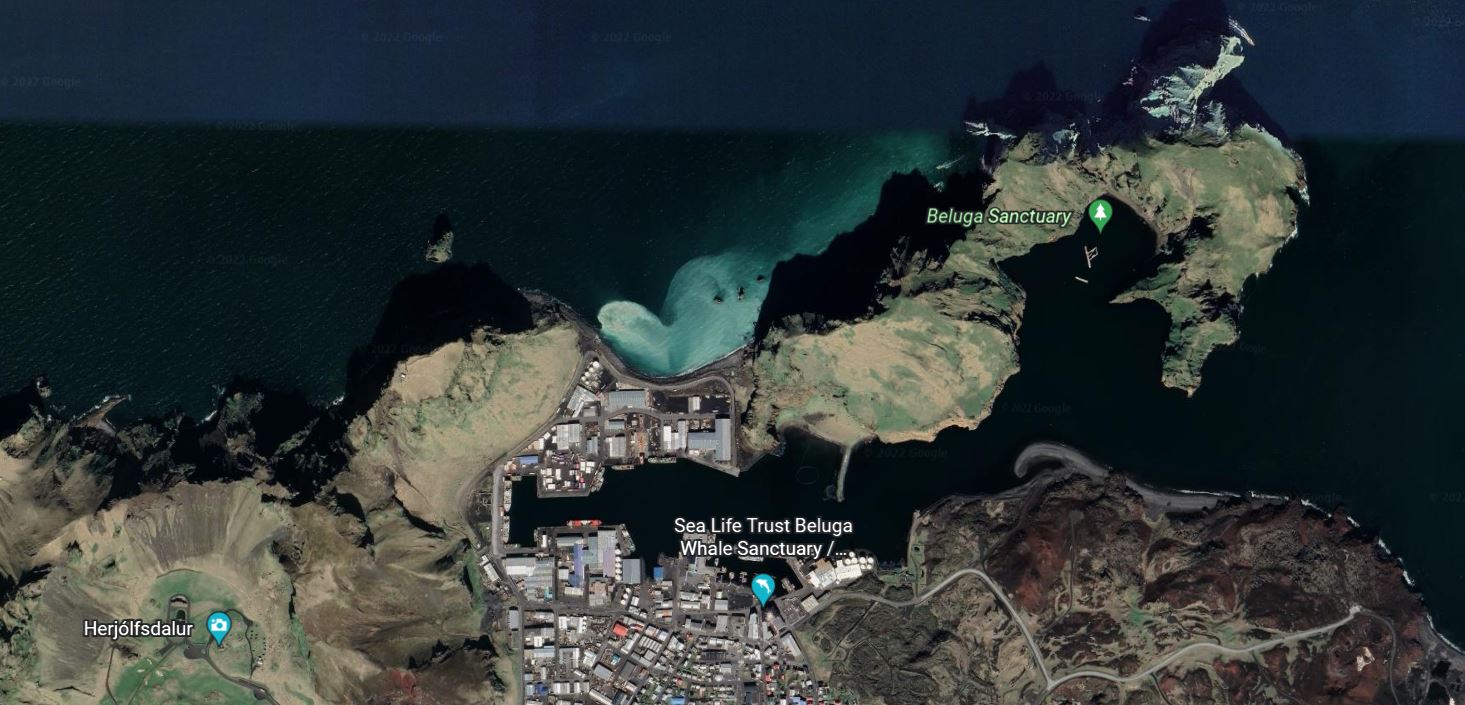
The new volcano threatened to close the harbor that runs left to right in this photo. The harbor entrance used to be twice as large as it is in the photo.

In my last post, I began a review of the book The Control of Nature by John McPhee. I mentioned that the book had three parts, and that I would be doing a review in three parts. See the first part of the review here.

The second part is titled “Cooling the Lava”. This concerns a volcanic eruption in Iceland in February 1973. It’s now been over a month since I read this section (maybe closer to two months), and I don’t remember all the names involved. Basically, this was on an island named Vestmannaeyar on the south side of Iceland. It included a sizable town, an important port, and a valuable fishing fleet and the infrastructure to support this. The town was Heimaey. The volcano was a new one, coming up from nothing but the hot works below the nation’s surface. See the photo I clipped from Google Earth.

Almost from the minute the volcano appeared, the fire boats, engines, hoses, and water came out and people directed it onto the flowing lava. People in the country laughed at them. But as the lava increased, so did the hoses and water. The laughter faded away and fear came.

McPhee does a good job of explaining how mankind cannot always allow nature to have it’s way.

Many people fled Heimaey. Others came and joined the fire brigade. Slowly, the hose holders won the battle. The lava hardened at the surface and new lava, when it came, piled up higher and higher, but ceased to move forward. The harbor was saved. In fact, the harbor entrance width was cut in half, reducing wave intrusion from the sea but leaving plenty of space for ships and boats to get in and out.

McPhee does a good job of explaining what was done, how the lava behaved, and the aftermath. I especially enjoyed the later. The surface cooled enough to walk on, but stick a thermometer through the surface, and a few inches down you have temperatures that will boil water. The crust, though hard enough to walk on, is thin. This is true even years after the eruption.

My main complaint about this section of the book is the same as the first section: it was too long. McPhee went on and on. He shifted from Iceland to Hawaii, where they took the opposite tack from Iceland. They let the lava flow and hoped for the best. It was interesting to learn about the difference in approaches, but it really dragged out this section. Actually, the Hawaii part wasn’t too long. It was the Iceland portion. I don’t know what I would cut out, but something really needed to be cut.

This makes two parts of the book with the same opinion on quality. Stay tuned for the third part, and my overall conclusion. I’m not sure whether that will be on Monday, or perhaps later.


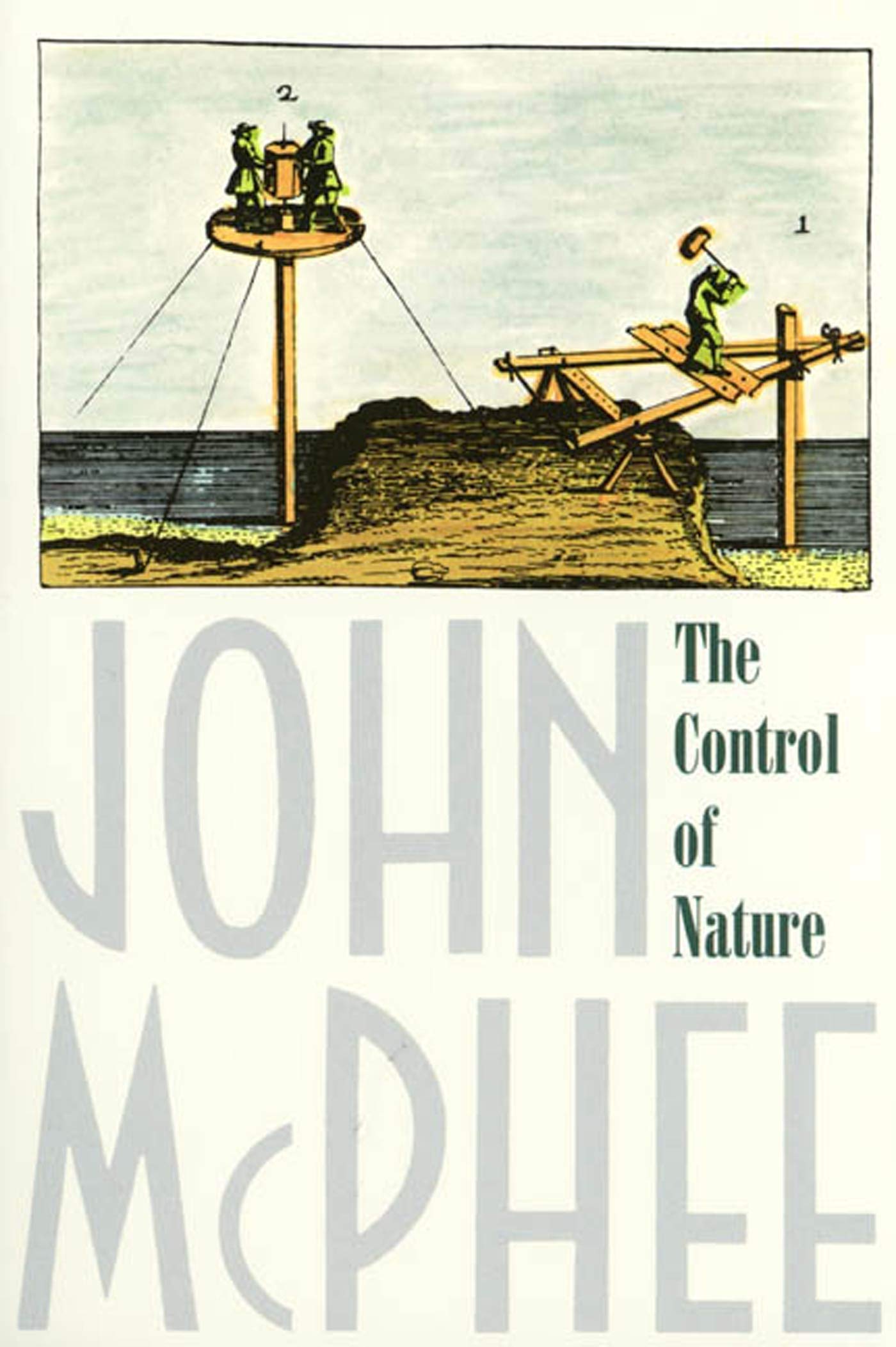
Book Review: “The Control of Nature”

McPhee does a good job of explaining how mankind cannot always allow nature to have it’s way.

Approximately 30 years ago, the head of our company gave me (as he did to others) a copy of the book The Control of Nature by John McPhee. I’m sure he thought that this would be a good book for civil engineers to read. Well, it took me a while to get to it, but I finally did, reading it over the summer. The reading ran a little longer than it probably should have. 288 pages long, I think it took me close to a month to read in ten page sittings.

The book is in three sections, each dealing with a case where man has battled what the natural world is doing in a place where man doesn’t want change to happen to his built environment. The first is where the Mississippi River, in its meanderings upstream of Baton Rouge, it trying to spill out into the Atchafalaya River, which is known as a distributary.

This illustration from Wikipedia shows what’s going on between the Mississippi and the Atchafalaya.

This is flat country. The river flows slowly, but it has a lot of water in it. Some of that water escapes from the Mississippi River watershed into the Atchafalaya River watershed. This has been going on for a long time (as in centuries), but is slowly accelerating. If nature had its way, just about all of the Mississippi would have, by now, been re-routed into the Atchafalaya. The Lower Mississippi will have ceased to be a major river, and New Orleans and Baton Rouge would have become untenable as major ports.

We can’t let that happen the Corps of Engineers decided over 60 years ago. So they built control structures. The first one worked, but wasn’t enough. So they built another, and another. Then the floods came, and everyone involved held their breath to see what would happen. The structures held. The “father of rivers” stayed in its banks. The control structures let water through, but just enough to keep the Atchafalaya flowing as it’s supposed to.

McPhee goes into great detail about how this all came about, how it is being maintained, and what the (then, around 1988) future was likely to hold. The structures had held up for a couple of major floods, though sustained wear and tear. What would happen in the future.

The area where the control structure are. They appear to still be working.

It occurred to me that if these structures were still standing I ought to be able to find them on Google Earth. Sure enough, there they are, though added to since McPhee wrote about them. They now include a hydroelectric structure on one overflow channel. The next photo, from closer in shows water flowing in the channels. The Corps couldn’t completely shut off the Atchafalaya, so the structures were built not to hold back the flow completely, but to allow just the right amount through.

The main control structure closer up.

This part of the book is fascinating. McPhee talked about the history of the rivers and the structures, but also about the present, that is the end of the 1980s present. He interviewed people who operated and maintained the structures. He interviewed those who lived nearby and how all of this affected them. And he interviewed those who were planning for the future.

In fact, those interviews give rise to my main criticism of the book. Sure, they were interesting, but they were too many and too long. They made into 90 pages what could have easily been told in 60 with no loss of interest, at least for me. And, as I go through this review, you’ll find that’s my complaint throughout.

But, I’m going to split this review up into three parts and won’t give my overall conclusion or rating until the end of the third part. I will say that, as an engineer whose career was mainly about the flow of water (sometimes sewage) through pipes and channels, this part of the book was fascinating to me. I also think non-engineers will find the book of interest. In fact, perhaps those many interviews will provide much enjoyment to those not so caught up in the engineering of the project.

Stay tuned for parts 2 and 3, coming at some point.

Book Review: Wallace Stevens’ Poetry

I gave up on this book, something I hate to do. I couldn’t understand his poetry.

At some point, I bought a copy of The Palm at the End of the Mind, a collection of Wallace Stevens’ poems. Although it is said to be “selected poems”, it seems to be fairly complete. My paperback copy is 404 pages.

The editor is Holly Stevens, his daughter. She wrote in the Preface, “The poems included in this selection have been chosen to represent my father not only at his best but also in the full range of his imagination. They have been arranged in chronological order, determined from manuscript evidence, correspondence, or date of publication.” Although these are selected, it seems like a complete collection to me.

I’ve known about Wallace Stevens for some time but had read little of his poetry. He has some poems in anthologies that I have leafed through, but if I read any of his, they didn’t make much of an impression on me. Until this collection, that is. I bought this, I suppose, to try to have a more “rounded out” collection of poets’ works. Stevens lived from 1879 to 1955, so was a poet of the 21st Century. I assumed that would make him essentially a free verse poet, that assumption being informed by snippets about him that I had read in magazines or short bios.

Sure enough, that’s what I discovered as I read in this volume.  Almost everything in it is free verse. I’ve made no bones about it that I don’t understand free verse and can’t appreciate it. Thus, it’s no surprise that I didn’t like what I was reading in this book. The first poem seemed pretty good, however, and I read on. Alas, for me it was all downhill from there. I had great difficulty finding enjoyment in most of the other poems.

Heck, I didn’t understand most of them. They seemed to be a series of unrelated and disconnected images. I just skimmed through the book to find an example of this. Virtually every poem has those types of images and language, but I think I won’t quote them here.

So, I gave up with Mr. Stevens’ book. I hate to do that with any book. Before I did I got to page 100, 1/4th of the way through the book, so that I could say I gave it an honest trial.

And, as you can suspect, the book is not a keeper. I hate to break up my poetry collection, but with this one I start the process.

Book Review: Witness

An excellent book about a man who suffered horrendously at the hands of the Soviet communists.

When you are a buyer of used books, you sometimes wonder where you got this or that book, how long you’ve had it, and why you bought it. So it is with the book Witness: An Autobiography by Josyp Terelya with Michael H. Brown. Terelya was a prisoner in the USSR in the 1960s-80s because of his Christian faith.

The reason I wonder why we bought the book is because Terelya is Ukrainian Catholic, which is attached to the Roman Catholic Church. As a Protestant, I’m not anti-Catholic, but I don’t usually read Catholic books. I suspect we bought this at a thrift store, based on the price marking.

However, it is an excellent book. Terelya was born to Communist parents in Ukraine during World War 2. In fact, they were leading communists and very much in favor of Ukraine being part of the Soviet Union. Terelya was influence by his grandparents and others, and became a devout Catholic, much to his parents’ dismay. The USSR suppressed religion, especially any religions that competed with the Russian Orthodox Church.

When Terelya became an adult, he did not hide his religious observances, and was soon put in prison for it. He escaped. He was captured and his sentence increased. Put in a more secure prison, he escaped again. He was beaten, spent much time in solitary confinement, Food rations were inadequate. He developed health problems. The guards also tried to break him psychologically, with frequent interrogations and beatings. As a consequence of his long imprisonment, he developed chronic health problems.

Through this, Terelya survived. He found ways to share his faith and prepare printed materials. Once when he was released for a couple of years, he married and fathered his first child. In later years, two more children were added to the family.

A portion of the book deals with “appearances” of Mary, the mother of Jesus, over a several week period in a small Ukranian village in 1987. Terelya was out of prison by then and took part in observing the visions. He went into considerable detail about these.

My wife and I read the book aloud in the evenings, taking about a month to complete it (with a few interruptions). I’m glad we did. It was unexpectedly timely due to the current war in Ukraine, and it told us a piece of history we had no idea of. Learning new things while being entertained is a good thing.

The book, published in 1991, is likely out of print. But it is worth the read if you can find it. I give it 4-stars, it losing one star due to what I consider an overabundance of placenames without providing a map to give at least a basic idea where places were. Alas, the book is not a keeper. We are going to give it away to a Catholic relative, and hope they, in turn, pass it on to someone who will enjoy it.

Book Review: “C.S. Lewis: His Life & Thought”

If you don’t know much about C.S. Lewis but would like to, this book is a good place to start.

When we traveled to Meade Kansas for an event at my wife’s home church, we discovered the library there had a sidewalk sale of surplus books going on. Naturally we had to go to it and look for bargains. I bought two books. One of them was C.S. Lewis: His Life & Thought by Terry Glaspey. I read this in about eight sittings in June.

It’s hard to get a bad book by or about C.S. Lewis. The eminent scholar and Christian apologist has had a major influence in the world and in my life. I try to always be reading a book of his or about him. This is the third or fourth I’ve read this year, and I’m reading in the second volume of his collected letters currently.

This book is in two sections. The first is a summary of his life, in short chapters covering brief periods or episodes. This is less than a biography, more of a series of vignettes.

The second half covers Lewis’s beliefs, again in short chapters, about various Christian doctrines and practices. These include quotes from Lewis’s writings as well as commentary by Glaspey. This section is well done, well worth reading.

The book includes a third section: C.S. Lewis: His Legacy. This is only ten pages long. Like the first two sections, it is also well done.

The entire book reads as a summary of Lewis’s life and beliefs, and a good part of his works. If you are looking for an introduction to C.S. Lewis, this would be a good book to start with.

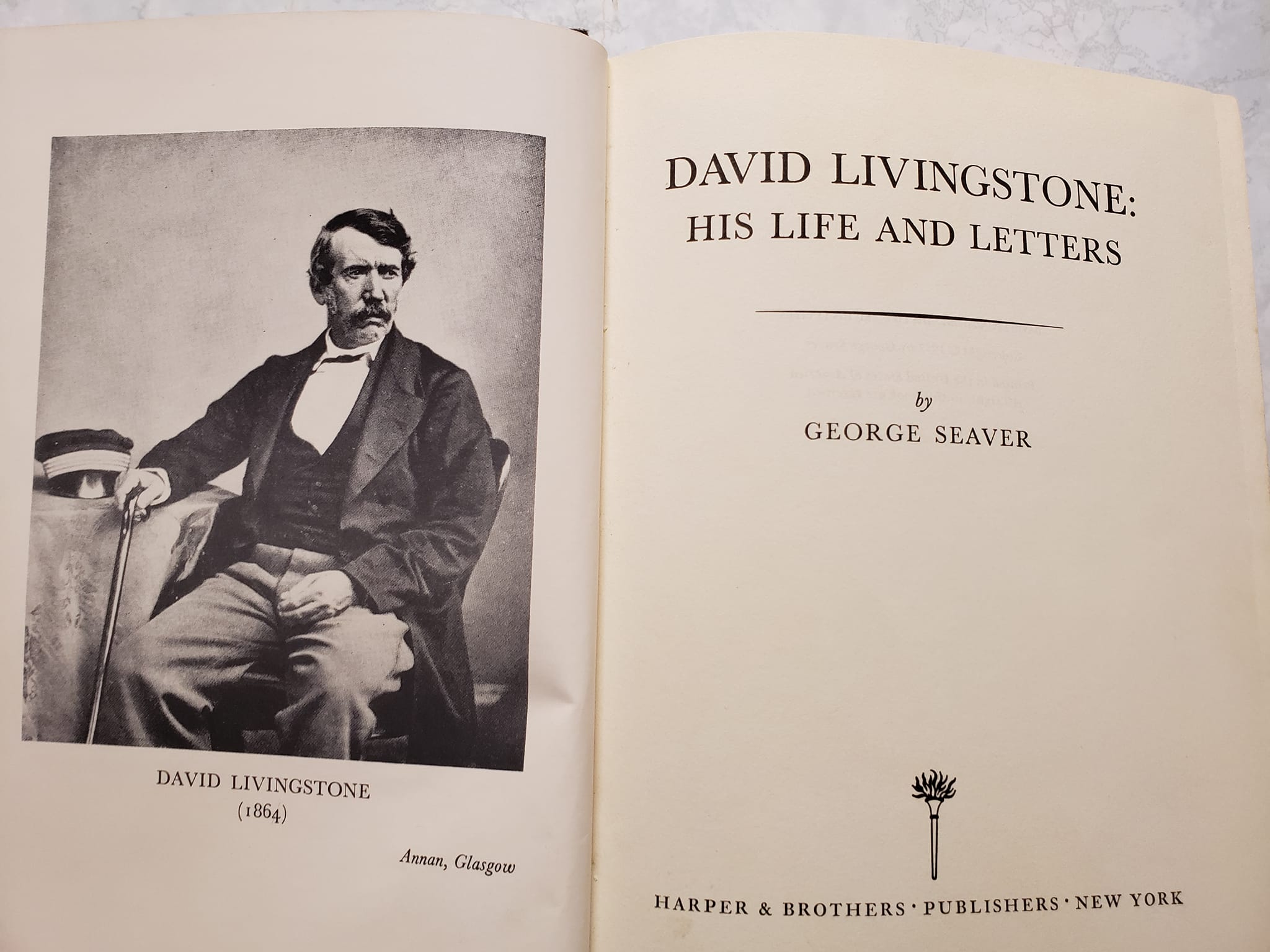
Book Review: Boswell’s “Life of Samuel Johnson”

This isn’t the version I read. Mine was hardback, printed in 1946, with some good illustrations, both b&w and color.

It seems that whatever British author I read in the 1800s and 1900s, reference is always made to The Life of Samuel Johnson by James Boswell. Obviously, this is an important book. As a result, some years ago, I picked up a used copy somewhere and put in in the reading pile.  Sometime in May, I was looking for a book to read, preferably a book that I would read and then get rid of. I saw this on my closet bookshelf. The 631 pages sort of turned me off, but I thought, why not?

It took me over a month to read this. Wikipedia says “It has often been described as the greatest biography ever written.” Would it prove so?

I had often heard of Johnson. Carlyle and McCauley wrote essays about him, or about this biography. C.S. Lewis frequently made references to him, or at least to this book, in his letters. Johnson was a writer. His most famous work was an English dictionary. I’m not sure if it was the first one published, but for sure it was an early and influential one. He also published The Rambler for three years, followed by The Adventurer.

Johnson’s works span essays, pamphlets, periodicals, sermons, poetry, biographies, criticism, the dictionary, and a novella. Sounds like he had the same writing malady that I do, Genre Focus Disorder.

Boswell had befriended Johnson, who willingly accepted the younger man into his circle of friends. Boswell kept a journal that included summaries of their conversations, recorded shortly after they had taken place. After Johnson’s death in 1784 at age 75, Boswell got to work on the biography. Published in 1791, it took England by storm. Boswell worked in many of those conversations. He also quoted extensively from his and Johnson’s correspondence, as well as of letters between Johnson and others. That resulted in a work that was varied in contents and made this biography much different than biographies published to that date.

Since then, this book has come under criticism for being less than a true portrait of Johnson. Boswell himself came in for criticism. McCauley said he was:

“Servile and impertinent, shallow and pedantic, a bigot and a sot, bloated with family pride, and eternally blustering about the dignity of a born gentleman, yet stooping to be a talebearer, an eavesdropper, a common butt in the taverns of London[;] … such was this man, and such he was content and proud to be”.

Of course, knowing how opinionated McCauley could be, I would not accept this assessment at face value. Thomas Carlyle also wrote about Johnson and this biography, one of Carlyle’s works I haven’t read yet, but will soon.

So I have now read this book. I’m glad I did so. Am I enlightened? Do I agree it is “the greatest biography ever written”? Is it a keeper.

Yes, I am enlightened, or perhaps I should say educated, about Johnson’s life. I had heard of him, but really didn’t know anything about him except his era and his general works. Now, I am more enlightened about the man, his life, and his works. I don’t know that I would classify this as the greatest biography ever written by modern standards. But, then again, I don’t know that I would hold any bio I’ve read head and shoulders above others. Biography is great and I enjoy reading them. This is a good one, but, in my opinion, not “the greatest”.

And, it is NOT a keeper. Now that I’ve written this post, out to the donation/sale shelf in the garage it will go. I just took a load of books and other stuff to a thrift store on Wednesday, so Johnson and Boswell might sit there awhile, gathering dust. Perhaps I’ll have a visitor to the house who will want this, and I will gladly give it to him or her.

Book Review: Dear Bertrand Russell

This isn’t the volume I have. Mine has a much plainer cover than this.

People have different things they buy on impulse.  For me it’s books. I’m better than I used to be. Nowadays, the book has to be something special at a good price. So when we were in Meade Kansas in late April-early May for the Centennial of Lynda’s home church, it was the same weekend as a city-wide “Trash & Treasures”, where people put stuff out at the curb for anyone to come by and pick up. The public library decided it was a good weekend for a used book sale. We just had to go to it.

One of the books I bought (of only two) was Dear Bertrand Russell: A Selection of His Correspondence with the General Public, edited by Barry Feinberg and Ronald Kasrils. For 50¢ I had to buy it. The name was familiar to me, but all I could remember about him, as I bought the book, was that he lived a long life and was some kind of scientist. I’ve since tried to learn a little more about him, and find him to have a unique life that covers many fields of interest.

Once home, I decided to read the book right away rather than add it to the bottom of the reading pile. The premise is: a short excerpt of a letter written to Russell by someone in the general public is given, followed by Russell’s reply, in whole or in part, to the original letter writer. The letters are arranged topically rather than chronologically. The chapters are: Facsimile Letters; Religion; Peace and Politics; Youth and Old Age; Philosophy; and Anekdota. Each chapter includes an introduction, and the book includes a nice, concise listing of Russell’s works and a timeline of his life. The book has a total of 162 pages.

This was a very easy read. I did five to ten pages a day and knocked it out quickly. I mentioned this book and one of Russell’s answers in a previous post. Since he’s an atheist, I obviously don’t agree with his religious views. I’m not sure I understand his pacifist views. He was a pacifist, yet he wanted to use force—even nuclear force—to make the USSR join a one-world government he proposed. Strange man.

All that comes from a couple of short bios I read. I’m predisposed to dislike Russell because he was British nobility: the 3rd Earl Russell. I get irked at British nobility thinking they can tell all the world what to do. But that’s an ad hominem argument and I should get over that. I have much more studying to do to understand Russell better. I doubt, however, that I’ll do much of that. I have too many other areas of study/work taking up my time.

This was a good book. The letters selected mostly come from the last 10 to 15 years of Russell’s life. A greater time-period variety would have been nice. But really, that’s a minor point.

I would urge anyone interested in letters who can find this to read it. I give it 5-stars. But it is not a keeper. Too many books to keep. I’m slowly going to break up my collection of books of letters, and this is the third to go.

Book Review: The Fellowship – The Literary Lives of the Inklings

This book, which I read as an e-book on my phone, is excellent. It’s a keeper, and I’m sure, God willing, I’ll read it again some time.

It should be no secret to readers of this blog that I’m a fan of C.S. Lewis. I have a fairly good collection of his works as well as books about him. I always have one of those books on my current reading list, and almost every day read at least a few pages in it.

Part of that fascination includes the Inklings, the writers’ group that Lewis formed with Tolkien and others, of which he was probably the key member. Lewis and Tolkien got together to share their works as early as 1932, and slowly others joined them. The years of World War 2 was their heyday. They kind of disbanded around 1947 and became a semi-regular fellowship group for the next ten or so year. I reviewed a book about themThe Oxford Inklings by Colin Duriez. I’ve read that book twice, and am sure I will again.

Another book about the Inklings published the same year, 2015, was The Fellowship: The Literary Lives of the Inklings: J.R.R. Tolkien, C.S. Lewis, Owen Barfield, Charles Williams. Written by Philip and Carol Zaleski, I came across this book while searching for something else. I thought the e-book was a little over-priced, but decided to get it anyway, using gift card money for the purchase.

I have to say this book didn’t disappoint in any way. While all the Inklings are mentioned, it covered the four main members listed in the title. They are the four who achieved literary distinction. The others were not all authors; some were merely friends of Lewis or one of the others. I think the weighting of each of these four in the book was about equal. Certainly Lewis and Tolkien achieved greater and longer-lasting distinction, but Williams and Barfield were no slouchers in the literary world.

I knew much less about Williams and Barfield going into this book, really not a lot more than that they were Inklings and friends of Lewis and did some writing.  I leave the book with greater appreciation of their life’s works and of their influence on fellow Inklings.

The Zeleskis delve into the private and professional lives of these four: their marriages, their children, their academic standing. Williams and Barfield had less than ideal marriages. One might say dealing with that was unnecessary in a book such as this, but I feel it helped me to understand them. Perhaps a full biography would give a more even-handed approach to those personal items, but what I read was useful.

I give this book 5-stars, and will take the time to cross-post this on Amazon.  I hope to read it again sometime. I have one other Inklings book I want to get and read, then will, someday, read all my Inklings books back-to-back. What a fun month that will be.

Book Review: Reagan In His Own Hand

Love him or hate him, this is excellent reading of historical significance.

Today should be the day for my writing progress & goals report, but I may be AWOI (away without internet), so I’m writing this post early ad scheduling it for posting on May 2.

The book Reagan In His Own Hand: The Writings of Rondal Reagan That Reveal His Revolutionary Vision For America is a great book. I began reading it a number of years ago, got maybe 1/3 of the way through it, and stopped. Why? Because I found it very intense, and more politics than I wanted to read at that time. I picked it up again a couple of months ago and got back into it.

It’s still intense, but I was able to read the rest of it by choosing a manageable amount per day and read just that. The book contains typescripts of the drafts Reagan wrote mainly of his radio addresses from 1975-1980ish. He wrote these on legal pads, doing what we all do when we draft on paper. He crossed out and inserted. He reworded and moved things around. Some staffer must have edited it. Somehow, it all came together into a script that Reagan read on the radio.

The book includes some other miscellaneous writings. Some are from his early years pre-politics, some from time as governor, some drafts of campaign speeches, and I think one or two presidential papers. Always they were typed from Reagans own writings.

My only complaint about this book is that they typescript includes all of Reagan’s handwritten edits.  These would be of interest to a researcher who wants to study Reagan’s composition style. For me as a reader, they were distracting, something I either needed to wade through and read or attempt to jump over and get to what the final version was. I mostly did the latter.

Whether you love Reagan or hate him, this book is good reading. If you hate Reagan, pick up a copy, read through it, get angry, and feed your hate. At least you’ll be reading historical stuff. If you love Reagan, well, what better thing to have than something written by him rather than something about him?

5-stars. It would be 4.5 stars if that were allowed, the 1/2 star lost for putting all the editing stuff in the typescripts. But it’s not a keeper. I don’t anticipate reading it again. Out to the sale/donation shelf it goes.

Book Review: A Gift of Miracles

A series of 31 short, inspiring stories. Well worth the read.

In our evening reading time, my wife and I recently read aloud A Gift of Miracles: Magical Stories to Touch Your Family’s Heart. This is a group of stories about events in peoples’ lives where something unexpected and, shall I say, miraculous happened.

Submitted by those whose stories they are, the book is by Jamie C. Miller, Laura Lewis, and Jennifer Basye Sander. I assume they are editors of this, though they may have served as co-writers with some who submitted their stories.

The book contains 31 inspiring stories, typically three to five pages. These are very much like the stories you find in Guideposts magazine, though this is not a Guideposts book. While this is a faith-based book, all the stories are not outwardly spiritual. No matter. It’s a good book.

If you find this book, it’s well worth a read. Read one story a day for a month. Or two if you have the time. Or read it straight through. You will be inspired.

While I liked the book and give it 5-stars, it is not a keeper, as I don’t see myself ever reading it again. If this is in a series, or we find another like it, we will probably pick it up and read it.