Category Archives: memories

An Odd Delivery

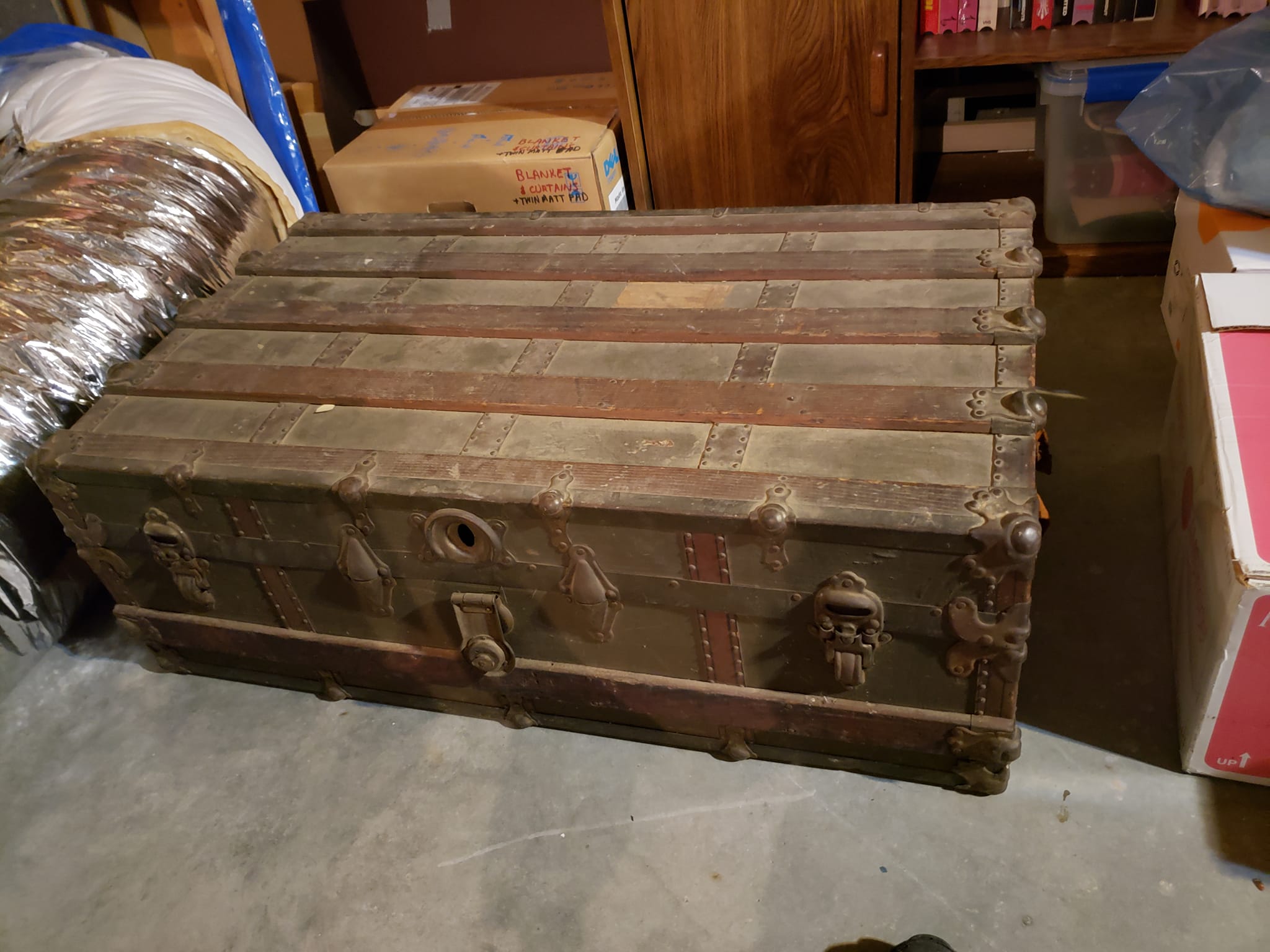
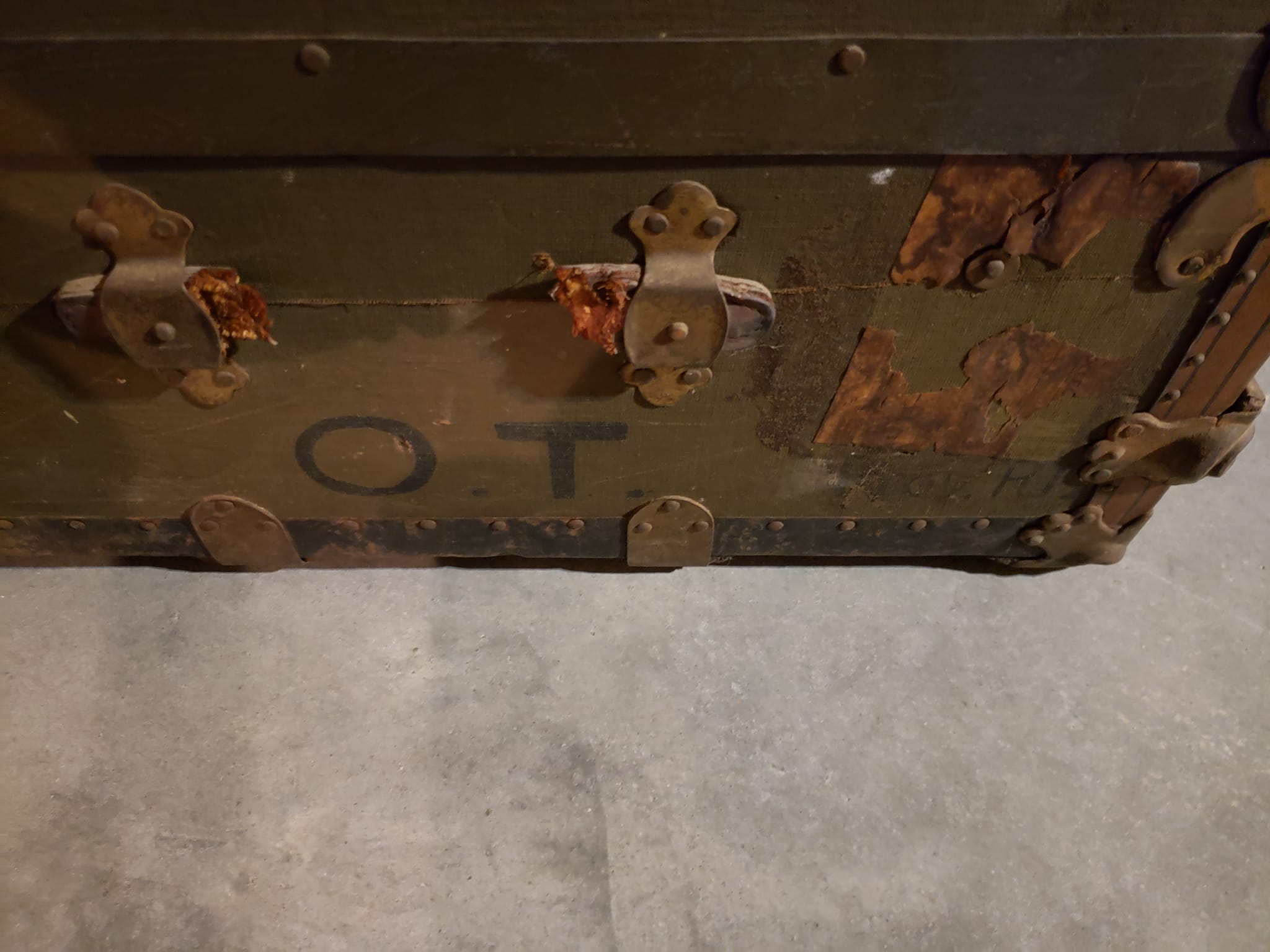
Grandfather Todd’s trunk. Came from Yorkshire to NYC in 1910, to Providence in 1912, to East Providence around 1914, back to Providence around 1945, to Cranston in 1950, to NW Arkansas in 1997, and to Myrtle Beach in 2023.

One of the consequences of being in West Texas on a long-ish (more than two weeks) grandparent duty is that I wasn’t home to handle one very important item, scheduled since January. This relates to decluttering and dis-accumulation in advance of a downsizing some day, specifically to the Stars and Stripes that I’ve written about before.

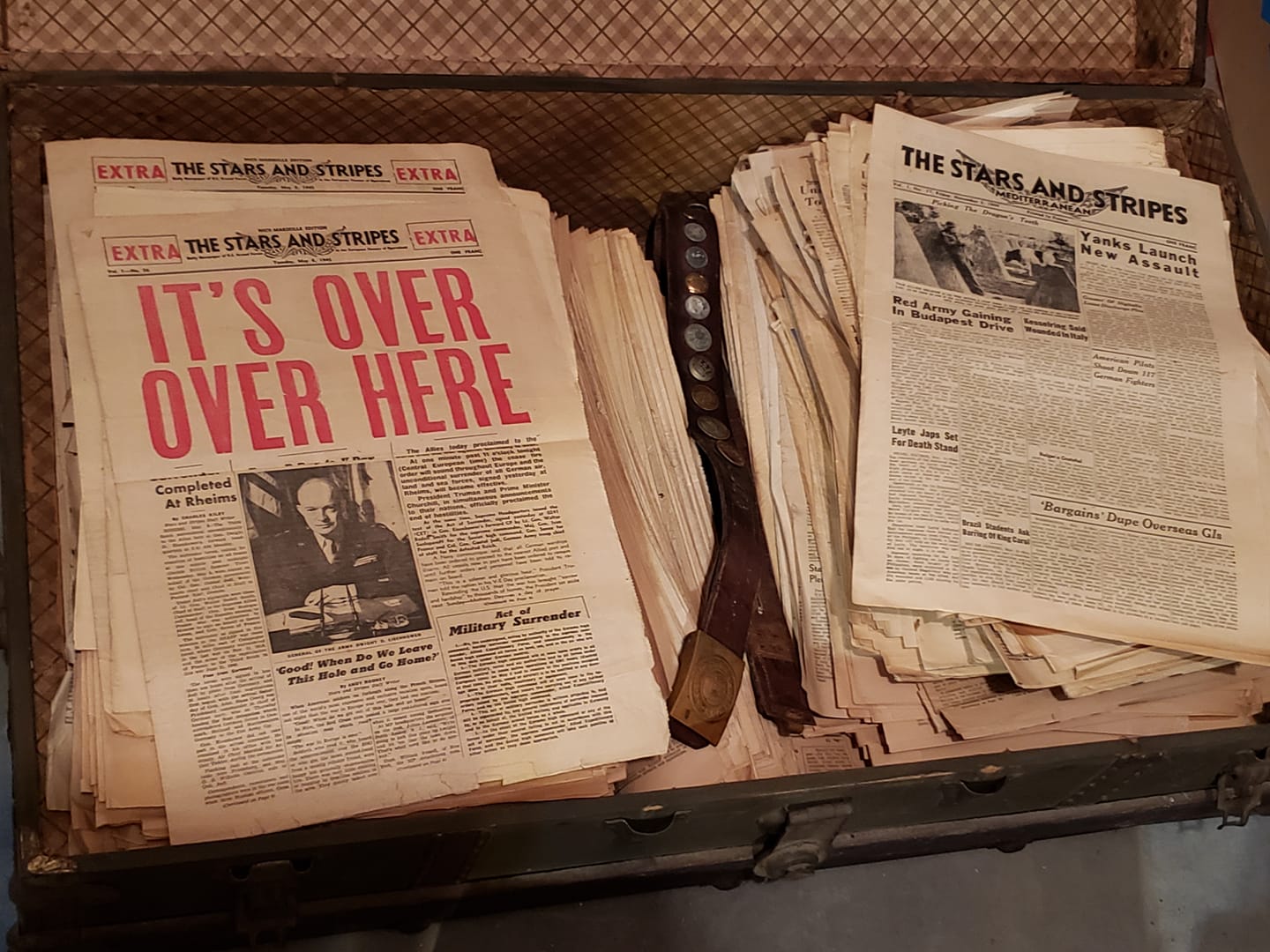
For decades it held wartime copies of the “Stars and Stripes”, but they are now gone.

Not really about the newspapers, but the trunk they were stored in. This is an old steamer trunk that was one of three trunks that sat in the basement of my parents’ house for decades. As a kid growing up, I never knew the origin of those trunks nor what they were storing.

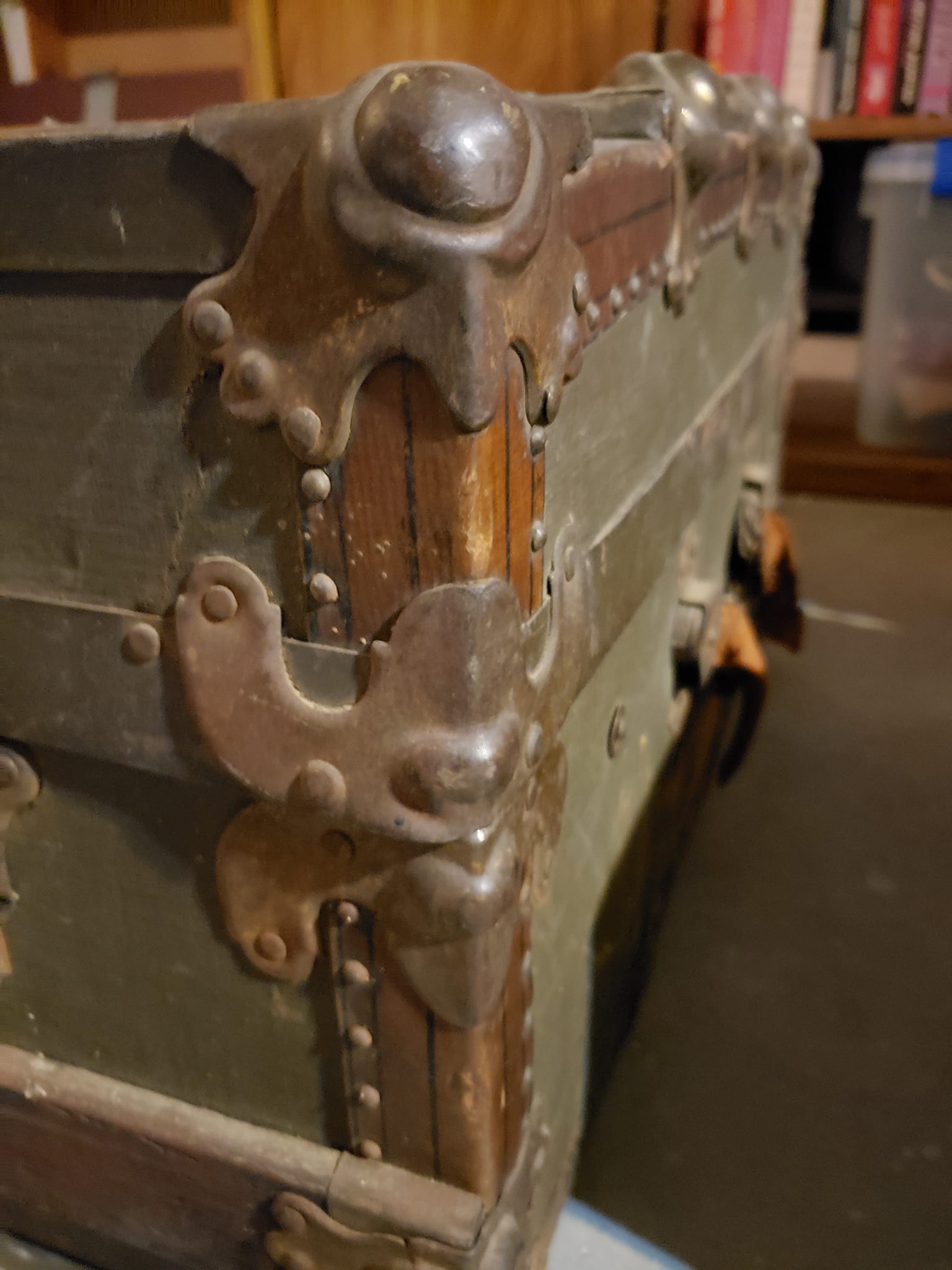
Someone who knows trunks could probably figure out more about it, such as year of manufacture and value.

On one trip back to Rhode Island, in 1990, Dad and I talked about his war service setting type for the S&S. We went to the basement and Dad showed me all those newspapers he’d sent home from Europe, which his parents kept and put in the trunk.

When Dad died in 1997, I took the trunk back to Arkansas and there it sat, either in my garage or basement, until a few days ago. Last year I removed the contents and shipped them to the University of Rhode Island Library as a donation, keeping a handful of copies as keepsakes.

That left the empty trunk. It was a steamer trunk, nothing fancy. On one end “OT” was painted. I assume, therefore, that this belonged to my grandfather, my dad’s dad, Oscar Todd. He emigrated from Yorkshire, England, to the USA in 1910 at the age of 20. He was in New York City for a couple of years, then made his way to Rhode Island. There he worked, married, and raised a family.

The “OT” painted on the outside is the only real clue I have about the origin, and the reason I believe it belonged to my grandfather, Oscar Todd, and was probably the trunk he brought with him from England to the USA.

I assume that this trunk was the one he brought from England in 1910. I’m sure there’s a way to research it and determine its age and origin. But I’m convinced that’s what it is: my grandfather’s trunk. He kept it, and when those newspapers came in wartime mail, it became a good place to store them.

From 1910 to around 1950, the trunk was wherever Oscar was, in NYC, the Riverside district of East Providence, and Providence. From 1950 to 1997, it was in the basement of Dad’s house in Cranston. From 1997 to 2023, it was with me in two different houses. While not overly large, it just doesn’t fit in with the concept of dis-accumulation. So when I decided to donate the S&S, I decided to get rid of the trunk.

Neither of my children wanted it. I don’t fault them for that. The trunk would take a fair amount of restoration to be a display item. The heirloom value would only be to someone who knew Oscar, and he died before they were born. I thought of others in the family who might want it, and decided on a cousin’s son, Frank Reed. He and his wife have six children, Frank knew Oscar, his great-grandfather, briefly and remembers him, so that seemed the next logical place for it to go.

The problem is, Frank recently removed from New Jersey to Myrtle Beach, South Carolina. How to get the trunk to him? Shipping was a possibility, though expensive. So in January I put out a call on Facebook for anyone making a road trip there who would be willing to take the trunk. Amazingly, a woman responded saying she would be going to the North Carolina Outer Banks and could drive the trunk as far as Raliegh-Durham Airport. Could my cousin meet her there? He said yes, and arrangements were made for the trunk transfer at a certain time on May 9.

But then, grandparent duties took me away from home at the time we would have to get the trunk to the woman who was driving it east. She contacted me; I was in Texas, not planning to be home before May 7, when the trunk needed to go to her.

Our neighbors had a key to our house to water the plants. I contacted them and they were happy to help out. The first transfer, from our house to our neighbors, happened on the 6th. The second transfer, from our neighbor’s to Kimberly’s van, happened on the 7th. The third transfer, from Kimberly to Frank’s son’s car (he went to pick it up), happened in the cell phone lot at Raleigh-Durham Airport on the 9th, and the drive to Myrtle Beach the day.

So much work to get a simple trunk halfway across country. But it happened. Now Frank and his family can decide how best to display and enjoy this family heirloom, either as-is or with restoration.

Dis-accumulation continues. Next, Uncle Dave’s 1900 Encyclopedia Brittanica.


Letters Between Friends

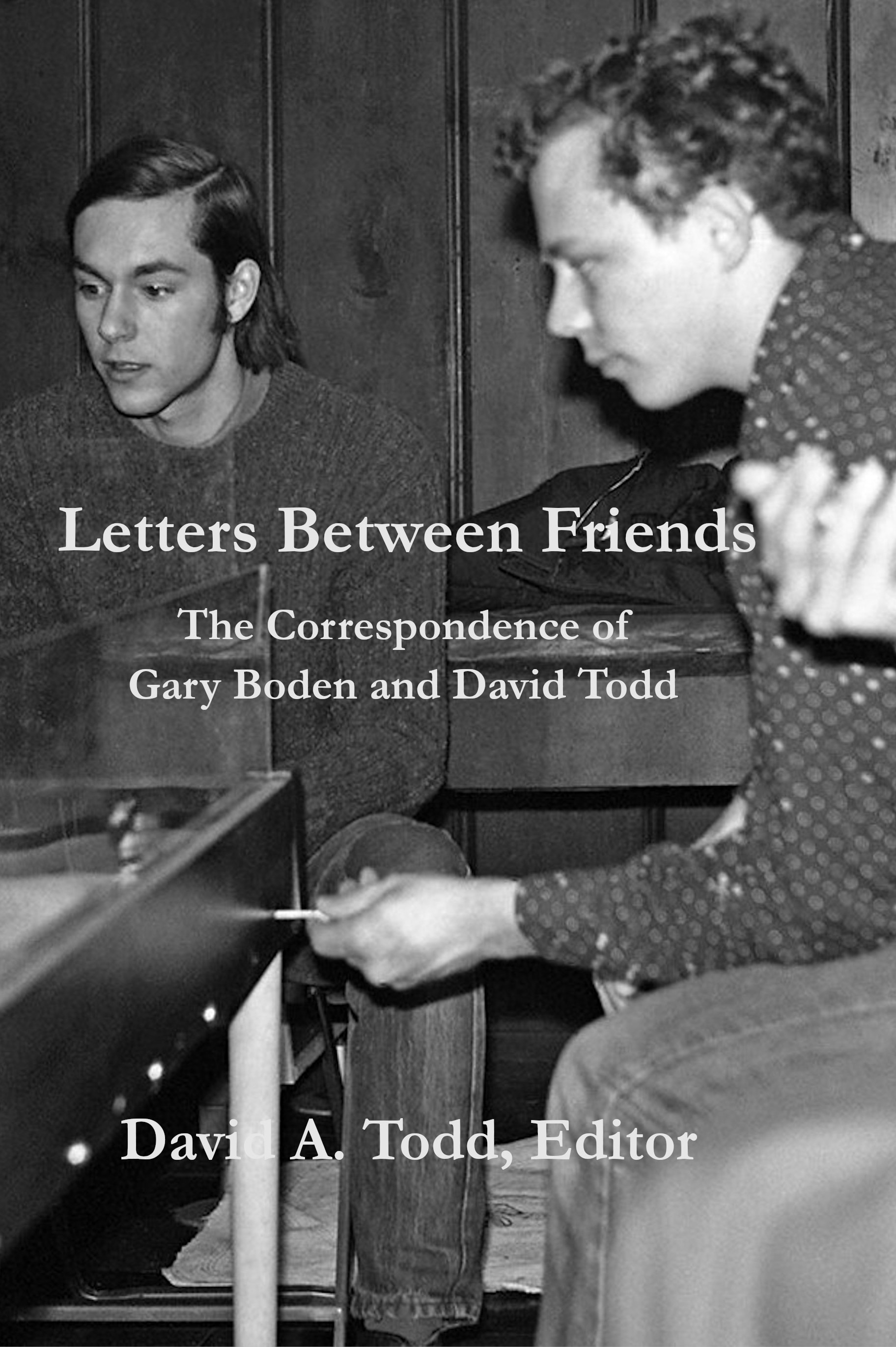
Corrected, redacted, and now available as an e-book. And as a paperback, though that’s quite expensive.

My latest book, Letters Between Friends, is different. It is a collection of letters, mostly sent as e-mails, between Gary Boden and me. We met in high school, most likely when we were both on the track team. Our real friendship began in college, however, and continued on into adulthood. We had many common interests, including track, boy scouts, political views, and summers spent on Point Judith Pond in Rhode Island, our houses visible to each other less than a mile away but a five mile drive to get from one to the other.

The idea for this book came to me shortly after Gary died in July 2020 (not from covid). I took a little time to pull up all e-mails he and I had shared through the years, all of which I had saved. I found it to be a rich exchange of ideas, happenings, and on occasion foolishness.

The idea came to me to pull these together into a book to present to Gary’s widow and daughter. I didn’t know if Gary saved e-mails the way I did. I thought that would be a nice gesture, a lasting memorial to Gary and to the friendship we shared. While I exchanged e-mails and sometimes snail mail with a few other friends, they amounted to a tiny fraction of the amount Gary and I shared.

I asked Gary’s daughter about what e-mails he kept, which turned out to be fewer than what I had. I’m not sure mine are a comprehensive record. In fact, I have only one letter before 2007, one that Gary sent with a Christmas card in 1993. I had an e-mail program I used before 2007, but alas, those letters are lost into the ether.

The letters in the book include some from a few other besides Gary. In those years when I made trips to Rhode Island, four of us would try to get together. The e-mails usually flew between us as we tried to coordinate our schedules. Then, after my visit, we kept up the multi-person exchange for a while. All but one of those correspondents were fellow 1970 graduates of Cranston High School East.

These letters are not works of art. They are what would be called “familiar letters”, not artistic letters. They capture normal thoughts and communications. For me, those are the letters I tend to like to read best. I left in all the typos so as to reflect what we read at the time they were sent. Here’s an example, showing excerpts from letters we exchanged on 17 November 2008, a day Gary and I celebrated as National Boise Idaho Potatoe Day (don’t ask why):

David to Gary: I begin my work day, at least the pre-hours, by wishing you felicitations on this glorious day. I’m afraid the adherants [sic] to what should be a national holiday are slowly dwindling in number. Is it more than 2? Or has it always been just 2?

Thanks for coming by and reading my blog….

Gary to David: May you also have a grand and glorious NBIPD.

It’s always been only two.

I don’t know how you keep up the volume of writing you do and have time for anything else. Maybe it’s that engineering training and a billable hours mindset that makes you efficient. It’s fun to check in on your blog and I’m curious about a lot of things so your topics naturally raise some questions for me.

I had planned to have the book ready to go in time to take it to Rhode Island in August 2022. Unfortunately, I had to cancel my trip there. So I completed the book and shipped it. I published it on Amazon so that a few friends could buy copies. My plans were to pull the book down after everyone had made their purchases. However, one of the correspondents thought it was so great, he posted it on Facebook for the world to see. I quickly asked him to take it down, explaining that I hadn’t sought permission of the copyright owners for publishing their letters to a broad audience. He removed it. Another correspondent in the book said he, too, thought I ought to let the book be known to the world.

So I went through the process of obtaining the permissions needed. Two correspondents asked for a handful of redactions, which I made. I saw two redactions that should happen as well as a half-dozen typos to correct, and I did those. Then I reformatted the book for print, and developed an e-book. I uploaded the new files on Saturday, March 18. Amazon approved them the same day. The book had remained for sale all the time while the permissions process was progressing.

Now, Letters Between Friends is out for purchase by the general public. Letter collections are not very interesting to most people, so I don’t expect this to be a best-seller. In fact, I would be shocked if it sold more than 10 copies. But it’s out there, for whatever good it will do. It is available at Amazon should you want a copy.

A tribute to a friendship cut short.

Library Memories – Part 5: Later Adult Years

This post continues in the series of my memories of times in libraries Earlier posts are: Part 1, Part 2Part 3, and Part 4.

After moving to northwest Arkansas, with our children a little older, with a house that had space to accumulate books, with the school libraries apparently adequate, we spent less family time at the Bentonville library. However, from 1991 to 2000, my office in downtown Bentonville was across the street from the Bentonville Public Library. I went there frequently during lunch hours, even sometimes on breaks. Once in a great while, I would go there with some of my company work and find peace and quiet, away from the telephone and people, and get some real work done.

I don’t have memories of particular books or discoveries from this library. One thing I did was look at investment publications, particularly Value Line. You couldn’t check that out, so I would sit and read it over several days. Was it time well spent? I’d like to think so. The things I learned about stocks, for investment and trading, provided a foundation for how I use the stock market now for supplemental income.

The Bentonville Library built a new building at the edges of downtown, and our company moved way away from downtown. I used the Bentonville library less. In the last ten years, it has been more of a meeting place. I used to meet with our pastor there for coffee and conversation. I donated a number of my books to this library for their local authors section.

Nowadays, my library forays are to the Bella Vista Public Library. While I sometimes browse and find a book to check out, it’s more a place for organizations I belong to to hold meetings. My critique group, Scribblers & Scribes, meets there one afternoon a month. Another group, Northwest Arkansas Letter Writers Society, meets there one afternoon a month. And another writers group, Village Lakes Writers and Poets, does the same. So I’m in this library typically three or four times a month. A recent expansion makes it much more functional.

If it weren’t for the 2000 or so books in our house, which I’m trying to sort through and read those I don’t think I will ever read, or read again, I would get more books from the library. I actually checked one out last week. But that was at the Big Spring, Texas, Public Library. It was a biography of C.S Lewis. I had only a few days to read it, and couldn’t get through all the 300 pages in that time, not with the babysitting and pet sitting duties to read a whole lot. I read a number of sections, determined it’s a book I’d like to read in full, and returned it to the library on the way out of town. I’ll see if they have it in Bella Vista, or if I can get it on interlibrary loan.

This will be the end of this series. I conclude by saying: Long live the public library!

Library Memories Part 4: Asheboro, NC

This post continues in the series of my memories of times in libraries Earlier posts are: Part 1, Part 2, and Part 3.

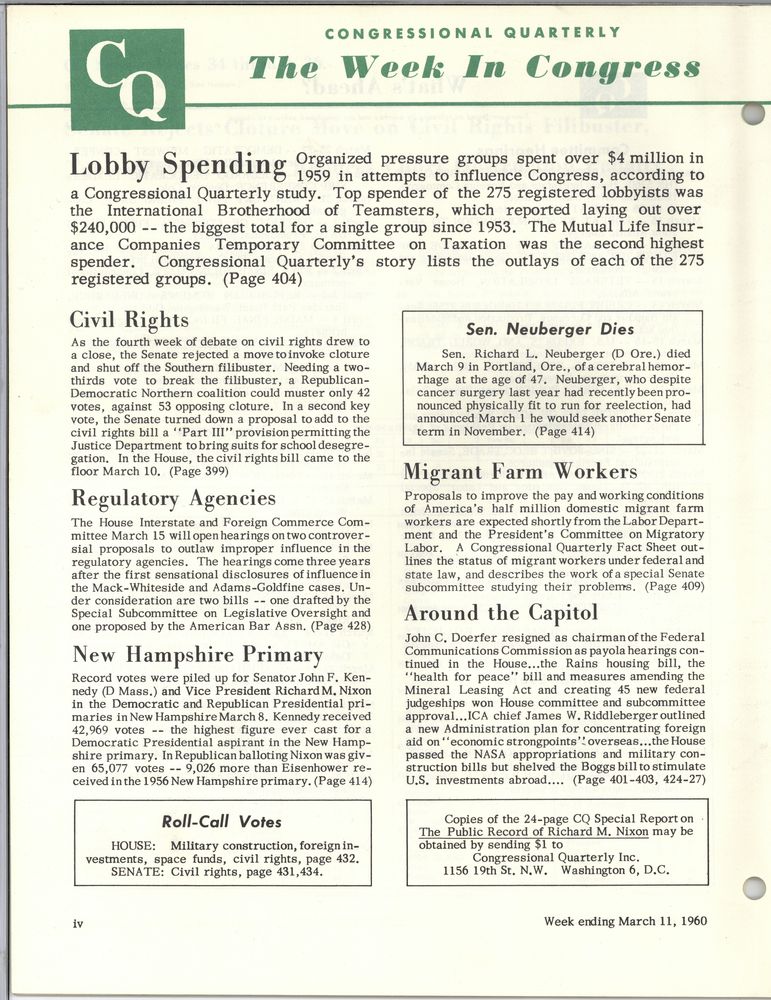
I learned a lot from reading Congressional Quarterly in the library.

In 1984, after returning to the USA from Saudi Arabia, we settled in Asheboro, North Carolina, instead of Kansas City. Asheboro, the seat of Randolph County and then was a city of less than 30,000 people, stretched out along a highway. In the downtown district was a very nice library.

Our children were 5 and 3 when we moved there, and many times in our four years in Asheboro did we take them to the library. That meant a lot of time spent in the children’s section. I think the number of visits increased as they became young elementary school students.

But it was in the adult section that I made two discoveries in this library. They weren’t, perhaps, quite as mind-opening as the atlas of the universe in Dhahran, but they led to other things.

The first was the magazine Congressional Quarterly. I had never heard of it before. It is (was; the name and format of the magazine may have since been changed) a reporting of Congress’s actions, and other things related to our national government. It may have been a weekly magazine then. For sure it was at least monthly, not quarterly as the name suggests.

While the kids were engrossed in their books, I would sit with CG and read for hours. Well, we didn’t really stay in the library for hours, but I could have. How interesting I found this publication. It seemed to me to be balanced politically, neither pro-Democrat nor pro-Republican. I learned much from its unadorned pages.

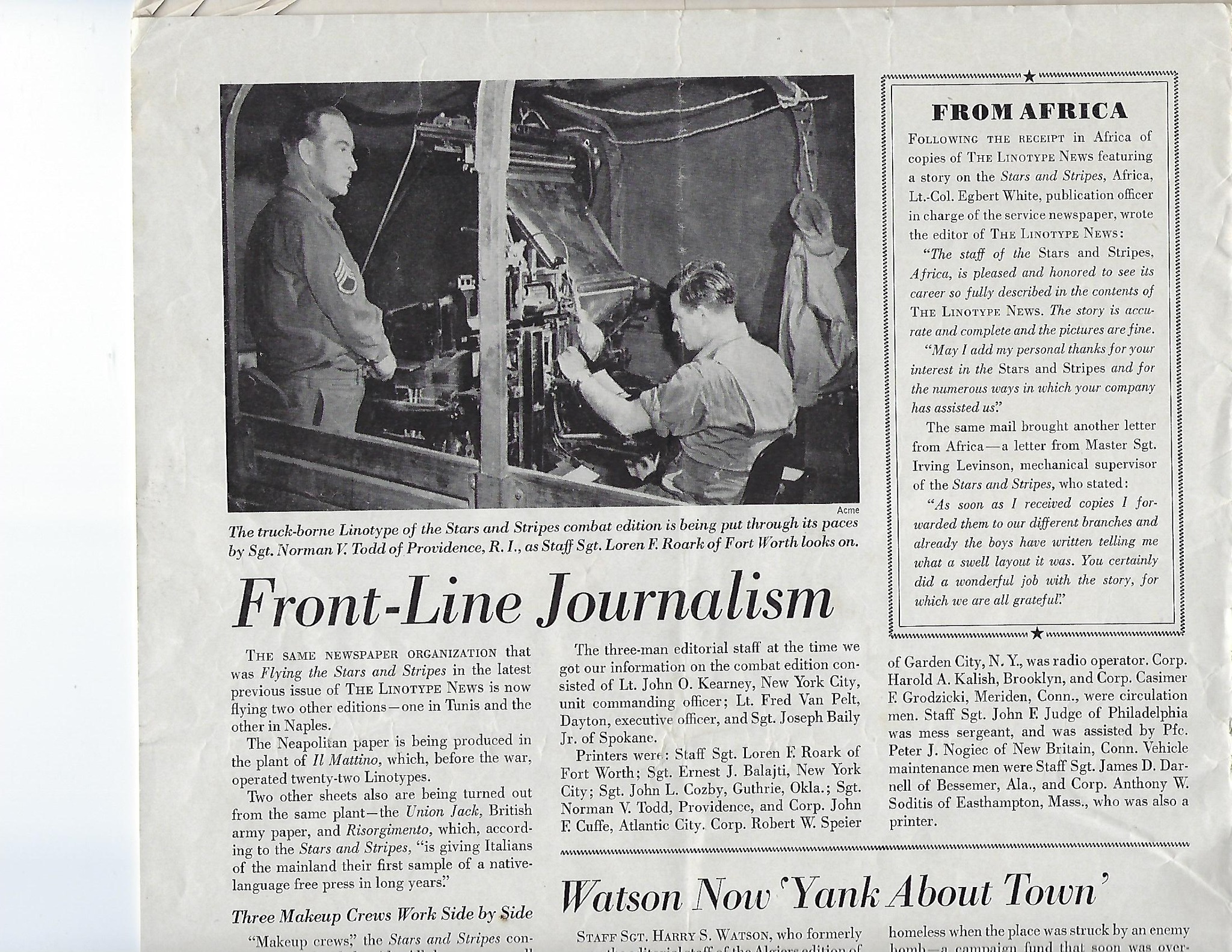
Dad at the truck-mounted mobile unit of the “Stars and Stripes”, putting out the Combat Edition in Italy.

The second discovery was a large book—coffee table book size—about the Stars and Stripes military newspapers. Readers of this blog will know that my dad set type for the Stars and Stripes in Europe during World War 2. Yet, we kids didn’t know that in the basement was a steamer trunk full of those S&S, sent home during the war and preserved by my grandparents then passed on to Dad.

So, I found this book of the S&S, which consisted of copies of the newspapers along with narrative about the newspaper. I skimmed it in the library and was fascinated by it. When we were preparing to drive to Rhode Island one year for a holiday, probably Thanksgiving, I checked the book out and brought it with me. Dad looked at it with less interest than I expected. But we had a good conversation about the S&S. Dad was glad that one of his children took more than a passing interest in what had been most of his war service.

That was in 1985 or 86. Fast forward to Fall 1990. Kuwait was now behind us, I was spending a couple of weeks a month in Boston working a temporary job while the family stayed in NC. On weekends, I drove to R.I. to spend time with Dad. Somehow in our conversation the S&S came up. He said, “Come with me. I want to show you something.” He led the way downstairs and showed me the trunk with the newspapers. He said, “When I croak, these are yours.”

Dad died in 1997. Lynda and I drove from Arkansas to Rhode Island for the funeral. One reason for driving instead of flying was to be able to take the S&S back with us.

So, my obtaining the Stars and Stripes from Cranston RI came about probably because of time in a library in Asheboro NC. Like I said, perhaps this isn’t an earth-shattering memory, but it fits with my current theme. Thank God for libraries.

Library Memories Part 3: Early Adulthood Discoveries

Continuing with my library memories series. This post will likely be shorter than the last two. See them here and here.

This was a good library find, probably in 1976 or 1977.

A long, long time ago, back in the second half of the 1970s decade, I first discovered the joys of library use for other than school stuff. Lynda and I bought a home in Mission, Kansas in 1976. Early in career, early in marriage, there wasn’t much budget yet for buying books. So we found the nearest public library, and checked books out there.

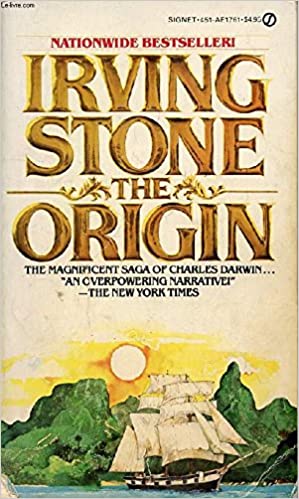
Two particular books that I got at that library stand out in my mind, even after all these years. The first was The Origen by Irving Stone. This is a biographical novel about Charles Darwin. Stone has done many of these, and I’ve since read a couple of others. This was my first introduction to Stone and to the concept of the biographical novel.

I didn’t know a lot about Darwin at that time, either, other than what I learned in science classes, that he had put together the theory of evolution and that he was English. The novel treated Darwin very fairly, I thought. He was a sympathetic character, and I learned much about him from that. I came away with a favorable opinion of him. I’ve since read Origin of Species, and reviewed it on this blog. I’m currently reading the first volume of Darwin’s letters, although I’m still in the lengthy biographical preliminaries. Hopefully I’ll be in the letters themselves in a day or two.

The second book was a genealogy book on Lynda’s family, The Cheney Genealogy. This was published in 1898, and I believe I got it via interlibrary loan rather than it being a book at our local library. At that time, I was having conversations with Lynda’s dad and paternal grandparents about genealogy, and just beginning what would become a serious effort to trace family history.

In that book, I found much information that appeared to be relevant to her family, though with a missing link that prevented me from making a firm connection to the original Cheney ancestor, John Cheney of Newbury, Massachusetts. Years later, in the internet era, I was able to build upon The Cheney Genealogy and make the connection. But it all started with my local library and the book I accessed through it.

23 Feb: Editing to add: One other book I found at that library was Rees Howells: Intercessor. This told the story of Rees Howells, a Welshman who was in the USA at the time of the Welsh revival around 1903. He went home, was converted himself, and began working in Christian ministries, including a Welsh bible college. He became known for his praying. The book tells about times of intense prayer in his personal life, in ministries, and in the life of the British nation during World War 2. The story of Howells has stayed with me, and in later years I picked up a copy of his biography for my personal library. Another good find at the Shawnee Mission Public Library.

Well, these are not profound memories, but they fit in this series, so here they are. Look for more going forward.

Library Memories, Part 1: childhood and teen years

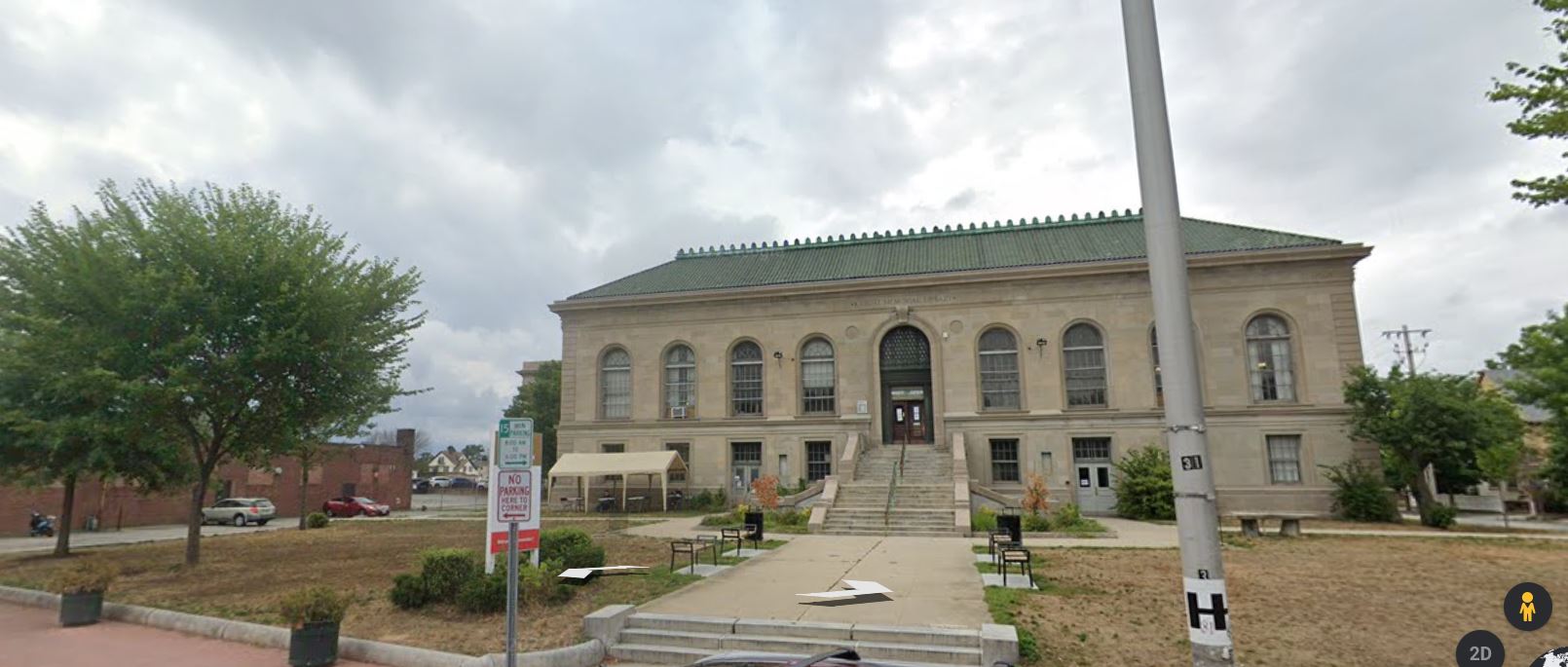
The Elmwood Ave. Branch of the Providence Public Library, in a recent picture on Google Earth. Just as I remember it.

Right now, say for the last three years, I’ve spent a fair amount of time in libraries. I met our pastor for coffee from time to time in the Bentonville Public Library. The writing groups I’m in meet in libraries, either the Rogers Public Library or the Bella Vista Public Library. So four times a month on average I’m in a library. That’s not a lot, but it got me to thinking about libraries I’ve been in and memories I have with them.

Growing up in Cranston, Rhode Island, you would expect me to have memories of libraries there, but I have none. I don’t think we ever went to public libraries in Cranston. They were a little too far to walk, there were no convenient bus routes, Mom didn’t drive much, and Dad didn’t take us, so for whatever reason we weren’t library patrons in our hometown. In my adult years, when visiting the hometown, we took our kids to Cranston Public Library—in a building that wasn’t there when I grew up—when we were home visiting Dad.

I don’t think our elementary school had a library, and I have almost no memories of a library at my junior high school. I know there was one there, and I used it, but don’t remember it. But I remember our high school library. I wasn’t in it too often, but was some. One main memory I have was a date in the library. I was talking with my sister’s best friend, two years older than me, about how I had never had matzoh (she’s Jewish). So she said she would bring some to school and share it with me. This was my sophomore, her senior year. We agreed to meet in the library a half hour before school on a certain day. We sat at one of the tables off in a corner, ate matzoh and shared pleasant conversation.

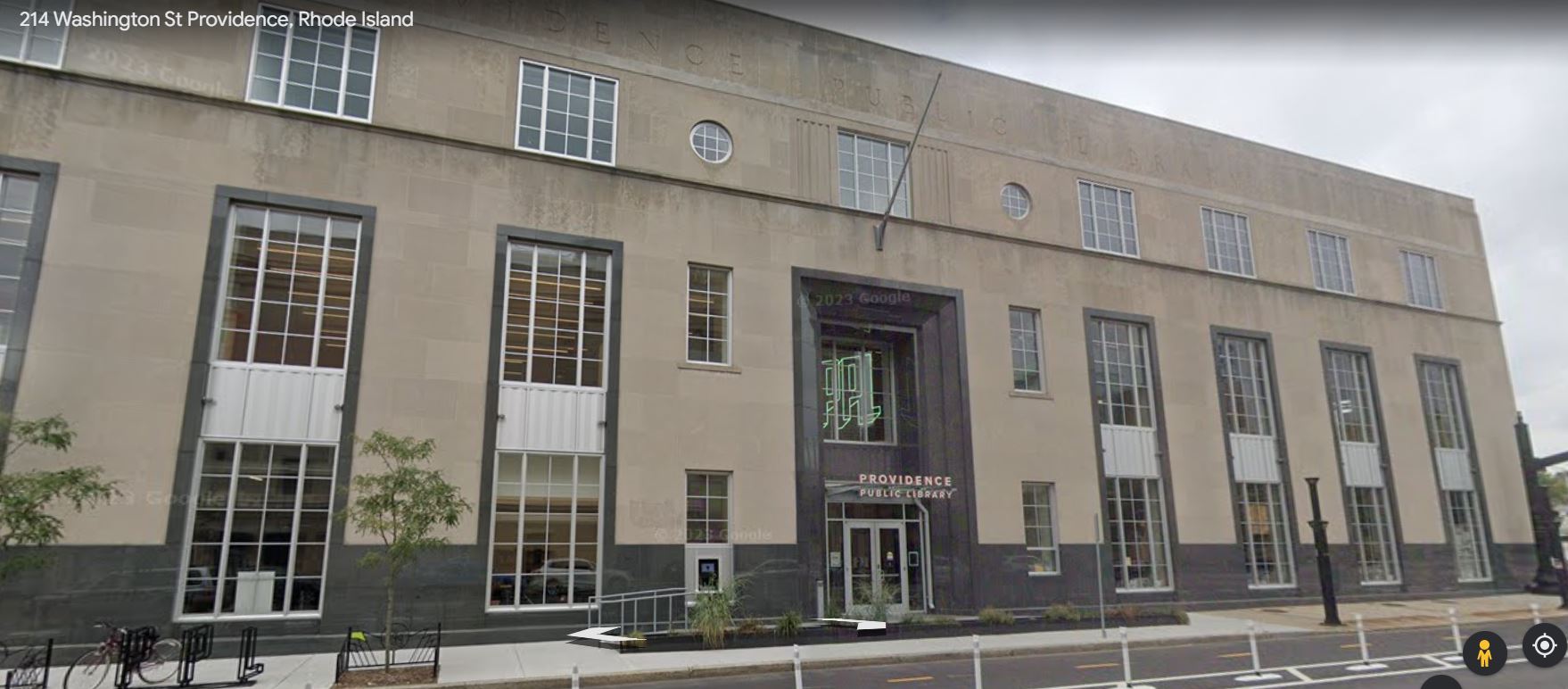
A recent photo of the main branch of Providence Public Library. Again, just as I remember it from the outside, though its neighborhood looks a little different.

You say that’s not much of a date, and you’re right. But, hey, went you had as few dates as I did (4 total in 9th through 12th grades, only 3 if you don’t count the matzoh date), you count everything you can as a date.

But, strangely enough, I have many more memories of public libraries in Providence, Rhode Island. I remember it was in 8th grade, after Mom had died. I had a history research and report assignment. Whatever library was in junior high didn’t have books that helped me. So I got Dad’s permission to hop on the bus and ride to the Elmwood Ave. Branch of PPL. We lived four house lots off of Reservoir Ave., right on a bus stop. The bus also stopped right in front of the Elmwood branch. You had to cross Reservoir twice on foot, but I think we had some traffic signals not far away.

So I did that. It must have been around wintertime, because I remember it was dark. I crossed Reservoir, caught the bus, rode it toward downtown Providence, got off at Elmwood branch, crossed Reservoir again, and entered a world of books. I still have some idea of the layout, of going to the history books and finding ten books that were suitable for the report. I spent an hour or more reading and taking notes (I didn’t have check-out privileges at PPL). I listed all ten books. Then I went home by bus. This probably happened from around 7 to 9 p.m. If memory serves me correctly, I did this a second time for this report.

As a side note, I listed all ten books in the bibliography of my report, even though I really only used two of them in writing the report. I remember I got an A on the report, and the teacher wrote, “Great bibliography!”

I may be unclear about one part of this. When Mom died in August 1965, Dad’s shift at ProJo ran from 7 p.m. to 3 a.m, usually with an hour or two of overtime. At some point they moved him to a 4 p.m. to 12 a.m. shift, usually with two hours of overtime. If his change of shift happened after my 8th grade year, it’s possible that Dad drove me to the library as he went to work, and I took the bus home. No matter.

When I got to high school, the Elmwood branch seemed inadequate, I guess, because I took the bus to the main PPL in downtown Providence and did research there. I remember it was closed stack when I first started doing this and open stack by the time I graduated high school. You wasted a lot of time waiting for someone to find the books you needed and bring them to you. The open stack shifted the searching function to you. It still took time, but at least you could look at other, nearby books once you found the one you wanted.

I probably went to PPL Main Branch between five and ten times per school year. I kind of remember the layout. In fact, I remembered where both the Main branch and Elmwood branch were and found them easily on Google Earth. They are still in the same buildings and look the same as I remember them. I suspect, of course, that the insides are much changed, as technology updates have surely been made. No more card catalogue. Yes, that’s how I found those history books at Elmwood: looking in the card catalogue, finding one book that sounded good, finding that shelf, and see a great treasure before me spread out left and right, up and down.

I hope my grandchildren will have equally fond memories of libraries. I try to take them our ours whenever they visit, and to theirs whenever I visit them. We have a sizable library of books in our own home—as they do in theirs—but it’s not quite the same.

And, before some of you express being aghast at a 13 or 14 year old boy taking the bus in Providence, Rhode Island unaccompanied by an adult, after dark, all I can say is it was a different world and a different city then. And greatly different family circumstances that required it.

Changes in the Old Neighborhood

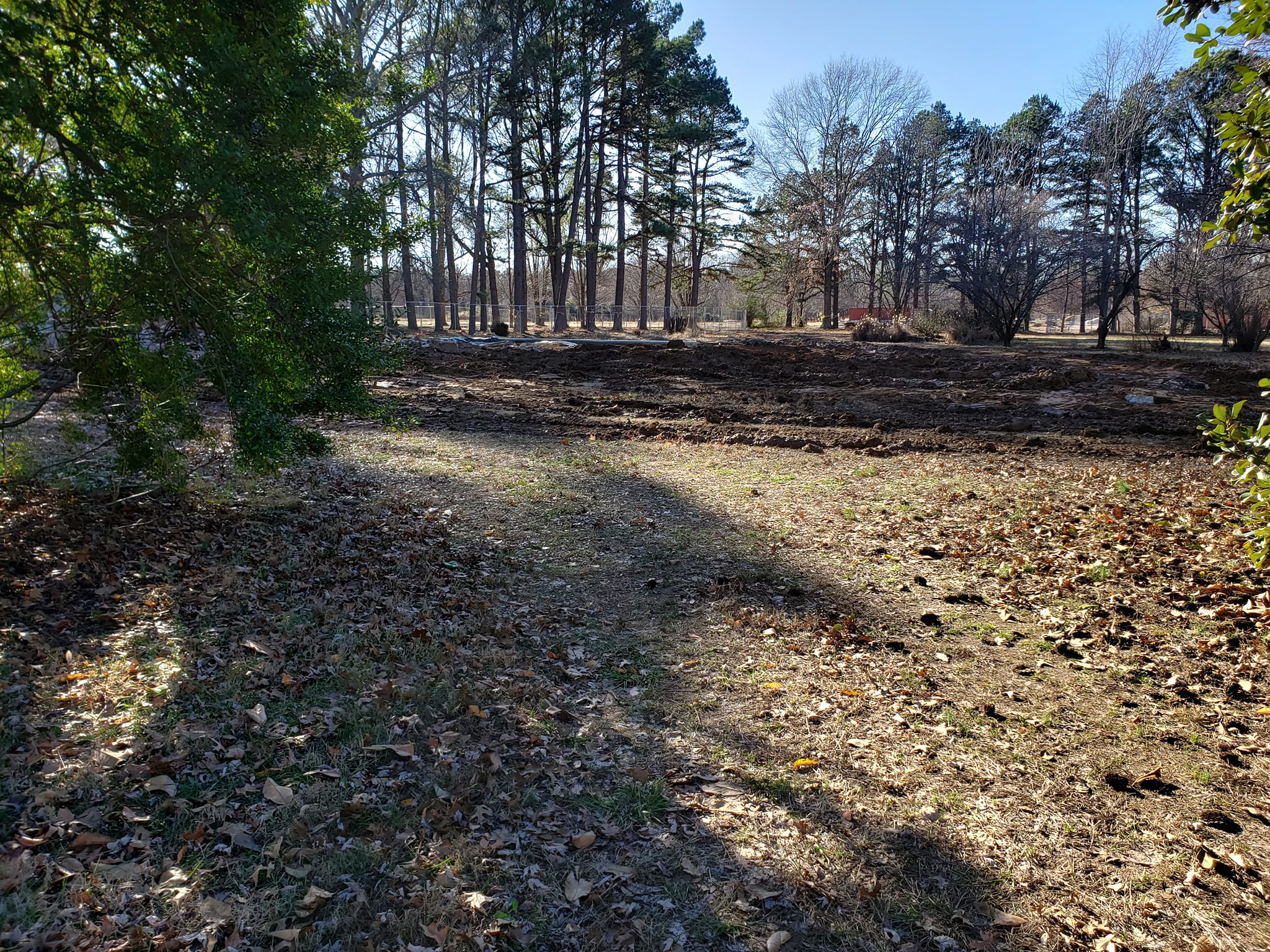
This was our house. Note the magnolia tree on the left. It’s twice as big as it was when we lived there. It seems to be marked for preservation.

One day a couple of weeks ago, Lynda and I were in Bentonville, we decided to drive out by our old home on NE “J” Street. A ranch home on 7 acres, we sold that in 2002 and moved to Bella Vista. We have rarely driven by the old house over the years, and it had been several years since the last time. So we were ready to see how it had changed.

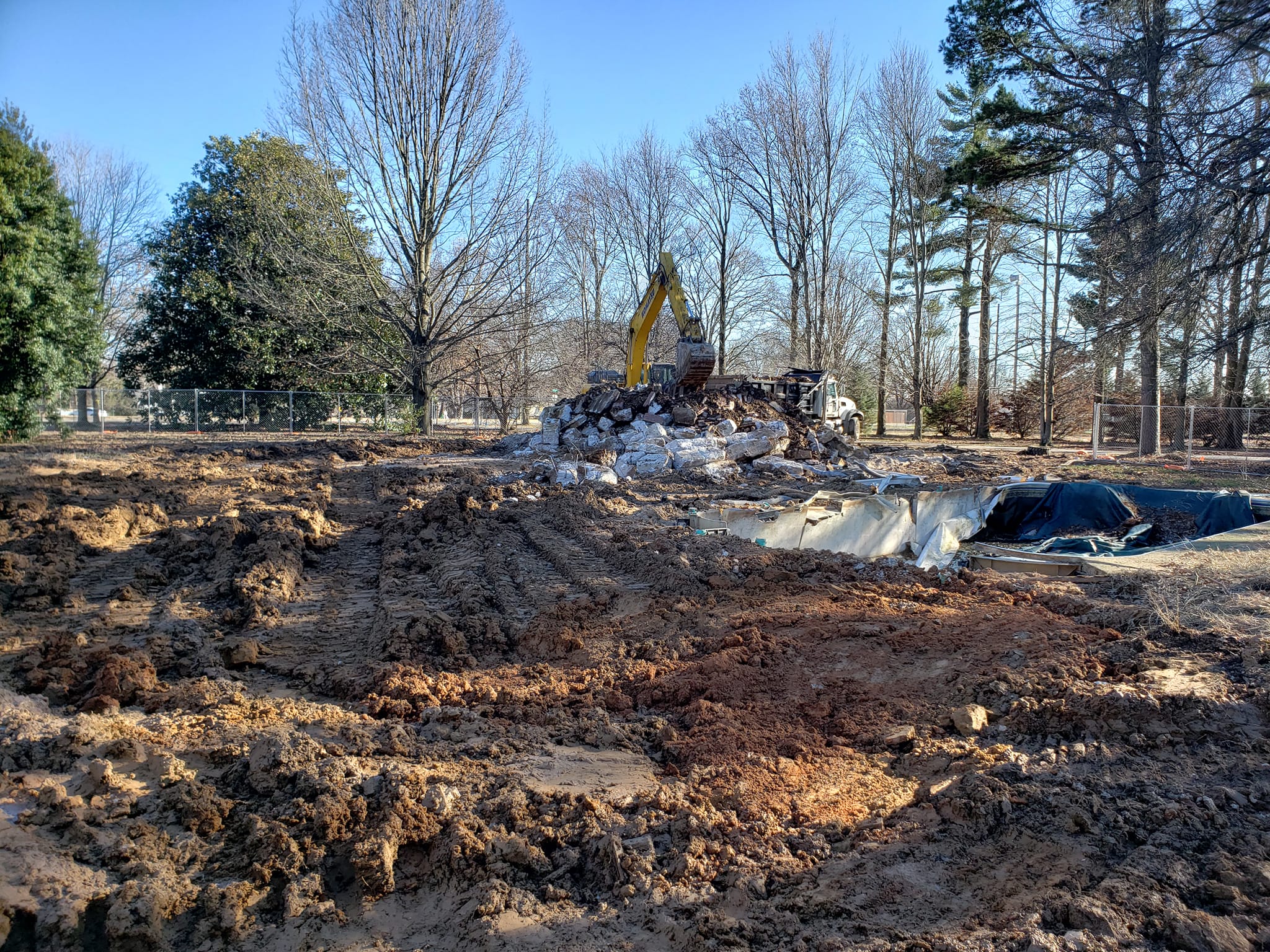
To our surprise, we saw it had been demolished! Yes, the home we lived in from 1991 to early 2002 was a pile of rubble. We were so shocked that we didn’t think to pull off and stop. Plus, it was starting to get dark.  Therefore, we went by it again a day ago. A trackhoe was in the process of loading the rubble into a dump truck. What we hadn’t seen before, the house to the south of ours was also gone. The house to the north of us was still there, but appeared to be vacant. What was going on?

We pulled into the driveway to the back five acres the owners after us had put in. We also drove back to the house on the back acreage and discovered that the house back there was gone. Four houses on 21 acres of land. What was going on?

Another house used to be across the field behind the row of pine trees, which were planted just before we moved to this house in 1991.

Looking at the County GIS site, 14 of those acres are owned by what appears to be a land developer. It appears it’s going to become a subdivision. Or could it be going to condominiums or townhouses? A sign for a public hearing was laying on the ground. Possibly I’ll contact the City and see what it’s going to be. Or, perhaps I can just go to a website.

But do I really care that much? Well, this was the house our children spent the most time at before they hit adulthood. They both went on to college while living at this house. They’ll get to see it when they are here before the end of the year. So yes, I do care. The house was built in 1970. So it’s only a little over 50 years old. The house I grew up in in Cranston RI was built in 1919, and it’s still there, still occupied and, last time I saw it, in 2015, was changed only in color and loss of the front evergreens.

But that was a stable neighborhood whereas Bentonville is a rapidly growing city. The property backs up to the Crystal Bridges Museum of American Art. The 5 acre parcel two lots to the north is now owned by Crystal Bridges, and the large house at the back of it appears to be an office of some kind.

Not only is the neighborhood changing, the world is changing very fast around me. The culture is changing. I’ve kind of purposely absented myself from the current culture, such things as the music. Nowhere is that more evident than the music sung in church for Christmas. So different than what we sang until just a few years ago.

There’s not much about modern music I like, though I suppose without partaking of it I have no basis for saying that.

I think I’m rambling now. The house is gone, and the culture I loved is mostly gone. The world moves on and changes just like the neighborhood did.

Forgive my ramblings. It’s kind of hard to see the house you used to live in now being a pile of rubble being loaded onto a dump truck.

A Christmas Memory: When our kids were young

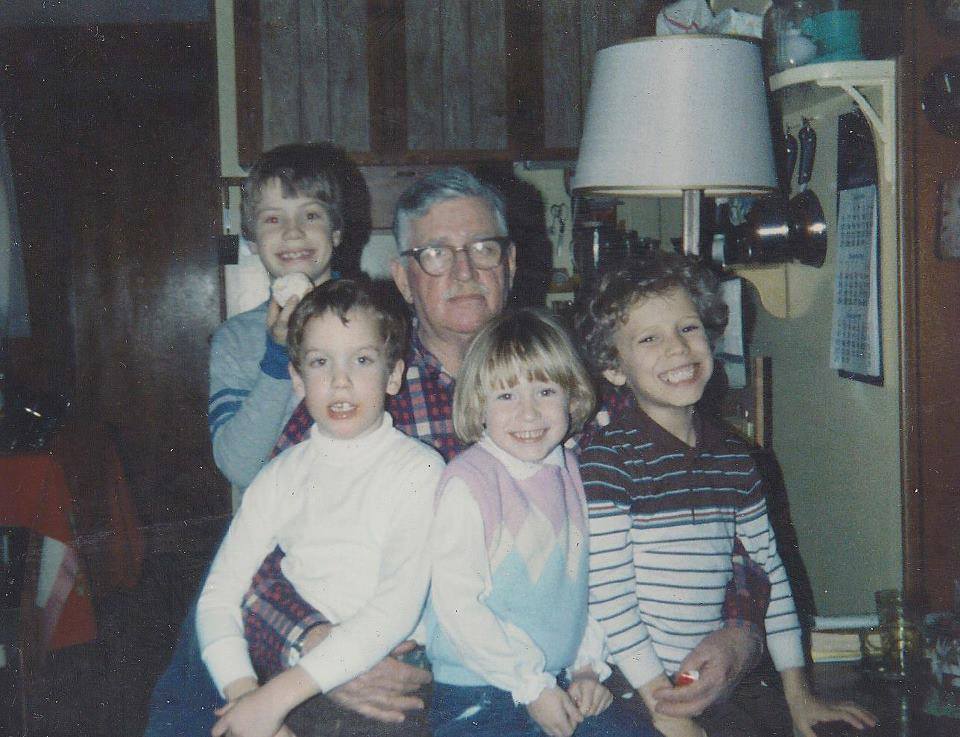
I don’t think this was a Christmas photo of Dad and his four grandkids, but it’s a good one.

Most of the Christmas memories I’ve posted had to do with my childhood years and how the family I grew up in celebrated Christmas. A day or two ago, I came upon another memory, but from the time when our children were young.

It was either 1983 or 1984. In ’83, we were newly home from Saudi Arabia. We flew into the US around Dec 15, left our kids with my dad in Cranston, RI, and flew to Asheboro, NC to house hunt in advance of our move there. Lynda flew back to RI Dec 23, and me on Dec 24, if I remember correctly. Christmas that year was celebrated at my brother’s house in Snug Harbor. Our sister, Norma, flew in Christmas morning, surprising all but my brother.

Or, it might have been in 1984. That year we drove from NC to RI for Christmas. I don’t remember if Norma came that year, but the rest of the party and the location was the same. Looking back at the age of the kids, it’s hard to tell which year it was. I believe that beginning in 1985 we stayed in NC for Christmas, so it had to have been 83 or 84.

Our two kids and my brother’s two boys put on a “pageant” for the adults, I think before Christmas supper, which would have been early evening. As I recall, our son Charles was the instigator/organizer of it. The pageant was merely singing Christmas songs, the more common ones that the kids knew. But the highlight was the opening. The children came out, oldest to youngest, and introduced themselves. It went like this.

Edward said, “I’m Mr. Todd.”

Charles said, “I’m Mr. Todd.”

Christopher said, “I’m Mr. Todd.”

Sara said, “I’m Mrs. Todd.”

I remember Dad looking in anticipation as to how Sara would introduce herself, and she said Mrs. instead of Miss, causing great laughter in the adults.

The pageant was good. The kids forgot the words to the songs, or sang the wrong song, or the wrong combination of kids came out from the bedroom—which served as the offstage—to the living room to sing. At one point Charles became frustrated with something that went wrong, or someone who didn’t come on stage when they were supposed to, and Charles blurted out, “We can’t get a d——d thing done!” Again, causing much laughter.

Later in the evening, after dinner, the kids got a little boisterous. I remember my nephews’ older cousin, John, was also there. Dad got tired of the noise, or pretended to get tired of the noise. My dad was a naturally kind-hearted soul who put on a pretense of being gruff most of the time, especially with his four grandkids. The noise got to the point where he said, loudly and gruffly, “All right, you boys. Out to the sun porch for ten minutes of silence!”

The four boys dutifully followed Dad from the kitchen, where they had been cutting up, through the living room to the sunroom. The boys showed no excitement. But there, behind the boys, was little Sara, also going out to the sunroom for “ten minutes of silence.” She had an excited look on her face and was obviously looking forward to what she thought would be a fun time.

As I recall, silence reigned in the house for the next ten minutes, excepting for whatever conversation the other adults were engaged in. The kids obeyed their grandfather (the cousin also obeying).

Anyhow, that’s the memory. Nothing special in a way, but very special in other ways. I tried to get my grandkids to do five minutes of silence out in the sunroom one year. It didn’t work. But Dad got the job done.

Losing Track of Days

As an exercise, I gathered all my 2011 outgoing and incoming letters (most were via e-mail) into a correspondence book and “published” it to Amazon. Here’s a photo of it. 559 pages. Of course, it can never be truly published like this because I don’t own the copyright of the incoming letters.

It’s Friday, my normal blog posting day. I try to write my blog posts the day before and schedule them to post on Friday and Monday at 7:30 a.m. Yet here it is, 10:45 a.m., and I just realized I hadn’t yet done a blog post. This one was to have been another in the climate change series, but I’m not ready for it. So I’ll have to settle with a fill-in post.

Today, my time has been taken up by busyness. I was up around 6:30 a.m. and out working in the woodlot by 6:45. I began moving cut branches and deadfall down the hill to a brush pile closer to the back of the lot. I also did more work on breaking down the brush pile near the front of the lot and moving it to the two piles near the rear. Lynda asked me to do this since the front pile was an eyesore from the street. She is right. Working on and off on it since spring, a 7-foot pile is now down to a foot and a half. The end is in sight.

After the brush pile, I did a little trimming of blackberry bushes and removal of weeds I sprayed a couple of days ago.

Back in the house, I took coffee and computer to The Dungeon. Devotionals complete, I was ready to begin my work shortly before 8:00 a.m. Friday is my biggest day for stock trading, so I had work to do to get ready for the market open at 8:30. I made seven trades and updated my spreadsheet and charts to reflect the trades.

Then it was on to writing, except my writing is somewhat shoved aside of late. Instead, I’m scanning old letters, converting them into Word files, then discarding the originals. Perhaps I need to explain.

In the late 1990s and early 2000s, I got into the habit of printing off e-mails and discarding the originals. What was I thinking? I wasn’t thinking ahead to the day when I would want to reduce the amount of my physical possessions, looking further ahead to the need to downsize as age took hold. Now here I am, with notebooks of printed e-mails (and a few handwritten or typed letters received in snail mail). Since I want to keep a record of my correspondence, I don’t want to throw them out.

I was transcribing some letters, mainly those in my genealogy research notebooks. I save each letter as a Word document in a nice and neat filing system with consistent document names. Then I throw away the printout.

My current goal is to get rid of 10 letters a day. I’m making progress at that rate. One more day and I’m done with 2002. Only three days more and I’ll be done with 2003. Most of what I’m doing now is with the scanner function on my printer. Scan the doc, pull it into Word, save it as a .docx file in the right place with the right name, correct formatting and scanner errors, and move on to the next one.

At this rate, I have no idea how long this will take. And I’m not sure I can sustain this rate and write too. The scanning and formatting of 10 printouts takes close to an hour. By that time, my mind is not on writing, and I’ve not been able to do much of that. Perhaps I need to reverse the order: get an hour or two of writing in then switch to scanning/transcribing. I’ll have to think about that.

I also did this with e-mails on my computer. I had emails saved going back to 2005, ever since I switched to Yahoo as my e-mail program. In the evening, while watching TV, I multi-tasked by saving the emails to Word files in the right place. At first I didn’t name them as well as I should have, and may have to go back—also as an evening, multi-tasking activity—and rename a number of files. All in good time.

Why this obsession with my correspondence? My love of reading letters has, I supposed, caused me to have the illusion that someone, someday, will want to read my correspondence. I realize the chances of that happening are pretty slim. But, if anyone ever wants to collect my correspondence and read it, they will find I’ve done most of the work for them.

How long will I do this? I don’t know. The notebook I’m currently working on covered 2001-2004. I finished 2001, and in less than a week will be done with the next two years. 2004 will take a little longer, probably to the end of August or even into September. After that, I may take a break from this work and get back to productive writing. The letter notebooks will be there for a later time.

Now, maybe I can keep track of the weekend days ahead, and have a better blog post on Monday.

Disaccumulation Is Hard: Finding a Home for the “Stars & Stripes”

Dad’s headline in the VE edition, Marseilles, France.

Dateline 26 July 2022

The day is surely coming when we will sell this big house and downsize into something smaller. Dis-accumulation is in progress. The next big item to go will be my collection of Stars & Stripes newspapers from World War 2.

It’s a lot of newspapers. Maybe as many as 200-300. I haven’t yet counted them.

The collection is mainly newspapers that my dad, Norman V. Todd, set type on as a G.I. during WW2 in Africa and Europe. Dad gave them to be in 1990 and I brought them home in 1997. There they sat. Twenty-five years and I’ve done nothing with them. I had such plans to read them, research them, and come to a better understanding of that war from the perspective of the men fighting it. Alas, that never happened.

I always thought these would be good to research the “fog of war”. How much printed as the war was in progress would be found to be inaccurate or untrue under the scrutiny of history?

Seven years ago I arranged to donate them to the World War 2 museum in Natick, Massachusetts. My first trip to RI since making that arrangement is coming up next month. I e-mailed the museum to confirm they still wanted them. Not receiving an e-mail in response, I called them this morning. The phone was not in service. A quick check on-line revealed that the museum closed in 2019. Bummer.

A wartime portrait, probably 1944. HIs “Stars & Stripes” insignia shows.

I’ll make this story a short one. Where could I donate them? Or was this a sign I should keep them, do that research that eluded me? I had already checked with the big WW2 museum in New Orleans, and they said they didn’t want any S&S. I checked with the S&S seven years ago, and it seems they didn’t need them.

I thought of three possible places: the University of Rhode Island, which has a special collections center at the university library; the University of Chicago, where our son works; and the Newberry Library in Chicago, an independent research library.  This morning I reached out to all three.

The University of Rhode Island got back to me first, and said they would be happy to take the collection. They often have students researching WW2, and this seems to be of value to them.

The trunk is a family heirloom. At least it will stay in the family for another generation, maybe two.

So the deal is complete. Next month these newspapers will find a new home. From 1943 to 1945, they went from Africa, Italy, and France to East Providence, then to Providence. Then in 1950 to Cranston. Then in 1997 to Bentonville Arkansas. Then in 2002 to Bella Vista Arkansas. All this time they have been in a steamer trunk that my grandfather, Oscar Todd, brought with him when he emigrated to the USA in 1910. The trunk will soon be at a different home in a cousin’s family, and the newspapers will be in Kingston RI.

In some ways, this feels like a betrayal, not to keep them in the family. I’m trying to look at it as solidifying Dad’s legacy in a permanent way, but it’s hard to do, and I’ve shed more than a few tears this afternoon on the realization that this piece of Dad will soon be gone.

Ah, well, when Dad first showed me them in 1990 (I had wondered, as a kid, what those trunks in the basement held; I learned then what filled one of them), he said he hadn’t looked at them since that trunk went into the basement in 1950. If they will now be in a place where maybe someone will make good use of them, where they will be protected and preserved, I guess that’s a better outcome. And my children won’t need to make a hard decision one day.