It’s Friday, my normal blog posting day. I try to write my blog posts the day before and schedule them to post on Friday and Monday at 7:30 a.m. Yet here it is, 10:45 a.m., and I just realized I hadn’t yet done a blog post. This one was to have been another in the climate change series, but I’m not ready for it. So I’ll have to settle with a fill-in post.
Today, my time has been taken up by busyness. I was up around 6:30 a.m. and out working in the woodlot by 6:45. I began moving cut branches and deadfall down the hill to a brush pile closer to the back of the lot. I also did more work on breaking down the brush pile near the front of the lot and moving it to the two piles near the rear. Lynda asked me to do this since the front pile was an eyesore from the street. She is right. Working on and off on it since spring, a 7-foot pile is now down to a foot and a half. The end is in sight.
After the brush pile, I did a little trimming of blackberry bushes and removal of weeds I sprayed a couple of days ago.
Back in the house, I took coffee and computer to The Dungeon. Devotionals complete, I was ready to begin my work shortly before 8:00 a.m. Friday is my biggest day for stock trading, so I had work to do to get ready for the market open at 8:30. I made seven trades and updated my spreadsheet and charts to reflect the trades.
Then it was on to writing, except my writing is somewhat shoved aside of late. Instead, I’m scanning old letters, converting them into Word files, then discarding the originals. Perhaps I need to explain.
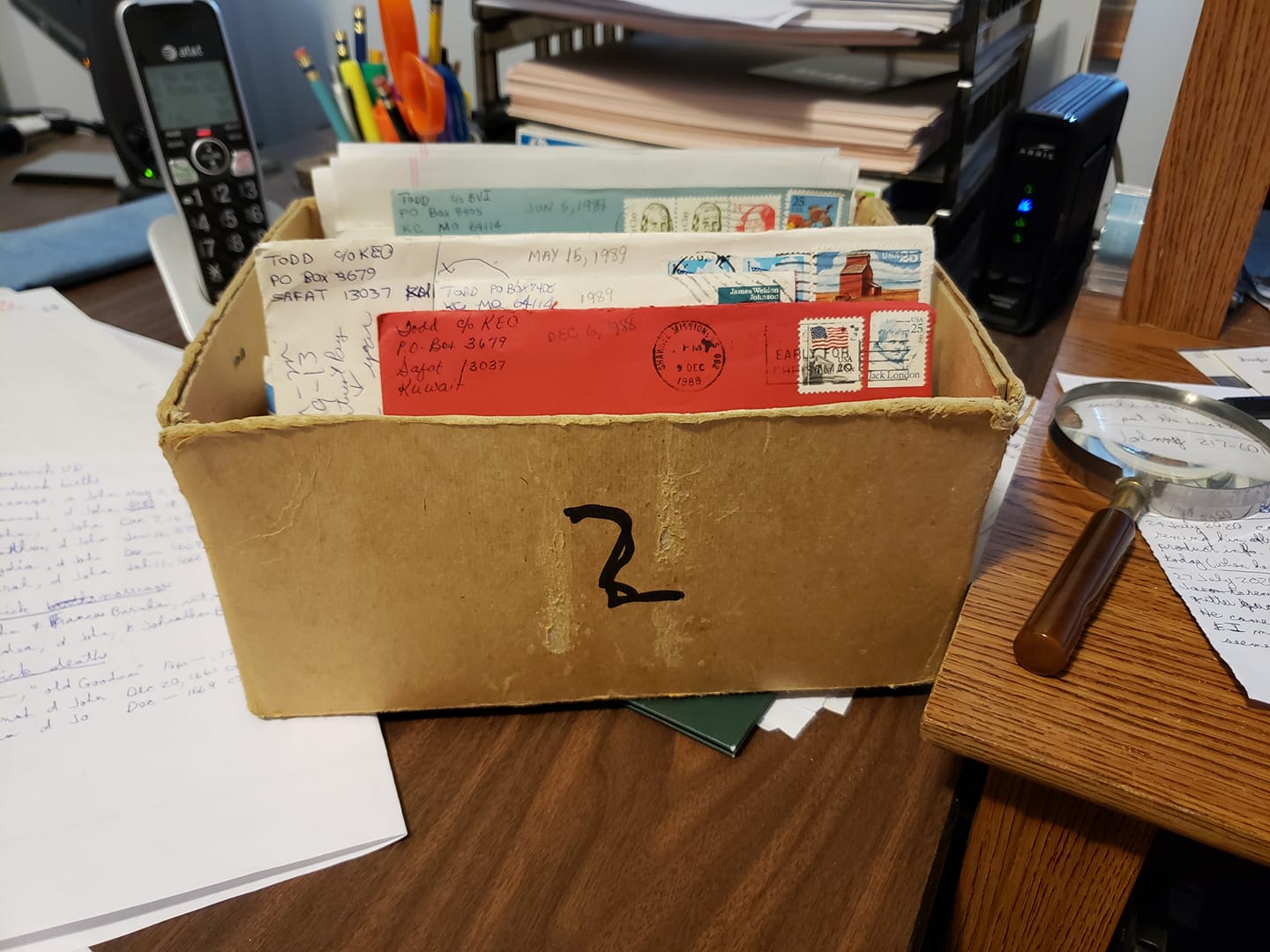
In the late 1990s and early 2000s, I got into the habit of printing off e-mails and discarding the originals. What was I thinking? I wasn’t thinking ahead to the day when I would want to reduce the amount of my physical possessions, looking further ahead to the need to downsize as age took hold. Now here I am, with notebooks of printed e-mails (and a few handwritten or typed letters received in snail mail). Since I want to keep a record of my correspondence, I don’t want to throw them out.
I was transcribing some letters, mainly those in my genealogy research notebooks. I save each letter as a Word document in a nice and neat filing system with consistent document names. Then I throw away the printout.
My current goal is to get rid of 10 letters a day. I’m making progress at that rate. One more day and I’m done with 2002. Only three days more and I’ll be done with 2003. Most of what I’m doing now is with the scanner function on my printer. Scan the doc, pull it into Word, save it as a .docx file in the right place with the right name, correct formatting and scanner errors, and move on to the next one.
At this rate, I have no idea how long this will take. And I’m not sure I can sustain this rate and write too. The scanning and formatting of 10 printouts takes close to an hour. By that time, my mind is not on writing, and I’ve not been able to do much of that. Perhaps I need to reverse the order: get an hour or two of writing in then switch to scanning/transcribing. I’ll have to think about that.
I also did this with e-mails on my computer. I had emails saved going back to 2005, ever since I switched to Yahoo as my e-mail program. In the evening, while watching TV, I multi-tasked by saving the emails to Word files in the right place. At first I didn’t name them as well as I should have, and may have to go back—also as an evening, multi-tasking activity—and rename a number of files. All in good time.
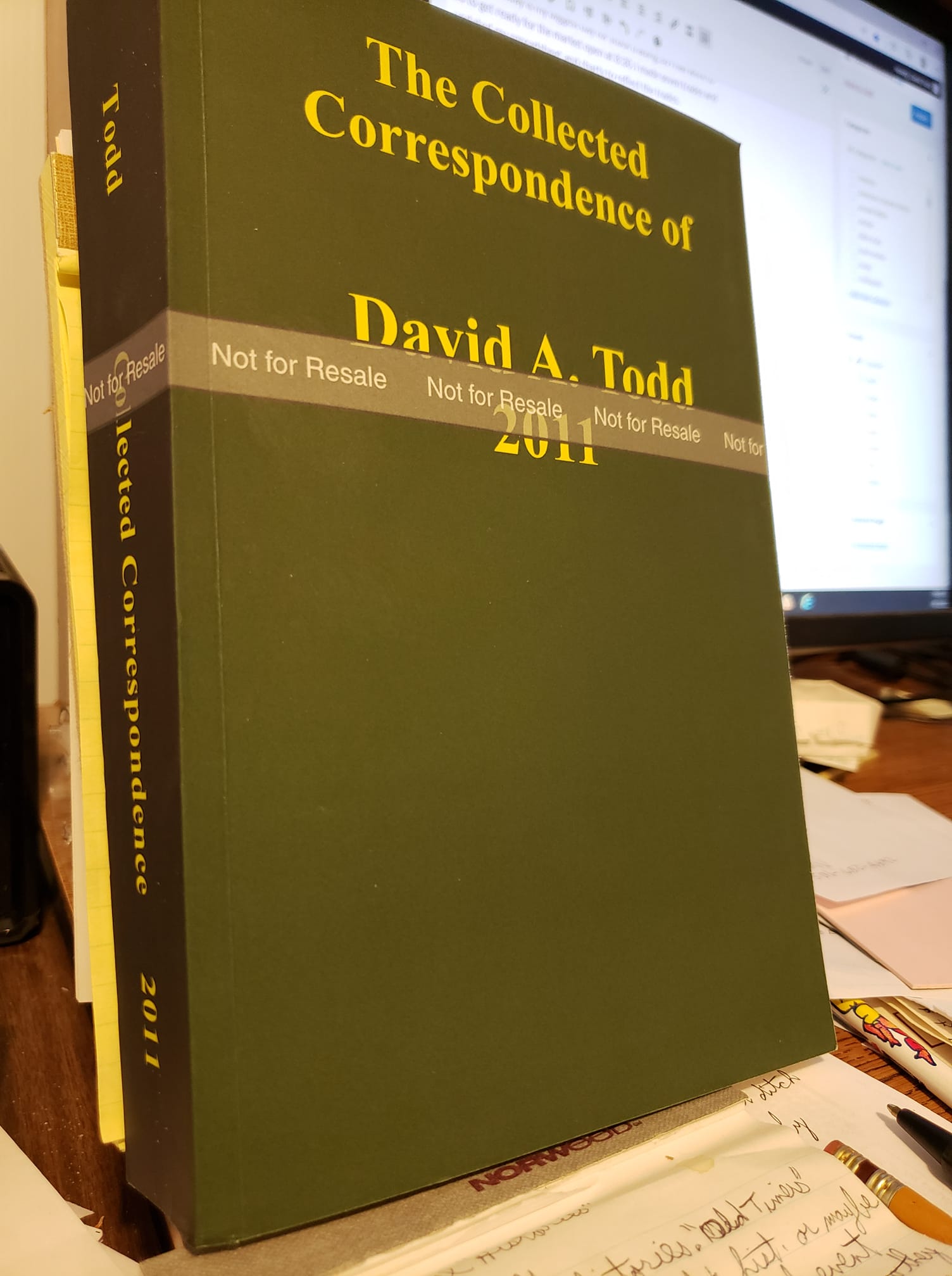
Why this obsession with my correspondence? My love of reading letters has, I supposed, caused me to have the illusion that someone, someday, will want to read my correspondence. I realize the chances of that happening are pretty slim. But, if anyone ever wants to collect my correspondence and read it, they will find I’ve done most of the work for them.
How long will I do this? I don’t know. The notebook I’m currently working on covered 2001-2004. I finished 2001, and in less than a week will be done with the next two years. 2004 will take a little longer, probably to the end of August or even into September. After that, I may take a break from this work and get back to productive writing. The letter notebooks will be there for a later time.
Now, maybe I can keep track of the weekend days ahead, and have a better blog post on Monday.