Category Archives: miscellaneous

Library Memories – Part 2: The Company

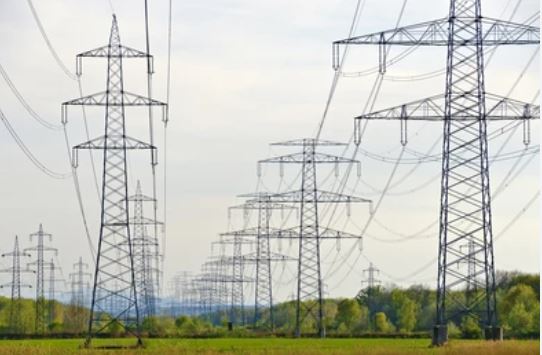
These massive structures took computer programs to design optimally. A library helped me do it well.

The first company I worked for had several libraries, one for each of the major divisions. But the main library was in the main building, Building A, on Meadowlake Parkway in Kansas City. I discovered this when I was working in Building N (or was it Q?) in Roeland Park, Kansas.

I had to go the 10 miles to Building A a couple of times a week to deliver a deck of punch cards to the main computer room, where they fed it into a modem to have the program run at McDonald Douglas in St. Louis. Don’t laugh, folks. This was 1975-76. Sometimes I would go, drop the cards off, and get the results the next day in the interoffice mail. Sometimes I was supposed to wait for the results. On those times, with nothing to do, I found the library and browsed in it.

This led to what I call two of my “career moments”, those times when you do something so spectacular that you remember it for the rest of your career and even after. At the time, I was with a group that was doing the structural design of 230 kV lattice steel transmission towers for the Eastern Province of Saudi Arabia. A few years later, I would be in Saudi and get to see those towers on the ground.

We were designing the towners using what we thought was a very good computer program, and none of us knew a whole lot about it. In the library, I found shelves full of journals of the American Society of Civil Engineers. One of those was the Power journal—many years of it—dealing with all things a civil engineer does for the electrical system. I found several articles about transmission towers. Needless to say, this was interesting reading.

In one issue, I found an article comparing the six or eight major transmission tower design computer programs (the analysis done by an unbiased party). The one we were using, the BPA program, was ranked second. The one that was first was proprietary, available only to the company that created it. My boss was about ready to head to Japan to a meeting about the Eastern Province project. I showed him the issue and article, and he took it with him and read it on the plane. In his meetings, someone criticized our program, saying it was not the best. My boss, fortified by the article and with the issue in hand, said, “Well, the ASCE Journal of Power Engineering says it’s the best program available. Look at this.” He won the argument and I was a hero. Career moment #1.

In another of those issues was an article on the general methodology of structural design of those towers. That led me to check out the manual on the BPA program and I learned it was a whole suite of programs. We were using the Design program, but after that we were supposed to go another step and do a more detailed analysis with the Analysis program. Based on what I learned, we started using it.

I learned this while a full-scale model of one of our towers was being tested in Japan, and we had a man there watching it. We worked late into the night and discovered that tower was 3% overstressed in one structural member. We quickly made a change, reran the analysis program, and had our fix, and waited for our man to make a pre-arranged call (no cell phones back then).

That morning, our man in Japan called and said that the tower being tested had failed at 97% of full load. We gave him the fix and were able waive the re-test, saving thousands or tens of thousands of dollars. Career moment #2 was in the books.

My next corporate library experience: While in Saudi Arabia, I discovered an Aramco library in Dhahran, where I frequently had to go for meetings. Perhaps it was more of a privately run public-type of library, but I’m calling it a corporate library. Whenever I had a half hour to kill between meetings, I would go there and browse. My main find was an atlas of the universe. I don’ remember the exact name. This had more than star charts. It talked about all things stellar and galactic. I learned about stars and galaxies near and far, and clusters of galaxies. I learned what a parsec was and how it was used to measure distances in the galaxies.

This gave me a fascination with space travel. I have several books queued up about that. Not sure when, if ever, I’ll get to write them.

Alas, my last couple of memories about corporate libraries aren’t good. When CEI moved into our new building in 2000, we had a great library. The then-director of training and his assistant did a wonderful job of organizing and labeling everything. And we even had a digital card catalog. This worked great from move-in day to around early 2005. A re-organization caused the library to move to less prominent quarters in our building. Things didn’t get put on the shelf the digital card catalog said they were on. This was not a downsizing but rather a reduction in usefulness at the start of the search engine era.

The downsizing came in 2009. After three or four layoffs, we were giving up our beautiful building and moving into rented offices. The library would move, but would be reduced in size. I was assigned the task of deciding what to keep, what to throw away. First, I had to organize it, which resulted in finding many duplicates of manufacturer’s catalogs and many we didn’t need. Things such as old phone books, old municipal standards, etc. all had to go. It was hard, but I made the cuts, and the truncated library barely fit in its new shelves.

That wasn’t the worst. As the Information Era came on full blast, and as we had a little growth, around 2012 the library lost much of its usefulness. It had to be shrunk even more, to maybe 125 linear feet of shelf space in a conference room. Again I had to make those hard decisions. Then, around 2016 the company decided to get rid of it all together. I took some of it into my office, got other people to take things, and got rid of everything else. Those were hard decisions to make, and hard to see valuable books and references overflowing in our dumpster.

I’ve wondered what my first company did with that library in Building A. The thought of all those journals being discarded isn’t a pleasant one. Maybe they found a way to keep it. I hope so.
Library Memories, Part 1: childhood and teen years

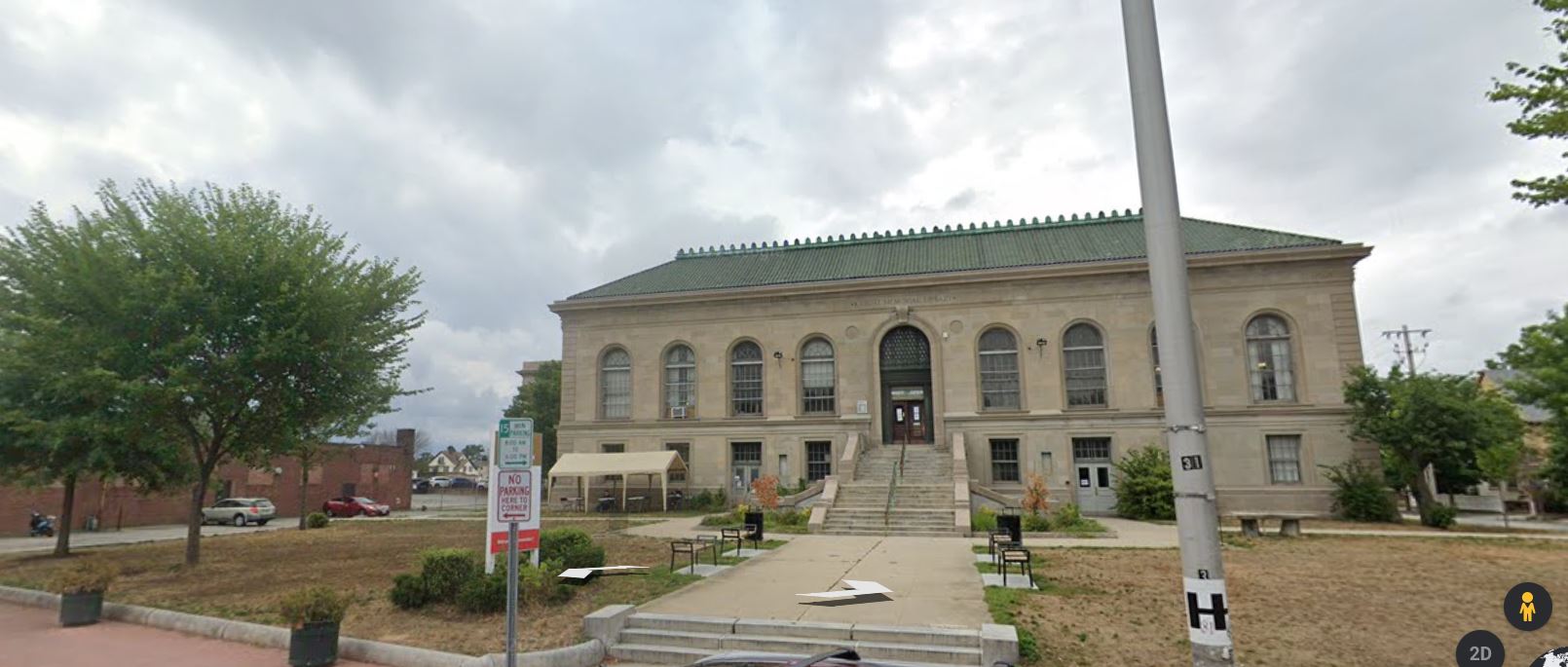
The Elmwood Ave. Branch of the Providence Public Library, in a recent picture on Google Earth. Just as I remember it.

Right now, say for the last three years, I’ve spent a fair amount of time in libraries. I met our pastor for coffee from time to time in the Bentonville Public Library. The writing groups I’m in meet in libraries, either the Rogers Public Library or the Bella Vista Public Library. So four times a month on average I’m in a library. That’s not a lot, but it got me to thinking about libraries I’ve been in and memories I have with them.

Growing up in Cranston, Rhode Island, you would expect me to have memories of libraries there, but I have none. I don’t think we ever went to public libraries in Cranston. They were a little too far to walk, there were no convenient bus routes, Mom didn’t drive much, and Dad didn’t take us, so for whatever reason we weren’t library patrons in our hometown. In my adult years, when visiting the hometown, we took our kids to Cranston Public Library—in a building that wasn’t there when I grew up—when we were home visiting Dad.

I don’t think our elementary school had a library, and I have almost no memories of a library at my junior high school. I know there was one there, and I used it, but don’t remember it. But I remember our high school library. I wasn’t in it too often, but was some. One main memory I have was a date in the library. I was talking with my sister’s best friend, two years older than me, about how I had never had matzoh (she’s Jewish). So she said she would bring some to school and share it with me. This was my sophomore, her senior year. We agreed to meet in the library a half hour before school on a certain day. We sat at one of the tables off in a corner, ate matzoh and shared pleasant conversation.

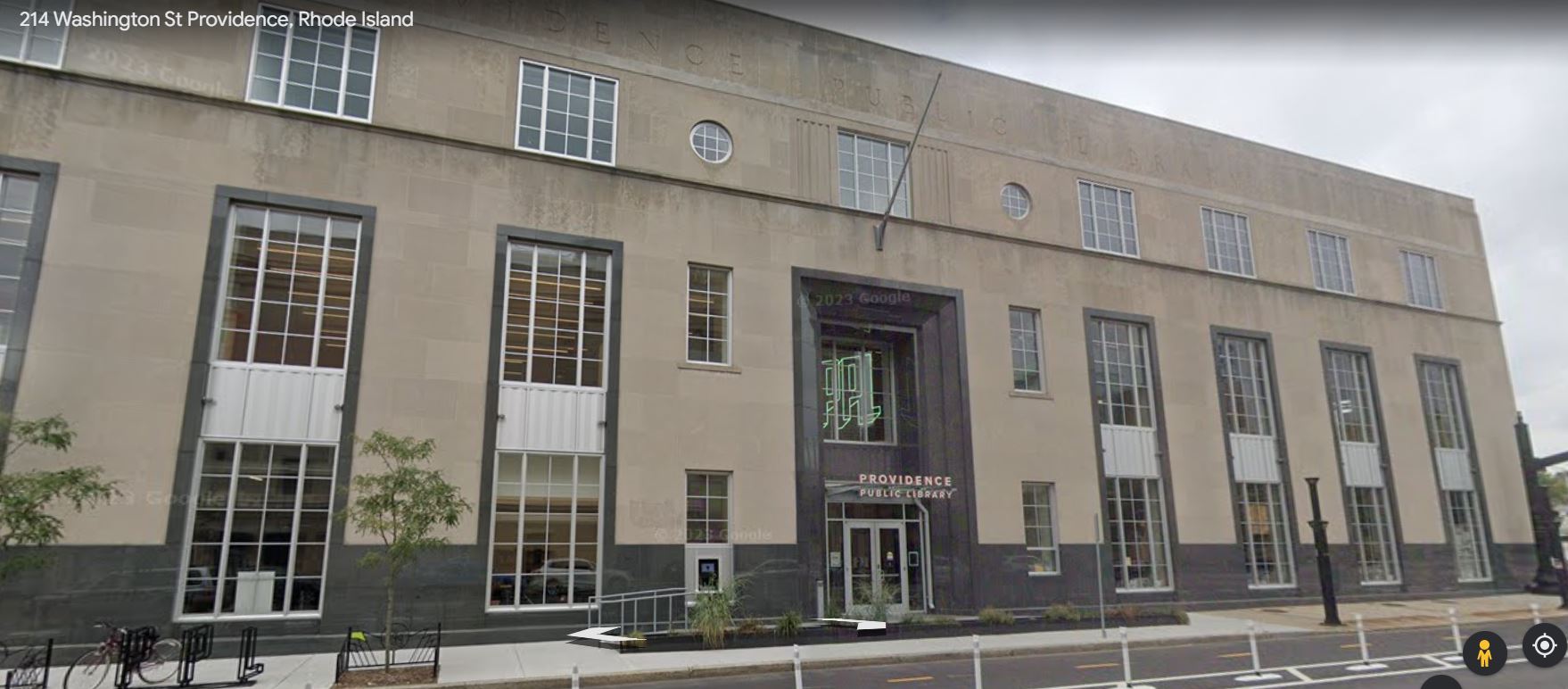
A recent photo of the main branch of Providence Public Library. Again, just as I remember it from the outside, though its neighborhood looks a little different.

You say that’s not much of a date, and you’re right. But, hey, went you had as few dates as I did (4 total in 9th through 12th grades, only 3 if you don’t count the matzoh date), you count everything you can as a date.

But, strangely enough, I have many more memories of public libraries in Providence, Rhode Island. I remember it was in 8th grade, after Mom had died. I had a history research and report assignment. Whatever library was in junior high didn’t have books that helped me. So I got Dad’s permission to hop on the bus and ride to the Elmwood Ave. Branch of PPL. We lived four house lots off of Reservoir Ave., right on a bus stop. The bus also stopped right in front of the Elmwood branch. You had to cross Reservoir twice on foot, but I think we had some traffic signals not far away.

So I did that. It must have been around wintertime, because I remember it was dark. I crossed Reservoir, caught the bus, rode it toward downtown Providence, got off at Elmwood branch, crossed Reservoir again, and entered a world of books. I still have some idea of the layout, of going to the history books and finding ten books that were suitable for the report. I spent an hour or more reading and taking notes (I didn’t have check-out privileges at PPL). I listed all ten books. Then I went home by bus. This probably happened from around 7 to 9 p.m. If memory serves me correctly, I did this a second time for this report.

As a side note, I listed all ten books in the bibliography of my report, even though I really only used two of them in writing the report. I remember I got an A on the report, and the teacher wrote, “Great bibliography!”

I may be unclear about one part of this. When Mom died in August 1965, Dad’s shift at ProJo ran from 7 p.m. to 3 a.m, usually with an hour or two of overtime. At some point they moved him to a 4 p.m. to 12 a.m. shift, usually with two hours of overtime. If his change of shift happened after my 8th grade year, it’s possible that Dad drove me to the library as he went to work, and I took the bus home. No matter.

When I got to high school, the Elmwood branch seemed inadequate, I guess, because I took the bus to the main PPL in downtown Providence and did research there. I remember it was closed stack when I first started doing this and open stack by the time I graduated high school. You wasted a lot of time waiting for someone to find the books you needed and bring them to you. The open stack shifted the searching function to you. It still took time, but at least you could look at other, nearby books once you found the one you wanted.

I probably went to PPL Main Branch between five and ten times per school year. I kind of remember the layout. In fact, I remembered where both the Main branch and Elmwood branch were and found them easily on Google Earth. They are still in the same buildings and look the same as I remember them. I suspect, of course, that the insides are much changed, as technology updates have surely been made. No more card catalogue. Yes, that’s how I found those history books at Elmwood: looking in the card catalogue, finding one book that sounded good, finding that shelf, and see a great treasure before me spread out left and right, up and down.

I hope my grandchildren will have equally fond memories of libraries. I try to take them our ours whenever they visit, and to theirs whenever I visit them. We have a sizable library of books in our own home—as they do in theirs—but it’s not quite the same.

And, before some of you express being aghast at a 13 or 14 year old boy taking the bus in Providence, Rhode Island unaccompanied by an adult, after dark, all I can say is it was a different world and a different city then. And greatly different family circumstances that required it.

Three White Ribbons

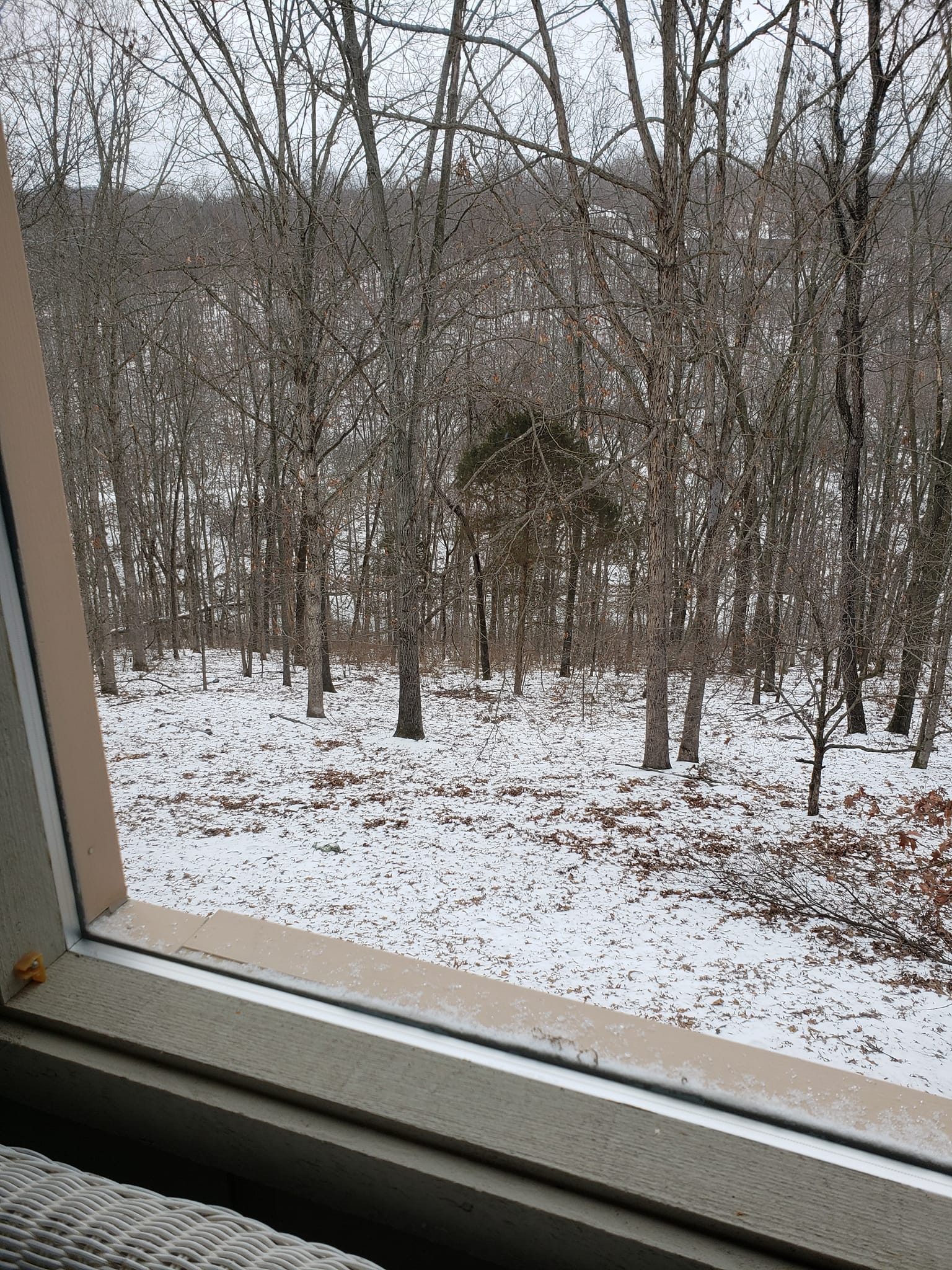
It’s hard to see, but in this photo are three white ribbons (paths) and two houses, mostly unseen most of the year.

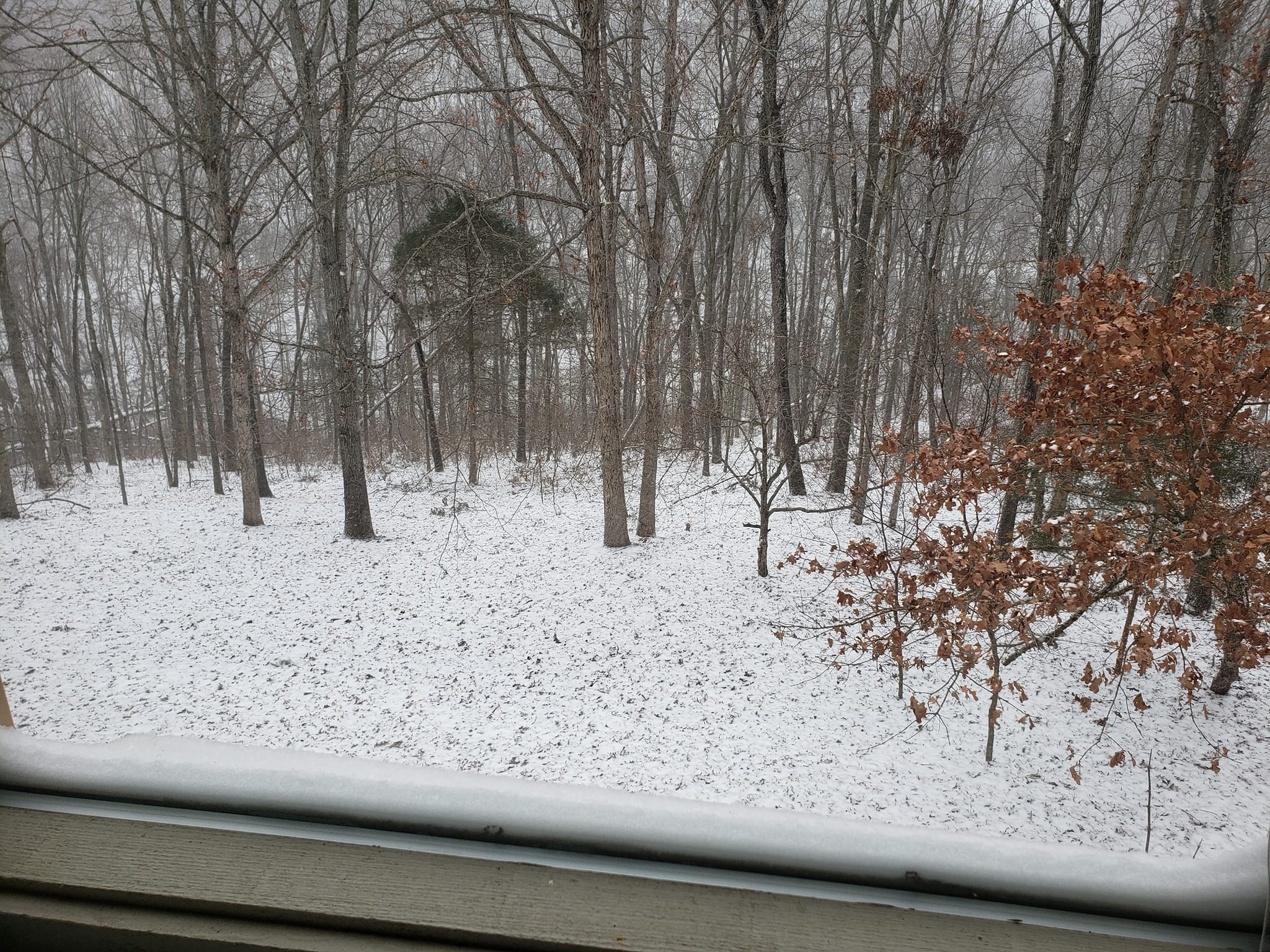
Monday morning, we woke up to a layer of frozen stuff that fell in the night. It was thin, almost more condensation than falling precipitation. This was forecast; no surprise. For the rest of Monday, the frozen precipitation did come. Sleet. Freezing rain. Ice. Maybe even some snow. By the end of Monday daylight, it had accumulated to perhaps an inch, maybe less.

Tuesday dawned cold, around 18° F and cloudy. Mid-morning brought some more frozen precip—again as predicted—though not as long as expected. Maybe a little more accumulation.

I didn’t leave the house for these two days, not even to check the mail. The farthest I went was one step onto the deck to strew birdseed. We stayed inside, did inside tasks, and, to some extent took it easy. Put away a few Christmas decorations. I was glad that I got some yardwork done on Saturday.

I spent my usual time in the chilly sunroom, including some looking out the window time. Behind our house is a valley, known in these parts as a hollow, or “holler”. The photo above is from the sunroom. If you click on the photo to get it full screen, then enlarge it as much as possible and pan around, a few features come out, features that are totally obscured by forest vegetation seven or eight months a year, and features that can’t be seen except when show highlights them.

One of the features is three white “ribbons”—strips of land that are significantly lighter than adjacent areas. At the bottom of the valley is the channel bottom, covered with light-colored gravel. Up just a little higher is part of the Tunnel Vision Trail. Built in 2019 to early 2020, this trail forms a 20 mile loop in western Bella Vista, popular with mountain bikers. That is also light-colored and visible in winter months even when there is no snow.

Then, up at the top of the photo, hard to see, is a strip that is a road going up the hill on the opposite side of the valley. I saw those clearly Monday night and Tuesday morning. Alas, by the time I snapped this photo, the City had run the plow up the road. If you look closely, you can see a black ribbon. That’s the road. It is totally not visible except when snow highlights it, in this case the absence of snow shows where it is.

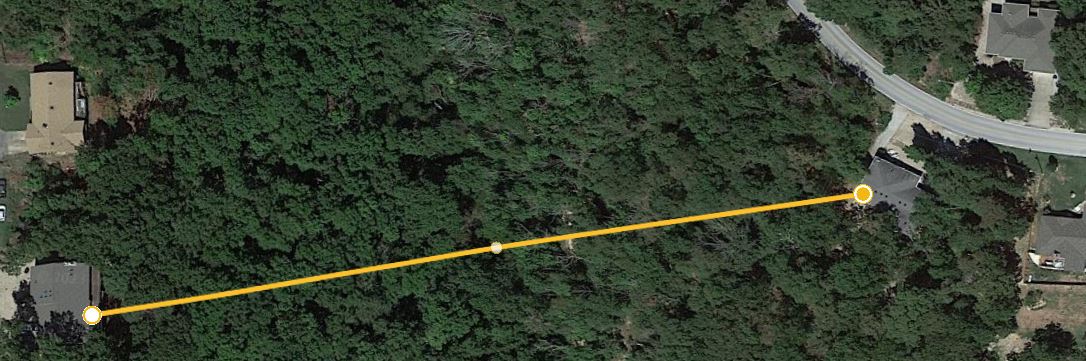
Our house on the left; the 700 ft house at the line on the right; the other house above that. Note the density of the forest canopy in the valley.

Other features that can be seen near the top of the photo are two houses. You can see the white roof of one. It’s on the far side of the black ribbon road, just right of the vertical projection of the evergreen tree near the bottom. The other is harder to see. It appears as a dark rectangle, partly obscured by tree trunks. This is the house that is closest to us across the holler, on this side of the black ribbon road, 700 feet as the crow flies. These two houses are barely discernable during normal winter conditions. The tree trunks reduce visibility that much.

There’s a metaphor somewhere in all of this, but I can’t tell what it is. Remove the foliage of life to see more of the background. Add a little adversity to see things even more clearly. Enlarge the vignette to see more details. I suppose I ought to explore that some.

All of which is so many words that doesn’t get me anywhere down roads I want to travel. Oh, I suppose better usage and description of metaphors would help me. My main concern Tuesday evening, when I began writing this post, was would I be able to get out of my driveway on Thursday to be able to attend the afternoon meeting of the Scribblers & Scribes critique group? That’s the road I need to travel next. By then the roads should be good enough to drive, but will I be able to get up the 50 feet of driveway to the street?

All of this is hurting my head. Too much thinking for a Tuesday night after a full day of editing, reading, and disaccumulating. I’ll add an update just before posting this on Friday.

A Variety of Thoughts

Saturday dawned cloudy, but the sun soon broke through. Then the clouds came again, dark clouds. Then, a few minutes later, the sun once again came out. This pattern continued for several hours, with it being cloudy more than sunny.

And windy. I did my usual Saturday morning paperwork, followed by some unusual disaccumulation tasks. That brought me to around 11:30 a.m. What to do next? It was about 55°, and the wind growing stronger. It wasn’t exactly the day for yardwork, but that’s what I’d planned on doing.  But at least it was dry. I had my choice of tasks: remove recent deadfall from our woodlot, or tend to the blackberry bushes across the street. Most years I’m slow getting to the blackberry bushes and, as a result, they bloom out without my having done the tasks to maximize their yield.

So I had three choices: the woodlot, the blackberries, or stay inside out of the wind, like any sensible person would. I decided to work on the blackberries. The work to be done was cutting out competing plants and removing some deadfall that may have broken down some of the blackberries. I started with the cutting.

Since I hadn’t done this for a couple of years there was a lot to do. Lots of bending and reaching, working around thorns to get to the plants that needed removal. It wasn’t strenuous work, but it was tiring. I worked around the blackberry branches, causing me to have to work slowly and be cautious. Still, I managed to get the worst of the competing plants cut away. That took all the time I had for yardwork, and I headed inside.

It wasn’t, perhaps, a major advance in getting through the to-do list, but it sure felt good. Especially because today, Sunday, it turned cold—just 32 degrees for the high. The next two days will be colder with winter weather possible or probable. That means on Wednesday, all the areas where I cleared on Saturday would be wet and not very nice to get to. Had I not done the work on Saturday, who knows when conditions would be right to do it.

That’s not an earth-shattering success. Sometimes, however, you have to understand the scattered nature of the tasks on my to-do list. There’s writing, stock market, family finances, taking down Christmas decorations, general cleaning, and a number of other things I could name. Once again, I’m feeling a bit discombobulated. Appointments and travel are just over the horizon. That always makes me unsettled.

So what is this post about? Darned if I know. I’m getting a few things done, but the unsettled and incomplete feeling remains.

In Search of a Metaphor

It is very cold today, two years before Christmas day. Perhaps some of the snow will stick around and we’ll have our first white Christmas in over ten years.

Last night was cold, probably -6°F, with the wind chill around -25°F. That’s a little colder than the coldest day here in the average winter season, which is more like 5°F. And it’s only December. Lots of winter days and nights to come.

Despite that, the house felt warm last night. Our new (as of August) heat pump kept cranking. Once I turned the heat down to 65° for nighttime, it kept the temperature there without having to resort to emergency heat. When I got up this morning just before 7 a.m., I walked around the house a little before dressing for the day and felt warm.

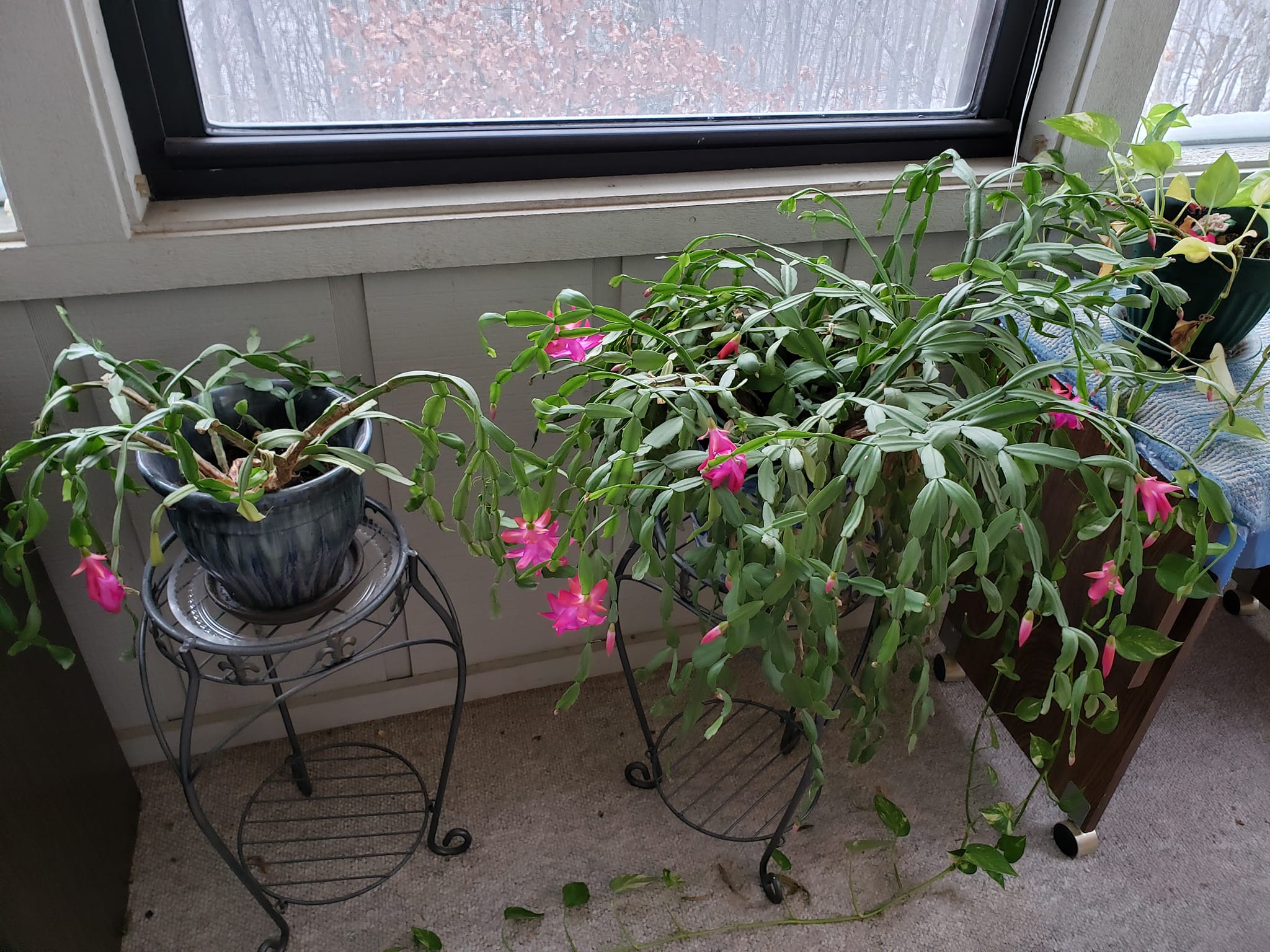
Our Christmas cacti are all blooming, both upstairs and down. They know the season even without us doing much with them except occasional watering.

Then again, for some reason I was hot last night. It’s -6° out and I’m hot. I got up and sat in my reading chair with a light blanket over me until I cooled down a little, then went back to bed. Now, down in The Dungeon, where I keep the basement thermostat cooler than upstairs, I feel just a little chilly, as I like it. I can just see a little of outside through the blinds, where the one vertical slat is missing. Tree branches are not swaying, so it appears the wind has tapered off. I see snow on the ground on the far side of the hollow from the 2 inches we got yesterday. And, just off to the right, I see the bright horizon where the sun is about to break over. We haven’t seen much of the sun for three days or so.

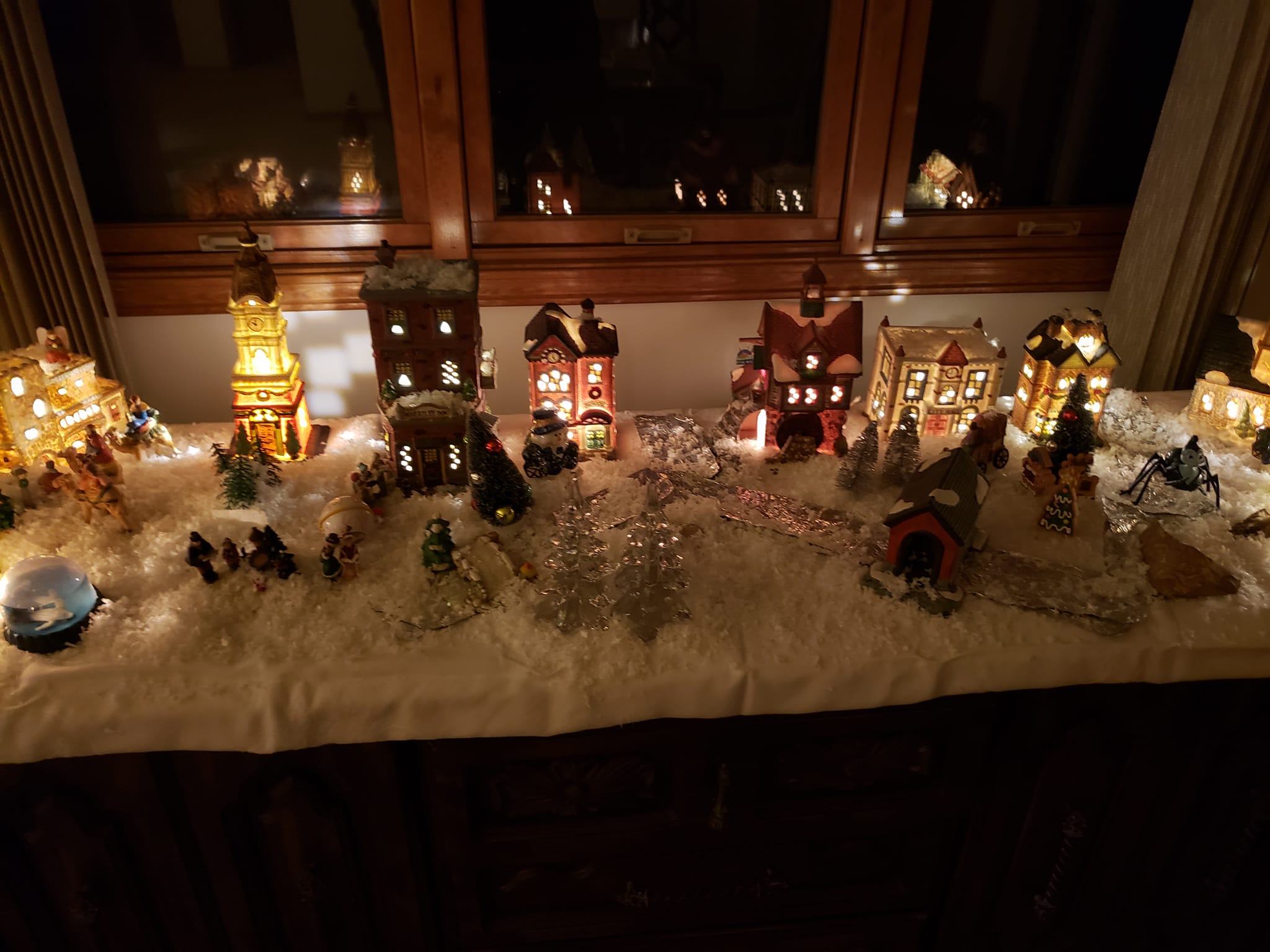
The tree may not be fully decorated, but at least the Christmas village is up. But only because after last Christmas we left it up, toys added by the grandkids and all.

Upstairs, our artificial Christmas tree is up and the lights are on. Today, Lynda and I will work together to add the ornaments, then clean up the boxes and storage bin. Might even vacuum, though that is more likely a tomorrow task. I wouldn’t even have put it up except for the family coming in a couple of days after Christmas.

In all of this, I’ve been searching for a metaphor about Christmas and life and maybe writing, but no metaphor comes to me.  Alas, just as poetry no longer comes to me. Maybe that’s because I’ve been working mainly on prose for the last 18 years. Or maybe it’s because I wasn’t much of a poet to begin with.

A metaphor of the Christmas season, a metaphor of the start of winter, a metaphor about writing. Seems like something should come to me.

Well, I will end this, my last post before Christmas.  Be safe everyone. Remember Jesus on this celebration of his birth. And as Tiny Tim said, “God bless us, everyone.”

Changes in the Old Neighborhood

This was our house. Note the magnolia tree on the left. It’s twice as big as it was when we lived there. It seems to be marked for preservation.

One day a couple of weeks ago, Lynda and I were in Bentonville, we decided to drive out by our old home on NE “J” Street. A ranch home on 7 acres, we sold that in 2002 and moved to Bella Vista. We have rarely driven by the old house over the years, and it had been several years since the last time. So we were ready to see how it had changed.

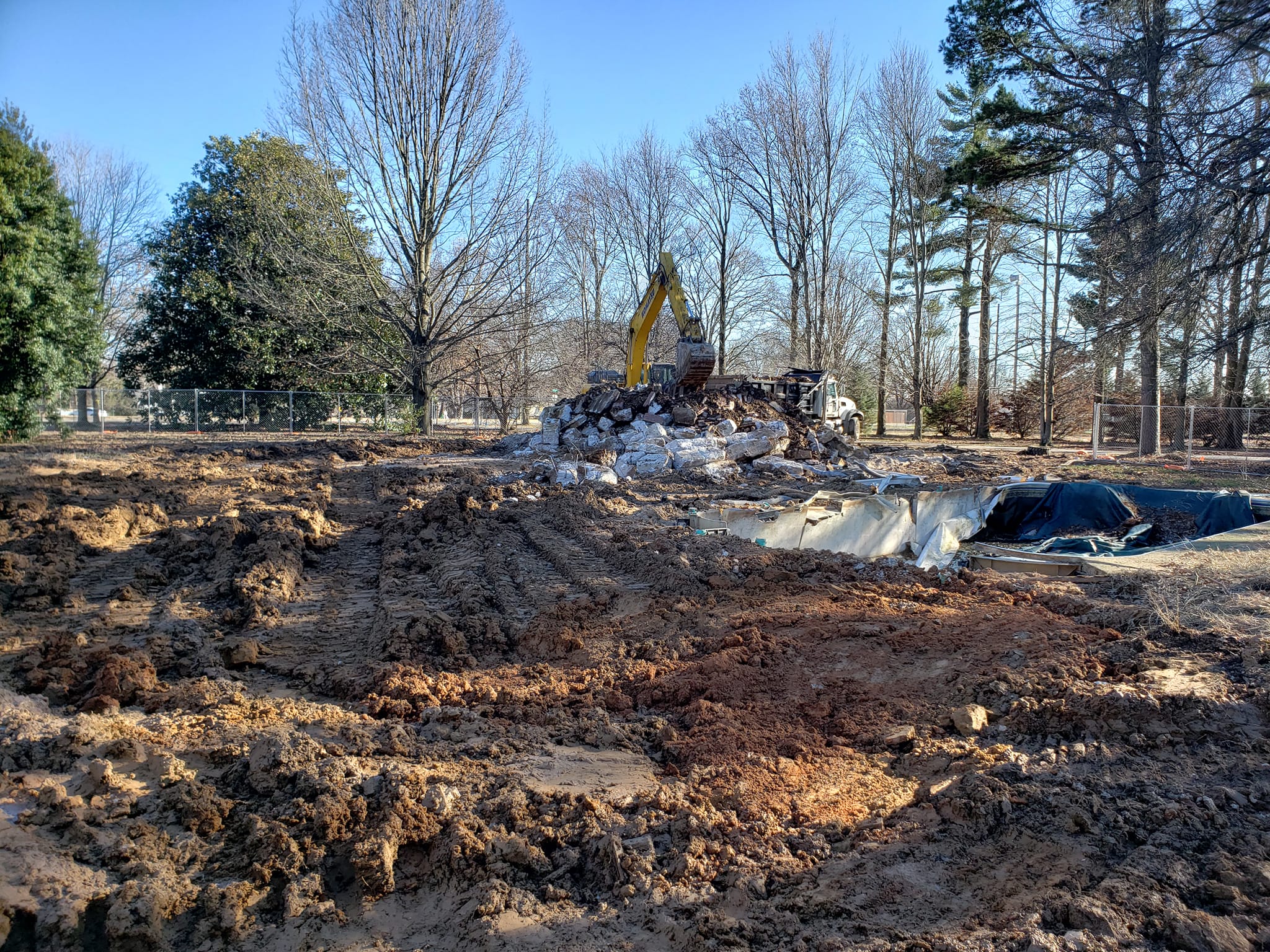
To our surprise, we saw it had been demolished! Yes, the home we lived in from 1991 to early 2002 was a pile of rubble. We were so shocked that we didn’t think to pull off and stop. Plus, it was starting to get dark.  Therefore, we went by it again a day ago. A trackhoe was in the process of loading the rubble into a dump truck. What we hadn’t seen before, the house to the south of ours was also gone. The house to the north of us was still there, but appeared to be vacant. What was going on?

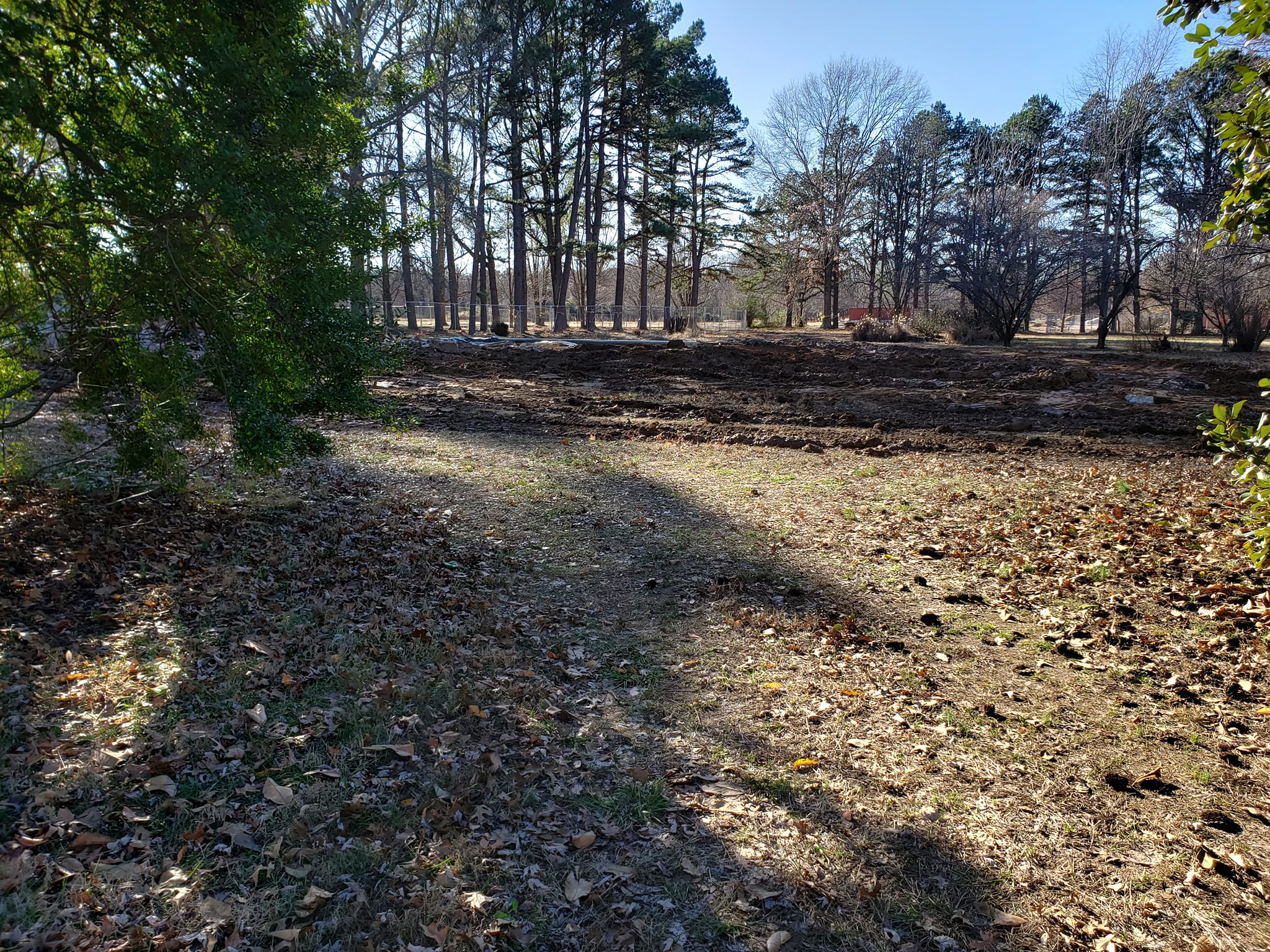
We pulled into the driveway to the back five acres the owners after us had put in. We also drove back to the house on the back acreage and discovered that the house back there was gone. Four houses on 21 acres of land. What was going on?

Another house used to be across the field behind the row of pine trees, which were planted just before we moved to this house in 1991.

Looking at the County GIS site, 14 of those acres are owned by what appears to be a land developer. It appears it’s going to become a subdivision. Or could it be going to condominiums or townhouses? A sign for a public hearing was laying on the ground. Possibly I’ll contact the City and see what it’s going to be. Or, perhaps I can just go to a website.

But do I really care that much? Well, this was the house our children spent the most time at before they hit adulthood. They both went on to college while living at this house. They’ll get to see it when they are here before the end of the year. So yes, I do care. The house was built in 1970. So it’s only a little over 50 years old. The house I grew up in in Cranston RI was built in 1919, and it’s still there, still occupied and, last time I saw it, in 2015, was changed only in color and loss of the front evergreens.

But that was a stable neighborhood whereas Bentonville is a rapidly growing city. The property backs up to the Crystal Bridges Museum of American Art. The 5 acre parcel two lots to the north is now owned by Crystal Bridges, and the large house at the back of it appears to be an office of some kind.

Not only is the neighborhood changing, the world is changing very fast around me. The culture is changing. I’ve kind of purposely absented myself from the current culture, such things as the music. Nowhere is that more evident than the music sung in church for Christmas. So different than what we sang until just a few years ago.

There’s not much about modern music I like, though I suppose without partaking of it I have no basis for saying that.

I think I’m rambling now. The house is gone, and the culture I loved is mostly gone. The world moves on and changes just like the neighborhood did.

Forgive my ramblings. It’s kind of hard to see the house you used to live in now being a pile of rubble being loaded onto a dump truck.

Difficult Days

Readers, sorry that I didn’t post anything on Friday, and that I’m late today. All I can say is I’m going through some difficult personal times right now. Also, I’m terribly busy with non-writing things around the house. For example, all morning so far I’ve been trying to estimate my income tax due next year for the 2022 tax year. I have to figure out if I will need to make an interim payment to the government so that I won’t be hit with penalties and interest. Since this year had one unusual income item (sale of all my stock in my former company), this is quite important.

I have other things going on, such as needing to replace the microwave oven (difficult since it’s a built-in), needing to get our main car to the shop, needing to get our back-up car running, cleaning/resetting things after some inside repairs, needing to schedule appointments. That doesn’t seem to include everything. Oh, yes, voting tomorrow, and figuring out who I’m going to vote for in local races.

So, I’m unable to do any better post than this today. Here’s hope for a real post on Friday, because I have much to tell.

A Difficult Transition

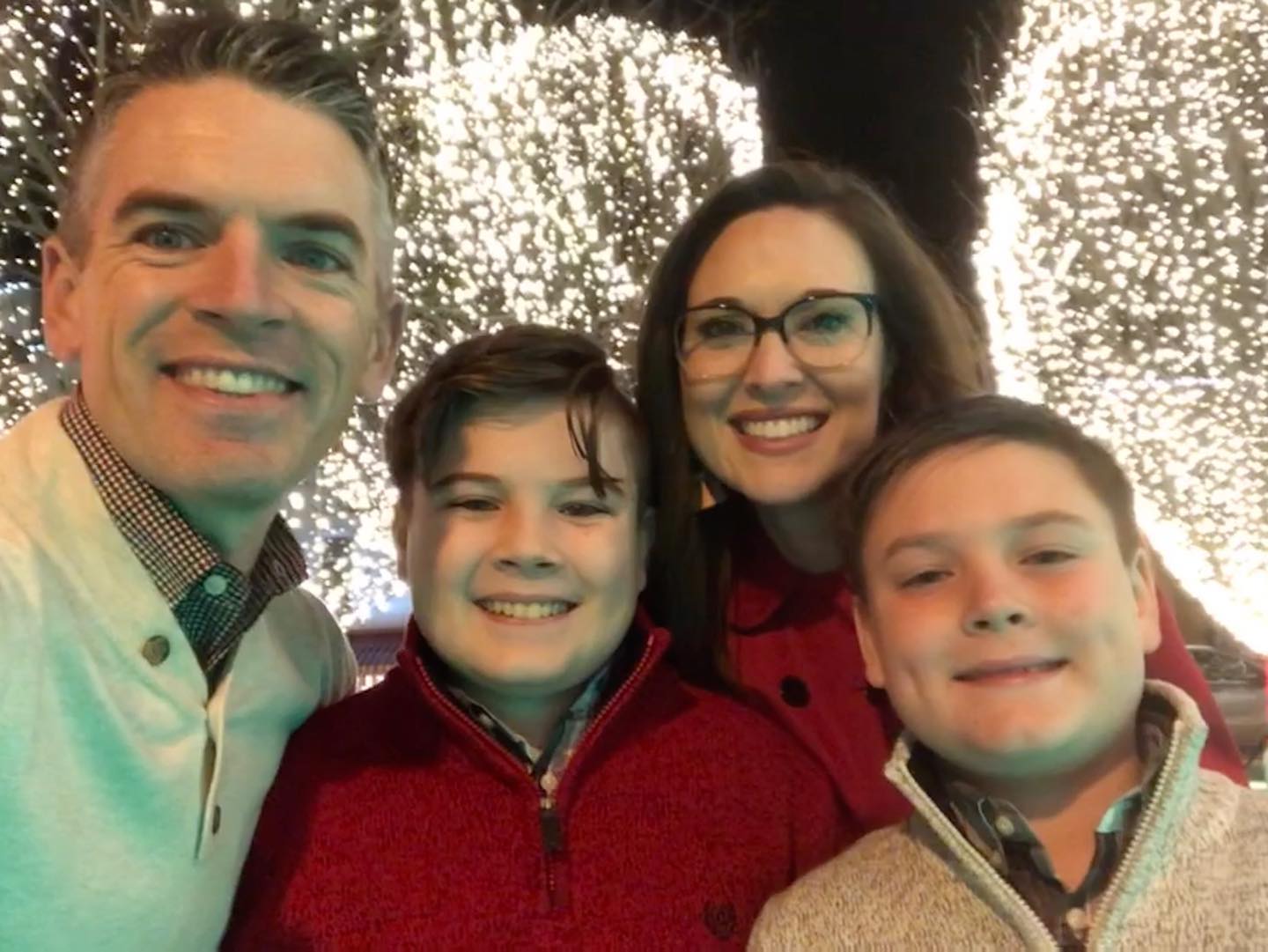
Not the most recent photo of the Snodgrass family, but a good one.

Yesterday was a sad day, as it was our pastor’s last Sunday at our church. Rev. (Dr.) Mark Snodgrass has been our pastor for close to 12 years. His children, Paul and Luke, were 4 and 1 when he and Lauren came to Bentonville in January 2011. Now they are teenagers, and this is the only home they know.

Pastoral changes are never easy. I was trying to figure out how many I’ve been through since I’ve been in the Church of the Nazarene. I think it’s around eight, though one of those happened while we were overseas. Mark is the pastor I’ve had longest, which perhaps makes it most difficult.

I haven’t been in any positions of church leadership during Mark’s tenure, as I pulled out of church leadership long ago, believing it wasn’t the ministry I was meant to be in. But as a Life Group leader, I interacted with our lead pastor quite a bit. He came to us right at the time I was starting to self-publish. I gave Mark several of my books. When I published books on Christian topics, I asked for guidance from him about whether my writing was doctrinally sound.

From time to time, I would have lunch with Mark. Once I retired in January 2019, my trips from home to Bentonville greatly reduced but, not having a job to do, I suggested we get together for coffee when I made the 13 mile drive for some purpose and when he had time and I had time. This resulted in us meeting at the Bentonville Library around four times a year. Those were good times. We discussed church topics, politics, social types—just about anything.

In these conversations, it became quite apparent that our politics differed. So did our belief in what I call social styles. Mark is big on community. I’m big on individualism. He’s an extrovert (a social style also called “Expressive”). I’m an introvert (a social style also called analytical). I tend to crave being alone and thrive working by myself.  I embraced self-checkout at Wal-Mart, not because I want to do that work but because that means one less person I need to talk with each time I went shopping. Mark loves to be among people and probably thrives when working in committee. But despite these differences, we became good friends. I will miss these occasional meetings.

We didn’t sell out of the book, but we sold a lot. I increased the print run from what Mark wanted. Turns out he was correct.

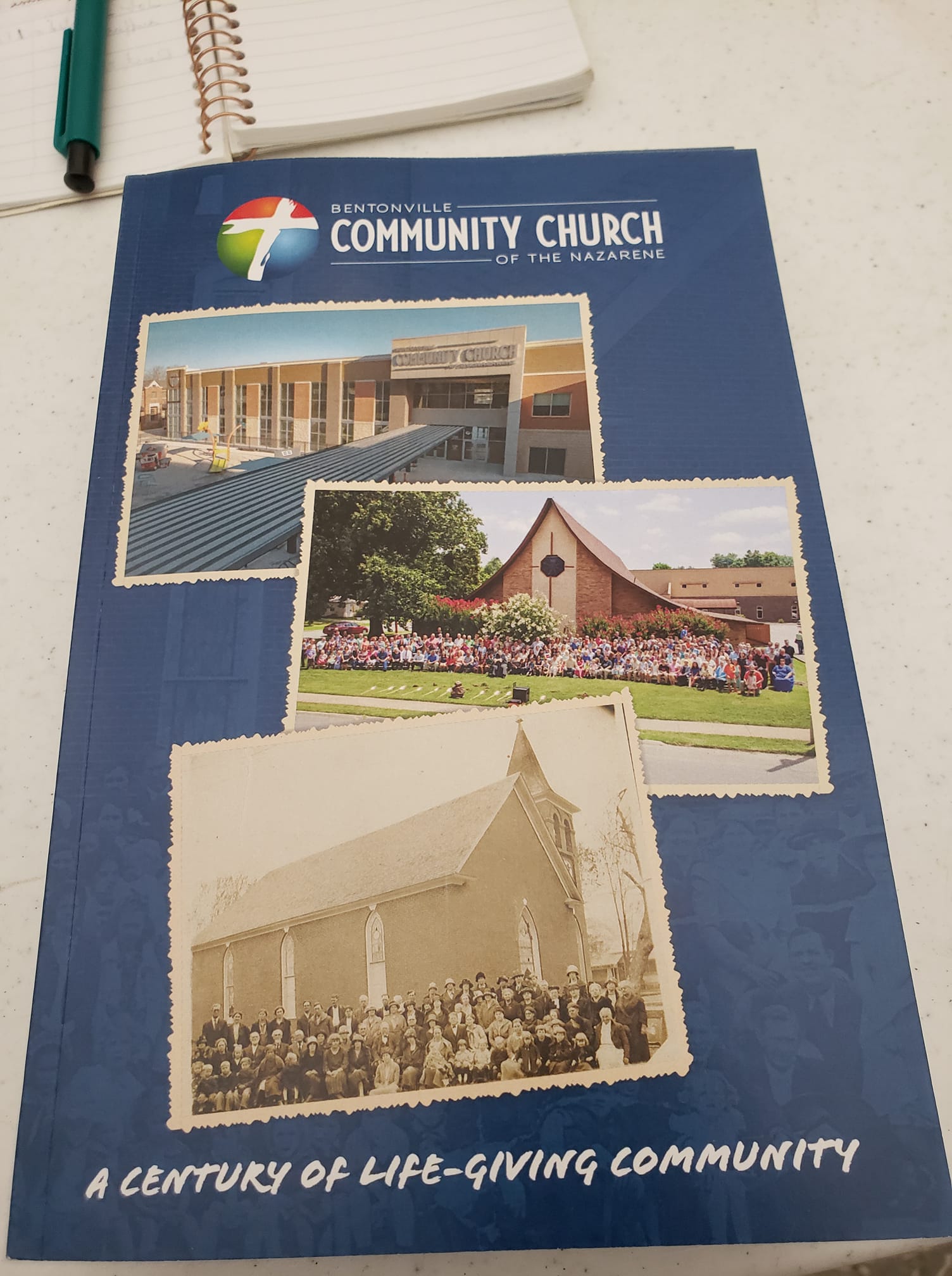
In November, 2020, Mark asked if I would write a history of our church’s Centennial. I agreed, and began work in January 2021. I made some amazing discoveries, which I shared with Mark along the way. He seemed pleased with the work I showed him, though some I didn’t tell, but let him see them as posts on the church’s website. The impact of those surprises were good. I don’t think Mark ever felt he made a mistake in his appointment of the “church historian”. That’s the closest I got to church leadership during his pastorate.

Mark has been called to a strong church in the Kansas City area. That’s only four hours away, and Kansas City was once Lynda’s and my home. Is getting together possible sometime in the future? Part of the process of a pastoral change is the letting go. The pastor has to let his/her current church go in order to fully minister to the new church, though of course a pastor never totally forgets those he/she ministers to. But the church also has to let the pastor go, not keep bugging him/her as they seek to acclimate to their new congregation.

The separation is hard, especially after twelve years. But I’ve prayed that God will confirm his call to his new church as he ministers there.

Godspeed Mark, Lauren, Paul, and Luke.

The Best Season of the Year?

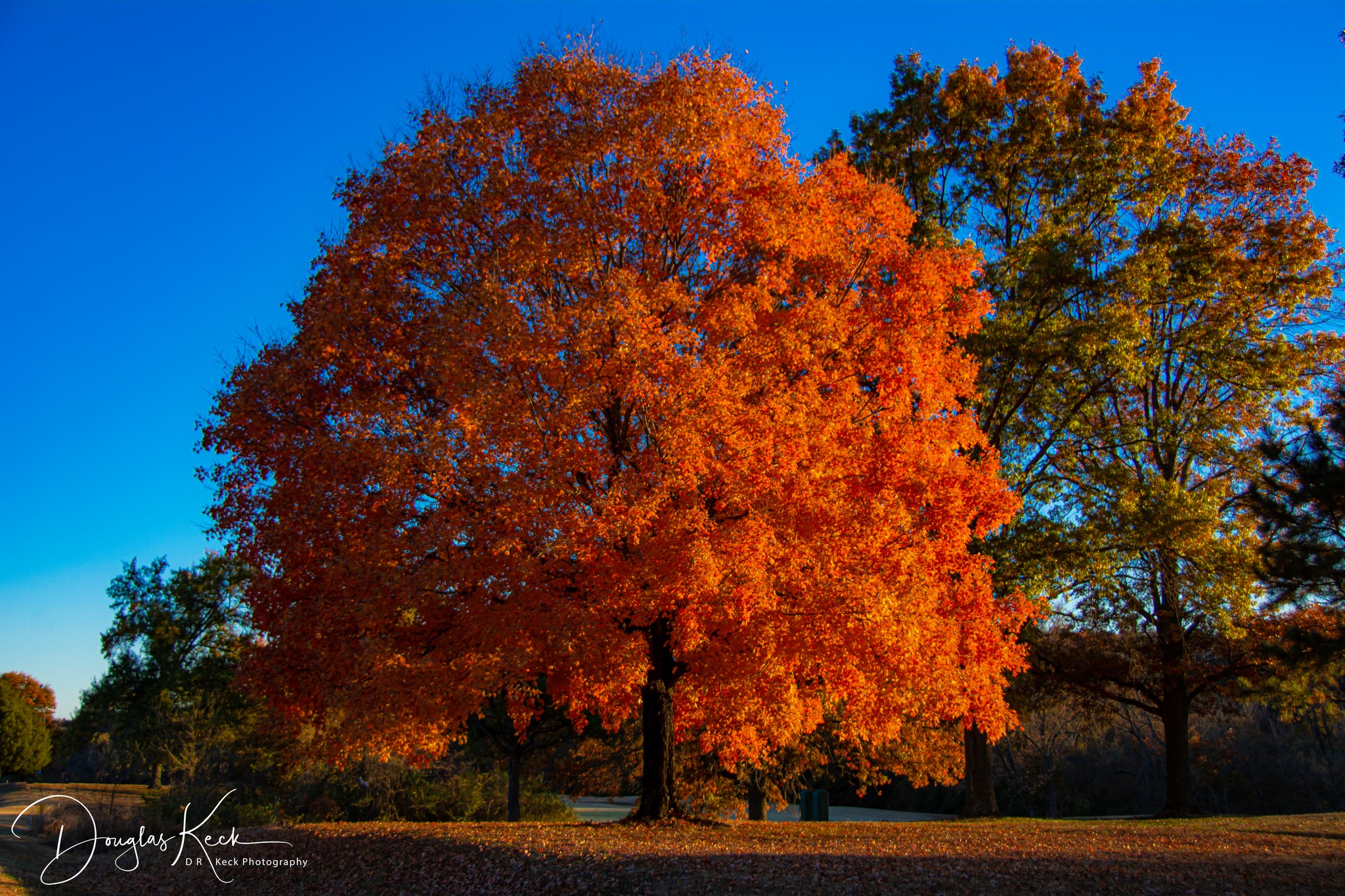
Some trees can only be described as spectacular. Photo by Douglas Keck Photography; used with permission.

You hear it ever year: Fall is the best season of the year.

Nature lovers who can’t wait for winter to end say it. Beach lovers who long all year for summer and waves and sun and umbrellas and sand between the toes say it.

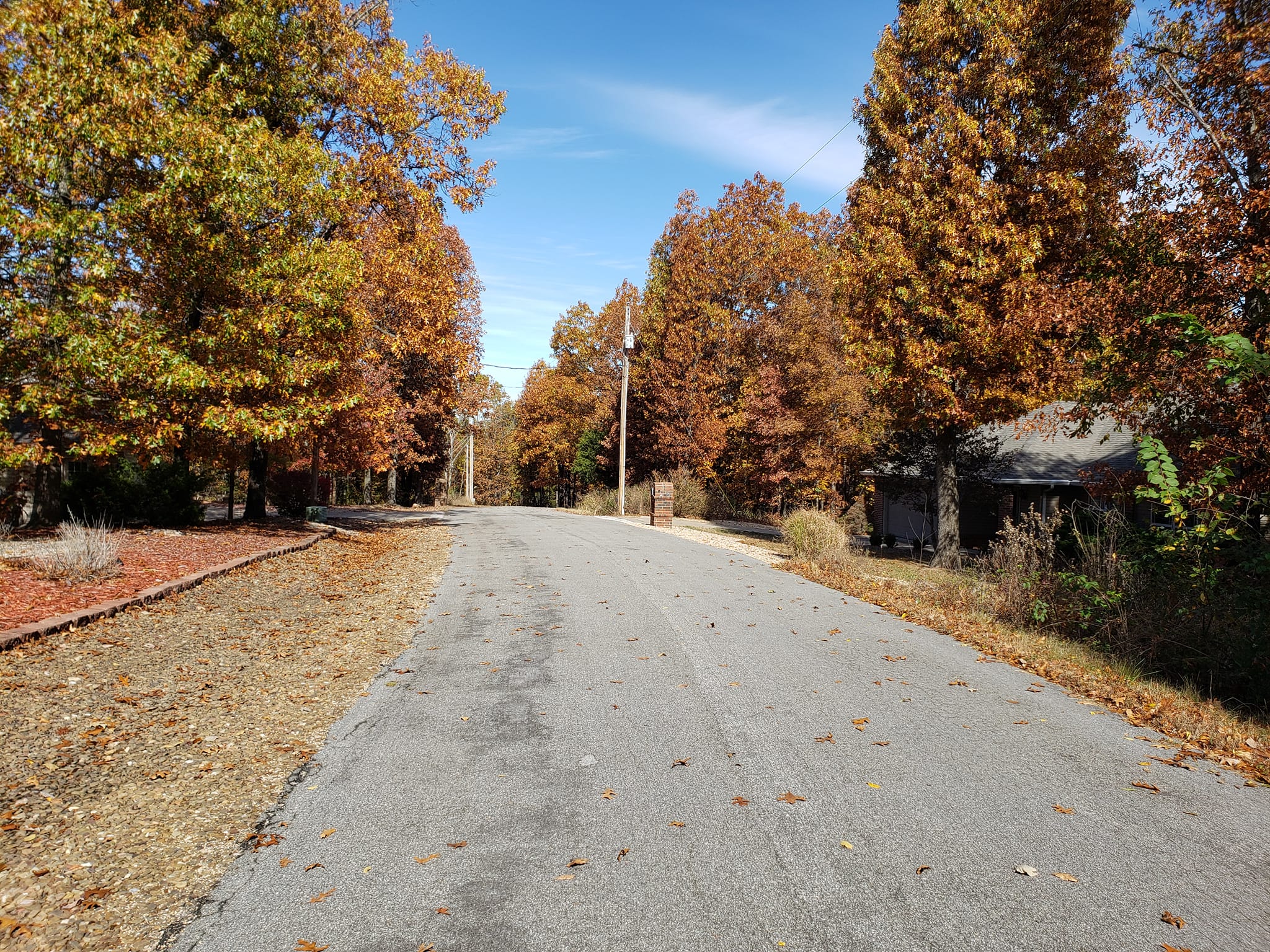
Oak trees not far from my house, when the sun isn’t directly on them. A little bit of color, but nothing to write a blog post about.

You hear it almost every year in just about any season. People who really like another season will, as September fades and October with its cooler temperatures come on, will proclaim the glories of fall.

Why? In the American south, it will be the joy of those cooler temperatures after fighting heat for three or four months. For the northern US it will be the fall foliage. Other parts of the country will have foliage changes also, but not like the north and northeast.

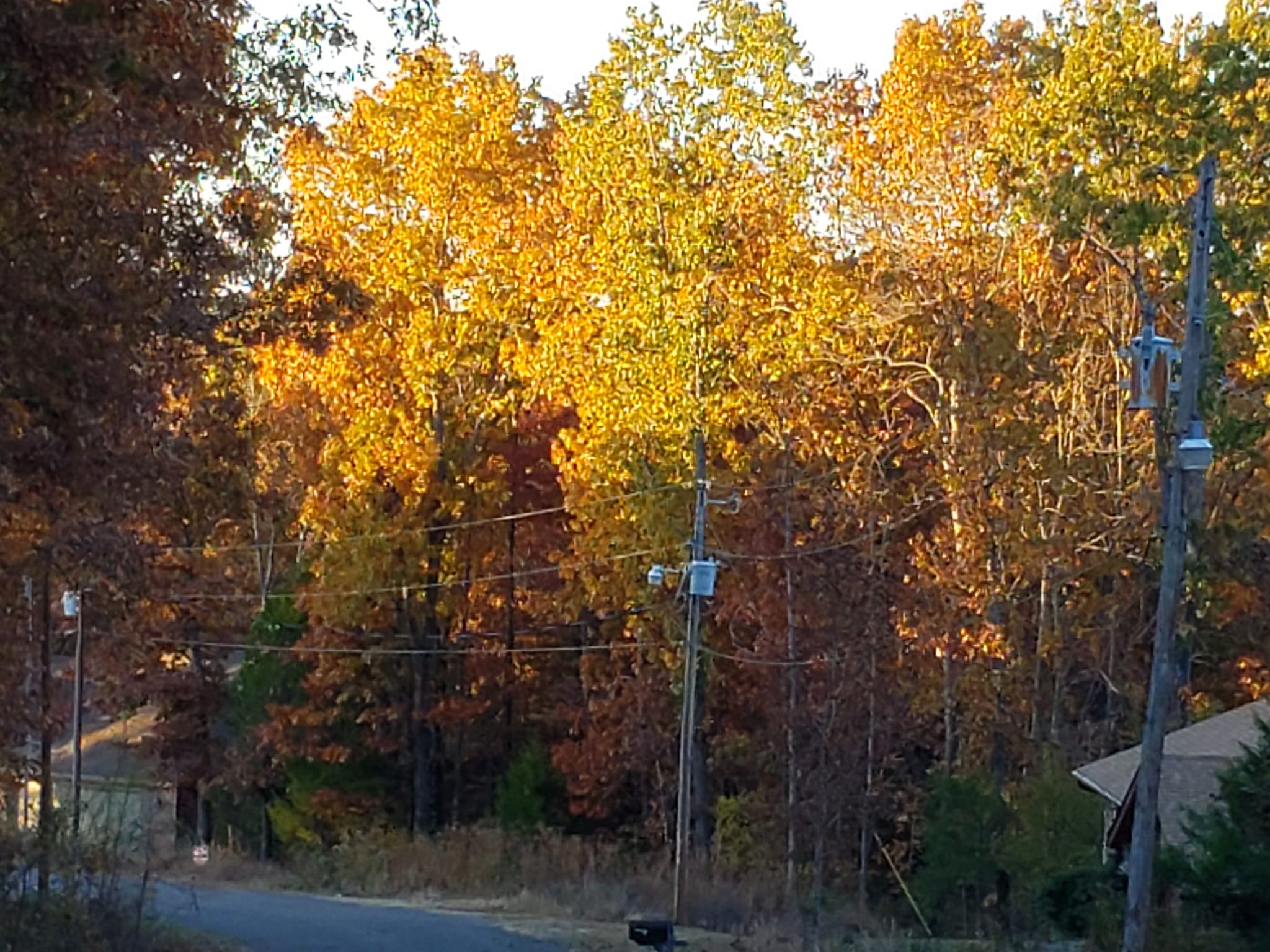
The oaks down the hill from us, in direct sunlight. More beautiful in person than in the photo.

What about the Virginia-North Carolina Piedmont area, you ask? Yes, the colors are spectacular there too. What about the Ozarks? Hmmm, let’s discuss that.

I remember a drive I took one fall day in the mid-1980s from Asheboro, NC thirty miles north to Greensboro. It was the peak of fall colors. The wide, clear right-of-way on the interstate allows for incredible views. The rolling hills were ablaze with solid oranges and reds. Just great to look at.

But I was reminded of my native New England. There, the fall colors are a little more muted but a lot more varied. I remember a trip to Vermont in October 2002. It was a little before peak foliage season. Lynda and I got out on some back roads, looking for beaver ponds and other wildlife. We found a secluded valley and sat for a couple of hours. I don’t remember much wildlife coming by, but the view there and coming and going to there were all very nice. The colors were a mix of yellow, purple, red, orange, and green. Evergreen trees dotted the mixed hardwood-softwood forest, creating a color palate mix that any artist would love to have.

Which is better, the Piedmont or upstate New England? That depends on if you want foliage like blazing fire or like an artist’s paints board. There’s no right or wrong.

What about the Ozarks? Well, for me, the foliage is not as good. In towns, you have a good mix of maples and other trees, not native to the Ozarks but brought in by people. Drive through most towns at peak season and the colors are great. But, out in the natural world, the forests are mostly oak. And the oaks we have here, the leaves just turn brown. They do so at least a week past the softwood tree peak. Brown after mixed colors. Hmmm. You would think the color mix would be better.

But, if you can catch the oaks on a sunny day, with the sun hitting the hillside just right, the brown oak leaves reflect back to you a wonderful orange-brown. It’s not as uniform in color as the Piedmont forests. It’s not quite as vibrant as the New England woods. But it’s a good sight to behold. If that’s all you see, it’s good enough for fall.

And, the mix of trees means you have a longer foliage season. The peak colors in town are around Oct 15-25 in our part of the Ozarks. The oaks tend to peak around Nov 1-10. I always like to drive a little on the first Sunday in November—provided it’s sunny. That is one drawback to oak foliage season. If you don’t have bright sun, all you’ll see is the dull brown. But, since this is generally a dry time of year, cloudless days abound during this time, and you have many good viewing days.

It helps that I’ve lived in four different areas of the country, and observed fall colors in towns and countryside, and saw the contrasts. I’d like to think God led me to these different places for me to enjoy fall in a number of different ways. Foliage variations is certainly one of them.