All posts by David Todd

January Progress, February Goals

My cover designer, Sophie Braun, made the revised covers for the series. I managed to upload them this month.

I didn’t exactly set January writing goals. On Jan 3, I posted some annual goals, with some mention of schedule, but I didn’t say “In January, I want to accomplish….” So, I have no monthly goals to report on. I think this was due to being uncertain of what I would be able to accomplish. So let me say what I managed to do in January, then set some goals for February.

  • I finished The Forest Throne. I thought this would happen in January. It was in the first ten days that I wrote the scene that connected the book to the actual last scene (which I wrote months ago). It has now been read by three other people besides me, and two beta readers have it. I’ve been in touch with a cover designer and she is working up some options. I have also made the decision to title the series The Forest Throne, and title this first book in the series There’s No Such Thing As Time Travel.
  • I also finished the church Centennial book. I wrote the last words in this in December, and in January I made a complete pass through the book as proofreader/editor. Those edits are typed. The cover designer is onboard and waiting on me to give the final size. Two proofreaders have been going through it in January, and informed me last week they are ready to meet. That is scheduled for Friday.
  • Having two long-term projects come to completion at the same time is unusual. I said in my earlier post that a Bible study would be next. I spent a week looking at where I stood in preparation work on several Bible studies, and made my choice. January 15th or so saw me beginning work on a Bible study on The Last Supper. This is the study I taught during Lent 2021. I have lots of notes on it, some of them typed as if they were going to be a book someday.
  • As you will see from looking back on the blog, I managed to blog twice a week, as per my general goal.
  • Change out the covers on the Church History Novel series with new covers giving the series theme. I received this in early January, and began making the switch outs. As I’m actually writing this a few days before the 31st, it’s possible I will finish this task in the month. If so, I’ll edit this accordingly. Edit: Yes, I managed to get this done on Friday-Saturday. The last of the four was approved by Amazon on Sunday.
It has taken over a year of work to get to this point, but finally we are within a couple of weeks of going to print.

What about for February?

  • Make any edits to the church Centennial book and deliver it to the printer. I guess that means we will have to make a decision on the printer, but that decision is actually almost made. This goal depends a bit on the cover designer, but it’s a fairly simple cover so I don’t see this as a problem.
  • Related to that, though not necessarily writing, finish pulling my research notes together into a format and organization that will make the job of a future researcher easier. I assume someone, in 25 or 50 years, will do something similar to me at a future milestone anniversary. I want to leave my notes in a condition that will facilitate their work. This is likely to take several days or even a week of concentrated work. This task includes writing a short document (short as in 10-15 pages) “Notes for a Future Researcher”. That document, however, is most likely a task for a future month, say March, April, or May.
  • Make any edits necessary to There’s No Such Thing As Time Travel. I want to get a few more chapters through my critique group, and of course I’m waiting on the beta readers and then the cover artist. Assuming that all comes together, I’m looking at publishing either in March or April.
  • Complete significant work on The Last Supper Bible study. I’ve had some trouble coming up with the right format; or rather, I’ve had trouble seeing how the format I came up with a year ago will work. I have to get some words on paper and see how well it comes together. As such, this goal is a bit unfocused. I suppose my real goal is to write enough in February to see if I have the right format, and be able to do more in a future month.
  • As always, attend writing group meetings, both in person and on-line. That will likely be five meetings, three of which will be in person.
  • As always, blog twice a week on Monday and Friday.

That’s where it stands right now. Other things can get in the way, things might take longer than expected—or shorter. But I think this will be a good second month for the year.

Book Review: “Turning Life Into Fiction”

This isn’t one of the premier books that every writer needs to read and have on their shelf, but it is a worthwhile read.

I have a fair number of books for writers in my library. I should read more of them, but, given the large number of books I’m working through, I tend to pick others over those. Recently, I browsed one of my bookshelves, the one tucked away in the storeroom, and pulled two out. I took them and no others on our recent trip to Texas, forcing me to read them.

On Wednesday I finished the first of them, Turning Life Into Fiction, by Robin Hemley. Since that’s what I do to a fairly great extent in my fiction, I thought this would be good to read. It was. I read the paperback edition, copyrighted 1994. My copy is a new book but I don’t remember buying it. Possibly I won it at a writers conference.  That might sound old, but really it isn’t. The advice that Hemley gives works across the 90s and the 20s.

Take your life, or any part of real life, and figure out how to turn it into fiction. You aren’t writing history, and there’s no need to make your fiction exactly faithful to history. Begin with the truth. Add characters, delete characters, change the gender of characters. Start with the real setting; make some changes, but probably not as many as with the characters. But, if you change anything about a real place be prepared for someone very familiar with that place to call you out on it. That’s okay. For every 1 reader who knows the place you will have 1000 readers who don’t. So make a few changes. Maybe more than a few.

Hemley starts with journaling, and the importance of it, then moving on to memoir. He talks about the news and how to take virtually any news story and be able to develop a fictional story about it. He cautions the writer, however, that not every historical detail needs to be part of your memoir or story. The writer needs to take great care to see that the story has the right details, the details needed to pull in the reader and keep them reading.

The last chapter has to do with legal and ethical concerns. You don’t want to use real people in your books without permission. If you do, change enough so that the character bears only a little to the original. While successful lawsuits against fiction writers based on characters that resemble real people are rare, they do happen.

I’m glad I read this book. It helped me to see how I’m doing a lot of things right as I turn real life experiences into fiction. I’m not going to keep this book, as I never see myself re-reading it. But it’s a good book, a worthwhile read for any writer.

Puzzling, a Blood Sport

All is serene as Elise and Ezra work with me on the puzzle. In the background, Nitwit is perched on the highchair to avoid Nuisance as she passes by.

On our recent trip to babysit grandkids and visit a few extra days, we brought gifts. No, not new games or nicely wrapped packages. We brought children’s stuff from our house to theirs: puzzles, and a few books (we brought two boxes of books the last trip).

They have no shortage of books of puzzles at their house, but, due to garage sale over-buying, we definitely have a surplus here. Lynda went through the children’s puzzles and selected a number—two boxes worth—to take. Needless to say, the parents at the other end of the gift weren’t exactly thrilled with more stuff in the house.

Do I sense a little aggressiveness here?

But, they have a good place to donate them if they turn out to be truly surplus, which they undoubtedly will.

When you have new puzzles in the house, you do them, right? We got little Elijah, 5 years old, to do a number of the puzzles at the younger end of his age range, and maybe one at the older range. We also got Elise, 8, and Ezra, 10 to work on larger puzzles. In the course of doing one, which I’m calling “puzzling”, I was reminded how in our family puzzling has always been a blood sport.

Elise has moved on to other things while Ezra and I get into the end-of-puzzle frenzy.

By that I mean that people get aggressive in trying to find pieces in a certain area of the board. They hoard the pieces for that area and try to keep anyone else from working the area. If someone does try to put a piece in, the speed of the puzzling picks up. You’ve got to go fast before someone else does what you want to do. If you see someone reaching for a piece you might need, you quickly grab it and try to put it in place ahead of them. This gets worse the closer you get to the end of the puzzle, when fewer pieces are easier to find and put in place. This is really when puzzling becomes a blood sport.

I first saw this puzzling behavior in our daughter when, as an adult on visits, we would do puzzles and the aggressiveness came out. Our son, not quite so much. Neither my wife or I are truly like that, though I don’t mind twisting people’s tails a little by pretending to go after their pieces, just to get them going.

So, Ezra and Elise began a 300 piece puzzle. Not all that big, as they have both done bigger on their own, but flat surface space was at a premium. They abandoned the puzzle. Then I, bored with reading the books I’d brought with me, began working on it. That brought them back, first Elise, later Ezra. Ezra and I finished it, him hiding a piece to be sure that he would be the one to put the last piece in. That is aggressive puzzling. Of course, I had threatened to do the same thing but then didn’t. I suppose I gave him the idea.

It was a good time. We didn’t get out another puzzle, but set the stage for future family puzzling on other trips. And when they next come here, I foresee the card table going up and a 500 piece puzzle coming out. Maybe two.

Random Friday Thoughts

Dateline: Jan. 20, 2022

Between leftovers and some takeout, I had to fix only one meal. Grandpa’s Mythical Sandwich was a hit, as always.

Yes, the dateline shows that I’m writing these Friday thoughts on Thursday. At least I’m beginning these thoughts then.

Yesterday (Wednesday), we drove back from West Texas from having babysat our four grandchildren last weekend and staying a few extra days. We might have come home on Tuesday, but Lynda had a stomach bug, so we delayed a day. Actually, we had been uncertain of which day to come home on.

But yesterday morning before we left, our son-in-law was sick, went for a covid test, and was positive. So we have been exposed. As it turns out we hadn’t been all that close to him in the house, so maybe we will be okay. But, let the quarantine begin. I guess 5 days. Except, I have prescriptions to pick up at Wal-Mart and a few after-trip groceries I must get. I’ll do that this morning.  I’ll have to miss the monthly meeting of the Scribblers & Scribes, our critique group, Thursday night. I’ll send my piece to them by e-mail.

With The Forest Throne done and waiting on beta readers, and with the church Centennial book done and waiting on proof-readers, I’m about to spend time on my next writing project. As I said in my annual writing goals post earlier this month, it would be a Bible study. But which one? On Tuesday, I consolidated my various files from the Holy Week study I taught last Lenten season, on the Last Supper. Thursday morning, I found my hand-written teaching notes and will go through them over the next several days.  I have a feeling I will make this my next book rather than the study I did on 1 and 2 Timothy some years ago. But we shall see. I should know by early next week.

I’m in the process of contacting an artist about a cover for The Forest Throne. Hoping to make contact on Thursday. Also, the first beta reader of TFT is my granddaughter Elise, 8. She loved it. She also picked up on a number of subtle things I put in the book.

I’ve been brainstorming the concept of individualism, having posted on that before and wanting to do a follow-up or two, possibly even write and publish an essay on that. I have come to the conclusion that the opposite of individualism is collectivism. I even found a quote by Dr. M.L. King that agrees with that, but I can’t trace it back to the actual speech or document, so hate to use it. I don’t know that this essay will ever happen, or if it does it will be anything more than serialized blog posts.

The drive home from W. Texas was pleasant. I was worried about road conditions near the end, in our own county, as the forecast was for a wintry mix that afternoon. As I looked at radar that morning, frozen precip was showing over Oklahoma City, where we were making a brief stop to drop recyclables from our daughter’s accumulation. But after driving an hour and a half, and checking the predicted radar again, it showed the OKC precip abating by the time we would get there, and that what would fall toward the end of our trip would be minor at most. So on we drove. We stopped about 45 minutes from home and made a couple of phone calls, learned the roads were fine, and so we continued on home.

I’m in the midst of reading three different books (well, four if you include the one I read 3 or 4 pages of on my phone a day—no, five if you include the book I’m reading for Life Group teaching), two of which are books about writing. I took those two with me to Texas, and made good progress in them. One I should finish in three days or so; the other will likely take over two weeks. It’s interviews with 20 writers, and I’m just reading one interview a day.

That’s enough random thoughts. I hope to head to the sunroom later, with my handwritten notes, and get to work on the Bible study. See you all on Monday, when I hope to get back to something on my list of upcoming blog posts.

The “Documenting America” Series

In my post about 2022 writing goals, I said that I was planning to complete my two works-in-progress, then shift to writing/completing a Bible study, then move on to the next volume in my Documenting America series.

My highest selling book in 2021.

I’ve written about this series before, but not recently. If you want to see some previous posts, look for Documenting America in the Categories box on this blog. I’ll give the short version here.

I began this as a series of op-ed pieces for our local newspaper after I bought a 20-book set The Annals of America, which published a lot of American documents. I saw how these could be worked into the op-eds, the local editor liked it, and I had four published before the guest op-ed program was cancelled. I kept writing the columns to see what frequency I could produce them at. I was up to 18 to 20, and was considering self-syndicating it, when I laid it all aside for other pursuits.

This was one of my favorite books to write.

When easy self-publishing came along, and I was looking to put together a book to self-publish because my novel wasn’t ready, I decided I could cobble those columns into chapters in a book. That all came together quickly, and the first volume, Documenting America: Lessons From The United States’ Historical Documents, was published in May 2011 as an ebook and in Nov 2011 as a print book.

As the 150th anniversary of the Civil War was coming, I decided to put together another volume of documents from that time. I didn’t get it done in time for those anniversary years, but I eventually did publish it. Then, for a next volume, I decided to make about the development of the Constitution. I finished that in 2019.

Sales are better than for most of my other books.

The way the books work is I take a quote from some American document—not always a famous one, but one I think expressed things important in our national development. I take a large excerpt from that, in a couple of paragraphs explain its importance in its time, and link it to an issue we face today. My goal in doing this was not to show my intelligence but to introduce people to these documents, hoping they would then go ahead and find the document and read them in their entirety.

Did I meet this goal? This review on one of the books tells me that for some readers I did.

This is a great compilation of primary sources. The editor/author adds a few paragraphs of analysis but the bulk of the book is primary source material. Some sources are well known. The best part, though, is lesser known documents that are now more easily available in this book for readers.

What’s next for the DA series? I have completed the research and laid out the documents for the next volume, Documenting America: Run-up To Revolution. It looks like it will be a little harder to produce than the last three, which is one of the reasons why I’ve gone on to publish the next volume.

After that? I have identified six volumes based on historical eras I would like to produce. After that? We have so many documents, with many of them becoming easily available, I can see how this could easily be a long series, more than 20 volumes. Even 40 volumes long. Of course, as I’m now 70 years old, I would be doing good to make this a ten-book series.

I hope to write and publish the next one before 2022 ends, but we will see. Meanwhile, I’m happy with the series even as it is now. I have more sales of this series than of any other.

Book Review: Four Ways of Modern Poetry

A good and pleasurable read, but ’twill not be put back on my shelves.

I continue to pull books from this or that shelf, looking for any that seem interesting but which I’m sure I won’t keep. Reading those should be a win-win situation. A bit of enjoyment and decluttering/dis-accumulation at the same time.  The one I chose a couple of weeks ago was an oldish one: Four Ways of Modern Poetry, edited by Nathan A. Scott.

Published by John Knox Press in 1965, I have the Chime Paperbacks edition. Original cost was $1.00, stamped right on the front page. It’s in pretty good condition for its age.

The book looks at four poets: Wallace Stevens, Robert Frost, Dylan Thomas, and W.H. Auden. I’m sure I bought this primarily for Frost, but also secondarily for Thomas. Since I bought this, I have read a little of Stevens, and have liked what I read. I’m still unfamiliar with Auden.

The book, 92 pages, consists of four essays by four different men, each one covering one of the four poets. I found the essay on Steven, by Stanley Romaine Hopper, mostly incomprehensible. I plowed through it but didn’t enjoy it and doubt that I learned much about him. I have a large book of his poetry and will have to get back into that sometime soon.

The essay by Frost was by Paul Elmen. This might have been equally incomprehensible as the first except that I know more about Frost. Elmen’s point is the Frost was a dark poet, not the simple, pastoral New England poet he appears to be. Others have said the same thing. I haven’t decided yet. I enjoy the pretty pictures that Frost’s poems paint, and am happy not to look for darkness beneath the surface.

The Thomas essay was by Ralph J. Mills, Jr. I’ve read a fair amount about Thomas. In fact, on my reading table is A Dylan Thomas Reader, which I dip into from time to time when other books at hand don’t excite me. I also have a book of his letters, which I read half-way through. Thomas’s poetry I don’t really care for, but he is an interesting character. Mills did a good job on explaining Thomas’s place in modern poetry.

The essay on Auden was written by the editor, Scott. It was by far the best of the four. It made me want to read more of Auden’s work, and some critique of those works and some biographical pieces. Alas, I will have to get much further into retirement and to the point where I don’t want to write anything of my own before I do that.

It took me only six or seven sitting to get through this. I consider the time to have been well spent. I won’t recommend it, mainly because I suspect it would be difficult to find a 1965 paperback in whatever bookstore you go into. It’s probably available on-line, from ABE Books or wherever you go for out-of-print books. It is worth reading if modern poetry is to your liking. But for me, I won’t be re-reading it so it is not a keeper. Nope. It’s already on the sale/donation shelves. A good read, but off it goes.


More on “The Forest Throne”

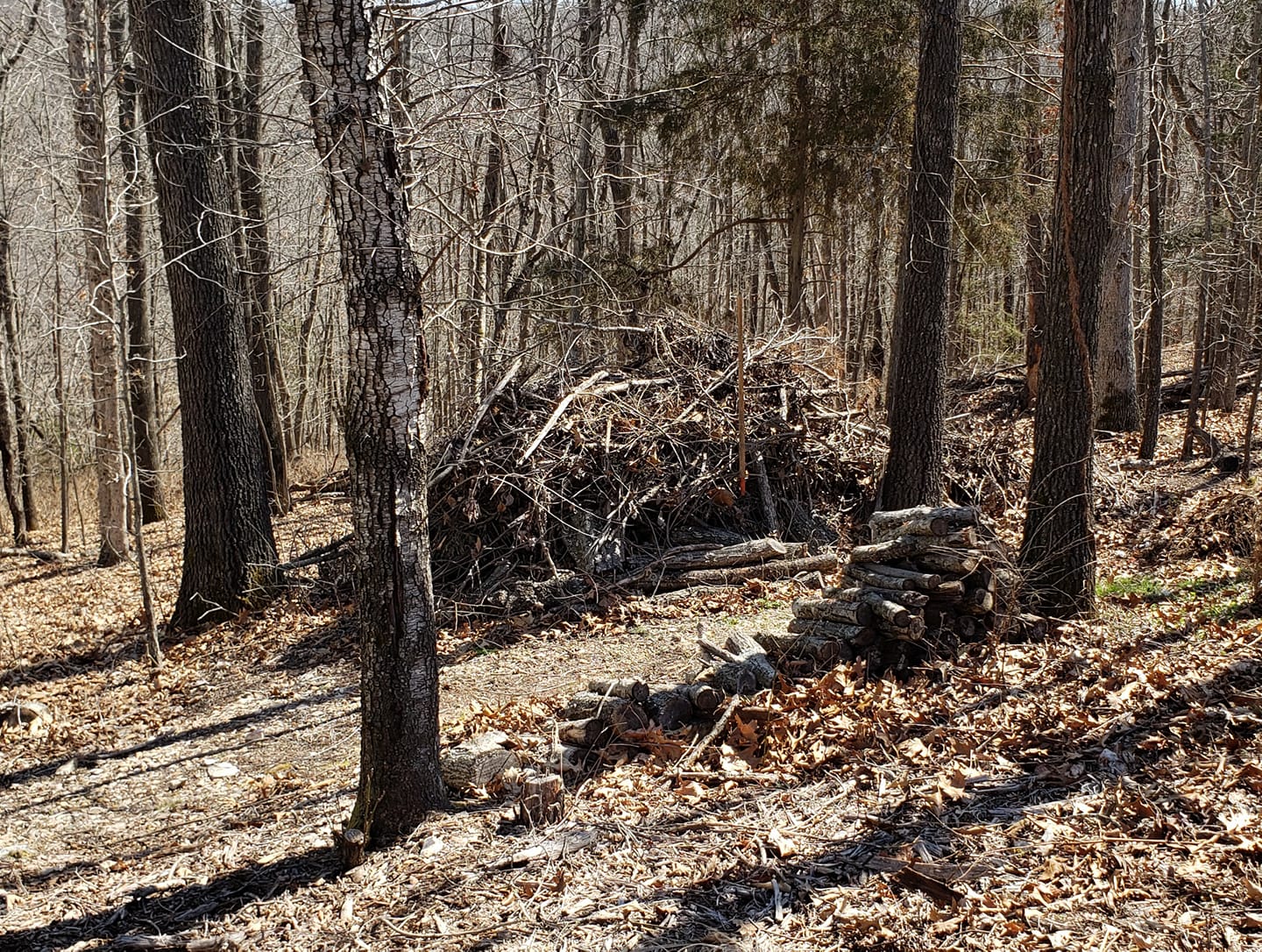
When building a fort in the woods, it’s good to have a helper.

Well, I’ve been sitting at my computer for an hour editing The Forest Throne. I totally forgot that the first writing I was supposed to do this morning was my Monday blog post. Hence, here it is 7:50 a.m. I’m 20 minutes late and just getting started.

Every fort has to have a beginning, and many hands to make the work light.

I had planned my post today to be about The Forest Throne, which I’ll abbreviate TFT hereinafter. I told something of the genesis of this book in a prior post, promising then to tell something of the story in a future post. The future has arrived.

Soon, it begins to look like a fort.

The story revolves around Ethan. He’s 11 years old to start the book, visiting his grandparents for Thanksgiving with his parents and three siblings. Ethan has some issues (what 11-year-old doesn’t?), and he’s constantly being corrected as he torments his little brother and sister. He and Grandpa go for a hike in the woods behind the house, into the hollow, something they do on every visit.

You never know what you will find when you hike down an Ozark hollow.

This is the Ozarks, not the highest mountains part, but the foothills. Lots of valleys covered with oak trees eking out a life on rocky hillsides. Way down the hill, just before you get to the bottom of the hollow, they find an odd formation in the hillside. It looks a little like a chair. It seems to be manmade, and has a hole drilled into one of the “arms”. Ethan sits in it, calls it his forest throne, and immediately wishes it was a time machine. His grandfather reminds him “There’s no such thing as time travel.”

Later they go across the street from the house and work on a fort. You’re in the middle of the woods. It’s someone else’s land, but they aren’t around, so what do you do? You build a fort. It takes a few years of repeated visits to get it done. While playing at the fort, Ethan’s little sister finds a blue peg, which he immediately takes from her. He realized it is the same size as the hole drilled in the forest throne and determines to go back there to see if the peg fits. Maybe it’s the key to activating the time portal.

Well, he does go back there; the peg does fit; and nothing happens except the peg gets stuck. Nothing he tries gets it out. Soon the visit is over and he and his family goes home to Texas.

They come back the next year during the summer—just the three oldest kids, not the parents or the baby brother. Ethan is 12 now, and he gets to stay longer after the other siblings go home. He goes down to the throne, which is a little hard to find, but he finds it. The peg is still in place. After much trying, he learns that with a little bit of twisting the peg will come out. He pulls out the peg. In just a few seconds he encounters….

Well, this is about as far as I can go without giving away the whole plot. Let’s just say that Ethan’s hopes that the throne is a time portal turn out to be all too true. He activates it, not once but twice, and a terrible thing has happened as a result.

TFT is done. I finished it last Wednesday. I finished reading it to the wife last night. I’m most of the way through with my first round of edits and will likely complete them today. My critique group has through Chapter 4. Later this week I’ll get it to my beta readers, all five of them. They are ages 13 through 8. We’ll see if it passes muster. Hopefully it will be ready to publish not later than April.

2021 Book Sales

My highest selling book in 2021.

It’s been a long time since I posted my book sales. 2021 was my best year for sales. I guess you would call it a record year, though, with the numbers still as low as they are, record somehow seems inappropriate.

I sold 223 books, almost all sales coming from on-line sources. That beat my previous best year which was 156 way back in 2012. Also, in 2021, I passed the 1,000 lifetime sales mark, ending up with 1034.

Why the increase? Amazon ads. I began running some ads on Amazon in July 2020, added to them in 2021, and sales finally happened. Unfortunately, to this point I’ve spent more in ads than I’ve received in royalties from all sources. It’s not a big number, and the deficit is shrinking. At the end of the year, I was down only $4.52, though at worst I was behind $73.80. If the trend continues into 2022, I’ll be money ahead in a month or two. Just on ad spend, not overall. The cost to maintain this website puts me way in the red each year.

Had 19 sales of this, pulled along by the ads for the first book in the series.

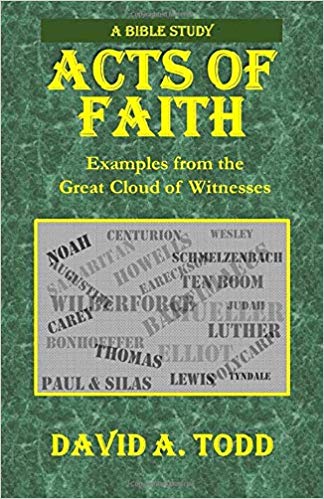
I had sales of 22 different books, out of 35 books listed for sale at year end. Highest of those was the first Documenting America book, which I advertised. Second was Doctor Luke’s Assistant, which I also advertised. The other two books in the Documenting America series also had double-digit sales, as did Acts Of Faith, which I advertised.

Several of these “sales” were actually through Kindle Unlimited, the first that I had from that Amazon sales channel. I think royalties work out to less, but I’ve had a hard time rigorously tracking them.

So, here comes 2022. My ads are still running. They don’t seem to be working quite as well as early in the year. I will probably add another book to those I advertise, though I’m not in any hurry to do that.

Here’s hoping 2022 will be another best year for book sales.


Writing Goals for 2022

In my post last Friday, I recapped what my writing progress was in 2021, and promised to make my next post about my writing goals for 2022. So here I am, as promised.

But, as I do so, I have only a few goals. Is that because I have no writing planned? No. It’s because I’m close to the end of two projects, have three others started. Will that be enough to fill the year? If not, I can conjure up more works later on.

Delayed a year due to the pandemic and construction adjacent to the church, we will celebrate our church’s centennial July 8-10.

But enough chat. What shall I do this year?

  1. Finish the church Centennial book. At present, two people besides me are proofreading it. Once we complete that, there will likely be a few more words to add. Besides that, I have to do a fair amount of work on photos, trying to enhance the quality, moving them to the exact position they are supposed to be. I suspect that will take a lot of hours this month. We have already found two printers for it, at least one of which can do it in our price range. Someone else on the committee will handle the cover. If I had to guess, I’d say we are two or three weeks away from having the words done, four weeks away from having the photos done, and just two weeks away from deciding on a printer. That means the book should be issued in late February or early March.
  2. Finish The Forest Throne. Yesterday I reached the second main plot point, where the protagonist figures out how to solve the problem. That’s at the 29,000 word point. Which means I have only four or five thousand more words to go. Which means I should finish the first draft in less than two weeks. I have two beta readers lined up, plus my three oldest grandchildren. I’ll be working on it during that time. No predictions about when it will be done, but I doubt it will be published before April.
  3. Publish at least one Bible study, and work on three. I will discuss this more in a future post, where I’ll discuss where my different Bible-studies-in-progress stand. Right now, I really can’t say which of three I’m thinking of will be first. Also, I can’t say how long any will take to complete. Those details will have to develop as the year unfolds.
  4. One goal remains as it has for three years: blog twice per week, generally on Monday and Friday.

The following two items are goals, but right now they are not firm. I think they will both happen, but who knows?

  1. After numbers 1-3 are complete, begin serious work on the next book in the Documenting America series. More on that in a future post. The research is done, though I did it so long ago I’m not sure I’ll remember it.
  2. After number 5 is done, or maybe simultaneous as I near the end of it, begin work on the next volume in the church history novel series.

That’s what I’ll add for now. But I suspect, even as 2021 did not go as I thought it would, I suspect 2022 will be the same. I’ll update this at different times during the year.

The Writing Year In Review: 2021

December 31 is a Friday this year, my regular writing day, also the end of my 70th journey around the sun. Time to look at what I accomplished this year, how well I did relative to my stated goals. I won’t then add goals for 2022. I’ll do that in January. Here, I’ll paste in the goals I posted on January 4th, and say what I did on them. Then I’ll add some things at the end, things I did that weren’t part of my original goals.

  • Finish and publish The Teachings…I might have the book ready to publish in April. Mission accomplished.  I completed the writing in February, took almost two months to edit, proofread, and receive feedback from beta readers. The e-book went live on April 13 and the paperback on April 25. As to sales, it’s had a whopping 7.
  • Write and publish one Sharon Williams story. Mission accomplished. I wrote Foxtrot Alpha Tango slowly as the year progressed, ran it by the Scribblers & Scribes critique group, and published it on December 15 after letting it sit two months. In a little twist, I did the actual publishing steps while on a Zoom conference with two 4th grade student who are interested in publishing.
  • Write and publish one Documenting America volume. I’m planning for this to be Run-up To Revolution, covering 1761-1775, the documents that led to our rebelling against England. Nope, didn’t get this done. Too many other things got in the way. I read some more for research. In fact, the research is done, except I will probably have to re-read some once I actually get on the book. I did make a lot of notes as I researched and planned out which source documents will go into which chapters. Thus, I won’t have to start at ground zero.
  • Write and publish a Bible study. I’ve planned out what I want the next one to be: Entrusted To My Care: A Study of 1st and 2nd Timothy.  Alas, I didn’t get this done. I did work on a Bible study, in fact put a lot of effort into it. But it wasn’t Entrusted To My Care.  My research and the beginning of my writing was in March-May on the Last Supper, which I taught in adult Sunday school class. I dusted that off in the summer and combined multiple files into one, and again in November when I tried to assess where I was and how much effort was left. If I get either one of these published in 2022, it will take a pretty concentrated effort.
  • Maintain a twice per week blogging schedule. This I did, mostly. I may have missed a time or two just due to busyness. A couple of times my regular blogging day snuck up on me and I only did a quick, no-information post. But I consider this a complete task.
  • Write some poetry. I did not accomplish this, though I tried. Several times I took pen and paper in hand and tried to set down lines of poetry, but nothing came to me. Instead, I planned my next poetry book. I scoured my already completed poems, found the ones that would work with the theme I chose for the book, and loaded them into a Word file. That gives me an idea of how many poems I still need to write (a bunch) to make it a viable book.

One thing that was on my mind last January, but which didn’t make my goals list, was to write the young adult novel I’d discussed with my oldest grandson. Tentatively titled The Forest Throne, it’s about adventures in unrequested, undesired time travel. I began writing it on June 8, never working on it intensely, but sporadically. As of last night I had ±21,000 words written, on the way to, I think, 40,000. I ought to be able to finish it in 2022.

And, another thing I did was significant digital decluttering. This goes along with the physical decluttering the wife and I are doing. I had old computers to pull data from and get rid of. I had multiple folders from prior computers loaded to the cloud that needed to be coordinated with other, more active folders. I made major progress on this.

It included going through my email inbox and outbox and sorting, saving, discarding, and archiving my emails since I started using this address in 2005. I’m working backwards on that and doing well with it. I completed all years up to and including 2011. I have 590 e-mails to go in 2010. For an exercise, I dumped my saved 2011 emails into a word document with an eye on creating a book out of them. Not for publication, but for my easy use and reference. Then I can discard some things from notebooks, reducing physical clutter.

And, one more writing item that took up more time than anything else: writing our church’s Centennial book. I began the research in January and managed to write 1500 words by month’s end. The research and writing took more time than I had planned on. But it is done. The book is being proofread by two people, and by me, and we are looking at publishing options. While this was time consuming and certainly pulled me away from my other writing, it was also fun and satisfying.

So there’s the year in review.