All posts by David Todd

“The Teachings” and Its Place in History

I’m not totally over my cold, but it’s better, and I’m back in the land of the living. So, here’s the next post in the series.

Doctor Luke’s Assistant ended in May 66 A.D., just as the Jewish revolt was breaking out. In DLA, no actual battles occurred, but unrest was growing.

The Teachings begin two weeks after the end of DLA. War breaks out before the end of the year and will continue until 70 A.D. This is the timeframe for my new book, so have to work in events of the wr into the book, event making them part of the plot. The main characters will be going here and there in Israel—and maybe even to other nations (still working that out), so I need to get things right. I can’t have the main character confronting Roman soldiers in Caesarea when the fighting at that point of the war was taking place in Galilee.

But where do you get information about the war, information that will give a specific timeline? I have a number of history books on Israel. Each of them covers the war, but none of them give a timeline. They say this happened first, that happened second, etc. But none give much of a timeline. Various online sources weren’t much different. I ran into an online Jewish encyclopedia recently. Perhaps, when I fully explore that I’ll find more info, but an initial look tells me it doesn’t have what I’m looking for.

That leaves me with the works of Josephus. Written by Josephus about 15 years after the war ended, The War of the Jews was the most extensive history written about this war. Josephus was a Jewish general on the Israeli side who lost a battle, was captured by the Romans, and ended up on the Roman side. As a result, his history is suspect. Did he skew things to favor himself? Does he treat the Jews more negatively than is justified and the Romans more positively, even though he’s a Jew?

Back in the late 90s or early 2000s, we bought a four-volume edition of Josephus’ works. Now they are available on-line in a number of places. I’m glad to have the print edition, however, as I can extensively mark in it, and am doing so.

Alas, the timeline is difficult to establish in Josephus’ War. He gives a few dates, even down to the day, but in an archaic dating system. I’m reading slowly in it.  I’m underlining. I’m taking notes. As it is the best reference available, it’s what I’ll use most.

I can ignore Josephus’ qualitative statements and just focus on timelines. Where was the fighting going on as 66 A.D. turned to 67 A.D.? What Roman general might my characters have interacted with? Where was loss of Jewish life greatest, should I decide to kill off any characters?

So many decisions to make. I want events to track with history. I want my characters to interact with that history accurately. It will slow down my writing to do this, but that’s how I want to do it.
Out Of It Today

While on the trip to Texas this month I caught a cold. I think I felt the first symptoms around Feb 10 or 11. It came on fast but not deep. I was able to keep functioning, and drove all the way home on Monday.

But once I got home the cold deepened and went to both a head cold and chest cold. The last two nights I’ve had to get up due to coughing fits and spend the rest of the night sitting in my reading chair. I may sleep some like that, but not long or well.

Hence, I’m sleep deprived today. And my mind isn’t working well. It was just a few minutes ago I remembered this is my regular blogging day. I intended to write about the Jewish War in 66 a.d. and how that works into my book, but no way can I do that now.

So this post will have to suffice for today. Hopefully I’ll be back to full strength on Monday.

The Teachings: a.k.a. The Didache

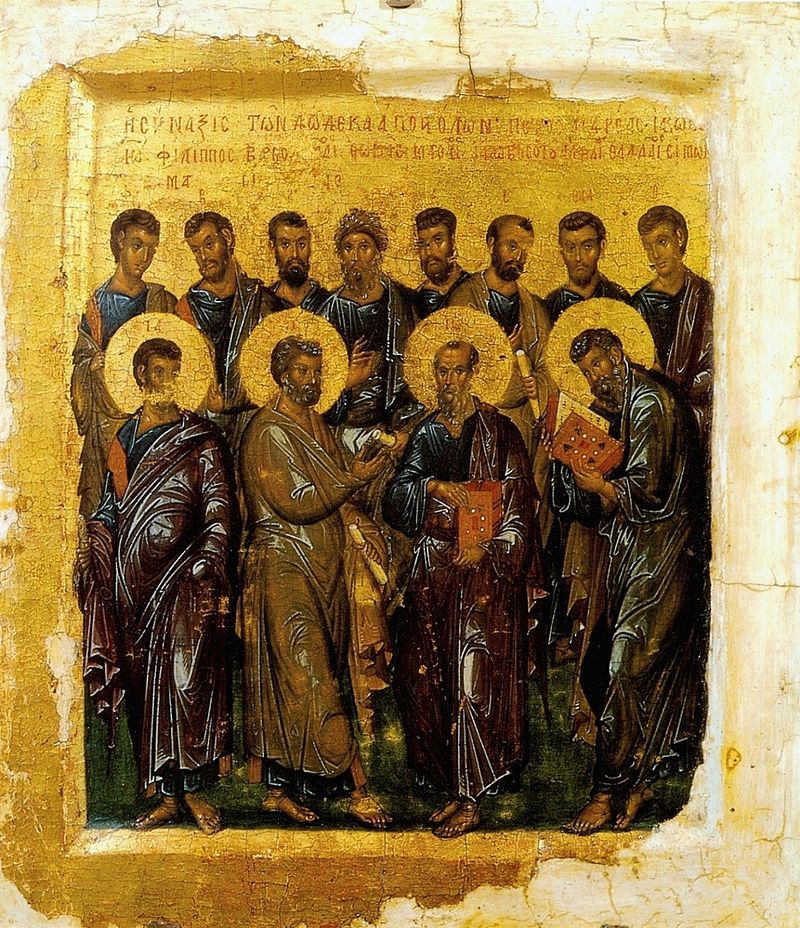
The twelve apostles’ importance to the growing church cannot be over emphasized.

In my last post, I began a series of posts about my novel-in-progress, The Teachings,  saying I would make several posts to explain what my intentions are for the series and for this particular book.

Today I’ll discuss the underlying Christian document. In Greek its title is The Didache. This translates to The Teachings. That’s the short title. The longer title is The Lord’s Teaching Through the Twelve Apostles to the Nations. It is relatively short, shorter than the Gospel of Mark, the shortest of the four canonical gospels.

What are the contents? You would think from the long title that it was a list of things the apostles said as the church formed in the years are Jesus died. The gospels told of Jesus’ life and teachings. Acts told about the formation and initial growth of the church. The Didache then gathered the teachings of the apostles. Peter said this, John said that, Matthew said this, Bartholomew said that.

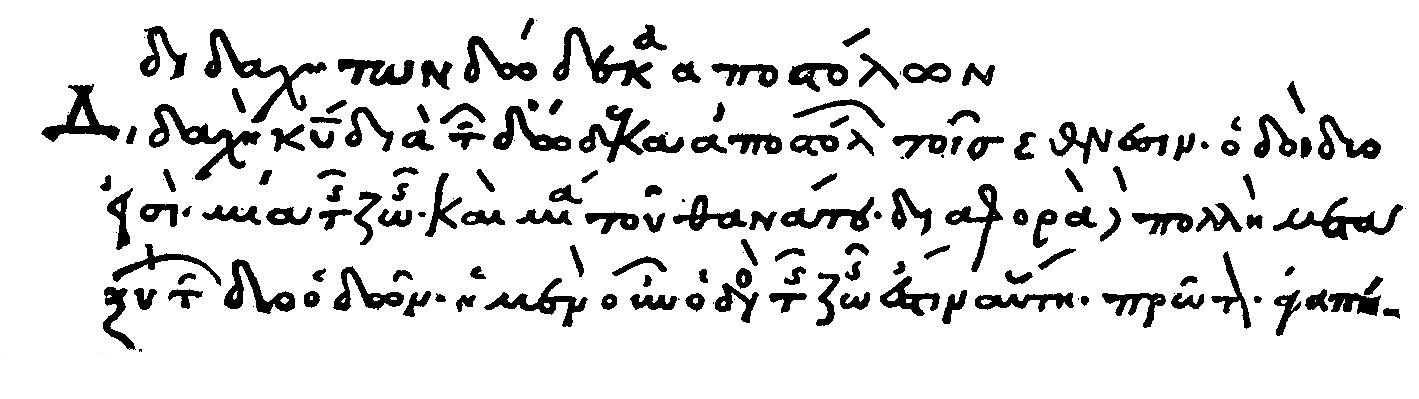
Here’s what the full title looks like in Greek.

But no, The Didache doesn’t quote from the apostles. Rather, it is a type of church manual. One book I read calls it the earliest church manual. It begins with a section called The Two Ways, speaking of the way a Christian should live. The two ways are called the way of life and the way of death.

After this it talks about false teachers, food offered to idols, baptism, fasting, the Lord’s prayer, and communion. A section deals with teachers, apostles, and prophets who travel among the churches and how they should behave and how the churches should greet and provide for them. Additional topics are meeting on the Lord’s day, the offices of bishops and deacons, and being watchful for the second coming of Christ.

When was it written? The relative simplicity of church government suggest it was written at an early time. The ecclesiastical hierarchy developed slowly and became burdensome sometime in the 2nd Century. The Didache seems unaware of that system. I read quite a bit about this. Scholars have suggested  any time from 60 A.D. to 180 A.D. Those that favor the later date suggests that the simple church structure was the writer’s attempt to show how it was at the time of the apostles. Those who favor the earlier date point to the absence of government structure as evidence that the date of writing has to be early.

For The Teachings, I chose the earlier date. The book is set from 66 A.D to about 74 A.D. (I won’t be sure of when the book ends until I finish writing it; it may end closer to 71 A.D.

Who wrote it? No one knows, and I’ve seen no speculation about that. The two ways section is very close to a part of the Epistle of Barnabas, a non-canonical writing thought to be from the first century. Other parts of The Didiche echo other writings from outside the Bible, but nothing seems to suggest who wrote it. Most likely that will remain a mystery.

Bryennios found The Didache while rummaging in a Turkish library.

How has history treated it? That this book was once an important part of the church is evidenced by mentions of it by church fathers in the late 2nd Century up into the 4th Century. However, many years later and it was lost. No one read it; no one copied it; no one mentioned it any more. Why would it fall out of favor? Perhaps because it wasn’t considered authoritative enough to be included in the New Testament (though some early lists of Christian scriptures do include it). Possibly the primitiveness of church government made it passe once the structured church had a complicated government. Why go to the trouble of copying a book that no one used any more?

The Didache was thus known to have existed, but we had no copies of it (save for a fragment or two) until 1873. A Greek Orthodox official was looking around in a library in Turkey and found a scroll that bore a date of 1056 A.D. Several books were written on this scroll, including the complete text of The Didache. The finder published the text 1883, and within three years the collective scholars of the church, in the Middle East, Germany, Great Britain, and the USA were in an uproar, arguing about it, trying to figure out its place in the church and composition time.

For this book of mine, assuming it was put together around 66 to 71 A.D., who wrote it? Scholars see it as a composite document, not written at one time, maybe not even by one person, and perhaps not at the same place. That is the premise I’m going with. One man will primarily responsible for its assembly, but the contents will come from many places. I may even write in a delay in issuing it.

In my next blog post I’ll write about what was going on in the world at the time my man is working on The Didiche.

The Premise Behind “The Teachings”

This book covers the writing of “Q”, alleged source document for the gospels.

This week, while visiting our daughter’s family in Big Spring, Texas, I was able to carve out time to write quite a bit on The Teachings. As I’ve said before, this is the fourth novel I’ve written in my church history series but it’s the third in chronological order. It fits between Doctor Luke’s Assistant and Preserve The Revelation.

This continues with the intent of the series; that is, that how we got our Christian documents is an interesting study and is worthy of thinking about. Knowing the documents is also a good thing. So far in the series I’ve looked at: the Gospel of Luke, the Gospel of John, the Revelation, and the precursor source for the gospels, the so-called Q document. This new book is about creating The Didache.

Written 2000-2003, I didn’t publish this until 2012. It is second chronologically in the series.

The Didache was a sort of manual for the church. It covered how to be baptized—what the baptismal candidate should do and what the church should do. It covered other matters of church government as well as having rules for Christian living. As these blog posts go on, I’ll say more about the contents of The Didache.

The short book disappeared for centuries. The church knew about it from the writing of historians in the 4th and 5th Centuries A.D., but the book itself had not been copied sufficiently to find copies being used by the church. It was only in the 19th Century in Istanbul that a copy was found, in a library, on a scroll created in the 11th Century.

Another premise of the series is that, in addition to the main authors of biblical and post-biblical Christian writings, unknown assistants must have worked on these books. The assistant names himself in the book of Romans, but otherwise these people are anonymous. In this series, the workers are from one family. They are literate, trained to work with documents.

Good feedback on this. Though fourth in the series chronologically, it is the second published, in March 2017.

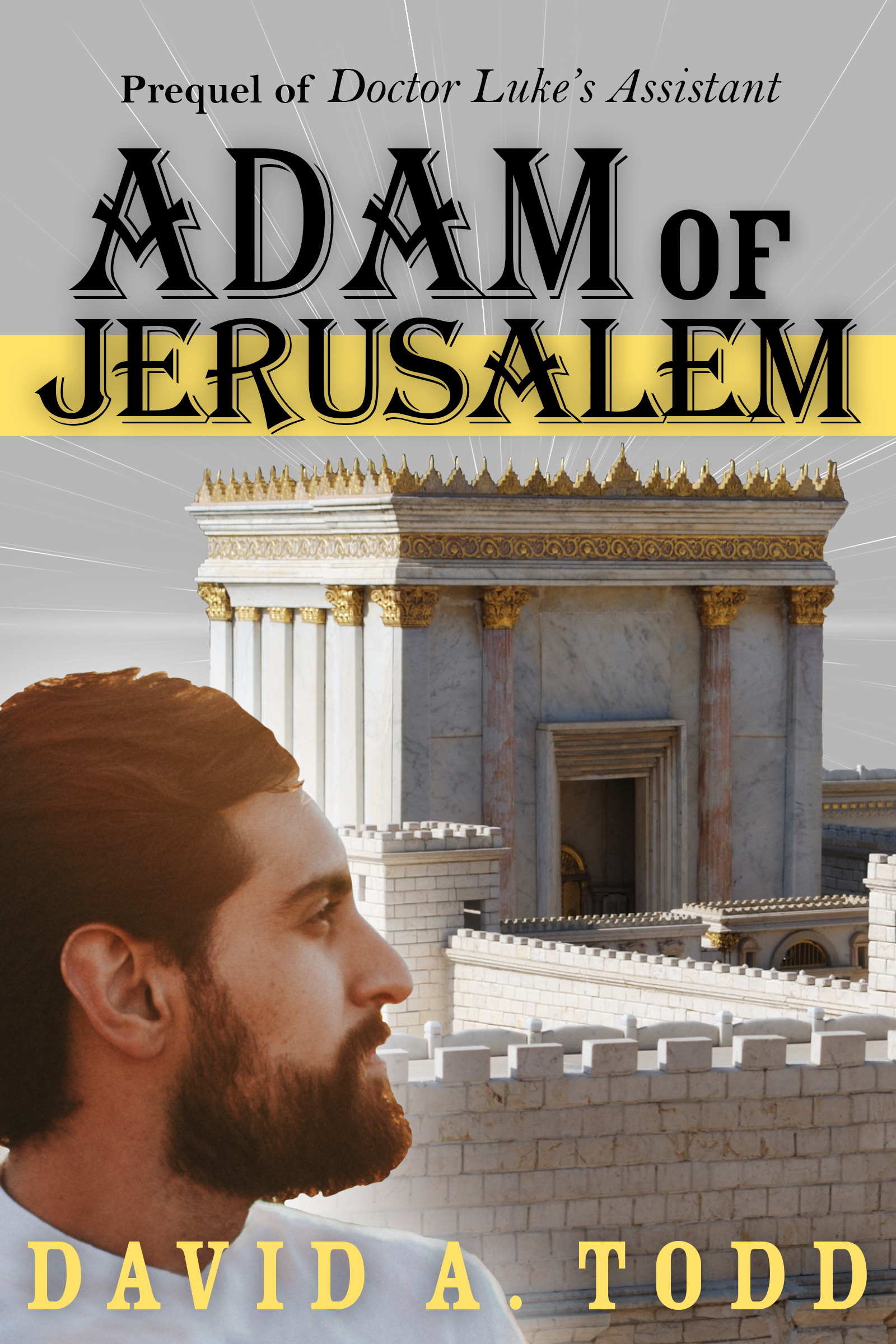
The patriarch of the family is Adam ben Zechariah, who starts out wanting to be a scribe in the high priest’s office. His big assignment is to research the life of Jesus.  It moves on to his son, Augustus ben Adam, who studies in Roman schools in Judea to be an amanuensis—a secretary He assist’s Luke in researching and writing his gospel. Eventually we have his younger son, Daniel ben Augustus, who, in the fourth book helps his father assist the elderly apostle John recording his gospel and his visions,  and has more adventures than any bookworm would want.

The third leg of these novels is what is going on in history, of the church and of the world. Rome is the occupying power in what we now call the Holy Land. During the time of Christ they rule directly in Judea and through surrogates in Galilee. From 30 A.D. to 66 A.D. factions of the Jewish nation became more and more disenchanted with Roman rule until full rebellion broke out. The Jews were crushed my the Roman military and remained under subjection to Rome until that empire fell.

In the church, growth produced growing pains. The only written scriptures they had were the Jewish scriptures. The words of Jesus were written on the hearths of those who had seen Him and studied under Him. But all the new Christians through the decades needed other documents to guide them. They needed doctrine and practices. What did it mean to put aside pagan practices and live as a Christian, believing in the one true and living God as revealed in His Son Jesus? Until orthodoxy was established the church went through a period of growth pains.

So these are the three pillars upon which the series of books is built. In my next post I’ll speak specifically about what’s going on in The Teachings.

Ideas and Grandchildren

The scene at the Dodge dealership in Snyder. Ezra is in the middle of the photo.

I stated in my last post that I wasn’t getting much writing done, due mainly to the snow days and the grandchildren being home. And I was okay with that. But, in the three days after the snow days, I have’t done much.

I had sent the first five pages of The Teachings to my critique group, Scribblers & Scribes of Bella Vista. I received one review back, and went over that carefully, incorporating many of the comments. Alas, I didn’t add any new material. I found a little time (maybe 30 minutes) to re-read some of the source material, which will help me down the road.

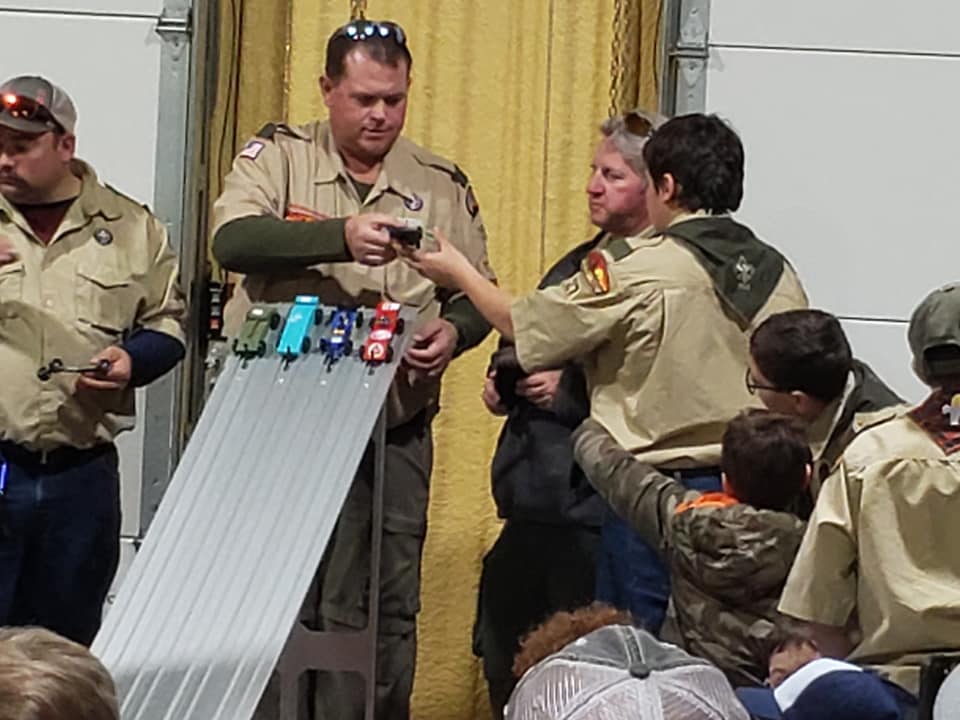
Leaders and boy scouts ran a good show on Saturday. Ezra’s car is the bright blue one.

Saturday I took #2 grandson, Ezra, to his Pinewood Derby competition in Snyder, about 50 miles away. That was a fun time. We had lunch afterwards, and Ezra commented it was lunch for second childs. Yes, it was.

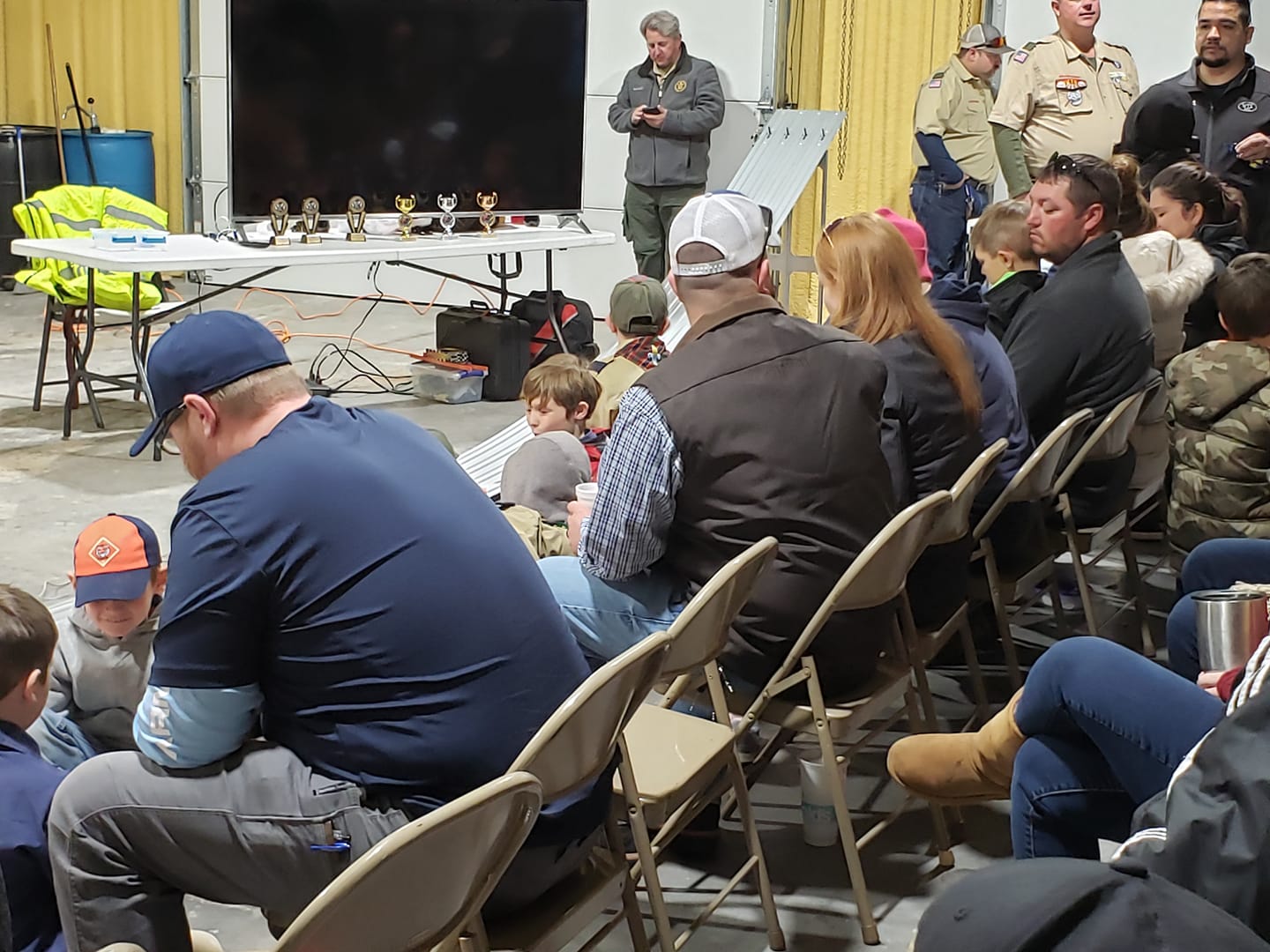
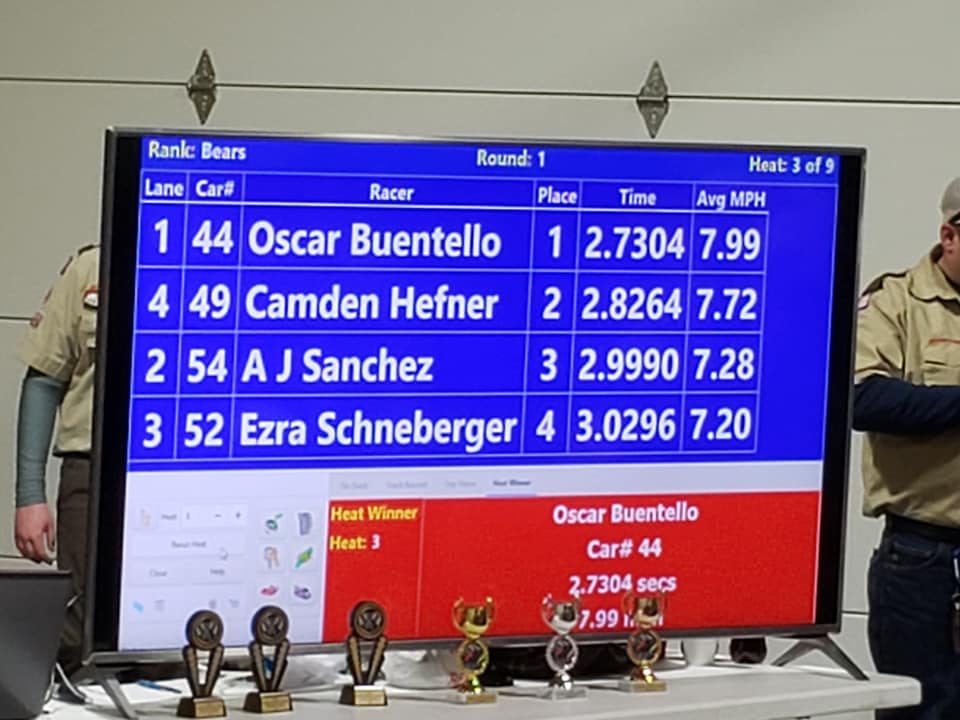
This was a snazzy set-up. The display shows the result from one heat.

We walked around the neighborhood a couple of days. Yesterday, after church, Ephraim had a friend over for a visit. I found some time to sit on the front porch and read—not in the source book, but in other things I brought along on our trip. Enjoyable, but not necessarily productive for writing.

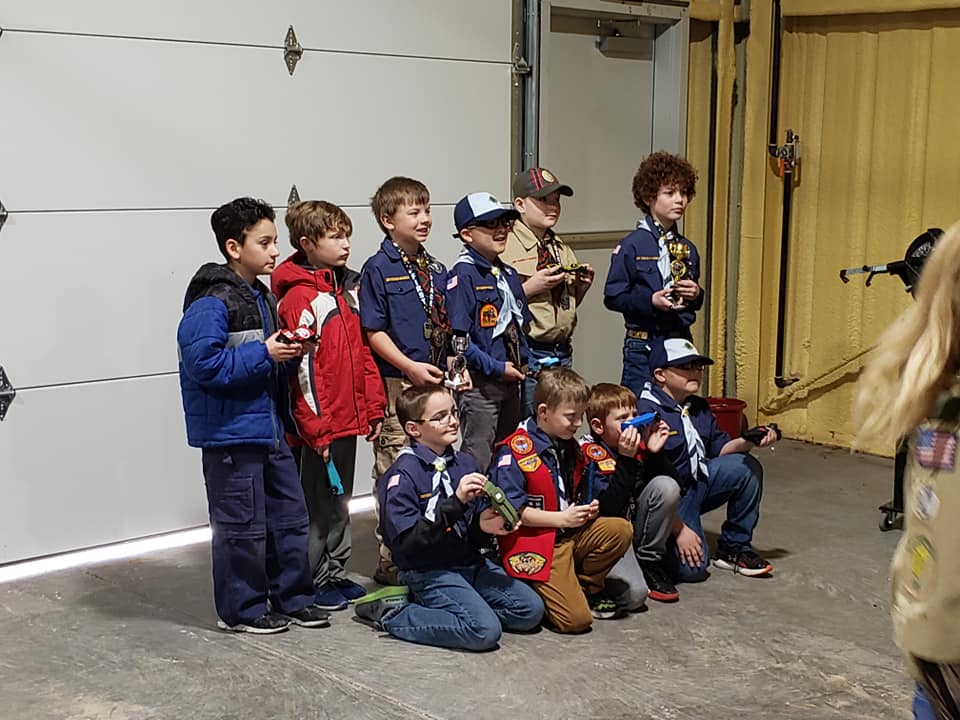
A good number from Ezra’s pack participated. All seemed to have a good time.

Yesterday, Sunday, was mainly for reading. But, as I read in the book we are currently studying in Life Group, and as I read some in a short book from 1886 about Thomas Carlyle, ideas started to come to mind. These were ideas for Bible studies to develop and write. One had been there for a while, but another came out of the blue. Actually, the thought came to me in the men’s Sunday school class yesterday, from a Bible passage we read and studied.

Ezra didn’t seem to be disappointed at not winning anything. He enjoyed being with his friends, and maybe with his grandpa.

Yesterday evening I took a few moments to write the ideas down. I didn’t take time to flesh them out. That may be an activity for later today or tomorrow. I also listed other Bible studies I’m thinking of. I have about six I’ve developed and taught but never written out in book form, and, in addition to the two added yesterday, I have six others I want to develop. I won’t give any of those here. That will wait on a future post.

So, in a way, this was writing productivity. One of my goals for this month is to decide on the next Bible study to write. Last night’s exercise will help me achieve that goal.

A Two-Day Break

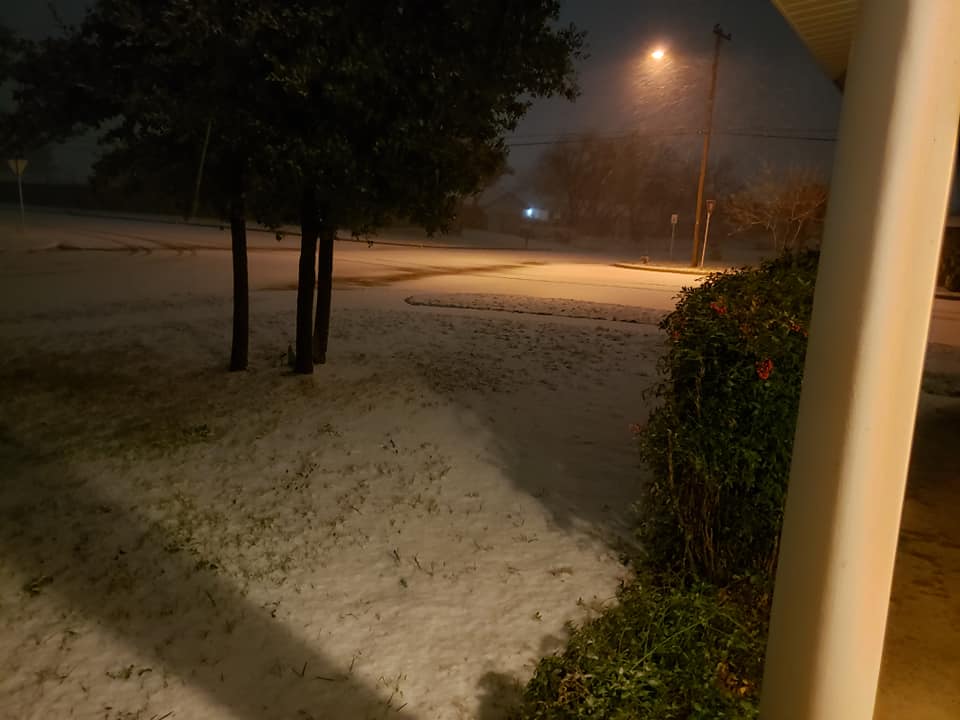
The storm began right on schedule.

When we drove from NW Arkansas to SW Texas, I had been checking the weather for days so that we would know how to pack. Temperatures in Big Spring could be expected to be somewhat warmer than in Bella Vista. Not always, however, as air masses move easily north and south on the Great Plains and sometimes it is colder in the more southerly city. Advanced forecasts showed some cold weather, but not too bad.

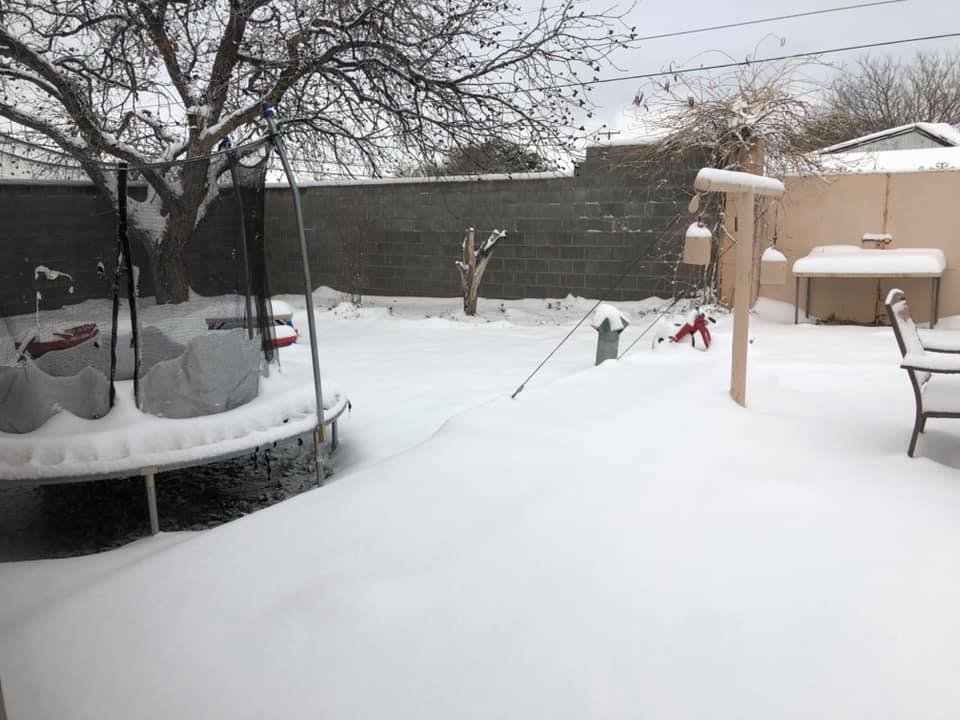
A winter wonderland greeted us in the morning.

We arrived on Friday a week ago. Advanced forecasts were showing chances of a winter storm on Wednesday. This was new, and had not been in the forecast while I was checking. Cold we were ready for, but snow? Or ice?

Eventually we went outside.

As the days went on, the forecast became more in focus. Snow would arrive Tuesday night and continue into Wednesday. Accumulations of 1-3 inches expected. Then it changes to 2-4, then to 3-6. Finally, on Tuesday morning,

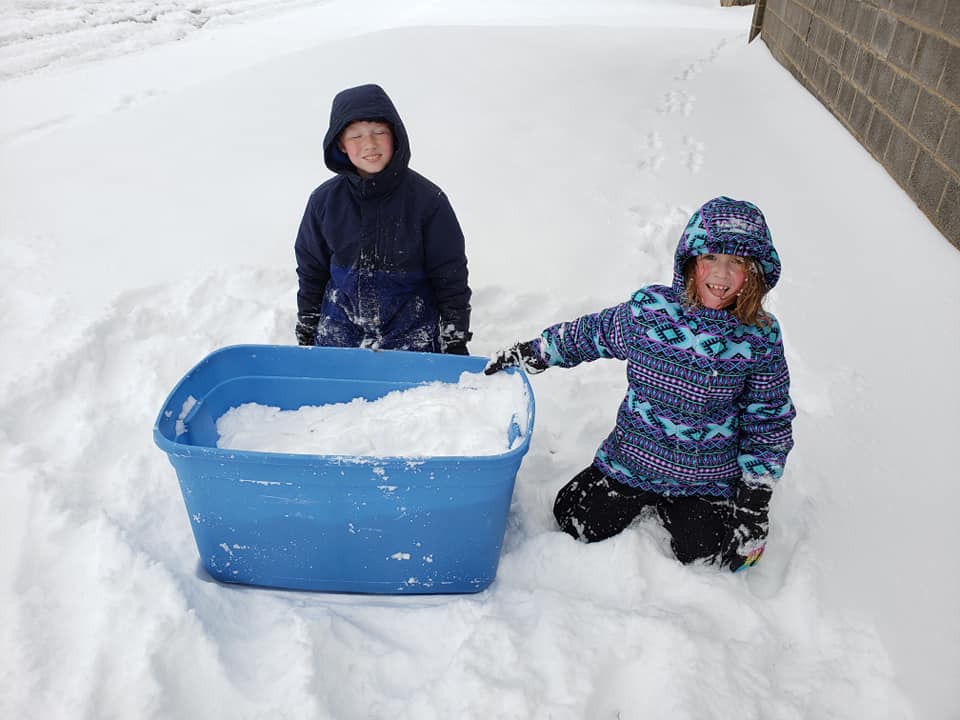
What mischief were they planning?

the winter storm warning showed 3-8 inches.

The storm indeed arrived, and right on “time” according to forecasts. At 11 p.m. on Tuesday, a check outside revealed snow coming down—not just a little.

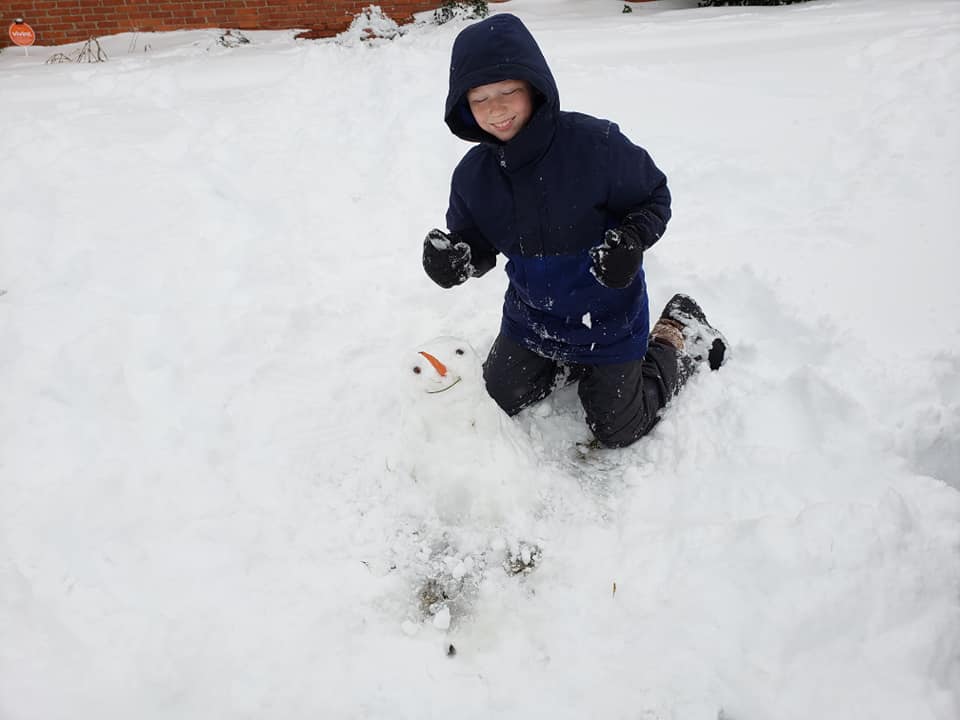
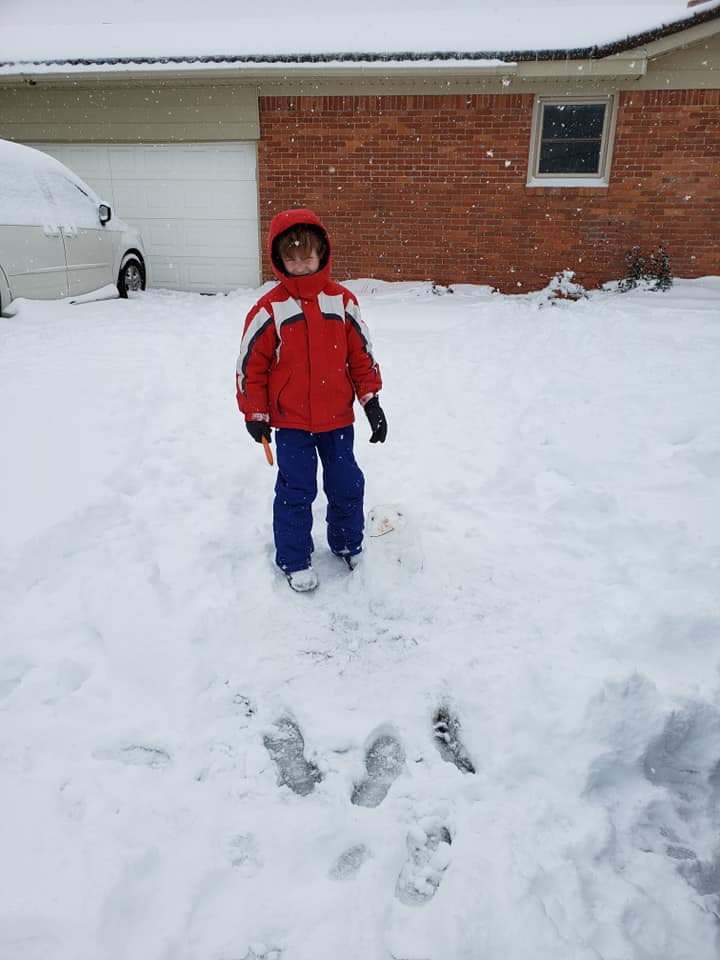
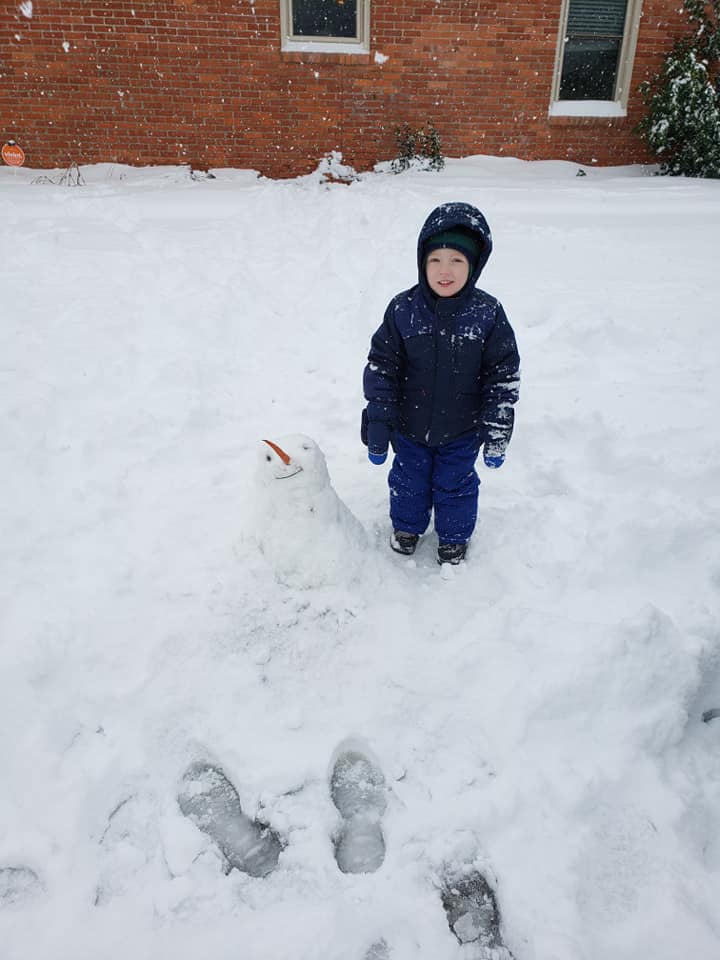
Ezra, right before he destroyed his brother’s snow man.

Schools quickly cancelled. Actually, they may have done that an hour before the snow started, when weather radar showed it couldn’t miss us. By morning we had 3 inches on the ground and it was still snowing.

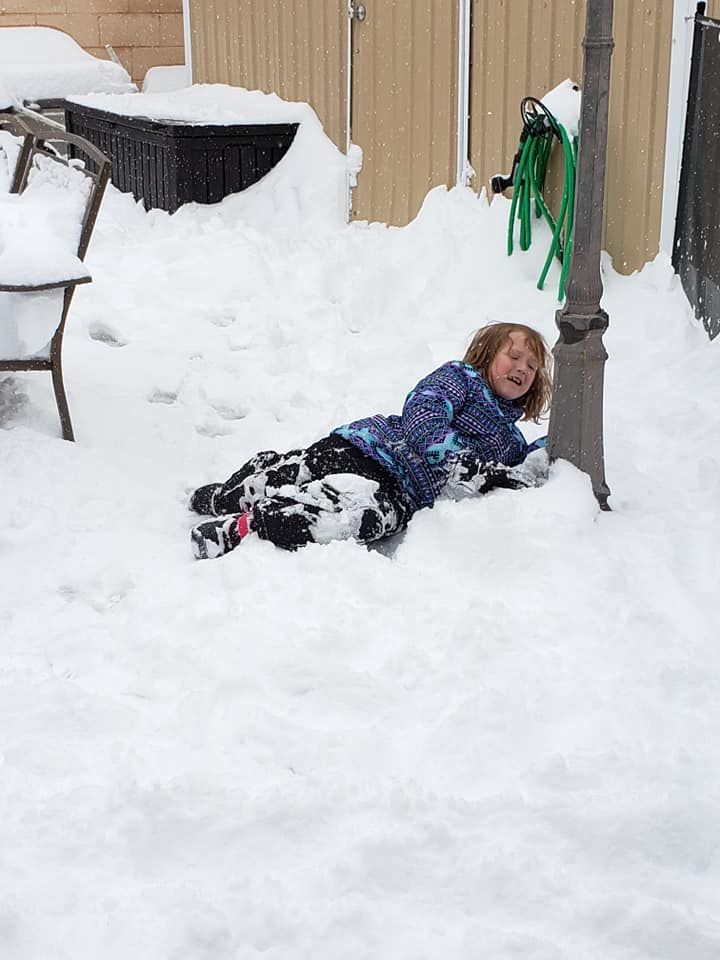
Snow continued off and on through the day, eventually accumulating to between 7 and 8 inches, the second largest storm in the city’s history. Needless to say, the four grandchildren bundled up and went outside to play in it. Also needless to say, I had to go with them. But, I had brought only light jackets.

Elijah loved it.

No problem. A tee shirt, two flannel shirts, and two jackets with light lining and I was all set. I went outside and had a blast with the kids. Two of them walked around the block with me, 4 or 5 inches on the ground and snow coming down. Then one went in and another came out, then that happened again. I don’t think all four were out at the same time.

That evening our daughter made snow ice cream, a tradition at their house for snow days.

Elise, like all the others, spent plenty of time on the ground.

The temperature dropped as the day went on. We went inside to warm up, then outside again for another snow session. We drank hot drinks. The temperature would drop to 7 degrees overnight, and school was closed again on Thursday. More play outside, more hot drinks, and some bored kids were the results. A trip to Wal-Mart on improving roads cured that.

So here it is Friday. School is delayed an hour and a half but will open. The last two days I got zero done on writing. No, that’s not quite true. I did some non-writing writing things. I kept up on blogs, did a little reading for research, checked out a couple of conferences I may want to go to, and answered writing group e-mails. But no new writing on my just-started novel. I hope today to add 500 to 1,000 words on it.

Grandpa gets back to writing today.

But I declare the last two days a triumph, and would be willing to see it extended.

February Goals

As reported in my last post, I had a good, productive January, at least in reference to my writing goals. Time now to set writing goals for February. As I’m traveling I’ll back off a little on my goals just a little. I’ll have fewer of them, but hope to spend a fair amount of time on writing.

  1. Blog twice a week. Based on past experience I feel good about this.
  2. Attend the mid-month meeting of Scribblers & Scribes of Bella Vista. I’ll be away for the other two writer group meetings I normally attend.
  3. Write a large amount in The Teachings. I started this last month and would like to get a lot done. I hesitate to set a word goal, as I’ll be doing some research/reading simultaneously. However, goals should be measurable, so I’ll set 10,000 words as my goal. Ideally I should be writing more, at least 1,000 words a day. Maybe, as I get further into it, I’ll write that much a day.
  4. Review the Bible studies I’ve written before, and ones I have planned, to see which one I’ll write next. I don’t plan on beginning it just yet, but I want to know which one I’m doing so I can be thinking about it.
  5. Finish re-publishing the Sharon Williams Fonseca short stories. I have two more to go. Doing this to correct any typos and to add all my books and stories to the document.
  6. Do more research for Documenting America: Run-up to Revolution. I have two main research books in hand, but will look for other sources, including on-line.

That’s all the official goals. Possibly something else will come up during the month.

January Goals – Accomplisment

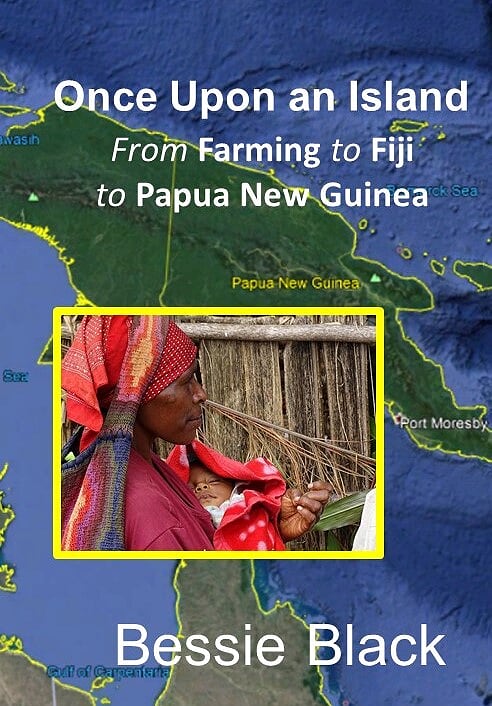
This is Bessie’s first book. While it was a work-for-hire, she has obtained a license for a limited print run.

Last day of the month. Time to see how I did on my January goals.

  1. Blog twice a week, on Monday and Friday. I’ve been fairly successful blogging at this rate, and feel confident I can achieve this. Yes, did this. I don’t think I missed a regular day.
  2. Finish producing a book for a writing friend. This project is well along. I might finish it today; if not, it should only be a day or two from now. Yes, check this off as complete. I got this done not long after I posted the goals. I did a quickie cover, using PowerPoint and loading it into G.I.M.P. The quality wasn’t as good as we’d like, so I did it over from scratch in G.I.M.P. It was accepted by Amazon without needing correction, and have ordered copies. I was able to use G.I.M.P. without much consternation.
  3. The 5th story in my Sharon Williams Fonseca – Unconventional CIA Agent series.

    Edit my short story “Tango Delta Foxtrot”. The story is finished, and I’m in the editing process. My critique group hasn’t particularly liked the plot, but I don’t know how to change it. Whether I can accomplish this in January is a little iffy. Not only did I get the editing done on this, but I also published it. The cover isn’t the greatest, but it’s the best I can do.

  4. Attend writing group meetings as much as possible. My travel schedule may make it impossible to attend one, but hopefully I’ll be at the other. My writing groups held only two meetings this month. I missed the meeting of the Village Lake Writers and Poets due to travel but attended the critique meeting of Scribblers & Scribes of Bella Vista. 
  5. Start my next book, tentatively titled The Teachings. This will be book 3 in my church history novels series. I plan on starting this later this week. Writing will take several months. I did this, but just barely. On Wednesday I created the files and reviewed my notes on the plot. Yesterday I entered the first words in the book. I think I wrote only about 250 words, but it’s a start. So yes, I did this.
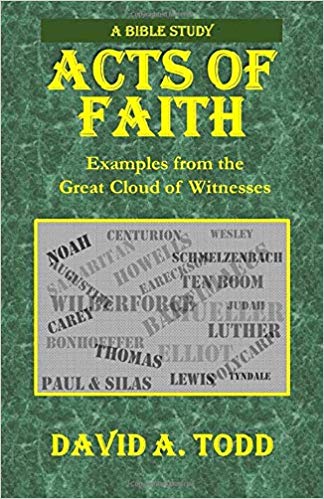
  6. I found too many errors in this book to let it go. So I corrected the text and re-published.

    Finish a proof-reading of Acts Of Faith and republish a corrected version. I’ve proofread about a third of it and found more errors than I like. Done! I completed the editing mid-month, and uploaded the new insides around the 22nd. No changes in the cover.

  7. Create a PDF version of Acts Of Faith: Leader’s Guide in 8.5×11 inch format. This is a brief task that should be no problem to complete. As I said in the goal, this was a quick one, and I did it with no problem.

And, actually, I completed one other major task that came up long after I made my goals post.

8. Read/proofread a book for a member of SSBV, who has a short window of time to get some changes made to her previously published book about to be re-published. I was able to do this. I finished the reading yesterday and e-mailed corrections and comments to the author. I’ll eventually write a book review of it.

So, it was a good, productive month. Perhaps tomorrow, or perhaps not until my regular Monday post, I’ll lay out my February goals.

Book Review: Essays Presented to Charles Williams

This will become a part of my permanent library, an affectation that I could someday be an academic.

With C.S. Lewis being on of my favorite authors, I never pass up an opportunity to add something he’s written to my library. Some time ago I found a paperback titled Essays Presented to Charles Williams, edited by C.S. Lewis, in a used book store. Needless to say I snatched it up. Having within the last year finally finished Mere Christianity after several previous failed attempts, I went to the bookshelf in the storeroom, hoping I would easily find this 145 page volume there, and sure enough it was right where I thought I remembered it to be.

The premise of the book was to honor Charles Williams, a member of the Oxford Inklings, the author critique group formed by Lewis and J.R.R. Tolkien. While Lewis and Tolkien were academics at Oxford, some others in the group weren’t. Lewis read one of Williams’ novels and liked it so much he wrote to him. At the same time, Williams, in his duties at the Oxford University Press, had just read Lewis’ The Allegory of Love, loved it, and was ready to write to Lewis. Mutual admiration of the other’s writings was the start of this friendship.

Lewis invited Williams to come to Oxford from London and visit the Inklings. He did so, and visited on occasion from 1936 to 1939. The outbreak of World War 2 caused the Oxford Press to temporary relocate from London to Oxford, at which time Williams became a regular member of the Inklings.

In 1945, as the war was ending, Lewis wanted to honor his friend and talked about putting a book of essays together, a typical way of doing honor in the literary world of that time. Alas, Williams died suddenly in 1945 before the project really started. Lewis persisted, however, and the book came together and was published in 1948. My paperback was the 4th printing, published in 1977.

Those contributing essays were Dorothy Sayers, Tolkien, Lewis, Owen Barfield, Gervase Mathew, and Lewis’ brother Warren. All except Sayers were part of the Inklings (well, Barfield not so much as he was based in London, but he was there occasionally and was a good friend of all of them).

The essays were literary in nature. Sayers’ “…And Telling you a Story”, Tolkien’s “On Fairy-Stories”, and Lewis’ “On Stories” are obviously about literature, specifically on story-telling. Barfield’s “Poetic Diction and Legal Fiction” fits in that category. Gervase’s “Marriage and Amour Courtois…” fits as well. Warren Lewis’ “The Galleys of France” doesn’t quite fit in with the others. It’s about what he learned from his research into 16th and 17th Century France, which was the topic of his writings.

Each of the essays I found to be a bit tedious, Warren and C.S. Lewis’ the least so, Tolkien’s the most (also the longest). In fact, I couldn’t get through Tolkien’s essay. I struggled with it, reading a few pages a day, reading slowly, trying to capture what Tolkien wanted to communicate. Alas, I finally gave up and skipped the last ten pages of 52-page essay and went on to the others. This is true of all of Tolkien’s writings for me. I have never completed reading The Lord Of The Rings due to how difficult I find it. I have The Sillmarillion waiting for me to get to, but I’m not excited about it.

Excited about getting to a book. That was my feeling when this finally popped to the top of my “reading pile”. It didn’t fulfill my expectations. Perhaps it’s because of the distance in time and space between 1948 England and 2019 United States. Perhaps it’s the academic nature of the essays. Perhaps it’s just that these authors knew what their friend would like and wrote in that way. Whatever it was, the book disappointed to some extent.

Don’t get me wrong. I’m glad I bought the book, glad I read it, and will gladly give it a place in my permanent library. But, was this the best use of my valuable reading time? Perhaps not. Still, I can see myself going back to this a decade hence, re-reading it from cover to cover, somehow drawing meaning from Tolkien’s essay and finishing it, gaining more insight from the others on a second read. Maybe in those ten years I’ll make another post and you’ll get to read all about it.

Author Interview – Romance Writer Jeni

Romance Author Jeni has three books for sale at Amazon.

One of the members of Village Lake Writers & Poets, a writers group I’m a member of, is Jeni. Jeni Who, you ask? She has a last name, but let’s just call her Jeni, the name she writes and publishes as. She recently presented the program at one of our monthly meetings. At the VLW&P Christmas party I sat across from her and had my first detailed conversation with her. I asked if she would let me interview her for An Arrow Through the Air, and she agreed. Here it is.

Q: Why did you decide to pursue writing as a career?

Jeni: Writing is in my blood. Creating characters is what I love!

Q: Since 2015, you’ve released three novels: Kellan’s Sweet Angel, Dirk’s Angel of Destiny, and Evan’s Sunset Angel. Is it fair to say you’re a romance writer?

Jeni: I am happy to say, I am a romance writer! With a dash of mystery, adventure and suspense!

Q: These are part of a series. Describe the series to us so far. And whose point of view are they in: the guy’s or the gal’s?

Jeni: In each of the books, I focus on certain characters and how they are affected by the sinister storyline. Thus far, you will learn about these men and how evil has interrupted and intertwined with their lives and the women they love.

As for point of view characters, according to the titles, it may indicate the stories are based on the male character’s point of view, but I feel, you get an insight of both the male and female characters point of view. This is what makes the story interesting and helps move it along. Is there one character’s point of view I focus on more? I’m not sure. But, I welcome you to read the books and let me know.J

Q: Your book covers feature handsome, muscled men. What does that suggest about the contents? Are these sweet romances, or saucy love stories?

Jeni: These love stories are sweet and sexy but also have mystery and adventure.

Q: Does this series go on? What “angel” will your fans read about in the future?

Jeni: The Angel series continues. It’s hard to tell right now which “Angel” we will read about next! I, too, am excited to find out and will share with all my readers when the book is done! J

So here’s a writer for some of you romance readers to try out. You can find Jeni’s books on Amazon.