Category Archives: Bible study

More on the Parable of the Two Sons

It’s funny how time causes your thoughts to fade. Maybe not funny; maybe tragic, unfortunate, unintended?

My last blog on the parable of the two sons was written several days before it actually posted, perhaps last Tuesday. At that time I had much more to say about it. Now it’s Monday, six days later, and I can’t really remember what it was I still felt compelled to say. How maddening is that?

Looking at my teaching notes, I see the parable ended with Jesus’ clear denunciation of the Jewish leadership at the time, maybe of the Jewish nation. When Jesus put the question to those who had confronted him [chief priests, elders, teachers of the law], they answered correctly: The son who said he wouldn’t go work in the vineyard but who actually did was the one who did what his father wanted.

Jesus then said, “…tax collectors and sinners are entering the kingdom of God ahead of you.” And, he referred back to John the Baptist, about whom the Jewish leaders had just refused to answer a question, because any answer to the question would have exposed their hypocrisy.

In our Life Group lesson,  after discussing what this parable meant to the original hearers, we considered what this parable means for us today. As Gentiles, none of us were part of God’s chosen people. But, as believers in Jesus, we are grafted into the vine of Israel, and so have become part of God’s chosen people. So it’s important for us to dig into it and extract a lesson for us.

Why had the Jewish leaders rejected the preaching of John the Baptist?

  • They were comfortable in their positions
  • “We have ours; tough about the rest of you”
  • They weren’t evangelical, were not trying to spread what they believed was their superior religion
  • Their practices left no room for repentance and turning to God
  • They functioned without love

All of these are traps that the evangelical church can be snared it.

That’s the lesson for us today. We have to look at this parable as if we were in the position of the Jewish leaders, and Jesus says we aren’t part of the kingdom of God. I try to constantly do that, to watch for hypocrisy in my own life, and take care to make my doctrine, my speech, and my walk all align perfectly with the teachings of Jesus.

It’s not easy to do, but it’s something I must keep trying to do.
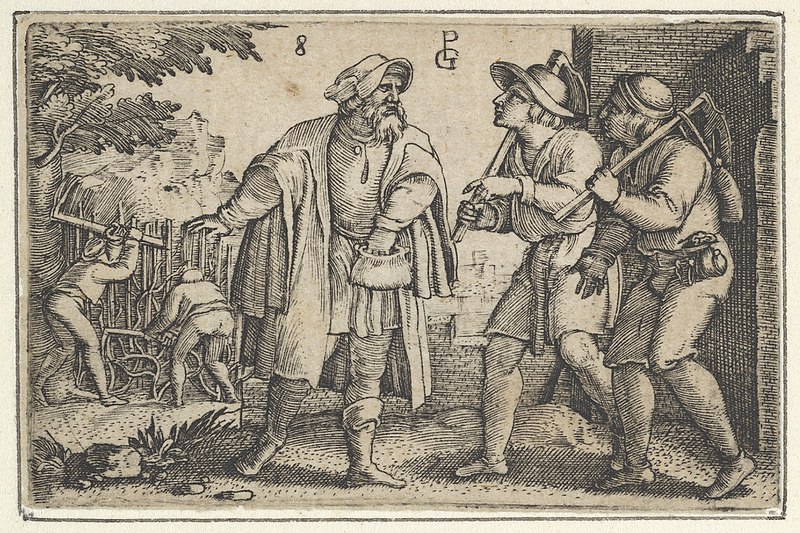
I Will Not, Father

One son said, “I will not” when asked by his father to work in the vineyard.

The other son said, “I will” when asked the same thing.

Would they do what their father wanted? Will you do what your Father wants?
[an etching by Georg Pencz, public domain]
Yet, both of these sons did the opposite of what they said. The obstinate one seems to have changed his mind, for later in the day, if his father had gone to look, he would have found this son hard at work, doing whatever the vineyard required at the particular season of the year. The first son, so willing to say he would go, would instead be found somewhere other than the vineyard, apparently at his ease.

When Jesus told this story, as recounted in Matthew 21:28-32, He said nothing about the motivation of the three people involved. Why does the father ask his sons to work? Is it a small farm and they have no servants? Would they normally work in the vineyard but, for whatever reason, neither had at that point in the day gone to do so? Are they perhaps young boys, not adult sons, who are just learning about what was needed to tend an agricultural property?

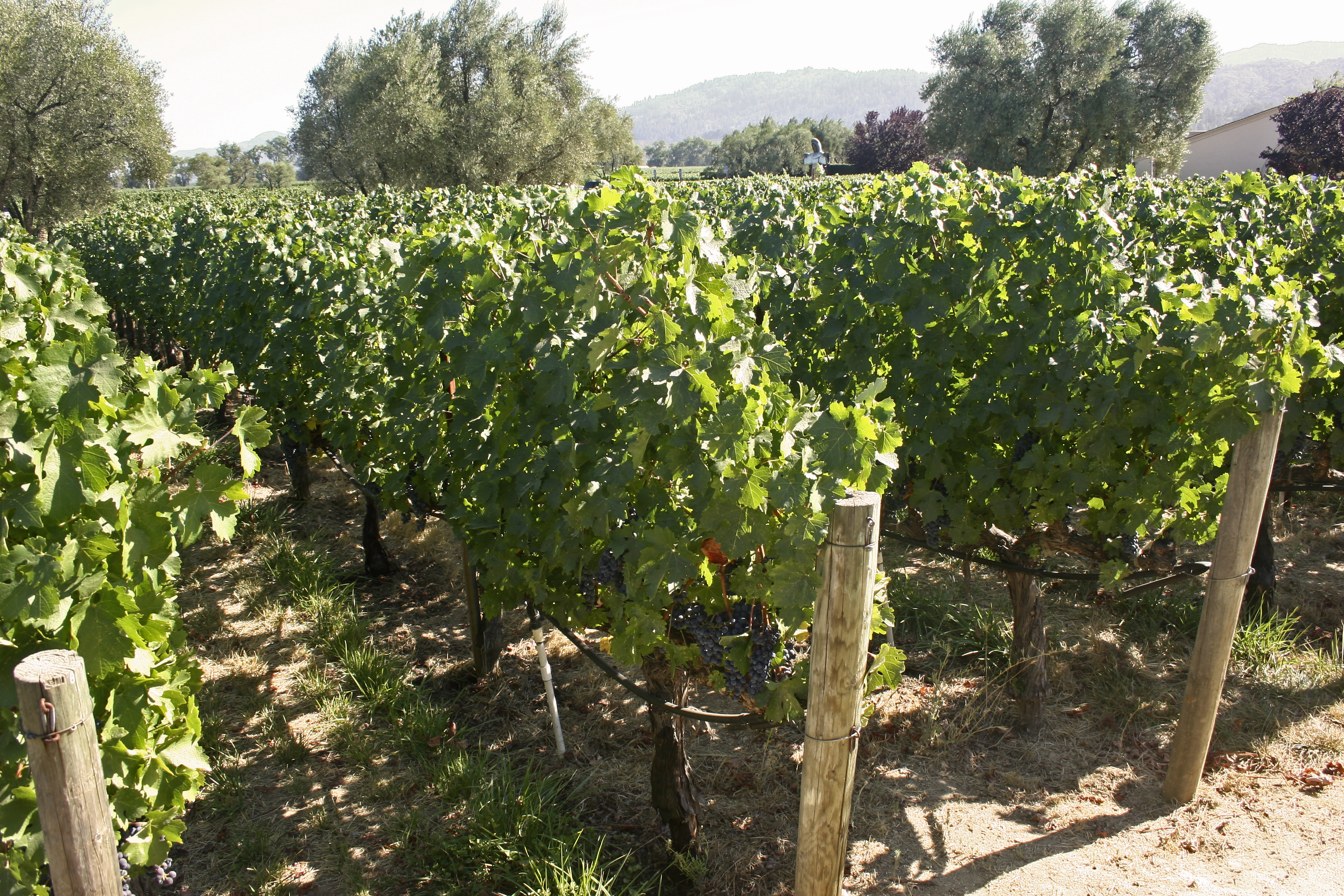
Work needed in the vineyard will vary depending on time of year and maturity of the plant. So, too, God’s work for us will vary.
[photo by Sanjay Acharya; shared via creative commons license]
Then, I wonder why the two sons changed their minds. The one who said, “I will” may have intended to go but, stepping outdoors, decided the heat of the day was too much, he hadn’t slept well enough for the labor, and decided he wouldn’t go. Or possibly he never intended to go, and his positive response was just to put his father off. The one who said, “I won’t go” might have been filled with remorse, especially if his father had a negative countenance after the son’s refusal. Or, perhaps he was teasing his father and intended to surprise him by going to the vineyard and working hard.

Speculation like this is kind of fun, but perhaps does nothing to help us understand the message Jesus has for us from this story. Neither son did what he said he would do. One spoke well but behaved poorly. One spoke poorly but behaved well. If these were your choices in life, you would most likely want to do well after having spoken poorly rather than do poorly after having spoken well.

I see a third option, however: to speak well and to do well. When the Father asks you to go work in His vineyard, don’t hesitate. Do what He asks of you. Go without hesitation. Go with joy that the Father has thought you worthy of some task, something that will improve His kingdom.

This was where our Life Group was a couple of Sundays ago, as we continued our series “A Walk Through Holy Week”. We had good interaction. Our group likes to talk, and I can usually fill the time just by asking a few questions. I think we all enjoyed digging deeply into this parable.

Alas, I’ve reached my desired word count but still have more to say. Look for part two of this, probably on Monday.

I Will Awaken The Dawn

Sunrises are always inspiring.
Wikimedia Commons user TeemuN. Link to license: https://creativecommons.org/licenses/by-sa/3.0/deed.en

One of the bad things about being a writer—at least for me—is that every good thought you have, every good thing you read, becomes an idea for writing.  Why oh why can’t I be like other people and just enjoy what I read without thinking I have to derive something from it?

My morning devotional reading is in Psalms. I was quite regular in my devotions when I was a working man, taking a moment with coffee at my desk at work to read something in scripture and pray before starting my day. I admit, however, to my shame, that I lost this discipline once I retired. I started that back up last week, and have faithfully read the Psalms each morning since, before I wake up my computer.

But I digress. On Tuesday, I read Psalm 57. You know how they say (whoever they are) that every time you read something in the Bible, no matter how many times you’ve read it before it becomes new for you again? Well, it turned out to be true for me that day. The key verse was 57:8, which reads

Awake, my soul!
Awake, harp and lyre!
I will awaken the dawn.

That last phrase hit me. “I will awaken the dawn.” What does that mean? I pondered it. It speaks to me of anticipating the day, of rising before dawn and saying that you can’t wait for the day to begin and see everything God has in store for you on this day.

The Psalms are a comfort to many readers.
Public domain

That doesn’t always happen, does it? Some days your normal waking time comes and it’s all you can do to swing your legs out of bed and find the floor. Standing up is a struggle, never mind going about your getting-up activities.

The psalmist didn’t seem to have that problem. He was so anxious to get going with the day that he called for his soul to wake up, for his harp and lyre to wake up, and together they would summon the dawn to get a move on.

That’s the kind of start to the morning I want to have.

So, I have this new encouragement to begin the day in a positive way. That was Tuesday. On Wednesday I read Psalms 58. I saw that the words under the title, which would actually be the first words in the text since these psalms weren’t numbered when they were written, were “For the director of music. To the tune of ‘Do Not Destroy’. Of David. A miktam.”

I remembered that quite a few psalms give the tune it is to be sung to. I checked the last several I’d read. For Psalm 57 it was also to the tune of “Do Not Destroy”. For Psalm 56 it was to “A Dove on Distant Oaks”. Psalm 60 is to “The Lily of the Covenant”. Other psalms in this part of the book have other song names attached to them.

Immediately, a possible book came to mind. I’m not going to give the details of it at this point. In fact, I’m still working it out, though, like many of my book ideas, what it will be from beginning to end has pretty much flashed before my eyes.

Is it a do-able book? Would anyone ever want to read it, or, like the rest of my books, will it sell around 20 copies and be forgotten?  Will I ever get it written? Perhaps someday you’ll find a book of that title by me, for sale at Amazon and other fine retailers. Or perhaps not.

Lots of questions. Time will reveal a few answers, I hope.


A Self-Taught Lesson

In recent weeks I have experienced three instances where “wrongs” were done against me, at least in my perception. I don’t want to go into any details. Let’s just say that two of the three are certain, while the third is “iffy”.

The last two of these, the certain ones, were on the same day,  almost on top of each other. It threw me for a loop for a couple of days. I went around depressed—not a clinical type depression, but more of a  wondering how to handle the two situations. One of them, if I didn’t want to, I would never have to see the person again. The other didn’t include that luxury. The third, the lesser one, was more a case of where I was very disappointed in someone’s words, words not directed at me but at a situation in life in general.

If I remember correctly, the two things happened on a Friday. Saturday evening, as is my habit, I took a look at the Life Group lesson I would teach the next day. It was Jesus cursing the fig tree, it shriveling up, and how he taught the disciples from this. It’s found in the two of the gospels, Matthew and Mark. I studied from my “Harmony of the Gospels”. It’s been enjoyable to use my own study tool for this series.

Jesus cursed the fig tree on Monday of Holy Week. He said, “May no one ever eat fruit from you again!” It was on Tuesday, when they passed the same way to go to Jerusalem that the disciples noticed the tree had withered. They questioned Jesus about how this happened, to which he replied that through prayer this was possible, using his metaphor of the mountain being cast into the sea.

But then, he added something, sort of the unsolicited advice he gave when he noted the true condition of someone’s mind and heart before they did. He said, “And when you stand praying, if you hold anything against anyone, forgive him, so that your Father in heaven may forgive you your sin.” This particular teaching is found in Matthew but not Mark.

This hit me hard. I realized I held something against someone, against three someones. If I were praying, and if I expected my prayers to be successful, I needed to forgive them. I wasn’t to wait for them to realize the wrong they’d done and ask for forgiveness. My forgiving them was to be instantaneous, and not asked for. This wasn’t something to delay into the future, when next we meet.

As I studied my lesson, I kept coming back to that concept. Maybe the things I held against these people weren’t wrongs at all. Perhaps my perception of what they did was wrong. Perhaps what they did was unintentional: they didn’t recognize what the consequences of their action or words would be. None of that mattered. I was to forgive.

My forgiveness would be for me, not for them. They wouldn’t know about it. The scripture doesn’t say I’m to seek them out and express this forgiveness to them. How would that sound? “Hey, sir or madam, you don’t realize you wronged me, and you haven’t asked for forgiveness, but I forgive you anyways.” No, I don’t think that’s what Jesus intended. You forgive, immediately, whether they ever ask or not.

So, I did that. I forgave each of them, and hold no animosity to them. In one case I could see that the person was actually helpful, but did so in a clumsy way. Another was a simple mental lapse due to disorganization, certainly with no evil intent. The third is a difference of opinion, and will likely forever remain so. I ought to be able to allow others to have different opinions without holding a grudge.

I learned my lesson. Let’s hope that I’ll be able to put it into practice going forward without having those bad moments of moping about wrongs or perceived wrongs.

We Interrupt this Book Review to…Write

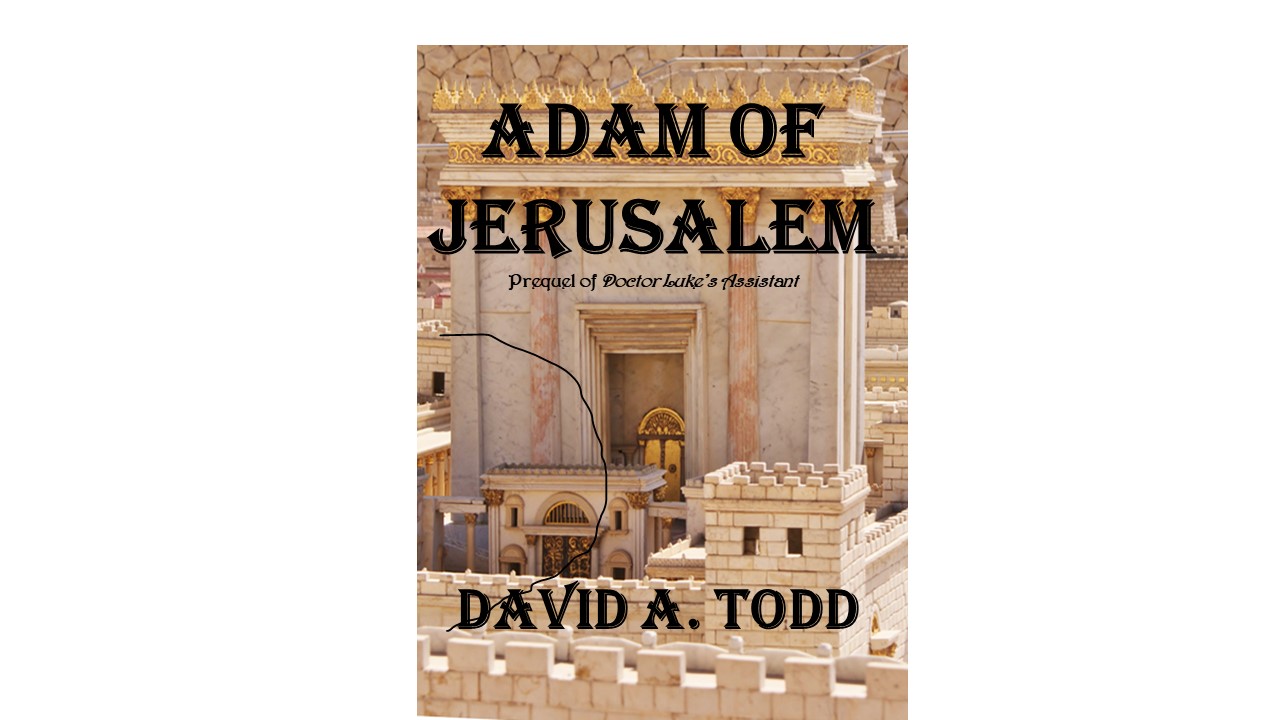
This is close to the cover I want to use for “Adam Of Jerusalem”, but I can’t find the copyright holder of the photo. I’m probably wrong in even posting it here.

In my last post I wrote part 1 of a two-part review of John Locke’s Two Treatises on Government. I said I would do the next part soon. However, soon is not today. Instead, I’m going to write about what I’m writing, and what I’m preparing to write.

I have two books in progress, one complete and being edited, one being written. The first is Adam Of Jerusalem. I finished this in mid-December 2018, let it sit a few weeks over the holidays, then began editing in mid-January. I think those dates are right; it’s all kind of blurry without looking at my diary. I’ve made three editorial passes, and given the book to three beta-readers. I have figured I would publish it then.

But, in January I joined a newly-formed writers critique group. I decided to run AOJ by them. They didn’t like chapter 1 in January or chapter 2 in February. Not enough description they said. Too much getting from point A to point B without flourishes. Alas, that must be the engineer in me.

So I went through these two chapters looking for places to add some description, some of what I call extraneous information that gives the reader a better experience, that makes them feel like they were there when the action was taking place. It caused chapter 2 to increase in length 25 percent. If I did that for the entire book, the novel would go from 72,000 words to 90,000 words. That’s not awful, but I would have to think about that.

Still, I decided to go on with this for a few more chapters at least. Last night I re-edited chapter 5, having completed 3 and 4, and found a number of places to add those flourishes. I’ll type these last edits sometime today and step back and see how it looks to me. I imagine I’ll go on with this while waiting on beta-readers to get back to me.

And, perhaps, a fourth to this one? Yes: Making The Constitution Edition, hopefully in 2019. Update: It will come in 2019!

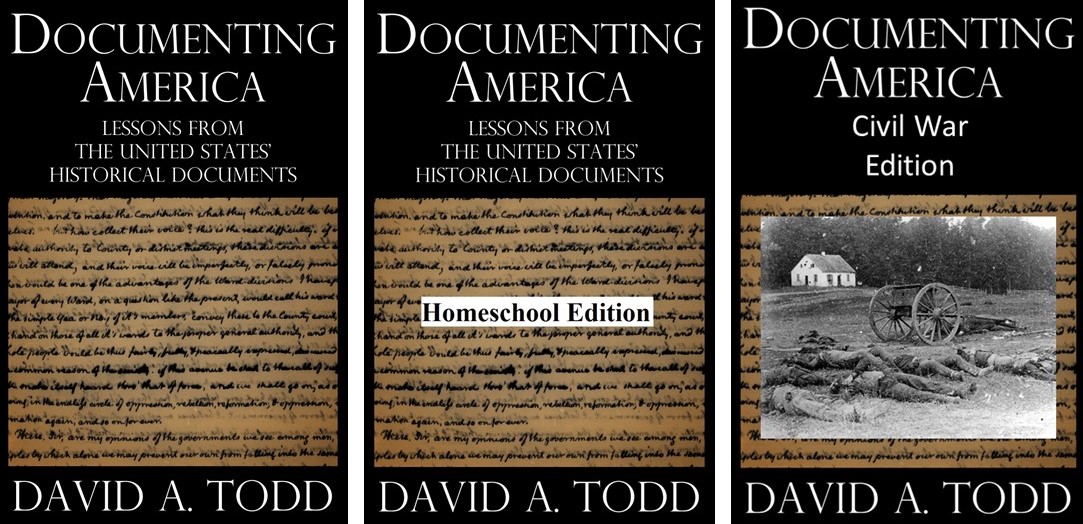
Then, my current writing project is Documenting America: Making The Constitution Edition. I’ve written about this series before many times, and this particular volume. At some point, around February 12, I began gathering source documents and completed the editing and writing of one chapter on February 18. Yesterday I completed the twelfth chapter (out of 31 or 32) and edited the source document for the thirteenth. I did that in the evening in manuscript, so will be typing that today.

Meanwhile, as I work on DA:MCE, I’m coming across material I realize I can use in a future edition. I don’t know what I’ll do next. The choices are many. I read some inspiring, early abolition works, and thought that a volume on the abolition movement might be good. So I created folders on my computer and began seeking out source documents for that. I’m a long way from doing anything with this book, but maybe, just maybe, I’m starting it the right way. Except, I should start a writing diary for it, even if it will have major time gaps in it.

One other project that I’m (somewhat) actively working on is a Bible study I developed and taught some years ago called Sacred Moments. It’s a study of the sacraments and the importance of them in the life of the Christian. They are sacred moments. I had a little trouble finding the files I created on that years ago. On a shelf in my closet, in an unmarked, green three-ring binder, I found the paper copies—preserved in sheet protectors, no less. Digging around in files transferred from an old computer, I found the computer files. I transferred them into my cloud storage.

I have no schedule for working on Sacred Moments. I feel I must do more research if I’m to publish it as a Bible study. It will be the first of those critters for me, and I would want to do it right. I did lots of research before, and even some after, but too many years have passed since I developed and taught it, so I’ll have to re-do some of that research.

That’s pretty much it. One other, more minor, task I want to work on soon is to get my ideas notebook in shape. I found it this week, on that closet shelf. I can’t remember the last time I looked at it. I’m thinking that may be a Sunday task, with a mug of coffee, in the sunroom.


Writing In Retirement

Well, you would think that, after almost a week of retirement (five days, actually, today being the beginning of the sixth), I would have accomplished much on writing. You would be wrong.

I actually started the year spending more time on genealogy and stock trading than anything else. Stock trading because it’s a new year, I needed new spreadsheets, and I needed to be active in it and try to make some money. Genealogy because I love to do it so much, and I had some new leads—or rather a little bit older leads I’d been holding off on until retirement. Following those leads now.

I’ve been holding off on writing also because I had much to do in life, and I knew retirement was coming. But retirement came, and I felt that I needed to get a few other things done first. Lynda is ill, with the flue, and it doesn’t seem to be going away quickly. Perhaps she had bronchitis as well. So I’m having to do some things for her. It’s not a burden, however. I’m glad the family sickness passed me by and I’m able to pick up the load.

I haven’t been totally absent on writing, however. A few days ago I saw a notice in a Bella Vista Facebook page about a new writing critique group someone want to form. I contacted her, and it looks as if it will happen, a once-a-month group at her house. I’m looking forward to that.

Last night I pulled out the manuscript of Adam Of Jerusalem, and began going through it looking for places where I’d marked I needed to add Adam’s backstory. Found them, and began to work on that backstory. I have the notebook next to me, in The Dungeon, and will work on it today.

These are somewhat feeble efforts, however. I wanted to get some other things done first. I felt that writing time would come shortly, and I needed to get my family budget up to date first, then file receipts, then clean up certain clutter stacks, then start a jigsaw puzzle (yes, did that yesterday). Saturday I made wonderful progress on all of these, which gave me freedom of mind to do a little on writing yesterday. Oh, yes, somewhere along the way I knew I needed to start doing some more healthy things. I’ve been doing that, though I need to ramp it up some still. Over time, over time.

Another thing I did was work some (on Saturday, I think it was), on the outline/programming of a Life Group lesson series my co-teacher and I had discussed. I like the way it’s coming together. It concerns Jesus’ activities during Holy Week. Three of the planned lessons might be a little thin on teachable/discussable material, so I’m doing a little more research on them. I should finish that today.

The last thing I’ve done is try to plan out what exactly I’m going to write in 2019. I have a list of things. I don’t know if it’s complete yet, and it’s certainly not prioritized. It reflects my Genre Focus Disorder; it reflect the fact that I have much I want to write; it also reflects that I now see myself with more time to write than I ever had before. I intend to work on that list this week, and maybe have it in shape to report it on my Friday blog.

Planning is fine, but doing is better. Time to leave this and post it, and get to my other work. See you all on Friday.

Something New—Again

Last Friday I did some cleaning in my office. It is somewhat of a mess, and I figure I’d better get it organized before my retirement in a mere 4 months and 25 days. Every week I’ve been taking something home, reducing the amount I’ll have to bring home the last week or day.  It’s working. I see much less I’ll have to take care of in the months and weeks ahead.

So on Friday last, I was going through little piles of paper on my desk, mostly the back of sheets from my Dilbert desk calendar, which I use as note paper. One of those had some notes I’d made on some Bible passages, three to be precise. I looked at them, trying to remember why I’d made those so many months ago, and what I was trying to tell my future self, meaning me right now.

I soon understood. These were some biblical insights I had that I thought could be turned into a Bible study. Yes, I saw it clearly. Three passages, three insights, three lessons. The start of a Bible study for our Life Group at church; the start of a Bible study book.

Now, I’ve written about this before, how these ideas come to me of things to write about. Often they are book titles that I can’t leave, which, in my mind, I flesh out into plot (for a novel) or outline (for non-fiction). Since I’m so busy while still working, and since I can’t possibly fit anything into my writing schedule for the next decade or two, I usually document the idea by writing it, hopefully somewhere where I’ll find it again, and in a form I can understand, then try to put it out of my mind. If I didn’t do that I think I’d go crazy.

I found this one, and after a bit of thought understood what I had written and why. I pondered it a while. I’m always looking for something for Life Group curriculum, as I’m more or less in charge of that for the class. This looked like a good one. Three weeks isn’t really enough for a good lesson series, so I thought more about it, and easily came up with a half dozen more lessons on the theme. I felt like I then had something, stuck the paper, and a larger sheet newly generated, into my carry-home folder. That night I looked at it some more. I thought of how, if we did that series beginning in October or early November, I could tie some Christmas lessons into the them. I added those, making twelve lessons. Two more came to mind, making fourteen.

The experts these days say your lesson series should be a matter of about six weeks, or a little more. Fourteen lessons would work for Baby Boomers, but not for later generations. But, our class is a bunch of Baby Boomers. so the longer series should be okay.

Now, the questions to be asked are:

  1. When do we start this series?
  2. If Sept 9, which is the earliest day needed, can I get enough done to make that happen?
  3. If it runs through Dec 16 as we would need it to, what do I do with it then? Should I immediately turn it into a printed Bible study? Or should I “shelve” it for the moment, to returned to when I have a more opportune time?

Enquiring people, including the author of this post, want to know. If I do this, what do I do with my publishing schedule? I’m so far behind on my novel-in-progress, and I’ve laid aside my research into the next Documenting America book. Do I totally trash the schedule and move the Bible study into first place on the writing list?

I have a few days to decide. For sure it’s something I’ll develop (at least a short-ish version if not the long one)  and teach, along with my co-teacher. And, some day, I’ll expand into a published Bible study. But for now, what to do, what to do?

My Current Writing Activities

So, with my suspected hacking dealt with (see my addition to my last post), I can get back to other things, such as telling you all about my writing.

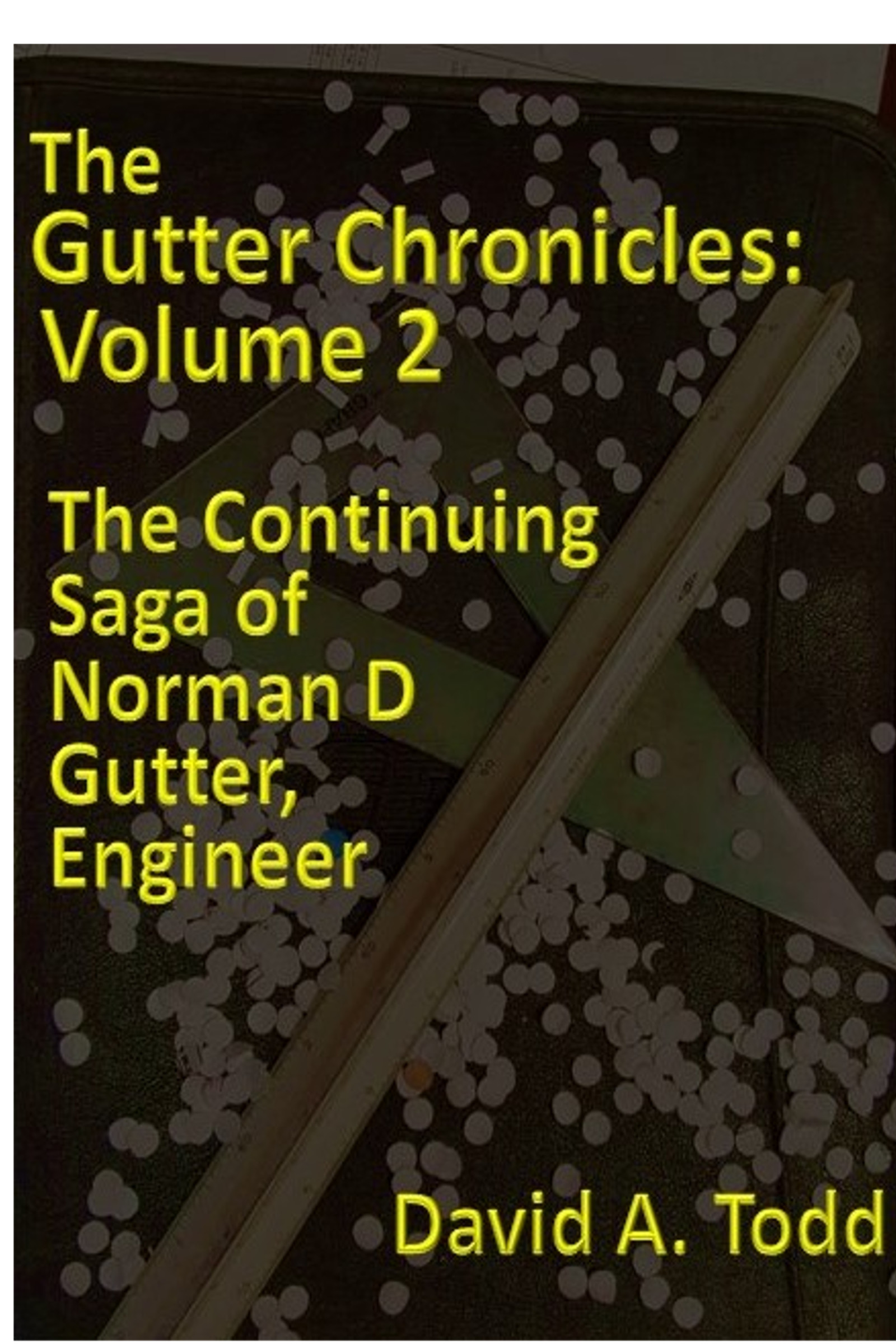
I created and made the cover for this one; so, if it doesn’t work, I’ll gladly take the blame.

I published The Gutter Chronicles, Volume 2. It went live on Amazon last Monday, live on Smashwords last Tuesday, live on Barnes & Nobel (via Smashwords) on Wednesday, and will soon be available in print. I submitted it to CreateSpace yesterday. This morning I got the e-mail saying my cover needed to be tweaked. I was able to do that today, and I believe it will be approved. Next, I’ll review it on-line for formatting, while at the same time ordering a proof copy. I don’t want to publish it without going through a physical proof copy. This isn’t a real book release post. I’ll do that when I get the print copy out there.

So far it’s sold: 1 copy, from a faithful reader who liked the first volume. Next, I’m going to send an e-mail to our CEI people in Arkansas, finding out how many people want a print copy. I’ll send out a couple of FB posts with the same message. With those, I’ll also see if anyone wants a copy of Volume 1 at the same time. I’m hoping to get 50 to 60 sales that way, although that’s probably optimistic.

Besides that, I have two main works-in-progress: Adam of Jerusalem, a prequel in my Church History Novels series; and Documenting America: Making the Constitution Edition. Both are begun.

With AoJ, I started writing it. This was back at least three months ago. I completed three chapters, and set it aside to simmer a while. The simmering time is up, and I anticipate getting back into the writing before long, certainly within a week.

With DA–MCE, I’ve been reading for research for the last two weeks, or a little longer. I’m reading in The Annals of America, getting an idea of what source documents are available, and refreshing and expanding my knowledge of the events of those times, 1783 to 1789. I’m learning quite a lot, and enjoying it.

From here on, I’ll work on the two simultaneously. When I feel like writing, it will be AoJ. When I feel like researching and reading, it will be DA–MCE. I think, in a month or two, one of them will prove to be the more enjoyable and will start to get more of my time. Although, my plan is to finish and publish AoJ first.

I have a couple of other things I’m doing as well. I’ve been brainstorming my Bible study Sacred Moments, and may try to expand that for publishing—not right away, but the brainstorming will continue. Then, I’ve been reading for research in one of my Thomas Carlyle projects, the Chronological Composition Bibliography. I have no plans for this except to read a little here and there, just to keep my mind sharp and not lose sight of the project, which I estimate is 60-70 percent complete.

So, there you have it. Hopefully in a week I’ll be able to report the print version of Norman Gutter’s activities is available. In a month or two I’ll let you know how other projects are going.

2nd Quarter 2018 Plans

As I’ve tried to make a habit, after reporting sales for a quarter, I then look at my writing plan for the year and see how I’m doing, and if I plan to make any changes. First, here is my writing to-do list as posted on January 5, 2018, in the order I planned to do them.

  • Finish The Gutter Chronicles, Vol. 2. Finish by the end of February; publish by the end of April.
  • Finish Adam Of Jerusalem by the end of the year; publish in 2019.
  • Begin work on Documenting America: Constitution Edition. I hope to be working on this by October.
  • Write “Tango Delta Foxtrot”. At present I’m not going to put a publishing target date on the list.
  • And, one other item, which is really planning for 2019: Decide on which of my Bible studies to publish in 2019.The other things on the list don’t have any deadlines in the second quarter. I plan to move next to Adam of Jerusalem. I’m a few chapters in to it, and I know the story I want to tell (i.e., it’s somewhat planned-out in my brain). If I can get enough time to put to this, I could actually finish it by summer. Time, however, is in short supply these days. Time to write, that is.

So, this is my 2nd quarter to-do list.

As you can see, it wasn’t an ambitious to-do list. But it considered where my circumstances in life stood, and what I thought I could realistically get done. Only one item was listed for the first quarter: Finish The Gutter Chronicles, Vol. 2 by the end of February. I actually completed it around mid-March, so missed it by two or three weeks. That wasn’t bad. It’s now in the editing phase, and I should have that done in just a few days. So, publishing by the end of April, as in my to-do list, is entirely possible.

  • Publish The Gutter Chronicles, Vol. 2 by the end of April.
  • Finish Adam Of Jerusalem by the end of the year; publish in 2019.
  • Begin work on Documenting America: Constitution Edition. I hope to be working on this by October. And, I will add to this, begin reading for research within the quarter.
  • I believe the first Bible study I’ll publish is Sacred Moments. I just finished reading a book for research, a book which, unfortunately, didn’t help all that month.

I’ll check back in against this list in early July.

Romans Study

I may or may not have mentioned this before. Our pastor is preaching a sermon series from the book of Romans this summer. Ten sermons, I think. Our Life Group decided we would also study Romans along with the sermon. But since a schedule of sermons wasn’t posted, we’re just going through it from beginning to end. That means we’ll probably take 25 to 30 weeks on it. This was our fourth week on it (having lost a couple of weeks when we didn’t meet), and we just got through Chapter 2.

It’s been an interesting study. In Chapter 1, Paul said, “I am not ashamed of the gospel.” Why did he have to say this? What about the gospel would cause anyone to think you should be ashamed of it? Our pastor got into that this week, but he was preaching from Chapter 6. So I’ll leave the answer to that question for another post.

After that statement, Paul said that no one has an excuse for rejecting God, as what is known about him is obvious from creation. God made himself evident in creation.  That’s from Romans 1: 18-32, which also describes the progression into sin.

Romans 2:1-16 was about how sin is universal, so we should not pass judgment on those who sin, being guilty of the same things as them. These verses also showed that the sin isn’t a violation of the Jewish law. Those who never had the Jewish law still sin. And those who do right, even though they don’t have the Jewish law, are considered righteous.

So that comes to the lesson from today, Romans 2:17-29. The passage heading in my study Bible is “The Jews and the Law”. This wasn’t my week to teach, but still, since my co-teacher can be called out for veterinarian duties almost any Sunday, even when he’s not on call, I got up early Sunday morning to prepare. As I went through the scripture, I noted how, if you changed “Jew” to “Christian” and “the law” to “the Bible” in it, the passage was very applicable to the church today. You couldn’t say, “Well, I’m not a Jew, so this doesn’t apply to me.”

Normally, when I prepare a lesson but then don’t have to teach, I find my co-teacher will teach a different lesson than I would, even though it’s from the same exact scripture. This time, however, Marion had the same points as I had. He turned “Jewish” to “Christian”, and we discussed how this applied to the church. I guess great minds run together, or whatever the exact saying is.

It was a good lesson. We picked the scripture apart, first when discussing it at our individual tables, then as a full class. I should write more about it, and perhaps I’ll edit more discussion in, but for right now, suffice to say it was a great time. These few verses are packed full of wisdom and guidance. I’ll be reading them again soon.