We are in our new house in Lake Jackson, TX. Many boxes are unpacked and broken down, but many more are pushed against walls, waiting their turn. We haven’t found a few things, though every day, as a new box gets opened, we find something we’d been looking for and say, “Oh, that’s where that was.”
We still have no inside fridge, relying only on the old fridge we brought from Arkansas and set up in the garage. I had many other things to do so didn’t rush the refrigerator. But the estate sale at our house was last weekend, we netted what I hoped we would, so now we can go buy the fridge. Today I’ll visit a couple of places, and hopefully we will buy it and have it installed tomorrow.
Today is the first day for me to work in my office. It’s not fully set up, but it’s functionable. I placed a few stock trades this morning and here I am writing a blog post. I’ll likely cut this show to see what more I can set up. It’s about time to take a look at income taxes, I have filing to do, and must find a few things yet.
So I’ll end this a little short. Time to get to my other work. Still thinking of a name for my office. “The Dungeon” won’t do anymore.
Edit on Feb 16. Well, I never got this done in a timely manner. I’ll post it now for what it’s worth.
I’m actually writing this Tuesday morning, February 3 and scheduling it to post on Friday Feb. 6th. On Friday I get the U-Hau; in the morning, the loaders load it in the afternoon, and on Saturday we drive. The following week, the estate sale people come in and whatever we leave behind will be sold the 13th-14th. The house should go on the market after that.
I’ll add an update on several days this week, at least until our internet is cut off, probably Thursday afternoon. I don’t yet have internet at the new house (investigating options), so I’m not sure when I’ll post again unless I write another one for posting during the dark time.
The Dungeon is all packed except for the modem, signal booster, and two mostly packed but not yet sealed boxes, waiting to see if I have any more small items to go in the top.
Tuesday, Feb 3. I woke at 3:45 a.m. and never got back to sleep. I read in the recliner for a while, in the last of the magazines I want to read and put in recycling before we leave. Then I tried to sleep, but couldn’t relax due to the massive amount of work yet to do. So I went out to the garage and worked on that. I had already packed my tools, but the box was too big. I got them re-packed in a properly sized box, boxed up the small amount of hardware I’m taking, pulled some shelf units out to the middle of the garage that I hope will fit in the truck, then went back in the house. I decided I won’t bring my drill, only the drill bits. I don’t know whether I’ll have to do any drilling. If I do, I will get a modern, cordless, chuck-less drill and let someone buy this old one.
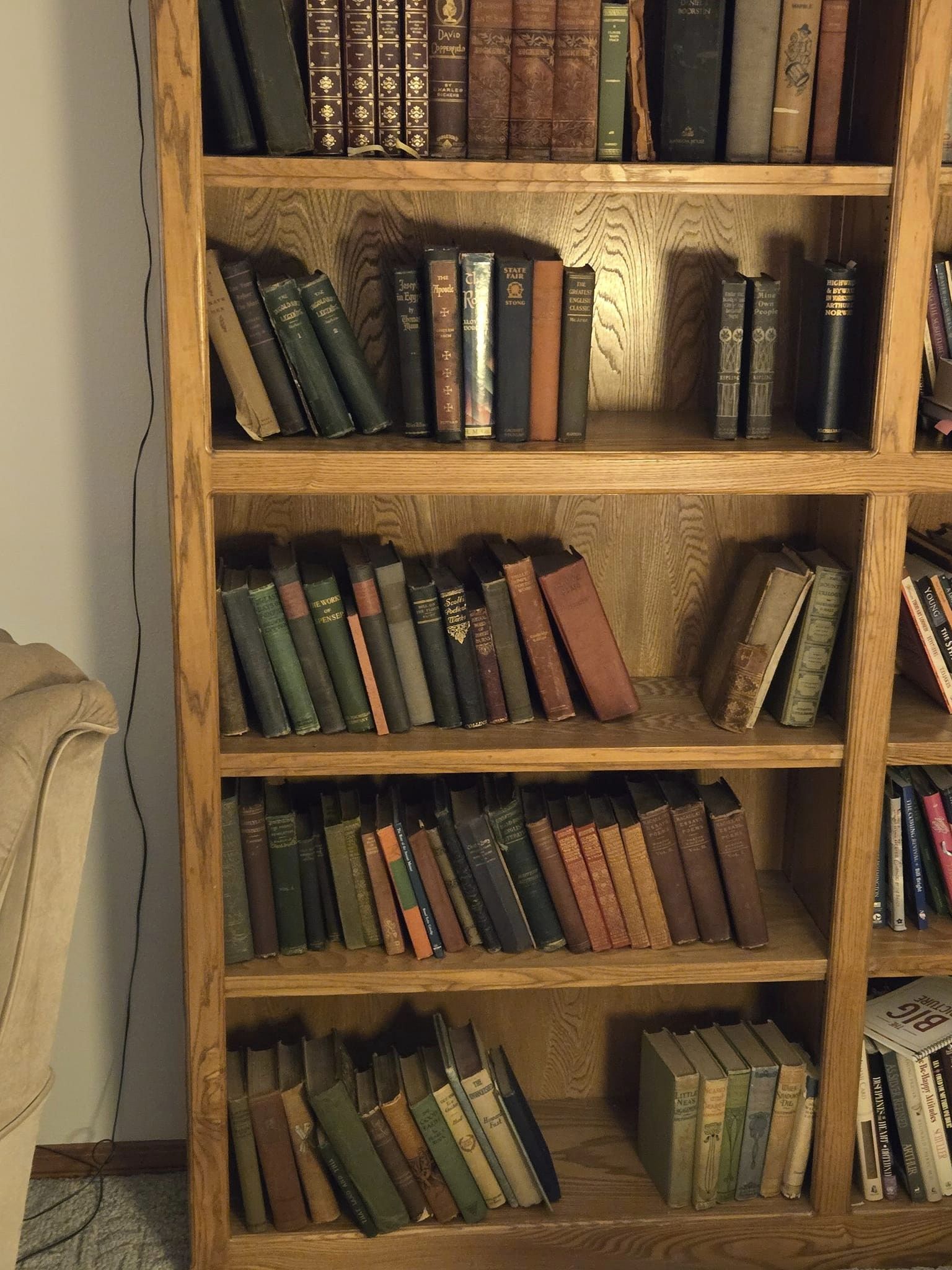
The legacy books were once a part of my journey. They are all gone now.
For a long time, I thought, if I ever wrote my autobiography, it would be titled The Journey Was A Joy. But as started to write it, that seemed wrong. I thought that would instead be the name of the last chapter. As I thought about the journeys I have been on—spatial, physical, spiritual, professional, intellectual, avocational—I decided instead I would title it Tales Of A Vagabond. I’ve written the first six chapters of that.
I’m about to embark on a new chapter of the vagabond life. For a long time Lynda and I have talked about moving to be close to one of our children. The choices were Worcester, Massachusetts and Lake Jackson, Texas. The problem is, neither of them may be in their current locations for a long time. Either of them could pick up and move in a matter of a few years. Knowing that, we’ve been slow-walking our decumulation efforts, as readers of this blog will know. Our son in Worcester finally convinced Lynda that the better place for us to move was to Lake Jackson. I had been of that mind for some time.
The health journey is also a consideration.
A couple of weeks ago, a house across the street and two doors down from our daughter came up for sale. To make a long story short, we found the house to be perfect in size and location. Through a realtor we made an offer, came to an agreement with the seller, and are under contract to buy the house. Closing is scheduled for Dec. 8.
Monday, we met with a realtor (husband and wife team) in our house in Bella Vista. Within a day or two we will likely put her to work as our realtor, and get the house listed ASAP. We think it will show well (if we can get it at least somewhat more presentable) and hope it will sell reasonably quickly. Our time to move is between Dec 18-ish and April 1. I have knee replacement surgery scheduled for Jan 27, so it may not happen then depending on when we do make the move.
Interest journeys have been part of it, as writing became a part of my life.
Am I excited? No. The amount of work before us is massive. Slow walking isn’t going to get it done. The worst part will be leaving our church of almost 36 years. That will be hard.
We’ve been in this house for close to 24 years, and in this area since January 1991. That kind of stability probably negates the idea of me being a vagabond. But life isn’t defined only by your physical location. My life has included many other types of journeys.
If I live long enough, like into my nineties, it is likely that this won’t be the last move in the vagabond journey.
What if Earth were in the center of the galaxy instead of a far away arm? How would gravity be different, and could human life be sustained or develop?
In several prior posts, I’ve written about the so-called Goldilocks Zone, a place on a planet where conditions are “just right” for human life to be sustained. Or for human-type live to have developed in the first place. with the deployment of powerful new telescopes in the last decade, astronomers are looking for and finding many more exoplanets, and astrobiologists are trying to figure out if any of these could sustain human life.
The bounds of the HZ are based on Earth‘s position in the Solar System and the amount of radiant energy it receives from the Sun. Due to the importance of liquid water to Earth’s biosphere, the nature of the HZ and the objects within it may be instrumental in determining the scope and distribution of planets capable of supporting Earth-like extraterrestrial life and intelligence. As such, it is considered by many to be a major factor of planetary habitability, and the most likely place to find extraterrestrial liquid water and biosignatures elsewhere in the universe.
The habitable zone is also called the Goldilocks zone
But my way of thinking is it’s more than temperature that is needed to develop or sustain human life. In a recent post, I discussed gravity. Too much or too little—in other words, too different than the gravitational tug we have on earth—would, I think, make human life difficult or impossible. Too much gravity and we would crawl around like a bunch of slugs. Too little gravity and we would bound around with great leaps, except that muscle mass and tone might never develop. I think gravity is really important.
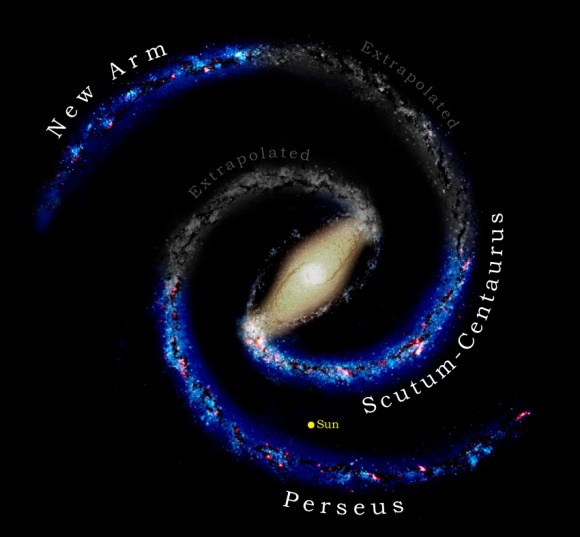
What about light? Does the amount of light that reaches Earth have an impact on our being able to live here? Did it have a factor in our developing in the first place? The graphical depiction above shows our solar system as being far away from the galactic center of the Milky Way. Thus, it is dark at night when we have rotated away from our sun’s direct rays. We get a little light from the thousands of stars we can see, and a little more from the moon, but obviously a whole lot less than during daylight. I think that, if we were located near the galactic center, we would have no night. The number or stars close enough that an exoplanet would not experience night, even when rotated away from its star.
What would perpetual daylight do to a person? Would the lack of a mostly dark period lead to some form of madness? I fear it would.
Or what if God used evolution as the way He made humans instead of creating them as a fully-formed and developed Adam and Eve? On an exoplanet with no night, could human-like life have evolved? How important is alternating periods of light and darkness to the development of the brain power we possess? I’m asking questions here about something I wonder about, and suspect is important, but in truth know nothing about.
This is the last of the factors I’ll write about that might have an impact on the habitable zone of any star. Actually, though, I wonder if there are more factors involved that I haven’t thought of.
What if Earth were in the center of the galaxy instead of a far away arm? How would gravity be different, and could human life be sustained or develop?
Continuing our discussion about the Goldilocks Zone—that area of a planet where conditions are just right to sustain life, especially human-like life—I move now from conditions on the planet itself to things in the planet’s neighborhood. I’ve already discussed the general concept of a Goldilocks Zone and factors affecting the temperature, which must be just right for human life to thrive.
The first of two things off the planet to discuss is gravity. Gravity? you say. Isn’t that on the planet? Well, yes, it is. Perhaps “off the planet” is not the best term. Anyone who has taken fundamental science in school has learned about gravity: the pull two objects exert on each other. It holds air close to Earth, creating the atmosphere we need for life. It’s what keeps our feet firmly planted on Earth, and why we can’t jump off of it. It’s why we fall if we lose our balance.
But we know it takes two bodies to gravitationally tango. This is demonstrated by the tides, which have been shown to be related to the moon’s gravitational tug on earth. Those tides are variable based on the lunar cycles.
I’m not saying we need a moon-ocean connection for human life to form but simply using the moon as an example of something in the neighborhood that affects our gravity. I’m trying to talk through the likelihood of another planet being out there somewhere in the Milky Way or another galaxy being able to sustain human life. Some people believe, given the number of galaxies and stars out there, the existence of finding other life-sustaining planets is a virtual certainty, including planets where human-like life could have developed. I’m simply talking through that scenario.
The Goldilocks Zone concept, as I’ve seen it presented, is usually posed as a question of temperature and nothing else. But could gravity play a factor? What if you had a planet with the moon’s gravity. If it could hold an atmosphere in place, could humans live in only that little gravity? Could human life have developed in only that little gravity? I sort of doubt it. Some different kind of life would have developed. You wouldn’t see a bunch of Armstrongs and Aldrins bounding around. But will wait for scientific experts to weigh in.
What about other celestial objects, such as the sun and other planets? Obviously the sun plays a big roll, its gravity holding Earth in orbit. Could you find a planet with a sun, say, three times the mass of ours, and place a planet in orbit around it so that a Goldilocks temperature could exist, would the gravity properties be such that human life could exist? Or what if the planet were twice as big as Earth? Same question. Would that planet hold so much air in place that the atmospheric pressure would be too great for humans to live in it?
Let’s go a little farther afield in the celestial neighborhood. What about a planet rotating around a star near the center of our galaxy. Would all the other stars around it combined exert so much gravitational force that it would be so different from ours that human life couldn’t exist? or not develop in the first place? I realize we are talking about four or five light years between stars. But what if you had bunches and bunches of stars?
I’m asking questions I don’t know the answers to. I suspect scientists, somewhere on Earth, understand gravity so much they can tell what conditions are an a supposed planet twice Earth’s size rotating a sun thrice our sun’s size in a celestial neighborhood 100 times more cluttered than ours. What are the “G” forces on a human at that equator, and could they exist there in that gravity if the temperature were right?
We have learned from long-term periods in space that it’s almost impossible for humans to maintain muscle mass and tone in Zero G, even with lots of exercise. What will happen on a theoretical exoplanet with G forces so foreign to our bodies? A biologist might—or might not—be able to answer that question.
The next post in this series will discuss one more celestial neighborhood factor in the presence of a Goldilocks Zone.
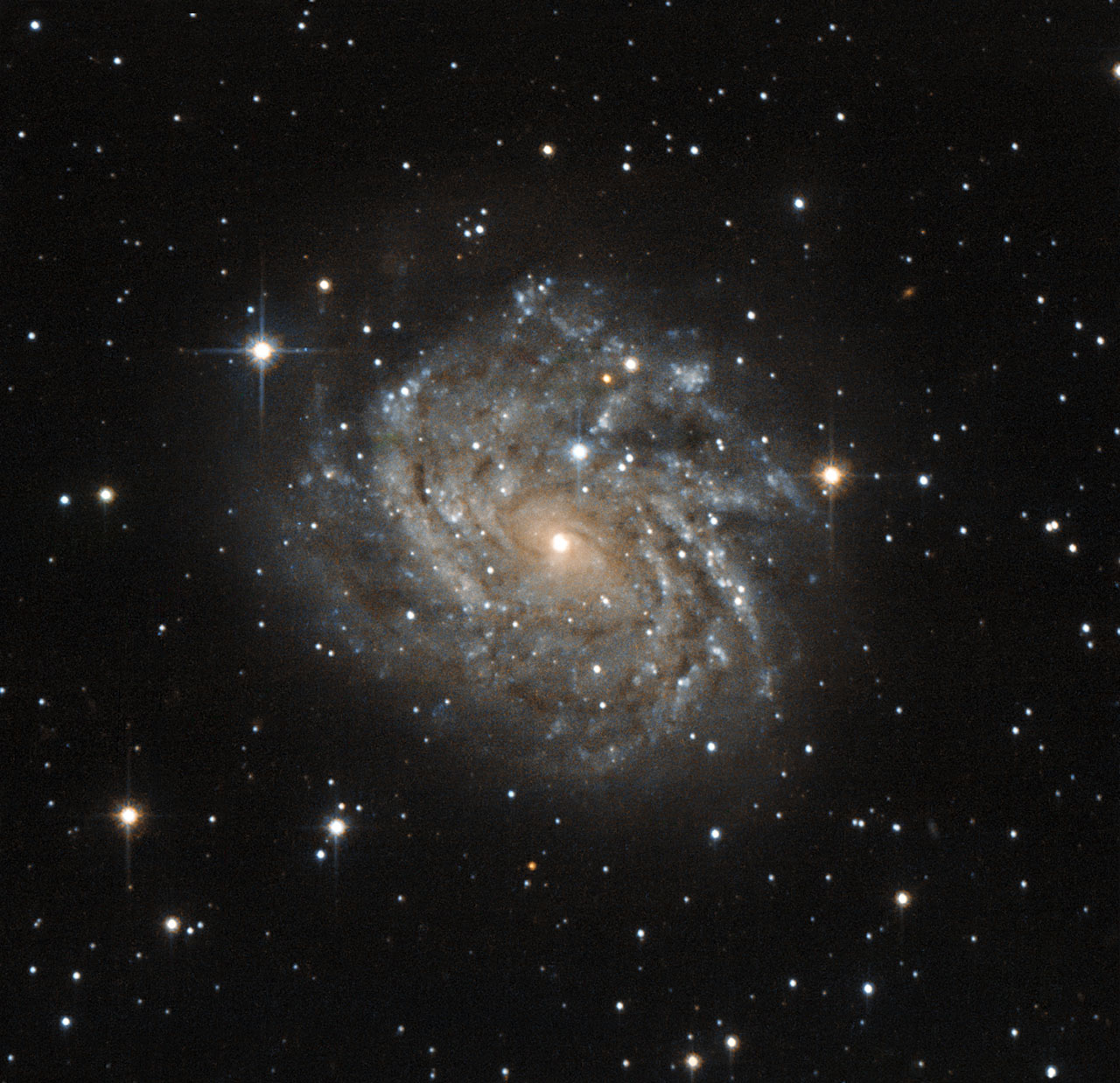
Does this galaxy, of a billion or more stars, have an exoplanet that includes a Goldilocks zone?
So, we are talking about planets outside of our solar system, exoplanets, and whether we might find among them a so-called “Goldilocks Zone”—a place on the planet where the amount of sunshine, atmosphere, and water could sustain human-like life. A side question would be whether such a planet could sustain any type of life. But, for the sake of this series of articles, we are discussing only human life.
It seems to me, the biggest factors in the presence of a Goldilocks Zone are the location away from its star and movement relative to that star and how those impact the planet’s surface temperature.
A just-right temperature is the most obvious need. But that’s a fairly wide range. With environmental adaption and bodily protection, humans live from the lower polar regions to the hot deserts. Not the coldest parts of the poles, and not the very hottest, dryest deserts, but close to them. As I say, that’s a pretty good range, indicating that humans are adaptable in a broad range of temperatures. That means we should have a pretty good chance of finding a suitable exoplanet, right?
Not so fast. On Earth, part of what determines the temperature is the Earth’s rotation. If it didn’t rotate, not much of the world’s surface would be habitable. The tropics would be out, for without 12 hours rotated away from the sun’s rays, the temperature would be too hot. I don’t know just how much Earth’s own Goldilocks Zone would shrink, but I would think it would shrink significantly.
Then, what about the tilt of Earth’s axis, that thing that gives us seasons? This results in a change in temperature between winter and summer, but does it also impact average temperature? Good question. And if the tilt impacts the Goldilocks Zone, does the wobble of the tilt also have an impact?
Then, what about the elliptical nature of Earth’s orbit? We aren’t always the same distance from the sun. Does that have an impact? I’m not sure it does, but it’s one more factor in Earth’s movements relative to the sun to think about.
Another obvious factor in maintaining temperature is the atmosphere. The heat from a star would radiate away at those parts of the planet not receiving sunlight except that the atmosphere holds some heat in. We know this because of how much colder it gets on a clear winter night compared to a cloudy winter night. And does the amount of moisture in the atmosphere affect this? I think it does.
What else is involved? I suspect the color of the planet makes a difference. Certain colors will reflect heat; certain other colors will absorb heat. And does the color of the Earth’s oceans, i.e. the reflection vs. absorption factor of the color of major water bodies, (not the heat retaining factor) affect the overall temperature? I suspect so.
One other factor occurs to me, which is the temperature of the inner core of the planet. Earth’s core is molten, covered with a thin, colder crust. Some of this inner heat finds an exit via volcanos, but it seems to me that some of this heat, perhaps just a little, must move up through the crust. I kind of suspect this is a minor factor, or maybe an Earth scientist will tell me it is no factor at all. If so, fine; I stand corrected.
All of this tells me that the factors that determine Earth’s temperature are very complicated. Distance. Rotation speed. Rotation angle. Orbit shape. Surface color. Interior temperature. Some of these factors are obviously major, some perhaps minor.
And temperature is not the only factor in a planet’s ability to have a Goldilocks Zone. The next couple of posts will discuss other possible factors in an exoplanet that may affect support of human lfe.
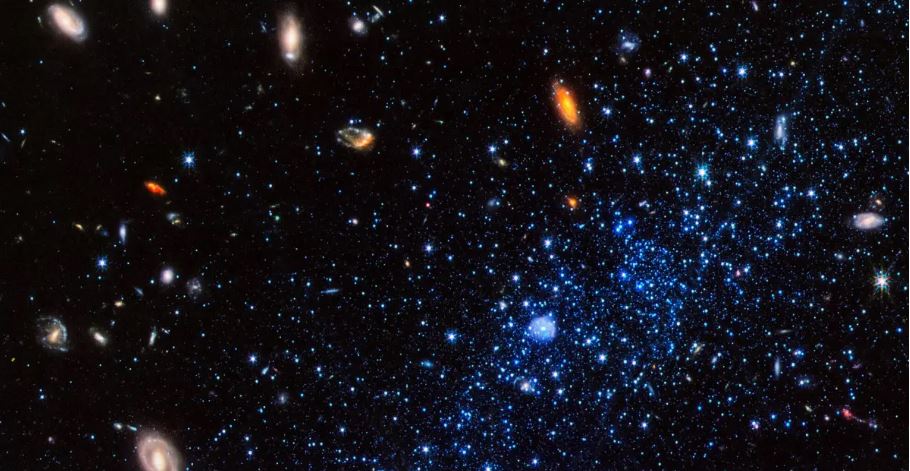
Images from the James Webb telescope are fascinating.
New telescopes, positioned in earth orbit and not hampered by earth’s atmosphere, have shown amazing pictures of space, both far and near. We now see further and further into space and, based on how long light takes to travel, closer and closer to the beginning of the universe, with greatly clearer images. Hubbell and Webb are creating quite a stir.
This once again has resulted in a discussion of what’s out there. Is there any kind of life on other planets, planets we now know exist outside our solar system? What about human-ish life, with human constitution, mobility, and ability to think, reason, and build, to refashion their environment to better suit who they are?
Or looked at another way: is there a planet out there, somewhere in space, to which mankind can flee should we despoil out planet to such an extent—or if natural processes proceed to a point—that earth becomes unlivable? That’s assuming, of course, that we overcome the time-based limitations of space travel and get to the point where humans can physically travel to that planet and arrive there not only alive but also healthy enough to set up their new habitation.
What do we need in another planet to be able to live there? Scientists talk about a planet needing a so-called “Goldilocks Zone”—that is, a part of the planet where the climate is just right: not too hot and not too cold. For example, life can’t exist on Venus, as it’s too hot and we would all fry. Nor can it exist on Mars, which is too far away from the sun, hence too cold and we would all freeze. Oh, I know some say we could adapt the Martian environment sufficiently to create a source of heat and thus develop a suitable habitation. Maybe. I’d have to study that one more.
Science fiction books talk a lot about terraforming other planets: the hypothetical process of modifying another planet’s or moon’s environment to make it suitable for supporting human life, transforming it into an Earth-like world. Check out a discussion of that here: https://en.wikipedia.org/wiki/Terraforming.
But just how rigid or flexible is the Goldilocks Zone? To look at how well humans have done in adapting to the wide range of climates Earth has, from the frigid polar regions to hot, humid tropics and hot, dry deserts, it seems we ought to be able to live on any planet that comes close to the conditions on Earth.
And, given the number of stars out there, and the number of galaxies, and the number of exoplanets we have already seen using our new telescopes, surely there’s a new earth for us. Heck, given the billions or maybe trillions of stars we can see, finding an exoplanet with a Goldilocks Zone is virtually assured. So the experts say.
Or maybe it’s the dreamers, not the experts, who are saying that.
In this series or posts, I’m going to explore the concept of a Goldilocks Zone, and talk through what it would have to include to support a transplanted human existence—or to have supported life in a way that resulted in another intelligent existence parallel to ours,
Oh my, it’s Friday and I haven’t posted yet. I started the day a little early, got involved in my special projects, including a couple of stock trades, and forgot to post. I had nothing planned, and consequently didn’t get one written.
I had a good day, getting much done. I have two letters ready to go to the P.O., and one long one sent by e-mail. Now waiting for a pie (of the frozen variety) to come out of the oven.
So, I’ll try to have something more meaningful to say on Monday.
It’s so nice to have photos, isn’t it? Of family. Of the house. Of that big snowstorm in winter. Of the beautiful landscape scenes you see on summer vacation. Family Christmas celebration.
Then there’s the old photo album that your grandparents had and gave to your parents. Aunt Jane, great-aunt Elizabeth, photos of croquet games, unknown children. How great it is to have all that family history.
Until, that is, 50 years or more have passed. You are the only one still alive who remembers great-aunt Elizabeth, and you aren’t quite sure the woman you remember was actually great-aunt Elizabeth or a neighbor lady. You take stock after a cousin comes by with a box of photos and says, “Keep what your want and do what you want with the rest.” And you realize the box probably has 5,000 photos in it.
And you further realize you have similar boxes of photos of your own family, you dad’s family, your mom’s family, your spouse’s dad’s family, and your spouse’s mom’s family. Is it really possible that you have 20,000 photos in the house?
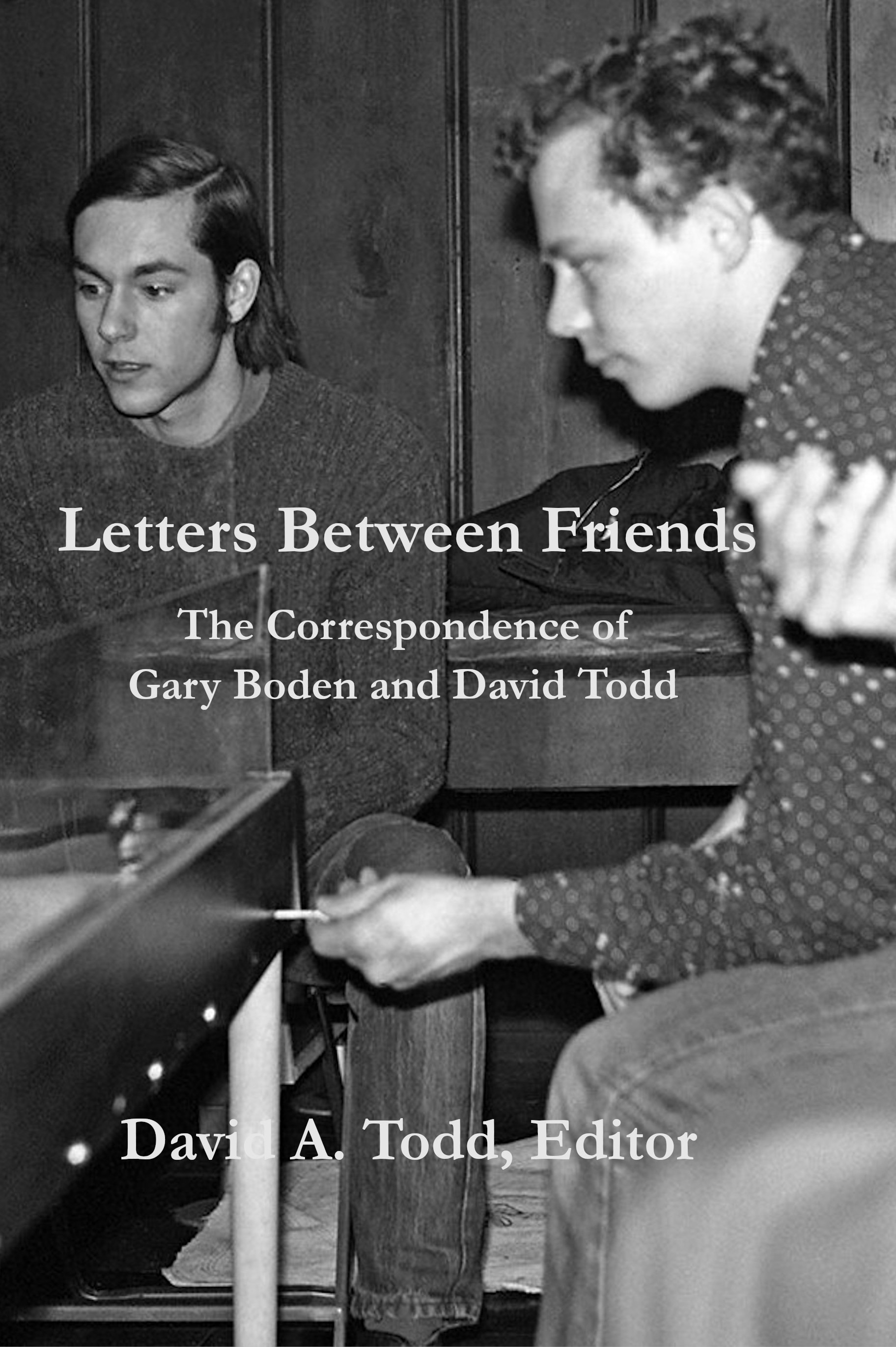
That’s where we’re at. We thinned out the book collection down to a manageable number for when we downsize. The photos come next. Digitize them, you say? That removes the stacks, but doesn’t really solve the problem. Someone, sometime, will have those digital files and wonder “who the heck are these people and why do I have these files?” No, they don’t take up a lot of physical space, but they are a type of clutter, a possession passed down that is not needed and probably not wanted. Something to leave to your children to make the decision on.
This is where we are. Probably 20,000 physical photos to do something with. At some point I’ll maybe count enough to see if my estimate is close.
Back when I was a working man—that is, working for a company—making to-do lists was both a blessing and a curse. The tendency for me was to make a comprehensive list of daily tasks, around 10 to 20 items. These often became a distraction. Which should I do next out of the twenty on the list? Most of the time I would tackle the easier, less important item just to cross something off the list, rather than the harder but most important task.
At some point I learned a trick from some efficiency expert. Your daily to-do list should have only four items on it. They should be the most important ones. Do them, cross them off your list, and then, if you have time, move on to other things. I adopted this practice with one modification: I put the four most important tasks above a line and four other tasks below the line. This gave me more of a plan to make the day really full of accomplishment.
I’ve never adopted that practice for the many things I have to get done in retirement. But since my health problems of last year, with the Dec. 22 seizure being the concluding event, severely interrupted my work, I’ve had trouble getting back to it. As I posted before, I began writing again not so long ago. I’m still working on decumulation. And our stock trading partnership taxes are due March 17. It was all becoming overwhelming. When I made a to do list, it didn’t help.
Then I remembered the four-task rule. About three weeks ago I started to begin each day making a four-task to-do list. The things I thought most important to that day went on the list. While I had big, on-going tasks, each day’s four were different. Partnership taxes were on it every day after about 3 March. But on 1 March, the first item was “Call Ezra”, #2 grandson on his birthday. I put one writing/publishing task on the list each day, and one decumulation task.
Yesterday’s four were:
finish partnership taxes
AWTHW V2 cover
transcribe journal sheets
storeroom organization
Alas, due to most of the morning being taken up with five errands, I didn’t have the full day to complete them all, and I did only 1 and 3.
Today, my four tasks are:
AWTHW V2 cover
mail partnership taxes
mark boxes in storeroom
Cheney fam photos
We’ll see how it goes. Meanwhile, I have found a use for all these pads that accumulate from unsolicited give aways. The one I’m currently using, with enough space for six days on a sheet, was given to us by the realtor who sold us our house before this one in 1991. I found it in the desk in The Dungeon a couple of months ago, and decided it was high time to use it. From the size of the pad still left, it will probably last for 3 or 4 months.