August Progress, September Goals

New month, time for a progress report and new goals. First, the progress report. Here are the goals I posted at the beginning of August.

  • Attend three writing group meetings in person. This includes making the presentation at one on Aug 9. Done. My presentation went very well, I think.
  • Blog twice a week, Monday and Friday. I think I missed one day, my first complete miss in a long time. With all that was going on, that wasn’t too bad.
  • Write at least two more chapters in The Key To Time TravelI did not complete this. I worked on one chapter, and got it mostly done in first draft.
  • Write at least two more episodes of Tales Of A Vagabond. I still don’t know what I will do with this. I need to get a little more into it before I can assess if this is a viable item for Kindle Vella. I worked on TOAV, perhaps a little more than I should have. I have completed five episodes. Now to see how I can program this, how many episodes out. At the moment, I’m thinking of setting it aside and get on other projects.
  • Continue to program the next Bible study. The tentative title is Death Kindly Stopped For MeI have now prepared lesson notes for three of the seven lessons in this series. I feel good enough about it that I can definitely schedule it to start in October. Now I need to make a trailer for it. Oops, that goals, not progress.
  • Do some marketing of There’s No Such Thing As Time Travel. Also need to close a couple of sales of this. I did a little marketing on this, but not much. Closed two sales.

So it was a so-so month. I’m not unhappy with it. I gave a lot of time to my paper files digitalization project, and likely will be doing that for a few months. That cuts into my writing time.

On to September.

  • Attend 3 writers group meetings, all in person, including making a presentation at the NW Arkansas Letter Writers Society on 9/13.
  • Blog twice a week on Monday and Friday, as always.
  • Concentrate my limited writing time on The Key To Time Travel. I won’t put a word or chapter goal. I’m in the middle of Chapter 2 currently.
  • Figure out how to make a trailer for my Bible study, Death Kindly Stopped For Me. It will be a simple trailer, but lots to study to make it happen.
  • Hopefully, get back to work on the two Bible studies I set aside a couple of months ago. One needs only an introduction and maybe 1,000 more words in the narrative to be finished. The other I estimate at 70 percent finished. Sure would be nice to find an hour here and there to work on them.

I think that’s it. Possibly more than I can accomplish, but it’s something to shoot for.

Climate or Weather

Previous posts in this series:

Establishing the series

Volcanic ash and climate change

Earth’s changing rotation

Hurricane season is upon us. So will be the claims that the number of hurricanes we see is evidence of climate change.

You hear it all the time. “Look at this cold snap. No way does global warming exist,” or “See how hot the summer it? That proves global warming exists,” or “Tornadoes, hurricanes, and blizzards show that climate change is really happening.”

If only it were that easy. We need to learn to differentiate weather from science. Weather is what’s happening today, what’s predicted to happen for the next 15 days, and maybe what the different almanacs suggest will happen over the next couple of seasons. Climate is the norm for the area, based on years and years of data.

How many years? Well, if I’m remembering what I learned in “Earth Sciences”, 2nd semester freshman year (1971), with professor Dr Edward Higbee, climate is figured on a 40-year basis. Average the conditions over the last 40 years, and there’s your climate. Once you have a new year of data, drop the year 41 years ago, add the new year, recalculate the average. A 40-year moving average.

I wonder if I’m remembering that correctly. Forty years seems a very short time to say this is our climate. Seems like a hundred, or several hundred, or even a thousand years would be better to define climate.

The problem is available data. A thousand years ago, no one was taking daily or hourly temperatures in 6,000 stations spaced scientifically around the world. No one was measuring upper atmospheric temperatures. That’s not to say we have no evidence of what the climate was 1000 years ago, but we don’t have much data.

Which leads me to wonder if 40 years was chosen more based on convenience than science. Sometime, maybe 80 or 100 years ago, someone decided to base climate on 40 years of data because that’s how much comprehensive data they had accumulated to that point. So they established the 40-year moving average as the basis for climate.

There may be some validity to the 40 years. I just don’t know. That seems short enough that the data can be skewed by certain events. For example, I said in a prior post that I thought the “mini-ice age” of the 1960s-70s was caused by air pollution—lots of particulate matter in the global atmosphere. It took a decade before the positive impacts of the Clean Air Act of 1969 began to have an impact. Maybe by 1990-ish, the atmosphere was cleaner, and temperatures worldwide were probably back to their norm. But, the data from 1950-1975 (call them the years of maximum pollution) still dominated the 40-year moving average, a.k.a. the climate. In fact, it wouldn’t be until 2015 that the impact of the mini-ice age was fully gone from the climate average and we had an accurate picture of the climate and if it was changing.

Now, if you say that the worst of the polluting years were 1950-1975, and I’d accept arguments that maybe it was a little different than that, then you also have years on either side of those that were also polluting years, just maybe not quite so much. So the 1940s and 1975-1985, say, were also polluting years, but perhaps less so. I’d make the argument that beginning in 1986, global average temperatures would start to go up as atmospheric pollution went down, and be noticeable in the change in the moving average over the previous five years, because you dropped off the polluting years of 1940-1945 and added the normal, non-polluting years (or call them the much less polluting years) of 1980-1985. And it appears you have global warming. Continue another 10 years and you drop more polluting years, add more normal years, and boom, you have higher temperatures.

The change was indeed manmade, but in this case man’s polluting his world in the 1940s, 50s, 60s, and 70s, and reducing his pollution in the 1980s, 90s, 00s, etc.

Does this make sense? It does to me. I need to study some data to see if my suppositions are correct. No, suppositions is not the right word. It’s more musing, or all-other-causes elimination. Those who claim climate change is totally manmade need to consider whether coming out of the polluting years might have skewed the data for 20 years, because for 20 years we were killing out atmosphere with pollution.

In a later post in this series, I’m going to talk about longer-term climate and whether that’s changing as a result of mankind’s activities.

What’s next? Stay tuned.

Life Conspires Against Me

The first six after-exercising bp readings were on a machine like this. The last one, which was barely acceptable, was done manually.

I had good intentions, I really did, of getting my blog post written today. But much of yesterday was taken up with critique group issues and with seeing a cousin in the hospital. His back surgery was scheduled for 3:00 pm, but kept getting pushed back, finally to 5 pm. But around 6 the surgeon came in and said the hospital wasn’t ready and they would do the surgery today.

So we went back today. The surgery happened today from 7:30 to 10:30, and we stayed with his wife. At one point, I stood up to check the progress board. Took about 10 steps then felt woozy and my steps became plodding and irregular. Before I knew it I was on the floor. I never passed out, but couldn’t stand.

I guess, if that’s going to happen to you, it’s good for it to be at a hospital. The attendant for the waiting room called for nurses from the surgery area and three of them were by my side in less than a minute. People helped me to a chair and I felt fine. I figured it was a low blood sugar episode, and they brought me some orange juice and crackers. Actually, as soon as I got to the chair it was as if nothing had happened.

Fast forward to this afternoon and my cardio rehab session. My blood pressure before exercising was 113/60. I’m normally around 105 or 110/65. I alerted the nurse assigned to me about my morning incident so that she might watch me a little closer than normal. I did my exercises fine and felt as normal at the end. A different nurse took my bp and it was 87/48—too low to let me go. She came back in a few minutes and it was 82/42. They gave me some water and it was 78/39. More water, elevated feet. It went up to 87/48ish. I walked around and felt fine. More water, more sitting. Up to 89/60. I think they poured two more cups of water into me and some more rest, and it finally got up to 92/52, ok for me to go.

They insisted on walking me to my car, except I wasn’t going to my car. I was going to the hospital next door to see my cousin. So my nurse walked me there. I felt fine, all the time after exercising, even while they were getting low readings, and while visiting my cousin and his wife. I drove the 20 miles home with no problem.

All of which leads me to believe that this morning it might have been a low blood pressure event, not low blood sugar. I messaged my doctors about stopping the (very) low dose blood pressure med I’m on. No answer yet.

Maybe my exercise and weight loss are paying off. I’ve lost 15 pounds since June 7, about 10 of that coming in the last three weeks. I’ve been walking in the early morning, usually from 6:45 to 7:30-ish, covering 1.5 to 1.75 miles. I’ve done that almost every weekday and one Saturday. Plus the exercise at cardio rehab, and I’ve been getting a lot of steps and burning the calories. Eating better, too.

We’ll see what the doc says. Maybe I’ll be off that bp med by early next week.

Meanwhile, sorry once again that I didn’t get my post written for today. Will try again on Monday.

Routine Interrupted

Dateline Sunday, 21 August 2022

If there is anyone who reads this blog regularly, including on days when I don’t make mention of a post on Facebook, they will note that I missed posting last Friday. I can’t think of the last time I totally missed a post. A few times I’ve made a minimal post late in the day. A few other times I did my post a day late. But it’s been a long time since I totally missed one.

Why did I? One reason was our son was here for a week’s visit. A few weeks back, when Lynda’s sciatica came on very strong and debilitating, he was ready to hop on a plan in Chicago and come right down to help out. We advised him not to at that time, and he complied, but he scheduled to come see us at his first opportunity after this. He came last Sunday and left Saturday.

He had to work remotely much of the week—it wasn’t vacation for him. After his workday ended, he helped us in our decluttering process. The main target was the garage. This has become a catchall place for things we wanted to get rid of, but we never seemed to get around to deciding what was trash, what was for donation, and what, if anything, actually needed to go back into the house.

We already had a donation pile. Tuesday we worked around 3 hours, sorting trash from donation vs keepers. We had a full trash barrel and a large donation pile. Wednesday evening early, Charles and I loaded that in the van and took the stuff to Goodwill. Then we worked another three hours. Thursday, I had writing critique group meeting. I worked a little that afternoon on organization, and that evening drove the car into the garage. That hasn’t happened for 15 years.

Friday evening, we drove into Bentonville, took a walk on the Chrystal Bridges Trail, then walked to the square and ate at a somewhat fancy restaurant. At least it was a good restaurant. Then it was walk around a little to find a certain store, then get some ice cream. Saturday, we took Charles to the airport, dropped a few electronic items off at the Benton County recycling facility (for a cost), came home, and relaxed for the rest of the day. I could have written a post then, but I just wanted to read. I also worked on an inside the house project: converting paper files to electronic files. I did that to 10 old letters. This is a long-term project that I do a little on each day, and hope to get done in around a year.

The other reason is that our air conditioner went out. That was last Saturday. We suffered through it until Monday our HVAC guy got here and gave us the bad news: complete replacement, costing in 5 figures. But supply chain issues means we won’t get the replacement for 2 to 4 weeks. Yuck. A man at church loaned us two portable vent-through-the-window unit. On Tuesday our HVAC man loaned us a third, It’s not quite 90 in the house as it was early on Monday, but it’s hotter than normal, and that leads to not feeling like doing much, including things like blog posts.

Now it’s Sunday. I taught Life Group this morning and will head back to the church shortly for a Teams meeting.

Tomorrow, I hope to get back to writing, something I did almost none of last week. Maybe I’ll even take time to write the next couple of posts in my climate change series.

Stay tuned.

The Summer of Major Events

I’m going to just say a few words here, a day late from my usual posting day.

This has been a summer of major events. My cardio rehab 3x per week. Our church Centennial. Lynda’s severe sciatica. My 50 yr high school reunion—as it turned out missed due to the sciatica. And now, our air conditioner goes out.

It happened on Saturday. I noticed around 1 or 2 pm that it wasn’t cooling. By early evening it was up to 84° in the house (92° outside). Naturally, at 6 pm Saturday evening, no one is coming for two days. Our HVAC guy got here at noon Monday. He determined the unit would possibly be fixable, but our best bet was to replace it. But, lead times on new units are 2-4 weeks. By mid-afternoon Monday it was 91° in the house (95° outside).

I posted something on Facebook about it, and a friend from church, who lives fairly close to us, said he had two portable units he had bought when their AC went out a few weeks ago, and he would loan them to us and help get them set up. That happened last night. By morning the temp was down to 80° in the common space and cooler in the master bedroom and kitchen, where the two units are.  We will survive the 2 to 4 weeks and, who knows, maybe the supply chain will do better than projected.

With this going on, I felt terrible yesterday and didn’t even think about this blog. I was in no condition on any of those days to pull my next climate post together, so the series is yet again delayed. Maybe I can get it done by Friday.

Losing Track of Days

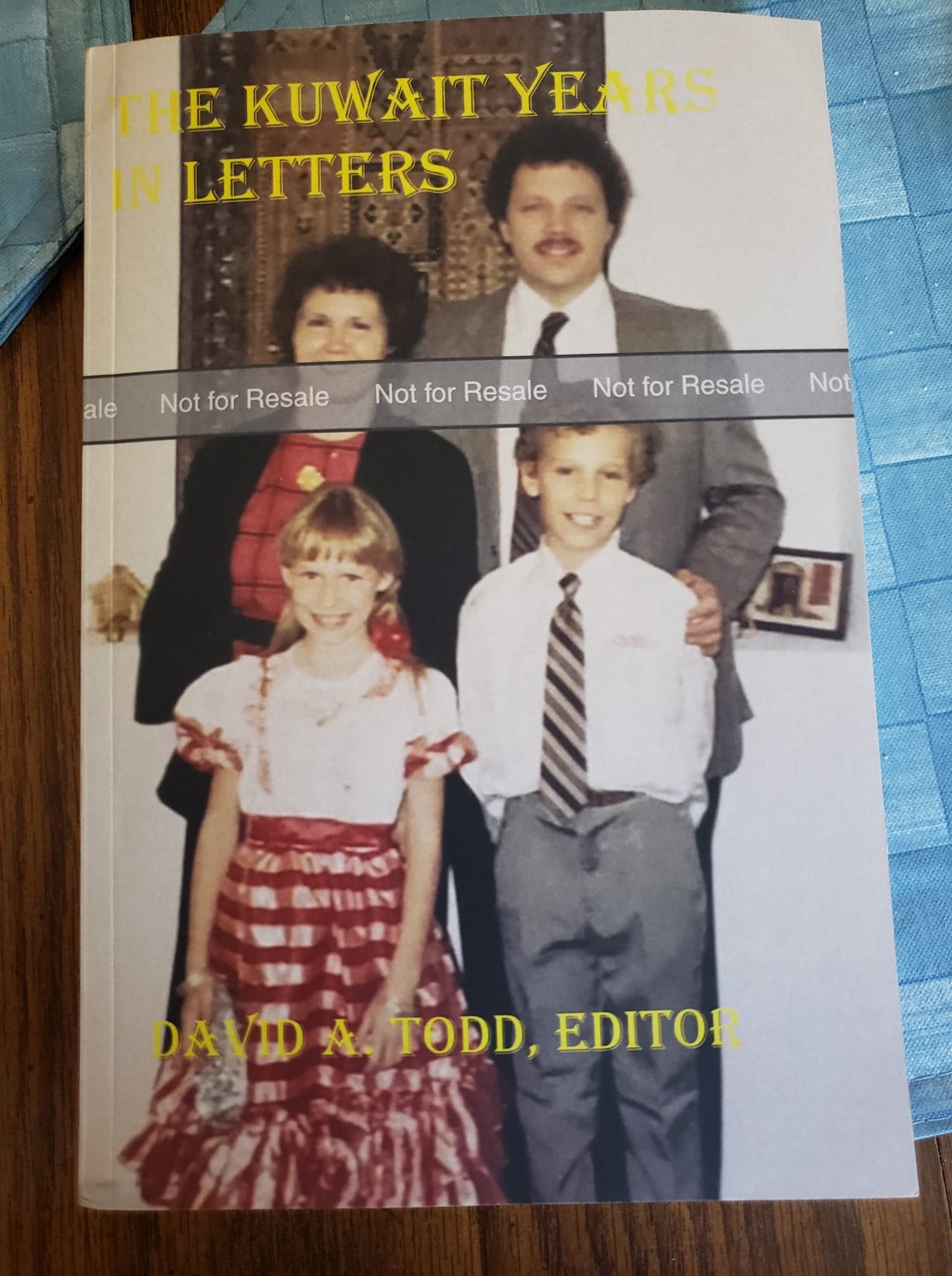
As an exercise, I gathered all my 2011 outgoing and incoming letters (most were via e-mail) into a correspondence book and “published” it to Amazon. Here’s a photo of it. 559 pages. Of course, it can never be truly published like this because I don’t own the copyright of the incoming letters.

It’s Friday, my normal blog posting day. I try to write my blog posts the day before and schedule them to post on Friday and Monday at 7:30 a.m. Yet here it is, 10:45 a.m., and I just realized I hadn’t yet done a blog post. This one was to have been another in the climate change series, but I’m not ready for it. So I’ll have to settle with a fill-in post.

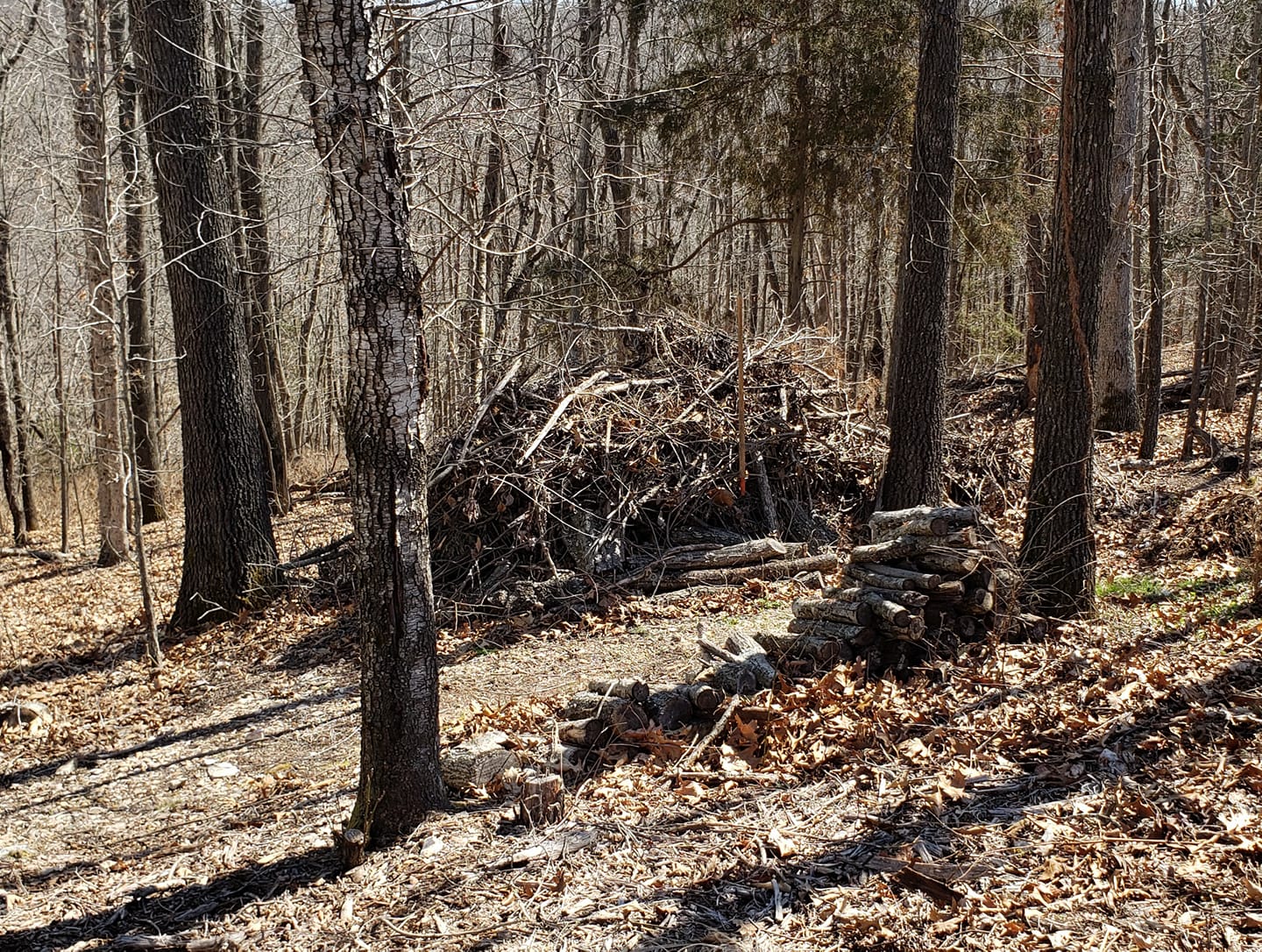
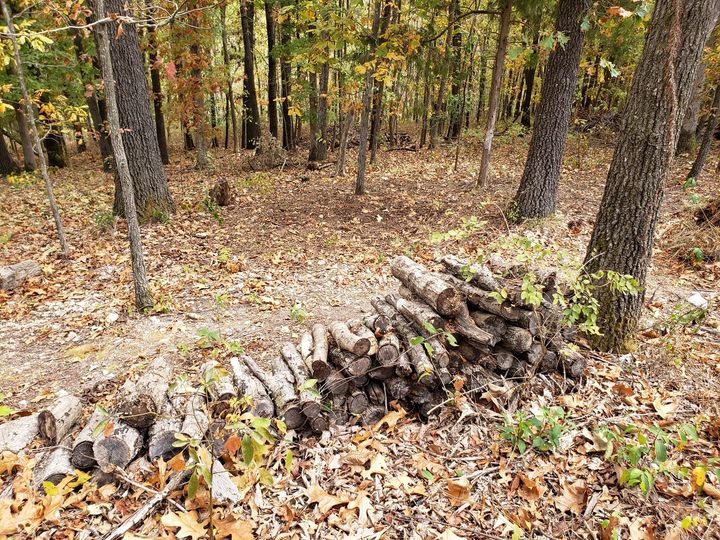
Today, my time has been taken up by busyness. I was up around 6:30 a.m. and out working in the woodlot by 6:45. I began moving cut branches and deadfall down the hill to a brush pile closer to the back of the lot. I also did more work on breaking down the brush pile near the front of the lot and moving it to the two piles near the rear. Lynda asked me to do this since the front pile was an eyesore from the street. She is right. Working on and off on it since spring, a 7-foot pile is now down to a foot and a half. The end is in sight.

After the brush pile, I did a little trimming of blackberry bushes and removal of weeds I sprayed a couple of days ago.

Back in the house, I took coffee and computer to The Dungeon. Devotionals complete, I was ready to begin my work shortly before 8:00 a.m. Friday is my biggest day for stock trading, so I had work to do to get ready for the market open at 8:30. I made seven trades and updated my spreadsheet and charts to reflect the trades.

Then it was on to writing, except my writing is somewhat shoved aside of late. Instead, I’m scanning old letters, converting them into Word files, then discarding the originals. Perhaps I need to explain.

In the late 1990s and early 2000s, I got into the habit of printing off e-mails and discarding the originals. What was I thinking? I wasn’t thinking ahead to the day when I would want to reduce the amount of my physical possessions, looking further ahead to the need to downsize as age took hold. Now here I am, with notebooks of printed e-mails (and a few handwritten or typed letters received in snail mail). Since I want to keep a record of my correspondence, I don’t want to throw them out.

I was transcribing some letters, mainly those in my genealogy research notebooks. I save each letter as a Word document in a nice and neat filing system with consistent document names. Then I throw away the printout.

My current goal is to get rid of 10 letters a day. I’m making progress at that rate. One more day and I’m done with 2002. Only three days more and I’ll be done with 2003. Most of what I’m doing now is with the scanner function on my printer. Scan the doc, pull it into Word, save it as a .docx file in the right place with the right name, correct formatting and scanner errors, and move on to the next one.

At this rate, I have no idea how long this will take. And I’m not sure I can sustain this rate and write too. The scanning and formatting of 10 printouts takes close to an hour. By that time, my mind is not on writing, and I’ve not been able to do much of that. Perhaps I need to reverse the order: get an hour or two of writing in then switch to scanning/transcribing. I’ll have to think about that.

I also did this with e-mails on my computer. I had emails saved going back to 2005, ever since I switched to Yahoo as my e-mail program. In the evening, while watching TV, I multi-tasked by saving the emails to Word files in the right place. At first I didn’t name them as well as I should have, and may have to go back—also as an evening, multi-tasking activity—and rename a number of files. All in good time.

Why this obsession with my correspondence? My love of reading letters has, I supposed, caused me to have the illusion that someone, someday, will want to read my correspondence. I realize the chances of that happening are pretty slim. But, if anyone ever wants to collect my correspondence and read it, they will find I’ve done most of the work for them.

How long will I do this? I don’t know. The notebook I’m currently working on covered 2001-2004. I finished 2001, and in less than a week will be done with the next two years. 2004 will take a little longer, probably to the end of August or even into September. After that, I may take a break from this work and get back to productive writing. The letter notebooks will be there for a later time.

Now, maybe I can keep track of the weekend days ahead, and have a better blog post on Monday.

Effect of Earth’s Slowing Rotation

The earth has a 24 hour day, right?

Not so fast. We know that earth’s rotation isn’t exactly 24 hours. It’s a little less than that. That’s why we have to add 397 leap days every 400 years. Yet, even that isn’t quite accurate enough to keep our solar-year-based calendar exactly aligned with a true solar year.

The world recognized the inexactness of the 24-hour day to measure a year. The Julian Calendar was produced during the reign of Julius Ceasar, creating the concept of a leap year and leap day. A long time later, mankind found that wasn’t accurate enough, and the Gregorian calendar was created, tweaking the Julian and getting us enough into alignment for, it was thought, a few millenia.

Now, however, we have scientific instrument so accurate that they have found that not only is the Gregorian Calendar off a little, but the earth’s rotation is not a fixed amount. It changes regularly, and can change with each rotation. So one day, it might be 23 hours, 56 minutes, and 4.1 seconds. The next day it might be 23 hours, 56 minutes, and 4.11 seconds. Or some such variation.

A while back I studied this. I wondered: Is it possible that the earth’s rotation is slowing, and what impact would that have on climate. I found data showing that the earth’s rotation is slowing. Every now and then, those that keep the atomic clock announce that they will add a “leap second” at such and such a time. Somehow all these electronic clocks we have get the message and the second is added, or they are manually reset. Maybe that’s why our analog clock in the kitchen keeps running fast.

The current info on Wikipedia’s “Earth’s Rotation” page is that earth’s rotation seems to be slowing about 2.3 milliseconds per century for the last 15 centuries. Except, in 2020, scientists noted a change, an infinitesimally longer rotation. Whether this is a trend of just an anomaly is too early to stay.

What would the effect be of a slowing rotation of the earth on earth’s climate? You would have longer consecutive daylight and longer consecutive dark. It seems like this would result in more weather extremes. Over time, the climate should exhibit more extremes.

But, how much difference can a few seconds over a milenia or two make? Surely, you will say, I’m over-emphasizing this potential factor as a potential natural cause of currently observed climate change. Maybe so. But I think we have several factors to consider. One is that we don’t know that this slowing has been at this same rate forever in the earth’s life. What if it slowed at a faster rate for a billion years and is now reaching some kind of steady state? The other is what if the cumulative effects of slowing rotation have just reached some kind of critical mass, and the climate is showing the effects of thousands of years of slowing?

I looked for answers to these questions, and didn’t find them. Possibly it’s like with volcanic activity—articles not available in 2018-2019 when I did my studies didn’t exist but they are out there now. Someday I’ll repeat my studies, but not now. For now, I see no mention of the earth’s rotation as a factor in climate change, only pat dismissals.

Volcanic Ash and the Climate

Remember the oil wells set afire by Iraq? It really happened. Here’s Lynda in June 1991 when she went back to Kuwait as a Red Cross nurse.

In my first post in this series on climate change, I mentioned the amount of volcanic ash in the atmosphere as a possible cause of global warming. I asked if global warming was in part caused by a reduction of volcanic activity over some period of time. I looked for an answer to that back in 2018-19 when I did my studies into this topic, and found nothing about it.

You might wonder why this came on my radar. The answer is what I observed in Kuwait in 1991. Those old enough will remember that Iraq, as they realized they were losing Kuwait and about to withdraw, set Kuwait’s oilwells on fire. When the US moved into the just-liberated country, they found an environmental disaster in progress. As soon as the country was secured, oil fire fighters from around the world, but especially from the USA, went to work on the fires in Kuwait. But within a couple of years, the ash was gone, the temperatures were back to normal.

The fires started around Feb 25, 1991. I went back to Kuwait in early July 1991. Some of the fires had been put out at this time, but many, possibly most, were still burning. I noticed that the ambient temperature was much lower than during my previous years in Kuwait and the Gulf region. Maybe as much as 10-15°F. Why? The ash in the atmosphere was clearly the reason.

I paid attention to this for a while. The plume of smoke was blown southwest by the dominant winds, though sometimes to the south. Areas downwind also experienced lower than normal temperatures. It took months to get all the fires out, and the lower temperatures persisted even beyond the time the last fire was out.

I’m sure we track the incident of volcanic activity. Finding info on that was harder than I expected it to be.

This stayed in my mind. The global warming (later rephrased as “climate change”) debate was just getting started at that time. As the debate built over the years, I read what I could about it. Those most vocal were, in general, people who I didn’t think very highly of. This made me skeptical of their arguments.

However, as I said in the first post in this series, it is intuitively obvious to me that mankind’s activities today produce heat compared to mankind’s activities, say, two or three or ten centuries ago. The question becomes, how much of the global warming is being caused by mankind and how much, if any, is being caused by natural causes that mankind has no control over?

As I gave this a lot of thought, I also took note of the “mini-ice age” that was observed in the 1960s and 1970s. This was a time of colder than normal temperatures in the USA and elsewhere. That ended somewhere in the first half of the 1980s, and average temperatures going up. Don’t remember the mini-ice age? You should be able to find out something about it by a simple internet search.

To me, the cause of the mini-ice age and the eventual end of it were obvious. The cause was particulates emitted into the atmosphere by industrial activity. The end of it was the result of changes in emissions brought about by the Clean Air Act (and similar actions in other countries). Passed in 1969, it took a while to retool our industrial infrastructure to reduce emissions. That began to take hold more and more each year after we began to address our crass treatment of the world we live in and the air we breathe.

Sometime in the early 2000s, these different things came together in my mind. Dump a bunch of pollutants into the atmosphere from smokestacks, lower the temperature. Stop doing that, raise the temperatures. Dump a bunch of oilwell fire ash in the atmosphere, lower the temperatures. Put the fires out, raise the temperatures.

That led me to think about volcanic activity and I wondered, are there different periods of increased and decreased volcanic activity, and might that be a contributor to climate change as the activity increases or decreases? In 2018-2019ish, I began to look for answers to this question, the internet being my main library.

Great reductions in worldwide temperature were experienced after major volcanic eruptions. 1815, 1883 (Krakatoa), 1991 (Mt. Pinatubo) were all major eruptions that resulted in global cooling. The effect lasted for years.

What about the less major eruptions? Have we tracked those, and do we have a database that shows the amount of volcanic ash disgorged into the atmosphere? And can this activity be correlated to changes in the climate? I looked for this information, even perusing the website of the organization of the organization that vulcanologists belong to, and couldn’t find it. As I said in the first post in this series, perhaps the information was available and my research techniques were at fault.

But thanks to a cousin, who posted about an article by the University of Cambridge (England), I now have access to a scholarly article about this. It was posted 12 Aug 2021, so after I did my searching. I’m quite glad to know that others are thinking about this.

This is a long, long article, filled with technical language that I’m wading through. It’s going to take me a while to digest it and be able to post about this. I’ll make other posts in the series, I think, before I get back to this.

July Progress, August Goals

First of the month. Time to review progress last month and set some goals for August. That means return to my environmental series will be delayed one more post.

First, the goals I set at the beginning of the month. They were not ambitious goals.

  • Get back on the two Bible studies I’ve set aside to complete other things. I’d love to set a goal of finishing them by the end of the month, but I think that’s too ambitious. Let me instead say to work on them in at least 10 writing sessions. I believe I worked on the Bible studies only one day. Life circumstances and changed writing interests resulted in my not being able to focus on this.
  • Attend three writers meetings, all in-person. Did this. They were three good meetings.
  • Blog twice a week on Monday and Friday. Might be a challenge with the grandkids here. Did this. Maybe a couple of posts weren’t the best.
  • Work on the programming of the next Bible study. I’ll post about it at some point. I did manage to have a couple of good sessions on this. I’m not as far along as I wanted to be, but at least I made progress.
  • Not originally a goal, but something I worked on was the next book in The Forest Throne series, tentatively titled The Key To Time Travel. I did this because the grandkids were here, and they were interested in getting started on it.

What about this month? I’m still dealing with some health issue for me and my wife. We were going to take a long road trip this month, but that’s up in the air right now due to health. I will decide on that sometime this week. I’m going to establish goals as if we won’t be making the trip.

  • Attend three writing group meetings in person. This includes making the presentation at one on Aug 9.
  • Blog twice a week, Monday and Friday.
  • Write at least two more chapters in The Key To Time Travel. I hope to work on that some today.
  • Write at least two more episodes of Tales Of A Vagabond. I still don’t know what I will do with this. I need to get a little more into it before I can assess if this is a viable item for Kindle Vella.
  • Continue to program the next Bible study. The tentative title is Death Kindly Stopped For Me.
  • Do some marketing of There’s No Such Thing As Time Travel. Also need to close a couple of sales of this.

I’ll leave it at that. This is really a tough month to plan anything, given uncertain health issues.

Disaccumulation Is Hard: Finding a Home for the “Stars & Stripes”

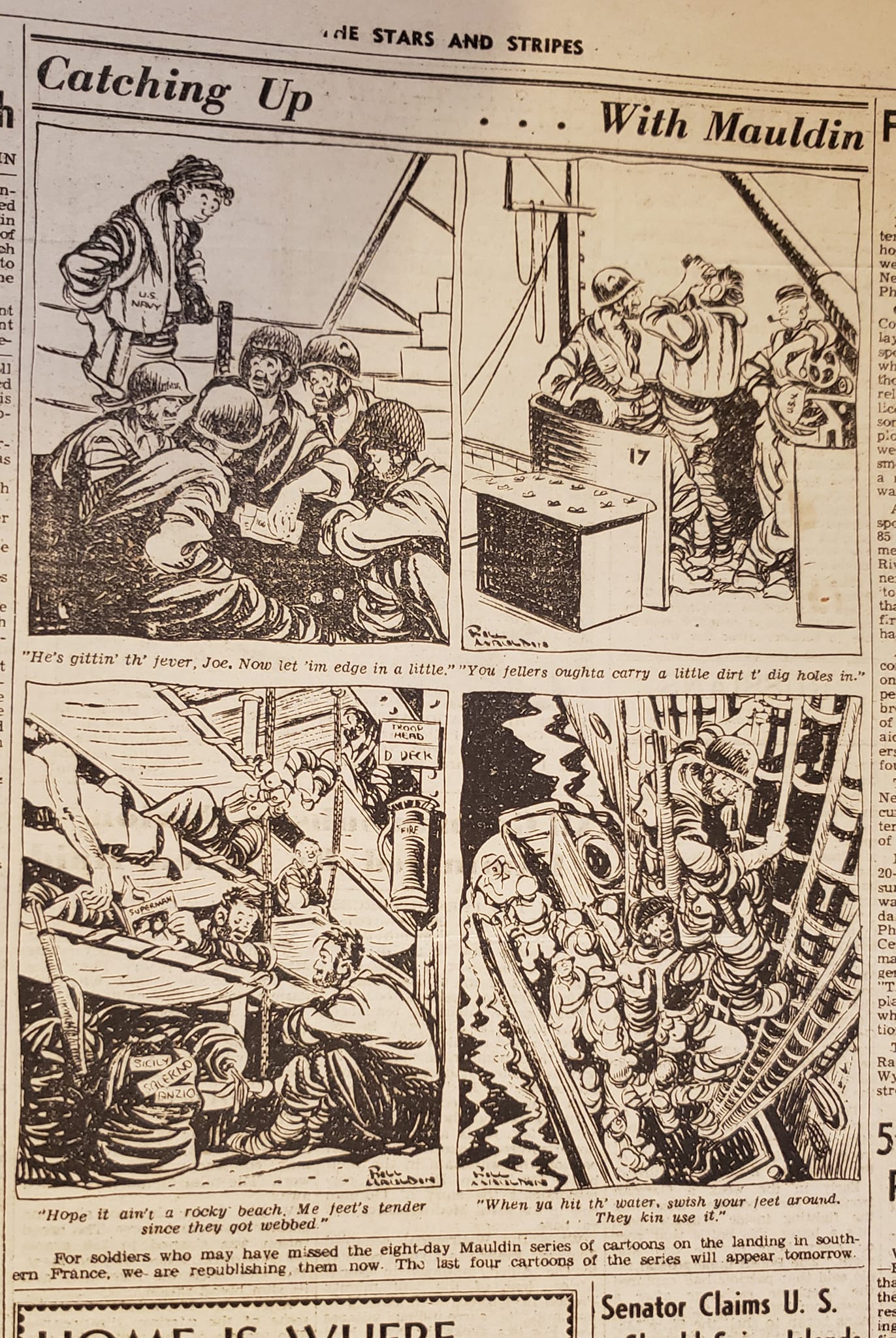
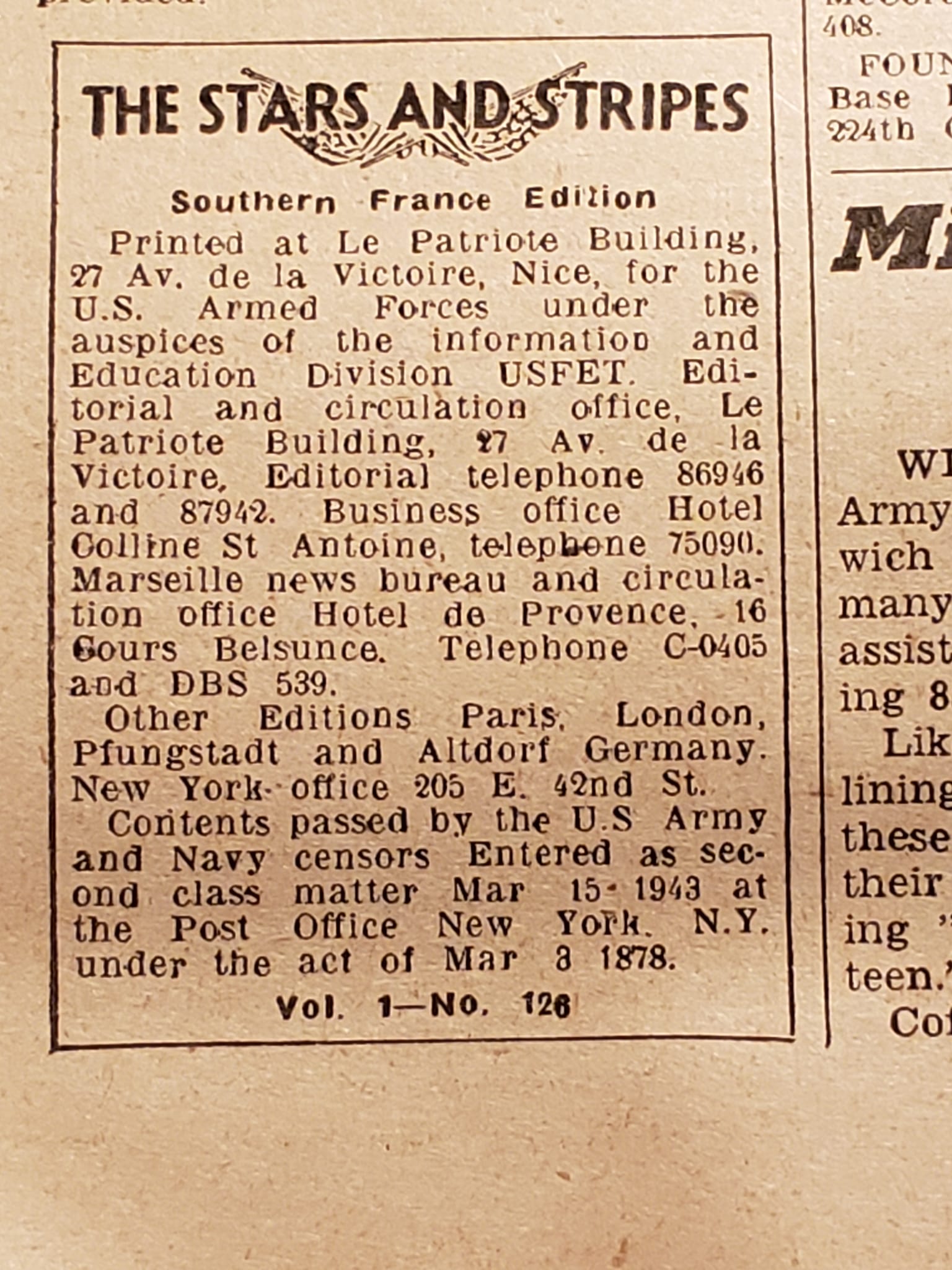
Dad’s headline in the VE edition, Marseilles, France.

Dateline 26 July 2022

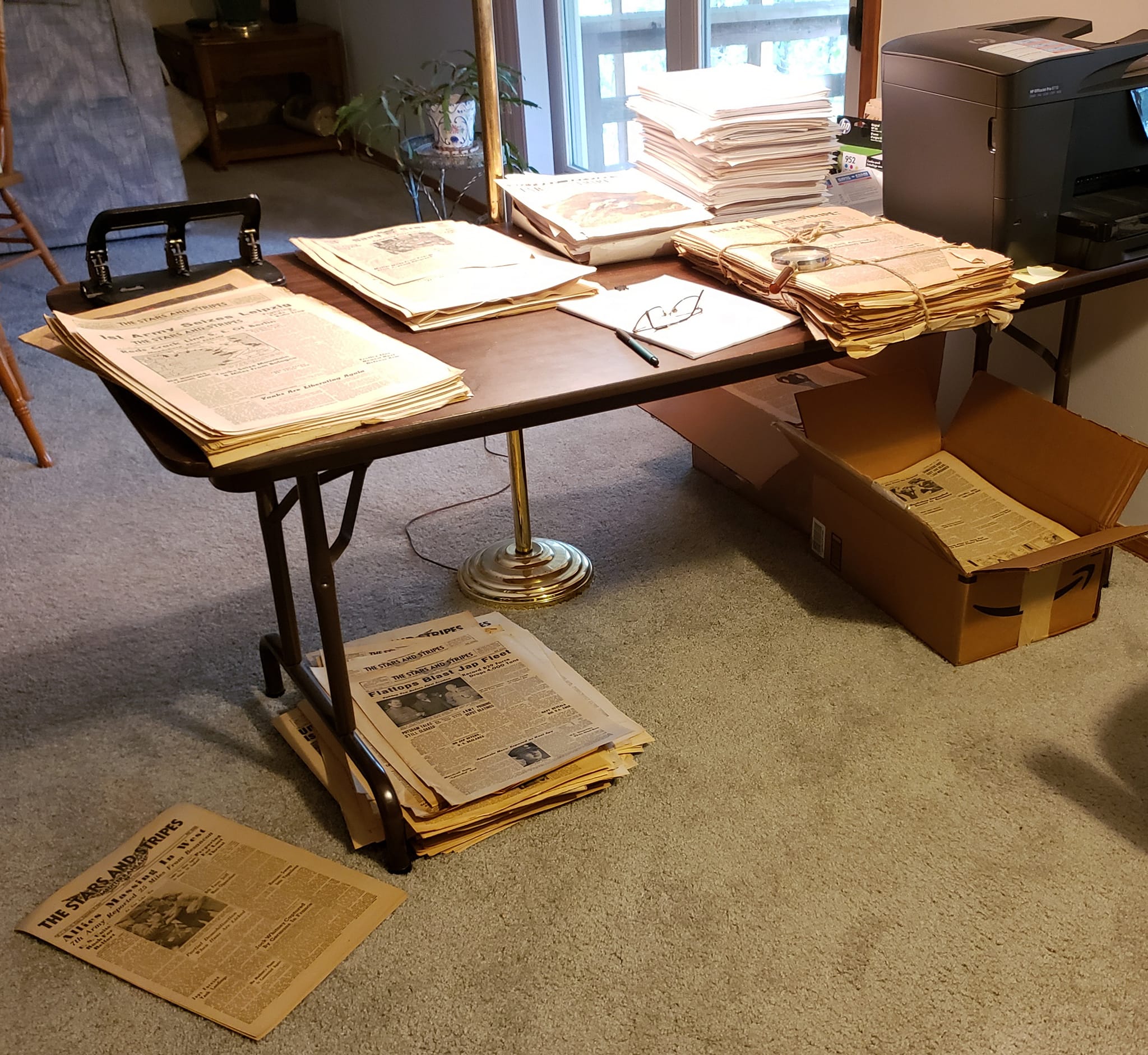
The day is surely coming when we will sell this big house and downsize into something smaller. Dis-accumulation is in progress. The next big item to go will be my collection of Stars & Stripes newspapers from World War 2.

It’s a lot of newspapers. Maybe as many as 200-300. I haven’t yet counted them.

The collection is mainly newspapers that my dad, Norman V. Todd, set type on as a G.I. during WW2 in Africa and Europe. Dad gave them to be in 1990 and I brought them home in 1997. There they sat. Twenty-five years and I’ve done nothing with them. I had such plans to read them, research them, and come to a better understanding of that war from the perspective of the men fighting it. Alas, that never happened.

I always thought these would be good to research the “fog of war”. How much printed as the war was in progress would be found to be inaccurate or untrue under the scrutiny of history?

Seven years ago I arranged to donate them to the World War 2 museum in Natick, Massachusetts. My first trip to RI since making that arrangement is coming up next month. I e-mailed the museum to confirm they still wanted them. Not receiving an e-mail in response, I called them this morning. The phone was not in service. A quick check on-line revealed that the museum closed in 2019. Bummer.

A wartime portrait, probably 1944. HIs “Stars & Stripes” insignia shows.

I’ll make this story a short one. Where could I donate them? Or was this a sign I should keep them, do that research that eluded me? I had already checked with the big WW2 museum in New Orleans, and they said they didn’t want any S&S. I checked with the S&S seven years ago, and it seems they didn’t need them.

I thought of three possible places: the University of Rhode Island, which has a special collections center at the university library; the University of Chicago, where our son works; and the Newberry Library in Chicago, an independent research library.  This morning I reached out to all three.

The University of Rhode Island got back to me first, and said they would be happy to take the collection. They often have students researching WW2, and this seems to be of value to them.

The trunk is a family heirloom. At least it will stay in the family for another generation, maybe two.

So the deal is complete. Next month these newspapers will find a new home. From 1943 to 1945, they went from Africa, Italy, and France to East Providence, then to Providence. Then in 1950 to Cranston. Then in 1997 to Bentonville Arkansas. Then in 2002 to Bella Vista Arkansas. All this time they have been in a steamer trunk that my grandfather, Oscar Todd, brought with him when he emigrated to the USA in 1910. The trunk will soon be at a different home in a cousin’s family, and the newspapers will be in Kingston RI.

In some ways, this feels like a betrayal, not to keep them in the family. I’m trying to look at it as solidifying Dad’s legacy in a permanent way, but it’s hard to do, and I’ve shed more than a few tears this afternoon on the realization that this piece of Dad will soon be gone.

Ah, well, when Dad first showed me them in 1990 (I had wondered, as a kid, what those trunks in the basement held; I learned then what filled one of them), he said he hadn’t looked at them since that trunk went into the basement in 1950. If they will now be in a place where maybe someone will make good use of them, where they will be protected and preserved, I guess that’s a better outcome. And my children won’t need to make a hard decision one day.

Author | Engineer