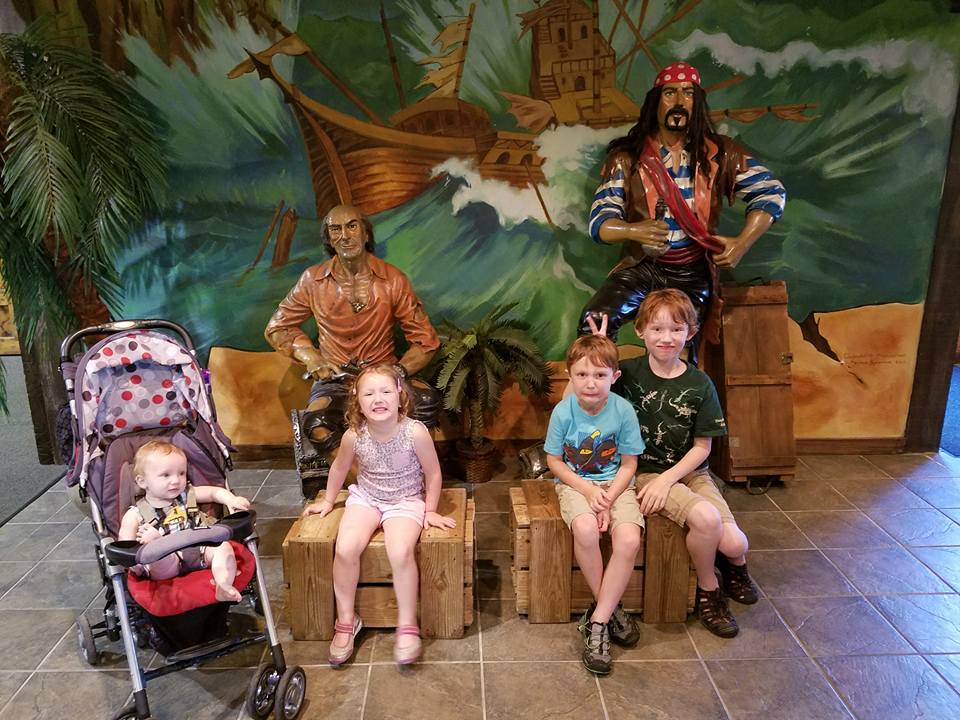
I’m writing this post ahead of time, to go live Friday June 30. At that time, I’ll be on vacation with the family in Branson, Missouri, the day before ending our trip. The question is, will I be relaxing or not?
From June 20-25 we were in Indianapolis, where our son-in-law, Richard, was a delegate to some of our church quadrennial meetings. Since Richard and Sara decided to make a family trip out of it, Lynda and I are along mainly to help. I write this before we even left. Our preparations for the trip are stressful. I can only imagine what Richard and Sara are going through.
We leave (or left, as you’re reading this) for Branson on June 26. There’s plenty to do there. Silver Dollar City will be on the agenda, as will a show, and probably a movie. Maybe even relaxing by the pool. Possibly the grandkids will allow us time to get a little reading in.
But, will I be able to relax? It’s been a busy time at work and home. I certainly need to decompress a bit. I’m just not sure this vacation is going to do the trip.
I’m scheduling this to post on the 30th. Possibly I’ll find time to come back and edit in some things about the trip, and report on my being able to relax.
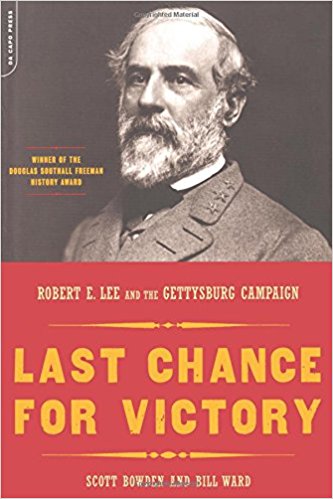
As I mentioned in a couple of prior posts, I recently finished a book about General Robert E. Lee’s Gettysburg campaign. In that book, Last Chance For Victory, the authors speak much about the second day of the battle. The first day was also covered extensively, though the third somewhat less than the first two. On the first day, the Confederate army and the Union army met almost accidentally at Gettysburg. A major clash wasn’t expected quite that soon by Lee. So the ebb and flow of the battle had to do with standing orders for both sides, and with soldiery and generalship, and less to do with strategy.
Lee’s gamble of marching north, to take the pressure off Virginia, and to force the North to end the war, didn’t pay off. This book suggests it came very, very close.
But, on the second day, it was all about strategy and tactics. So say Bowden and Ward, the authors of LCFV. Lee spent much of the night of July 1-2 working on his strategy, even before he knew for sure what the Federal positions were and which of his own forces would be available for battle. He consulted with his corps commanders: Longstreet, Hill, and Ewell. They had ideas of what to do, especially Longstreet. Lee considered that, then set a plan for a frontal attack from the west against Cemetery Ridge, held by the Union. A “demonstration” in force by Ewell’s corps from the north was also part of it, which Lee meant to develop into a full attack, depending on how the Union reacted. These plans took most of the morning to prepare, and were to launch in the early afternoon.
But, when Lee and others made a final check of the front. It was discovered that General Sickles, a corps commander for the Union, had moved his corps down Cemetery Ridge into a forward position along the Emmitsburg Road, over a mile closer to the Confederates. And, his new line had a “kink” in it; it wasn’t a nice straight line as armies are used to forming. It also left the Union susceptible to flanking movements, either around Sickles to the south or between Sickles and the next corps, commanded by General Hancock.
Bowden and Ward say this was a stupid move on Sickles’ part. This is echoed in other accounts that I’ve read, limited as they are. Sickles was too exposed, his new line too hard to defend. Yes, it was a stupid. The results of the battle “prove” this true. Sickles’ corps was decimated by Lee’s attack. They fell back—the ones that weren’t killed, injured or captured. That stupid Sickles cost the Union a functioning corps.
Except, because of Sickles’ move, Lee changed his battle plan. Instead of a full, frontal attack simultaneously by two corps, he went with an en echelon attack, that is, an attack that progressed from one end of the line to the other, not simultaneously, but sequentially, division by division or brigade by brigade. This took an hour or so to put together and issue new orders. Thus, the Confederate attack didn’t kick off until about 4:00 in the afternoon. It went well, but fell apart as dark was approaching, giving Lee no time to take corrective action.
So Sickles’ move cost the South about an hour of battle daylight. Lee famously said that they needed another half hour to make the attack successful. Why didn’t he have the time he needed? Because of Sickles’ move. So, even though his corps took heavy, heavy casualties, wasn’t his move what saved the day for the Union?
Bowden and Ward didn’t discuss the time factor, the time Sickles’ took away from Lee by changing his position. Yes, his casualties were heavy, but it seems to me it was the key move by either army in the whole sequence of the three-day battle. While Lee was adjusting his strategy and orders, the Federal army was able to bring up more troops that were arriving, and make other adjustments. Also, troops badly beaten the previous day had an extra hour to get their act together. Many were still not battle-worthy, but with an extra hour of rest, and time for their officers to rally them, they had to be in better shape at 4:00 p.m. than they would have been at 2:00 p.m., when the battle might have kicked off according to Lee’s original plan.
So, was Sickles’ move folly, or genius? Everything I’ve read says it was folly. Is their no one among the battle’s historians who see this as a good move—a costly move, but a good one in that it bought time, time that the Union desperately needed. Who am I to question military historians, a novice such as I am?
I have much more reading to do on this to know for sure. And, I don’t know that that time will ever present itself for me to be able to do this. I hope, some year, I’ll get to read more on it, and maybe write something from more knowledge.
For research purposes, I picked up a used copy of Last Chance For Victory. The subtitle is Robert E. Lee and the Gettysburg Campaign. The authors are Scott Bowden and Bill Ward. Bowden has written many books on military issues, especially the Napoleonic wars. I didn’t check into Ward’s credentials.
Lee was a professional soldier, who fought for the honor of his state. But since the cause he fought for was so wrong, his legend will always be tained.
I began reading this sometime in 2014, when I began writing my book Documenting America: Civil War Edition. As I said in a prior post, I knew I would be including a chapter on Gettysburg, so I thought this would be good research for me. The paperback copy I read is 529 pages long, not including one tabular appendix, but including the many, many pages of end notes for each chapter. I read the first five chapters (221 pages) back then, then put it aside when I put my book aside. But, this April, I went back to work on my book, so went back to reading LCFV, in early May. I think I remembered the gist of what I’d read three years ago.
This is a very good book. Bowden and Ward make a good case that Lee handled himself very well in the Gettysburg campaign, from recognizing the strategic need for it, to planning it, to executing it. Yes, the Confederacy lost this battle, but not because of Lee, they say. In their last chapter, they list 17 causes for the Confederate loss. A couple of them were things that the Union did, or their generals did. Except for that, the authors missed no opportunity to show their disdain of the Northern soldier and his generals. Concerning Lee, they listed only two faults:
failure to keep a large enough headquarters staff to do all that a commanding general needed done; and
failure to take tactical control on the third day of the battle, when it was obvious that two of his three corps commanders (and, they actually make a case for all three) failed to execute Lee’s orders, either to the level of incompetence or insubordination. Even the oft-praised General Longstreet came in for harsh criticism for his performance on the third day of the battle.
Everything else, Lee did flawlessly. That cavalry general Jeb Stuart misread Lee’s orders and went gallivanting in Pennsylvania, far enough from where Lee concentrated his army to be absent the first two days and ineffective the third day was Stuart’s fault, not Lee’s. They go into great lengths on this. Their arguments are fairly convincing. It appears Stuart didn’t follow orders, though I can see some ambiguity in the orders. That Ewell’s corps didn’t take Culp Hill on the first day was Ewell’s fault for over-emphasizing the words “if practicable” in the order. On this, I think Bowden and Ward have good grounds for criticism of General Ewell. Many military victories (so I’ve read) have happened when a field commander took the initiative and fought for and took the hill, then held it until reinforcements arrived.
But, they don’t find fault with Lee for failing to come to the front lines on the second day, when the en echelon attack was in progress, and kick his corps commanders in their sorry rear ends and get their divisions and brigades into the action as they’d been ordered to do. Instead, Lee stayed in his headquarters, watching or receiving reports on the action. If he had just taken one of General Hill’s divisions and shoved them to the front, the entire battle would have been different. Maybe.
I have a couple of criticisms of the book. The main one is that the authors fixate on a point and beat it to death. The en echelon attack is the main one, along with the failures of Ewell, Hill, Stuart, and to a lesser extent Longstreet. These were covered in the chapter of that part of the battle, then mentioned in the next chapter, the next chapter, and left beaten to death in the summary. They could have done with much less of this, either covering other things, or making the book shorter. I also found a few more typos than I would have liked. One map for the action on July 1 was labeled as for July 2. But, overall, I would say the typos didn’t bother me.
The comments on Amazon indicate this book is controversial, in that it gives too much credit to Lee, overlooks some of his shortcomings, and fails to say that the Union army and generals had something to do with the Confederacy losing. Since this is my first book to read on Gettysburg, I really can’t say much to that. For sure it is highly favorable to Lee. Whether he deserved those laurels for this battle, someone else will have to determine.
I bought this book for a whopping $0.50, probably at a thrift store. I don’t know that I’ll ever read it again. If I read more on Gettysburg it will be other books. But, for now, I’ll keep it as a reference book. I might have to refer to it again.
Our pastor is preaching from Romans for the summer, so our Life Group decided we would study it along with the sermons. I suspect Pastor Mark will have about eight to ten sermons from Romans. But, studying it as a Bible study will require many more weeks than that, perhaps as many as 25 to 30 weeks. This was the third week for the series, and pastor is in Romans 6, whereas in Life Group we are just through Chapter 2 verse 16.
I found many lessons to teach yesterday from Romans 2:1-16. I chose to focus on the statements along the lines of “you have no excuse.” The main two are 1:19-20 and 2:14-15. Here’s what those four verses say, presented herein as if they are consecutive in the book.
What may be known about God is plain to them [mankind], because God has made it plain to them. For since the creation of the world God’s invisible qualities—his eternal power and divine nature—have been clearly seen, being understood from what has been made, so that men are without excuse. Indeed, when Gentiles, who do not have the law, do by nature things required by the law, they are a law for themselves, even though they do not have the law, since they show that the requirements of the law are written on their hearts, their consciences also bearing witness, and their thoughts now accusing, now even defending them.
So, in these verses, God is saying, through Paul, that mankind is without excuse as to following Him or not. You can’t get to the gates of heaven and say, “No one presented the gospel to me in a clear way, a way I could understand it.” Nor can you say, “I’m a Gentile, and didn’t have the benefits the Jews had.” Nor can you say, “I’m a Jew. We were God’s chosen people.” In each case, God says, “You have no excuse. I made Myself plain to you. All who sin apart from the law, all who sine under the law, and you now have your eternal punishment.”
Ouch. That’s something no one wants to hear. Everyone wants to think that everyone they know who dies makes it heaven. Not so, says God through Paul.
I think I need to spend a lot more time in these few verses. Of course, in twenty or so weeks I might think that about all of Romans.
Tuesday evening I went back to editing on my book Documenting America: Civil War Edition. I finished the first round of edits about ten days ago, and decided to let it sit awhile, to give me a fresh perspective. That time passed, and so I decided it was time to edit. I have the book out with a beta reader, who I told not to hurry on it, as I wouldn’t be publishing it till sometime in July.
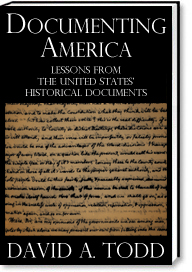
This isn’t the cover—just a temporary mock-up graphic for this post.
As I looked at the book, I decided to take a slightly different approach to this round of edits. Each chapter is organized like this. It’s built around an historical document from the Civil War era. I write a lead-in paragraph, briefly setting the scene. The original document comes next, usually heavily edited down to a reasonable amount to read. After the document comes two pieces of my writing, which together are usually shorter than the document excerpt. In the first bit, I do a little explaining of the document or of the issues it is involved with. In the second bit I try to tie the document to an issue we are facing today. My purpose for that is to show that things may not have changed as much as we think they have.
During my first round of edits, I realized that the early chapters, which were written in 2014, and the later chapters, written in 2017, had significant differences between them. The 2014 chapters make reference to world events that were hot topics then, but which, to some extent, have faded from the front pages. The 2017 chapters make appropriate references to current world events.
But, does this not show a weakness in the book? If I refer to events that don’t seem as important now as they seemed in 2014, maybe they really aren’t worth mentioning at all. I need to think about this.
So, to bet back to my editing approach. I decided in this round of edits I would just read the words I wrote, not the documents I edited. That way I get through them a whole lot faster. In three days I read and edited my words in 17 chapters. Only 12 to go, so I should finish those by Sunday.
I’m hoping that reading these parts close together, and quickly, will give me greater insight into what changes I should make, if any. It may be that I’ll leave it about as is, and add some explanation in the Introduction about the times of writing.
Either way, I’ll finish it by Sunday, then do another read-through of the excerpted documents, and see if there’s anything else I can cut for readability while not destroying the integrity of what the document says.
Well, I just finished the typical busy weekend. Yard work wasn’t too bad. I cleared the last of the leaves away from the backyard. With grandkids to visit soon, I wanted one less place for snakes to hide. Next weekend I’ll take the leaf blower and clear the stragglers out. In the front yard I sprayed for weeds, and picked up sticks. That’s a never-ending task, as the three large trees in the front yard like to keep me busy.
We made the usual shopping run. My wife came too this week, as she’s wanting to do some new things in the kitchen and wanted to make sure the grocery cart was properly filled. She also bought some herbs to plant, and some larger tomato plants. That will be work for this week.
The waterline in our street was leaking, we noticed when we came back from the store. I could see that it had already been reported (based on markings on the pavement). The repair crew was there in an hour or two, tried the simple repair, which didn’t work, so had to shut the water off. We were without it for five hours, as it turned out to be a very bad line break. It was around 9 in the evening when we got it back. I spent the afternoon doing a lot of filing of financial papers, including culling some old files. The evening was mainly straightening some things up inside, and reading. Thus ended a full day.
Sunday was Life Group (I didn’t have to teach) and church. After lunch I walked 5K, in just over an hour. I felt okay about that, given the hills in our area. That afternoon, Lynda and I went to a couple of stores for some clothes purchases ahead of vacation. I found what I needed, but she didn’t. In the evening I got the checkbook entries up to date (still have to add it), but otherwise mainly read. It was a good way to wind down.
So here it is, Monday morning. Rather than have a sense of accomplishment for what I got done this weekend, I have a feeling of dread of all I have to do today and over the next couple of days. Here’s a partial list:
Lab work at the doctor’s office this morning
Call in prescriptions
Pay company credit card bill
Call the IRS about the letter I received from them this weekend, a non-so-good letter
Pay the last bill from my procedure in January
Double-check on our reservations for Branson, since I’ve never received the confirming e-mail
Plant the herbs; figure out a place for the tomatoes
Begin the many little things in the house needed to be done before guests come next weekend
Get by the store (probably tomorrow) to pick up the prescriptions along with diabetic supplies
Order the one item I couldn’t find at the store, and hope it comes within a week, which is when I need it by
That’s enough on the to-do list. I need to get a few of them done before I think through everything that needs to be done. Needless to say, writing is on hold for a while. I’m ready to do the next round of edits in Documenting America: Civil War Edition, but will wait a couple of days to do that. Plus, it’s out with a beta reader, and I’ll want to incorporate his comments when I next work on it. I won’t be messing with stock trading much this week, and maybe not next week either. I won’t be working on much else, writing-wise. The main pages on my website are in desperate need of an overhaul, but I don’t see me getting to that for about a month.
Life is busy. I guess that’s good, though I’d go for a little less busy right now, if I could.
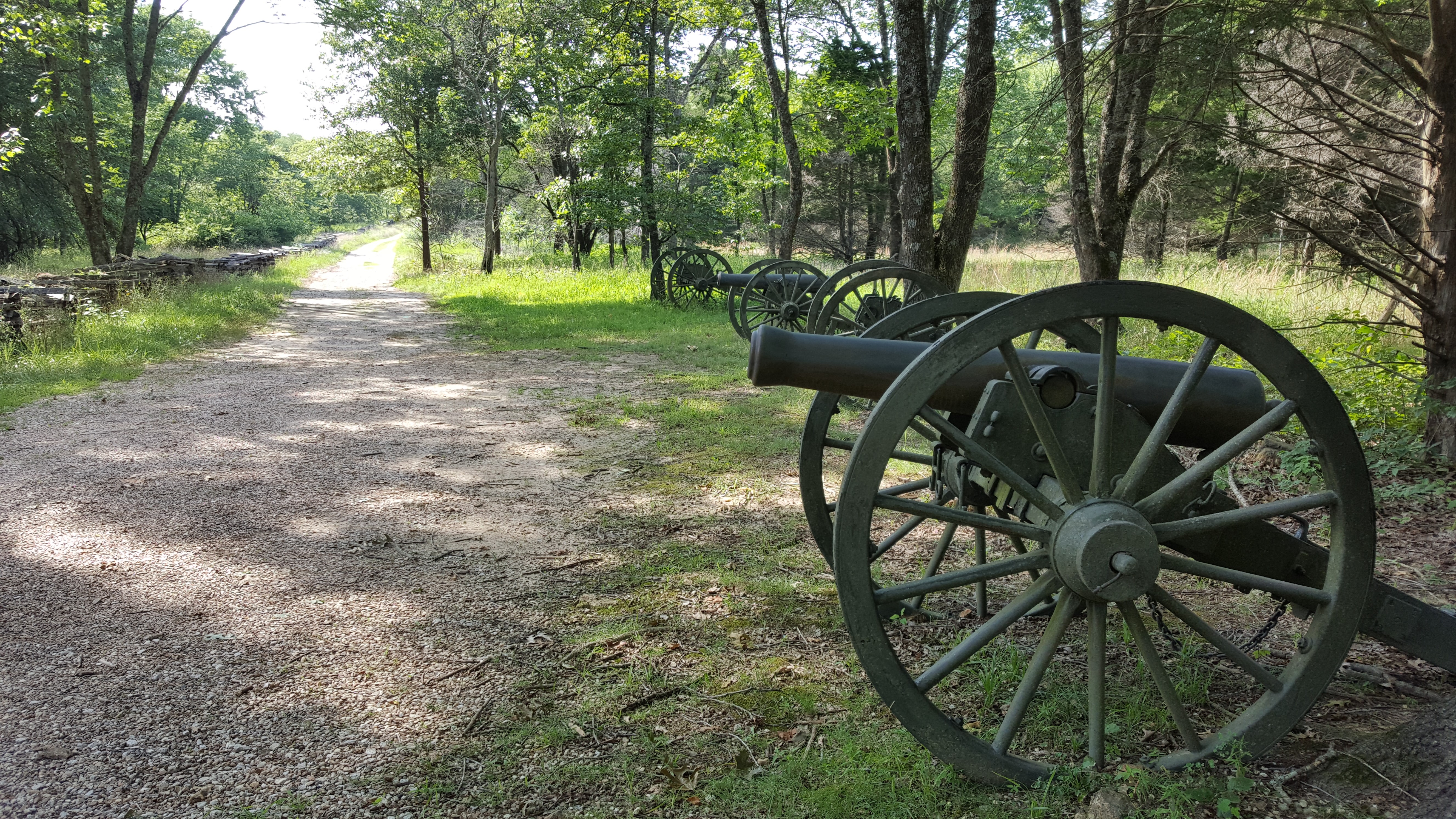
Gettysburg, a three-day battle, was had the most casualties of any Civil War battle.
As I wrote my Civil War history book, the battle of Gettysburg consumed one chapter. The documents I used were: a letter from Confederate General George Pickett to his wife after the battle; and the official battle report of Confederate General Robert E. Lee. I also read, about three years ago, part of a book titled Last Chance for Victory. This is written by two historians from Texas, who concentrated on the Confederate strategy and battle execution.
When I read this (well, part of this), I didn’t yet have my documents decided upon. I mainly read it to get an overview of the battle, about which I had known nothing, and to see what references the authors used, figuring it would be from among those references that I would select the source documents. That worked well, and I did get a fair number of suggestions for source documents.
Now, having finished the book, and having recently finished reading a different book, I decided to return to LCFV and finish it. I’m in the midst of it, having finished almost 400 pages, with another 200 or so to go.
Lee’s gamble of marching north, to take the pressure off Virginia, and to force the North to end the war, didn’t pay off. This book suggests it came very, very close.
I will eventually write a full review if it. But what I wanted to do with this post is talk about historical interpretation. As I’m reading LCFV, and not being a military tactics person, knowing relatively little about military strategy, and not being a military historian, I’m much dependent on what those more knowledgeable than me say. But, yesterday, I went to the Amazon listing for LCFV, and read through the 70-odd reviews, as well as the 50 or so comments on the reviews. I got an eyeful.
Many said the book was great, and it was about time an honest book had been written from the Southern perspective. Others, including some who appeared to be professional military historians, as well as guides at the Gettysburg National Military Park, took issue with LCFV, saying it whitewashed Lee’s mistakes in planning the battle, and in leading his subordinates on the execution. Wow. So many opinions, so little time to digest them.
Perhaps the truth lies somewhere in between. Perhaps I’ll have to read more about Gettysburg (I have another book in-house). But I have no intention about becoming an expert on this battle, or any other battle. I want to know what happened. I want to direct my readers to some original source documents, and maybe spur them on to research in other source documents, and to draw conclusions for themselves.
I realize that isn’t going to happen a whole lot. People are content to read history books, where the author(s) mainly quotes snippets from the sources, tells the reader what he’s concluded, and suggests the reader does the same. I don’t want to do that with my books. I want to help the reader get an introduction to the many (thousands) of source documents, and hope they dig a little deeper into whatever part of the Civil War interests them.
Not ten seconds before I pulled up my administration page here, I finished the first round of edits on my latest book, Documenting America: Civil War Edition. I’ve spoken about it before on this blog. I can’t remember how much I’ve spoken about the specifics.
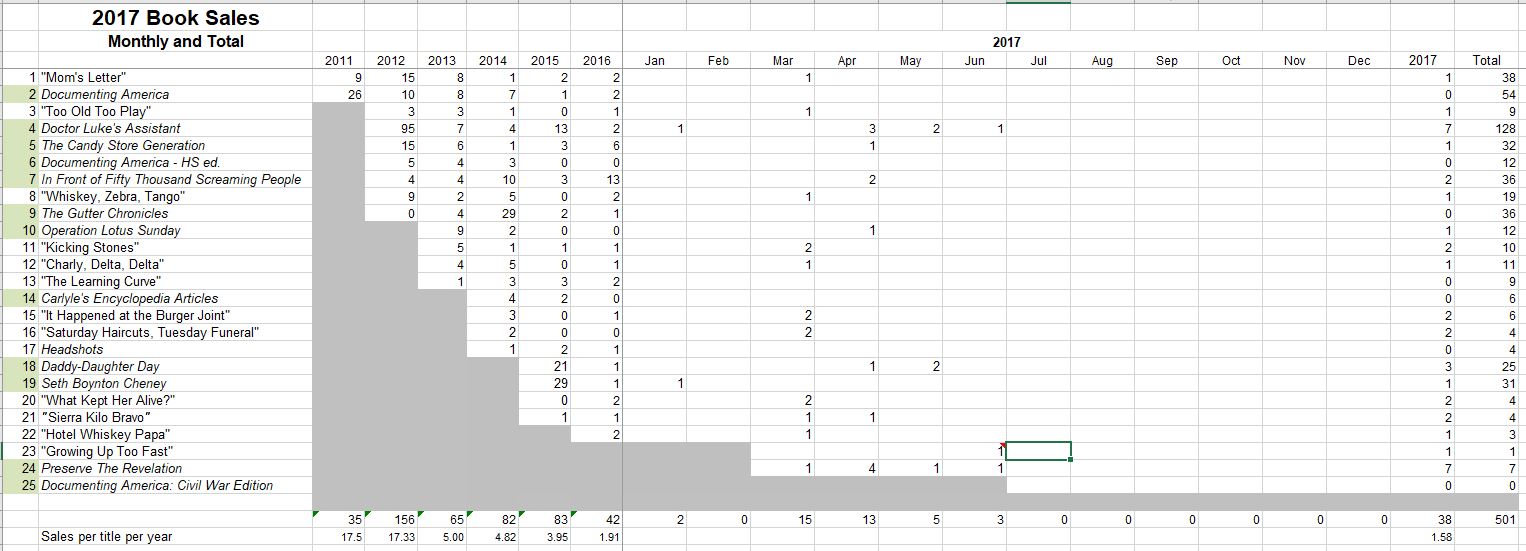
I wouldn’t call it a smash hit, but I’ve had a few sales of “Documenting America”.
In 2011 I published Documenting America: Lessons From the United States’ Historical Documents. Then in 2012 I added a homeschool version of it. In that book I took documents from a variety of eras in
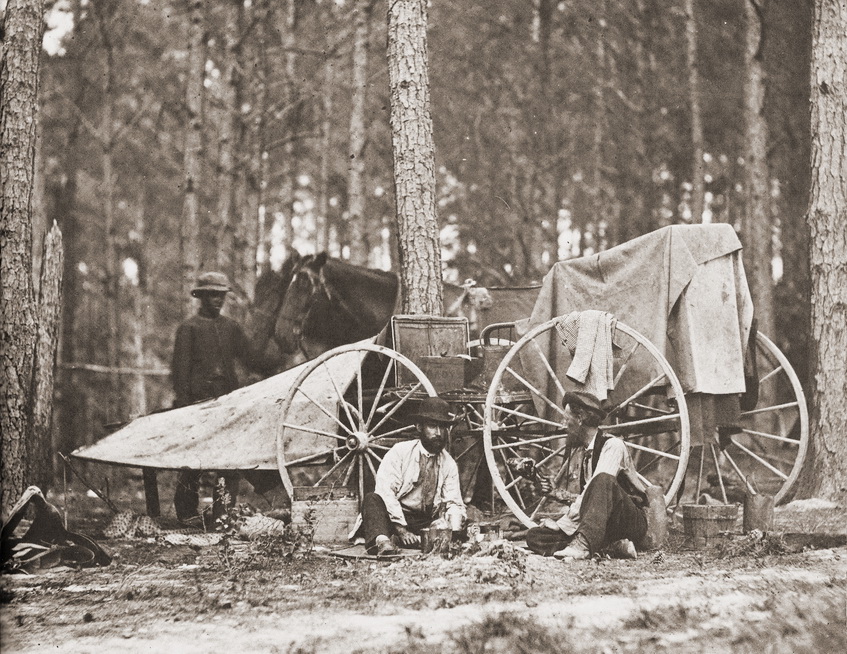
Mathew Brady did such a good job of capturing the Civil War in photos.
US history, excerpted them, commented on their historical significance, then tied them to an issue in our country at that time. My goal was to get people interested in reading original source documents, rather than just trust history books to give an accurate historical picture.
As I wrote that, I realized I could do that with a whole series of books. I had the whole of a four hundred year span to choose from for the next book. I decided to go with the Civil War. The format will be the same: choose a document; excerpt it; give historical context; tie it to a current issue. I found the writing more difficult, as writing about several military battles made differentiating those battles difficult. But I was able to persist, and completed the book about three weeks ago, having started it in 2014 but then laid it aside. This first round of edits left me pleased with it. At the risk of breaking my arm patting myself on the back, I think it does a good job of bringing historical documents to life. And, I think my historical context and issues comments are fine. I’ll do another round of edits, of course, but perhaps only one more. My guess is I’ll be publishing this in July.
Now, I’m going to paste in the Table Of Contents, so you can see what exactly is in the book.
1. A Merciless and Fearful Retribution: The firing on Fort Sumter, in the Charleston Mercury, April 13, 1861
2. I Appeal to All Loyal Citizens: Executive orders and Proclamations issued by President Lincoln from April 15 to April 27, 1861
3. The Lamentable and Fundamental Error: Jefferson Davis address to the C.S.A. Congress, April 29, 1861
4. Interests of Transcendent Magnitude: Jefferson Davis address to the C.S.A. Congress, April 29, 1861
5. Exhaustion of All Peaceful Measures: Abraham Lincoln address to the USA Congress, July 4, 1861
6. Ballots the Rightful Successors to Bullets: Abraham Lincoln address to the USA Congress, July 4, 1861
7. Shattered and Panic-Stricken: The Battle of Bull Run, in the New York World, July 21, 1861
8. The Wondrous Chain of Providence: Southern Presbyterian Church minutes, late 1861
9. His Virtues and His Merits: J.S. Rock Speech before the Massachusetts Anti-Slavery Society, Jan 23, 1862
10. Not Hastily, But Deliberately: Abraham Lincoln on Compensated Emancipation, March 6, 1862
11. Show Yourselves Worthy: Various Orders and Reports about the Battle of Shiloh, April 6-7, 1862
12. Be It Enacted: The Homestead Act, May 20, 1862
13. Disappointed and Deeply Pained: Horace Greely, editorial in the New York Times, against the conduct of the war, Aug 19, 1862
14. Worthy of a Better Cause: Report on the Peninsula Campaign, Stonewall Jackson, Aug 25-27, 1862
15. Such a Gigantic Scale: Wartime Finances in the North, October 1862
16. Sore Tongued and Fatigued: Various correspondence and reports, Sep 7-Nov 5, 1862
17. What Defeats Our Best Plans?: General Sherman on the press and wartime security, Feb 18, 1863
18. Instruments of Despotism: Vallandigham’s address at Cooper Union, Mar 7, 1863
19. The Peril of his Government: Lincoln re: habeas corpus, June 12, 1863
20. Merited a Better Fortune: General John H. Forney, Siege of Vicksburg Battle Report, July 10, 1863
21. On That Blood-Soaked Field: General George Pickett, letter to his wife, July 6, 1863; General Robert E. Lee, Gettysburg Battle Report, July 31, 1863
22. Repugnant To My Feelings: Louis Agassiz, letter on the fate of the freed Negro, August 9, 1863
23. When The War Trumpet Sounded: James Gooding, letter to Lincoln on equal pay for Black soldiers, Oct 12, 1863
24. Steps to a Great Consummation: Abraham Lincoln address to Congress on reconstruction, Dec 8, 1863
25. Unwise, Impolitic, Unconstitutional: A.H. Stephens on Habeas Corpus in the Confederacy, March 16, 1864
26. A Windrow of Dead Men: On the Wilderness campaign, May 1864
27. A Full Load of Responsibility: Sherman’s March to the Sea, November 1864
28. Unsurpassed Courage & Fortitude: Horace Porter’s account on Appomattox, Apr 1865; General Robert E. Lee’s final order to his troops, Apr 10, 1865
29. This Cup of Liberty: Abraham Lincoln’s Last Public Address, Apr 11, 1865
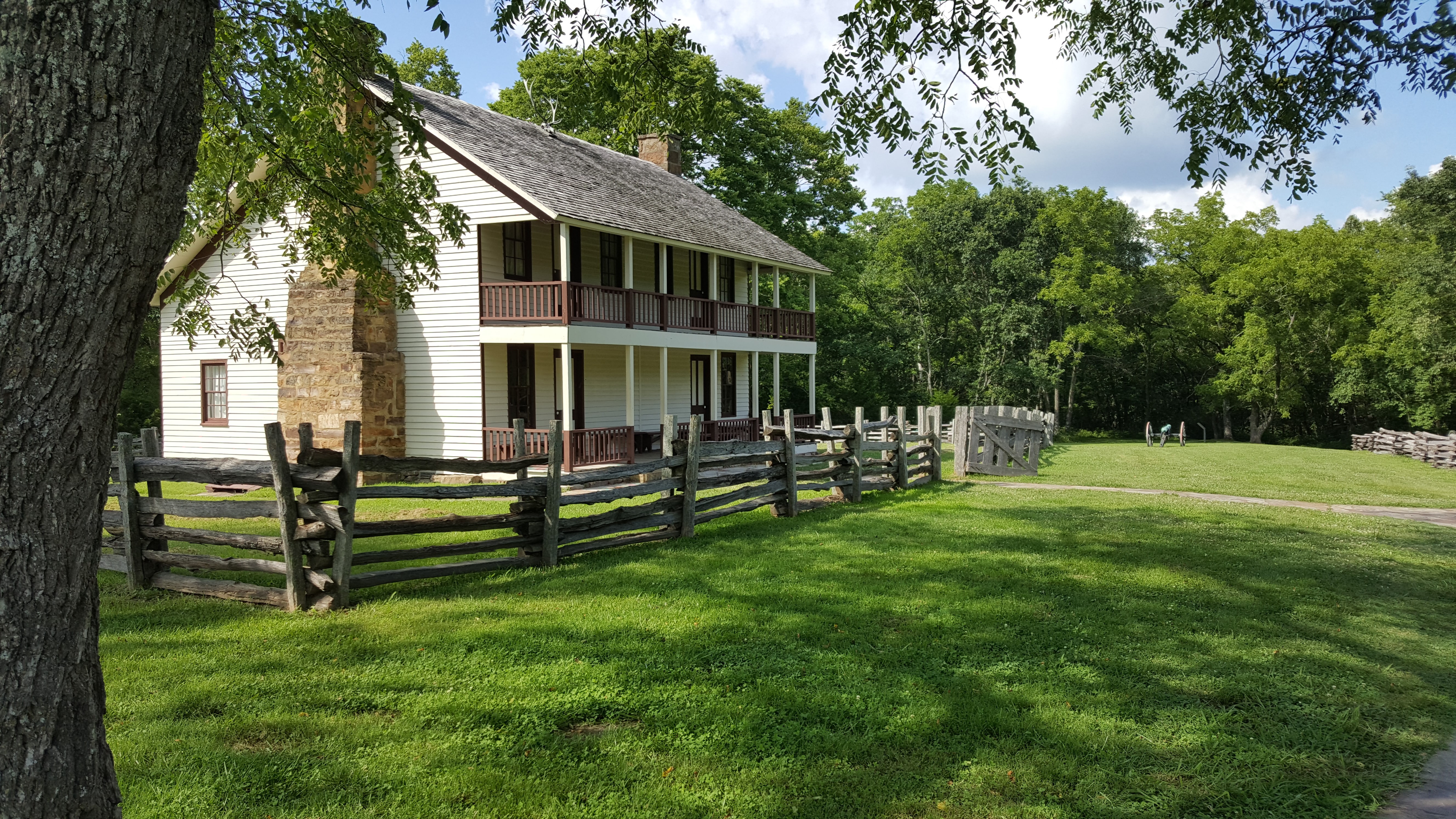
At the spray park on Memorial Day, there was no black or white—only people having a good time.
This past weekend, a four-day weekend for me, we went to Oklahoma City to be with our daughter and her family. We had missed a birthday weekend for two grandchildren earlier in the month, so we sort of made up for it with this weekend. Our time was full of typical holiday weekend stuff. I even slept out in a tent in the backyard one night with the three older grandkids.
One bad things that happened: When I woke up from a Sunday afternoon nap, sitting in a chair on their patio, with my head back against a pillar, my knee was hurting really badly. No reason for it. I didn’t trip, didn’t wrench it. Within three days it was back to normal, which includes some underlying pain until I get it replaced. Very weird. That’s actually not part of the story, but I thought you might be interested.
The story is my observations at the local spray park on Memorial Day. This is a neat park, across the street from the grandkids elementary school. We got there around 10:30 in the morning. No other cars were there, and the water wasn’t going. I thought perhaps the park was closed. However, I soon found out you turn the water on by rubbing your hand over a sensor. The water runs on a timer, and must be restarted every five minutes or so. I thought that was nice, with no wasted water. That’s quite good.
Within 15 minutes, other cars began arriving. Within an hour, the parking lot was half full and the park was awash with kids, of all ages, having a great time with the different jets, with spray guns and water balloons. In the two hours we were there, I didn’t see anyone hurt. We left there with three happy, but tired, kids, and two tired adults.
That’s not much of a story, you say, not worthy of a blog post. No, but let me finish. On this weekend, for reading material, I brought the printed first-draft of my work-in-progress, Documenting America: Civil War Edition. I started reading/editing it Sunday afternoon. I made good progress despite my nap and my knee. I was reading chapters I’d written almost three years ago, chapters about the early days of the Civil War, when the Union and Confederacy were laying out their war aims. Soon I’ll be reading later chapters. In all of these, race is a factor.
Race, first as in slavery, then as in segregation, all with the belief that the black race was inferior to the white race, and thus bondage for them was the normal condition. Short of that, segregation was next best. As I wrote in the book, the source materials I had to go through to write this were painful to read, and painful to write about. We’ve sure come a long way as a nation. I’m not saying we’ve come as far as we should, or can, but I’m glad for what progress we have made.
Which brings me back to the spray park. We were the first family there that day. The second family was a black woman with four children. Later conversation revealed one was her child, three were nephews or nieces. The third and fourth families were black. The fifth family was white. After that I lost count, or rather didn’t bother to count, because I didn’t really care. I was so happy that the white and black race can mix like that. When the park was quite well populated, I’d say the races were pretty well balanced. No one seemed to care. Splash and play feels about the same for whites as it does for blacks.
I thought of how fifty or sixty years ago, spray parks like this would have been segregated, and wouldn’t have been built in black neighborhoods at all. Yes, we have made progress.
I’ll get through this round of edits, print it again, and read it again. I’d say I’m a little more than a month away from having a finished book, ready for publication. The pain of reading the old, racist materials will pass. Hopefully the words I added to the source words will make a difference with someone, and will improve race relations just a little. That’s what I hope for.
I regularly read two publishing industry blogs to keep up with the news and opinions. One is Between The Lines, the blog of the Books & Such Literary Agency. This agency serves the Christian booksellers market, and could be considered closely aligned with the trade (sometimes called traditional) publishing model. Their five agents rotate through the week with a daily post. The other blog I read is The Passive Voice. This is by a lawyer who re-posts and sometimes comments on news from the publishing industry. This blog is closely aligned with the self-publishing model. Both blogs have a community of readers/commenters, and I comment at both blogs from time to time.
Creativity comes in many sizes. Sometimes it even comes inside the box.
Being part of the self-publishing industry, I tend to be more in agreement with TPV than with BtL. I keep reading the latter, however, because I want to keep up with news and trends in the other side of the industry. I’ve tried other blogs, but find BtL as easy to read, and it provides an adequate sampling of what I’m looking for.
So, all that said, I recently read this on the BtL blog:
“The need for money is the bane of art. Oh for the days of good old-fashioned patrons of the arts. Writing for the paycheck is the fastest way to kill a career. Each book needs to be better than the last, if we’re to build over time.”
This irks me. “The need for money is the bane of art.” How? How is commercial viability a bad thing, but whatever is not commercially viable a good thing? Commercial viability (a.k.a. artists making money off their art) indicates people are willing to pay to own or use the art. This, in turn, is a reflection of what society believes is good art. The inability of an artist, by which I mean anyone who does artistic things as a career, which would include writing, to sell his art indicates that society doesn’t believe he’s producing good art. Who is a better judge of what art is good: society, or the artist who produces it?
The writer of that phrase is implying that the need to produce art that society will accept as good and pay for somehow compromises the artist’s creativity. Follow the supposed train of thought by the artist: I need to feed myself and my family. No one’s buying the art that I produce, even though I think it’s good. But they are buying that [genre of book; type of painting; method of sculpture; etc.]. So maybe I should just emulate that artist and produce art I don’t this is good so I can feed my family. I guess I won’t be able to produce the stuff that I think is good but which society apparently doesn’t think is good.
Kids know. Sometimes playing inside the box is better than all those toys outside the box.
What’s the solution to this? The original poster said, “Oh for the good old-fashioned patrons of the arts.” Their solution: For the artist to find a source of Other Peoples’ Money, to allow them to produce art they believe is good, even though no one wants it. And this is supposed to free the artist to produce whatever they believe is good. This is supposed to advance the arts, to produce stuff that people think isn’t worth paying for?
I could go many ways with this. Is artistic creativity really stifled by having to produce art that people want to buy? Cannot an artist be creative while staying “inside the box” or “between the lines”, or within the range of commercial viability? I think they can. I’ve said often before that my favorite type of poetry is formal poetry. Give me a sonnet, a ballad, a haiku, or a cinquain any day. Give me those constraints, and I’ll produce something with artistic creativity. Inside-the-box creativity is equally creative as outside-the-box creativity.
It always amazes me that people want to pigeon-hole creativity by saying it can only happen outside the box, and that it can’t happen on the lines. It’s funny that, in wanting the maximum artistic freedom, they say creativity can only happen one way. Once again, I reject that. I believe my creativity is best released by being presented with boundaries, and, since my art is the written word, finding words that do something new and different within the boundaries.
That’s my opinion, and I’m sticking to it. Any comments?