All posts by David Todd

Immersing in Reading

Dateline: Thursday, 28 September 2023, 2:20 p.m.

It may not be selling, but at least my grandkids are reading it and seem to like it.

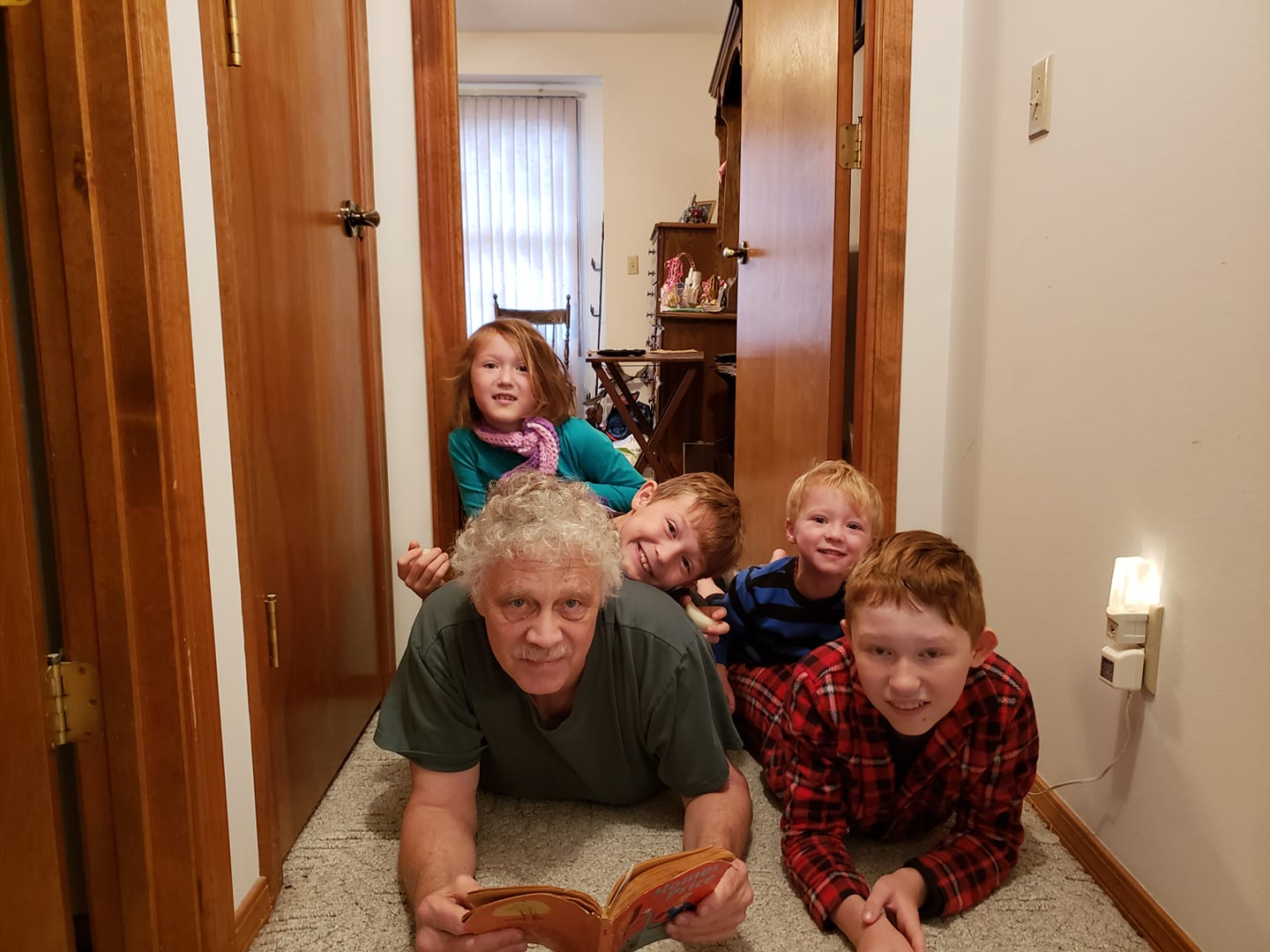
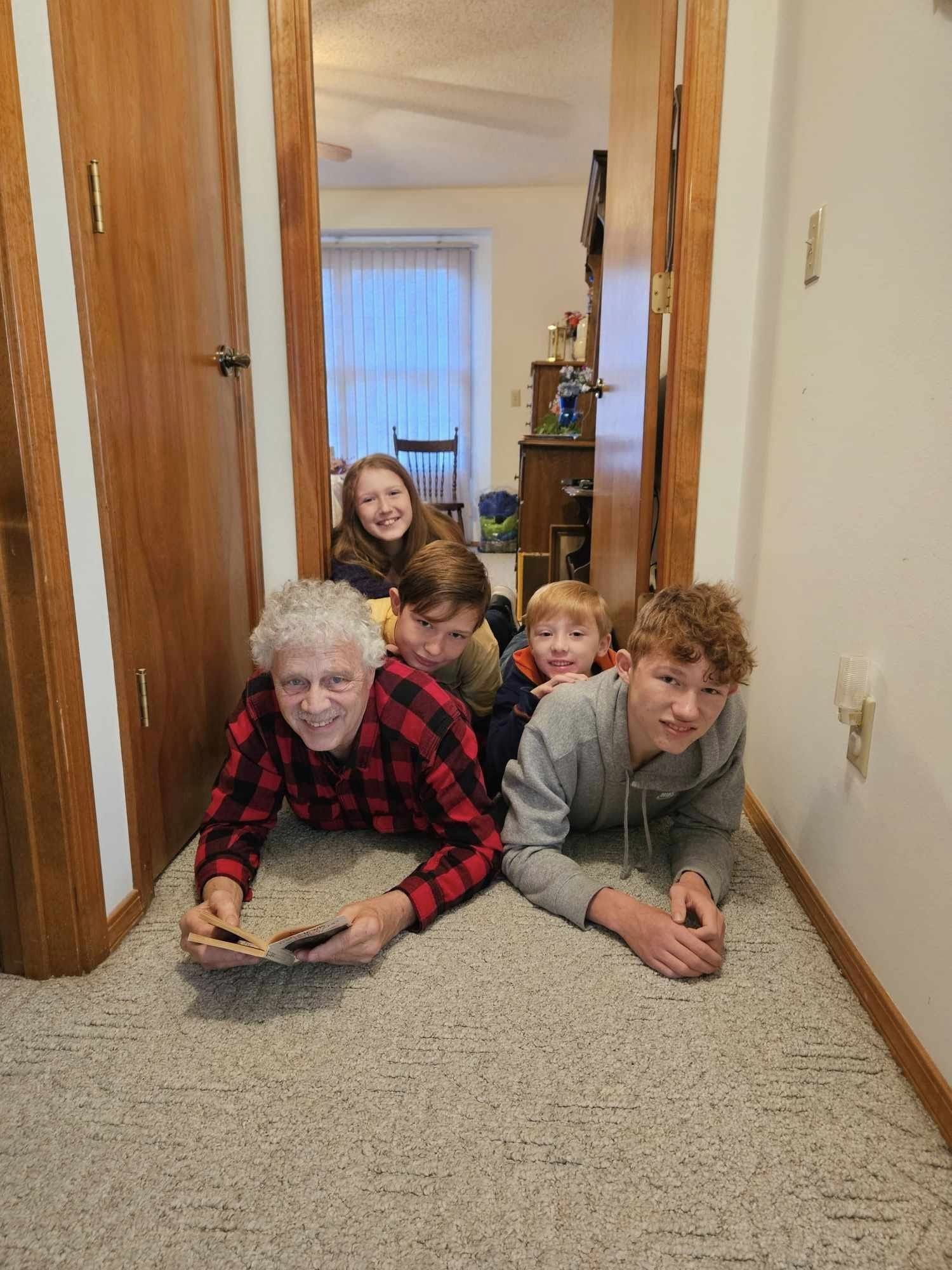
This will be somewhat of a short post. Lynda and I are currently on grandparent duty while our daughter and son-in-law are away at their annual ministers and spouses retreat. Four children, three cats, one dog, one bearded dragon, and five foster cats that will soon be going to the shelter (I hope I hope). Just for two days and two nights.

The last two days I went with my daughter on the school drop-off and pick-up run so that I could get a feel for routes and timing. Yesterday morning, I was quite stressed out about it, but after that, with some study of the map and two more times to run the route, I think I’ll be okay.

As I’m between writing projects, my free time is taken up with reading. I’m close to completing Darwin’s Century, having only 30 pages to go. I should finish it Sunday or Monday. I’m also reading a collection of C.S. Lewis’s essays on literature. These are not his real scholarly essays on medieval or renaissance literature, but rather shorter things he wrote for magazines: book reviews; criticism; stories on genres of literature; etc. They have been good, if not terribly inspiring. I imagine I’ll be another two weeks in that. I’m also going back and re-reading a book on “The Inklings,” Lewis’s and Tolkien’s literary group.

Last evening, grandson Ezra and I managed to read four chapters in Proverbs together as Ezra continues on his quest of reading the Bible through cover to cover. The previous two trips, we didn’t get in any reading time. But, then, he was gone parts of those trips and we only overlapped a day or two each time. I was also able to read with grandson Elijah in a Bible stories for children book. That was the one he picked out last evening. I’m hoping to read with granddaughter Elise a little. Yesterday, in their grandfather-imposed 30 minutes of reading time, she said she was reading in The Key To Time Travel. I didn’t see it so I’m taking her at her word. Maybe today I’ll get to observe her reading.

So far this has not found an audience on Kindle Vella. But I will stay the course and publish all 32 episodes there, the bring it out as a book at the appropriate time.

Possibly tomorrow I will begin putting a few words together on my next writing project. I’ve already created the file and the diary. That will be beating my goal by a couple of days. I don’t think that’s ever a bad thing. Meanwhile, episodes of Documenting America: Run-Up To Revolution continue to post to Kindle Vella on schedule. Episodes 1-6 are live and available for reading. Episodes 7-11 are scheduled for publication. Episodes 12-18 are edited and waiting to be scheduled. And Episodes 19-32 are written and waiting to be edited. It’s not selling either, but that’s somewhat true for everything I write.

Discoverablility is everything, and so far I ain’t got it.

I Guess I’m a Blackberry Farmer

It takes a lot of picking to get enough blackberries for eating and baking. In order to pick enough, one must first farm.

Ever since early spring, I’ve been doing a good job of keeping up with yard work. Well, mostly a good job. With all the travel we did in February through May, I fell behind a little.

But I kept at it. Before the weather turned hot, I went out almost every weekday, weather permitting, and worked 30 to 60 minutes. Once the weather turned hot, I shifted my schedule to going out first thing upon rising in the morning and putting in the same amount of time. I had planned for blowing last year’s leaves out of the yard during the first week or two of September. But I found an efficient way to do it, and got it done in four days.

So I looked around at what I needed to do next. I looked at the blackberry vines at the front of our woodlot. Aha! The very thing that needs doing. After blackberry season, I allowed the vines to grow where they wanted to. I had two separate rows, plus a mass of vines behind the second row that had newly spring up. By early September, the first row (a shorty) was still separate, but all the rest was one big mass.

I had walked the area several times around the edges of the bushes/vines/whatever you call them. trying to figure out whether it would be better to cut rows either north-south or east-west. I finally decided to keep them north-south, as they were before. Around September 10 I got to work on them. I found it a little easier to do than I expected.

Until I got to the back. To make a long story short, I was able to trim the vines into five distinct rows. They aren’t as straight as I would have liked, and I’m not sure I’m done cutting them back. But I have five rows running north-south. The total length of the five rows combined in probably 80 feet or so. Further to the south is another mass of vines that I need to decide what to do with. I would have tackled them by now except for several days of rain preventing me from doing things where it’s wet, which these vines are.

So does 80 feet of vines cut into five rows make me a blackberry farmer, rather than a hobbyist who likes some free fruit? Perhaps. The proof will be in the harvest next year.

Harvest. Using that word, maybe I’ve answered my own question.

Life Is Busy Right Now…

Verly close to finishing the book. Individual chapters going up on Vella each week.

…so busy that I didn’t prepare a blog post for today. Yesterday I worked hot and heavy on Documenting America: Run-Up To Revolution, completing two chapters and doing a little restructuring. I had a number of phone calls and messages to make regarding work to be done at the house and upcoming travel.

Consequently, I didn’t prepare a blog post ahead of time. And you get this filler post. I may come back and say a little more later. Right now I’m preparing for a City inspection of some work and our quarterly pest control treatment. Also need to call about a car in the shop, accommodations for our next trip, and something else that’s escaping me right now. Oh, yes, find out what’s the hold up on getting an estimate on some work we want done.

Possibly I’ll get back later to add something to this.

ETA, 3:01 PM Friday 22 September 2023

Well, today I finished DA:RUTR. I wrote the last two chapters this morning. I also edited Chapter 17, putting me more than halfway through the editing process. In addition, ten episodes are uploaded to Kindle Vella and scheduled to be published on Mondays and Fridays. I think that, by this time next week, all episodes will be edited and scheduled to be published.

It’s always a good feeling when you say “I’m done” with the first draft of a book. Better even when it is fully edited, and then when it’s published. At least the first part is done.

Now to figure out what to write next. Most likely I’ll move on the A Walk Through Holy Week, Part 1.

Book Review: Carlyle Letters Online

Regular readers of this blog (all two or three of you) know that I love letters. Not just to receive them, or write them, but to read them in historical collections. Some years ago, I acquired electronic files of Carlyle’s letters with Ralph Waldo Emerson. Somewhere I picked up a print copy of one of the two volumes, and then a print copy of other letters of his.

The Carlyle Letters Online is a project I’ve used frequently, with many hours of pleasurable reading and research.

From an internet search, I learned about the Carlyle Letters Online. This is a project to put all of the letters of Thomas and Jane Carlyle online in a searchable and highly usable database. This followed the print edition of the letters, which took place from 1970 to 2023, is composed of 50 volumes.

The online version began in 1999. By that time, many letters by the Carlyles that had escaped earlier detection and collection had been found. The number of letters in the online collection is over 9,000 in all, more by Thomas than by Jane.

This review is really only over the first ten volumes of the online collection. which cover the period from 1812 to 1838. I have no idea if I will ever get to the other 40 volumes. In fact, I confess to not having read every letter in Volumes 1, 2, and 3. At that time, I was trying to find letters about specific topics. Beginning with Volume 4, I have read every letter in each volume. It’s taken me a few years to do this, reading one or two letters many nights right before going to bed.

Many of the letters are to family members. Though Carlyle was a man of letters, in the volumes I’ve read, there weren’t many letters to literary men. There were some, of course. By 1838, Carlyle was just starting to gain a following. Soon his circle would expand and include more than Emerson, Mills, and Sterling. I’m anxious to get into those letters.

Thomas often writes in typical Victorian language: flowery, hard to understand, complicated sentences, many references that are now obscure. Sometimes the letters were hard to understand, at least beginning to end. He used a lot of private references we would call coterie speech.

A sample of how using the index works. Very useful and efficient.

Fortunately, the CLO has copious footnotes on many subject, making the obscure more understandable. It also has a good indexing system. A few years back the index showed on each letter—links to the items in the letter that were indexed. Type about anything Carlyle-related in the index and it brings up results with links to the letters you’ll find that item in. The illustration with this paragraph shows an example of references to one of Carlyle’s less well-known essays.

I don’t know how much time I’m going to put into reading these letters for a while. After finishing Vol. 10 I’m taking some time off from reading them. Oh, I still open the database from time to time and read a letter. I’ll get back to it in a bigger way, maybe next year some time.

While the collecting of the Carlyles’ letters took over a century, and is not over yet, it’s a massive project that has a very specialized audience. I don’t necessarily recommend people rush out and buy either the print letters or start perusing the online letters. For me, they are a source of pleasurable reading.


Nature: The Artwork Of God

I love being out in nature. Too bad my knees and heart prevent me from going on long, woodland hikes.

I think, a few posts ago, I mentioned I had a new writing idea. Not sure if it will be a book or something else. Right now, it’s just an idea not yet fully developed.

I got this idea from the book I’m currently reading, Darwin’s Century. This is a book that talks about Darwin’s predecessors among naturalists, who came up with a piece of the evolutionary theory. Darwin put them all together. The part I’m at now is about Darwin’s voyage on the Beagle, and how this impacted his intellectual journey on his scientific road. Soon it will get into the theory itself, and talk about the people who helped to “sell” Darwin’s theory to the scientific community and the world. Right now, without having looked ahead or checked the Table of Contents, I’m not quite sure where the book is going—other than it’s pro-Darwin and pro-evolution.

This is the seventh book I’ve picked up about evolution. I find the story fascinating. I have only one more I plan to read (if I can find it at a reasonable price) and re-read one other. That should complete what I feel like I need to know to be well informed about the subject.

Oh, make that eight books. I forgot about the novel I read recently that dealt with some of these issues.

These have got me to thinking about the opposition that the theory of evolution has set between science and religion. Many people who believe in God think evolution is bunk. And many people who believe in evolution think God never existed but was a manmade concoction.

The crux of the matter falls into two categories, or maybe it’s three: God’s sovereignty, creation of humans, and old earth vs. young earth. I’ve been trying to put this into succinct, short paragraphs describing what I see as errors on both sides, but I haven’t yet been able to find the phrasing I want. I’m making progress, however.

I’m tempted to put the drafts of two paragraphs in this post, but will hold off. I need to learn to finish things before posting. Suffice to say I like how the two statements are shaping up.

So what about this book, or whatever this writing idea turns into? What’s the premise? It’s that God is seen in nature, that all that we see is His creation—however He set it in motion and however it continues. Also that science is an ever-changing thing, and we need to be careful about ever saying “The science is fixed,” and basing any type of beliefs about what science says at present.

Well, this post is unfocused today. Sorry about that. That tells you where I am with this writing idea: unfocused. Perhaps I’ll get some focus before long, as I put little thoughts on paper.

Entering The World Of Kindle Vella

I don’t know how this will work, but I did it. The first episode went live this morning. The next will appear on Thursday. Then the episodes will come two a week, Monday and Thursday, until all are published.

Today is the day that I have become a Kindle Vella author.

But it was one day last week that I officially took the plunge. I won’t give the full story right now. Here’s the short version.

I’ve been working on Documenting America: Run-Up To Revolution, since June. I did the research for this back in 2021, but other writing got in the way. But I made good progress on it in June, July, and August. I felt I was working toward a schedule that might have the book published in October if everything went right, or in November if not.

Completing the fourth book in the series would feel good. I published the last one in 2019. I can’t believe it’s been four years since then. I had enjoyed writing the series and always planned for more volumes, but other books got in the way. Finally, I made the decision that this one would be next. The fact that I have more sales in this series than any other was a strong inducement to get back to this.

But my plans were interrupted by Kindle Vella. For those who don’t know, Vella is a place where authors publish their stories/books as a series. Chapters are called “Episodes,” books are called “Season.” They can be published on any subject, at any frequency the author wants.

Volume 3 of Documenting America, on the events that bought us the Constitution, was published in 2019. I waited too long for the next volume.

Vella has a combination of fiction and nonfiction titles, but fiction dominates. I’ve browsed the nonfiction lists and haven’t been impressed with what’s there.

I’ve been watching Vella a couple of months. No one really knows if it is going to be successful. I finally decided there was no downside. I publish episodes while I’m still finishing up the final chapters. Vella allows you to publish the season as a book thirty days after the final episode appears. So I put it on Vella first. That causes me to be disciplined, to keep writing, editing, uploading, formatting, and promoting. When done, I’ll pull the episode back into a book and publish it that way.

Maybe I’ll make a little money with this volume on Vella, maybe not. But the book will be published, perhaps three or four months later than intended, but it will be published. Maybe it will join the ranks of its older brothers in the series and increase my sales later on.

Here’s the link to the series on Vella. Or maybe that’s just to the first episode. The first three episodes are free for anyone to read. Some number of free tokens are available to new readers. After that, you buy tokens and use them to read episodes. I’m not quite sure of the cost to read a book like this. But check it out.

Author Interview: Susan Barnett Braun

Susan is a long time writing friend and colleague.

I met author Susan Barnett Braun at the 2011 Write-To-Publish Conference in Wheaton, Illinois. I attended that conference with the help of a generous Cecil Murphey scholarship. Susan did the same. I was one of six people who were members of an on-line writing group, The Writers View 2. Six of us in that group received scholarships. We got an e-mail loop going before the conference and agreed to meet, share meals together, and hang out.

Susan received her scholarship by other means, perhaps direct from Cec’s website. But when she got to the conference and quickly came to know of our little huddle of scholarship winners, she “crashed our party,” so to speak, and joined us for meals and other conversations.

Susan and I kept in touch afterward. She was beta reader for several of my books, providing great feedback. One of her daughters, who is talented with graphic arts software, has made several of my book covers.

What evil lurks in the organ loft? You’ll only find out on Kindle Vella.

Susan recently dipped her toe into the Kindle Vella pool. She wrote about it on Facebook, and I exchanged e-mails with her about the process and prospects, then offered to interview her here about it.

Q: Before we get into Kindle Vella, tell us a little about your writing career up to this point.
Susan: I loved to write even as a child, and wrote several books while in elementary school. I would write them out in longhand, and my mom would type them for me on the typewriter. I’d even take a few snapshots and add those in. I wrote my first book as an adult in 2011, when I wanted to write a memoir of my childhood for my 3 girls to read someday. After doing that, I attended a writing conference which further lit the writing fire. I wrote two other books in the next year or two; one a biography of “mad” King Ludwig II of Germany, and the other a children’s biography of Kate Middleton.
Q: In an e-mail to me, you implied that “Kindle Vella got me writing again”. That implies you’ve been through a dry spell, or at least a non-writing period. Is that true?
Susan: It is, as far as books go. After my whirlwind of writing the three books about a decade ago, I didn’t write more books. I just didn’t have the ideas or the motivation that I often felt when I had written my books. I have, however, blogged since 2008. That’s been great in keeping me still writing in some form. I have to say it feels good to be working on a longer work, a story/book, again.
Q: What made you decide to write a serialized story for Kindle Vella?
Susan: In June, our family took a vacation to Glacier National Park and the surrounding area. One night, we had dinner with my husband’s cousin. She is a prolific writer, and she immediately asked if I’d heard of Kindle Vella. Although the term was vaguely familiar, I didn’t know anything about it. She told me about how she’d become a big fan of Vella. It’s a different way of releasing a book, one chapter (or “episode,” as Vella terms it) at a time. She works full-time writing grants, but on Saturdays she writes on her Vella stories and then releases a couple of episodes each week. She liked the way it’s so easy to do this, plus after a story is fully released on Vella, Amazon makes it easy to convert into an e-book or paperback 30 days later. She was so excited about Vella, and spoke so highly of it, that I caught her enthusiasm and thought I might enjoy trying it too. I like the idea of serialized stories — it reminds me of the “old times,” when authors often released stories this way, but in magazines, not online.
Q: Tell us something about the story line in Phantom of the Organ.
Susan: Fiction isn’t my usual genre. In thinking about what I might write as a fiction piece, I thought of what I knew. That led me to the world of church, and specifically, a church organist. I thought I might like to try writing a mystery, and I liked the idea of combining a church with a mystery. My girls have always loved Phantom of the Opera story. All those threads came together for me, and I came up with a church organist who is practicing at night in the church, when she hears strange noises … The Phantom of the Organ was born.
Q: Rumor has it there will be a season 2 of PotO. Is this true?
Susan: Yes! My original story line took me 10 episodes to tell. I thought that was that. But then, I realized I was liking the characters and setting I’d come up with. I wanted to spend more time with them! So, I thought up another mystery for season two; this one involving items going missing from St Matthews church. My plan at this point is that I’d like to come up with four seasons. With each season running just over 10,000 words, that would be a book nearing 50,000 words. At that point, I would plan to release the story as an e-book and paperback. Can you tell I’m having fun with this?
Susan’s books can be found through her Amazon author page. That doesn’t get you to her KV story, however. Here’s the link for that. I hope you will check it out.

Book Review: John Keats, the Making of a Poet

The book title page and the frontispiece: a “Life mask” from 1816

In July, while looking around for a book to read—a book I would find interesting yet wouldn’t want to keep after reading, I saw on my bookshelves in the storeroom John Keats: The Making of a Poet. By Aileen Ward, published in 1963, this was perfect. It looked like  serious biography, the subject of poetry still holds my interest, and I didn’t think it would be a book I’d like to read twice.

Wentworth Place, where much of Keats writing took place.

Born in 1795 in London, son of a groom/stableman, Keats was one of the “Romantic era” poets. The last major one to be born and the first to die.  Before reading this, I knew his poetry and read some of it. I have, somewhere upon my over-stuffed bookshelves, a small volume that someone pulled together of best-known works, and a volume of his complete poems.

But I knew little about the man except about his tragic death from consumption at age 25. This book told me much about him. His father was a hard worker who opened a business for stabling the horses of travelers; he died when Keats was 9 and away at boarding school. His mother was a gadfly who quickly remarried upon her husband’s death, left the family for a few years, then returned in time to have Keats nurse her through the final stages of consumption when he was a teenager.

A sketch of Keats on his deathbed, 1821.

Keats took up the study of medicine and seemed to do well with it. He was at the point of launching into one of the lower-level medical sub-professions when poetry became his main interest. He began to write it and found he could do it. Alas, he fell under the influence of Leigh Hunt, who was roundly disliked by the better known literary critics. Hence Keat’s first poetry book, published in 1817 while he was still planning on a career in medicine, was also denounced by those same critics.

Despite this, Keats laid aside the medical field and took up poetry as his vocation. His long poem, “Endymion,” published and panned by the critics, is not considered a classic. According to Ward, many of his shorter poems were autobiographical, written about this or that person, or place, or event. The most famous of these is “On First Reading Chapman’s Homer”.

But Keats struggled financially, as well as in his health. He never received his full inheritances from his parents and grandparents, never earned much from his published poems, and lived without extravagance.

This biography does a good job of telling all of this, sometimes in almost too much detail. But it does keep moving and did keep my reading. I read about 10 pages a day in my noon reading time, in the sunroom our outside in the woods when the weather cooperated, and finished it in a little over a month.

I found the sources used by Ward and her way of spinning them into the story particularly impressive. Despite how old this is relative to our modern times (Keats died in 1821), it seems she was able to document close to every day of his life: when he wrote which poem and why; where he traveled; who he dined with; what his health was like at the moment. It helped that Keats left an extensive correspondence behind at his death.

I am so glad I saw this book on the shelf and read it. I rate it the full 5-stars. I’ll not read it again and it’s not a keeper. But learning about this little piece of poetic history has acted like a tonic in my reading life.

Writing Progress and Goals: Aug-Sept 2023

Time to work on a cover for the newest volume in this series?

It’s that time of the month—time for accountability of writing goals. How did I do last month vs. what I planned? First, the progress.

  • Blog twice a week, on Monday and Friday. As usual, I achieved this. Only one time did I find myself late and have to throw something together.
  • Attend three writers meetings. One writers group is folding, so I’ll only have three most months henceforth. Attended all three, as well as an online social gathering of writers.
  • Begin serious writing work on Documenting America: Run-Up to Revolution. I don’t know how fast this will go—or how slow—so I won’t set a word goal. I actually began this on Saturday, and was able to complete the commentary part of Chapter 1—first draft, of course. This bodes well for future writing progress on this book. Yes! I made some major progress on this. As of 8/31, I had 12 of 31 chapters complete. The rest have the source documents fully edited and are ready for my words to be added.
  • Read more in reference documents for my new Bible study idea. If everything gels, get started on the study overview and outline. I didn’t read any more source documents, but I did spend a little time improving the outline.
  • Continue to work on digitizing/discarding of genealogy papers. Yes, I did this, though made less progress in the last week than previously.

Now for some goals. I’m a little hesitant to set any, because my mind has been too active on some potential new projects. But, if I don’t set some goals I’m just drifting to the future instead of steering a purposeful course. So here they are.

  • Blog twice a week, Mondays and Fridays. I suspect my readers are tired of seeing that goal each month.
  • Attend three writers meetings, plus the online social gathering.
  • Complete the first draft of Documenting America: Run-Up To Revolution. This is very doable, but I will have to be disciplined, especially in consideration of…
  • .. Decide on whether to post my new Documenting America book to Kindle Vella and, if I do, get the first chapter/episode published on Wednesday, September 6.
  • Tie down the new writing idea that came to me on August 28-30. Write all I can about the idea in manuscript. No, I’m not sharing what it is now. Heck, I don’t know when I would have time to write it if it seems viable.

Enough! I’ll also be working on the genealogy papers digitization project.  I have a very large notebook open on my desk that I’d like to get all the way through in September.

Book Review: The Pilgrim’s Progress

We started reading in this book, but…

The Pilgrim’s Progress by John Bunyan is a Christian classic novel/allegory that has been around since 1678 in part and 1684 in complete version. For some reason, while I knew about this for years, I never read it.

But a couple of months ago, while browsing my bookshelves for something to read, I found this. I suggested it to Lynda early this month and she agreed we should read this.

Let me tell you, this is a hard read! The subject matter is great; the language is archaic and quite difficult to read, especially aloud. It didn’t help that the book we had was a mass-market paperback from 1968 that fell apart less than halfway through. While we were out and about for a doctor’s appointment, Lynda suggested we buy a new copy rather than power through with the loose pages. So we bought a new one.

…it fell apart, given that it was 55 years old and cheaply made. So we switched to…

The problem was that the book divisions weren’t the same in the 1968 and the newer (2008 or later) book. Bunyan’s book has lots of marginal notes and scripture references. In the 1968 book, the marginal notes are printed as headings between paragraphs. In the new book they are in the margins. Once I was able to orient to the new system, the reading was definitely easier in the new.

…this newer book. Much easier to read (better font, cleaner pages).

For those who don’t know the story, the first part follows a man named Christian, who lives in the City of Destruction. He decides to go on “pilgrimage”—the allegorical word for he became a Christian. He “leaves” his wife and four sons for his journey. Along the way he encounters many problems. He walks with a huge burden on his back. He walks alone, though frequently encounters both those who would deter him from his goal and those who would help him to reach his goal, the Celestial City.

In the second part, Christian’s wife, Christiana, decides she has made a mistake by not going with her husband on pilgrimage. She leaves the City of Destruction with her sons and Mercy, a young woman from the town. Their journey is much different than Christian’s was. They are given a “conductor”—a man named Great-Heart who will help them on their way. Their party of seven (Christiana, Mercy, the four boys, and Great-Heart) heads on the journey. Their guide advises them where to go and protects them from many of the dangers. Their party swell with additional pilgrims.

Eventually they reach the river across-which is the Celestial City. One by one they receive a message via “post”, and are given the time when they must enter the river and cross to meet their king, the allegorical description of death.

As I said, the reading is difficult. Neither of our books had modernized text or punctuation. I did some modernization as I read, but it was difficult.

I’m not going to rate this classic. And, while I suspect I will never read it again, I won’t discard the new book. I’ll find a place for it on the shelf. But the older book is going into the recycling bin.