Continuing with my library memories series. This post will likely be shorter than the last two. See them here and here.
This was a good library find, probably in 1976 or 1977.
A long, long time ago, back in the second half of the 1970s decade, I first discovered the joys of library use for other than school stuff. Lynda and I bought a home in Mission, Kansas in 1976. Early in career, early in marriage, there wasn’t much budget yet for buying books. So we found the nearest public library, and checked books out there.
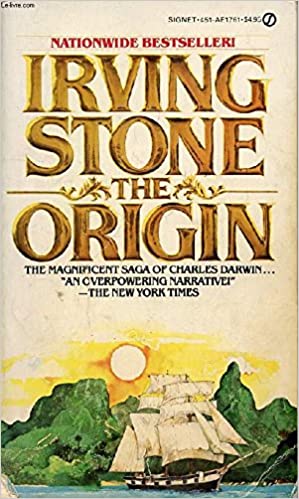
Two particular books that I got at that library stand out in my mind, even after all these years. The first was The Origen by Irving Stone. This is a biographical novel about Charles Darwin. Stone has done many of these, and I’ve since read a couple of others. This was my first introduction to Stone and to the concept of the biographical novel.
I didn’t know a lot about Darwin at that time, either, other than what I learned in science classes, that he had put together the theory of evolution and that he was English. The novel treated Darwin very fairly, I thought. He was a sympathetic character, and I learned much about him from that. I came away with a favorable opinion of him. I’ve since read Origin of Species, and reviewed it on this blog. I’m currently reading the first volume of Darwin’s letters, although I’m still in the lengthy biographical preliminaries. Hopefully I’ll be in the letters themselves in a day or two.
The second book was a genealogy book on Lynda’s family, The Cheney Genealogy. This was published in 1898, and I believe I got it via interlibrary loan rather than it being a book at our local library. At that time, I was having conversations with Lynda’s dad and paternal grandparents about genealogy, and just beginning what would become a serious effort to trace family history.
In that book, I found much information that appeared to be relevant to her family, though with a missing link that prevented me from making a firm connection to the original Cheney ancestor, John Cheney of Newbury, Massachusetts. Years later, in the internet era, I was able to build upon The Cheney Genealogy and make the connection. But it all started with my local library and the book I accessed through it.
23 Feb: Editing to add: One other book I found at that library was Rees Howells: Intercessor. This told the story of Rees Howells, a Welshman who was in the USA at the time of the Welsh revival around 1903. He went home, was converted himself, and began working in Christian ministries, including a Welsh bible college. He became known for his praying. The book tells about times of intense prayer in his personal life, in ministries, and in the life of the British nation during World War 2. The story of Howells has stayed with me, and in later years I picked up a copy of his biography for my personal library. Another good find at the Shawnee Mission Public Library.
Well, these are not profound memories, but they fit in this series, so here they are. Look for more going forward.
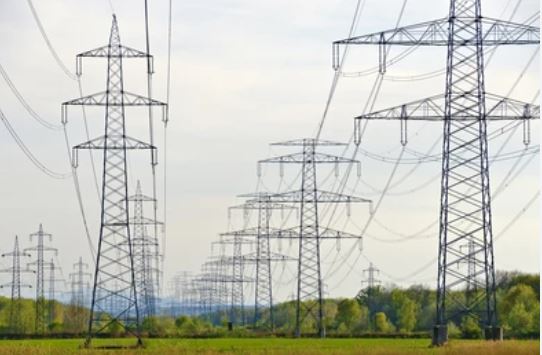
These massive structures took computer programs to design optimally. A library helped me do it well.
The first company I worked for had several libraries, one for each of the major divisions. But the main library was in the main building, Building A, on Meadowlake Parkway in Kansas City. I discovered this when I was working in Building N (or was it Q?) in Roeland Park, Kansas.
I had to go the 10 miles to Building A a couple of times a week to deliver a deck of punch cards to the main computer room, where they fed it into a modem to have the program run at McDonald Douglas in St. Louis. Don’t laugh, folks. This was 1975-76. Sometimes I would go, drop the cards off, and get the results the next day in the interoffice mail. Sometimes I was supposed to wait for the results. On those times, with nothing to do, I found the library and browsed in it.
This led to what I call two of my “career moments”, those times when you do something so spectacular that you remember it for the rest of your career and even after. At the time, I was with a group that was doing the structural design of 230 kV lattice steel transmission towers for the Eastern Province of Saudi Arabia. A few years later, I would be in Saudi and get to see those towers on the ground.
We were designing the towners using what we thought was a very good computer program, and none of us knew a whole lot about it. In the library, I found shelves full of journals of the American Society of Civil Engineers. One of those was the Power journal—many years of it—dealing with all things a civil engineer does for the electrical system. I found several articles about transmission towers. Needless to say, this was interesting reading.
In one issue, I found an article comparing the six or eight major transmission tower design computer programs (the analysis done by an unbiased party). The one we were using, the BPA program, was ranked second. The one that was first was proprietary, available only to the company that created it. My boss was about ready to head to Japan to a meeting about the Eastern Province project. I showed him the issue and article, and he took it with him and read it on the plane. In his meetings, someone criticized our program, saying it was not the best. My boss, fortified by the article and with the issue in hand, said, “Well, the ASCE Journal of Power Engineering says it’s the best program available. Look at this.” He won the argument and I was a hero. Career moment #1.
In another of those issues was an article on the general methodology of structural design of those towers. That led me to check out the manual on the BPA program and I learned it was a whole suite of programs. We were using the Design program, but after that we were supposed to go another step and do a more detailed analysis with the Analysis program. Based on what I learned, we started using it.
I learned this while a full-scale model of one of our towers was being tested in Japan, and we had a man there watching it. We worked late into the night and discovered that tower was 3% overstressed in one structural member. We quickly made a change, reran the analysis program, and had our fix, and waited for our man to make a pre-arranged call (no cell phones back then).
That morning, our man in Japan called and said that the tower being tested had failed at 97% of full load. We gave him the fix and were able waive the re-test, saving thousands or tens of thousands of dollars. Career moment #2 was in the books.
My next corporate library experience: While in Saudi Arabia, I discovered an Aramco library in Dhahran, where I frequently had to go for meetings. Perhaps it was more of a privately run public-type of library, but I’m calling it a corporate library. Whenever I had a half hour to kill between meetings, I would go there and browse. My main find was an atlas of the universe. I don’ remember the exact name. This had more than star charts. It talked about all things stellar and galactic. I learned about stars and galaxies near and far, and clusters of galaxies. I learned what a parsec was and how it was used to measure distances in the galaxies.
This gave me a fascination with space travel. I have several books queued up about that. Not sure when, if ever, I’ll get to write them.
Alas, my last couple of memories about corporate libraries aren’t good. When CEI moved into our new building in 2000, we had a great library. The then-director of training and his assistant did a wonderful job of organizing and labeling everything. And we even had a digital card catalog. This worked great from move-in day to around early 2005. A re-organization caused the library to move to less prominent quarters in our building. Things didn’t get put on the shelf the digital card catalog said they were on. This was not a downsizing but rather a reduction in usefulness at the start of the search engine era.
The downsizing came in 2009. After three or four layoffs, we were giving up our beautiful building and moving into rented offices. The library would move, but would be reduced in size. I was assigned the task of deciding what to keep, what to throw away. First, I had to organize it, which resulted in finding many duplicates of manufacturer’s catalogs and many we didn’t need. Things such as old phone books, old municipal standards, etc. all had to go. It was hard, but I made the cuts, and the truncated library barely fit in its new shelves.
That wasn’t the worst. As the Information Era came on full blast, and as we had a little growth, around 2012 the library lost much of its usefulness. It had to be shrunk even more, to maybe 125 linear feet of shelf space in a conference room. Again I had to make those hard decisions. Then, around 2016 the company decided to get rid of it all together. I took some of it into my office, got other people to take things, and got rid of everything else. Those were hard decisions to make, and hard to see valuable books and references overflowing in our dumpster.
I’ve wondered what my first company did with that library in Building A. The thought of all those journals being discarded isn’t a pleasant one. Maybe they found a way to keep it. I hope so.
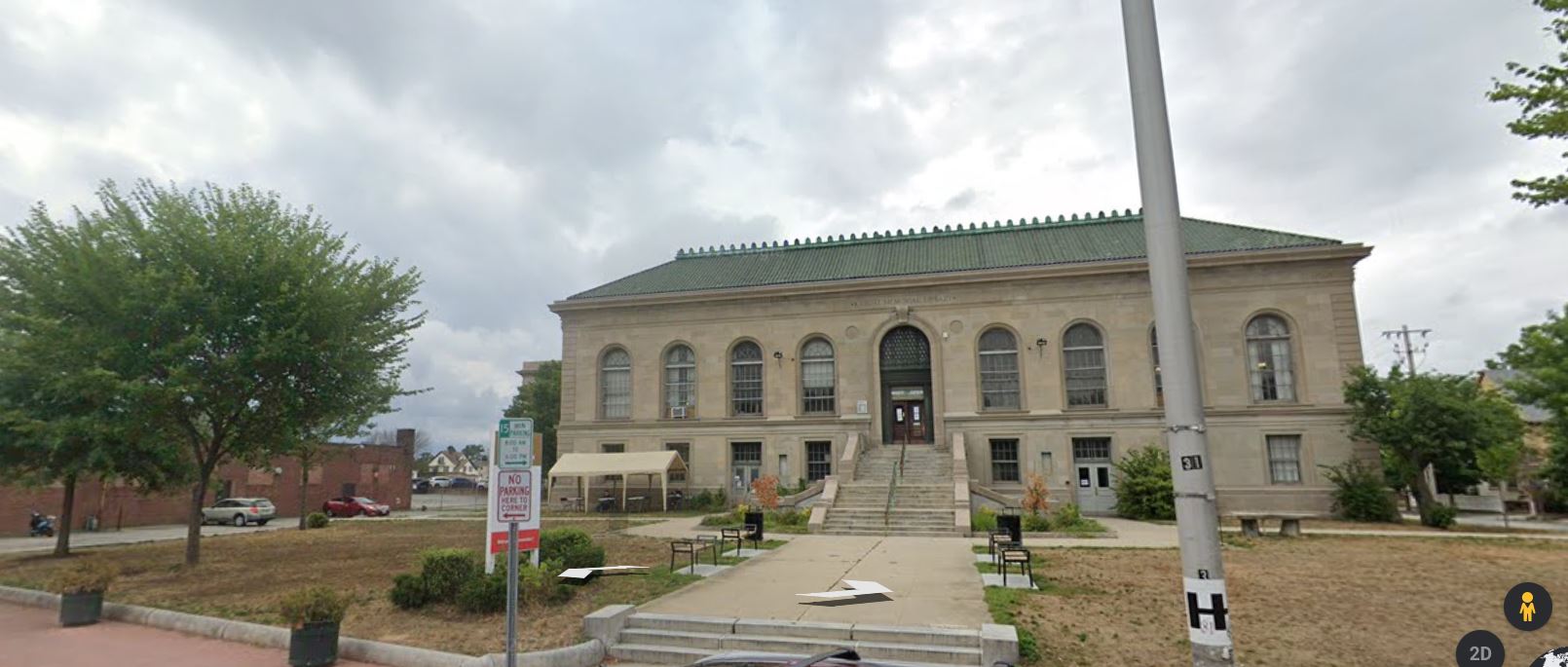
The Elmwood Ave. Branch of the Providence Public Library, in a recent picture on Google Earth. Just as I remember it.
Right now, say for the last three years, I’ve spent a fair amount of time in libraries. I met our pastor for coffee from time to time in the Bentonville Public Library. The writing groups I’m in meet in libraries, either the Rogers Public Library or the Bella Vista Public Library. So four times a month on average I’m in a library. That’s not a lot, but it got me to thinking about libraries I’ve been in and memories I have with them.
Growing up in Cranston, Rhode Island, you would expect me to have memories of libraries there, but I have none. I don’t think we ever went to public libraries in Cranston. They were a little too far to walk, there were no convenient bus routes, Mom didn’t drive much, and Dad didn’t take us, so for whatever reason we weren’t library patrons in our hometown. In my adult years, when visiting the hometown, we took our kids to Cranston Public Library—in a building that wasn’t there when I grew up—when we were home visiting Dad.
I don’t think our elementary school had a library, and I have almost no memories of a library at my junior high school. I know there was one there, and I used it, but don’t remember it. But I remember our high school library. I wasn’t in it too often, but was some. One main memory I have was a date in the library. I was talking with my sister’s best friend, two years older than me, about how I had never had matzoh (she’s Jewish). So she said she would bring some to school and share it with me. This was my sophomore, her senior year. We agreed to meet in the library a half hour before school on a certain day. We sat at one of the tables off in a corner, ate matzoh and shared pleasant conversation.
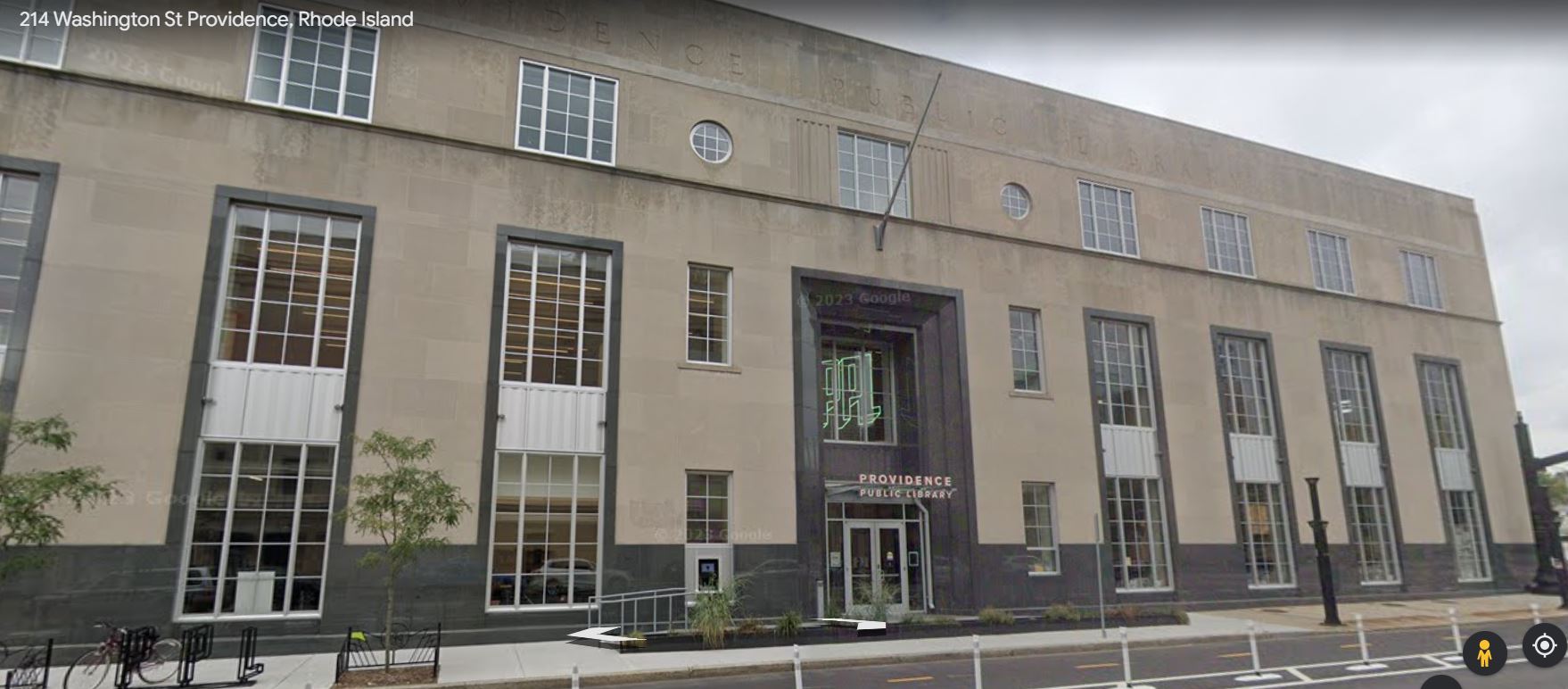
A recent photo of the main branch of Providence Public Library. Again, just as I remember it from the outside, though its neighborhood looks a little different.
You say that’s not much of a date, and you’re right. But, hey, went you had as few dates as I did (4 total in 9th through 12th grades, only 3 if you don’t count the matzoh date), you count everything you can as a date.
But, strangely enough, I have many more memories of public libraries in Providence, Rhode Island. I remember it was in 8th grade, after Mom had died. I had a history research and report assignment. Whatever library was in junior high didn’t have books that helped me. So I got Dad’s permission to hop on the bus and ride to the Elmwood Ave. Branch of PPL. We lived four house lots off of Reservoir Ave., right on a bus stop. The bus also stopped right in front of the Elmwood branch. You had to cross Reservoir twice on foot, but I think we had some traffic signals not far away.
So I did that. It must have been around wintertime, because I remember it was dark. I crossed Reservoir, caught the bus, rode it toward downtown Providence, got off at Elmwood branch, crossed Reservoir again, and entered a world of books. I still have some idea of the layout, of going to the history books and finding ten books that were suitable for the report. I spent an hour or more reading and taking notes (I didn’t have check-out privileges at PPL). I listed all ten books. Then I went home by bus. This probably happened from around 7 to 9 p.m. If memory serves me correctly, I did this a second time for this report.
As a side note, I listed all ten books in the bibliography of my report, even though I really only used two of them in writing the report. I remember I got an A on the report, and the teacher wrote, “Great bibliography!”
I may be unclear about one part of this. When Mom died in August 1965, Dad’s shift at ProJo ran from 7 p.m. to 3 a.m, usually with an hour or two of overtime. At some point they moved him to a 4 p.m. to 12 a.m. shift, usually with two hours of overtime. If his change of shift happened after my 8th grade year, it’s possible that Dad drove me to the library as he went to work, and I took the bus home. No matter.
When I got to high school, the Elmwood branch seemed inadequate, I guess, because I took the bus to the main PPL in downtown Providence and did research there. I remember it was closed stack when I first started doing this and open stack by the time I graduated high school. You wasted a lot of time waiting for someone to find the books you needed and bring them to you. The open stack shifted the searching function to you. It still took time, but at least you could look at other, nearby books once you found the one you wanted.
I probably went to PPL Main Branch between five and ten times per school year. I kind of remember the layout. In fact, I remembered where both the Main branch and Elmwood branch were and found them easily on Google Earth. They are still in the same buildings and look the same as I remember them. I suspect, of course, that the insides are much changed, as technology updates have surely been made. No more card catalogue. Yes, that’s how I found those history books at Elmwood: looking in the card catalogue, finding one book that sounded good, finding that shelf, and see a great treasure before me spread out left and right, up and down.
I hope my grandchildren will have equally fond memories of libraries. I try to take them our ours whenever they visit, and to theirs whenever I visit them. We have a sizable library of books in our own home—as they do in theirs—but it’s not quite the same.
And, before some of you express being aghast at a 13 or 14 year old boy taking the bus in Providence, Rhode Island unaccompanied by an adult, after dark, all I can say is it was a different world and a different city then. And greatly different family circumstances that required it.
In the category of “what was I thinking–I wasn’t thinking, include my post on last Friday. That was the day closest to the first of the month, the day I should have been recording my writing progress for January and goals for February. Instead, I did the post that came to mind first. Ah, well.
Here’s how I did in January relative to the goals I set.
Edit The Key To Time Travel, at least once and hopefully twice. I’m happy to say I did three editorial reads of TKTTT, and am pleased with how it turned out. One of those reads was aloud with my wife.
Finish one pass through A Walk Through Holy Week, Part 4. If time allows (which it should), make a true editorial reading of it. Also, write whatever introduction is needed, and whatever ending makes sense. And I did this too. That is, I did a devotional reading of it, one section each day. The editor in my couldn’t keep from correcting typos, clarifying the text, making the occasional change. At least this allowed me to know the two places I need to give most attention to as I do my edits in February.
Blog twice a week, Mondays and Fridays. I don’t know if I can claim this as done or not. Twice I had only what I call a “dummy” post, just a few words to let my readers know I was alive and kicking, but didn’t have time to write something beneficial.
Attend four writers meetings this month. The one I sometimes make, sometimes miss, is a lunch brainstorming session, which I plan to go to. I was able to attend only two. The two others came during my wife’s hospitalization and I wasn’t able to attend.
Work on at least one other part of A Walk Through Holy Week, probably Part 3, which is already well along. No, I did not get this done.
Plan out the next part of A Walk Through Holy Week. I will be teaching that in February through April, and last year I found it was easier to write the current part than one from a previous year. Yes, this I did get done. I have a plan for the 10-lesson series and have discussed it with my co-teacher. It begins February 26. Still more prep work to do, however.
So now, we come to February, already six days into it. Here are my goals.
Blog twice a week, on Monday and Friday. I believe this is do-able, even with certain distractions planned into the month.
I won’t be attending writers meetings this month. The first one, already passed, was snowed out. The three others come while I’ll be out of town.
Edit and complete A Walk Through Holy Week, Part 6. This was Part 4 until I restructured the series last month through some serious planning. That wasn’t one of last month’s goals, but I did it. I begin that editing today. Part of this goal is to, at the end of February, have a publication-ready book.
Begin work writing AWTHW Part 7, simultaneously to when I teach it. That worked well last year on part 6 (was part 4 before restructuring).
Get TKTTT to beta readers and receive their feedback back. I began this process last Friday. Hoping two of my grandchildren will read it this week and next. And I have one other family to check with.
Work with the cover designer of TKTTT.
That seems like enough. I’ll check back in on March 3, report how I did, and post some goals for March.
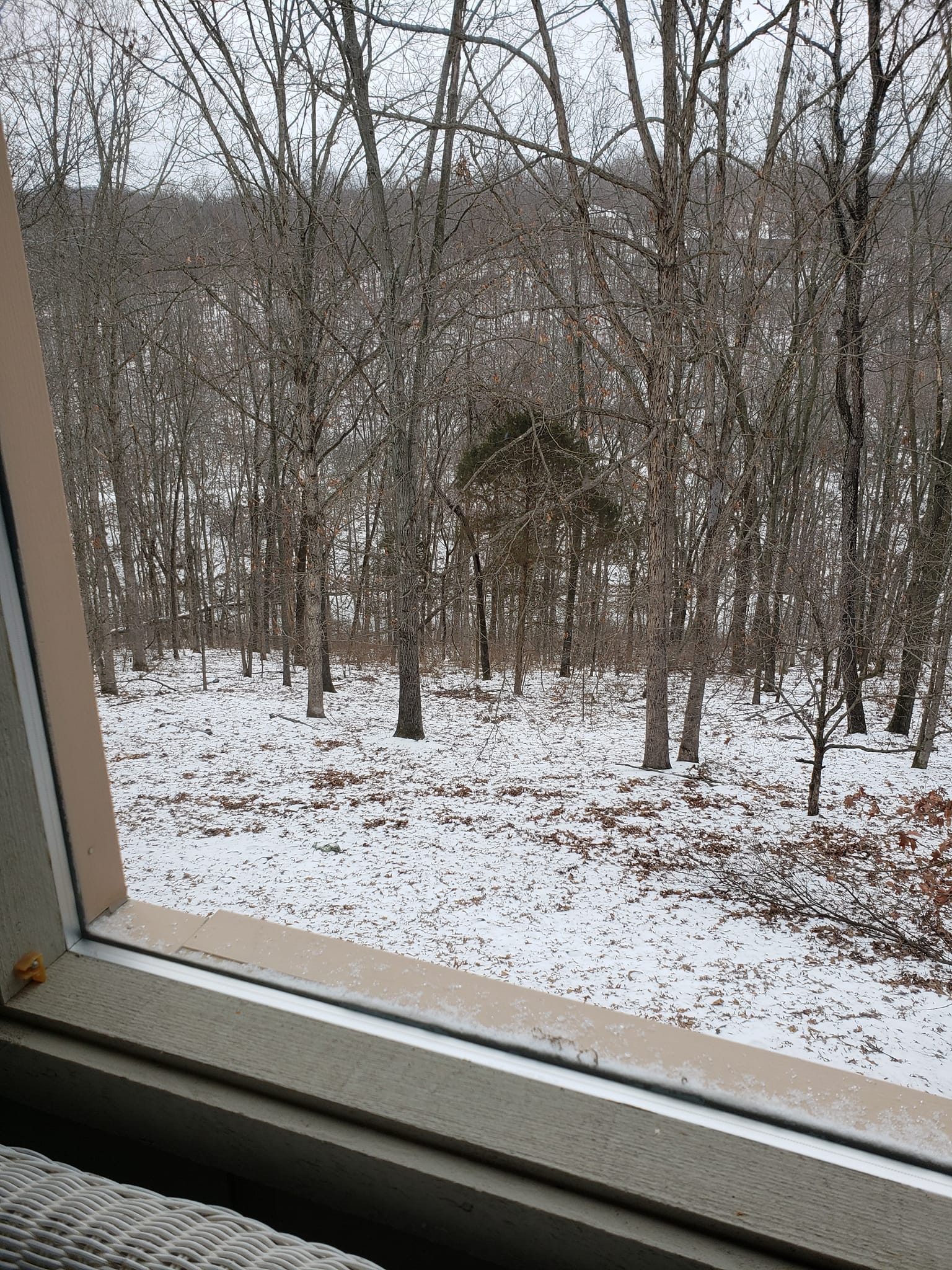
It’s hard to see, but in this photo are three white ribbons (paths) and two houses, mostly unseen most of the year.
Monday morning, we woke up to a layer of frozen stuff that fell in the night. It was thin, almost more condensation than falling precipitation. This was forecast; no surprise. For the rest of Monday, the frozen precipitation did come. Sleet. Freezing rain. Ice. Maybe even some snow. By the end of Monday daylight, it had accumulated to perhaps an inch, maybe less.
Tuesday dawned cold, around 18° F and cloudy. Mid-morning brought some more frozen precip—again as predicted—though not as long as expected. Maybe a little more accumulation.
I didn’t leave the house for these two days, not even to check the mail. The farthest I went was one step onto the deck to strew birdseed. We stayed inside, did inside tasks, and, to some extent took it easy. Put away a few Christmas decorations. I was glad that I got some yardwork done on Saturday.
I spent my usual time in the chilly sunroom, including some looking out the window time. Behind our house is a valley, known in these parts as a hollow, or “holler”. The photo above is from the sunroom. If you click on the photo to get it full screen, then enlarge it as much as possible and pan around, a few features come out, features that are totally obscured by forest vegetation seven or eight months a year, and features that can’t be seen except when show highlights them.
One of the features is three white “ribbons”—strips of land that are significantly lighter than adjacent areas. At the bottom of the valley is the channel bottom, covered with light-colored gravel. Up just a little higher is part of the Tunnel Vision Trail. Built in 2019 to early 2020, this trail forms a 20 mile loop in western Bella Vista, popular with mountain bikers. That is also light-colored and visible in winter months even when there is no snow.
Then, up at the top of the photo, hard to see, is a strip that is a road going up the hill on the opposite side of the valley. I saw those clearly Monday night and Tuesday morning. Alas, by the time I snapped this photo, the City had run the plow up the road. If you look closely, you can see a black ribbon. That’s the road. It is totally not visible except when snow highlights it, in this case the absence of snow shows where it is.
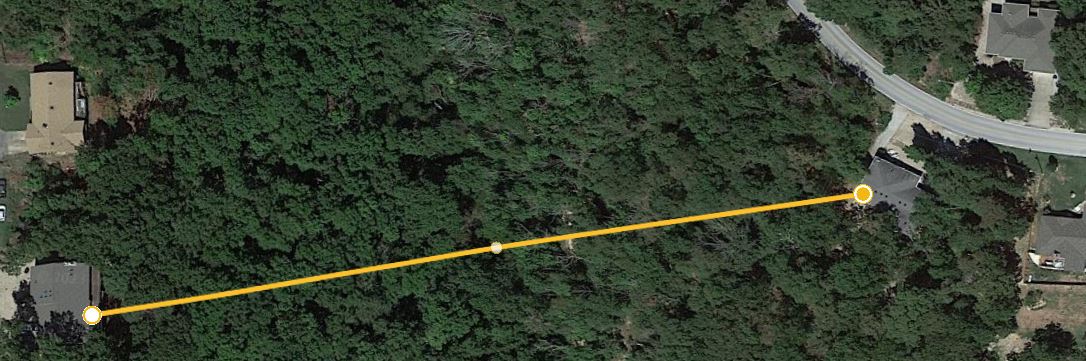
Our house on the left; the 700 ft house at the line on the right; the other house above that. Note the density of the forest canopy in the valley.
Other features that can be seen near the top of the photo are two houses. You can see the white roof of one. It’s on the far side of the black ribbon road, just right of the vertical projection of the evergreen tree near the bottom. The other is harder to see. It appears as a dark rectangle, partly obscured by tree trunks. This is the house that is closest to us across the holler, on this side of the black ribbon road, 700 feet as the crow flies. These two houses are barely discernable during normal winter conditions. The tree trunks reduce visibility that much.
There’s a metaphor somewhere in all of this, but I can’t tell what it is. Remove the foliage of life to see more of the background. Add a little adversity to see things even more clearly. Enlarge the vignette to see more details. I suppose I ought to explore that some.
All of which is so many words that doesn’t get me anywhere down roads I want to travel. Oh, I suppose better usage and description of metaphors would help me. My main concern Tuesday evening, when I began writing this post, was would I be able to get out of my driveway on Thursday to be able to attend the afternoon meeting of the Scribblers & Scribes critique group? That’s the road I need to travel next. By then the roads should be good enough to drive, but will I be able to get up the 50 feet of driveway to the street?
All of this is hurting my head. Too much thinking for a Tuesday night after a full day of editing, reading, and disaccumulating. I’ll add an update just before posting this on Friday.
Saturday dawned cloudy, but the sun soon broke through. Then the clouds came again, dark clouds. Then, a few minutes later, the sun once again came out. This pattern continued for several hours, with it being cloudy more than sunny.
And windy. I did my usual Saturday morning paperwork, followed by some unusual disaccumulation tasks. That brought me to around 11:30 a.m. What to do next? It was about 55°, and the wind growing stronger. It wasn’t exactly the day for yardwork, but that’s what I’d planned on doing. But at least it was dry. I had my choice of tasks: remove recent deadfall from our woodlot, or tend to the blackberry bushes across the street. Most years I’m slow getting to the blackberry bushes and, as a result, they bloom out without my having done the tasks to maximize their yield.
So I had three choices: the woodlot, the blackberries, or stay inside out of the wind, like any sensible person would. I decided to work on the blackberries. The work to be done was cutting out competing plants and removing some deadfall that may have broken down some of the blackberries. I started with the cutting.
Since I hadn’t done this for a couple of years there was a lot to do. Lots of bending and reaching, working around thorns to get to the plants that needed removal. It wasn’t strenuous work, but it was tiring. I worked around the blackberry branches, causing me to have to work slowly and be cautious. Still, I managed to get the worst of the competing plants cut away. That took all the time I had for yardwork, and I headed inside.
It wasn’t, perhaps, a major advance in getting through the to-do list, but it sure felt good. Especially because today, Sunday, it turned cold—just 32 degrees for the high. The next two days will be colder with winter weather possible or probable. That means on Wednesday, all the areas where I cleared on Saturday would be wet and not very nice to get to. Had I not done the work on Saturday, who knows when conditions would be right to do it.
That’s not an earth-shattering success. Sometimes, however, you have to understand the scattered nature of the tasks on my to-do list. There’s writing, stock market, family finances, taking down Christmas decorations, general cleaning, and a number of other things I could name. Once again, I’m feeling a bit discombobulated. Appointments and travel are just over the horizon. That always makes me unsettled.
So what is this post about? Darned if I know. I’m getting a few things done, but the unsettled and incomplete feeling remains.
What happens when a headhunter is introduced to God?
Amazing man, amazing story, amazing book.
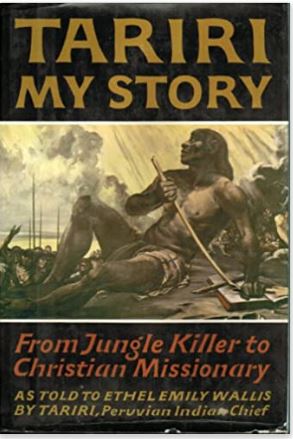
This was the subject of the book Tariri, My Story: From Jungle Killer to Christian Missionary, which Lynda and I read aloud a couple of months ago. The events of the book took place in the 1950s, when missionaries reached a section of the upper Amazon River at the border of Peru and Ecuador.
From the book’s dust jacket: The great chief Tariri was a legendary figure among the tribes along the eastern slopes of the Andes in southern Peru. The tales of his brutal killings were told with wonder even among his own people, the Shapras of the Candoshi group. A vital, colorful leader, he ruled his tribe through brute force and feared no one because of his fierce conviction that he was impregnable, inviolate.
Until two single women, workers with the Wycliffe Bible Translators group, arrived. Doris Cox and Lorrie Anderson, armed only with Bibles, pioneered the work among the Shapras and encountered the feared Tariri. He realized they were no threat to his rule, and so they were not accosted in any way, by him or others of his tribe. They went to work, joined by Rachel Saint at times. Slowly they helped Tariri understand that a way to live was possible without killing. That you could be at peace with rival tribes.
The Peruvian government had agents and officials within 50 miles of Tariri’s tribe, but had not had any influence on them. The killing continued. They—the Shapras—understood they should not harm the government men who lived and mostly remained at the edges of their territory, but beyond that Tariri was the law and the government in his territory.
Slowly, the two white women began to influence the jungle chief. Over time, he turned away from killing and embraced a life dedicated to Jesus Christ. The change wasn’t easy for him, but it happened. Killing as a way of life, a way of settling disputes, ended.
The book, published in 1965, was fascinating. It was a little hard to read because of all the names and terms in Tariri’s language. His words were recorded on tape, and translated to English. The book is mostly his words, his story, with a little context provided by the missionaries who worked in the area.
I have no idea where we got this book. It likely sat on our shelves for years, waiting for us to notice it. I’m glad Lynda finally did. My intention was to not keep this, mainly because we have so many other books we’d like to get through. But I think we will keep it. I’d love for the grandchildren to read it some day. It is definitely 5-stars. Still available at Amazon, perhaps other places.
Sorry folks. I’ve been down with a deep cold this weekend. I could feel the beginnings of it on Friday. It increased Saturday and came on in full force on Sunday. Still almost as strong today.
So I’ll not write a post today. I hope to be back Friday.
Well, here it is Friday evening and I just realized I hadn’t done a post today. It’s been busy. Our son is visiting us from Chicago, here for a few days to help us out as my wife convalesces following her pacemaker surgery. I’m sorry to not have a real post, but it will have to wait until Monday.
I completed this book yesterday, from a Word doc from Project Gutenberg, uploaded to my Kindle library. My second reading of it.
I’m usually reading several things at once. I have a reading pile in the sunroom, where I go around noon most days to get a break from my tasks. That reading usually consists of printed books, and sometimes a magazine. I have a reading pile in the living room as well, and a basket of magazines I’m way behind on. This is usually evening reading, after all else is done for the day.
Then there’s my phone, through which I read using a Kindle app, a Nook app, and Google books. My phone I might use anywhere, and the things I read on it usually are easier reads. That may not be the best description. But I think they take a little less concentration and can be read in places such as waiting rooms, restaurants, coffee shops, etc. Any place I have a few minutes and want to engage my mind with more than people watching.
So yesterday, I read a little more than normal, and to my surprise, I finished reading four different items on the same day. How odd is that?
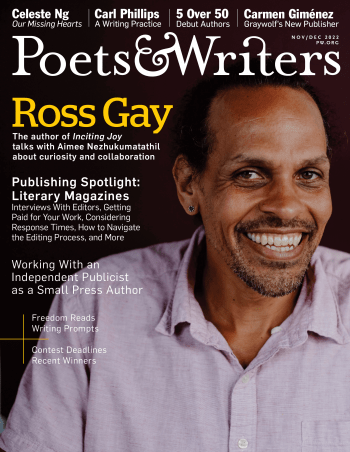
I always enjoy reading Poets & Writers magazine, and, on those rare occasions when I buy an issue, I read it slowly, enjoying each article. I even look at the ads.
In the sunroom, I finished reading an issue of Poets & Writers magazine. I buy one of these at Barnes & Noble from time to time. While this mag is very much oriented towards the Master of Fine Arts crowd and is far from my writing world, I enjoy it more than other writing mags. Anyway, I had only two pages left in this particular issue, and finished those pages yesterday. At a future writers meeting I will pass this along to someone.
Still in the sunroom, I next looked at an essay I’ve been slogging through on Jesus’s triumphal entry into Jerusalem. Years ago I downloaded this from the Bulletin for Biblical Research and printed it (at a time when the company I worked for had a generous policy of making personal copies). I may have read most of it before but, having come across it in a notebook while working on my near-continuous dis-accumulation efforts, I decided it was time to read it, absorb what it said, and get rid of it. The essay is about 60 pages long, heavily footnoted.
While I enjoyed reading it, the article was a bit of a chore to get through. When I started yesterday, I had about ten pages left to read. Maybe I had come to an easier part of the magazine, or maybe my mind was better engaged, but I got through those last pages. I’m not quite ready to discard the sheets, but within a couple of months I’ll extract the info I need from it to go into a future Bible study I plan to write.
Then, in the evening, I finished the last nine pages (of 633 total) in a biography of David Livingstone. This tome took me three months to get through, though admittedly I laid it aside several times to read other things. Other than the small print, and smaller print on the extensive quotes from Livingstone’s letters and journal, it wasn’t a hard read. Ten pages at a time was fairly easy to get through. And if I hadn’t been reading other things simultaneously, I think I would have been able to finish this in a month. It’s done now, and will likely take two blog posts to review.
Lastly, I finished re-reading Volume 1 of the correspondence between Thomas Carlyle and Ralph Waldo Emerson. Years ago, long before Google Books and Kindle, I found this at Project Gutenberg, downloaded both volumes, and formatted them in Word for a blend between tight printing and easy reading. Using those printing privileges, I printed them and put them in notebooks. Meanwhile, I have recently learned how easy it is to upload a Word document to Kindle for your personal library. I did that with Vol. 1.
As I’ve said many times before, I love reading letters. Wanting something “light” for those odd moment reads, I sent this to Kindle and began reading it perhaps a month ago. I found it delightful, as I did perhaps 20 years ago. Yesterday, I came to the end of Volume 1.
This is sort of waste-of-time reading, since I have so many things to get through. But it was quite enjoyable. I was able to read it fairly quickly, including in the hospital last week with Lynda. At some point yesterday, I read a letter by Emerson to Carlyle, and was surprised to find it the last in the volume. So I promptly found Vol 2 on my computer and uploaded it to my Kindle library. Not sure when I will start this.
So, that’s the story of the strange circumstances that had me finishing four very different reads on the same day. It’s unlikely to ever happen again.
Time to pick up some new reads. One I’m already 40 pages into. What else will I pick up next?