One of my usual blog posts to start a year is to post my book sales for the previous year—and for the last quarter of the year. Let’s start with the quarter, which was my best of the year. Sales were:
Oct – 6 sales of two different books
Nov – 19 sales of three different books
Dec – 24 sales of two different books
Quarter: 49 sales of five different books
Those of you who follow my blog know this was a huge quarter for me. Those of you new to the blog will no doubt say What? With 32 books for sale you sold less than 2 copies per book for a quarter? Yes, that’s true. It shows that increasing sales haven’t made a dent in my cellar-dwelling status.
The reason for increasing sales is the ads I’m running on Amazon. Most of those 49 sales were of the two books I have ads for, 10 ads total, 5 for each. It would be nice if I could report profitability, but, alas, my ad costs so far have run more than my royalties. The will be the subject of a blog post in the near future.
Then, for the year 2020, I sold 96 books. That’s my third best year, lower than last year. But last year I sold books at author events. The pandemic prevented author events this year. Of these sales, 15 were sold in person, the rest through Amazon or Smashwords (only 1 there). I had sales of 14 different books.
So not a stellar year, but much better than some. I still have money in my ad budget. Hopefully they will run a profit before long.
That sounds too flippant, to call last week a “whacky” week. It was an awful week as far as our nation goes. For me in my personal life, “whacky” is an apt description.
Not that anything went wrong, at least not terribly wrong. The worst that happened to me was a dead battery. I drove to a haircut appointment on Friday, the first haircut I had since May. I took the Green Monster, our old minivan. It’s been a little hard to start and I thought it might be that the battery was old. But it started and I drove it the 3/4 miles to the beauty shop. Got my haircut, came out, and it wouldn’t start. So I walked home and let it sit overnight.
I considered having my neighbor drive me up there and jump start me then drive it to the Dodge dealership 4 miles north, but on Saturday? I decided instead to call AAA. They now have a battery service. I requested that, and they came so fast I barely had time to walk up there to meet them. Fifteen minutes and some money later and I was up and running. That battery was six or seven years old, so I was on borrowed time with it. And, that service didn’t cost a whole lot more than going to Wal-Mart, buying a battery, and putting it in myself.
During the week I actually got back to significant work on my novel, The Teachings. Over Tuesday through Friday I added over 5,000 words to it. I haven’t had that kind of writing production in a long time. I left it on Friday with the next scene clearly in my mind, hoping to add another two to three thousand words over the weekend. But instead I added…nothing. Other tasks consumed my time.
On Saturday, in addition to taking care of the van, I did maintenance around the house. The shower door handle needed attention, and was easily fixed. I tried to glue down some old wallpaper that is coming loose but it wouldn’t stick, even with gorilla glue. A window handle needed put back in place, and I was able to find screws that reasonably matched and got that done. While at it I went around the house and checked the other window handles, tightening a few. I also did some more straightening/arranging of my miscellaneous hardware, and identified some more I can sell.
We continue with decluttering, going through old Christmas cards and letters received over a 28 year period. Few are worth saving. Why we saved them I don’t know. But that is slowly being cleared out. I keep getting some inquiries about items I have listed for sale on FB Marketplace. Sold some books on Thursday, but a freak snowstorm that day kept two other scheduled buyers away or I might have sold more.
My reading was progressing well early in the week. I read ten or more pages a day in C.S. Lewis’s letters, with great enjoyment. But I read less over the weekend, my concentration waning. Our evening reading is in a Philip Yancey book, and we make good progress in that. We lost reading time two days as I had evening Zoom meetings on church-related tasks.
One of those tasks is our church’s 100th anniversary committee. I was asked if I would write a book to be distributed as part of the celebration, which is in October. That may seem like a lot of time, but it’s not. Thursday evening I went up to the church to retrieve the archives. Saturday I went through about 5 to 10% of them. It’s going to be a huge task. I have a timeline already started, though with much more needed. I probably need to spend some time every day on this, and will do some today.
My weight and blood sugars were a little whacky last week. My eating was fairly good and I lost some weight and had good blood sugars, but the blood sugars didn’t track as well to my eating and exercise as I thought they would; not sure why.
I could go on. Prepared on Saturday for and taught adult Life Group yesterday. Did a little genealogy research. And, as you would expect, made a few Facebook posts or comments on Wednesday, now estranged from a family member over it. This too shall pass. I will post about that, maybe in my next post of possibly not until next week. While I’m hoping the madness (yes, I consider it madness) has stopped, I’m hearing things that concern me that it hasn’t. More on that later.
So, here it is another week, the 2nd of 2021. Normal tasks are before me. God is on the throne. I will continue to serve Him, regardless of what of what swirls around me.
For the first time in many years, I start the new year with uncertainty as to what I want to accomplish in my writing. Perhaps this is a residual effect of the corona virus pandemic, which caused a general uncertainty in the world and made life difficult to plan. I didn’t get as much writing done in 2020 as I wanted to, not so much because of corona virus but because of being diverted to other things (health issue, de-cluttering work, letters transcription).
But, a writer who is publishing is running a business, which should have a business plan if it wants to be successful. So here is my plan. It’s a starting point. I will be thinking much about this over the early part of the year and may modify it based on further consideration.
These books have been waiting for the book that goes between them to be written. I’m finally back to working on it.
Finish and publish The Teachings. A little over a week ago, I got back to serious work on this novel. As of today’s effort, I have 37,000 words in the first draft. If 80,000 is the minimum size of the book, I’m closing in on halfway done. But I don’t feel that the story is halfway done, so perhaps this will be a 90,000 word novel. Either way, at my current pace I could be done in mid-February, which means I might have the book ready to publish in April. For now, those are my goals.
Write and publish one Sharon Williams story. Believe it or not the next story in my series Sharon Williams Fonseca: Unconventional CIA Agent, is starting to roll around in my brain. This is happening unsolicited. I’m not trying to think about it, yet the story is developing. That may be a sign that I should write the story this year.
Write and publish one Documenting America volume. I’m planning for this to be Run-up To Revolution, covering 1761-1775, the documents that led to our rebelling against England. I did some reading for research in 2019 and a little more last year. I need to figure out where I was and see how quickly I could do this. Writing these volumes is always pleasurable, and I’m looking forward to this.
I know which Bible study I want to write and publish next, but it’s going to take some work. Not sure I’m quite ready to do that..
Write and publish a Bible study. I’ve planned out what I want the next one to be: Entrusted To My Care: A Study of 1st and 2nd Timothy. I have a fair number of notes on this, have taught it twice, and think I could do this one with the least amount of effort among all those I’ve developed. Yet, it would still be a pretty significant effort. This would be later in the year.
Maintain a twice per week blogging schedule. The last two years have shown me I can do this. On occasion I may have to make a dummy post or even skip one, but for the most part I should be able to do this.
It’s been a long time since I wrote most of the poems in this, around 2005-6, I think.
Write some poetry. The desire to write poetry again has become active, even if the words aren’t rolling around yet as they are for the short story. I know the poetry book I want to write. My question is: do I wait for inspiration to strike or do I apply some perspiration and just get on with the writing? That’s what I’ll be thinking about the next few weeks.
As I say, this is a start. For now I’m concentrating on my novel. Once I get that done, I’ll give this plan serious re-evaluation.
The 5th story in my Sharon Williams Fonseca – Unconventional CIA Agent series. Published in January 2020, I’ve sold one copy.
Ah, 2021 is starting out good, with January 1 falling on Friday, my regular blog post day. I always start a new year here by summarizing the year just ended and making some goals for the year just starting. I’ll do that today with a recap of 2020. On Monday I’ll put some writing goals for 2021, assuming, that is, that I formulate some goals between now and then into a publishable state.
Retired from my day job (for the 2nd year), cooped up due to the corona virus pandemic, you’d think I got a lot of writing done, right? You’d be wrong. I’ve said all this before on the blog, but let me go through it again.
In January I published “Tango Delta Foxtrot”, the next short story in the Sharon Williams Fonseca series. That was written in 2019 and passed through my critique group. It all came to January and I published it then. So far I’ve had one sale. Yippee.
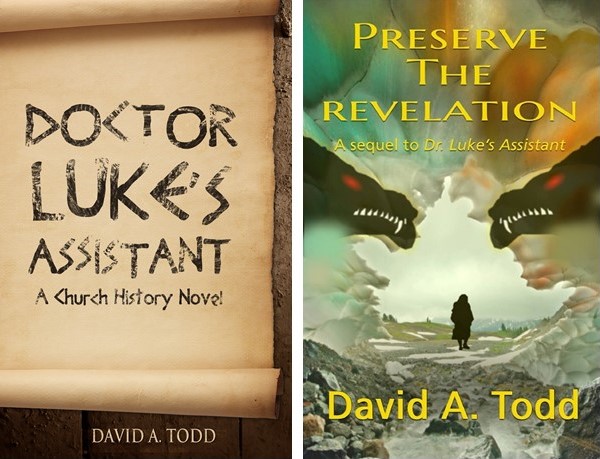
Also in January, I continued work in the next novel in my church history novels series. Begun in late 2019 and tentatively titled The Teachings, it falls chronologically between Doctor Luke’s Assistant and Preserve The Revelation. The action takes place during the first Jewish war of 66 to 70 A.D. I got a few chapters in, running them by the critique group, when I bogged down on making my story fit into the historical events. I spent a lot of time reading in source materials, adding a little text, setting it aside, and going back to the sources again. By mid-March I had about 21,000, or between 20 and 25 percent of the intended length. Feeling frustrated with it, I decided to stop my major work on it.
Stephen Cross was quite a character. Frequently in court, involved with a pirate, taking part in two military excursions, he left a lot of footprints that I’ve been able to follow.
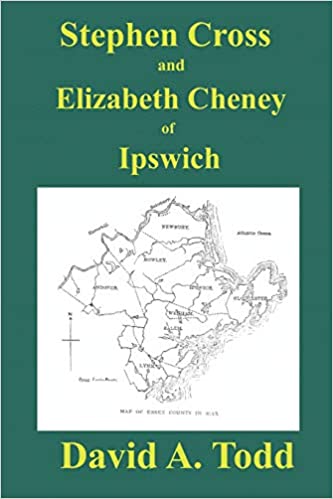
Instead, I pulled out some genealogy work I had begun some time ago. This was the lives of Stephen Cross and Elizabeth Cheney. Elizabeth is a gr-gr-whatever-aunt of Lynda’s. I began studying them two or three years prior and realized I had enough material on them to make a short book. I organized the material back then and wrote the beginnings of a book. I picked up that work again and saw that yes, I could make a book out of their lives, but I really needed to do more research. I worked on that the second half of March, making good progress.
Then Lynda went into the hospital on April 3. I couldn’t go in to see her, of course, so to keep myself busy, instead of going back to The Teachings, I focused on Stephen and Elizabeth. By the time Lynda got out on April 21 I had most of the research done and was back writing the book. My labor on it continued after Lynda came home. It all came together around the end of May, I edited and formatted in June, and published it in July. Stephen Cross and Elizabeth Cheney of Newbury has—wait for it—one sale so far. That’s fine. This isn’t intended to be a best seller. Hopefully some day a few Cross and Cheney researchers will find it.
From there I moved to decluttering/dis-accumulation work at our house. I dug into boxes of papers left behind by my mother-in-law. That caused me to also look at our own boxes of papers and begin culling. In the process I found our Kuwait years letters. I collated them, indexed them, and then decided to transcribe them. This took up some of July, all of August, and some of September. Someday I will add photos and make it a book for the family. For now, it will sit in the cloud.
During this time, I occasionally picked up The Teachings and did a little work on it, either research or writing. I added 500 words here and there. But I still couldn’t focus on it.
I updated my first Documenting America book for conditions in 2020: correcting typos, correcting formatting, adding new text for 2020.
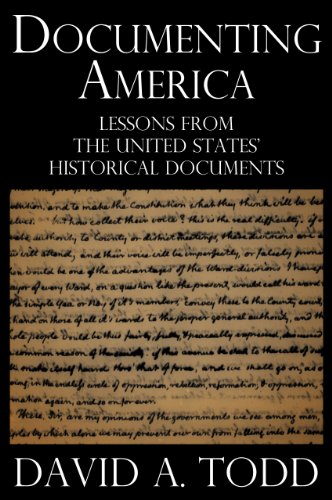
In September, I think, I decided to re-publish my first history book, Documenting America: Lessons From the United States’ Historical Documents. I published it first in 2011 and decided it could use some updating for conditions in America in 2020. I think it was September to early October that I: re-read it; corrected a few typos; and added text to each chapter for what’s going on now. I also had to improve the formatting because, in 2011, I didn’t know much about print book formatting and made some errors. I completed this work in mid-October and re-published it.
Meanwhile, I had been dissatisfied with some formatting and illustration quality in the Cross-Cheney book. I tackled that in October as well, substituting some figures, improving the pixel quality of others, and re-published it. I still wish they were better than they are but at least they are better than they were.
Writing related, but not new writing, was taking part in two week-long on-line seminars about using Amazon advertising to boost book sales, once in July and once in October. I saw an increase in sales as a result, though the ads really are not paying out. I’m still within the budget I set, so I’ll keep the ads running. I’ll take the challenge again this month, then see where I go with it.
Finally, in the second half of December, I was ready to return to serious work on The Teachings. Over the last few days of the month I added over 5,000 words, bringing my total to just short of 33,500. I have much of the rest of the book planned, and should be able to make good progress, so long as other things don’t get in the way.
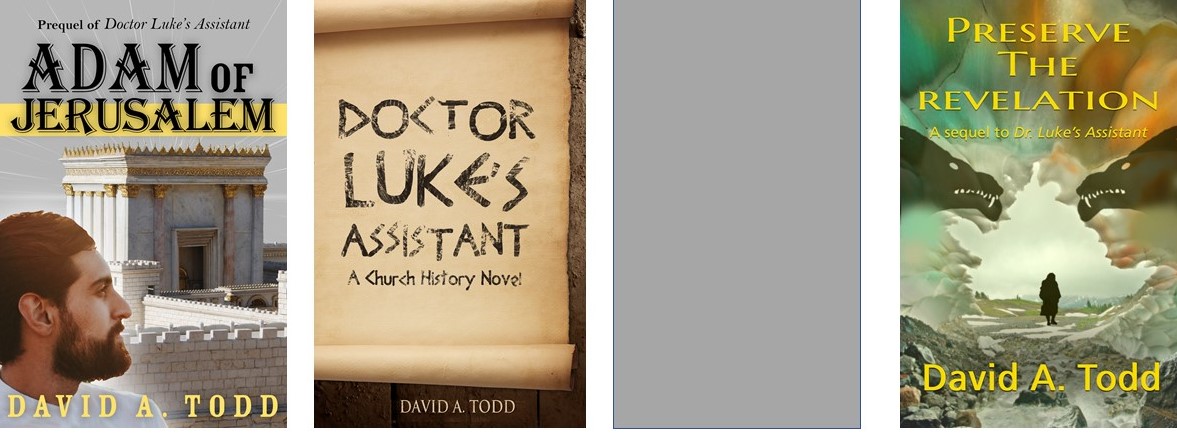
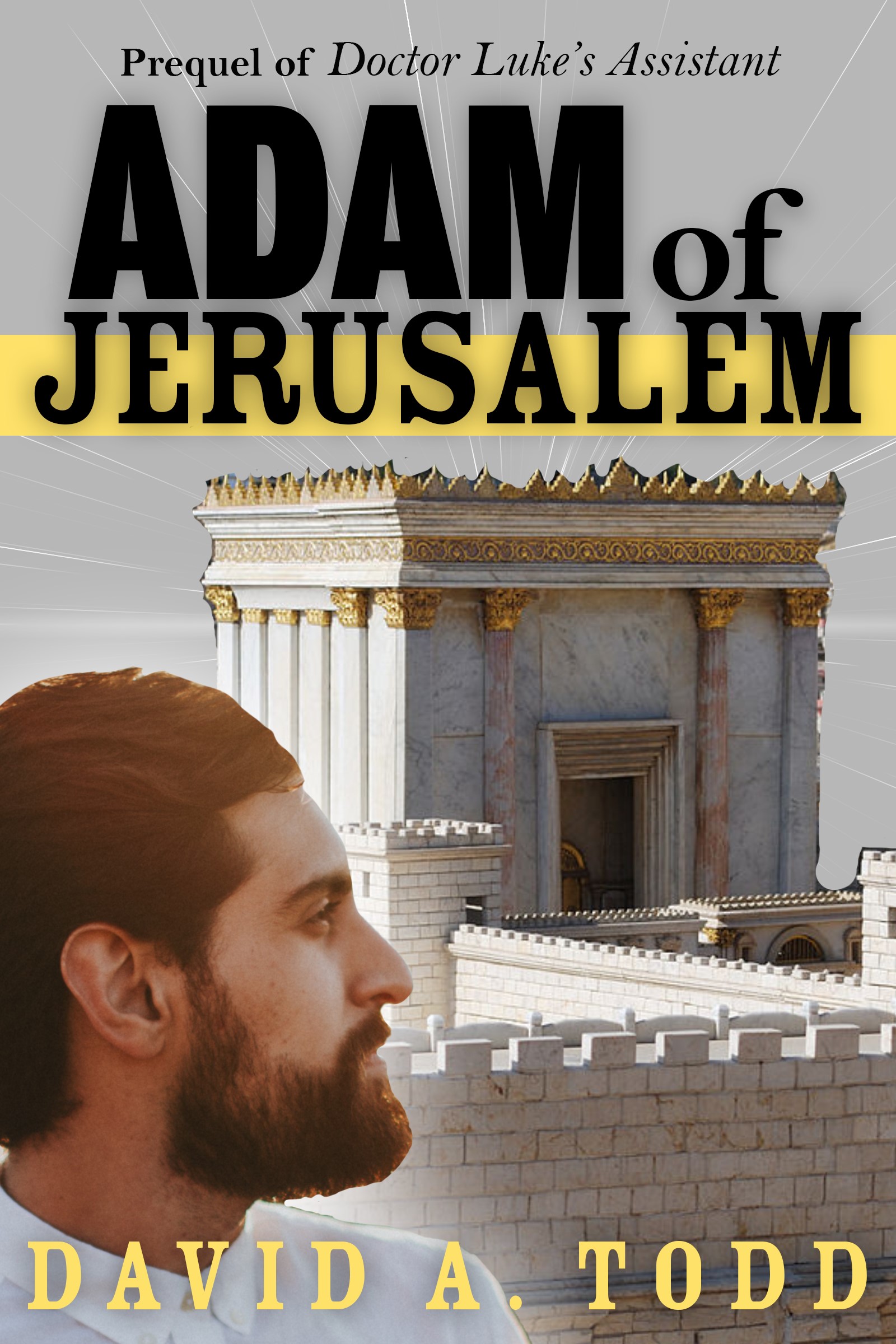
Here’s where my Church History Novels series stands. Working on that “gray” one.
Things such as a new short story, or deciding to transcribe more letters, or let decluttering overtake me again.
Was it a productive year, writing-wise? Perhaps. I wish I had more to show for it. May 2021 be better.
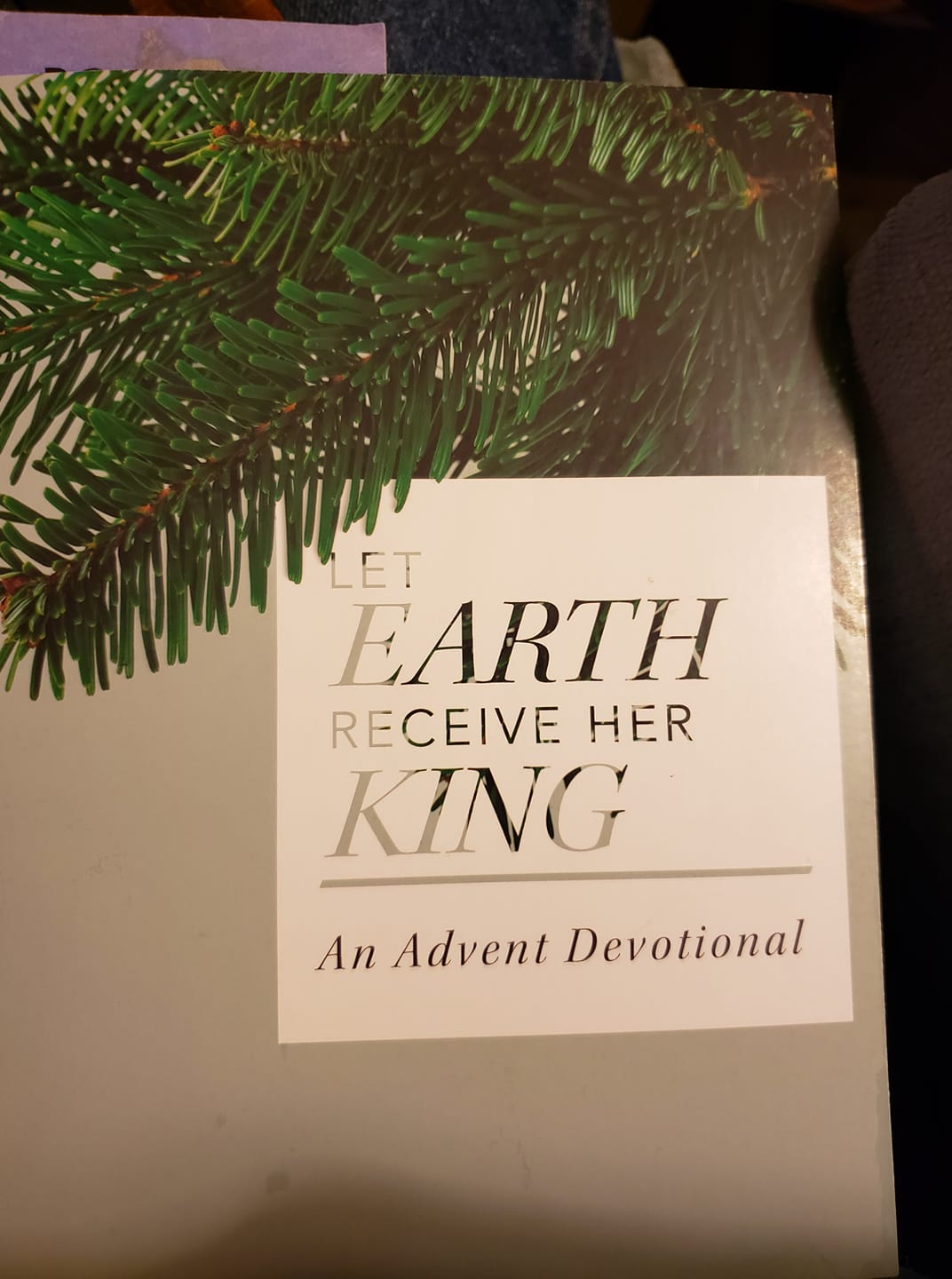
This is an Advent devotional book worth reading, but it won’t become a permanent part of my library.
Here I am a day late with my blog post. Sorry to all of you who came here yesterday looking for it. I knew what I was going to write and post, but just let the day get filled up with other things, other good things, and, well, I didn’t get it done. But here it is.
Every year, for several years at least, our denomination has published a book for the Advent season. Normally the pastor of our congregation preaches a four or five week sermon series that goes along with the book. This year, the book was Let Earth Receive Her King: An Advent Devotional. I’m one of those who reads all the front matter, and I was surprised to not see who the author was. It wasn’t on the cover, the spine, the title page, or the copyright page. I figured the church didn’t want us to know who the author was. The Introduction was written by T. Scott Daniels, but that didn’t say to me that he was the author of the entire book. I figured it was a book written by “staff” and quit worrying about who wrote it. But then, as I got further into it, the book became more personal, with a lot of first person illustrations. Obviously, “Staff” was a person, but who?
The book was good. Well written, clearly written, with stated themes and points well made. I would say it’s better than the Advent books from recent years. My wife and I read it aloud in the evenings, me doing the reading. We did it every day from Dec 1 to Dec 24, skipping only one day due to extreme tiredness but making that up the next and keeping going.
As to whether I recommend the book or not, I can say I do, with a couple of exceptions I’ll state in a minute. When we finished the book, I turned to the back cover, realizing I hadn’t read that before starting the book. There it clearly said that T. Scott Daniels was the author, giving a short bio of him. I guess the pub house figured everyone reads the back cover and having the author name there instead of the front cover and title page sufficed.
The book is organized around the Advent candles that have become a Christmas tradition. Each week in the Advent season you light a candle of a certain color. One stands for joy, one for peace, etc. This is a new tradition to me, one my family didn’t follow in my childhood, one I never established with my own family. In fact, I don’t remember ever seeing it done in church until maybe the last twenty years. When and how did this become a tradition? Was it one 60 years ago and somehow our Episcopal family missed it? Perhaps it is a long-standing evangelical tradition. Since it’s not my tradition, the organization around the candle themes is meaningless to me and did not enhance the book for me. C’est la vie. I’m sure others found that not only useful but enjoyable.
The other thing that prevents me from being able to enthusiastically recommend the book is the dual emphasis on mourning and exile. Perhaps emphasis is too strong a word. But several times Daniels talked about Advent as a season of mourning. For example, on page 78 Daniels writes:
“In Advent, the church grieves and awaits the return of the bodily absent Lord. Yet, in the meantime we pray and work….”
Sorry, but I don’t see it that way. Advent is, to me, a season of anticipation and joy. Mourning during Advent would be a new interpretation to me and, well, you probably can figure I don’t cozy up to new interpretations.
As to exile, I note from the bio on the back that Daniels is the author of the book Embracing Exile. This was popular a few years back. Our pastor preached a sermon series on the theme, using the book as an outline. Since our Life Group was already engaged in another study when that one started, we didn’t participate. But I see this theme of exile creeping in a number of places. In the recent study from the book Kings and Presidents, the authors kept emphasizing how the book of 2 Kings was written while the Israelites were in exile in Babylon. I haven’t studied that, but have trouble believing it. Much of 2 Kings reads like a contemporary history, not a history told decades or centuries after.
Should you buy and read this, and is it a keeper? Sure. It should help you prepare for the Christmas season. It is well written, also well designed and laid out. I especially liked the left-only justification, as that is much easier to read than full justification. But, it goes out to the sell/giveaway pile—after I skim it some more and try to find those mourning entries.
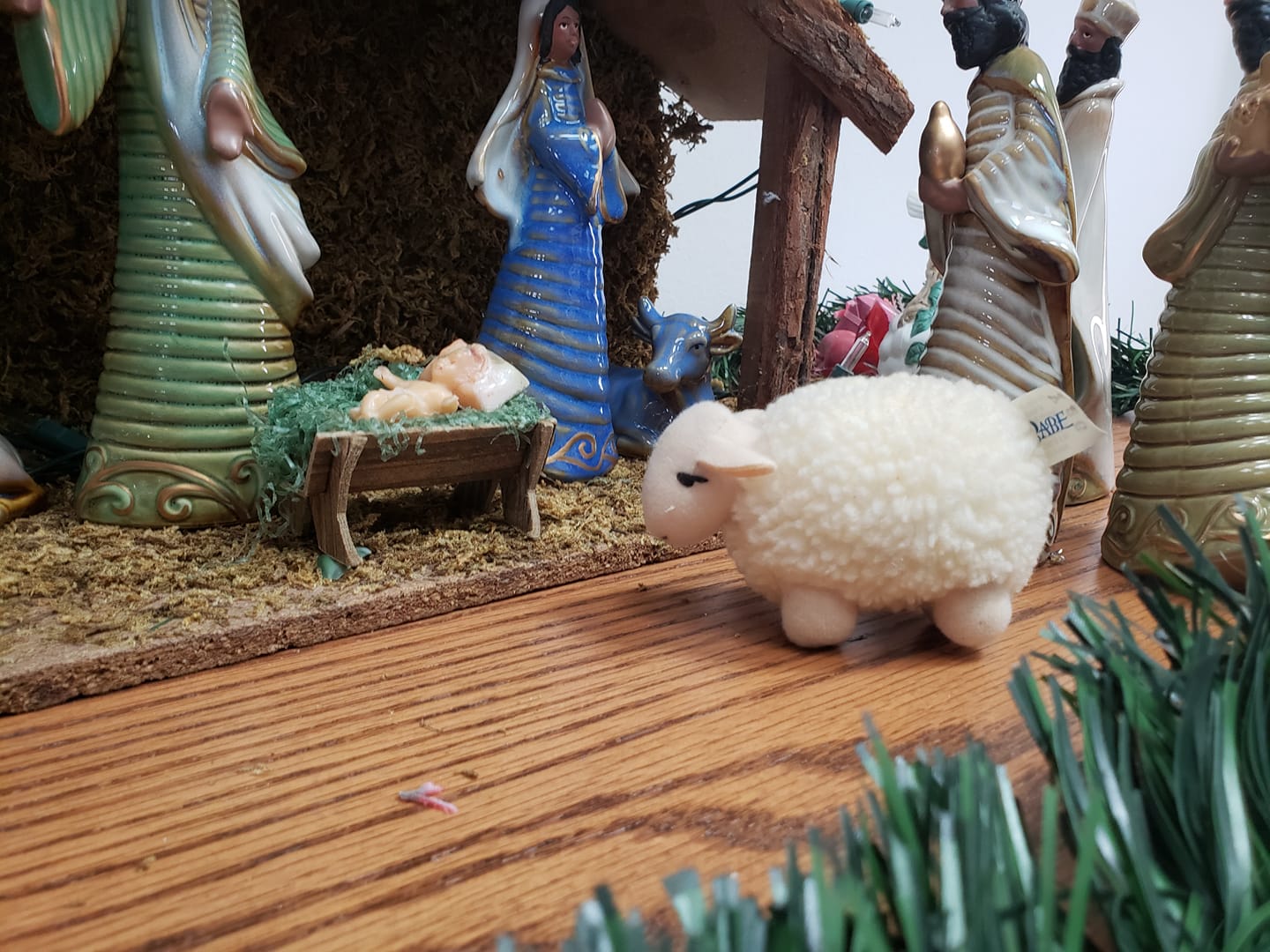
The grandkids aren’t here to add toys to our Christmas displays, so Lynda did it, finding this stuffed sheep somewhere in the house and adding it to our nativity scene.
What a different year this is. No one in for Thanksgiving, no one in for Christmas. We have toyed with going over to my cousin’s house in Bella Vista, setting up chairs in the driveway, staying 6 feet apart, drink coffee and talk. But right now Lynda is beset with headaches, possibly a lingering effect of the corona virus. She rightly said that we are, perhaps, both in a weakened condition and more vulnerable to other infections. Or, if we actually had a false positive covid test and really haven’t had it, we are vulnerable to get it. So, it will be just me and Lynda. I have a roast to cook, along with some nice vegetables. We have lots of treats: Christmas cookies, fruit cake, pumpkin pie, honey & mustard pretzels. And more. We will be all set.
And, of course, you read in your Advent devotional book every day.
Listening to Christmas music, I’ve been thinking a lot about John Lennon’s “So This Is Christmas”. Written as the Vietnam War had drug on and on, it’s a cute tune with simple lyrics. Partway through the song, background singers begin singing “War is over, if you want it.” The background gets louder and louder and, by the end of the song, you mostly hear the anti-war chant and not so much the main lyrics.
It’s a nice thought, war is over if you want it to be. Alas, few wars are carried on only by one side. Someone is the aggressor and someone is defending themselves. Back in the late 60s-early 70s, it did seem like the USA was fighting a war that didn’t need to be fought. Not all wars are like that. One wonders what kind of song Lennon would write today, if he would make the lyrics in Arabic so that those who most want war (a.k.a. jihad) could get the message.
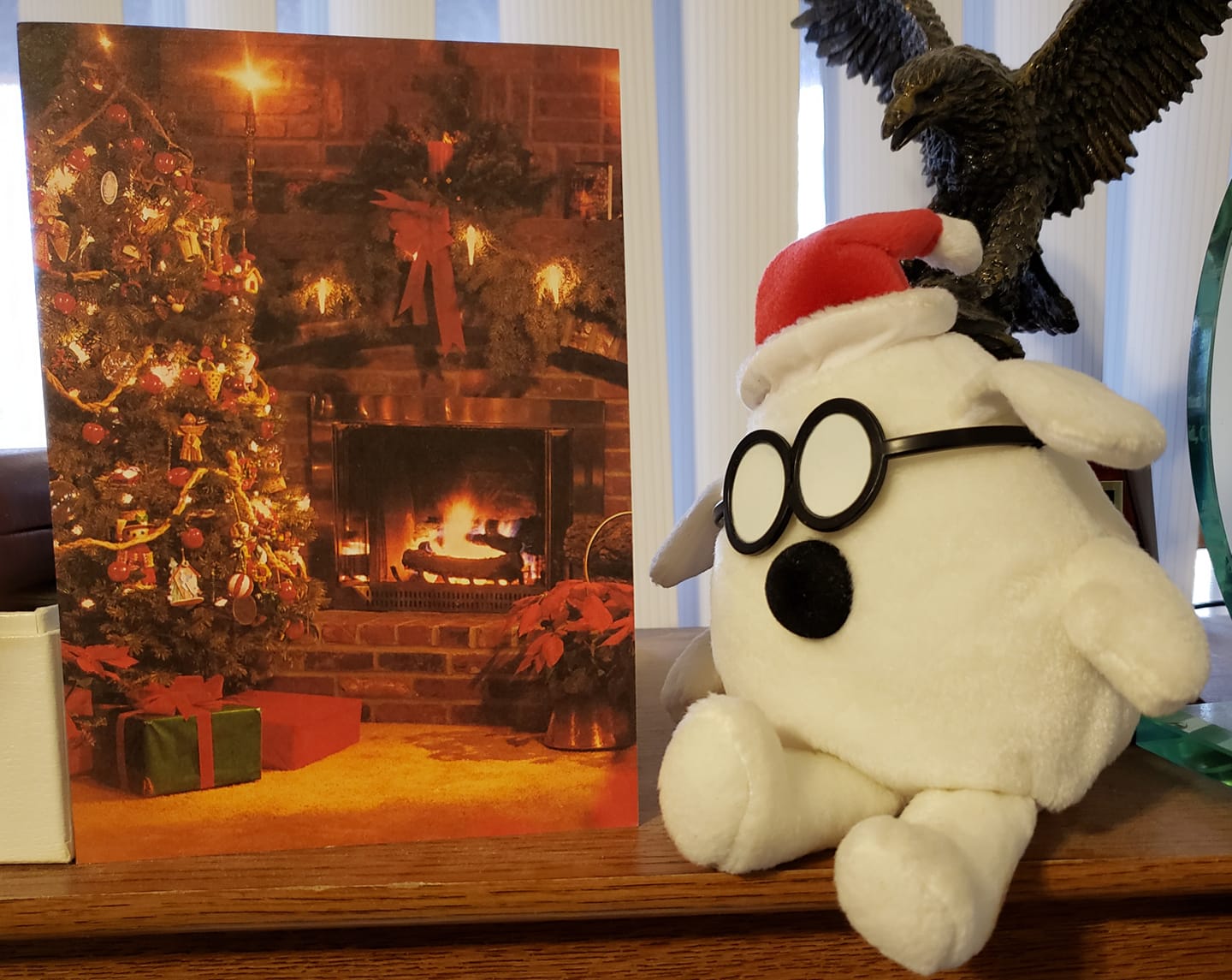
The simple decorations in The Dungeon. When I took this photo, I didn’t realize the eagle appears to be swooping down to get Dogbert.
And so this is Christmas. I hope you have fun. The near and the dear ones, the old and the young. Very simple, as are the rest of the lyrics in the song, the rhymes almost forced, , but very pleasing, with an enjoyable tune and excellent instrumentation. Just as Christmas is this year. Simple. Few Christmas decorations. Less work to set up and put away. A simpler meal. No presents to wrap and unwrap. No grandkids to put wooly mammoths in my Christmas village, or a toy rock, or a toy fire truck. No one to tuck in bed Christmas eve or watch and see their face light up Christmas morning. Stockings are hung by the chimney with care but are not filled. They hang limp, empty.
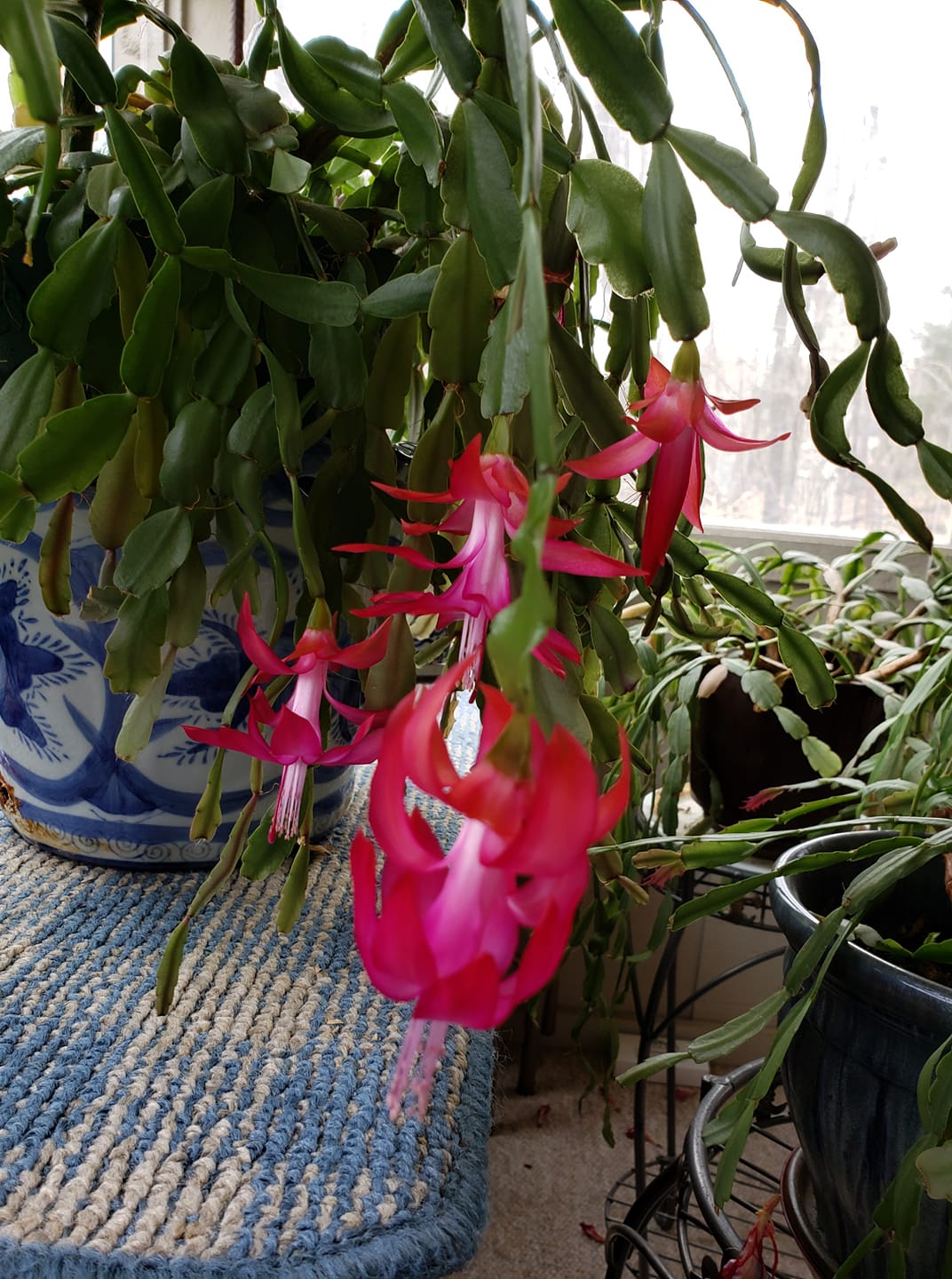
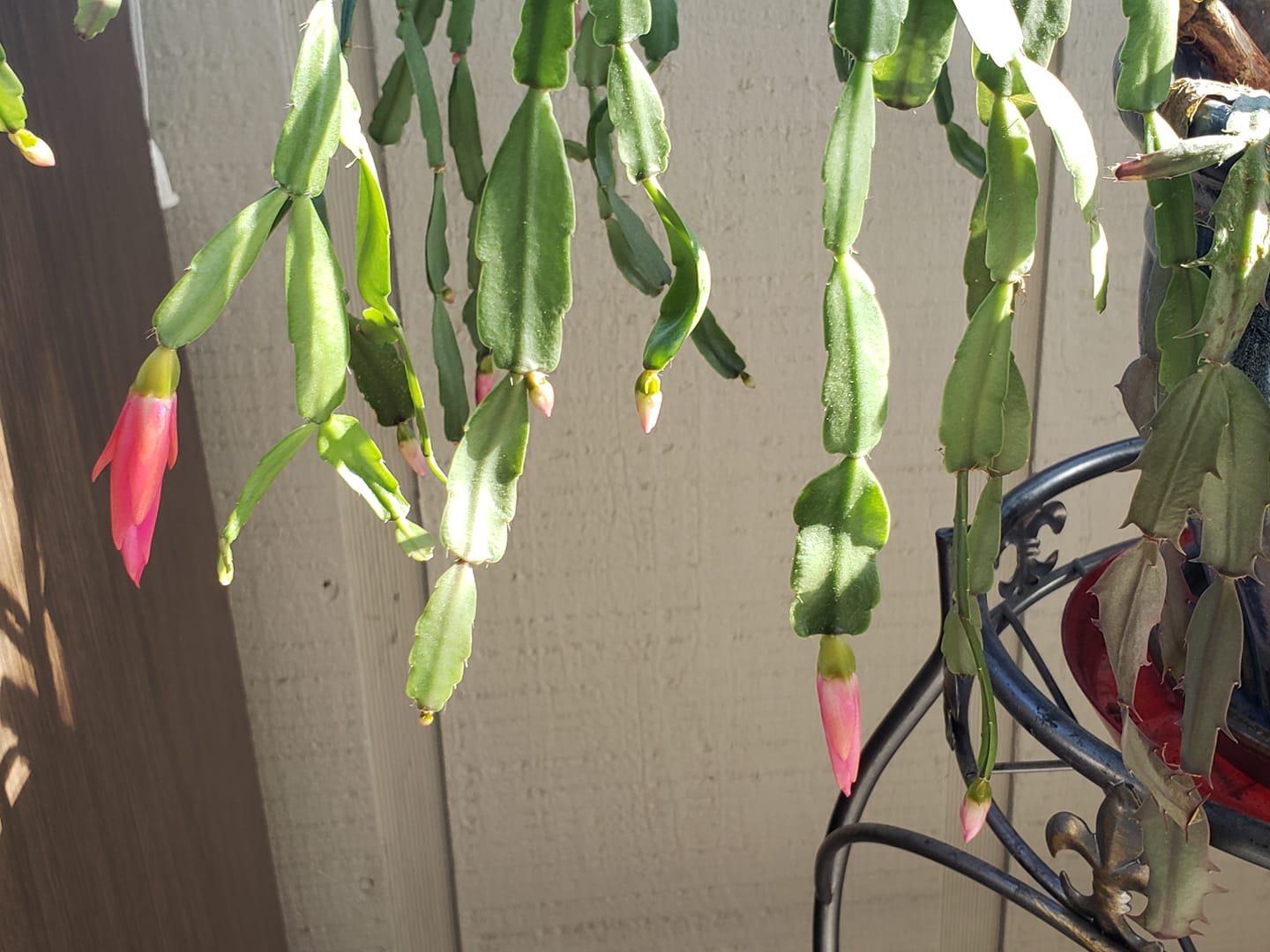
From early 2020: These bloomed all December through January, dropping their flowers during February and March. Here they are blooming again.
But Christmas isn’t empty. Yes, the world may be going mad with covid19, and we may be taking extreme precautions. The vaccines are being distributed. Will they really end this plague? Will it be Christmas as usual in 2021? I’m not worried. We will have a very pleasant Christmas in 2020, with the near and the dear one, without any fear. War is not over, but I think we are a little smarter about it, the 2003 disaster excepted.
Enjoy this rendition of “So This Is Christmas” by Celine Dion. It doesn’t include Lennon’s anti-war chant (well, maybe just a little in the middle, I think). Well worth listening to.
And so, happy Christmas for black and for white, for yellow and red ones. Let’s stop all the fights.
We will miss these cuties on both Thanksgiving and Christmas, but hope to see them soon in 2021!
All that late decorating on Christmas eve made for tired parents by the end of Christmas Day.
Christmas is going to be quiet this year, the quietest ever. It will just be Lynda and me. While we are both recovering from covid-19 infections, we are in isolation, and don’t know when we can return to the current real world of staying mostly apart from everyone else. Our son and his partner were planning on visiting us this week, but that’s obviously out. Then we had thought of driving to Big Spring Texas to be with Sara and family over Christmas, but that’s obviously out. So it’s just us. I put up only a few Christmas decorations, and may put up a few more.
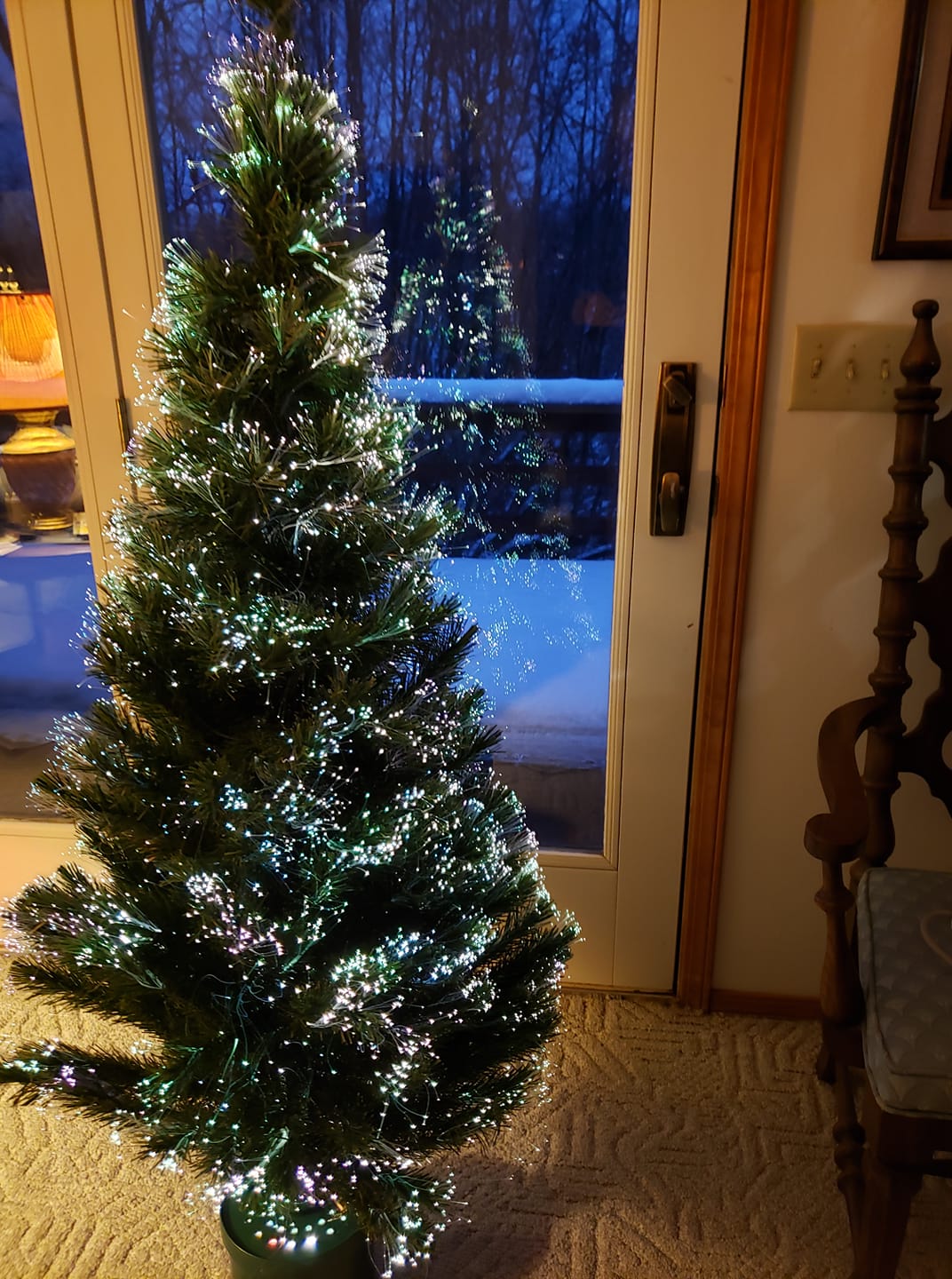
Our tree in 2020. Colors change as the motor turns the palate.
Our tree is a small, motorized fiber-optic tree, about five feet tall. I was planning on selling it as part of our down-sizing efforts. But the tree we usually put up is a lot of work, whereas this one was pull out of the closet, put it in the stand, plug it in. The colors change as the motor turns. No ornaments; just the lights at the end of each fiber.
This got me thinking about Christmas past, and the Christmas trees we had growing up. I thought I had written about this before, but can’t find such a post. Maybe I embedded this in another Christmas post, or maybe it’s there and I just don’t know how to search my own blog. But even if I did write about it before, some things are worth covering twice.
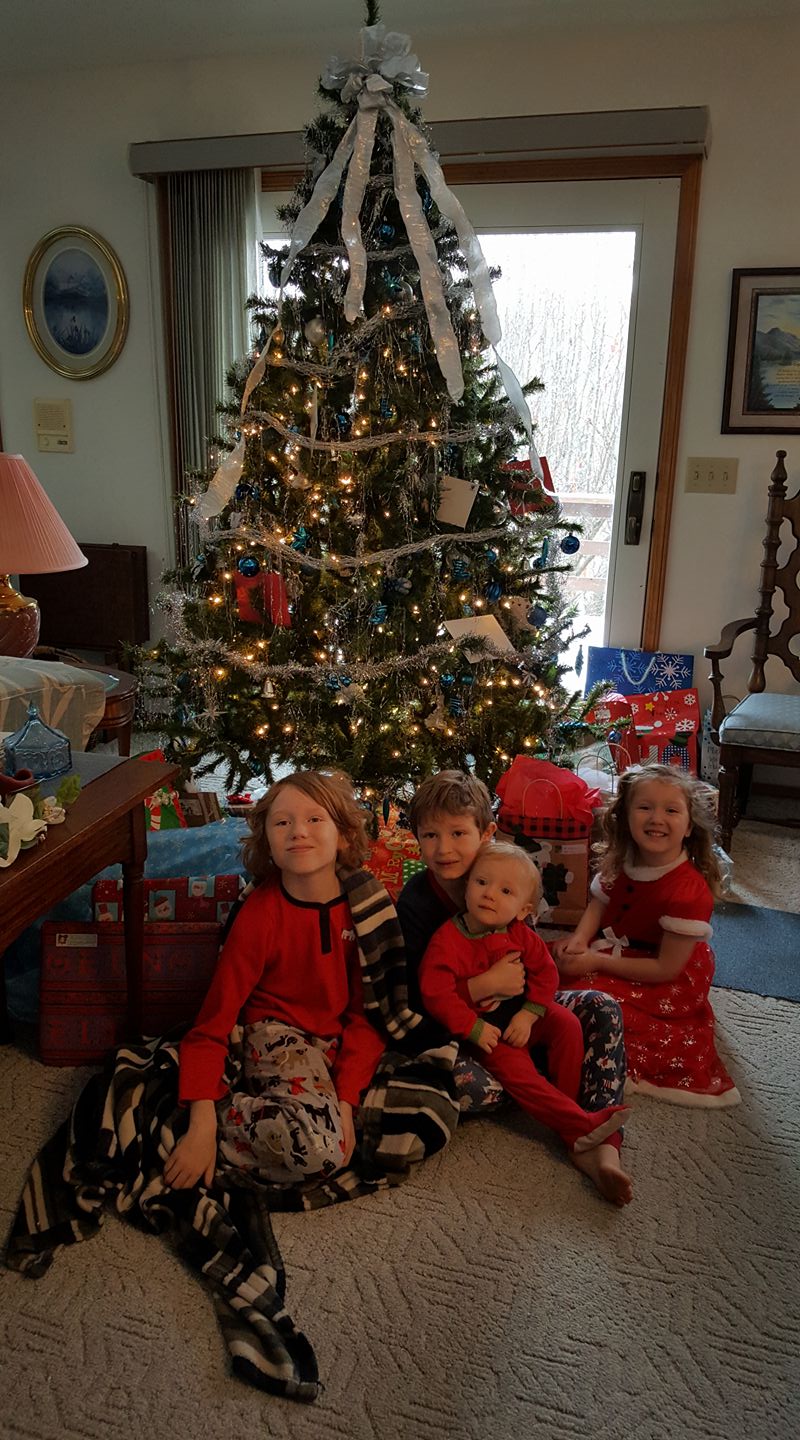
Ah, a tree with decorations on it and in front of it. From a couple of years ago.
Each year we got a natural Christmas tree from one of the Christmas tree lot that sprang up on Reservoir Avenue not far from our house. Nowadays all those lots have businesses on them. Dad and we three children would go buy one, Mom being too sick to do so, but she was also busy making other Christmas preparations. We set out on foot—yes, on foot, for the tree lots weren’t more than a five or ten minute walk from the house. We had to cross Reservoir, a major four-lane road, but that was no problem.
This was always kind of exciting. Each family member chipped in to buy the tree. Our budget was $1.00 total, meaning we each had to chip in 20¢. Yes, you read that right. $1.00 for a tree. We didn’t get one of the better ones, but we were all happy with what we got. We picked it out, paid for it with ten dimes, carried it across Reservoir then the two or three blocks. Into the detached garage it went, in a bucket of water. I still remember the year when we couldn’t get a tree for less than $1.25, and we each had to add another 5¢ from our allowance.
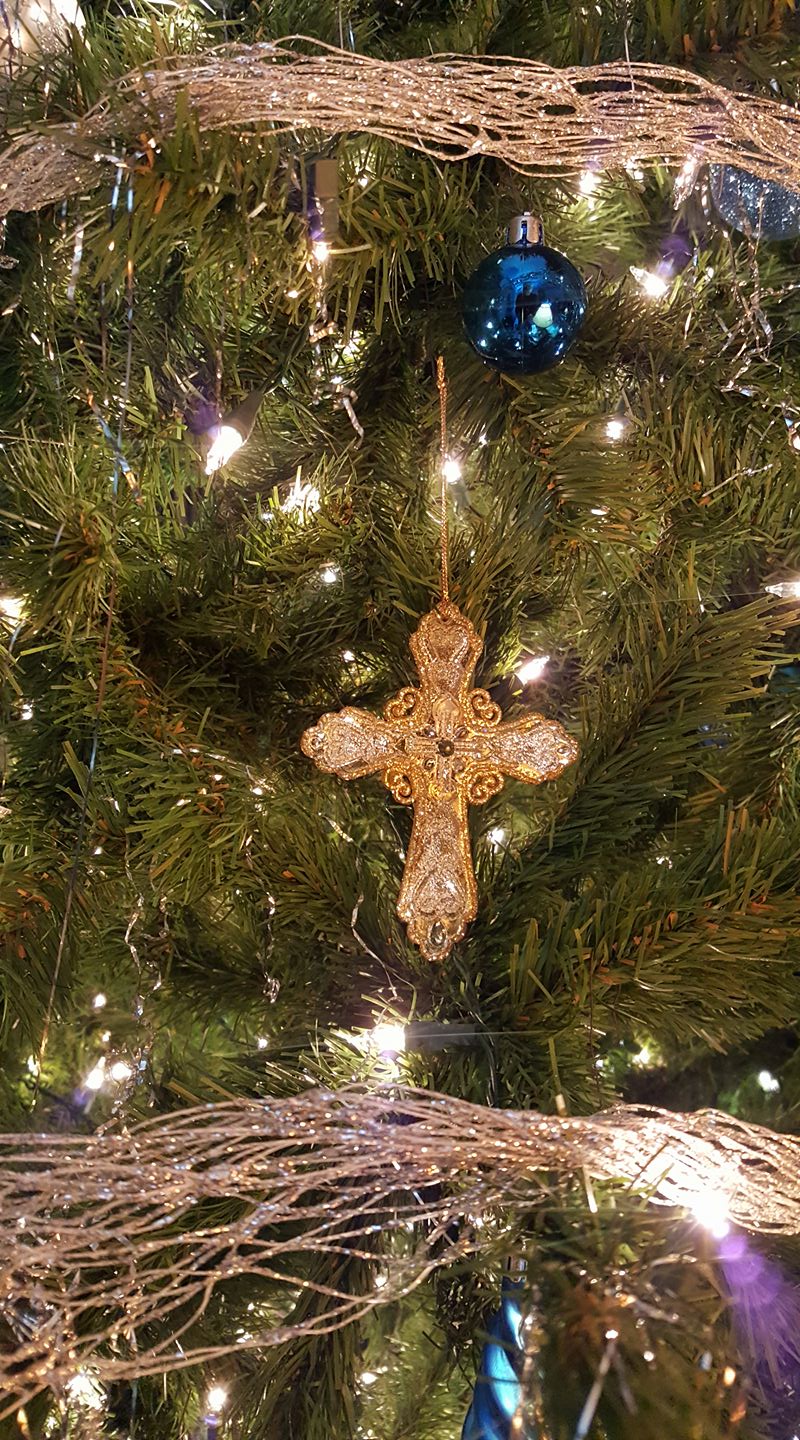
Some modern decorations do make for a bright Christmas.
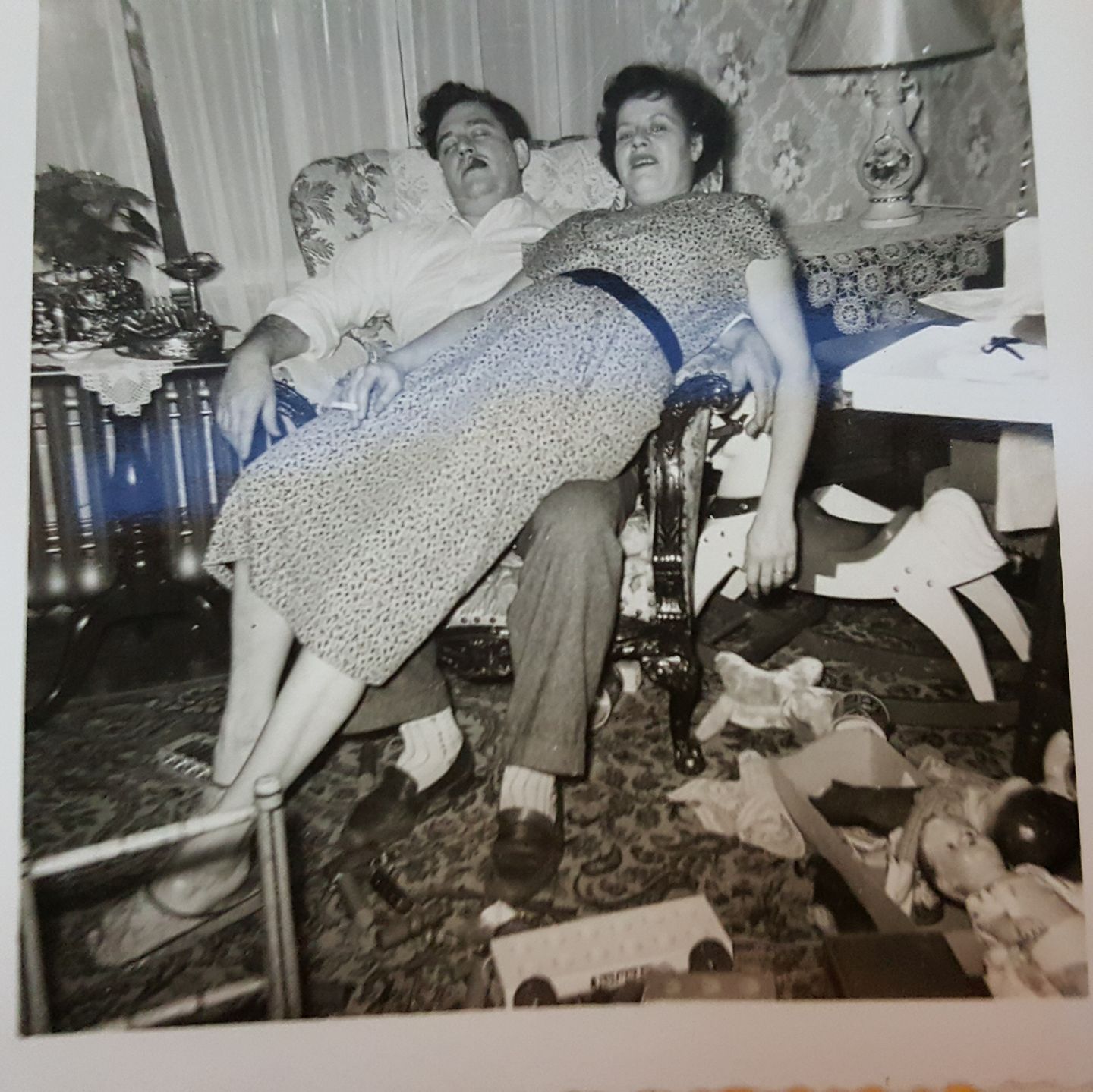
And there it stayed for a week or more. Then Dad brought it to the basement to “get acclimated to being in the house.” He measured it and normally sawed some off the bottom. There it stayed until Christmas eve, or maybe the day before. Dad brought it upstairs to the living room. On Christmas eve we decorated it. Yes, not until Christmas eve. That seems strange by today’s standards, but that was the family tradition. Christmas eve was reserved for decorating, with Mom in the kitchen. At times we all helped her with the cookies and whatever else needed doing.
The decorations were not color coordinated. The lights were multi-colored and large: some bubbly, some round, some pointy. Each string had a mix. The ornaments were in no way color coordinated, a mixture acquired over the years.
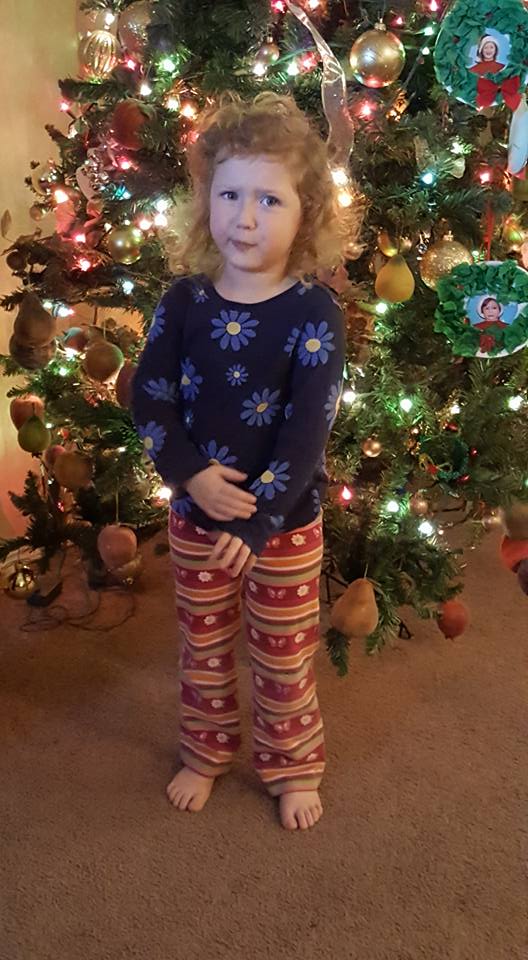
A favorite Christmas picture. E3 wasn’t too happy with me.
Now, of course, the tree goes up right after Thanksgiving. It’s artificial. The lights are all white LED. All ornaments are silver or blue. Even the garland is silver. It’s all very pretty. But it’s so different than what I had growing up that, sometimes, it makes me…sad.
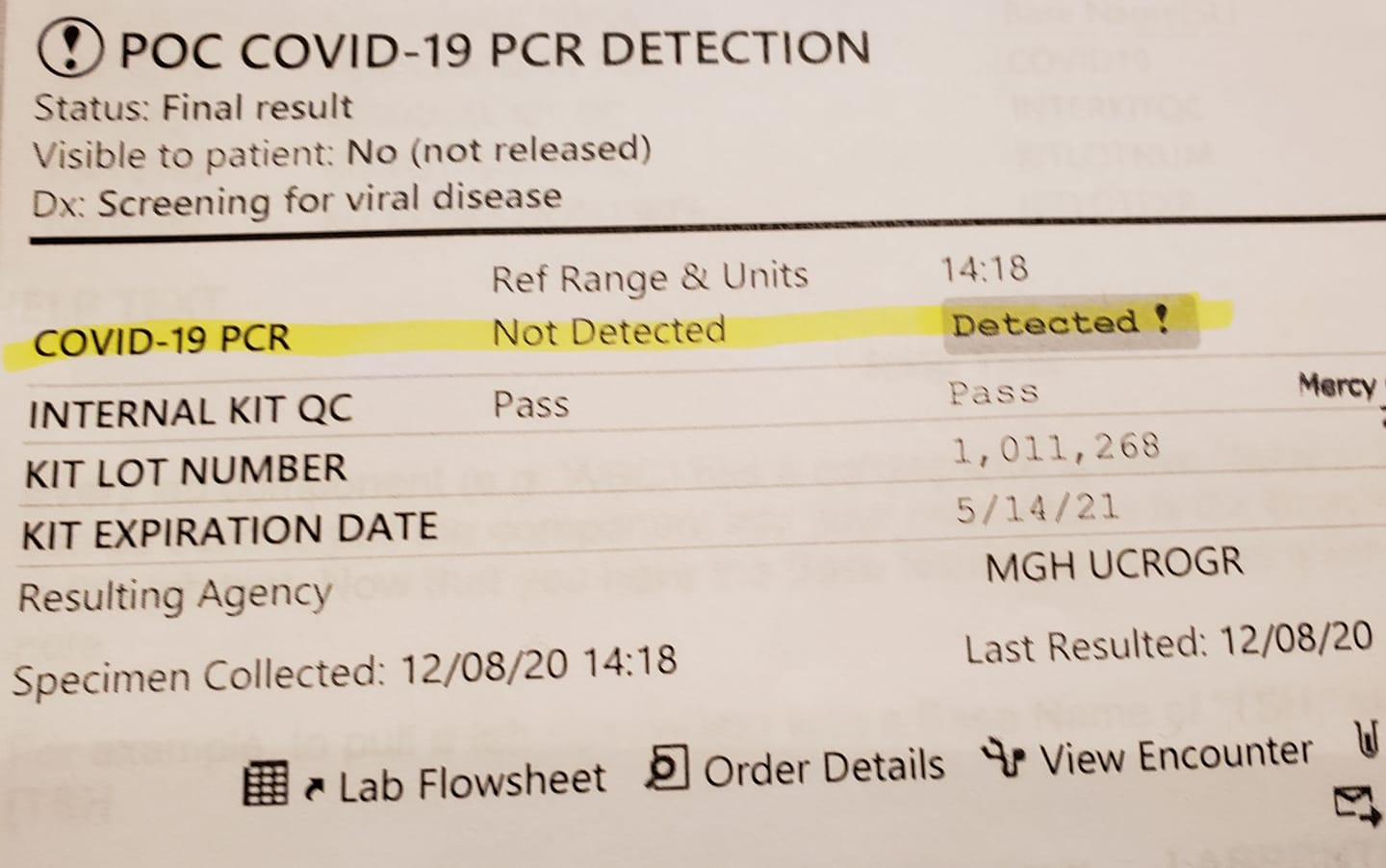
Surprise, surprise! We’re covid-19 positive. 🙁 Not fun.
In a day or two I’ll draft our Christmas letter. I plan on starting it, “What a year, what a year!”
Yes, it has been a doozy of a year. What with the corona virus pandemic hitting, then Lynda’s appendix bursting putting her into the hospital for 19 days with two major operations at the height of the spring restrictions, then her blacking out and falling in August and an ER visit followed by seeing cardiologists about whether her heart caused her to black out. Yes, what a year.
So what do you do when in isolation because you’re covid-19 positive? Put up some Christmas decorations.
It is now worse, however. On Tuesday, Lynda and I both tested positive for covid-19. What a shock. We had both been a little under the weather with what seemed like common colds. Mine fairly mild, Lynda’s a little deeper. Her cold began Dec 1 (maybe the evening of Nov 30), mine Dec 3. Since our son is planning to visit us from the 12th to the 21st, and since any sickness in these times gets you nervous, we decided to get tested. Expecting this to be a simple, calming precaution, what a shock it was when the medical person said, just 10 minutes after the tests, “Well, you are both positive.”
Or you read in sunroom and watch the Christmas cacti start to bloom.
Obviously we are now isolated until we are no longer contagious. I don’t know how long that will be. As to symptoms, mine are very, very mild. I have no fever, didn’t have a fever. I had sniffles and a slight sore throat resulting in a cough. I also had pressure behind my eyes causing them to be very tired and…weird. In other words, exactly like my many colds over the years. Lynda had the same, but also muscle aches and a severe headache. She ran a temperature of 100-101 for a couple of days.
We were barely home from the tests Tuesday afternoon when our doctor called. She had us each describe our symptoms and how they had changed from onset to present. She didn’t ask anything about where we might have got it. The people at the clinic didn’t ask us that either.
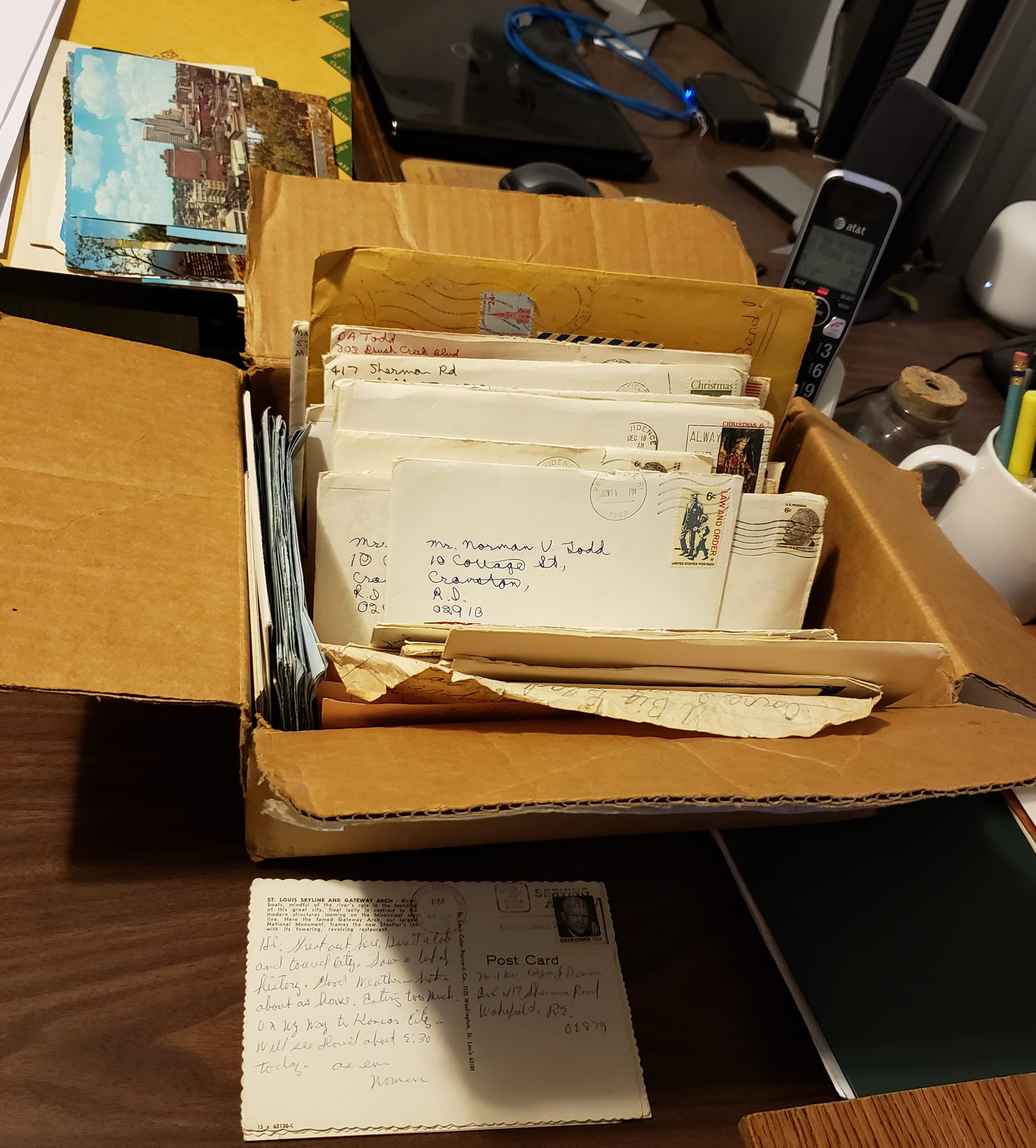
Or, you go through yet another box of old letters: collating them, indexing them, and preparing to transcribe them.
Already, my symptoms are mostly gone and Lynda’s are much reduced. I’m back to normal and Lynda is close to back to normal. Yesterday I walked to the PO (mailing stuff outside) and today almost as far. Together we walked a slow half-mile each of the last two days. Our son ordered a pulse-ox meter for us. It arrived today and we began taking our oxygen level at rest and after six minutes of light exercise, as the doctor asked us to do. So far, so good. We are both at 96% O2 both at rest and after exercise. We’ll watch this closely for a week or so, doing the double readings three times a day, then see where we are.
And, of course, you read in your Advent devotional book every day.
As I understand the disease, the fact that we are both feeling better doesn’t mean we are recovered. Symptoms can come and go. After being better for a while, giving you a false sense of return to health, it can get worse. The worst doesn’t necessarily come when expected.
We are scratching our heads trying to figure out how we got it. Lynda’s symptoms began on Nov 30/Dec 1 and mine not until Dec 3 suggests she got it before me. But I could have been asymptomatic and got it first. Looking 14 days before that, we had a couple of outings but in a safe manner. We were outside in downtown Bentonville on Nov 19, walking around. Lynda went in a restaurant to use the restroom, and into another store out of curiosity, both times wearing a mask. Most people we encountered were wearing masks, even out in the open. I went to church on Nov 22 and made a trip to Wal-Mart on Nov 25. At both places masks are the norm. No one at church was without one, and at WM maybe 5 percent of the customers didn’t wear masks. Contagion not impossible, but maybe improbable.
I’ll give an update once I know anything more. For now, we continue our isolated state, but totally now instead of mostly.
A difficult read. I hope others had an easier time of it than I did.
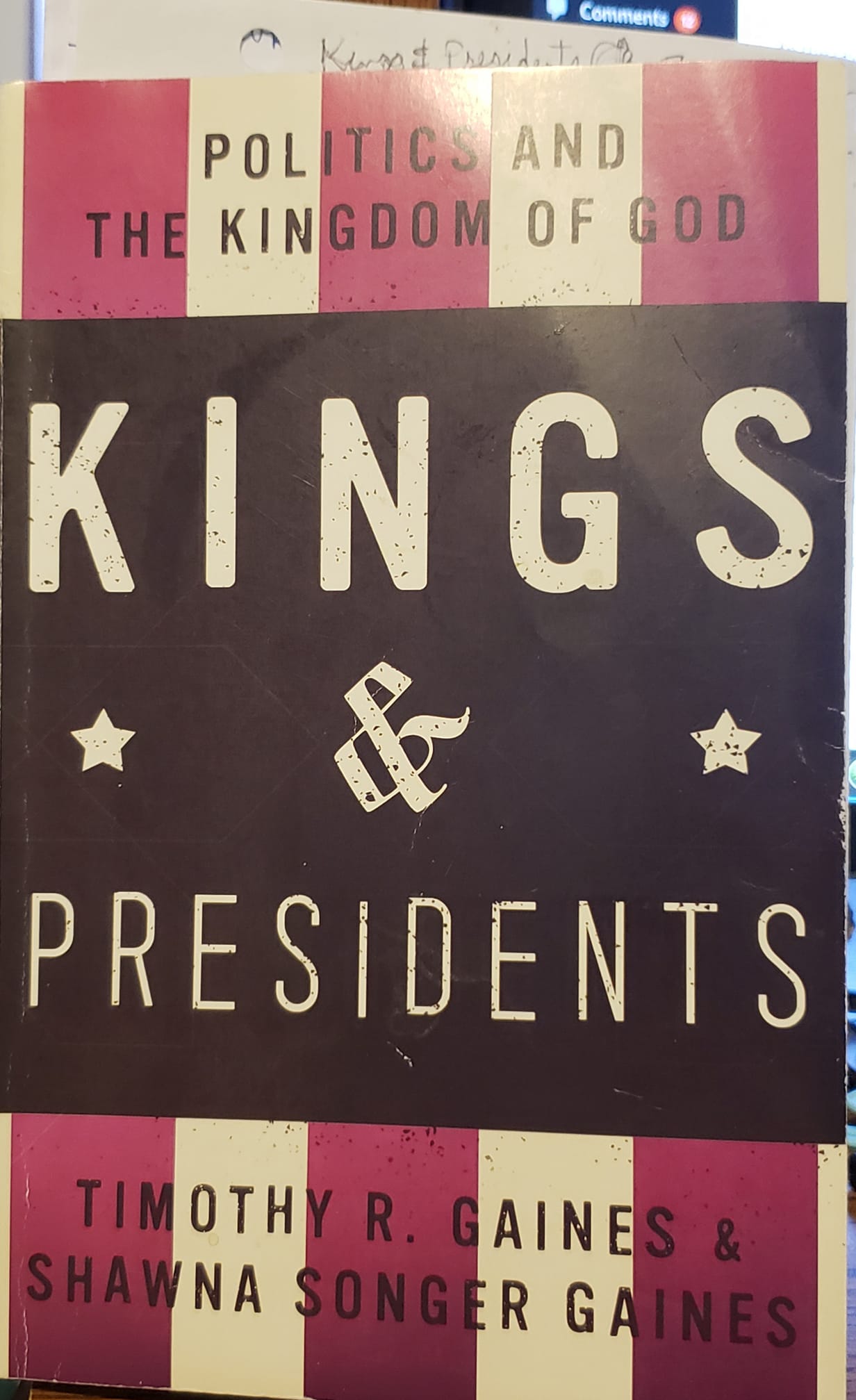
In the last month leading up to the general election just concluded (but still being disputed) in the US, our church decided to do a study of the book Kings & Presidents by Tim and Shawna Gaines. Our pastor preached on it for four weeks. All adult Life Groups were encouraged to also study it, either the four weeks the pastor preached on it or the full eight week series envisioned by the book. Our group elected to do eight weeks. When I had coffee with our pastor during the series, he said there was no way he could preach eight sermons on this material.
Let me tell you, this was perhaps the hardest lesson series I ever taught. Five of the eight weeks were mine, three by my co-teacher. Looking back, I’m glad we studied it, because I feel that we learned something, but, man, it was difficult to teach.
Tim & Shawna (T&S henceforth) developed the book following the 2012 presidential election, when they were pastoring in California. Members of their congregation were apprehensive about what would happen. The book came from the sermon series.
The book takes stories from 2nd Kings 1-7, the days of Elisha the prophet, and contrasts the workings of God with the workings of kings. The kings were unable to see what God could do, whereas the prophet always could. Messages to the king weren’t understood. In the end God always prevailed. That’s fine. But how does that help us approach politics if we are devout Christians?
The purpose for the book is stated thus in the Introduction:
Our purpose…is to offer a vision of political life that takes discipleship to Jesus Christ seriously and treats it as primary.
Okay, that’s all well and good, but how do you do that? They sort of answered that question in the Afterword:
If you’re wondering So what exactly are we supposed to do politically? our guidance would be something along the lines of: Gather with other believers, empty yourself, lovingly deliberate, humbly discern, and then go and be persistent. Engage the world according to the way of Jesus Christ in the power of the Holy Spirit. Take that vision that the ancient stories of our father open to us and act according to the world of the kingdom.
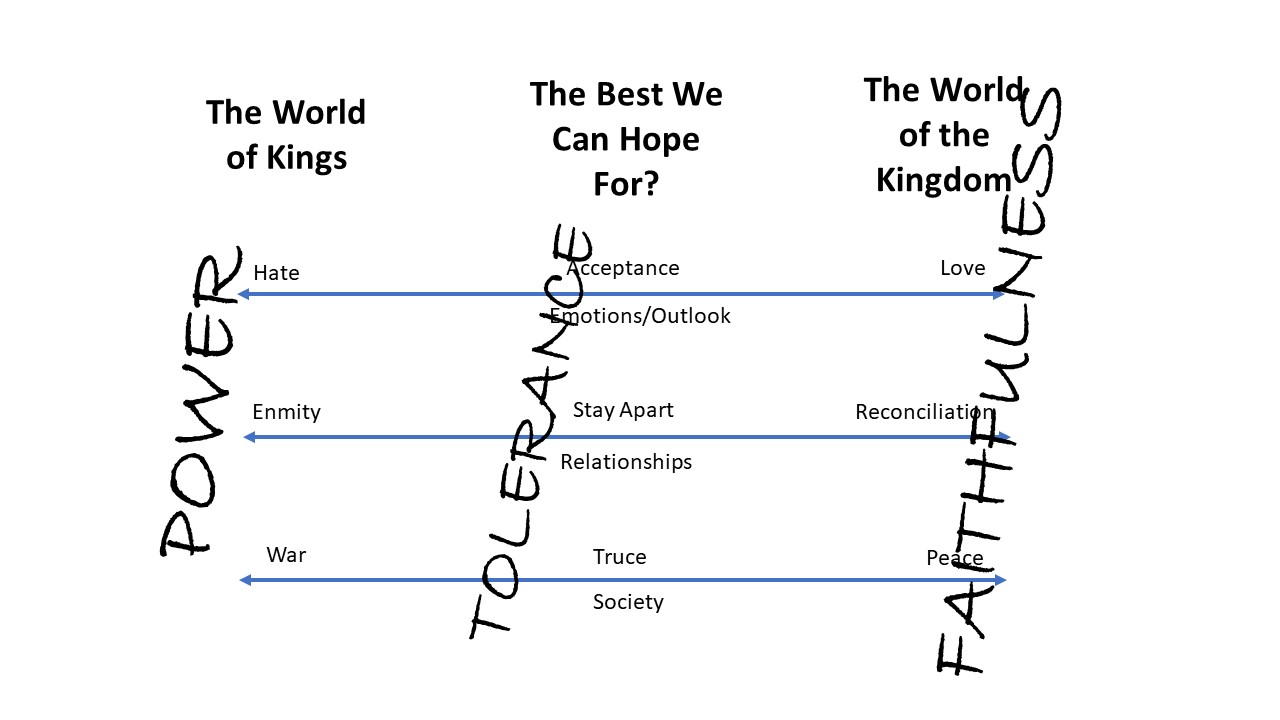
All well and good again. Except this said “gather with other believers.” If I take that literally, does that mean I should not engage in politics with non-believers? T&S do say “engage the world”, which implies we should engage in political discussions with non-believers. I think what they mean is: engage in political discussions with whoever, but don’t lose your faith over it. Come at it from a disciple point of view, not a worldly point of view. To help me help the class to understand this, I developed this chart which summarizes my understanding of T&S’s message. Hopefully I’m right or close to right. Click on the chart to enlarge it.
The best I could come up with on what the book teaches. Christians should approach politics and governance from the right side of the continuum, and seek to move the world in that direction.
In the final lesson—or maybe it was in an earlier lesson—I suggested to the class that they engage in political discussions with non-believers in such a way that, immediately after the political discussion they could present the gospel to them with no loss of credibility. Maybe that’s what T&S are saying.
Here’s a quote from the last chapter of the book.
[A]t its fullest and deepest, politics has always been about being reconciled to God and to one another.
No, no, no, no, no. Unless I’m misunderstanding them, they are proposing dropping the separation of church and state. Politics (by which T&S mean both what I call politics and governance, but they don’t really define their meaning) has nothing to do, and should have nothing to do, with God. It is a secular thing. Governance is about governing, of doing what the people want as far as rules and laws that regulate human civic behavior. Politics is about getting into the position to govern. Politics and governance should be separate from religious practice. We should not be hoping for a theocracy—a blending of church and state.
T&S say some negative things about the concept of the individual. The state regulates individual behavior, they say, so that everyone has the space they need to conduct their life and exercise their rights without stepping on the rights of others. It results in tolerance of each other Yes, they seem to be a bit negative on this, although they also say,
Tolerance is not a bad thing, but we need to acknowledge that a Christian view of politics, a sanctified vision of what politics is mean for, is so much more than simply putting up with one another.
Maybe. Maybe in a world (or a subset of the world) that is 100% devout Christian that would happen. But not in the world we live in. Sorry, T&S, but I can’t grasp your vision in a secular world.
So, it comes down to two questions: do I recommend this book to you? And is it a keeper? No, I don’t recommend it. It was difficult to read and seemed a little long for the material covered. I had to read each chapter a minimum of three times before I could grasp it enough to teach it, and even then I went into each lesson feeling unprepared. As for keeping it, the jury is still out. I may keep it and re-read it before the next election, to see if seasoning by years will make the message of the book clearer and thus be more useful to me. But it is not a long-term keeper. Three stars on Amazon.
Oh, one last thought. T&S kept calling the Christian faith “subversive.” Sorry, but I just don’t see that. I thought a long time about it, but I don’t see it.
Will I ever complete the 4th book in this series (3rd book chronologically)? I’m sure I will, but right now the way is not clear.
This week I got back to work on The Teachings , re-reading in the last three chapters and looking at comments on Chapter 7 by a member of my critique group. I made sure my manuscript notebook was correct and carried it with me wherever I was in the house. It went with me to The Dungeon, to the sun room, to the living room, even to the kitchen table. I barely looked at it, just two times I think.
Alas, all my good plans were only partially realized. I’ve spent a fair amount of time on stock trading this week. Monday through Wednesday I didn’t make any trades. I mainly did research. Actually, I think I made two small trades on Monday and one on Tuesday, testing a new strategy with a very small toe dipped in the trading pool.
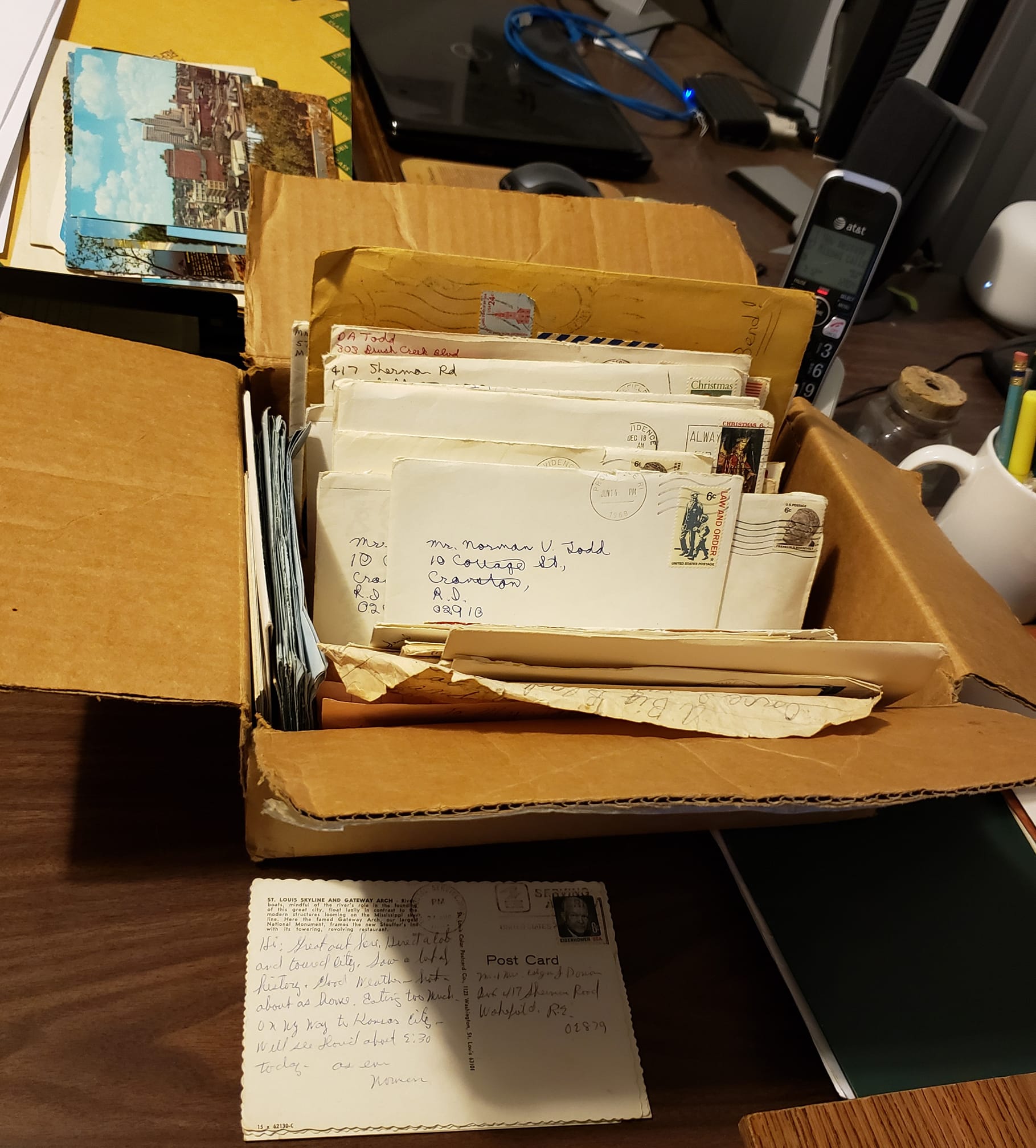
Then, in the drive to continue to declutter and reduce our possessions, I took yet another box of old correspondence out a couple of days ago and began ordering and inventorying it—letters, postcards, and greeting cards from my juvenile days through the first five years of marriage; to my dad and a few to my grandparents, I finished that box yesterday, sort of. The main batch of correspondence is done, but I pulled from the box all the things that don’t fit. These include letters to Dad from his uncles in England, a few letters and cards to him from his siblings, a few to my grandmother from her friends, and some of ours from other years. I found six pieces of correspondence that are part of our Saudi years, so I’ll have to put them in another place. Having more or less finished with this box (a box of keepers for now), I think I’m down to two or three boxes of things to go through and inventory.
Other downsizing tasks included getting rid of four old bicycles, and preparing to mail books and magazines that have sold on Facebook Marketplace. Then, of course, there were two dentist appointments for me. One was supposed to be for Lynda, but as she’s slightly under the weather I went ahead and took it, cancelling a second one I had for later in the month.
Yet another box of old correspondence pulls me away from other tasks I’d like to do, the unnecessary but enjoyable interrupting the important.
Now, having gotten all those tasks out of the way, I should be ready to work continuously on my book, right? Not quite. I’m reading in five different books right now, and try to do some in each every day. I won’t list them here, as they may be the subject for my next blog post. Suffice to say that I’m making a little progress in all five.
Saturday will find me blowing leaves and hauling them into the woods, picking up recently fallen brush, and maybe finishing the border of wallpaper in the downstairs bathroom. I think I have about 6 feet to go, a twenty minute task. I want to get that done before our next visitors come, which will be a week from Saturday. And, of course, there’s always preparation needed to teach Life Group, even when I’m just a substitute. Oh, wait, Saturday is the Rhode Island Author Expo. Since it’s a virtual event this year I signed up to attend it—as a participant, not as an author. That pulls me away from other things from 9 to 4, if I decide to attend all sessions. I’m not really a Rhode Island author, having lived away from my home state for 46 years, but I still want to keep a little of Little Rhody in me.
So, while I can be thankful that the desire to work on the book has finally happened, I can also rue that other tasks continue to get in the way. I’ll somehow get the book done, but it’s sure taking much, much longer than planned.