Previously on this blog I’ve statedthat I have a writing disease: Genre Focus Disorder. This is totally self-diagnosed, and, as you might surmise, a self-created term. Mine seems to be getting progressively worse the longer I’m on this writing journey.
Kristen is a writer who is well on her way of making a mark in the world.
So I’m always…what should I say… encouraged? justified? amused? or maybe sympathetic when I find another writer who has GFD. Recently Kristen Joy Wilks made a comment on a literary agency blog I follow, and I could see GFD pouring from every word. You’ll see it if you look at her website. So I asked Kristen if she would agree to be interviewed here, and her she is.
Q: As I read your bio on your website, I learn of many interesting adventures you have where you live in the Cascade Mountains. Tell us a little about your life there.
A trouble-making dog? Surely this lovable creature isn’t the model for that character!
Kristen: I live at a small Bible camp where my husband is the Camp Director and our three sons take their pet chickens on field trips through the forest, mountain meadows, and up into tree forts of dubious construction. Our Newfoundland dog frolics along behind them, adding muddy pawprints and her lovingly shared fur to the mix. The camp sits at 3,000 feet above sea level and is mostly off grid. We do have phones, but power and water are something we must supply for ourselves through a well and generator with its own battery system.
Q: Also from your website, I see books in three categories: romance, young adult, and middle grade. Yikes, do you really have Genre Focus Disorder just like I do?
Kristen: Yep, I also have picture book manuscripts and poetry about boys, puppies, bugs, and true love! My first love is YA, but during 18 years of attempting to sell my work, I’ve found that the YA market is incredibly tight. I’ve found a home for my romantic comedies and am still pitching stories for children of all ages whenever I get the chance.
Q: Your romances seem to be set in the modern era, not in a series (at least not that I could tell from the brief descriptions). Tell us about your latest romance novel, or, if you prefer, about any of them.
One of Kristen’s romance books.
Kristen: I love to put trouble-making animals in my stories. Copenhagen Cozenage uses a few of our own stories from owning a 150lb Newfoundland dog as I hazard my heroine with an abandoned dog of epic proportions. Spider Gapis my latest and I combine an amazing hike from my youth with a story about an inexperienced hiker who attempts to smuggle her purse dog over a glacier on a 21 mile hike. Right now, I’m working on edits for an adventure in Yellowstone National Park involving a strict park ranger and a free spirited motorcycle-riding photographer who just happens to misplace her Scottish terrier in a herd of bison. If you know anything about Scotties, you’ll realize what a huge problem this is since Scottish terriers will attack any animal no matter their size … even if they weigh in at 2,000 lbs and have two foot horns.
Q: So how does a romance novel writer manage to also write young adult and middle grade?
Kristen: I started with YA and then wrote a romance on a dare so that I had something to pitch at our local conference. The editor loved it and they are super fun to write! I keep coming back to stories for children though and hope to find a home for them at some point.
Q: Do you find yourself gravitating to one of these three genres? Please don’t tell me you’re thinking of adding a fourth.
Kristen: Ha ha, yes I have added picture books. Sorry about that! I am feeling the siren call of middle grade right now after so many years of reading aloud to my three sons. There aren’t many books for boys in the Christian market and who better to write for boys then a mom who has discovered a smuggled gardener snake in her sons’ tub, found pet chickens in the bunk beds, and been asked to pray for captured bugs?
Q: Tell us something about your work(s)-in-progress.
Kristen: Ooooh, right now I’m jumping between two stories. A middle grade that uses some of our wild dog moments as we navigate life with a 110 lb Newfoundland Princess who demands fresh water with every drink, a cookie if we want her to scoot off the seat belts so our youngest can buckle, and wakes us up at 3:00 AM in order to tattle on the neighbor kids about taking her special spot on the couch. Also, there is a book that uses my love of the forest and camp combined with young boys battling prehistoric creatures while trying to hide a rowdy puppy. Here is a photo of our Princess Leia Freyja, the Newfoundland Princess and only other girl in our household.
Check out Kristen’s websitefor more about her. And check out her books at her Amazon page, or at other retailer links on her website. I’m sure you’ll find something you’d like to buy. Or sign up for her newsletter.
Help support artists with GFD. Look at the choices you have of Kristen’s books.
You see many things about aging. Now that I’m in the senior citizen category, I pay more attention to them. Sometimes I identify way too much with them.
A little at the end of the nostril each night makes me sleep a little better.
My day to go to Wal-Mart for groceries is, at the moment, Thursday. I was going on Friday (a change from pre-retirement Saturday), but shifted to Thursday, probably for no good reason. The store is a little less crowded Thursday afternoon compared to Friday afternoon.
So last Thursday (not yesterday) I went. I took with me six cloth grocery bags. I hate to bring home a bunch of plastic bags. We recycle them when we get them, taking them to a thrift store for re-use, but I still hate to take them. I stuffed the six bags in the seat portion of the shopping cart and proceeded with my shopping.
One item on my list from the pharmacy section was a bottle of Vicks VaporRub. Actually, I would be okay with the generic store brand and intended to get that. But this WM is re-merchandising and updating everything. That day they were working on the pharmacy shelves, and had the aisle blocked that I needed to go down. But, on the end-cap was a display with small bottles of Vicks. I said the heck with going around to get to the aisle from the other way, so I picked up a box of Vicks and put it in the basket.
Later, at the check out, my purchases needed only four of the six cloth bags. I left the other two in the basket, paid, walked out to the car. When I loaded things in I found the Vicks, still in the basket, hiding with the two extra bags and obviously not paid for.
What should I do? Obviously I should walk back to the store from my distant parking space and pay for it. I decided not to and drove on home. At some point while driving, I realized I could bring it back on my next trip to Wal-Mart and pay for it with the next week’s purchases. That seemed like a good plan. I managed to (unintentionally) sneak it out of Wal-Mart, surely I could sneak it in.
The next day, Friday, I thought I should put that box in a prominent place on the kitchen table so that I wouldn’t forget it on my next trip. But, the box was nowhere to be found. I hadn’t put it in the bathroom or on my night stand or on the dining room table or on the kitchen table or on the kitchen counter or anywhere such products might be put while waiting to be taken to their proper place. Where was that thing? I began to think maybe I had left it in the shopping cart. That would have been fitting since I didn’t pay for it. And the double absent-mindedness was certainly a sign that I have for certain taken my place among the ranks of senior citizens.
Yes, I really did it.
The story continues, however. Sunday, as I was fixing a couple of fresh vegetables to go with our leftover stir-fry, as I pulled things out of the vegetable drawer in the fridge, there was the box of Vicks, hiding beneath some zucchini. I include the photo to show that it really did happen. It was indeed double absent-mindedness, just in a different way than expected.
The end of the story is anticlimactic. Yesterday I brought the Vick with me to Wal-Mart, hiding beneath those same cloth bags in the shopping cart basket. I went through the store, made my selections, and checked out, making sure this time the Vicks was on the conveyor. I told the clerk about it, and we had a good laugh together at my expense.
So, while I may be of a certain age, when the brain and many other functions begin to go, or have already gone, I had the wherewithal to sneak something into Wal-Mart. I’ll feel good about that for a while.
It’s funny how time causes your thoughts to fade. Maybe not funny; maybe tragic, unfortunate, unintended?
My last blog on the parable of the two sons was written several days before it actually posted, perhaps last Tuesday. At that time I had much more to say about it. Now it’s Monday, six days later, and I can’t really remember what it was I still felt compelled to say. How maddening is that?
Looking at my teaching notes, I see the parable ended with Jesus’ clear denunciation of the Jewish leadership at the time, maybe of the Jewish nation. When Jesus put the question to those who had confronted him [chief priests, elders, teachers of the law], they answered correctly: The son who said he wouldn’t go work in the vineyard but who actually did was the one who did what his father wanted.
Jesus then said, “…tax collectors and sinners are entering the kingdom of God ahead of you.” And, he referred back to John the Baptist, about whom the Jewish leaders had just refused to answer a question, because any answer to the question would have exposed their hypocrisy.
In our Life Group lesson, after discussing what this parable meant to the original hearers, we considered what this parable means for us today. As Gentiles, none of us were part of God’s chosen people. But, as believers in Jesus, we are grafted into the vine of Israel, and so have become part of God’s chosen people. So it’s important for us to dig into it and extract a lesson for us.
Why had the Jewish leaders rejected the preaching of John the Baptist?
They were comfortable in their positions
“We have ours; tough about the rest of you”
They weren’t evangelical, were not trying to spread what they believed was their superior religion
Their practices left no room for repentance and turning to God
They functioned without love
All of these are traps that the evangelical church can be snared it.
That’s the lesson for us today. We have to look at this parable as if we were in the position of the Jewish leaders, and Jesus says we aren’t part of the kingdom of God. I try to constantly do that, to watch for hypocrisy in my own life, and take care to make my doctrine, my speech, and my walk all align perfectly with the teachings of Jesus.
It’s not easy to do, but it’s something I must keep trying to do.
One son said, “I will not” when asked by his father to work in the vineyard.
The other son said, “I will” when asked the same thing.
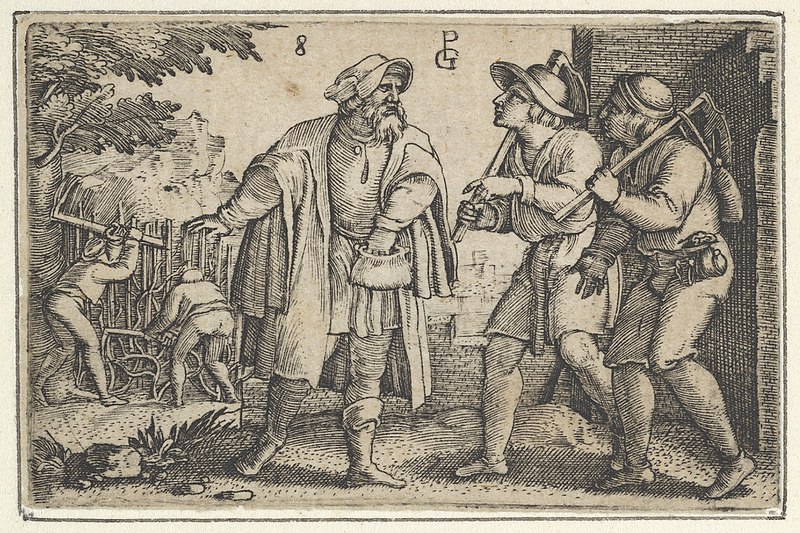
Would they do what their father wanted? Will you do what your Father wants? [an etching by Georg Pencz, public domain]Yet, both of these sons did the opposite of what they said. The obstinate one seems to have changed his mind, for later in the day, if his father had gone to look, he would have found this son hard at work, doing whatever the vineyard required at the particular season of the year. The first son, so willing to say he would go, would instead be found somewhere other than the vineyard, apparently at his ease.
When Jesus told this story, as recounted in Matthew 21:28-32, He said nothing about the motivation of the three people involved. Why does the father ask his sons to work? Is it a small farm and they have no servants? Would they normally work in the vineyard but, for whatever reason, neither had at that point in the day gone to do so? Are they perhaps young boys, not adult sons, who are just learning about what was needed to tend an agricultural property?
Work needed in the vineyard will vary depending on time of year and maturity of the plant. So, too, God’s work for us will vary. [photo by Sanjay Acharya; shared via creative commons license]Then, I wonder why the two sons changed their minds. The one who said, “I will” may have intended to go but, stepping outdoors, decided the heat of the day was too much, he hadn’t slept well enough for the labor, and decided he wouldn’t go. Or possibly he never intended to go, and his positive response was just to put his father off. The one who said, “I won’t go” might have been filled with remorse, especially if his father had a negative countenance after the son’s refusal. Or, perhaps he was teasing his father and intended to surprise him by going to the vineyard and working hard.
Speculation like this is kind of fun, but perhaps does nothing to help us understand the message Jesus has for us from this story. Neither son did what he said he would do. One spoke well but behaved poorly. One spoke poorly but behaved well. If these were your choices in life, you would most likely want to do well after having spoken poorly rather than do poorly after having spoken well.
I see a third option, however: to speak well and to do well. When the Father asks you to go work in His vineyard, don’t hesitate. Do what He asks of you. Go without hesitation. Go with joy that the Father has thought you worthy of some task, something that will improve His kingdom.
This was where our Life Group was a couple of Sundays ago, as we continued our series “A Walk Through Holy Week”. We had good interaction. Our group likes to talk, and I can usually fill the time just by asking a few questions. I think we all enjoyed digging deeply into this parable.
Alas, I’ve reached my desired word count but still have more to say. Look for part two of this, probably on Monday.
Most of my posts lately have been related to my immediate works-in-progress or my other reading, with an occasional dabble in an inspirational post. I have a thought for the latter, based on study for yesterday’s Life Group lesson. I’m not quite ready for that yet.
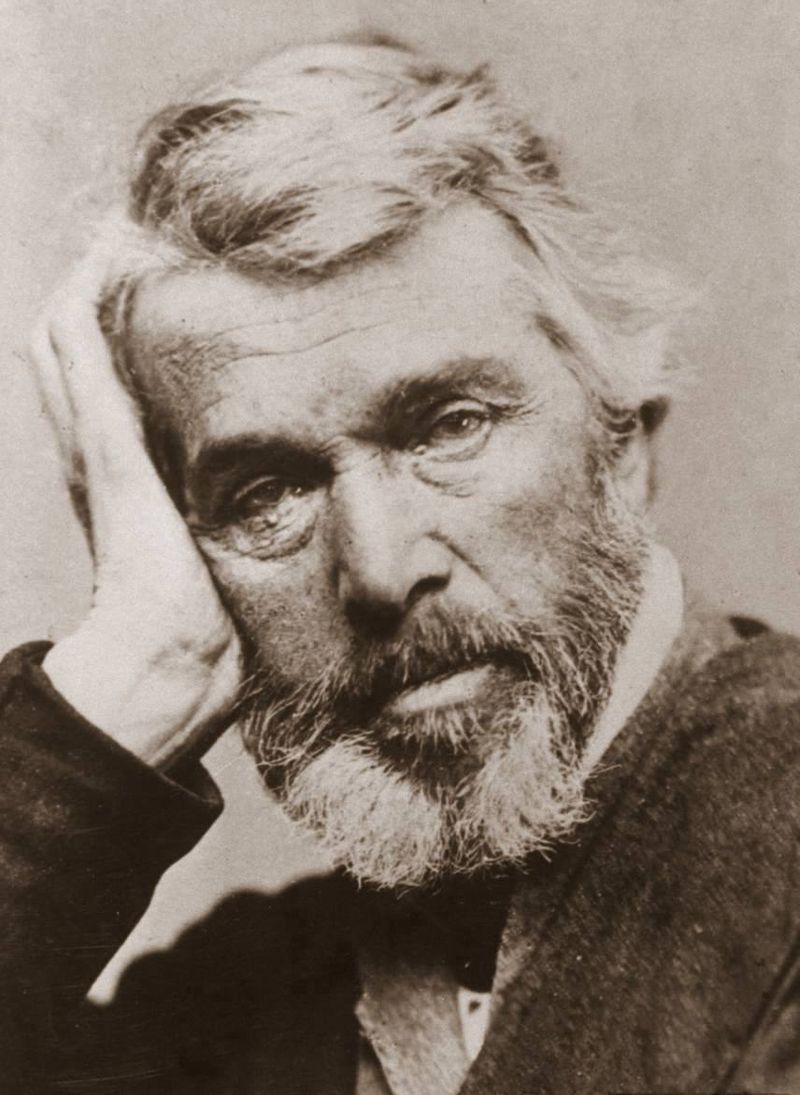
So, I’ll stick with what I intended to post about today, which is my current reading in the writings of Thomas Carlyle. It’s been a while since I’ve written about him. “Carlyle” is a category for my blog posts, so you could easily check and see what I’ve written about him before.
I have published one book about him, a gathering and reprinting of his articles written 1820-1823 for the Edinburgh Encyclopedia. So far as I know, my book is the only time all his articles for that publication have been gathered in one publication.
I’ve been slowly, over several years, working on two other books about Carlyle. One is about his book Chartism. The other is a Comprehensive Chronological Composition Bibliography. Both of these works have stalled, mostly because they are simply lower on my writing priority list than others. Perhaps that will change one day, but it’s the case for now.
Carlyle changed from being a compassionate man to a promoter of slavery. How that change came about is the subject of my Carlyle studies.
But I’m back to reading him. From 1827 to 1833 Carlyle’s main writing was a series of articles for the Edinburgh Review and other literary magazines. Emerson gathered these and published them in three volumes around 1839. It was so popular in the USA that a British edition soon followed. Today they are considered one of Carlyle’s major works.
I’ve read a couple of the articles before, and started a couple more, but never got very far with it what have come to be called Carlyle’s Miscellanies. I haven’t wanted to put money into buying them in print (or e-book), and had never found an e-copy of good quality of a public domain version. About two weeks ago I went looking for them again, and, lo and behold, I found an e-book re-issue of the essays, of excellent quality, all in one volume, I think.
I’m reading them on my smart phone. That’s not a totally new experience, since I recently read Locke’s Two Treatises of Government on my smart phone. Still, reading books on phones will be somewhat new for a while. I’m enjoying it there, however. I turn the phone sideways and slightly enlarge each page to fill the window. So far I’ve read two of the essays, the first two in chronological order: “Jean Paul Friedrich Richter” and “State of German Literature”, both from the Edinburgh Review in 1827. I finished the second one last night.
Why am I doing this? Why distract myself from my writing or research for my writing. I can only plead a reduction in sanity, or perhaps an increase in delusion. I sometimes think myself a scholar and want to read something that either is or seems to be scholarly. Carlyle seems to fit. And, in case I ever do get around to finishing that Chartism book, these readings might actually play a part in it.
The Richter article was easy enough to understand, and I found it informative and even enjoyable. The German Literature article was tedious, even boring. I think this is where I bogged down before in my reading of his essays. The book has some good parts to it. I think I would grasp more with another reading. Carlyle, like so many writers of his time, wished to write poetry along with prose. He left a number of poems to us, none of which are highly thought of. I may pull out some of his thoughts on German poetry, really about poetry in general, and see if I couldn’t make essays out of them.
Queued up on my phone is his third essay in the book, “Life and Writings of Werner”. I don’t believe I’ve rad this one before. I don’t know Werner, so am not looking forward to reading it, except to know it will perhaps sate my need to be reading something intellectual. If I can get through this third essay, there’s hope that I will get through the entire book.
Meanwhile, should you buy and read my previous book on Carlyle? I’m really just an editor in that book. I wouldn’t recommend it, not unless you want to make study of Carlyle a significant intellectual enterprise. If you do, be forewarned that, after publication, I found an embarrassing error in the chapter on Pascal. I corrected it in the e-book, but it remains in the print book, awaiting my taking the half-hour needed to make the correction and republish. Seeing as I have to migrate all my print books from CreateSpace to Amazon KDP, I’m planning to get that correction done during the migration.
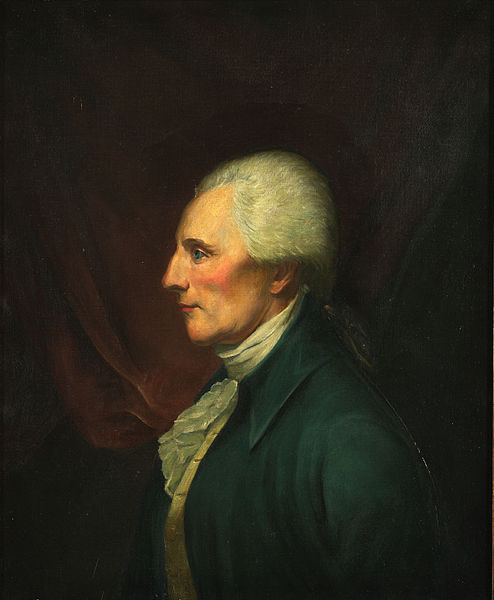
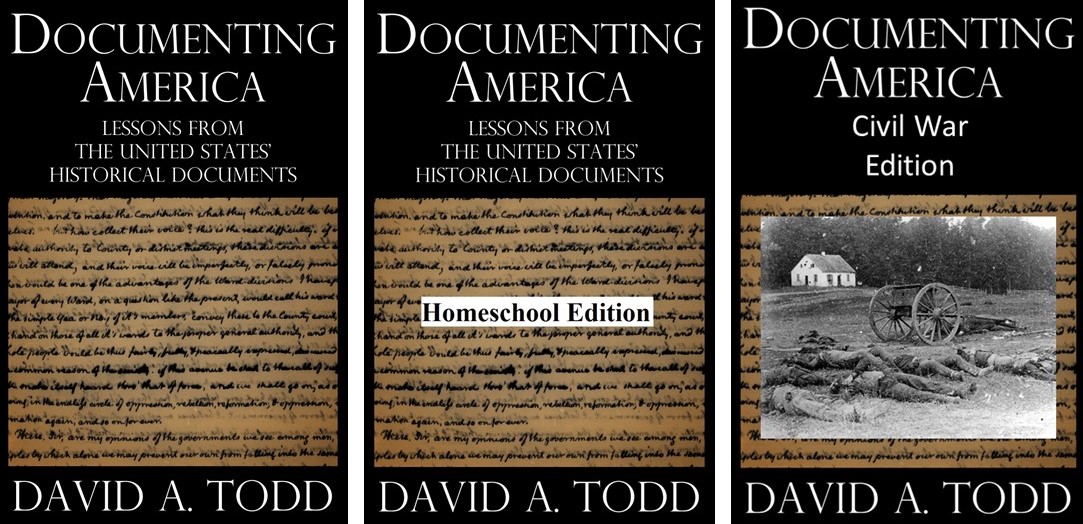
Richard Henry Lee, while a true patriot, wasn’t happy with the proposed Constitution. [Photo by Billy Hathorn, used under creative commons license]As I work on Documenting America: Making The Constitution Edition, my main problem is having too many sources or sources of too great a length with too many inspiring words. If I put in everything I want to, the book would be 200,000 words. In comparison, the first volume in the series was a mere 45, 000 words and the third only 70,000.
Clearly, I have much editing to do. A good example of this are some letters written by Richard Henry Lee right after the Convention. Published in a newspaper with a pseudonym, they were anti the proposed Constitution.
Since in the book I want to present both sides of the argument, Lee’s letters interested me. I pulled two of the five letters into my manuscript, and discovered they were over 9,000 words. Heavens! How in the world would I ever get them down to a reasonable length, which is between 1,000 and 2,000 words without throwing away valuable words?
I decided I had two different things I could do with the excess words. One is to take some excerpts from the letters and build blog posts around them. In furtherance of that, Here is a quote from Letter 3.
This, by a part of Art. 1, Sect. 4, the general legislature may do, it may evidently so regulate elections as to secure the choice of any particular description of men. It may make the whole state one district—make the capital, or any places in the state, the place or places of election—it may declare that the five men (or whatever the number)…the state may chuse who shall have the most votes shall be considered as chosen. In this case it is easy to perceive how the people who live scattered in the inland towns will bestow their votes on different men, and how a few men in a city, in any order or profession, may unite and place any five men they please highest among those that may be voted for and all this may be done constitutionally, and by those silent operations, which are not immediately perceived by the people in general. I know it is urged, that the general legislature will be disposed to regulate elections on fair and just principles: This may be true. Good men will generally govern well with almost any constitution: but why in laying the foundation of the social system, need we unnecessarily leave a door open to improper regulations? This is a very general and unguarded clause, and many evils may flow from that part which authorises the congress to regulate elections.
In the book I would make commentary on this excerpt. I would focus on how Lee’s fears were not met—except where gerrymandering occurs, but this is done by the States, not the Federal government. I would make reference to his statement that “Good men will generally govern well with almost any constitution” and quote it in my commentary, as I did here. While Lee’s letter is negative relative to the Constitution, I would present his side but find a way to make it positive.
And, perhaps, a fourth to this one? Yes: Making The Constitution Edition, hopefully in 2019. Update: It will come in 2019!
So why didn’t I? Why did so much of Lee’s words end up on the cutting room floor (my final excerpt being only 1450 of Lee’s 9200 words)? Chalk it up to editor’s license, and the fact that I have a surfeit of material, and that I judged other of Lee’s words to be better for my chapter.
It has occurred to me that I have a second way to use some of these deleted words or other sources that I have cast aside in my editorial duties. For years I’ve thought about starting a writer’s newsletter, to be shared via e-mail; something to “market my wares”, so to speak. I’ve hesitated doing this because of the work involved. For a while I thought I would wait until retirement to start it. I’m there now, and still hesitate due to the work.
I wanted to title the newsletter Citizen and Patriot, after the words of James Otis in his argument against the Writs of Assistance in 1761: “These manly sentiments in private life make the good citizen, in public life, the patriot and the hero.” That didn’t seem appropriate for a writer’s newsletter, however.
Then I thought, perhaps it could be a column in my newsletter. Since I hope to be forever working on books in my Documenting America series, this could be the column where I promote them.
Still another thought came to me. Perhaps I could make this a stand-alone newsletter, one that, through using the words from America’s historical documents, to urge good citizenship and patriotism. I could even make it a paid newsletter and maybe make a little money from my research.
Well, of necessity I’m going slowly with that. I would need a design, a simple masthead, and a few sample newsletters prepared to see what it looked like and how much time each would take. I’d need to establish a frequency, and utilize some time of e-mail marketing service to make it happen. All much work, it seems to me.
So, for now I’ll accumulate sources. I’ll relegate many unused sources, and large parts of used ones, to my editor’s waste pile—but I won’t discard them, not just yet. Perhaps I’ll have more blog posts about them, and maybe a newsletter somewhere in my future.
Sunrises are always inspiring. Wikimedia Commons user TeemuN. Link to license: https://creativecommons.org/licenses/by-sa/3.0/deed.en
One of the bad things about being a writer—at least for me—is that every good thought you have, every good thing you read, becomes an idea for writing. Why oh why can’t I be like other people and just enjoy what I read without thinking I have to derive something from it?
My morning devotional reading is in Psalms. I was quite regular in my devotions when I was a working man, taking a moment with coffee at my desk at work to read something in scripture and pray before starting my day. I admit, however, to my shame, that I lost this discipline once I retired. I started that back up last week, and have faithfully read the Psalms each morning since, before I wake up my computer.
But I digress. On Tuesday, I read Psalm 57. You know how they say (whoever they are) that every time you read something in the Bible, no matter how many times you’ve read it before it becomes new for you again? Well, it turned out to be true for me that day. The key verse was 57:8, which reads
Awake, my soul! Awake, harp and lyre! I will awaken the dawn.
That last phrase hit me. “I will awaken the dawn.” What does that mean? I pondered it. It speaks to me of anticipating the day, of rising before dawn and saying that you can’t wait for the day to begin and see everything God has in store for you on this day.
The Psalms are a comfort to many readers. Public domain
That doesn’t always happen, does it? Some days your normal waking time comes and it’s all you can do to swing your legs out of bed and find the floor. Standing up is a struggle, never mind going about your getting-up activities.
The psalmist didn’t seem to have that problem. He was so anxious to get going with the day that he called for his soul to wake up, for his harp and lyre to wake up, and together they would summon the dawn to get a move on.
That’s the kind of start to the morning I want to have.
So, I have this new encouragement to begin the day in a positive way. That was Tuesday. On Wednesday I read Psalms 58. I saw that the words under the title, which would actually be the first words in the text since these psalms weren’t numbered when they were written, were “For the director of music. To the tune of ‘Do Not Destroy’. Of David. A miktam.”
I remembered that quite a few psalms give the tune it is to be sung to. I checked the last several I’d read. For Psalm 57 it was also to the tune of “Do Not Destroy”. For Psalm 56 it was to “A Dove on Distant Oaks”. Psalm 60 is to “The Lily of the Covenant”. Other psalms in this part of the book have other song names attached to them.
Immediately, a possible book came to mind. I’m not going to give the details of it at this point. In fact, I’m still working it out, though, like many of my book ideas, what it will be from beginning to end has pretty much flashed before my eyes.
Is it a do-able book? Would anyone ever want to read it, or, like the rest of my books, will it sell around 20 copies and be forgotten? Will I ever get it written? Perhaps someday you’ll find a book of that title by me, for sale at Amazon and other fine retailers. Or perhaps not.
Lots of questions. Time will reveal a few answers, I hope.
In recent weeks I have experienced three instances where “wrongs” were done against me, at least in my perception. I don’t want to go into any details. Let’s just say that two of the three are certain, while the third is “iffy”.
The last two of these, the certain ones, were on the same day, almost on top of each other. It threw me for a loop for a couple of days. I went around depressed—not a clinical type depression, but more of a wondering how to handle the two situations. One of them, if I didn’t want to, I would never have to see the person again. The other didn’t include that luxury. The third, the lesser one, was more a case of where I was very disappointed in someone’s words, words not directed at me but at a situation in life in general.
If I remember correctly, the two things happened on a Friday. Saturday evening, as is my habit, I took a look at the Life Group lesson I would teach the next day. It was Jesus cursing the fig tree, it shriveling up, and how he taught the disciples from this. It’s found in the two of the gospels, Matthew and Mark. I studied from my “Harmony of the Gospels”. It’s been enjoyable to use my own study tool for this series.
Jesus cursed the fig tree on Monday of Holy Week. He said, “May no one ever eat fruit from you again!” It was on Tuesday, when they passed the same way to go to Jerusalem that the disciples noticed the tree had withered. They questioned Jesus about how this happened, to which he replied that through prayer this was possible, using his metaphor of the mountain being cast into the sea.
But then, he added something, sort of the unsolicited advice he gave when he noted the true condition of someone’s mind and heart before they did. He said, “And when you stand praying, if you hold anything against anyone, forgive him, so that your Father in heaven may forgive you your sin.” This particular teaching is found in Matthew but not Mark.
This hit me hard. I realized I held something against someone, against three someones. If I were praying, and if I expected my prayers to be successful, I needed to forgive them. I wasn’t to wait for them to realize the wrong they’d done and ask for forgiveness. My forgiving them was to be instantaneous, and not asked for. This wasn’t something to delay into the future, when next we meet.
As I studied my lesson, I kept coming back to that concept. Maybe the things I held against these people weren’t wrongs at all. Perhaps my perception of what they did was wrong. Perhaps what they did was unintentional: they didn’t recognize what the consequences of their action or words would be. None of that mattered. I was to forgive.
My forgiveness would be for me, not for them. They wouldn’t know about it. The scripture doesn’t say I’m to seek them out and express this forgiveness to them. How would that sound? “Hey, sir or madam, you don’t realize you wronged me, and you haven’t asked for forgiveness, but I forgive you anyways.” No, I don’t think that’s what Jesus intended. You forgive, immediately, whether they ever ask or not.
So, I did that. I forgave each of them, and hold no animosity to them. In one case I could see that the person was actually helpful, but did so in a clumsy way. Another was a simple mental lapse due to disorganization, certainly with no evil intent. The third is a difference of opinion, and will likely forever remain so. I ought to be able to allow others to have different opinions without holding a grudge.
I learned my lesson. Let’s hope that I’ll be able to put it into practice going forward without having those bad moments of moping about wrongs or perceived wrongs.
I’ve made a few political posts on An Arrow Through the Air (okay, perhaps more than a few), but tend to avoid them. Plenty of news outlets and commentators do a good job saturating us with news and news analysis.
But this one I must, because I found a magazine article that agrees with me and presented the same analysis of health care costs that I did at least five years ago.
Somehow we got on the mailing list for Imprimis, the magazine published by Hillsdale College. We’ve never given them money, so it was a curiosity when it first showed up in our mail. It’s a good magazine, however. I tend to read the issues in batches, whenever the magazine basket gets to overflowing.
Last week I read the September 2018 issue. The article is titled “A Short History of American Medical Insurance” by John Steele Gordon. I don’t know him, but I like his article. Perhaps I like it, in part, because he agrees with views I already had, yet gave me new information at the same time.
I’ve said for a long time that things paid for with other people’s money tend to rise in price faster than things you pay for with your own money. Or, put another way, what you don’t pay for yourself and directly you won’t fight to keep the cost low.
Health insurance isn’t exactly other people’s money, but, when you go to the doctor’s office and have a $25 co-pay, or when you pic up a med at the pharmacy and have a $4 co-pay, you tend to not pay any attention to the actual price of the thing. $4 for a month of pain pills? Great. $25 to see my PCP to see about my chronic condition? Best bargain in town.
Thus, forgetting that the actual cost of going to the doctor is $188, with you paying $25 and insurance paying $163. Except, you have to pay for the insurance, but that’s taken out of your paycheck and you never see it. And for sure you never see your employer’s contribution. The prescription or office visit looks like a bargain, but it probably isn’t. You see no need to fight to keep the cost down, or find a lower-priced alternative.
Slowly, over the years, those who provide those services learn they can increase their costs to a fairly high level, up to a point where the insurance company starts pushing back.
Now, I realize you shouldn’t purchase medical care based on low-bidder. These are professional services. You want the best you can get. The problem is, removing the payment away from the consumer results in the consumer simply not paying much attention, and prices go up.
Don’t worry; it’s not just you. A hundred million purchasers of medical services in America are doing the same thing. One person trying to buck the system isn’t going to get far. It’s an unfortunate result of believing that the “windfall” of having your bills paid for with other people’s money means you pay more in the end. You paid for a big chunk of your health insurance. And, if your employer didn’t pay for the rest of your health insurance, that money would be part of your salary. With the greater amount of money you could shop around for the best services at the lowest acceptable cost, and would most likely come out ahead. Health insurance would become true risk mitigation, which is the true definition of insurance.
The phenomenon is the same with other things that are paid for with other people’s money. The main one that comes to mind is a college education. When 50% of the cost comes from scholarships (other people’s money), 40% from loans (temporary use of other people’s money) , and a mere 10% from out-of-pocket during the college years, the payments are so far removed that the consumers of college educations don’t try to apply pressure to keep the costs down.
These are things I see the results of, but have no answer on how to reverse a trend and make it better. Too many people are enamored at the thought that other people are paying their bills to ever change back.
I should take time to quote a number of places in Gordon’s article where I feel he is spot on in his analysis. My post is already too long, however. Perhaps I’ll make a second post. If not, I leave it by saying I’m glad to have had corroboration, from a source I admire and consider authoritative, for some long-held beliefs.
John Locke significantly influenced key leaders of the American Revolution.
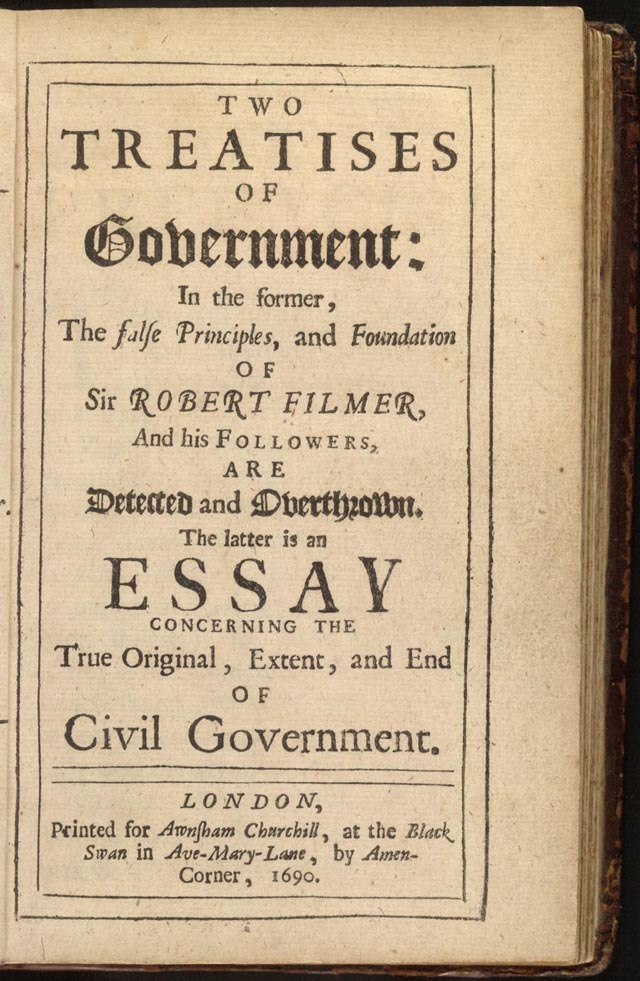
Last week I posted my book review on John Locke’s first treatise on government, promising to come back “soon” for a review of the second treatise. Here I am for that purpose. I made a slight digression, as I obtained Filmer’s Patriarcha and have allowed myself the distraction of reading it some.
In his second treatise, Locke is trying to say why government is established, and how, and how it is changed. I found his descriptions tedious. Again, how much of this was the archaic language and structure, how much my distracted reading, how much my small-screen device I don’t know. A future, second reading is on the unwritten to-do list.
Detected and overthrown? Locke was certainly confident about the success of his arguments. Photo reference: Public Domain, https://commons.wikimedia.org/w/index.php?curid=399928
Locke started by saying his first discourse had proven that Adam had no special authority to rule over all the earth, nor did his immediate or later heirs, that there was no right of succession, and that even if there had been a right of succession we have lost the line of succession; hence, what do we do? Did he prove that? I’ll have to re-read the first treatise to decide.
His conclusion, however, I can agree with: “…it is impossible that the rulers now on earth should make any benefit, or derive any the least shadow of authority from that [Adam and the right of succession]” and thus “all government in the world is the product only of force and violence, and that men live together by no other rules but that of beasts, where the strongest carries it, and so lay a foundation for perpetual disorder and mischief, tumult, sedition and rebellion….” Therefore, mankind “just of necessity found out another rise of government, another original of political power, and another way of designing and knowing the persons that have it, than what Sir Robert Filmer hath taught us.”
Locke then sets out to describe and prove this process in 219 pages (in my copy). In chapter 2 he describes the State of Nature. In chapter 3 it’s the State of War. He discusses Slavery in chapter 4. This interested me. On the slavery-freedom continuum, where Filmer came down on the end that is slavery, Locke comes down on the end of freedom.
“The natural liberty of man is to be free from any superior power on earth, and not to be under the will or legislative authority of man, but to have only the law of nature for his rule.” Locke’s Second Treatise, Chapter 4, section 22
I like Locke’s position. Given opposite ends of the continuum, all men are slaves (except for the king) or all men are free, I agree that all men are free. This seems more natural than that all men are born slaves, subject to the one man who has dominion over all.
I could go on and on. Locke talks of Property in chapter 5 and the right to defend it. His discussion of Paternal Power in chapter 6 is a blur to me. Moving to Political or Civil Society in chapter 7, Locke held my interest a little more. This phrase, “man in society”, shows up in the writings of our Founding Fathers. It’s the buzz word of the day for mankind not living alone, but with other men, and thus having to modify behavior so as to live at peace.
The latter is part of Locke’s system of government that I need to know better. I’m sure I’ll re-read this book. I may, perhaps, read Filmer all the way through first, and maybe Hobbes, now that I have both in my possession.
The American Founding Fathers liked Locke. I need to too. I’m not really there yet. As I re-read some of the second treatise in preparation for this review, it seemed clearer to me. I was able to focus on Locke’s premises and arguments, rather than just read the words. Maybe there’s hope for me yet in understanding these books.
Do I recommend anyone else read these books? I don’t, at least not yet. Perhaps in a few months, or maybe a year, I’ll have finished a second read and will revisit this in a post.