All posts by David Todd

A Self-Taught Lesson

In recent weeks I have experienced three instances where “wrongs” were done against me, at least in my perception. I don’t want to go into any details. Let’s just say that two of the three are certain, while the third is “iffy”.

The last two of these, the certain ones, were on the same day,  almost on top of each other. It threw me for a loop for a couple of days. I went around depressed—not a clinical type depression, but more of a  wondering how to handle the two situations. One of them, if I didn’t want to, I would never have to see the person again. The other didn’t include that luxury. The third, the lesser one, was more a case of where I was very disappointed in someone’s words, words not directed at me but at a situation in life in general.

If I remember correctly, the two things happened on a Friday. Saturday evening, as is my habit, I took a look at the Life Group lesson I would teach the next day. It was Jesus cursing the fig tree, it shriveling up, and how he taught the disciples from this. It’s found in the two of the gospels, Matthew and Mark. I studied from my “Harmony of the Gospels”. It’s been enjoyable to use my own study tool for this series.

Jesus cursed the fig tree on Monday of Holy Week. He said, “May no one ever eat fruit from you again!” It was on Tuesday, when they passed the same way to go to Jerusalem that the disciples noticed the tree had withered. They questioned Jesus about how this happened, to which he replied that through prayer this was possible, using his metaphor of the mountain being cast into the sea.

But then, he added something, sort of the unsolicited advice he gave when he noted the true condition of someone’s mind and heart before they did. He said, “And when you stand praying, if you hold anything against anyone, forgive him, so that your Father in heaven may forgive you your sin.” This particular teaching is found in Matthew but not Mark.

This hit me hard. I realized I held something against someone, against three someones. If I were praying, and if I expected my prayers to be successful, I needed to forgive them. I wasn’t to wait for them to realize the wrong they’d done and ask for forgiveness. My forgiving them was to be instantaneous, and not asked for. This wasn’t something to delay into the future, when next we meet.

As I studied my lesson, I kept coming back to that concept. Maybe the things I held against these people weren’t wrongs at all. Perhaps my perception of what they did was wrong. Perhaps what they did was unintentional: they didn’t recognize what the consequences of their action or words would be. None of that mattered. I was to forgive.

My forgiveness would be for me, not for them. They wouldn’t know about it. The scripture doesn’t say I’m to seek them out and express this forgiveness to them. How would that sound? “Hey, sir or madam, you don’t realize you wronged me, and you haven’t asked for forgiveness, but I forgive you anyways.” No, I don’t think that’s what Jesus intended. You forgive, immediately, whether they ever ask or not.

So, I did that. I forgave each of them, and hold no animosity to them. In one case I could see that the person was actually helpful, but did so in a clumsy way. Another was a simple mental lapse due to disorganization, certainly with no evil intent. The third is a difference of opinion, and will likely forever remain so. I ought to be able to allow others to have different opinions without holding a grudge.

I learned my lesson. Let’s hope that I’ll be able to put it into practice going forward without having those bad moments of moping about wrongs or perceived wrongs.

Thoughts on the Rising Cost of Health Care

I’ve made a few political posts on An Arrow Through the Air (okay, perhaps more than a few), but tend to avoid them. Plenty of news outlets and commentators do a good job saturating us with news and news analysis.

But this one I must, because I found a magazine article that agrees with me and presented the same analysis of health care costs that I did at least five years ago.

Somehow we got on the mailing list for Imprimis, the magazine published by Hillsdale College. We’ve never given them money, so it was a curiosity when it first showed up in our mail. It’s a good magazine, however. I tend to read the issues in batches, whenever the magazine basket gets to overflowing.

Last week I read the September 2018 issue. The article is titled “A Short History of American Medical Insurance” by John Steele Gordon. I don’t know him, but I like his article. Perhaps I like it, in part, because he agrees with views I already had, yet gave me new information at the same time.

I’ve said for a long time that things paid for with other people’s money tend to rise in price faster than things you pay for with your own money. Or, put another way, what you don’t pay for yourself and directly you won’t fight to keep the cost low.

Health insurance isn’t exactly other people’s money, but, when you go to the doctor’s office and have a $25 co-pay, or when you pic up a med at the pharmacy and have a $4 co-pay, you tend to not pay any attention to the actual price of the thing. $4 for a month of pain pills? Great. $25 to see my PCP to see about my chronic condition? Best bargain in town.

Thus, forgetting that the actual cost of going to the doctor is $188, with you paying $25 and insurance paying $163. Except, you have to pay for the insurance, but that’s taken out of your paycheck and you never see it. And for sure you never see your employer’s contribution. The prescription or office visit looks like a bargain, but it probably isn’t. You see no need to fight to keep the cost down, or find a lower-priced alternative.

Slowly, over the years, those who provide those services learn they can increase their costs to a fairly high level, up to a point where the insurance company starts pushing back.

Now, I realize you shouldn’t purchase medical care based on low-bidder. These are professional services. You want the best you can get. The problem is, removing the payment away from the consumer results in the consumer simply not paying much attention, and prices go up.

Don’t worry; it’s not just you. A hundred million purchasers of medical services in America are doing the same thing. One person trying to buck the system isn’t going to get far. It’s an unfortunate result of believing that the “windfall” of having your bills paid for with other people’s money means you pay more in the end. You paid for a big chunk of your health insurance. And, if your employer didn’t pay for the rest of your health insurance, that money would be part of your salary. With the greater amount of money you could shop around for the best services at the lowest acceptable cost, and would most likely come out ahead. Health insurance would become true risk mitigation, which is the true definition of insurance.

The phenomenon is the same with other things that are paid for with other people’s money. The main one that comes to mind is a college education. When 50% of the cost comes from scholarships (other people’s money), 40% from loans (temporary use of other people’s money) , and a mere 10% from out-of-pocket during the college years, the payments are so far removed that the consumers of college educations don’t try to apply pressure to keep the costs down.

These are things I see the results of, but have no answer on how to reverse a trend and make it better. Too many people are enamored at the thought that other people are paying their bills to ever change back.

I should take time to quote a number of places in Gordon’s article where I feel he is spot on in his analysis. My post is already too long, however. Perhaps I’ll make a second post. If not, I leave it by saying I’m glad to have had corroboration, from a source I admire and consider authoritative, for some long-held beliefs.

Book Review: John Locke’s “Two Treatises on Government”

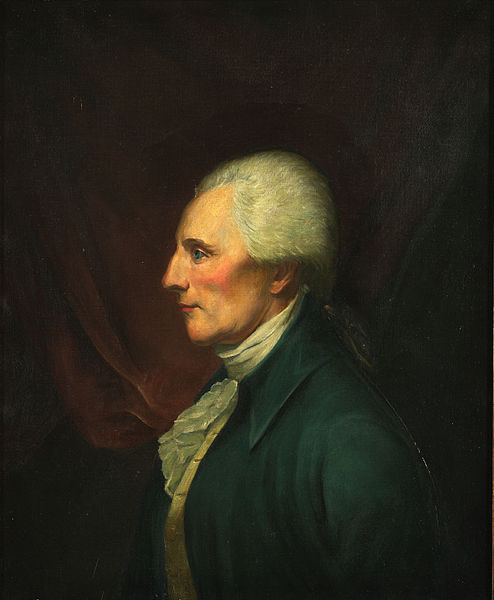
John Locke significantly influenced key leaders of the American Revolution.

Last week I posted my book review on John Locke’s first treatise on government, promising to come back “soon” for a review of the second treatise. Here I am for that purpose. I made a slight digression, as I obtained Filmer’s Patriarcha and have allowed myself the distraction of reading it some.

In his second treatise, Locke is trying to say why government is established, and how, and how it is changed. I found his descriptions tedious. Again, how much of this was the archaic language and structure, how much my distracted reading, how much my small-screen device I don’t know. A future, second reading is on the unwritten to-do list.

Detected and overthrown? Locke was certainly confident about the success of his arguments.
Photo reference: Public Domain, https://commons.wikimedia.org/w/index.php?curid=399928

Locke started by saying his first discourse had proven that Adam had no special authority to rule over all the earth, nor did his immediate or later heirs, that there was no right of succession, and that even if there had been a right of succession we have lost the line of succession; hence, what do we do? Did he prove that? I’ll have to re-read the first treatise to decide.

His conclusion, however, I can agree with: “…it is impossible that the rulers now on earth should make any benefit, or derive any the least shadow of authority from that [Adam and the right of succession]” and thus “all government in the world is the product only of force and violence, and that men live together by no other rules but that of beasts, where the strongest carries it, and so lay a foundation for perpetual disorder and mischief, tumult, sedition and rebellion….” Therefore, mankind  “just of necessity found out another rise of government, another original of political power, and another way of designing and knowing the persons that have it, than what Sir Robert Filmer hath taught us.”

Locke then sets out to describe and prove this process in 219 pages (in my copy). In chapter 2 he describes the State of Nature. In chapter 3 it’s the State of War. He discusses Slavery in chapter 4. This interested me. On the slavery-freedom continuum, where Filmer came down on the end that is slavery, Locke comes down on the end of freedom.

“The natural liberty of man is to be free from any superior power on earth, and not to be under the will or legislative authority of man, but to have only the law of nature for his rule.” Locke’s Second Treatise, Chapter 4, section 22

I like Locke’s position. Given opposite ends of the continuum, all men are slaves (except for the king) or all men are free, I agree that all men are free. This seems more natural than that all men are born slaves, subject to the one man who has dominion over all.

I could go on and on. Locke talks of Property in chapter 5 and the right to defend it. His discussion of Paternal Power in chapter 6 is a blur to me. Moving to Political or Civil Society in chapter 7, Locke held my interest a little more. This phrase, “man in society”, shows up in the writings of our Founding Fathers. It’s the buzz word of the day for mankind not living alone, but with other men, and thus having to modify behavior so as to live at peace.

The latter is part of Locke’s system of government that I need to know better. I’m sure I’ll re-read this book. I may, perhaps, read Filmer all the way through first, and maybe Hobbes, now that I have both in my possession.

The American Founding Fathers liked Locke. I need to too. I’m not really there yet. As I re-read some of the second treatise in preparation for this review, it seemed clearer to me. I was able to focus on Locke’s premises and arguments, rather than just read the words. Maybe there’s hope for me yet in understanding these books.

Do I recommend anyone else read these books? I don’t, at least not yet. Perhaps in a few months, or maybe a year, I’ll have finished a second read and will revisit this in a post.


We Interrupt this Book Review to…Write

This is close to the cover I want to use for “Adam Of Jerusalem”, but I can’t find the copyright holder of the photo. I’m probably wrong in even posting it here.

In my last post I wrote part 1 of a two-part review of John Locke’s Two Treatises on Government. I said I would do the next part soon. However, soon is not today. Instead, I’m going to write about what I’m writing, and what I’m preparing to write.

I have two books in progress, one complete and being edited, one being written. The first is Adam Of Jerusalem. I finished this in mid-December 2018, let it sit a few weeks over the holidays, then began editing in mid-January. I think those dates are right; it’s all kind of blurry without looking at my diary. I’ve made three editorial passes, and given the book to three beta-readers. I have figured I would publish it then.

But, in January I joined a newly-formed writers critique group. I decided to run AOJ by them. They didn’t like chapter 1 in January or chapter 2 in February. Not enough description they said. Too much getting from point A to point B without flourishes. Alas, that must be the engineer in me.

So I went through these two chapters looking for places to add some description, some of what I call extraneous information that gives the reader a better experience, that makes them feel like they were there when the action was taking place. It caused chapter 2 to increase in length 25 percent. If I did that for the entire book, the novel would go from 72,000 words to 90,000 words. That’s not awful, but I would have to think about that.

Still, I decided to go on with this for a few more chapters at least. Last night I re-edited chapter 5, having completed 3 and 4, and found a number of places to add those flourishes. I’ll type these last edits sometime today and step back and see how it looks to me. I imagine I’ll go on with this while waiting on beta-readers to get back to me.

And, perhaps, a fourth to this one? Yes: Making The Constitution Edition, hopefully in 2019. Update: It will come in 2019!

Then, my current writing project is Documenting America: Making The Constitution Edition. I’ve written about this series before many times, and this particular volume. At some point, around February 12, I began gathering source documents and completed the editing and writing of one chapter on February 18. Yesterday I completed the twelfth chapter (out of 31 or 32) and edited the source document for the thirteenth. I did that in the evening in manuscript, so will be typing that today.

Meanwhile, as I work on DA:MCE, I’m coming across material I realize I can use in a future edition. I don’t know what I’ll do next. The choices are many. I read some inspiring, early abolition works, and thought that a volume on the abolition movement might be good. So I created folders on my computer and began seeking out source documents for that. I’m a long way from doing anything with this book, but maybe, just maybe, I’m starting it the right way. Except, I should start a writing diary for it, even if it will have major time gaps in it.

One other project that I’m (somewhat) actively working on is a Bible study I developed and taught some years ago called Sacred Moments. It’s a study of the sacraments and the importance of them in the life of the Christian. They are sacred moments. I had a little trouble finding the files I created on that years ago. On a shelf in my closet, in an unmarked, green three-ring binder, I found the paper copies—preserved in sheet protectors, no less. Digging around in files transferred from an old computer, I found the computer files. I transferred them into my cloud storage.

I have no schedule for working on Sacred Moments. I feel I must do more research if I’m to publish it as a Bible study. It will be the first of those critters for me, and I would want to do it right. I did lots of research before, and even some after, but too many years have passed since I developed and taught it, so I’ll have to re-do some of that research.

That’s pretty much it. One other, more minor, task I want to work on soon is to get my ideas notebook in shape. I found it this week, on that closet shelf. I can’t remember the last time I looked at it. I’m thinking that may be a Sunday task, with a mug of coffee, in the sunroom.


Book Review: John Locke’s Treatises on Government – Part 1

John Locke significantly influenced key leaders of the American Revolution.

Approximately two years ago, when I began reading in earnest as research for Documenting America: Making The Constitution Edition, I read something, not in a source document, about the Founding Fathers being interested in the writings of John Locke, particularly his two Treatises on Government, published anonymously in 1689.  I figured I’d better read them, as background for my other research. So, I found a good quality electronic copy (for free), downloaded it, and began reading.

Let me say two things to start. My reading of this was probably not in an optimum way. I read in fits and starts wherever I had a few moments of waiting with my phone, the device I read the whole thing on; and I probably wasn’t at my best as I read it. I don’t know that I retained much about the two treatises, and will someday have to read them again.

This post will be only on Locke’s Part 1. Part 2 will follow in another post in the not-too-distant future.

Filmer is less well known that Lock. Perhaps Locke’s debunking of him was effective, or so history has judged.

Part 1 was…strange. Somehow the Preface didn’t stick with me. I got into the book, and Locke is referring to “Sir Robert”, giving quotes and page numbers. I had no idea who he was referring to. At some point I had to go back and re-read the preface. Locke referred to Sir Robert Filmer, who had written a book named Patriarcha: On the Natural Power of Kings, published in 1680. In this, Filmer laid out the case for the divine right of kings and an absolute monarchy. He got some of his material from Thomas Hobbes in a 1651 book named Leviathan.

Locke said his purpose in writing his Part 1 was “to establish the throne of our greater restorer, or present King William; to make good his title…” Locke liked William, taking note that he came to the throne in what is called the Glorious Revolution of 1688. His mother was the daughter of King Charles 1st of England, so he had some place in the royal order of succession. He married his cousin, Mary, daughter of the Duke of York. William and Mary came to the throne as joint monarchs, and after Mary died in 1694 William reigned alone until his death in 1702. Some thought him to be an illegitimate king.

It’s not my purpose to go into this history, but a little of it is essential background for Locke’s Part 1. From the wording of the Preface, it’s as if Locke had a foregone conclusion and was trying to justify it with this book. However, I don’t think that’s the case. He looked at Filmer’s work, was horrified by it, and decided to refute it. That also had the result of justifying William’s reign.

As I said, the book was strange to me. The language and structure, being archaic, made the reading somewhat difficult. It seems Filmer’s argument for the divine right of kings/absolute monarchy came from the Bible. He believed Adam was born king, was thus king of all his progeny, and passed that right through his progeny. Locke gave many arguments against this, using different scenarios to refute Filmer’s different points.

Except, they all sounded the same to me, these different points. Filmer said Adam, by right of being first born of all creation, had an absolute right to rule over first his children, then their children, then that was passed down to them and their children. Locke said no, essentially that was ridiculous. That once a child reached age of majority, or responsibility, the father no longer had any right to rule over him.

One thing I did take away from this Treatise, though which I was had been better developed, is the concept of man is either born a slave (per Filmer) or born free (per Locke). It’s a continuum, with slave on one side and free on the other. I’m assuming Filmer chose the slave side, and hence, as slaves, all mankind is servant to whoever holds the legitimate kingship. Locke rejected that. Maybe he did state the continuum thought clearly, and in my diminished reading capacity I missed it. I’m going to look for that again for sure.

Over and over this went, for 200 pages. Shades of claims by Filmer and counter-claims by Locke. It started to all run together. Perhaps, had I read in better conditions, I would have felt it more informative. No, informative isn’t the right word, but I can’t think of a better one. I didn’t take as much away from it as I’d hoped to.

I believe the framers of our country and government were most interested in Locke’s second treatise, which dealt with government. They were opposed to monarchy, so could probably not have cared less about Locke’s defense of King William in the first treatise.

I have this as an e-book, in my Google Books account, so I’ll keep it. I’ll read it at least one more time. Except, I feel that I ought to read Filmer before re-reading Locke. And, possibly, I’ll have to read Hobbes before I read Filmer. And, I imagine when I read Hobbes I’ll find he relied on someone else and I’ll have to read that.

Where does it end?

Don’t Bash Rhode Island

I had a different post planned for today, but think I’ll go this way instead.

There’s a reason The Independent Man is atop our statehouse: We are independent minded. Or, are we just stubborn?

Yesterday, I thought I was done with my research in Documenting America: Making the Constitution Edition. I had all my chapters lined-out, all my source text found and entered in a Word document. Well, almost all, as the source text for one chapter eluded me. Yesterday I found an alternative (actually, two) and that’s now in the document. I even wrote my commentary on a chapter yesterday. Now up to nine chapters complete out of a probably thirty-one.

I started work on the next chapter, editing the source text. It’s a letter from Thomas Jefferson, while he was in Paris in 1787, to Edward Carrington. TJ made some very good points and I’m happy to have that in my book. I figured writing the chapter around it would be somewhat easy.

But, I wanted to see what Carrington had written to TJ to prompt this letter. I went to the Library of Congress website, which has been my source for so much. It didn’t take too long to learn Carrington hadn’t written to TJ in six years. TJ had re-initiated the correspondence. I decided then to see how Carrington responded.

That was easy to find with the tools on the LOC site. Jefferson wrote Jan 16, 1787; Carrington responded April 24, 1787, a reasonable lag given the time for a letter to sail across the ocean. So last night I began reading the April 24 letter, and enjoyed it until I came to this sentence.

Rhode Island is at all points so anti-federal, and contemptible, that her neglecting the invitation, will probably occasion no demur whatever in the proceedings. 

I kept reading, however, as a good researcher should do. I next went to Carrington’s June 9, 1787 letter to TJ, written before Jefferson had responded. It this letter I found the following.

All the States have elected representatives except Rhode Island, whose apostasy from every moral, as well as political, obligation, has placed her perfectly without the views of her confederates; nor will her absence, or nonconcurrence, occasion the least impediment in any stage of the intended business.

And I though, them’s fightin’ word mister! How dare you bash my home state like that. I suppose, however, he’s correct. He’s talking about choosing and sending delegates to the Constitutional Convention in Philadelphia. This followed the failed Annapolis convention in 1786. Rhode Island didn’t attend that one, though they did appoint delegates who simply didn’t arrive on time.

Now, however, as the Constitutional Convention drew near, Little Rhody was the only State to boycott it. They liked the ineffective Articles of Confederation just fine, thank, and didn’t want them changed. They liked doing things their way, even if they wound up being a tiny, independent nation.

I think it was the word “contemptible” that rankled me. Yes, Rhode Island is a different kind of state. The top of our statehouse has a statue titled the Independent Man.  We have our quirks and love having our quirks.

Then the word “apostasy” also rankled. Carrington didn’t mean this in the religious sense, but rather in terms of politics, that we had fallen away from the sense of cooperation that pervaded during the Revolutionary War. We had ceased looking at ourselves as part of a larger union. Still, the word hurt.

It also hurt that he said it didn’t matter if Rhode Island showed up or not. He said that twice, once in each letter. Was that because of our size and relatively small population? Most likely.

I’ve been away from Rhode Island now for 45 years. I still visit from time to time, and keep in touch with relatives and friends there. I may live in Arkansas, but I still feel like a Rhode Islander.

And I love this research I’m doing for the book. I need to be careful, however. I could research for days and days, enjoying it so much that I’d never get the book written. I need to cut it off and just stick with the writing.

And I will, just as soon as I absorb these Carrington letters.

Religious Freedom Revisited

As I’m working on Documenting America: Making the Constitution Edition, I find that certain topics come back into current American life that have been discussed and, supposedly, settled before. Religious freedom seems to be one of them.

My research suggests that the Founding Fathers did indeed want to keep some degree of separation between religion and government. Their primary focus was preventing the government from regulating religion or restricting who/how/why people could worship.

The latest infringement on the free exercise of religion is US senators asking candidates nominated to various government positions about their religion and how it would affect their performance in office. I first noticed this almost 20 years ago when Chuck Shumer, then a relatively new senator from New York, asked Attorney General nominee John Ashcroft how he could turn off his evangelical Christianity so he could do a proper job as A.G.

I was shocked then and am shocked now when people like Senator Feinstein says to a candidate, “The dogma is strong in this one.” The U.S. Constitution says:

but no religious test shall ever be required as a qualification to any office or public trust under the United States.

When Shumer asks “How do you turn it off” and Feinstein says “the dogma is strong in this one,” what is that if not a religious test. Shumer is saying you can’t be Attorney General if you’re a practicing evangelical. Feinstein is saying you can’t be a Federal judge if you are a devout Catholic. Shame on these senators!

This was all settled in the Constitution. Thomas Jefferson led the way in his writing the Virginia Declaration of Rights, which was later put into law in that state. Religious freedom came in this form.

Be it enacted by the General Assembly, That no man shall be compelled to frequent or support any religious worship, place, or ministry whatsoever, nor shall be enforced, restrained, molested, or burthened in his body or goods, nor shall otherwise suffer on account of his religious opinions or belief; but that all men shall be free to profess, and by argument to maintain, their opinion in matters of religion, and that the same shall in no wise diminish enlarge, or affect their civil capacities.

Note that religion should not affect their “civil capacities.” In other words, the law shouldn’t punish someone because of their religion. By the time the Constitution was written, this was applied to Federal officials through the religious test clause.

So here we are, 232 years later, fighting the same battles we did years ago. What will it take for this to end, for us to win the battle again that a person’s religion cannot disqualify them from holding a Federal office? Maybe it will take one nominee to refuse to answer a question about their religion, to tell the senator who asks, politely, where to shove the question, to show that the Constitution means something.

I’m hopeful that will happen next time the situation comes up.

Still Getting Things Done (in Retirement)

When I was a full-time, working engineer, not all that long ago, I used to occasionally post about getting things done. This would be at times of particular busyness, or perhaps when I was able to complete a major writing task in the face of a normal heavy schedule at work.

Now retired, for not quite two months, I find I’m not getting to all my tasks as well as I’d like to. Last Friday, I felt so overwhelmed by needed to do things, I made a to-do list. First on that was “Fix toilet”. The flush valve in the master bathroom had quit working a day or two before. It wouldn’t shut off when the tank filled. I went out on Thursday to get the new works to put in, but didn’t get it in.

Last Friday I was asked to attend a meeting in my consultant roll for my former company, which meant I didn’t get right on that job. I finally did Friday afternoon, but, as inept as I am with plumbing work, I couldn’t get everything right. So we still couldn’t use that bathroom.

I’ll cut this short, because nobody likes to hear stories about toilets. On Saturday I re-did it and managed to get the works properly installed. However, I loosened something on the supply line, and we still had a small leak. It was then the Presidents Day weekend, so I wasn’t able to call our plumber till Tuesday. He came Wednesday and fixed it, a minor adjustment in the tightness of the supply line. No charge. One thing off the list.

Last Friday morning we woke up to frozen precipitation from the night. I started our old van to clear ice from the windshield, giving myself plenty of time to make my appointment. The street appeared to be mostly dry. I came out a few minutes later, hopped in the van, put it in reverse, and promptly rolled forward. I jammed on the breaks in time so that it didn’t hit the garage. Only then did I notice the van had stalled. It has such a quiet engine I didn’t notice that.

Now I had to start the new van, clear the ice from the windshield, and hurry to my meeting. I made it with a little to spare. It was coming home from that that I tackled the toilet job.

I won’t bore you with the rest of my to-do list from last weekend. Taking down the majority of the Christmas decorations that we’d never done was one thing accomplished and checked-off. Many smaller tasks remained. Most of those were checked off as well.

As for writing tasks, I did such things as:

  • read submissions for the new critique group
  • begin beta-reading a friend’s book
  • print a copy of Adam Of Jerusalem and deliver it to my third beta-reader
  • finish the Table of Contents for my next book, Documenting America: Making The Constitution Edition.

That brought me through the holiday (which didn’t feel like a holiday for me except that the stock market was closed). I think it was on Tuesday that I was in The Dungeon. I made some trades when the market opened, read and critiqued another submission for critique group, and sat back. My to-do list had been completed—almost. All I didn’t do was contact the potential cover artist for AoJ. What should I do next?

Almost out of the blue it occurred to me that I could begin my real work on DA:MCE, which is: reading the source documents, editing them down to reasonable length, writing an intro, writing historical context, and writing the current events tie-in. So I indeed did that. As of yesterday, I had completed three chapters, about a tenth of the book.

I can’t tell you how good that felt. I should be able to complete two chapters ever three days, meaning that the first draft of the book could be ready around mid-April, and I could be publishing it in mid-May. Now that’s getting things done.

But, I must report on one more important item. I don’t know if I’ve written before that I still haven’t had my Social Security and Medicare Part B approved and activated. I didn’t realize how long the government took to get this done. Two things that slowed it down was the fact that the IRS had an identity flag on my SS number due to the identity theft attempt from 2017; the other was, perhaps, the government shut down. Also, it seemed I had given them a wrong phone number to reach me at.

They finally contacted me while I was in Texas early this month. They assured me my application was moving and my benefits would be retroactive to January 1st, both Social Security and Medicare Part B. That was good, but I still couldn’t apply for supplemental insurance until all that was settled. While this was mostly out of my hands, it was still something that I felt like was on my to-do list, to get this done.

Yesterday I realized I still hadn’t heard from them that my benefits had started, so I shot the woman I’ve had contact with an e-mail, asking for a status update. Then, last night, I pulled up my on-line banking to make sure the checkbook was up to date. Lo and behold, there was a SS deposit for me, made on Wednesday, for one month’s SS payment. I still haven’t had any paperwork come in the mail, but there was money in my account.

That means that my Medicare part B is also established, which means that today I can call the supplemental insurance company I want to use and get that going. that is on my today list. As are a number of other items, but at least I’m feeling good about getting things done.

Oh, yes, about the van. I finally made arrangements yesterday afternoon  for it to be towed to the nearby Dodge dealership. This morning they called me. The did a normal servicing, but otherwise could find nothing wrong with it. What in the world? I guess I’ll go down and get it, and maybe it really is okay. But at least it’s checked off my to-do list.

Now, what needs to be added?

Book Review: Modern Arms and Free Men

Some time ago I made a review about Fletcher Prouty’s book on the JFK assassination. In that I wrote that I was somewhat surprised how Prouty went back in time and spent much of his book talking about events from 1943 up to 1959, before Kennedy was in the presidency. After reading that, I wanted to read some other book that dealt with some of this time period.

The dust jacket kind of crumbled as I read. Oh, well, back to the garage sale box with it.

And I remembered that, out in my book boxes ready to sell at our next garage sale was the just the book I wanted. Modern Arms and Free Men, by Vannevar Bush, was published in 1949, so was likely written 1947-48. It is subtitled A Discussion of the Role of Science in Preserving Democracy. It is a book I found in my dad’s house after he died. I couldn’t tell if he ever read it.

Dr. Bush was an engineer, inventor, and science administrator. During World War 2 he was head of the Office of Scientific Research and Development. For a while this included administering the Manhattan Project. Here’s a link for his profile on Wikipedia.

I found the book to be somewhat strange. Bush certainly knew military weaponry. He knew how our scientific advances helped us to win the war. He also credited advances by the British, and was quite critical of Germany’s failure to make scientific advances. This he attributed to the fact that Germany was a dictatorship, all things flowed from Hitler, and if Hitler didn’t want to put resources into weaponry advances (other than the V1 and V2 rockets—and jet planes, though too little too late) then it didn’t happen.

This isn’t true in a democracy, or in a republican government based on self-determination Bush says. Here, where many people are involved in innovation, changes do occur. Are those changes improvements? Bush seems to think so.

The book covers weapons development during the war, in the period immediately after the war, and looks ahead to what might be coming. For each type of weapon, he talked about the defense that could be developed to oppose it. In all situations except for biological weapons, the defense always seemed to win in Bush’s mind.

He spent time on nuclear weapons. At the time of writing, America was the only nuclear power. The USSR hadn’t yet developed a nuclear warhead. They exploded one in 1949, about when the book was published. The next nuclear power was the UK in 1952. Bush looked ahead to when our enemies would have “the bomb”, and how we might defend against it, and they against ours.

One thing that surprised me about the book was Bush spent almost no time on aircraft carriers. This, despite the fact they played such a pivotal role in the naval war. He did, however, spend a lot of time on submarines. He saw subs as playing a critical role going forward.

And Bush’s book is mainly a forward-looking book. Yes, he spent time on WW2 developments, then so fresh on everyone’s minds, but he tried to project ahead, into the weapons that might be developed in the near future. In that regard, the book seems almost to be a sales pitch for the military-industrial complex that Ike would warn us about a decade after Bush’s book.

So the question should be asked, how well did this book suit my purpose, of following up on Prouty’s book to learn more about the Cold War period? Not a whole lot, honestly. I’m glad I read Bush’s book. It gives me some new perspectives on the immediate post-war world. He made a good case of how we must keep innovating our armaments to remain free men. But, it was written so early in the Cold War that there was little in it to mesh with Prouty’s book.

Should you find this 72 year old book and read it? You could. It’s cheap on used book site. But, if anyone really wants it, let me know and I’ll mail you mine for the cost of postage. I don’t plan on keeping it. Later today it will go back in the yard sale box. More likely, it will go to a thrift store in a month or so.