Category Archives: Bible study

A Determinist Sociological Development

In our evening reading aloud, Lynda and I are reading in two books right now. One is our denomination’s Lenten Devotional book Sacred Invitation: Lenten Devotions Inspired by The Book of Common Prayer. It’s been good, though for thirty years I never once heard celebration of Lent promoted in our church and don’t understand why it is being so now. But perhaps that’s a subject for a different post, or an essay. The book is an easy read. Daily morning and evening scripture readings (which I assume come from the Lectionary) along with a couple of pages of text and a page of questions to spark spiritual growth. The text is small, 11 point font or less—I think 10 point font.

The other is A History of the Jews by Paul Johnson. This was a book of our son’s when he was in college, for it has his name and a date from his college years written on the inside. It includes marginalia that does not appear to be his handwriting, so perhaps he got it used. In that case we are at least the third owners of it. It’s 595 pages of text, plus a lot of pages of endnotes. It is also in 10 point font, so it’s a lot of reading. We’re only on page 37 after three or four days.

Whether we finish it or not is a big question right now. I’m re-reading some of the early pages which Lynda read aloud and I was a little distracted in my listening. On page 6 I ran across this statement:

Under the influence of Hegel and his scholarly followers, Jewish and Christian revelation, as presented in the Bible, was reinterpreted as a determinist sociological development from primitive trial superstition to sophisticated urban ecclesiology.

That’s a mouthful, for sure. I know who Hegel is but know nothing about what he thought or taught, nor about the “school” that follows, or followed, him. That phrase though, “determinist sociological development”, threw me. What the heck does that mean? I looked up “determinist” and had a sort of idea of what it means: the opposite of free will. I kind of know what ecclesiology is but looked it up to be sure: the study of church doctrine is the way I would say it in layman’s terms (the definition wasn’t real clear to me). So this is saying that Hegel and the folks who follow his teachings consider the history told in the Bible moves from lack of free will to something scholarly, something sophisticated, something urban.

I’m sure I’ve got that wrong, but that’s the best I can do. Now, a couple of things come to me from that. I find those kind of hard to understand statements a couple of times on each page. I spent ten minutes or so trying to riddle this one out. If I do that on every page, we’ll never finish the book. On the other hand, do I really need to understand that to understand the history of the Jews? Do I need to know that some dude (I guess he’s a man) and his minions have a complicated idea of what Bible history is teaching, that the author is getting ready to say is not correct? Probably not.

Elsewhere in the book, we’ve been running into lots of words that need looking up to understand, two examples being adumbration and aggadic. Thirty seconds on the cell phone provides those definitions but perhaps not that much greater understanding. Which makes me think this book is not for us.

Meanwhile, in other writing work, I’m engaged to write a book on the history of our church for our 100th anniversary. That happens in July, but because of pandemic fears and some major construction adjacent to the church, the actual celebration has been pushed back to a date not yet established. For that book, I’ve been researching our charter members. I’m probably doing too much research into our charter members. But given how research way leads on to way, I’ve pulled up some interesting church history documents. I have allowed myself to go down these rabbit holes. One document I was in today, a PhD dissertation, included this statement.

The manner in which nineteenth-century advocates of holiness reconstructed the Wesleyan/holiness cultural-linguistic system emphasized an imagistic religiosity which heightened individual awareness of spiritual autonomy.

Cultural-linguistic system…imagistic religiosity? This did me in. I have no idea what the PhD is talking about. This tells me nothing about the history of the church or the particular religious movement, nor does it help me live a better life. Nor will it help any Christian minister to be a better pastor of their flock. So what is its purpose? I’d answer that question, but I don’t have a spare week of continuous study that I would have to spend to do so.

All of which tells me I should do what I just read in a different book. I should stick to my lasts and leave the scholarly documents to the scholars. Back to my the Bible itself, a devotional book, books of letters, and Agatha Christie books.
Writing Goals for 2021 – A Starting Point

Dateline 3 January 2021

For the first time in many years, I start the new year with uncertainty as to what I want to accomplish in my writing. Perhaps this is a residual effect of the corona virus pandemic, which caused a general uncertainty in the world and made life difficult to plan. I didn’t get as much writing done in 2020 as I wanted to, not so much because of corona virus but because of being diverted to other things (health issue, de-cluttering work, letters transcription).

But, a writer who is publishing is running a business, which should have a business plan if it wants to be successful. So here is my plan. It’s a starting point. I will be thinking much about this over the early part of the year and may modify it based on further consideration.

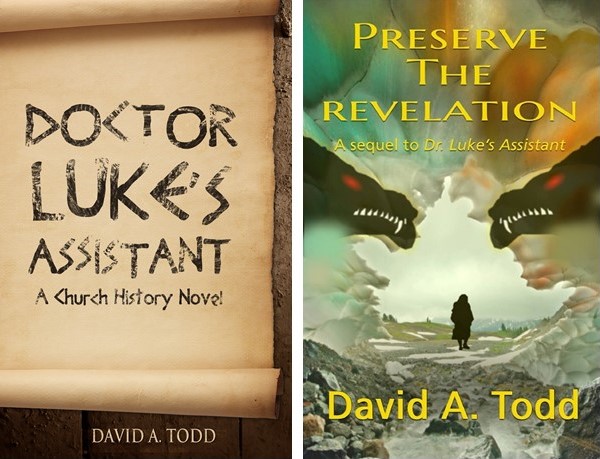
  • These books have been waiting for the book that goes between them to be written. I’m finally back to working on it.

    Finish and publish The Teachings. A little over a week ago, I got back to serious work on this novel. As of today’s effort, I have 37,000 words in the first draft. If 80,000 is the minimum size of the book, I’m closing in on halfway done. But I don’t feel that the story is halfway done, so perhaps this will be a 90,000 word novel. Either way, at my current pace I could be done in mid-February, which means I might have the book ready to publish in April. For now, those are my goals.

  • Write and publish one Sharon Williams story. Believe it or not the next story in my series Sharon Williams Fonseca: Unconventional CIA Agent, is starting to roll around in my brain. This is happening unsolicited. I’m not trying to think about it, yet the story is developing. That may be a sign that I should write the story this year.
  • Write and publish one Documenting America volume. I’m planning for this to be Run-up To Revolution, covering 1761-1775, the documents that led to our rebelling against England. I did some reading for research in 2019 and a little more last year. I need to figure out where I was and see how quickly I could do this. Writing these volumes is always pleasurable, and I’m looking forward to this.
  • I know which Bible study I want to write and publish next, but it’s going to take some work. Not sure I’m quite ready to do that..

    Write and publish a Bible study. I’ve planned out what I want the next one to be: Entrusted To My Care: A Study of 1st and 2nd Timothy. I have a fair number of notes on this, have taught it twice, and think I could do this one with the least amount of effort among all those I’ve developed. Yet, it would still be a pretty significant effort. This would be later in the year.

  • Maintain a twice per week blogging schedule. The last two years have shown me I can do this. On occasion I may have to make a dummy post or even skip one, but for the most part I should be able to do this.
  • It’s been a long time since I wrote most of the poems in this, around 2005-6, I think.

    Write some poetry. The desire to write poetry again has become active, even if the words aren’t rolling around yet as they are for the short story. I know the poetry book I want to write. My question is: do I wait for inspiration to strike or do I apply some perspiration and just get on with the writing? That’s what I’ll be thinking about the next few weeks.

As I say, this is a start. For now I’m concentrating on my novel. Once I get that done, I’ll give this plan serious re-evaluation.

Book Review: Kings & Presidents

A difficult read. I hope others had an easier time of it than I did.

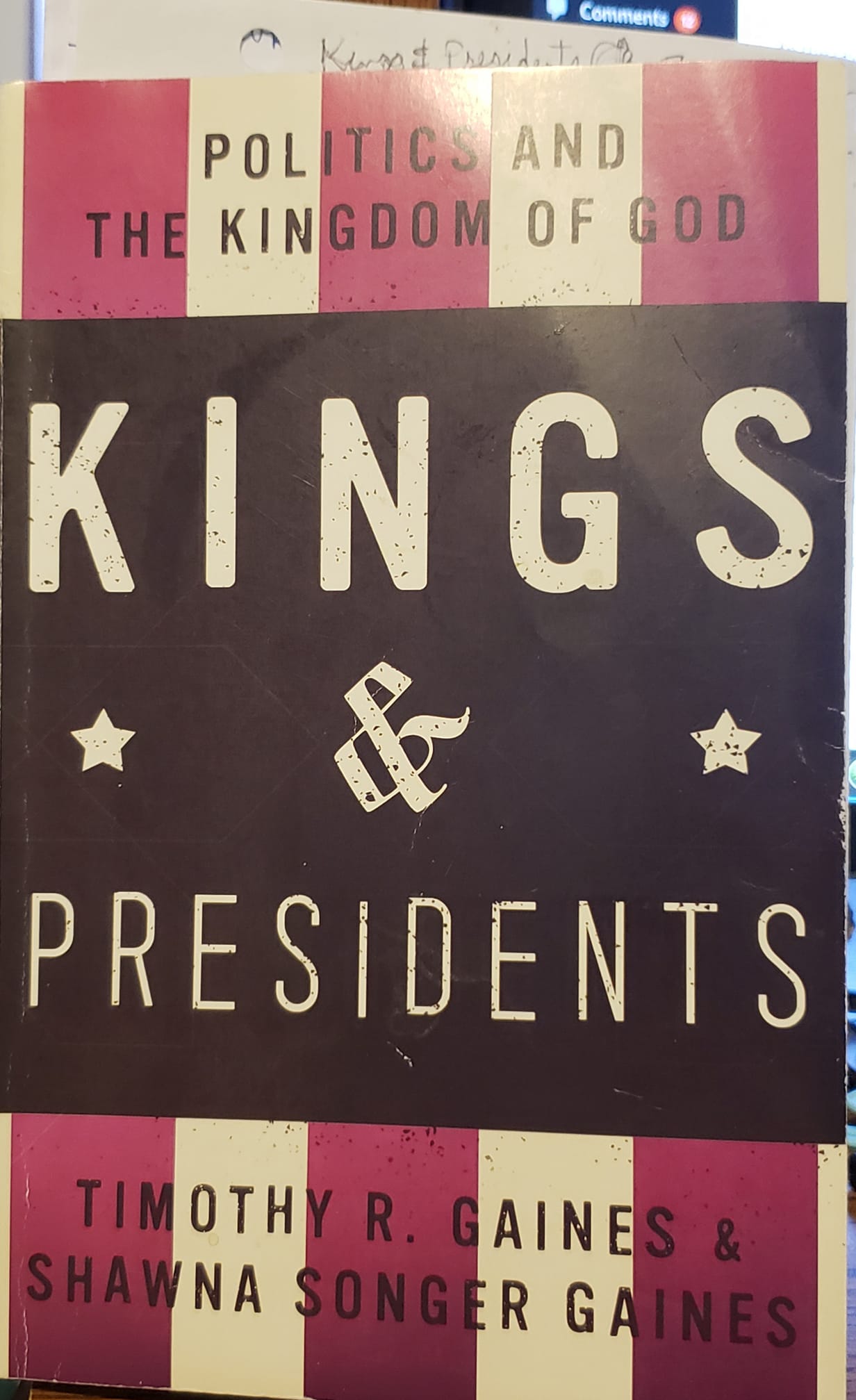
In the last month leading up to the general election just concluded (but still being disputed) in the US, our church decided to do a study of the book Kings & Presidents by Tim and Shawna Gaines. Our pastor preached on it for four weeks. All adult Life Groups were encouraged to also study it, either the four weeks the pastor preached on it or the full eight week series envisioned by the book. Our group elected to do eight weeks. When I had coffee with our pastor during the series, he said there was no way he could preach eight sermons on this material.

Let me tell you, this was perhaps the hardest lesson series I ever taught. Five of the eight weeks were mine, three by my co-teacher. Looking back, I’m glad we studied it, because I feel that we learned something, but, man, it was difficult to teach.

Tim & Shawna (T&S henceforth) developed the book following the 2012 presidential election, when they were pastoring in California. Members of their congregation were apprehensive about what would happen. The book came from the sermon series.

The book takes stories from 2nd Kings 1-7, the days of Elisha the prophet, and contrasts the workings of God with the workings of kings. The kings were unable to see what God could do, whereas the prophet always could. Messages to the king weren’t understood. In the end God always prevailed. That’s fine. But how does that help us approach politics if we are devout Christians?

The purpose for the book is stated thus in the Introduction:

Our purpose…is to offer a vision of political life that takes discipleship to Jesus Christ seriously and treats it as primary.

Okay, that’s all well and good, but how do you do that? They sort of answered that question in the Afterword:

If you’re wondering So what exactly are we supposed to do politically? our guidance would be something along the lines of: Gather with other believers, empty yourself, lovingly deliberate, humbly discern, and then go and be persistent. Engage the world according to the way of Jesus Christ in the power of the Holy Spirit. Take that vision that the ancient stories of our father open to us and act according to the world of the kingdom.

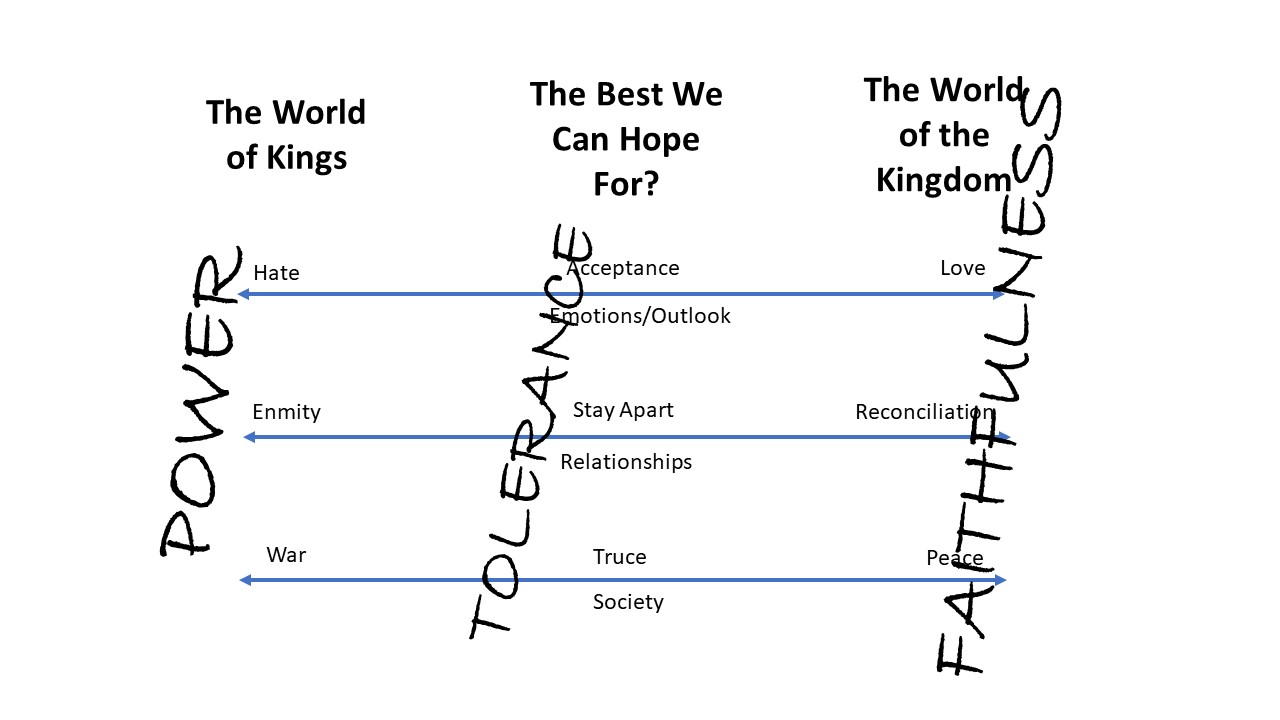
All well and good again. Except this said “gather with other believers.” If I take that literally, does that mean I should not engage in politics with non-believers? T&S do say “engage the world”, which implies we should engage in political discussions with non-believers. I think what they mean is: engage in political discussions with whoever, but don’t lose your faith over it. Come at it from a disciple point of view, not a worldly point of view. To help me help the class to understand this, I developed this chart which summarizes my understanding of T&S’s message. Hopefully I’m right or close to right. Click on the chart to enlarge it.

The best I could come up with on what the book teaches. Christians should approach politics and governance from the right side of the continuum, and seek to move the world in that direction.

In the final lesson—or maybe it was in an earlier lesson—I suggested to the class that they engage in political discussions with non-believers in such a way that, immediately after the political discussion they could present the gospel to them with no loss of credibility. Maybe that’s what T&S are saying.

Here’s a quote from the last chapter of the book.

[A]t its fullest and deepest, politics has always been about being reconciled to God and to one another.

No, no, no, no, no. Unless I’m misunderstanding them, they are proposing dropping the separation of church and state. Politics (by which T&S mean both what I call politics and governance, but they don’t really define their meaning) has nothing to do, and should have nothing to do, with God. It is a secular thing. Governance is about governing, of doing what the people want as far as rules and laws that regulate human civic behavior. Politics is about getting into the position to govern. Politics and governance should be separate from religious practice. We should not be hoping for a theocracy—a blending of church and state.

T&S say some negative things about the concept of the individual. The state regulates individual behavior, they say, so that everyone has the space they need to conduct their life and exercise their rights without stepping on the rights of others. It results in tolerance of each other Yes, they seem to be a bit negative on this, although they also say,

Tolerance is not a bad thing, but we need to acknowledge that a Christian view of politics, a sanctified vision of what politics is mean for, is so much more than simply putting up with one another.

Maybe. Maybe in a world (or a subset of the world) that is 100% devout Christian that would happen. But not in the world we live in. Sorry, T&S, but I can’t grasp your vision in a secular world.

So, it comes down to two questions: do I recommend this book to you? And is it a keeper? No, I don’t recommend it. It was difficult to read and seemed a little long for the material covered. I had to read each chapter a minimum of three times before I could grasp it enough to teach it, and even then I went into each lesson feeling unprepared. As for keeping it, the jury is still out. I may keep it and re-read it before the next election, to see if seasoning by years will make the message of the book clearer and thus be more useful to me. But it is not a long-term keeper. Three stars on Amazon.

Oh, one last thought. T&S kept calling the Christian faith “subversive.” Sorry, but I just don’t see that. I thought a long time about it, but I don’t see it.

The Beginning of a Quiet Week

Thanksgiving week is usually a busy week for us. People are coming in. Last year was larger than normal, as both of our children were here, with grandchildren, a sister, and a cousin, plus spouses. We had to set up an extra table for dinner. Thanksgiving has always been a busy time, yet a fun time.

This year, the pandemic has canceled all that. It will just be Lynda and me. Our son was here with his partner last week. They quarantined for two weeks in Chicago before coming, as did we here, so we all felt safe doing that. Charles also came for a week in October, and, if plans work out, they will do the same in mid-December. Our daughter’s family has sickness running through it. Not the corona virus, but the strep throat that kids seem to get every year in school and pass on to parents. So they will hunker down in West Texas.

Last week we had an early Thanksgiving dinner with our visitors, not quite traditional but close. We are now eating leftovers and soon I’ll be making soup and figuring out how much turkey I have to freeze, along with other things. For sure we will be eating leftovers on Thursday. So Thanksgiving will be a quiet affair.

That is actually back to normal. Life is quiet for us. Lynda’s health issues would have forced us into quietness even if there hadn’t been a pandemic. The double-whammy means we don’t go out. I still go to Wal-Mart for groceries and meds, but try to shop so as to go every nine or ten days instead of every five or six days as I used to. I still go to church, except when quarantining. We still see our neighbors on occasion. In this rural neighborhood we have more vacant lots than built-on lots, so you have to go out of your way to see you neighbors. Getting out of the house mostly means taking walks, not drives.

This week, as I look ahead on Monday and build my to-do list, looks to be a writing week. My stock trading activities are now quite efficient and don’t take more than an hour a day. I normally stretch that out to two or so. Last night I spent some time on a writing project: adding commentary to the transcribed letters from our Kuwait years. This went fairly quickly. I want to keep commentary to a minimum. At this point I’m halfway through the book with just a few hours work, and could easily finish it this week. I still have editing to do on the letters, then proofread it all and compare it to the original letters, then decide if I’m going to add photos and if so how many. I don’t know that I’m going to make this a continuous task or rather work on it in odd moment as the spirit moves me, such as when multi-tasking before the television.

I might spend a little time fleshing out the next Bible study I want to write. I’ve selected it and, having taught it twice, have a lot of beginning material. But other studies have been nagging at me, suggesting I develop and write them instead. I will have to spend some time deciding.

A letter to an old friend of my wife and me is in the offering, perhaps as early as today. Listing more things on Facebook Marketplace will also be a task quite soon, maybe even today. While I’ve been pleased with how that has gone, I’ve found it is time consuming. I plan on listing my box of JFK assassination magazines that I bought at auction some years ago, as well as our old treadmill and older bicycles. All of that will take some time. As will a few other downsizing activities.

Which brings me to my novel-in-progress. Yes, I want to get back to that. I think I know how to plow ahead with it and not be stymied by the historical elements. Ideas are floating through my mind and I need to get them written before they totally float away. It is a featured task on my to-do list, though I may need to do a few others first.

All of this is possible because of the quiet Thanksgiving. I will miss not seeing my children and grandchildren all together. But I will also feel good knowing they are protecting themselves where they are, perhaps getting some rest rather than going through all the trouble of travel. We will look forward to making Thanksgiving a busy time in 2021.

Book Review: “More”

Two—or at most three—stars is the most I can give this.

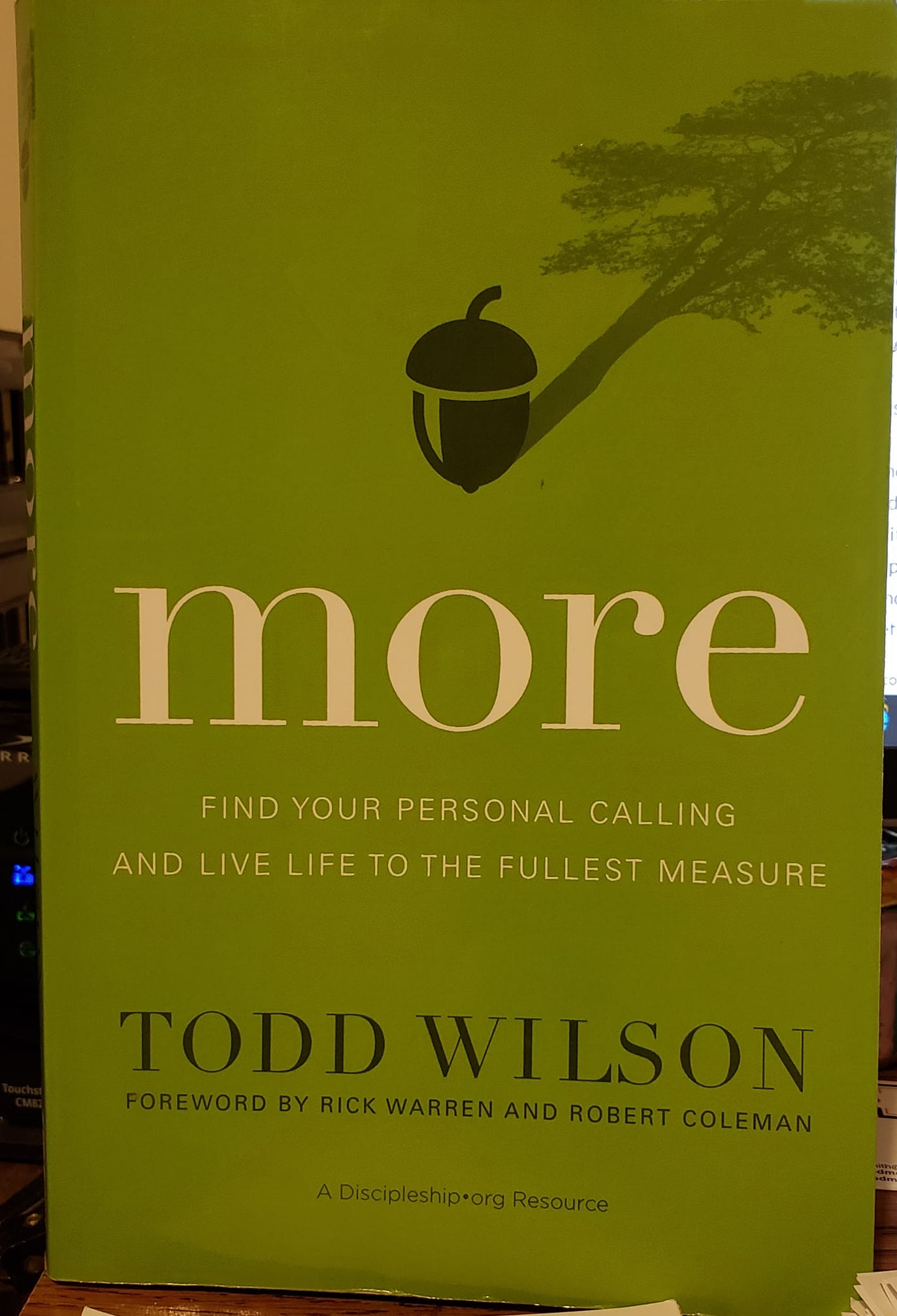
Some time ago, in early in 2020, our church did an all-church study of the book More: Find Your Personal Calling and Live Life to the Fullest Measure (2016, Zondervan) by Todd Wilson. The pastor preached on it and adult Life Groups were to study it. We were in the midst of the study of my book, Acts Of Faith, but decided to interrupt that and do the all-church study instead. I can’t be specific on the dates, as I can’t find all my teaching notes nor the little sheet I recorded my reading dates on. Maybe I saved all I had.

The book stemmed from conversations Wilson (who was a nuclear engineer who entered the pastorate and currently is an author of Christian ministry books, and a speaker) had with with a successful business man who didn’t feel fulfilled. That man wondered “Is this all there is? What is my purpose? What should I be doing to have the biggest impact?’

I found the book to be tedious. Wilson presents a formula, complete with diagrams. Those diagrams concern our “Be-Do-Go”. “Be” is our identity/design. “Do” is our mission/purpose. “Go” is our mission field/position. For each of these we primary or general calling and a secondary or unique personal calling. The general calling is something common to all Christians, and the unique calling is what God as specifically called each of us to do on earth in His kingdom.

Each week we were to do certain exercises and fill in a chart as we gained understanding on the general calling and tried to figure out our unique calling. I found those charts almost juvenile and had trouble asking our Life Group to fill them out. Consequently, I told them what the book wanted them to do and suggested the see if it worked for them. It didn’t work for me, though I’m not sure why.

With Wilson being an engineer I can understand why he reduces his teaching to diagrams. I kind of do the same. And you would think I would embrace his approach and love the book. But I don’t and didn’t. I won’t say I hated it, but for some reason it came up short with me. It was nicely organized and well written. You knew where he was going and he got there in a reasonable amount of time. It’s a fairly easy read. It’s just not my kind of book, that’s all I can say. I haven’t reviewed it on Amazon, and may or may not. If I do, I’ll give it only two stars, or maybe three.

Yet, it will stay on my shelf, for the possibility exists that I’ll read it again in a few years. Perhaps in a second reading it will seem better to me.

My Next Bible Study Will Be…

Yes, I’ve made up my mind. After much consideration, and looking at the easiest items, as discussed in my last blog post, I’ve decided my next Bible study to write will be:

Entrusted To My Care: A Study of 1 and 2 Timothy.

My reasoning behind it is:

  • I have the best notes from past teaching
  • It’s been taught twice, to two different groups in our church
  • The subject still interests me
  • I think it will make the right length book for a Bible study

I just found the sheet I made back in January that laid out writing goals for 2020, divided into months. They might not truly be called goals but more properly my 2020 writing program. On that I show selecting my next Bible study in February and beginning to write it in May. I was a little behind (ten days only) making the selection, but beginning the writing per that sheet is still doable.

Why make the decision now if I’m not going to work on it for a couple of months? I’ll pull my notes together and get them into a place where I can work on them at any time. I’ll take some time to read the two Timothy books again. I might do a little more research. Just knowing what I’ll be working on and when will help me focus my mind in preparation for the task.

Of course, there’s no magic in what’s on that sheet. As the months roll on, what I’m accomplishing should inform later months, and my interests should come into better focus. I can make any changes I want to: accelerate some things, delay others, decide not to work on something because my interests now lie somewhere else.

I’m pretty sure ETMC isn’t going to go away. And I’m pretty sure I should write a Bible study in 2020. The months might change, but I’ll be working on this later in the year.

My Next Bible Study

I found too many errors in this book to let it go. So I corrected the text and re-published.

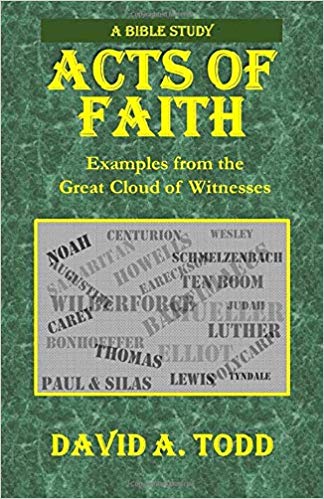
One of my March goals is to make a decision on what Bible study I will write next. Last year I published Acts Of Faith: Examples From The Great Cloud Of Witnesses. So far the feedback on it is good, even though the first print run had two embarrassing typos in the running heads and more than a few typos throughout the text. I also published a Leader’s Guide for this, which turned out to be an entirely new book.

My wife thinks I should write and publish more Bible studies. One woman in our Life Group at church wants me to submit Acts Of Faith to our denominational publishing house. Others have said I should write more like that.

In fact, I would like to write more Bible studies, and have made it a goal for 2020 to write and publish one more. Over the years, as an adult Life Group teacher, I’ve developed a number of Bible studies that I’ve then taught to our Life Group. I had my teaching notes for most of them (can’t find one, and another has rather thin notes). Any of those for which I have notes I could most likely expand into a book.

In addition, ideas for more Bible studies have come to mind. Several times over the last year I’ve listed these, even planning some of them to gauge how difficult their preparation would be. It’s one thing to say, “Hey, that would be a good Bible study,” and another to actually put it together and teach it.

Yesterday I took time to list them, the ones taught and the ones in the planning/brainstorming stage. Here they are. The ones taught are in the order I taught them in. The dates are approximate. I didn’t keep a running record of what I was teaching when, and the only way I can pin the dates down is by reviewing my teaching notes and see what dates I wrote on them (which I usually do and hope I did in the beginning).

Here are the ones taught.

  • A Study in Isaiah. This was a 20-lesson series, developed and taught around 2008. So far I haven’t found my teaching notes for this.
  • The Prophetic Duo: Lessons from the Lives of Elijah and Elisha. This was originally around 14 lessons, but the class wanted to look at some events in the prophets’ lives that I skipped, and it grew to 18 lessons. I believe I taught this around 2009 or 2010.
  • Life on a Yo Yo: Learning from Peter’s Ups and Downs. I put this together probably in 2009 and taught it in 2010. I think it was 14-15 lessons.
  • What One Thing Is Strongest? This is not, strictly speaking, a Bible study as it is from the apocryphal book of 1 Esdras. This was just a five lesson series, and the class loved it. There are some challenges in publishing it. The writing, I think, would go fairly easy.
  • Malachi, the Answer Man. This study in the book of Malachi was around six or seven lessons. I didn’t seem to make a lot of notes as I taught this, though I have a couple of more places to look.
  • Good King, Bad King. I did this one summer, maybe in 2013. It was to be a study of the kings of Israel and Judah. I only did two lessons, but have programmed out around 12 to 14. This one should probably be in the not-yet-developed category.
  • Sacred Moments: Special Times in the Lives of Believers. This was a study of the sacraments, the seven of the liturgical churches with special emphasis on the two of the evangelical churches. I believe I taught this around 2014 in ten lessons. In addition to the sacraments, two other special times could be added to make a twelve lesson series.
  • Know My Story. This was a summer fill in series of a few lessons, maybe six or seven, on lesser-known biblical people. It was well received by the class. This could be extended to almost any number of lessons. I think 14 to 18 is most likely. I’m not sure where my notes are, though I think I do. I just haven’t pulled them off the shelf since I taught it. I could almost put this in the not-yet-developed category.
  • Entrusted To My Care. A study in 1 and 2 Timothy, this looked how much of Paul’s instruction to his protege pastor applies to laymen. I taught this in 2016-17, and it was taught again last fall at a Wednesday evening class, mostly by another teacher from my notes, but I took a couple of weeks of it. This is the Bible study for which I have the most notes.
  • A Christmas Study. This took a look at all the biblical events of Advent and Christmas, put them in a chronological order, and studied them. I forget how many lessons this was, but I think ten or so, maybe a couple more. We did this over Christmas 2018 and into 2019. One lady in our class has encouraged me to publish this.
  • Acts Of Faith. Developed, written, and published in 2019, we started

And here are the ones in the planning stage.

  • From Slavery to Nationhood. A study of the people of Israel from Exodus, Leviticus, Numbers, Deuteronomy, and maybe a little into Joshua. Somewhere I have programming notes on this, which I hope I can find.
  • To Exile and Back. This is to be a study of Israel from their exile to Babylon to their return. I did fairly extensive research into this a few years ago and found it harder to develop than I expected. Hence it’s on the shelf for now.
  • Lazarus, Come Forth! This is a study of Jesus raising Lazarus from the dead. It includes many interesting interactions with people. I programmed this some time ago, and think it would make six lessons, maybe seven. I haven’t taken this much more than brainstorming and preliminary programming.

Alas, my post is long already. On Friday I’ll reveal which one I’m going to write next.

February Goals – Accomplishment

Dateline: 1 March 2020

Early in the month I posted my February writing goals, saying at the time they were modest goals, as befitting my schedule of other activities for the month. Time now to see how I did on them.

  1. Blog twice a week. Based on past experience I feel good about this. Did this. Once I had a “sick day” post that didn’t really say much, but at least I posted.
  2. Attend the mid-month meeting of Scribblers & Scribes of Bella Vista. I’ll be away for the other two writer group meetings I normally attend. I did this. It was a good meeting, with just the four regulars.
  3. Write a large amount in The Teachings. I started this last month and would like to get a lot done. I hesitate to set a word goal, as I’ll be doing some research/reading simultaneously. However, goals should be measurable, so I’ll set 10,000 words as my goal. Ideally I should be writing more, at least 1,000 words a day. Maybe, as I get further into it, I’ll write that much a day. After a fast start, my cold slowed me down. But, as I came out of the fog of the cold, I had some good days. As of right now, The Teachings stands at 12,122 words. Since I started the month with less than 300, I met my goal.
  4. Review the Bible studies I’ve written before, and ones I have planned, to see which one I’ll write next. I don’t plan on beginning it just yet, but I want to know which one I’m doing so I can be thinking about it. I reviewed the Bible studies several times this month. I ruled out some, ruled others in. As of today I’m close to having made a decision. It’s down to two or three to choose between.
  5. Finish re-publishing the Sharon Williams Fonseca short stories. I have two more to go. Doing this to correct any typos and to add all my books and stories to the document. No, didn’t do this. In fact, I forgot about this. It would have been an easy thing to do on days when I didn’t feel like writing. I’ll add it to March.
  6. Do more research for Documenting America: Run-up to Revolution. I have two main research books in hand, but will look for other sources, including on-line. I did about as much as I intended. I wish I had done a little more, but at least I got some reading done. Alas, the document I read (a 60-page pamphlet from the pre-Revolutionary War era) looks like it will be hard to use in the book.

So, that’s not bad for accomplishing my goals. May this new month be even better.

Ideas and Grandchildren

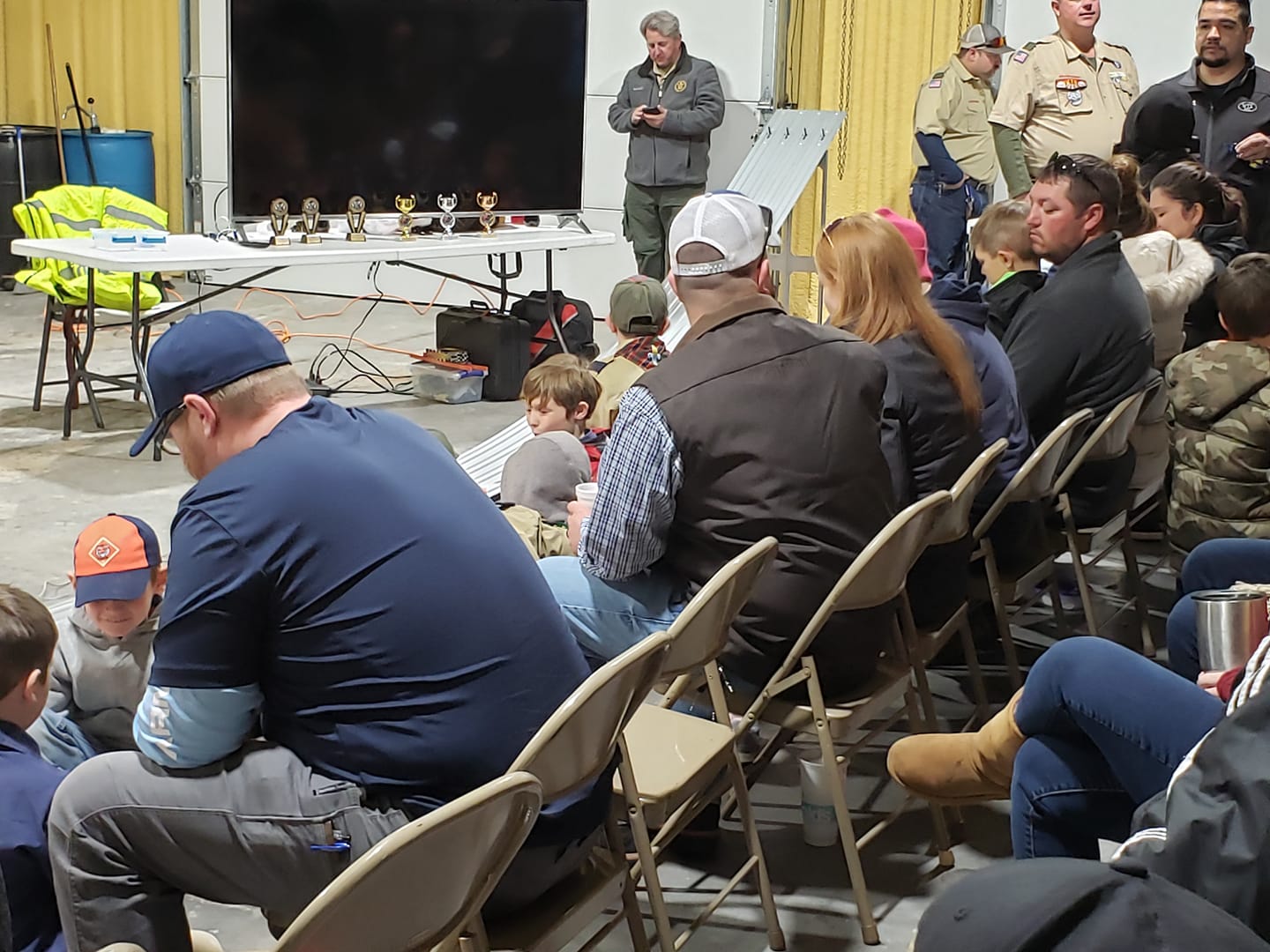
The scene at the Dodge dealership in Snyder. Ezra is in the middle of the photo.

I stated in my last post that I wasn’t getting much writing done, due mainly to the snow days and the grandchildren being home. And I was okay with that. But, in the three days after the snow days, I have’t done much.

I had sent the first five pages of The Teachings to my critique group, Scribblers & Scribes of Bella Vista. I received one review back, and went over that carefully, incorporating many of the comments. Alas, I didn’t add any new material. I found a little time (maybe 30 minutes) to re-read some of the source material, which will help me down the road.

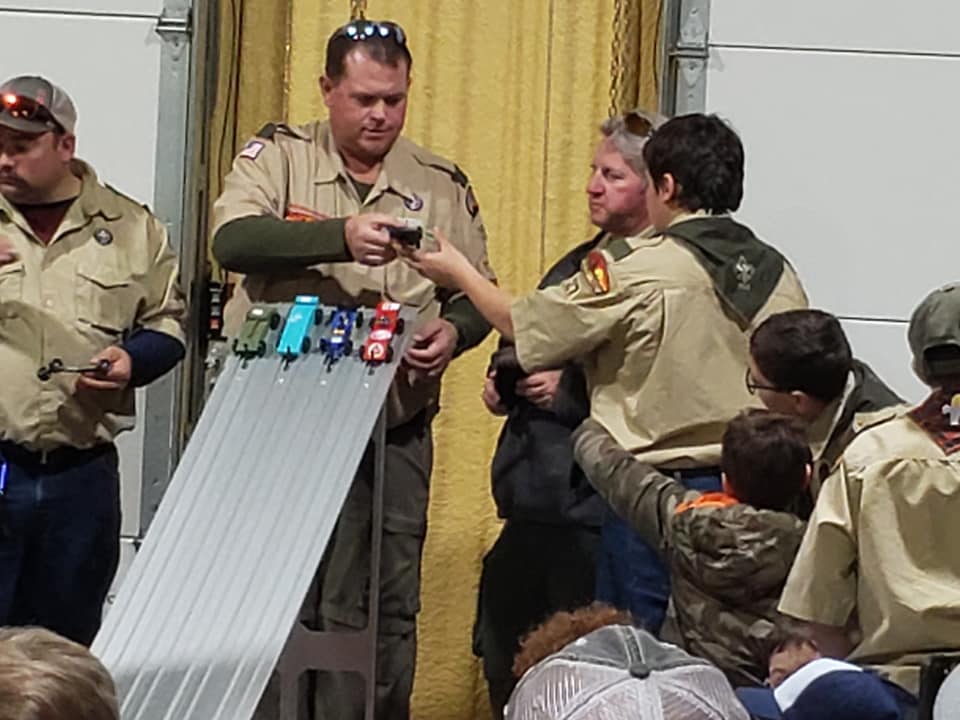
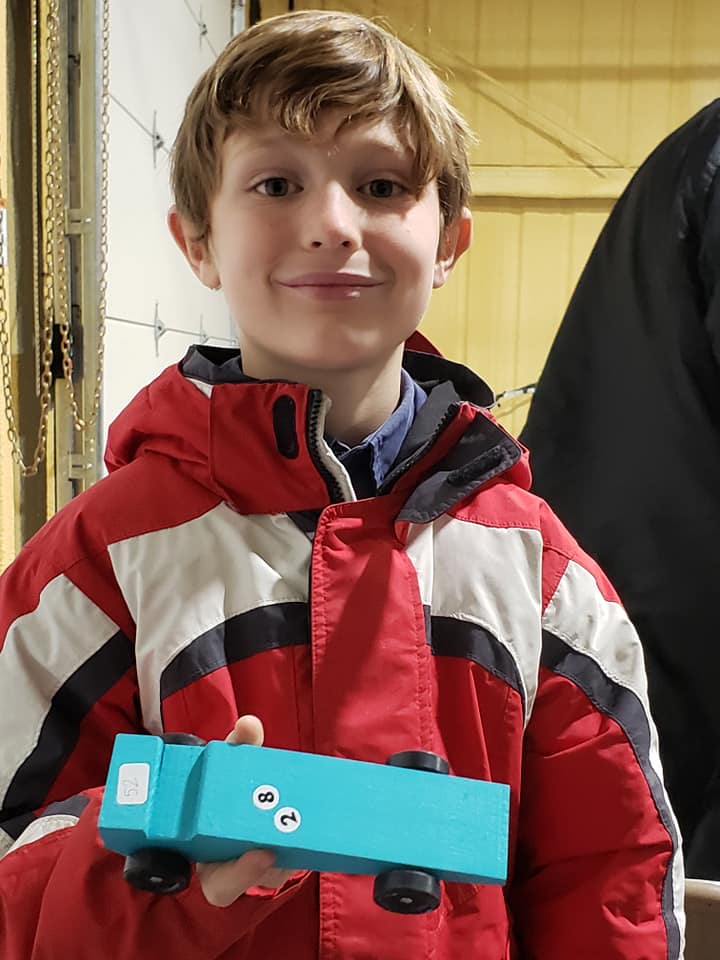
Leaders and boy scouts ran a good show on Saturday. Ezra’s car is the bright blue one.

Saturday I took #2 grandson, Ezra, to his Pinewood Derby competition in Snyder, about 50 miles away. That was a fun time. We had lunch afterwards, and Ezra commented it was lunch for second childs. Yes, it was.

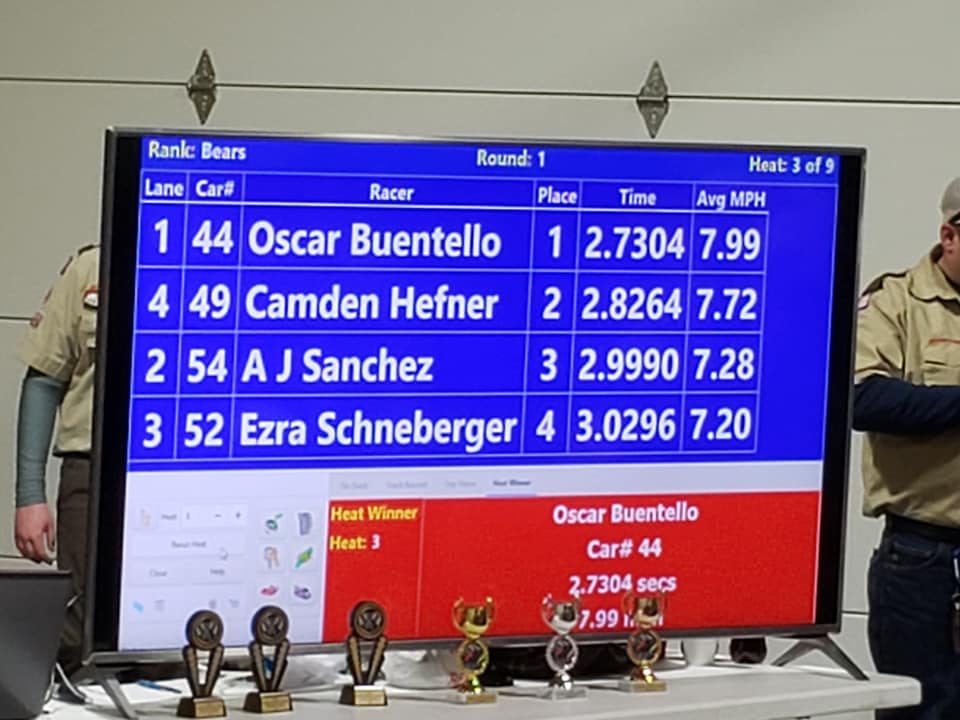
This was a snazzy set-up. The display shows the result from one heat.

We walked around the neighborhood a couple of days. Yesterday, after church, Ephraim had a friend over for a visit. I found some time to sit on the front porch and read—not in the source book, but in other things I brought along on our trip. Enjoyable, but not necessarily productive for writing.

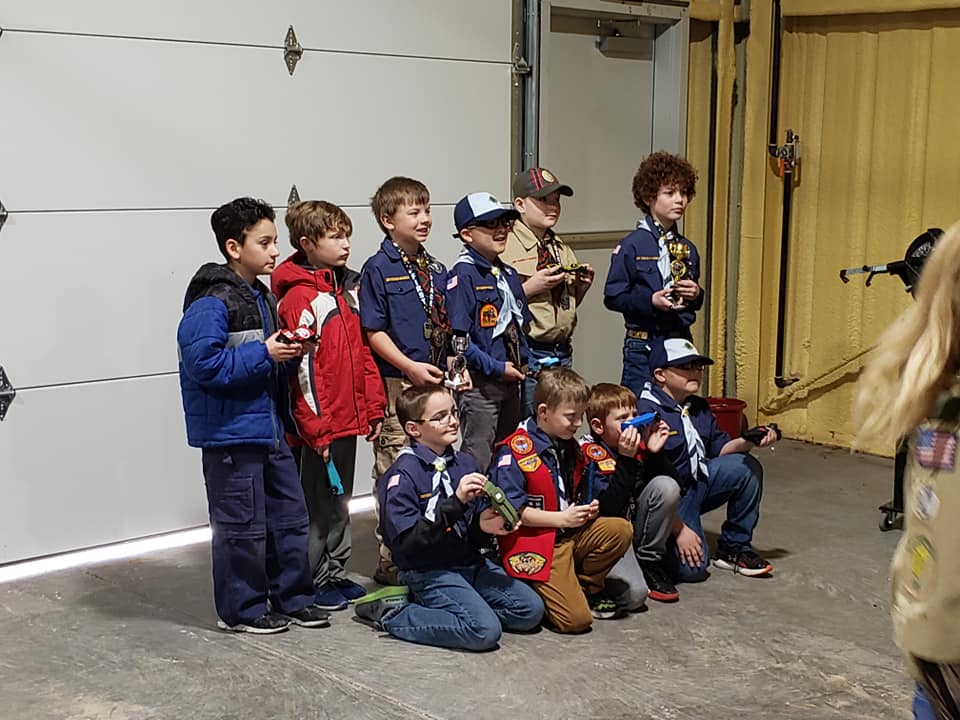
A good number from Ezra’s pack participated. All seemed to have a good time.

Yesterday, Sunday, was mainly for reading. But, as I read in the book we are currently studying in Life Group, and as I read some in a short book from 1886 about Thomas Carlyle, ideas started to come to mind. These were ideas for Bible studies to develop and write. One had been there for a while, but another came out of the blue. Actually, the thought came to me in the men’s Sunday school class yesterday, from a Bible passage we read and studied.

Ezra didn’t seem to be disappointed at not winning anything. He enjoyed being with his friends, and maybe with his grandpa.

Yesterday evening I took a few moments to write the ideas down. I didn’t take time to flesh them out. That may be an activity for later today or tomorrow. I also listed other Bible studies I’m thinking of. I have about six I’ve developed and taught but never written out in book form, and, in addition to the two added yesterday, I have six others I want to develop. I won’t give any of those here. That will wait on a future post.

So, in a way, this was writing productivity. One of my goals for this month is to decide on the next Bible study to write. Last night’s exercise will help me achieve that goal.

February Goals

As reported in my last post, I had a good, productive January, at least in reference to my writing goals. Time now to set writing goals for February. As I’m traveling I’ll back off a little on my goals just a little. I’ll have fewer of them, but hope to spend a fair amount of time on writing.

  1. Blog twice a week. Based on past experience I feel good about this.
  2. Attend the mid-month meeting of Scribblers & Scribes of Bella Vista. I’ll be away for the other two writer group meetings I normally attend.
  3. Write a large amount in The Teachings. I started this last month and would like to get a lot done. I hesitate to set a word goal, as I’ll be doing some research/reading simultaneously. However, goals should be measurable, so I’ll set 10,000 words as my goal. Ideally I should be writing more, at least 1,000 words a day. Maybe, as I get further into it, I’ll write that much a day.
  4. Review the Bible studies I’ve written before, and ones I have planned, to see which one I’ll write next. I don’t plan on beginning it just yet, but I want to know which one I’m doing so I can be thinking about it.
  5. Finish re-publishing the Sharon Williams Fonseca short stories. I have two more to go. Doing this to correct any typos and to add all my books and stories to the document.
  6. Do more research for Documenting America: Run-up to Revolution. I have two main research books in hand, but will look for other sources, including on-line.

That’s all the official goals. Possibly something else will come up during the month.