I’m at the age where I’m much closer to death than to birth, and more people I know are dying than people I will know are being born. The circle is shrinking. Parents are gone. One sibling is gone. Four of the fourteen in my paternal first cousin group are gone. Of my high school class of 725 people, we know over 80 are dead, and maybe others.
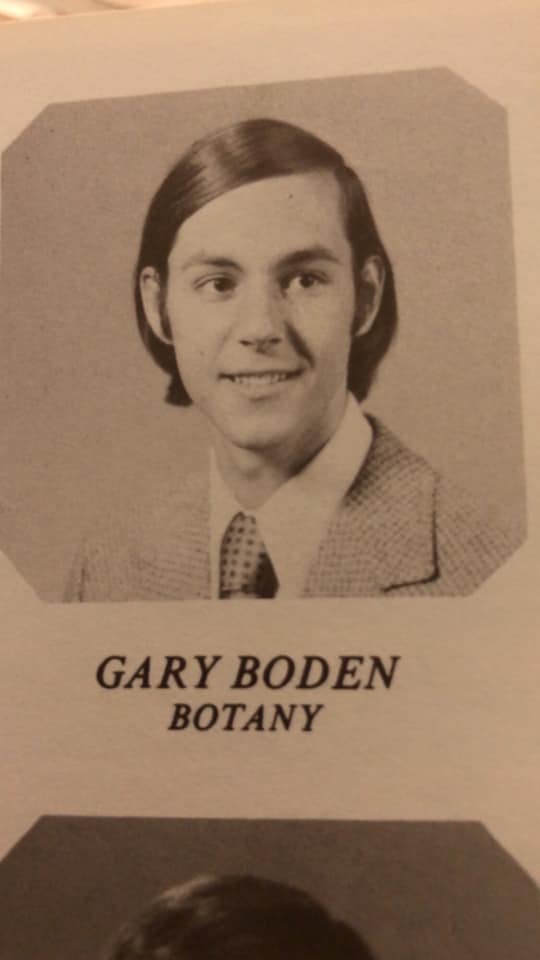
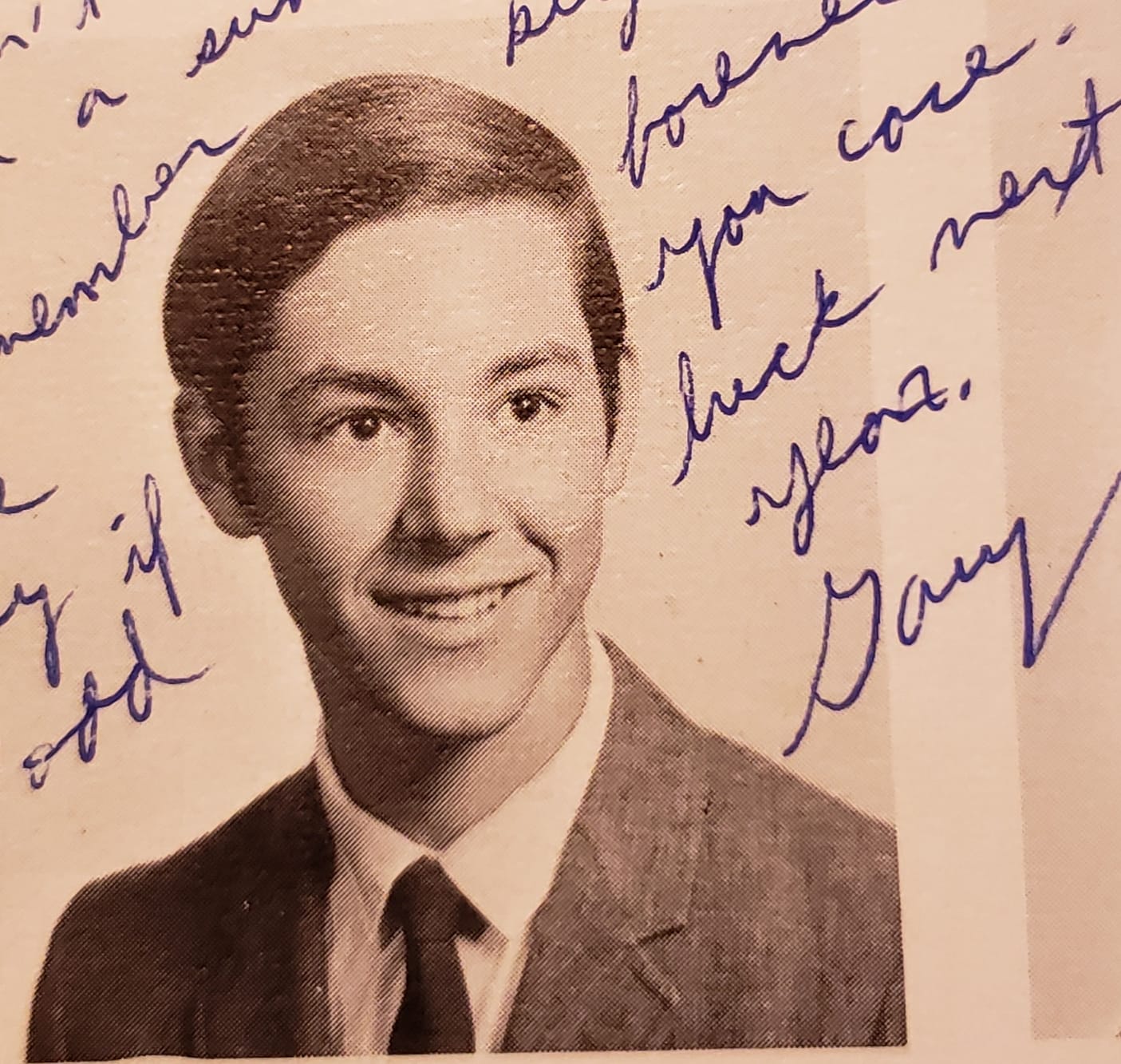
That number went up by one last week when one of my best friends, Gary Boden, lost his battle with cancer and went on to his heavenly reward. Gary and I went to high school together, and met, not in class, but running track. Gary was a hurdler, I was a middle-distance runner. We got to know each other a little during practices. We knew each other well enough that he signed my yearbook; maybe I signed his, don’t remember. This was the start of our friendship. To the best of my recollection we never had any classes together.
Then, in June 1970, many of us in my class went to freshman week at the University of Rhode Island. This was a two-day stay in one of the dorms. I don’t remember who I roomed with, but I remember Gary and I hung out together most of the two days. We played pool in the basement of the dorm (Barlow Hall, I think) most of the night, going to bed just before daylight when we knew we would have to get up in a couple of hours.
A number of us Cranston East alums hung out together during freshman year. Gary and I learned we had much in common. We were both boy scouts (he made eagle, I didn’t). My grandparents lived on the west side of Point Judith Pond—I spent summers there; his parents had a summer home on the east side of the pond. We could see each other’s summer place, 2/3 mile apart by water, 6 miles by land. During the summer Gary worked at the Burger Chef in Wakefield; I got a job at that Burger Chef late freshman year and worked there till my last semester. During the summer, Gary would just be getting off when I came in, and we had a chance to talk a while. One summer afternoon I swam across the pond and showed up at their house in just my swim trunks. We both liked sailing and had small sailboats, and occasionally met in the pond and then had friendly races (which I won, more based on the character of the two boats rather than the sailing skill of the victor).

We were in the same suite together junior year, along with other Cranston kids. That was for just one semester, when I moved out of the dorm to live “down the line” with my grandparents. Upon graduation, I packed almost everything I owned in my Plymouth Valiant and moved to Kansas City for work. Gary went straight on to Cornell and earned his master’s degree. I eventually got mine as I worked. I called him a couple of times on his birthdays while he was in Ithaca, thus keeping in touch.
My life pulled me even farther away in the 1980s and we had few contacts. One was in 1980 during one of my trips back to Rhode Island. I saw Gary and Gayle during their engagement. I had learned that our common friend, Chuck Nevola, had planned a surprise bachelor party for him. I almost spilled the beans when I saw Gary and Gayle. She looked aghast (Gary didn’t see it), but I caught myself and we pulled off the surprise the next day. Six or seven of us took him to Ann & Hope as a ruse, then on to Valli’s Steak house for the real party.

I’m not sure when we next saw each other. We exchanged a few Christmas cards, but it was in the 1990s, after I’d returned to the States and moved to Arkansas, that we began the regular visits every few years when I went back to the old haunts. Four of us got together for an evening: Gary, Chuck, Joe Farina, and me. A couple of times the wives joined us (though never all four wives at a time), but usually it was just us four, sharing old times and solving the world’s problems.
We didn’t exchange many letters. Once e-mail came in we communicated that way. Once Messenger came in we exchanged messages that way. If I could gather them all up it would be a fair number of letters. I hope to do that some day. I looked at our e-mails last night, and found many more than I expected. I see pleasurable reading ahead.
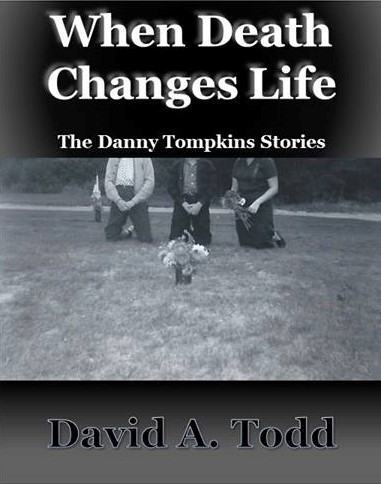
Gary was a lover of literature. I was a hater of literature—until I started writing books. After that, Gary became a reviewer for me, a beta reader. He read advanced copies of several of my books and gave me good advice on making them better. When he read In Front Of Fifty Thousand Screaming People he told me, “You set this up so well for the sequel”, to which I said, “There isn’t going to be a sequel.” He came back with five or six plot lines that he thought were not finished and would make a good sequel. I saw he was right, and Headshots was the result. I became a better writer because of Gary.
I could go on and on. A friendship of 52 years is not easily condensed into a single blog post. Let me just say that, though it has been five years since our last gang of four meeting, I will miss Gary much, for the rest of my life. I take comfort, and I know his wife and daughter do as well, that we know where he is right now, and that his eternal reward is a fitting end to his life here. He has now heard his Savior say,
Well done, good and faithful servant. Come and share your master’s happiness.