Category Archives: Writing

Documenting America: From the Cutting-Room Floor

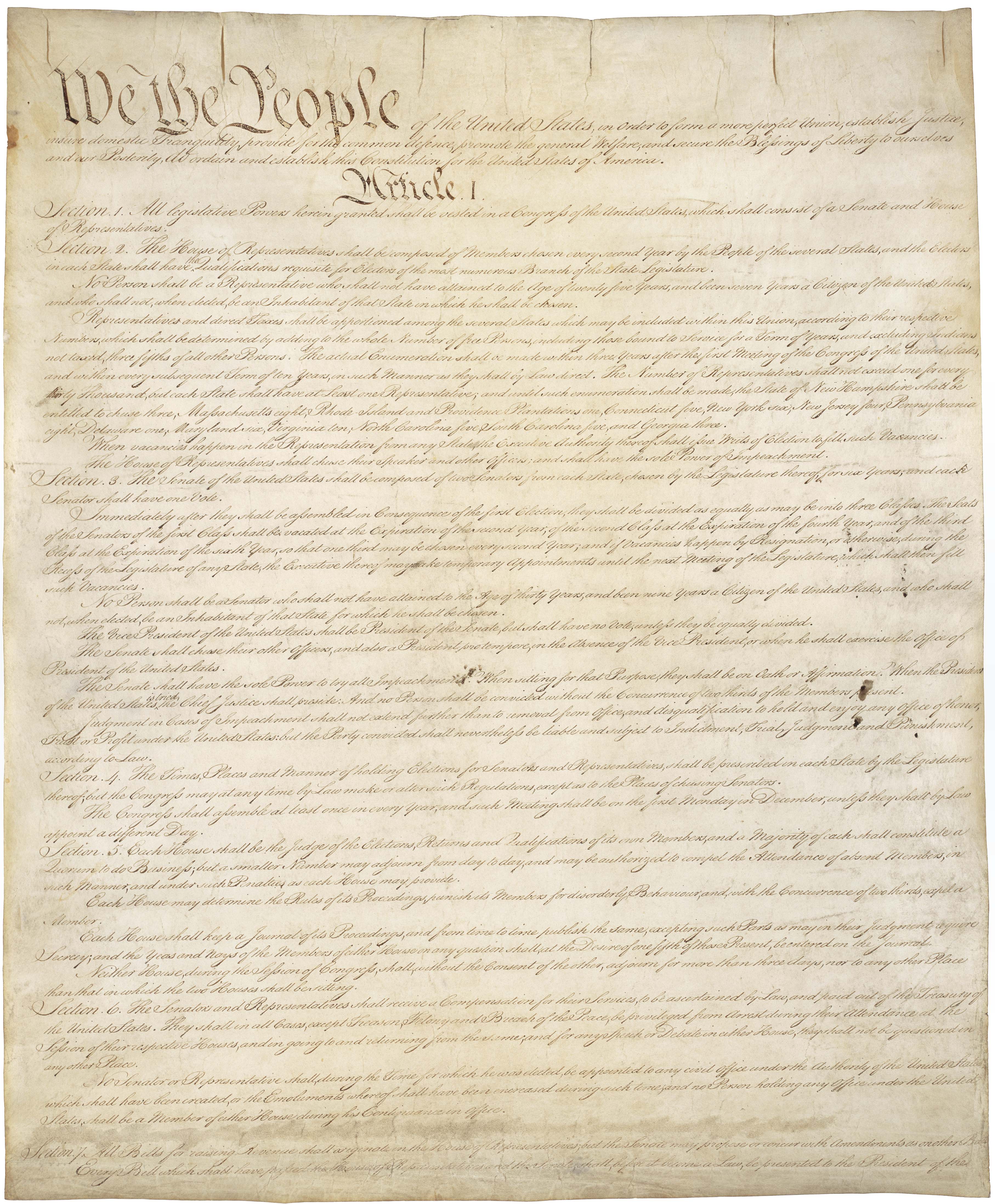
The United States Constitution. What a great system of government.

As I mentioned in a previous post, as I’m going through the source documents for Documenting America: Making the Constitution Edition, much good material gets edited out. It winds up on the cutting room floor, so to speak, using the movie industry term.  Some of this is good material. I’d love to use it in my book, but, alas, I need to keep the book a reasonable size.

The thought came to me to use it for blog post material. So, instead of just dumping it, I’ve been saving it for use when it’s time to write a blog post and I have nothing else in mind. It could also be newsletter material, I suppose, if I ever take the plunge to writing a newsletter.

But, again alas, something I put into a file last week, from one of the Federalist Papers, is now nowhere to be found. What did I do with it? Did I save it to my Documenting America Vol 3 folder? It’s not there. Did I save it to my Blog folder? It’s not there either. Maybe, without paying attention, I saved it to the root folder of my Documents. Nope, not there either. Did I fail to save it and let it go drifting off into the ether?

Whatever, the excellent item I was going to use for today is not on my computer. I could spend an hour looking for it, but think, instead, I’ll find something else. I saved other stuff.

Here’s one from an anonymous writing from someone from Pennsylvania who didn’t like the proposed constitution.

The wealthy and ambitious, who in every community think they have a right to lord it over their fellow creatures, have availed themselves, very successfully, of this favorable disposition; for the people thus unsettled in their sentiments, have been prepared to accede to any extreme of government; all the distresses and difficulties they experience, proceeding from various causes, have been ascribed to the impotency of the present confederation, and thence they have been led to expect full relief from the adoption of the proposed system of government, and in the other event, immediately ruin and annihilation as a nation. These characters flatter themselves that they have lulled all distrust and jealousy of their new plan, by gaining the concurrence of the two men in whom America has the highest confidence, and now triumphantly exult in the completion of their long meditated schemes of power and aggrandisement.

Whoever wrote this, a small part of a much longer article, was, I think, spot on concerning what happens when power is obtained and then applied to government. Wealthy and ambitious people do tend to lord it over their fellow citizens. They are successful, often from their own work, and they see this as a reason why they should 1) be held in high esteem by others, and 2) have positions of political power.

The writer of the original document seems to have been wrong, however, about the motives of those who wrote the Constitution and about how the government would function under it. Things turned out much better than his dire predictions. He knew things weren’t going well under the Articles of Confederation, and saw this new document as setting up a government of the rich and powerful. I believe most of our 232 year experience with it shows us that this isn’t so.

My Documenting America series focuses on our historical documents, and tries to inspire people to seek the documents out and read them.

Or is it? As I look on Congress today, I see lots of multi-millionaires. I see people who make laws that apply to others but not themselves. I see the rich and powerful say the government should take over your health care while they keep a very nice plan for themselves. Same with pensions and Social Security.

I could go on and on. Can you tell I’m not a big fan of Congress? I think most of the ills in the nation that are often attributed to the president—every president, no matter who it is—are often the fault of Congress, either due to their action or inaction.

So why didn’t this particular passage make it into my book? Simply a matter of space. This document, like all of them I’m using in the book, is chock full of good phrases and arguments. Some turned out to be wrong arguments, some right. It’s all worth reading. If someone reads Documenting America and then digs into the source documents, they’ll see this. All the better. If they don’t, this will remain obscure and unread.

Perhaps my book and this blog will help others to find and read it.


Still Reading Thomas Carlyle

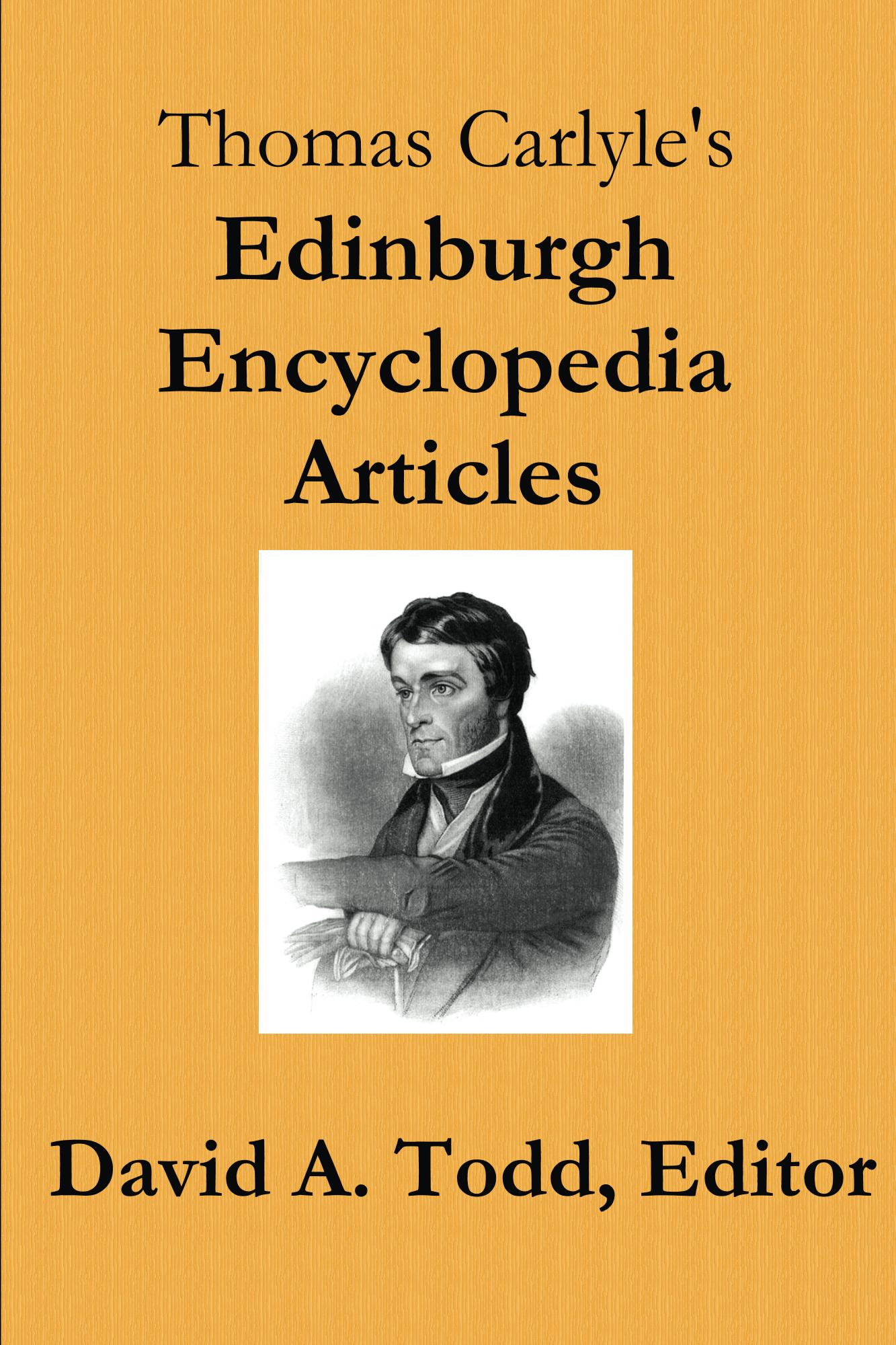
My first book on Thomas Carlyle, published 2014

Most of my posts lately have been related to my immediate works-in-progress or my other reading, with an occasional dabble in an inspirational post. I have a thought for the latter, based on study for yesterday’s Life Group lesson. I’m not quite ready for that yet.

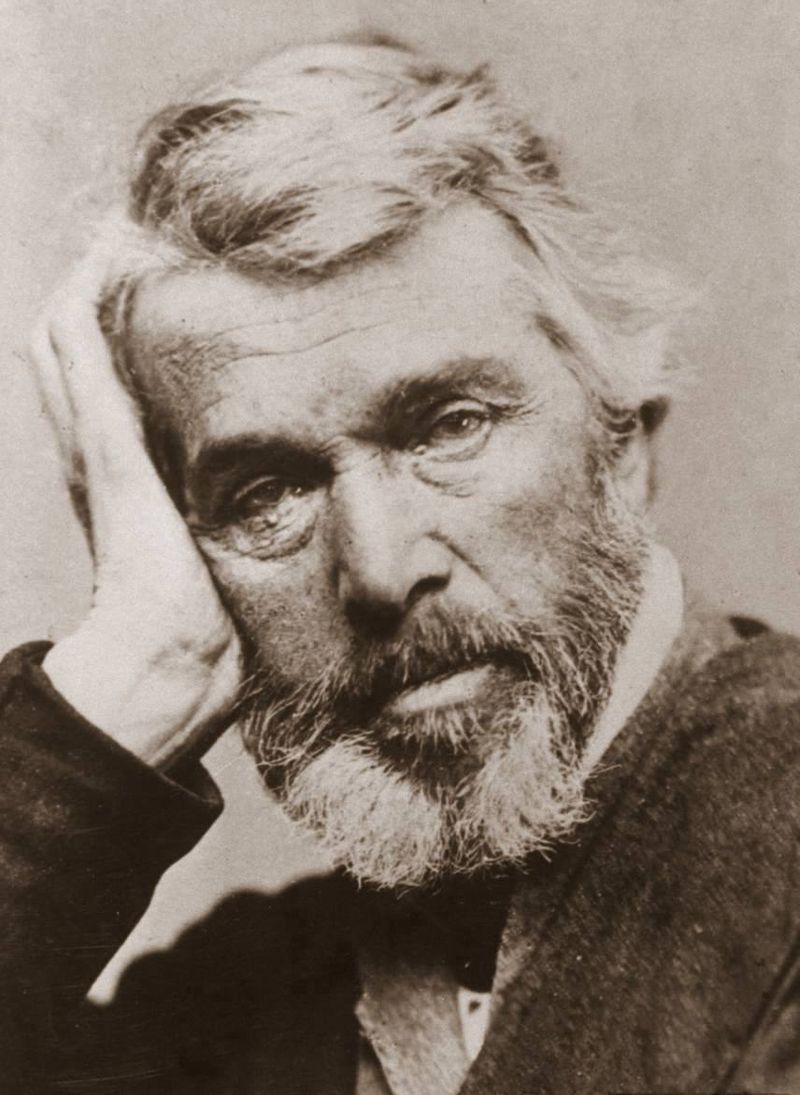
So, I’ll stick with what I intended to post about today, which is my current reading in the writings of Thomas Carlyle. It’s been a while since I’ve written about him. “Carlyle” is a category for my blog posts, so you could easily check and see what I’ve written about him before.

I have published one book about him, a gathering and reprinting of his articles written 1820-1823 for the Edinburgh Encyclopedia. So far as I know, my book is the only time all his articles for that publication have been gathered in one publication.

I’ve been slowly, over several years, working on two other books about Carlyle. One is about his book Chartism. The other is a Comprehensive Chronological Composition Bibliography. Both of these works have stalled, mostly  because they are simply lower on my writing priority list than others. Perhaps that will change one day, but it’s the case for now.

Carlyle changed from being a compassionate man to a promoter of slavery. How that change came about is the subject of my Carlyle studies.

But I’m back to reading him. From 1827 to 1833 Carlyle’s main writing was a series of articles for the Edinburgh Review and other literary magazines. Emerson gathered these and published them in three volumes around 1839. It was so popular in the USA that a British edition soon followed. Today they are considered one of Carlyle’s major works.

I’ve read a couple of the articles before, and started a couple more, but never got very far with it what have come to be called Carlyle’s Miscellanies. I haven’t wanted to put money into buying them in print (or e-book), and had never found an e-copy of good quality of a public domain version. About two weeks ago I went looking for them again, and, lo and behold, I found an e-book re-issue of the essays, of excellent quality, all in one volume, I think.

I’m reading them on my smart phone. That’s not a totally new experience, since I recently read Locke’s Two Treatises of Government on my smart phone. Still, reading books on phones will be somewhat new for a while. I’m enjoying it there, however. I turn the phone sideways and slightly enlarge each page to fill the window. So far I’ve read two of the essays, the first two in chronological order: “Jean Paul Friedrich Richter” and “State of German Literature”, both from the Edinburgh Review in 1827. I finished the second one last night.

Why am I doing this? Why distract myself from my writing or research for my writing. I can only plead a reduction in sanity, or perhaps an increase in delusion. I sometimes think myself a scholar and want to read something that either is or seems to be scholarly. Carlyle seems to fit. And, in case I ever do get around to finishing that Chartism book, these readings might actually play a part in it.

The Richter article was easy enough to understand, and I found it informative and even enjoyable. The German Literature article was tedious, even boring. I think this is where I bogged down before in my reading of his essays. The book has some good parts to it. I think I would grasp more with another reading. Carlyle, like so many writers of his time, wished to write poetry along with prose. He left a number of poems to us, none of which are highly thought of. I may pull out some of his thoughts on German poetry, really about poetry in general, and see if I couldn’t make essays out of them.

Queued up on my phone is his third essay in the book, “Life and Writings of Werner”. I don’t believe I’ve rad this one before. I don’t know Werner, so am not looking forward to reading it, except to know it will perhaps sate my need to be reading something intellectual. If I can get through this third essay, there’s hope that I will get through the entire book.

Meanwhile, should you buy and read my previous book on Carlyle? I’m really just an editor in that book. I wouldn’t recommend it, not unless you want to make study of Carlyle a significant intellectual enterprise. If you do, be forewarned that, after publication, I found an embarrassing error in the chapter on Pascal. I corrected it in the e-book, but it remains in the print book, awaiting my taking the half-hour needed to make the correction and republish. Seeing as I have to migrate all my print books from CreateSpace to Amazon KDP, I’m planning to get that correction done during the migration.


Too Many Sources

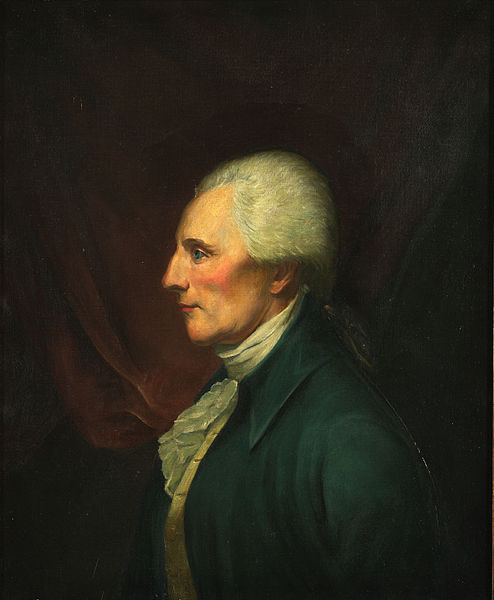
Richard Henry Lee, while a true patriot, wasn’t happy with the proposed Constitution.
[Photo by Billy Hathorn, used under creative commons license]
As I work on Documenting America: Making The Constitution Edition, my main problem is having too many sources or sources of too great a length with too many inspiring words. If I put in everything I want to, the book would be 200,000 words. In comparison, the first volume in the series was a mere 45, 000 words and the third only 70,000.

Clearly, I have much editing to do. A good example of this are some letters written by Richard Henry Lee right after the Convention. Published in a newspaper with a pseudonym, they were anti the proposed Constitution.

Since in the book I want to present both sides of the argument, Lee’s letters interested me. I pulled two of the five letters into my manuscript, and discovered they were over 9,000 words. Heavens! How in the world would I ever get them down to a reasonable length, which is between 1,000 and 2,000 words without throwing away valuable words?

I decided I had two different things I could do with the excess words. One is to take some excerpts from the letters and build blog posts around them. In furtherance of that, Here is a quote from Letter 3.

This, by a part of Art. 1, Sect. 4, the general legislature may do, it may evidently so regulate elections as to secure the choice of any particular description of men. It may make the whole state one district—make the capital, or any places in the state, the place or places of election—it may declare that the five men (or whatever the number)…the state may chuse who shall have the most votes shall be considered as chosen. In this case it is easy to perceive how the people who live scattered in the inland towns will bestow their votes on different men, and how a few men in a city, in any order or profession, may unite and place any five men they please highest among those that may be voted for and all this may be done constitutionally, and by those silent operations, which are not immediately perceived by the people in general. I know it is urged, that the general legislature will be disposed to regulate elections on fair and just principles: This may be true. Good men will generally govern well with almost any constitution: but why in laying the foundation of the social system, need we unnecessarily leave a door open to improper regulations? This is a very general and unguarded clause, and many evils may flow from that part which authorises the congress to regulate elections.

In the book I would make commentary on this excerpt. I would focus on how Lee’s fears were not met—except where gerrymandering occurs, but this is done by the States, not the Federal government. I would make reference to his statement that “Good men will generally govern well with almost any constitution” and quote it in my commentary, as I did here. While Lee’s letter is negative relative to the Constitution, I would present his side but find a way to make it positive.

And, perhaps, a fourth to this one? Yes: Making The Constitution Edition, hopefully in 2019. Update: It will come in 2019!

So why didn’t I? Why did so much of Lee’s words end up on the cutting room floor (my final excerpt being only 1450 of Lee’s 9200 words)? Chalk it up to editor’s license, and the fact that I have a surfeit of material, and that I judged other of Lee’s words to be better for my chapter.

It has occurred to me that I have a second way to use some of these deleted words or other sources that I have cast aside in my editorial duties. For years I’ve thought about starting a writer’s newsletter, to be shared via e-mail; something to “market my wares”, so to speak. I’ve hesitated doing this because of the work involved. For a while I thought I would wait until retirement to start it. I’m there now, and still hesitate due to the work.

I wanted to title the newsletter Citizen and Patriot, after the words of James Otis in his argument against the Writs of Assistance in 1761: “These manly sentiments in private life make the good citizen, in public life, the patriot and the hero.” That didn’t seem appropriate for a writer’s newsletter, however.

Then I thought, perhaps it could be a column in my newsletter. Since I hope to be forever working on books in my Documenting America series, this could be the column where I promote them.

Still another thought came to me. Perhaps I could make this a stand-alone newsletter, one that, through using the words from America’s historical documents, to urge good citizenship and patriotism. I could even make it a paid newsletter and maybe make a little money from my research.

Well, of necessity I’m going slowly with that. I would need a design, a simple masthead, and a few sample newsletters prepared to see what it looked like and how much time each would take. I’d need to establish a frequency, and utilize some time of e-mail marketing service to make it happen. All much work, it seems to me.

So, for now I’ll accumulate sources. I’ll relegate many unused sources, and large parts of used ones, to my editor’s waste pile—but I won’t discard them, not just yet. Perhaps I’ll have more blog posts about them, and maybe a newsletter somewhere in my future.

I Will Awaken The Dawn

Sunrises are always inspiring.
Wikimedia Commons user TeemuN. Link to license: https://creativecommons.org/licenses/by-sa/3.0/deed.en

One of the bad things about being a writer—at least for me—is that every good thought you have, every good thing you read, becomes an idea for writing.  Why oh why can’t I be like other people and just enjoy what I read without thinking I have to derive something from it?

My morning devotional reading is in Psalms. I was quite regular in my devotions when I was a working man, taking a moment with coffee at my desk at work to read something in scripture and pray before starting my day. I admit, however, to my shame, that I lost this discipline once I retired. I started that back up last week, and have faithfully read the Psalms each morning since, before I wake up my computer.

But I digress. On Tuesday, I read Psalm 57. You know how they say (whoever they are) that every time you read something in the Bible, no matter how many times you’ve read it before it becomes new for you again? Well, it turned out to be true for me that day. The key verse was 57:8, which reads

Awake, my soul!
Awake, harp and lyre!
I will awaken the dawn.

That last phrase hit me. “I will awaken the dawn.” What does that mean? I pondered it. It speaks to me of anticipating the day, of rising before dawn and saying that you can’t wait for the day to begin and see everything God has in store for you on this day.

The Psalms are a comfort to many readers.
Public domain

That doesn’t always happen, does it? Some days your normal waking time comes and it’s all you can do to swing your legs out of bed and find the floor. Standing up is a struggle, never mind going about your getting-up activities.

The psalmist didn’t seem to have that problem. He was so anxious to get going with the day that he called for his soul to wake up, for his harp and lyre to wake up, and together they would summon the dawn to get a move on.

That’s the kind of start to the morning I want to have.

So, I have this new encouragement to begin the day in a positive way. That was Tuesday. On Wednesday I read Psalms 58. I saw that the words under the title, which would actually be the first words in the text since these psalms weren’t numbered when they were written, were “For the director of music. To the tune of ‘Do Not Destroy’. Of David. A miktam.”

I remembered that quite a few psalms give the tune it is to be sung to. I checked the last several I’d read. For Psalm 57 it was also to the tune of “Do Not Destroy”. For Psalm 56 it was to “A Dove on Distant Oaks”. Psalm 60 is to “The Lily of the Covenant”. Other psalms in this part of the book have other song names attached to them.

Immediately, a possible book came to mind. I’m not going to give the details of it at this point. In fact, I’m still working it out, though, like many of my book ideas, what it will be from beginning to end has pretty much flashed before my eyes.

Is it a do-able book? Would anyone ever want to read it, or, like the rest of my books, will it sell around 20 copies and be forgotten?  Will I ever get it written? Perhaps someday you’ll find a book of that title by me, for sale at Amazon and other fine retailers. Or perhaps not.

Lots of questions. Time will reveal a few answers, I hope.


Don’t Bash Rhode Island

I had a different post planned for today, but think I’ll go this way instead.

There’s a reason The Independent Man is atop our statehouse: We are independent minded. Or, are we just stubborn?

Yesterday, I thought I was done with my research in Documenting America: Making the Constitution Edition. I had all my chapters lined-out, all my source text found and entered in a Word document. Well, almost all, as the source text for one chapter eluded me. Yesterday I found an alternative (actually, two) and that’s now in the document. I even wrote my commentary on a chapter yesterday. Now up to nine chapters complete out of a probably thirty-one.

I started work on the next chapter, editing the source text. It’s a letter from Thomas Jefferson, while he was in Paris in 1787, to Edward Carrington. TJ made some very good points and I’m happy to have that in my book. I figured writing the chapter around it would be somewhat easy.

But, I wanted to see what Carrington had written to TJ to prompt this letter. I went to the Library of Congress website, which has been my source for so much. It didn’t take too long to learn Carrington hadn’t written to TJ in six years. TJ had re-initiated the correspondence. I decided then to see how Carrington responded.

That was easy to find with the tools on the LOC site. Jefferson wrote Jan 16, 1787; Carrington responded April 24, 1787, a reasonable lag given the time for a letter to sail across the ocean. So last night I began reading the April 24 letter, and enjoyed it until I came to this sentence.

Rhode Island is at all points so anti-federal, and contemptible, that her neglecting the invitation, will probably occasion no demur whatever in the proceedings. 

I kept reading, however, as a good researcher should do. I next went to Carrington’s June 9, 1787 letter to TJ, written before Jefferson had responded. It this letter I found the following.

All the States have elected representatives except Rhode Island, whose apostasy from every moral, as well as political, obligation, has placed her perfectly without the views of her confederates; nor will her absence, or nonconcurrence, occasion the least impediment in any stage of the intended business.

And I though, them’s fightin’ word mister! How dare you bash my home state like that. I suppose, however, he’s correct. He’s talking about choosing and sending delegates to the Constitutional Convention in Philadelphia. This followed the failed Annapolis convention in 1786. Rhode Island didn’t attend that one, though they did appoint delegates who simply didn’t arrive on time.

Now, however, as the Constitutional Convention drew near, Little Rhody was the only State to boycott it. They liked the ineffective Articles of Confederation just fine, thank, and didn’t want them changed. They liked doing things their way, even if they wound up being a tiny, independent nation.

I think it was the word “contemptible” that rankled me. Yes, Rhode Island is a different kind of state. The top of our statehouse has a statue titled the Independent Man.  We have our quirks and love having our quirks.

Then the word “apostasy” also rankled. Carrington didn’t mean this in the religious sense, but rather in terms of politics, that we had fallen away from the sense of cooperation that pervaded during the Revolutionary War. We had ceased looking at ourselves as part of a larger union. Still, the word hurt.

It also hurt that he said it didn’t matter if Rhode Island showed up or not. He said that twice, once in each letter. Was that because of our size and relatively small population? Most likely.

I’ve been away from Rhode Island now for 45 years. I still visit from time to time, and keep in touch with relatives and friends there. I may live in Arkansas, but I still feel like a Rhode Islander.

And I love this research I’m doing for the book. I need to be careful, however. I could research for days and days, enjoying it so much that I’d never get the book written. I need to cut it off and just stick with the writing.

And I will, just as soon as I absorb these Carrington letters.

Religious Freedom Revisited

As I’m working on Documenting America: Making the Constitution Edition, I find that certain topics come back into current American life that have been discussed and, supposedly, settled before. Religious freedom seems to be one of them.

My research suggests that the Founding Fathers did indeed want to keep some degree of separation between religion and government. Their primary focus was preventing the government from regulating religion or restricting who/how/why people could worship.

The latest infringement on the free exercise of religion is US senators asking candidates nominated to various government positions about their religion and how it would affect their performance in office. I first noticed this almost 20 years ago when Chuck Shumer, then a relatively new senator from New York, asked Attorney General nominee John Ashcroft how he could turn off his evangelical Christianity so he could do a proper job as A.G.

I was shocked then and am shocked now when people like Senator Feinstein says to a candidate, “The dogma is strong in this one.” The U.S. Constitution says:

but no religious test shall ever be required as a qualification to any office or public trust under the United States.

When Shumer asks “How do you turn it off” and Feinstein says “the dogma is strong in this one,” what is that if not a religious test. Shumer is saying you can’t be Attorney General if you’re a practicing evangelical. Feinstein is saying you can’t be a Federal judge if you are a devout Catholic. Shame on these senators!

This was all settled in the Constitution. Thomas Jefferson led the way in his writing the Virginia Declaration of Rights, which was later put into law in that state. Religious freedom came in this form.

Be it enacted by the General Assembly, That no man shall be compelled to frequent or support any religious worship, place, or ministry whatsoever, nor shall be enforced, restrained, molested, or burthened in his body or goods, nor shall otherwise suffer on account of his religious opinions or belief; but that all men shall be free to profess, and by argument to maintain, their opinion in matters of religion, and that the same shall in no wise diminish enlarge, or affect their civil capacities.

Note that religion should not affect their “civil capacities.” In other words, the law shouldn’t punish someone because of their religion. By the time the Constitution was written, this was applied to Federal officials through the religious test clause.

So here we are, 232 years later, fighting the same battles we did years ago. What will it take for this to end, for us to win the battle again that a person’s religion cannot disqualify them from holding a Federal office? Maybe it will take one nominee to refuse to answer a question about their religion, to tell the senator who asks, politely, where to shove the question, to show that the Constitution means something.

I’m hopeful that will happen next time the situation comes up.

Still Getting Things Done (in Retirement)

When I was a full-time, working engineer, not all that long ago, I used to occasionally post about getting things done. This would be at times of particular busyness, or perhaps when I was able to complete a major writing task in the face of a normal heavy schedule at work.

Now retired, for not quite two months, I find I’m not getting to all my tasks as well as I’d like to. Last Friday, I felt so overwhelmed by needed to do things, I made a to-do list. First on that was “Fix toilet”. The flush valve in the master bathroom had quit working a day or two before. It wouldn’t shut off when the tank filled. I went out on Thursday to get the new works to put in, but didn’t get it in.

Last Friday I was asked to attend a meeting in my consultant roll for my former company, which meant I didn’t get right on that job. I finally did Friday afternoon, but, as inept as I am with plumbing work, I couldn’t get everything right. So we still couldn’t use that bathroom.

I’ll cut this short, because nobody likes to hear stories about toilets. On Saturday I re-did it and managed to get the works properly installed. However, I loosened something on the supply line, and we still had a small leak. It was then the Presidents Day weekend, so I wasn’t able to call our plumber till Tuesday. He came Wednesday and fixed it, a minor adjustment in the tightness of the supply line. No charge. One thing off the list.

Last Friday morning we woke up to frozen precipitation from the night. I started our old van to clear ice from the windshield, giving myself plenty of time to make my appointment. The street appeared to be mostly dry. I came out a few minutes later, hopped in the van, put it in reverse, and promptly rolled forward. I jammed on the breaks in time so that it didn’t hit the garage. Only then did I notice the van had stalled. It has such a quiet engine I didn’t notice that.

Now I had to start the new van, clear the ice from the windshield, and hurry to my meeting. I made it with a little to spare. It was coming home from that that I tackled the toilet job.

I won’t bore you with the rest of my to-do list from last weekend. Taking down the majority of the Christmas decorations that we’d never done was one thing accomplished and checked-off. Many smaller tasks remained. Most of those were checked off as well.

As for writing tasks, I did such things as:

  • read submissions for the new critique group
  • begin beta-reading a friend’s book
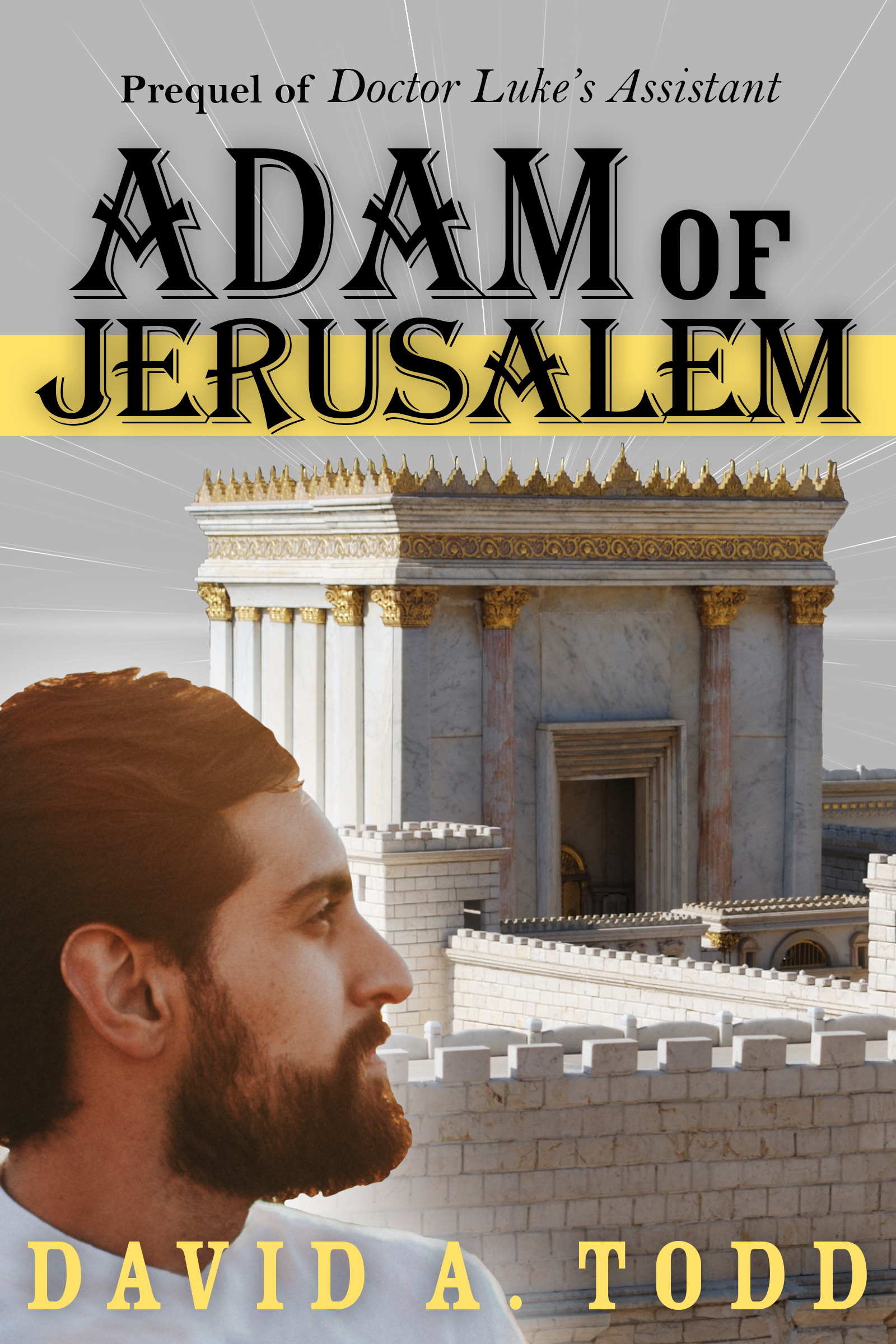
  • print a copy of Adam Of Jerusalem and deliver it to my third beta-reader
  • finish the Table of Contents for my next book, Documenting America: Making The Constitution Edition.

That brought me through the holiday (which didn’t feel like a holiday for me except that the stock market was closed). I think it was on Tuesday that I was in The Dungeon. I made some trades when the market opened, read and critiqued another submission for critique group, and sat back. My to-do list had been completed—almost. All I didn’t do was contact the potential cover artist for AoJ. What should I do next?

Almost out of the blue it occurred to me that I could begin my real work on DA:MCE, which is: reading the source documents, editing them down to reasonable length, writing an intro, writing historical context, and writing the current events tie-in. So I indeed did that. As of yesterday, I had completed three chapters, about a tenth of the book.

I can’t tell you how good that felt. I should be able to complete two chapters ever three days, meaning that the first draft of the book could be ready around mid-April, and I could be publishing it in mid-May. Now that’s getting things done.

But, I must report on one more important item. I don’t know if I’ve written before that I still haven’t had my Social Security and Medicare Part B approved and activated. I didn’t realize how long the government took to get this done. Two things that slowed it down was the fact that the IRS had an identity flag on my SS number due to the identity theft attempt from 2017; the other was, perhaps, the government shut down. Also, it seemed I had given them a wrong phone number to reach me at.

They finally contacted me while I was in Texas early this month. They assured me my application was moving and my benefits would be retroactive to January 1st, both Social Security and Medicare Part B. That was good, but I still couldn’t apply for supplemental insurance until all that was settled. While this was mostly out of my hands, it was still something that I felt like was on my to-do list, to get this done.

Yesterday I realized I still hadn’t heard from them that my benefits had started, so I shot the woman I’ve had contact with an e-mail, asking for a status update. Then, last night, I pulled up my on-line banking to make sure the checkbook was up to date. Lo and behold, there was a SS deposit for me, made on Wednesday, for one month’s SS payment. I still haven’t had any paperwork come in the mail, but there was money in my account.

That means that my Medicare part B is also established, which means that today I can call the supplemental insurance company I want to use and get that going. that is on my today list. As are a number of other items, but at least I’m feeling good about getting things done.

Oh, yes, about the van. I finally made arrangements yesterday afternoon  for it to be towed to the nearby Dodge dealership. This morning they called me. The did a normal servicing, but otherwise could find nothing wrong with it. What in the world? I guess I’ll go down and get it, and maybe it really is okay. But at least it’s checked off my to-do list.

Now, what needs to be added?

On to the Next Book

My most recently completed novel, Adam Of Jerusalem, is in the hands of two beta readers. Sunday I will put a print copy in the hands of a third. I received a little feedback from one and a little more feedback from the other. That process is working.

I contacted a cover designer while I was in Texas. She responded that maybe she can help me, though she is busy. I haven’t contacted her again; that’s on the schedule for today, though today looks to be very busy.

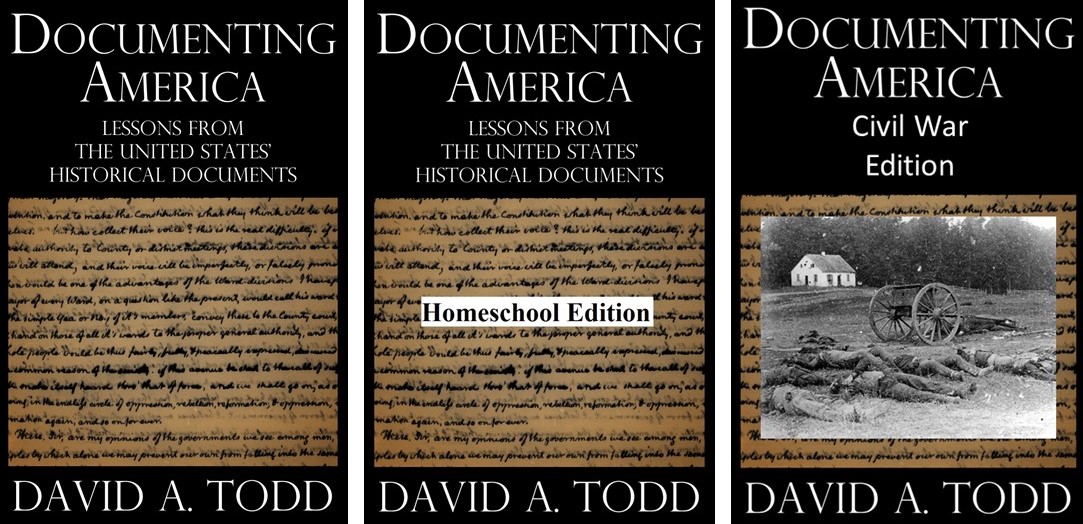
So, it’s on to the next book, which is the next in my non-fiction series. Documenting America: Making The Constitution Edition is next. In theory it’s the third book in the series, although since I did a homeschool edition of the first it is in reality the fourth. I can’t remember how much I’ve written about it before, so I think I’ll just plunge in and tell about it and where I am.

I then took the first book and expanded it into a homeschool edition.

The book covers the period from 1783 to 1789. The Revolutionary War is over. During the war, the Articles of Confederation worked as a form of government. Now in peace time, however, it turns out they don’t work. The central government was a little too weak, and the states a little too independent, for government to function. Wise men saw there was a real chance of the confederation breaking apart into thirteen nations, or perhaps into a few regional nations.

In 1787 a convention was held to revise the Articles of Confederation. The delegates saw that was hopeless, and went in a different direction. They devised a whole new system of central government and wrote a document that became the Constitution.

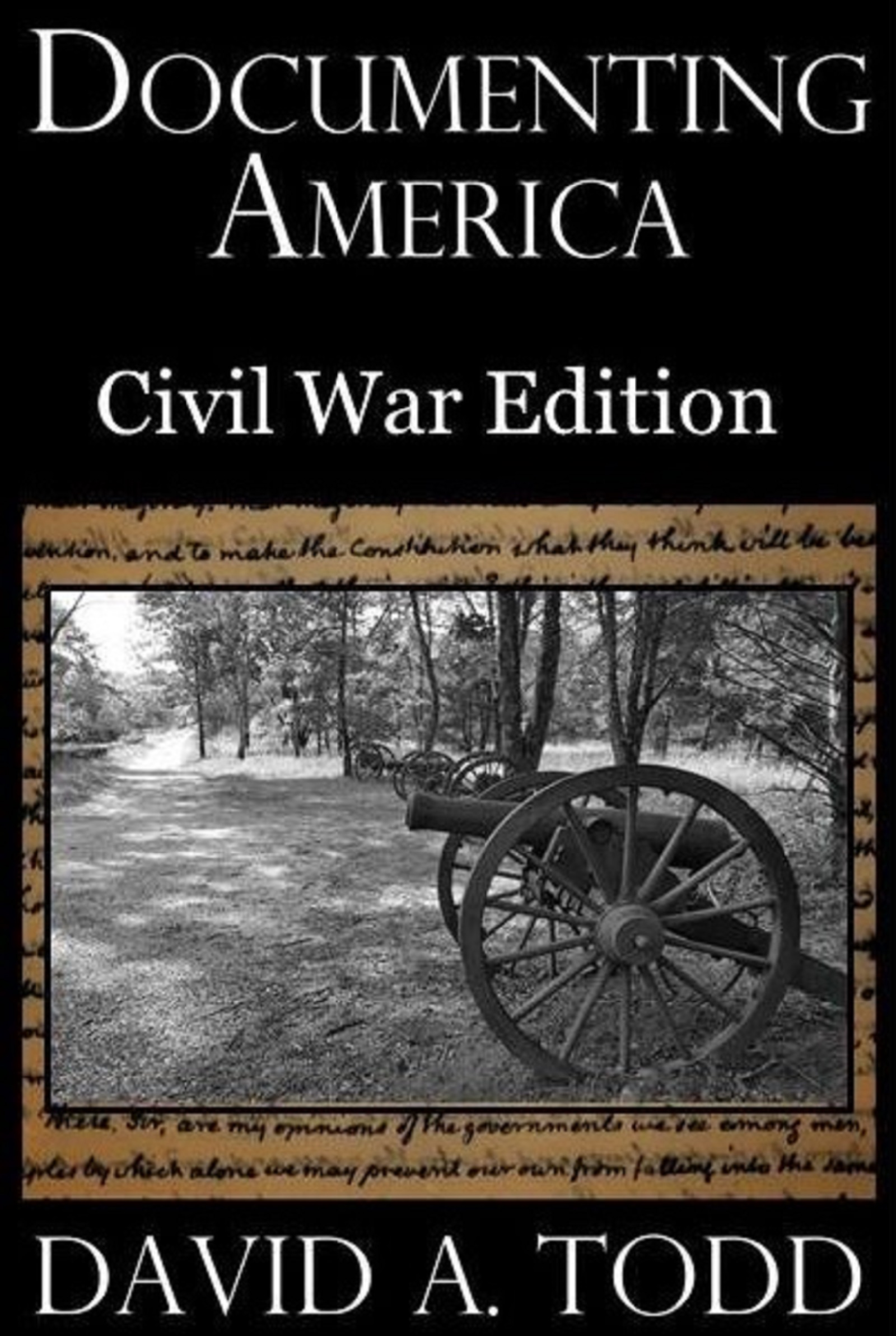
The Civil War edition was published in mid-2017.

From fall of 1787 to late 1788 the states considered this new government. One by one they ratified it. Only nine affirmative votes were needed. They got eleven, with North Carolina and Rhode Island being the only holdouts. Electors met in January-February 1789 and elected Washington to be president. He took the oath of office on April 30, 1789, and the new government was underway.

Here’s the status of the book: I’ve done most of my background reading and have identified the documents I want to use and how to organize them into chapters. I have 30 chapters identified, though some of them are tentative. I have four chapters where I have the source documents identified (The Federalist Papers) but I haven’t read the documents. I plan on starting on that tonight.

Yesterday I took a big step. I created my folder on OneDrive, created the book file, and began to seek out digital copies of my source documents. I found most from the first half of the book—all but one. I copied the full documents and added them to my book file. The fourteen source documents are there, 55 pages and 29496 words. Today (if I have time; if not tomorrow or Sunday) I’ll work on the next fifteen chapters and do the same, all except the four chapters I still have some reading to do on. I hope to have all this done by about Wednesday of next week, including the four lagging chapters.

Then comes the editing/excerpting of the source documents. I have that partly done for about eighteen chapters in my copy of the Annals Of America, where I’ve marked paragraphs to use. That’s far from complete, and some of it was done over a year ago and is thus vague in my memory, but it’s at least started.

I won’t excerpt the documents all at once. I’ll start with Chapter 1, which is a document by Alexander Hamilton about the unfair treatment of loyalists It is 5,221 words. I’ll except this down to around 1,000 (plus of minus 250, at least that’s my target; some documents demand more words be kept), then write my part of the chapter. That process is likely to take two to four days per chapter.

That may be a bit optimistic. Documents from this era are in archaic English, and reading/editing can be a chore. In the book they are all in different formats and will have to be reworked. Four days per chapter to re-read, except, write historical commentary, and tie to a current issue may take longer on average. I don’t really know for sure.

So that’s the plan. Now in retirement, possibly it will all go faster. On days when the stock market is open, and I’m making or watching trades, I plan on doing this work simultaneously. Maybe it will go faster than I think. I’m not ready to look ahead and project a publishing date. Perhaps in two weeks I’ll be ready to take a stab at that.

Oh, one thing I haven’t done yet is create my book journal. That’s another task I hope to get done today.

Back in the Saddle

Last night, around 8:30 p.m., Lynda and I pulled into our driveway, 1318 miles and 11 days after having pulled out. We drove to Big Spring Texas where we spent time with our daughter Sara and her family. We watched the kiddos Friday-Sunday the first weekend and Friday-Saturday the second weekend.

The three older ones are in school, so, with just the 2 yr 4 mo old there in the daytime, and with our daughter there on weekdays, it was sort of vacation for us. Yes, we helped out during those days and times, but I found time to work on stock trading and make a number of trades.

I also found time to make two blog posts, without revealing my whereabouts, and to do significant research on Documenting America: Making the Constitution Edition. I read a lot, and extended my outline to the point where I had 23 of 30 chapters identified. This morning I completed my outline. I still have reading to do, but at least I know my destination now.

I accomplished a number of other, perhaps more important things while in Texas. I took my oldest grandson to his Cross-over Ceremony, where he graduated from Webelo to Boy Scout. That was excellent to see. I also helped him build an A.T.A.T. out of cardboard around his top bunk. We didn’t quite finish, but we got close. And, we had a number of talks—nothing terribly profound or earth-shattering, but simple conversations.

With my next-oldest grandson, we had several times of Bible reading together. He’s seven, and decided he wanted to read the Bible through. He’s currently on Deuteronomy. We read about ten chapters in it, maybe a few more. I also teased him with his portions at meals, something he came to expect and I think enjoy.

With the two youngest, there was playing with blocks and roughhousing and playing runaway blanket.

I didn’t have much time to help with projects around the house, such as hanging pictures or getting a few things put where they should go. I’ll have another trip to do that. I fixed several meals for everyone, and was the founder of a couple of times eating out.

All in all, I declare this to have been a successful trip. Now I’m ready to tackle at-home tasks, the list of which is not being shortened in retirement.