All posts by David Todd

Still Not Making a Lot of Progress

Dateline 1 Oct 2020

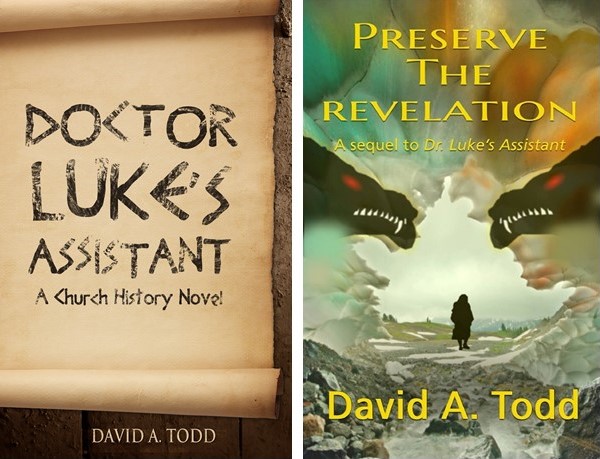
“Adam Of Jerusalem” is a prequel to “Doctor Luke’s Assistant”, and is the first in my church history novel series. “The Teachings” fits in as book 3 of the series.

In January of this year I began writing The Teachings, the third (chronologically) novel in my Church History series. I had been reading for research some time before that. I worked on it consistently through January and February, then bogged down in March. My problem was I wanted to be historically accurate to events in 66-70 A.D., but didn’t want to overdo the historical stuff and not have the novel interesting for the characters and the plot. I started re-reading my main source, Josephus, but that just made me more uncertain of how to proceed.

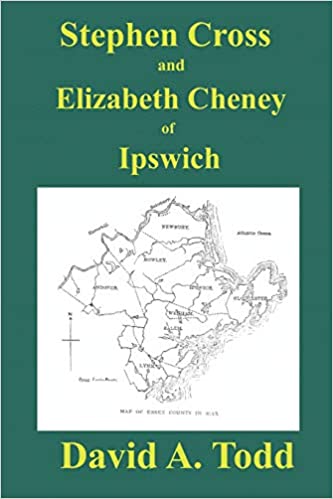
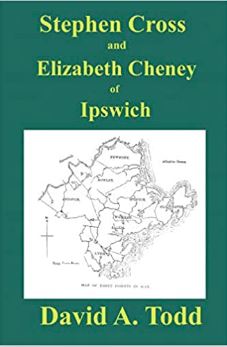
So, as I have a habit of doing, I went to another project, my family history/genealogy research into the children of John Cheney of Newbury (1600?-1666). Genealogy research is always a pleasure and I figured it would be a brief, rejuvenating diversion. Some years ago I began this work on his youngest child, Elizabeth, who married the mariner Stephen Cross of Ipswich. I found much about them (mainly about Stephen, but that helped define Elizabeth’s life as well), and realized it would be a stand-alone book about them. I brought that book to about 60 pages in 2018, then set it aside. In March I picked it up again as the diversion, and by April 3 I had it up to around 80 pages and, I thought, close to finished.
The colonies did well governing themselves, until the King of England tried to impose new government on them. Resistance to that became the seeds of the American Revolution.

On April 3, Lynda went into the hospital with her burst appendix and was in 19 days, requiring two surgeries. It didn’t look good for a while. Since due to the pandemic I couldn’t be with her at the hospital, to keep myself occupied I worked feverishly on the Cross-Cheney book. Before long I had it up over 100 pages. Lynda finally came home though was still weak and recuperating. I got the book up to 116 pages, polished it, and published it. So far, with 1 sale, it’s doing about as expected. A few of the figures were of poor quality, so I haven’t advertised it to the Cross or Cheney genealogy boards and won’t till I get those figures replaced.

After getting my diversion done, it should have been back to The Teachings, right? Well, a little bit. But soon I was working on another diversion. It started as decluttering, going through the many papers my mother-in-law left behind at her death. But that soon evolved into transcribing our Kuwait years letters. That took the better part of August and early September. That’s now done. I will someday turn that into a book for my children and grandchildren. That will take editing, adding commentary, and illustrating it with photos. I don’t see doing more on that for the rest of this year—although, I don’t rule out occasionally opening the file and adding some commentary.
Published in 2011, I really need to do something with this, update it for later publications and correct some formatting errors. So, I began the editing work in early September 2020, and hope to re-publish by the end of September.

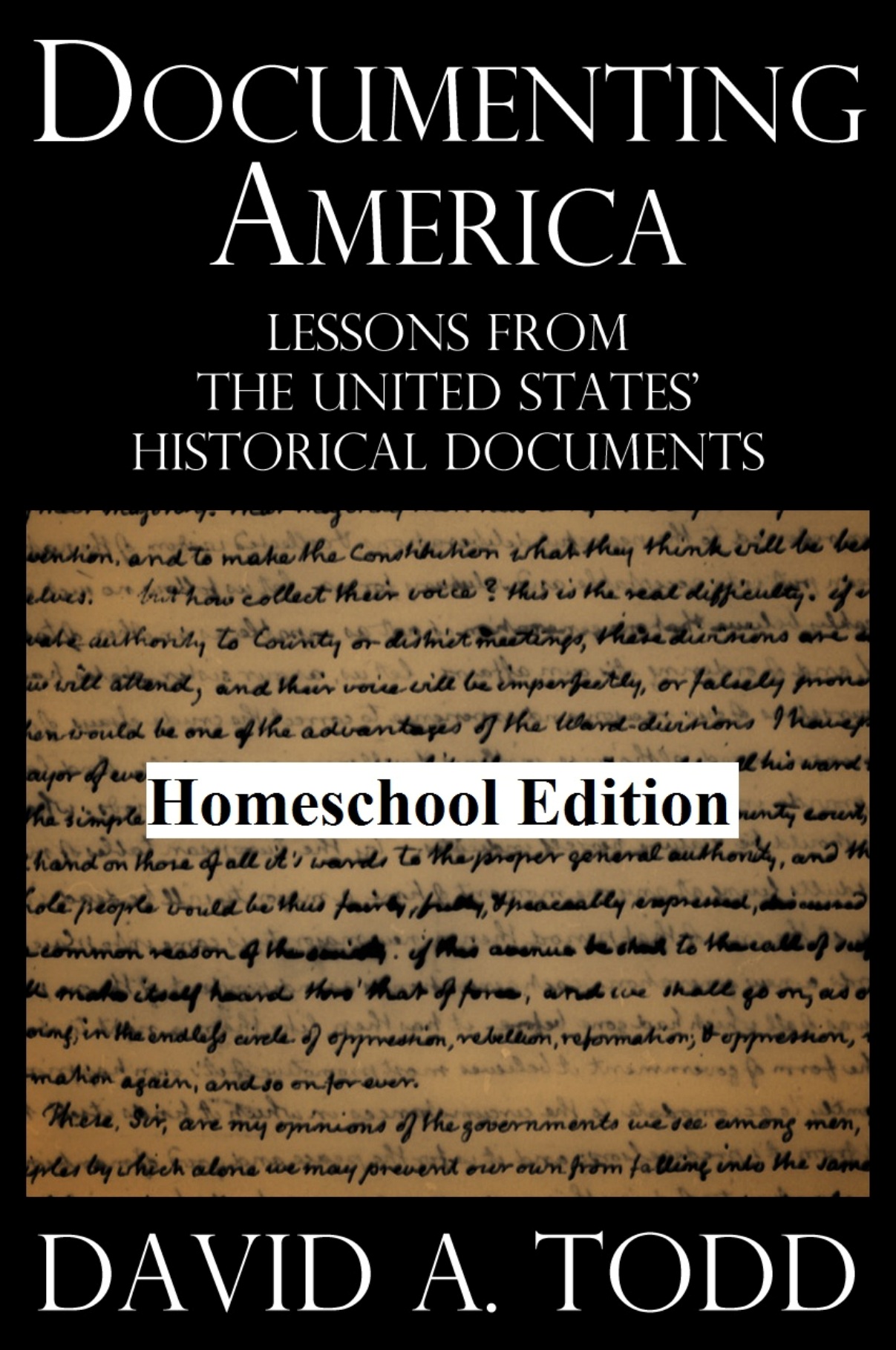
That brought me up to mid-September. Time now to work on The Teachings. Except I still didn’t feel like it. I decided I would take another Amazon Ad Challenge in October, and that I would focus on the first Documenting America book as the next to advertise. But this book needed significant work. It was the first I published, long before I understood formatting.  I also figured I should add new material to bring the book up to date for 2020. I worked on this the second half of September, and began the re-publishing process on Sept. 28th. The last couple of days have been sufficiently busy with life that I haven’t had much time to work on it. But that’s now a today task for the e-book. I’ll have the proof copy of the print book on Saturday, so by Sunday Oct 4 the re-publishing process should be complete.

Then what? Work on The Teachings, finally? Maybe, maybe not. I want to get the Cross-Cheney book figures corrected and that book re-published and advertised. There’s always file maintenance. Plus, evenings in front of the television, I do e-mail “maintenance” and saving my correspondence to Word documents. That’s a tedious but fun process, something I can do multi-tasking, a non-urgent item to make progress on. But next on the list of items I posted on Monday is The Teachings. Will I finally get back to this?

Today, instead of working on finishing the Documenting America changes, I dusted off my Thomas Carlyle Bibliography.  Last night, as part of my TV-watching-multitasking, I opened the Carlyle Letters On-line and read a couple of letters. I discovered a short translation he did of a Goethe autobiographical passage that wasn’t in my list of his writings or publications. How could this possibly be? I have three other full Carlyle bibliographies, plus a partial bibliography that covers the period in question. Why would they leave this out? I documented it on paper and, since it was late, went to bed.

This morning, as my first item of business after devotions, was to add this entry in my bibliography. First, however, I found the document on-line, at a previously unknown (to me) site called the Biodiversity Heritage Library. Sure enough, in the January 1832 issue was the Carlyle translation. I checked the two thick bibliographies on my shelf and confirmed that this composition wasn’t in it. Maybe they didn’t add it because it’s a translation with just a paragraph of Carlyle commentary rather than an original piece? Maybe so, but those bibliographies include his other translations. I added all this to my bibliography. While I was at this, I found an essay on Carlyle I hadn’t seen before and downloaded it for future reading.

The fact that I keep pulling off my novel in favor of other, less important publishing tasks, is perhaps testimony that I’m not thrilled with how the novel is going. Or that it’s consuming a lot more brain power and I’m unwilling to expend that brain power at present. I’m not sure what it is, but, if I ever hope to get this novel completed and published, I need to get on it. Even if it takes a lot of brain power.

Stay tuned to find out if I manage to get to it.
So Many Choices, So Little Time

I’m a little late with my post this Monday morning. The weekend was busy and I didn’t get it written ahead of time. Then, this morning Lynda had to go for a Covid19 test ahead of a procedure on Wednesday. Her appointment was at 7:50 and we were to be there fifteen minutes early. It was a drive-by testing site, and the long line of cars moved quickly through.  A stop for gas and pastries on the way home, and here I am, finally writing this.

Over the weekend and late last week my thoughts began to gel about my next writing tasks. It was Friday (I think; maybe Saturday) that I documented a couple of book ideas and wrote them in a Word document and saved them to my “Ideas” folder. They’ve been bugging me and, while I’m now purposely suppressing writing ideas as come, these two pre-date my decision to suppress, so I wanted to be done with them to free up brain space for other things.

What to do next? I have a novel-in-progress that’s stalled. I have a book I’m updating. I have a short story that’s bugging me. I have the next book in the Documenting America series to begin. And that’s not everything. I needed to prioritize.

So I took a little time to brainstorm that and decide what to do next, and why. Here’s what I decided.

  1. Published in 2011, I really need to do something with this, update it for later publications and correct some formatting errors. So, I began the editing work in early September 2020, and hope to re-publish by the end of September.

    Republish Documenting America: Lessons From The United States’ Historical Documents. I had already done most of the editing. An hour and it would be ready for publishing tasks. My reason for putting this first is I want to run some Amazon ads on it, beginning in about two weeks when I participate in the next Amazon ads challenge. I want an updated book to advertise.

  2. Edited to add: I forgot, when I posted this earlier, that I have to make a few corrections to my second genealogy book, Stephen Cross and Elizabeth Cheney of Ipswich. A few of the figures were of poor quality. I need to load them into G.I.M.P and improve the quality, put them in the book file, then upload the revised file. As much as I hate doing graphic arts with G.I.M.P. I’ve been putting this off. I think, however, that I’ll slip this in after I finish re-publishing Documenting America.
  3. Return to work on The Teachings, the volume 3 in my church history novel series, which will plug the gap between volume 2 and 4. I’m about 1/3 done with it, and need to get back.
  4. Write, or at least start, the next story in the Danny Tompkins series of short stories. I had once thought the series finished, but an idea for one more story just won’t leave me, so I need to write it to get it out of my head. My problem is I know the main idea I want to convey, but not the full story. So when I start on it I’ll perhaps stall almost right away. I won’t know till I start the writing.
  5. The transcription is now complete (28 Sep 2020). Time to add some commentary.

    Add commentary to the Kuwait letters book. I’ve written about this before. After finishing the transcription, and before I put the letters back to storage and relegated the file to its folder and out of my mind, I added a little commentary. I’m ready to open the file and add some more commentary. I don’t know that I want to take the time to finish it, but I want to add something to it. This may be something for the odd hours between other things.

  6. Begin reading for the next book in the Documenting America series. This is tentatively Run-up to Revolution, covering the period from 1761 to 1775 or 1776. It will be the realization that the Colonies were no longer aligned with Great Britain and a separation was inevitable. I’m not sure how I will research this. Everything I need, just about, is on-line, but how to access it and when to read it is unknown at this time.

I had a couple of other things I wanted to put on this list, but will wait. As I sit and write this nothing else is coming to mind. If it does before the end of the day, I’ll edit this.

Now, if I can accomplish half of this by, say, the end of 2020, I’ll feel like I’ve made progress.

Land Ownership: A Defining American Characteristic

My research into US history and genealogy has convinced me that widespread ownership of land was a uniquely American phenomenon. I have more research to do, especially into European land ownership, but what I’ve been able to glean from American documents has been instructive.

In Documenting America: Lessons From The United States’ Historical Documents, I cover a curious 1792 writing of James Madison. Then in the US House of Representatives, Madison wrote about an unfortunate situation in Great Britain, then, concerning his fellow Americans, wrote:

“What a contrast is here to the independent situation and manly sentiments of American citizens, who live on their own soil, or whose labor is necessary to its cultivation….”

Madison realized that Americans tended to own their own land. Since that contrasts with the situation in Britain, I conclude most Britains didn’t own their own land. It seems to me, from history readings years ago still clinging to a few gray cells, that the feudal system was long gone in England by the time Madison wrote this, but clearly elements of that system remained. Land was owned by English nobility—princes, dukes, earls, and whatever other titles there were—had huge holdings of land and leased it to the poor peons who worked it for the lord, dividing the proceeds with him.

Land ownership in America wasn’t universal, but it was widespread. As I study my wife’s genealogy on her father’s side, which stretches back to the earliest days of Massachusetts Bay Colony, I read a lot of wills and inventory of estates. Most of them include land. Upland lots, marsh lots, lots on “The Way”, town lots, farms. Defined by maple trees, stone walls, and nascent rights-of-way, almost every estate, be it modest or great, had land in it.

That’s not to say that everyone had an equal amount of land. In Ipswich, Massachusetts, many people received a 2-acre lot in town, but some lots were better than others. One man would sell “the eastern 15 feet of my said lot to….” Another man carved a small house lot out of his 2 acres for his wife’s sister and husband. Land was subdivided and sold at a brisk pace. But it was people’s to sell. In England, none of these people would have had land.

I realize, of course, that much of this land was stolen from the native peoples. Or they were enticed with alcohol and sold their land for a fraction of its worth. This is a shameful chapter in our history. Wealth was stolen or coerced away from the rightful owners.

My research into three Ipswich families in the mid to late 1600s led me to the issue of Mason’s claim. It seems that John Mason had been granted title to a large tract of land in what is now Northern Massachusetts. The towns of Newbury, Rowley, Ipswich, and others were settled on these lands beginning in 1633. Land was apportioned to the settlers, who built houses, established farms and trades, and lived a rugged existence. Civil war in England, the Cromwell years and then the restoration, made enforcing Mason’s claims difficult. He died without ever seeing “his land”.

But come the 1670s and Mason’s grandson said, “Hey, that’s my land!” Court battles took place, one court ruling in favor of Mason’s claim, another overruling that. It must have been quite the legal doneybrook.

But, in the town records, in extant pamphlets and broadsides, you see the fear of the people. Their land might not be theirs after all. Some feudal lord who was the king’s friend had a title to it. People were scared. In England, Scotland, and Wales they could never dream of owning land. Here in the New World they had 20 upland acres and a town lot, plus some marshland that was really arable. And some grandson of some wealthy person is going to take it from them? Fortunately for the colonists, the grandson eventually gave up.

As New England and other Atlantic seaboard places filled up, the march west began. At times seeking gold, most settlers were after land. Somewhere beyond the mountains was land for the taking, and they would go get it. Once again, England, France, Germany, Spain, and other European nations had no equivalent.

Even today, the quest for land goes on. It’s not quite the same as it once was. A hefty bank account is also a sign of wealth, and you can have that while renting. But home-ownership remains a strong American goal. Americans want land, at least a lot of us do.

But times have changed, and with the size of our population we no longer have as high a percentage land ownership as we did in the colonial years and soon after. Not being a landowner changes one’s perspective.

So far I’ve covered two unique aspects of the USA that I consider worth studying: self-determination and land ownership. Stay tuned for the third, which will be coming in about a week.

Book Review: Cup Of Gold

Originally published in 1929 and selling few copies, “Cup Of Gold” was republished after Steinbeck’s huge successes with later books.

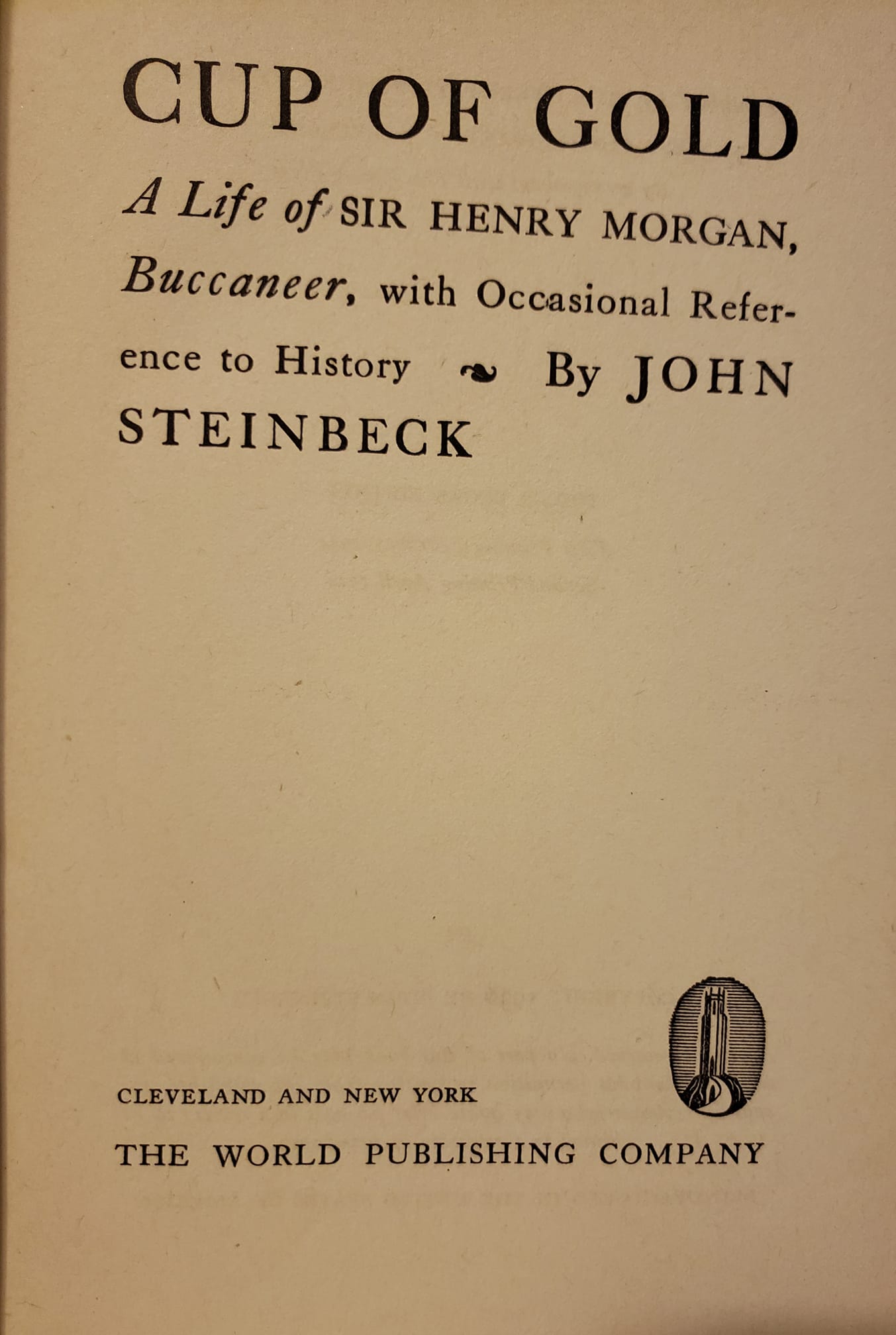
I have enjoyed all the John Steinbeck books that I’ve read. So when I found Cup Of Gold by John Steinbeck on a bookshelf in the house, I put it in a reading pile. Before too long it rose to the top. A little research showed it was published in 1929, though only 1537 copies sold. A second edition in 1936 by a different publisher sold even fewer. My particular volume is a Tower Books Edition, Second printing, April 1944. How this book came into my possession is a mystery to me. I don’t think I bought it, and it has a marker in it suggesting I’ve had it a long time. It must have been Mom’s, or possibly a book Dad picked up from a flea market.

The subtitle is A Life of Sir Henry Morgan, Buccaneer, with Occasional Reference to History. It’s almost a biography, almost a novel. Today we would classify it, I think, as creative non-fiction. Of, perhaps it would be shelved under historical fiction. Either way, I’m quite glad I had this, found it, and read it.

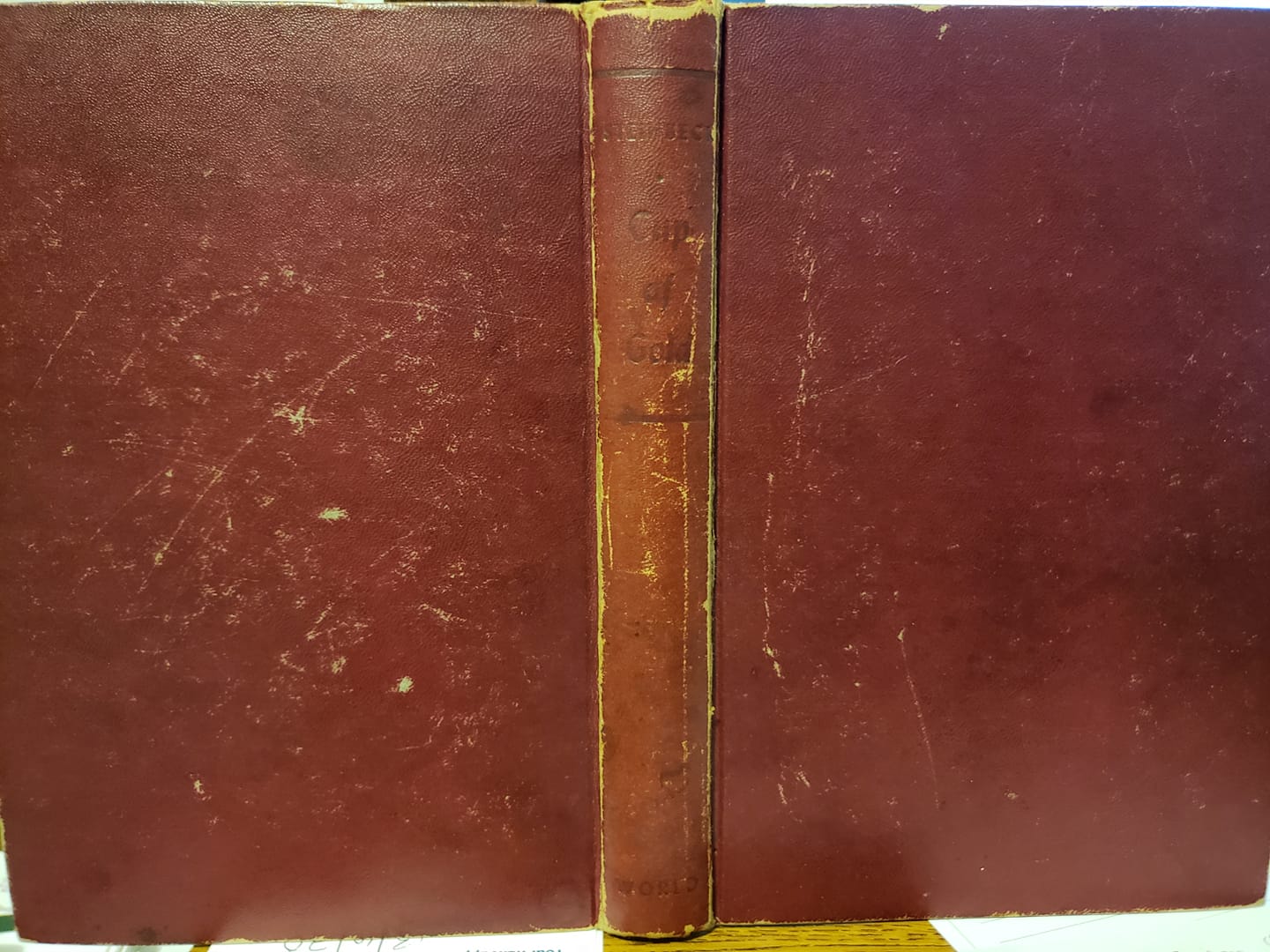
My 1944 edition is more than a little worn. The title is just barely visible on the spine. Though old, it’s not a collector edition.

Pirates in the Caribbean are the rage now, aren’t they? Maybe not quite as much as a few years back, but they are in an almost mythical era, men who did incredible feats of daring. In America we tend to think of Englishmen who stole treasure ships from the Spaniards. Some worked with the blessing of the British crown and some freelanced. Henry Morgan was, according to Cup Of Gold, one of the latter.

He went to the Caribbean as a teenager, intent on becoming a buccaneer because of the stories he’d heard in his native Wales. He spent time as an indentured servant to pay for his passage, then entered his pirate life. After many successes, he led a raid on the city of Panama, a successful raid, and became a hero to the English.

I read this without distraction, in a comfortable setting.

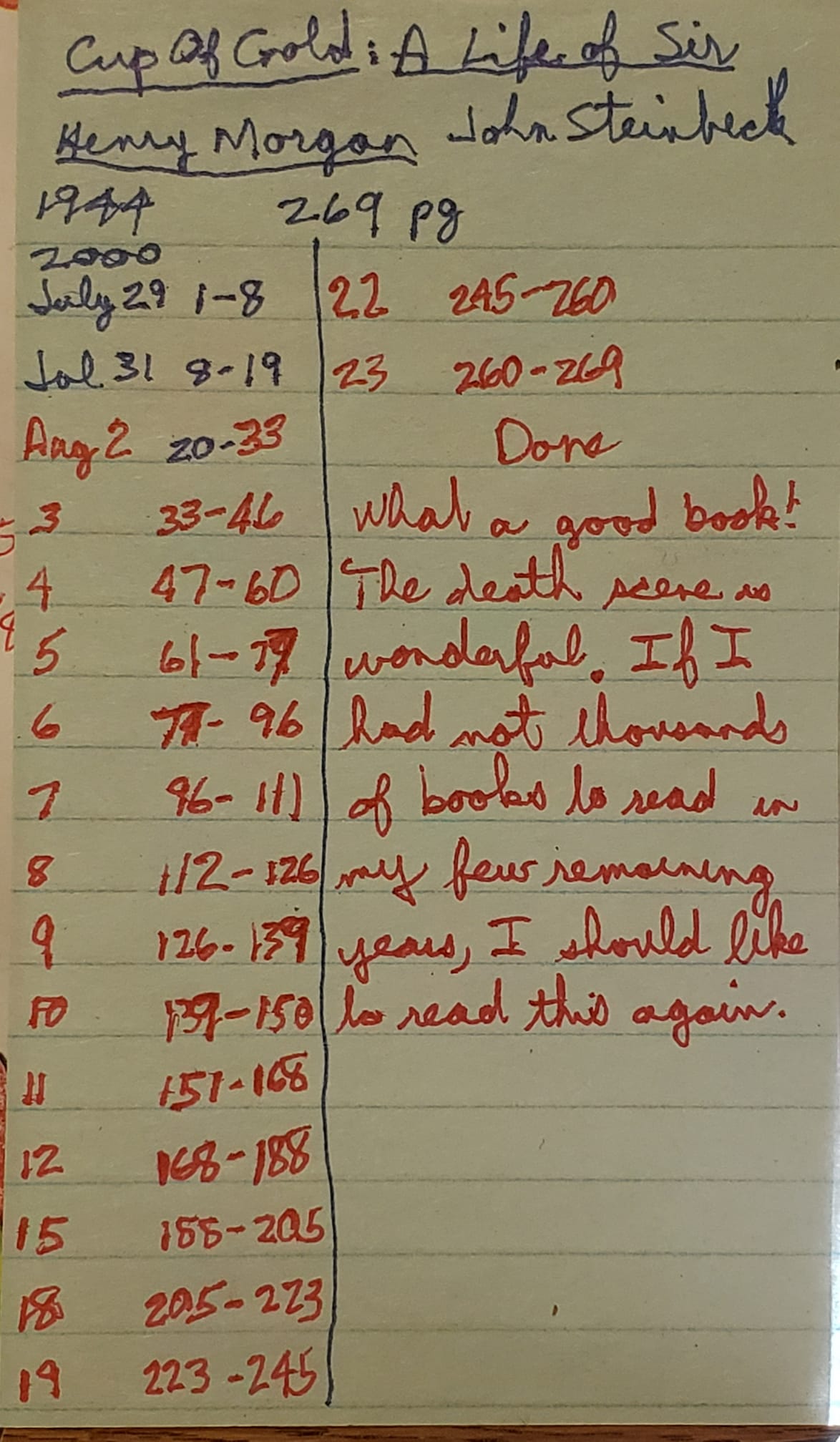
I read this 269 page book in 18 sittings in July-August 2020, out in the sunroom, at cooler times during the summer days. Here’s what I wrote on little sheet I used as a bookmark and reading record: “What a good book! The death scene is wonderful. If I had not thousands of books to read in my few remaining years, I should like to read this again.”

Steinbeck does a great job (as we would expect, based on his other, later works) of weaving the story. He mixes historical facts with dialog. The dialog seems very faithful to the time. The mix of dialog and narrative is good. Steinbeck chose to focus on a few episodes in Morgan’s life, not try to give us every year and every event. Not surprisingly, the raid on Panama takes up a good chunk of the book.

I can see the excellence of Steinbeck’s writing even in this early book. I’m not a “literary criticism” person, so I’m not going to analyze is. I’ll just say it’s an excellent and easy read. If you like Steinbeck but didn’t know about this early work of his, by all means pick up a copy.

Is this a keeper? Alas, I think not. It’s not a collector edition as it’s a reprint after Steinbeck’s fame with other works. I’m at the point in life where I need to be getting rid of things, not saving them. That includes books. I can’t keep all the authors I like, and Steinbeck, alas, doesn’t make the cut. So, Cup Of Gold is going out to the garage today, to the sell/donate bookshelf out there, awaiting either a sale of a trip to the thrift store.

Self-Determination: A Defining American Characteristic

My first characteristic of what makes the United States of America different than most other nations is the concept of self-determination. In other words, we chose our own form of government and our own leaders, and have maintained that for over 230 years. Actually, the choosing of our government goes back much further than that.

The residents of Waterville Vermont wrestled with choosing leaders and setting the tax rate in the mandatory annual town meeting. How interesting it was to read those records.

From the moment that Europeans came to these shores in the early 1600s, selection of leaders through voting has been a part of our nature. The form of government was at first based on what the colonists knew back home, or what was imposed on them by the terms of the charter by which the colony was established. However, slowly, the form of government changed and settled into a pattern.

First it was pure democracy at the local level, with a fledgling republic at the colony level. By the time of the revolution, when the colonies considered themselves states, republican form of government was well-established. At the local level even, a mini-republic had mostly replaced democracy. Some vestiges of democracy remained, but for the most part the form of government was a republic.

Of course, a republic requires active participation of its citizens in terms of voting. At regular intervals, from as short as six months to as long as two years, the people chose their leaders. In doing so peacefully, the people were saying, “We are satisfied with this form of government. All we are doing now is choosing those who will lead us, either returning those already in leadership or voting new ones in.” Election after election, for more than a century before we were a nation, this process took place from New Hampshire to Georgia. Those eligible to vote chose new leaders and kept their form of government.

The colonies did well governing themselves, until the King of England tried to impose new government on them. Resistance to that became the seeds of the American Revolution.

Self-determination. We will govern ourselves. How different this was than in the Europe they had left! England had a monarch, a king or queen, who ruled. In the 17th Century the parliamentary system was flexing its muscles and growing in importance. England went through three revolutions (one bloody, two peaceful) and one counter-revolution. All other European nations had much the same. The monarchy was a coercive power. The people didn’t choose it so much as the king ruled by “divine right”. France, in a bloody revolution that would eventually lead to a worse dictatorship than the kings ever were, would throw off that monarchy thirteen years after the American Colonies declared their independence. Other nations would eventually follow suit. But it was the bloody American Revolution that set much of that in motion.

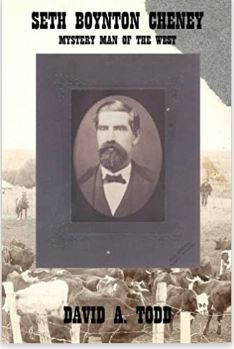
As I researched my first genealogy book, Seth Boynton Cheney: Mystery Man of the West, I had occasion to look into town records of Waterville Vermont, where Seth was born and raised until he was 13. It was interesting to see the notices of the town meeting on the last Saturday in March (right in the middle of maple sugar harvest no less) and having all voters required to attend. I read how they set the tax rate: “Voted to establish the rate at $X” or “Voted a rate of $Y to construct a fence around the cemetery.” These people were governing themselves at the local level, deciding big issues as a democracy but electing representatives to lead the municipal republic the rest of the year. I “watched” as new towns were formed, Waterville carved out of Bakersfield because the Waterville residents couldn’t cross the snow-covered mountain in March to attend the town meeting. Self-government in action, the form of government chosen by the people and maintained year by year, decade by decade, century by century.

As I researched my second genealogy book, Stephen Cross and Elizabeth Cheney of Ipswich, I saw the same thing from a much earlier period, Ipswich in the Massachusetts Bay Colony in the years 1647 to 1710. I actually went back earlier than that, as I was simultaneously researching an earlier ancestor in the Cheney family, the subject of a future book. I saw the same thing with the town, and more so at the county and state level. One rabbit-hole I went down with my research that took place during Stephen’s and Elizabeth’s lives was the change in colonial charters forced upon the colonies by the king of England. This did not go over well. In fact, the seeds of the American Revolution were sown right here, as people, who had chosen and maintained a form of government they liked—self-determination—had a form of government and leaders forced on them—a coercive power—who served at the whim of and benefit of the monarch, not the people. Ipswich was a hot spot about this and some consider it to be the cradle of American independence.

Now, in 21st Century America, we have a hard time conceiving what the world was like during our colonial days. Oh, we know from studying our history what the colonies were like, and may have a vague understanding of England, from whence most of those settlers came. But I think we need more study of just how different the government was in our world. And to what extent the people had, not just the right, but the obligation to maintain that government through votes and taxes. We had our faults back then, and took far too long to address those faults. Compromises would eventually be forged that would keep us as one nation rather than several regional federations, compromises that later would almost tear us apart.

Yes, I believe self-determination is a defining characteristic of the United States of America. Other nations now have it. Yet many other nations only dream of it. It defines the USA. How long can we keep it?

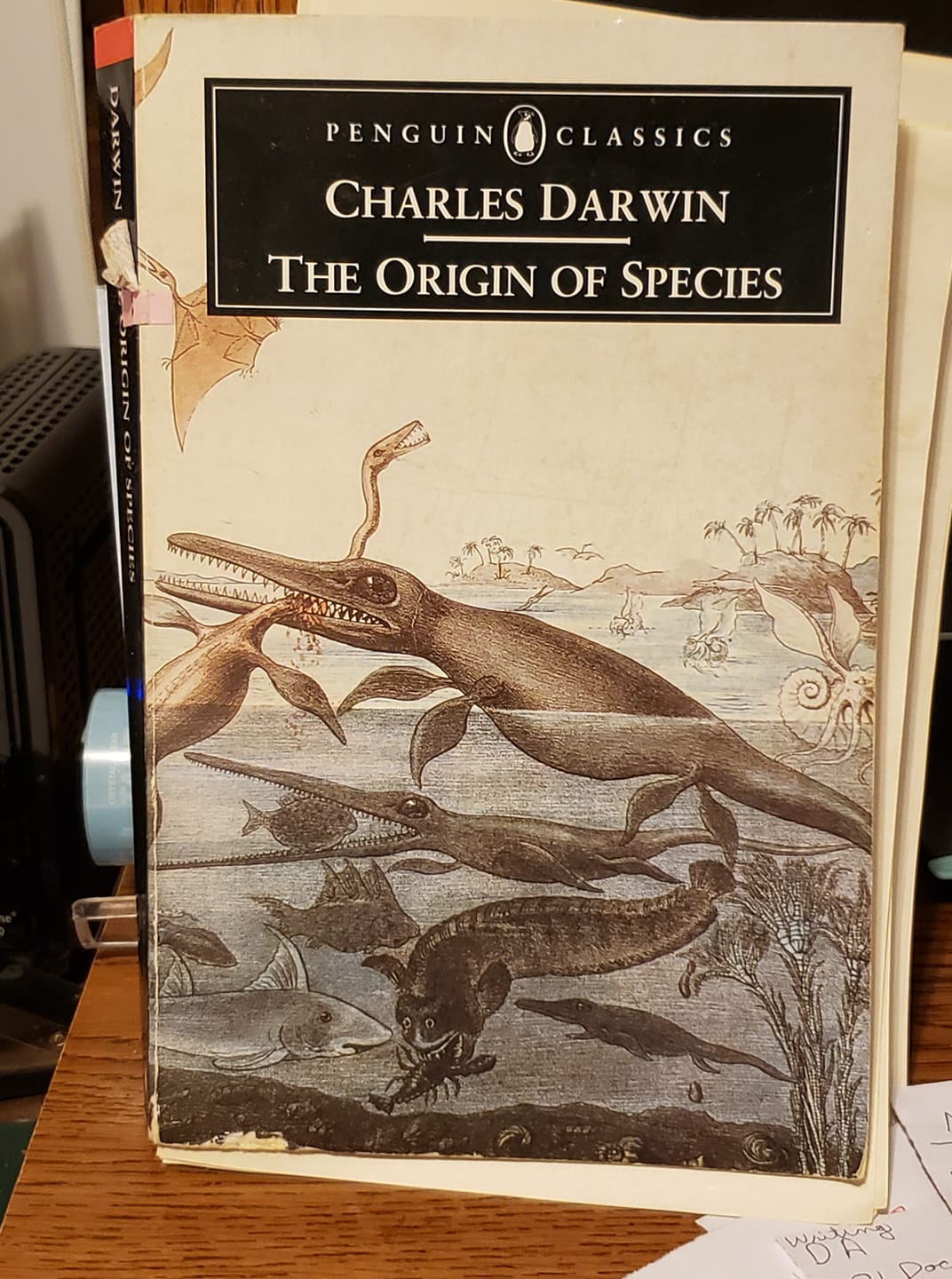
Book Review: On the Origin of Species By Means of Natural Selection

Alas, this book is falling apart. Tonight it will go into the trash.

Several decades ago I read the book Origins by Irving Stone, checked out of a library. It’s what we now call creative non-fiction, not quite a novel and not quite a biography of Charles Darwin. I liked it a lot. It presented Darwin in a sympathetic way. I learned a lot about him.

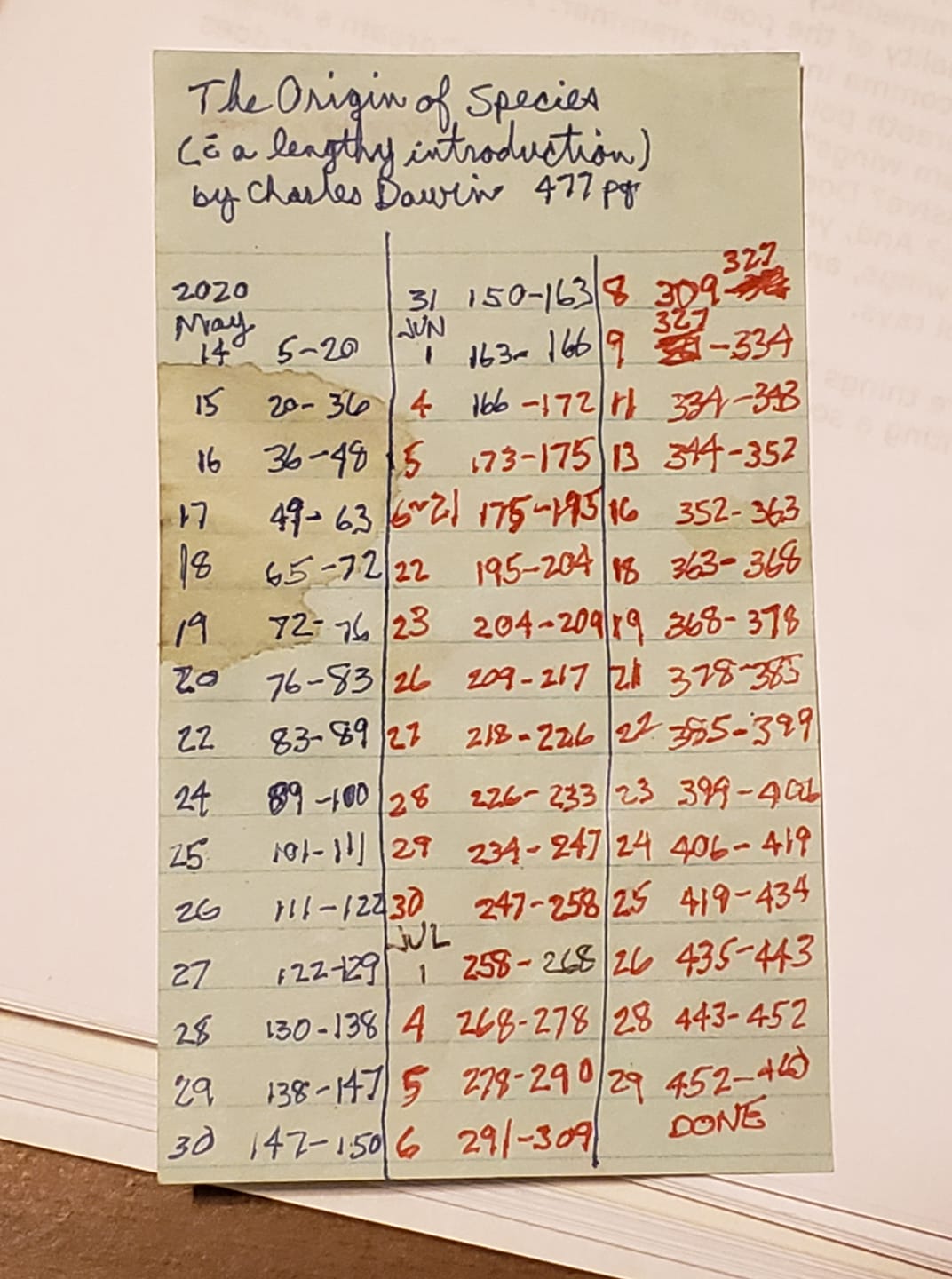
Flash forward three decades. I saw Darwin’s On the Origin of Species by Means of Natural Selection at a thrift store, I grabbed it and put it on my reading pile. It sat there for several years, until May this year. Having finished another book, and ready for something new, I went searching for this book in my downstairs, storeroom library. It took a couple days of looking but I found it, exactly where I remembered seeing it a couple of years ago. I began reading it on May 14, 2020 and finished on July 29, 2020 in approximately 50 reading sessions.

Did I enjoy it? Not particularly. Did I learn for it? For sure. Do I recommend it to others? I’m not sure. It was a difficult read. The language, being from the 1850s, is somewhat archaic. Sentences are long and convoluted. Paragraph breaks sparse. It’s not exactly old English, but it’s not modern either. In addition there were lots of scientific terms, and lots of partial references to other experts Darwin consulted.

Over 40 reading sessions for 460 pages indicates how difficult this was to read.

Reading it was a struggle for me. I wanted to read for comprehension, but often I found myself skimming, or reading the same paragraphs two or three times trying to understand it.

Why did I read it? I wanted to get Darwin’s theory directly from him, rather than filtered through a science teacher or science textbook. What exactly did Darwin say? Does it seem plausible? Where should I go next in researching the topics he wrote on—would there be hints in OOS that would allow me to do this? An inquiring mind wanted to know.

Alas, after reading OSS, I can’t really say I know more about Darwin or the theory of evolution. I read the book slowly, away from the television and other distractions, so I can’t blame lack of concentration. I’ll blame the other things I mentioned a few paragraphs back. I think I understand what Darwin was saying, but, by today’s standards, I don’t think it develops the theory very well. It certainly has no references. Many times Darwin says something like, “Dr. Smith informed me of his research into….” The reader, unless a contemporary of Darwin in the science of that day, has no idea who Dr. Smith is, what his field of study is, and why he should be trusted. That’s not to say it’s wrong. It’s simply impossible to know the correctness of what Darwin is saying from Darwin’s book alone.

The subject matter in the book is far ranging. Darwin covers not just the gradual change in species from what they are to completely new species over thousands (or tens of thousands) of generations, but also the concept of mutations and hybrid species.

Still, I wasn’t very satisfied by the book. I think I would have to read this at least three times to understand it. Will I ever do so? Not with this book. It was somewhat damaged when I bought it as a used book, and started falling apart as I read it. It starts with a 70 page introduction, and the first 80 pages of the book have fallen out. It was a cheaply made, mass-market paperback. It’s not worth trying to sell at a garage sale nor donating to a thrift store. No, this particular book is going in the trash—not because of what it contains, but because of its physical condition. And, if I ever do want to read it, I can access it as a free e-book at Project Gutenberg.

Weary Once More

My plans for today’s blog was a book review. But it would be an intense book review, and I don’t know that I have the strength of mine for it at the moment. So I’ll write about weariness.

Published in 2011, I really need to do something with this, update it for later publications and correct some formatting errors.

After having written about the Kuwait years letters in a recent post, I did a little more searching in the storeroom and found a few more items and transcribed them. The collection is now up to 143 items, the computer file running to 152 pages and 89,000 words, maybe 300 of which are commentary I’ve begun to add. I think I’m done with it. I hope I’m done with it. The Saudi years will be some time from now, after I get the Kuwait years into published form.

The last two days have been full, though in some ways I wonder exactly what I accomplished. In the evenings I worked on saving e-mails to Word documents for my letters file. I also collated five notebooks of printed correspondence, a task that’s not quite complete. Wednesday morning I worked outside for an hour. I intended to yesterday, but rain quashed that notion.

Then I’ll get to correct this one in the same way.

I attended a writing group meeting via Facebook live stream and Zoom conference on Wednesday. On Thursday I attended a writing workshop on improving books for getting noticed on Amazon. Much to consider.

A writing task I’ve been planning to do was to correct and republish my original Documenting America book, updating the works by this author section all versions, and correct the running heads and locations for page numbers for the print version. I then will republish it, then do some Amazon ads for it. I originally published this in 2011, and I don’t think I ever updated it.

And, this one will also need some updating.

Alas, I found my computer files in a mess. I had files here, files there, folders inside of folders, duplicates and triplicates. I couldn’t tell for sure which was my latest file. So, while listening to the webinar yesterday, I multi-tasked by creating a good file structure and move files into it from their scattered locations. I found that work mentally exhausting, and I was good for nothing after doing that. Except I did figure out which was the latest print book file and began working on it.

That came after Thursday normal stock trading work, a Wal-Mart grocery and meds run, and getting a roast started for supper, adding the veggies after the webinar. Then it was off to the sunroom and reading in a David Morrell novel. Then to the living room and more work on e-mails. I eventually dished up supper, and store-bought pie for dessert, and went back to e-mails.

Then, I was exhausted. We had The Curse of Oak Island re-runs on, which are easy to tune out and do other things. Then it was read aloud in an Agatha Christie mystery. Now, Friday morning, I’m doing trading, and work on the book revision. Soon we’ll head on a 45 mile drive for some medical tests for Lynda.

And I’m weary. Weary in well-doing. Weary in from doing too much. Getting my book corrected and re-published has to be my top priority. I hope, when we get back from the distant lab, to get back to the print book. I could finish that today and get on to the e-book. I’m hoping some energy will return.

Three Traits that Mark the USA

When the time came for a new form of government, American traits were well-established. This series of blog posts will explore those.

What is it that differentiated the United States of America? What separates us from all other nations? Or is there anything? Are we the same as the other nations, but we became wealthy and powerful by chance of time and location? Did we just happen to find the right combination of population and resources?

Many talk of American exceptionalism. When did that kick in? Were we exceptional at the beginning, or did we develop into an exceptional people and nation in response to circumstances?

These are difficult questions. I’ve been pondering them for a while—at least ten years, since I’ve been writing the Documenting America series. I’m learning more and more as I do the research on this. In addition to that, I do a lot of research into genealogy—American genealogy. My first genealogy book dealt mainly with the years 1830-1910, long after American traits would have been established. My second genealogy book dealt with the years 1640-1710, right in the foundational period. As I wrote that genealogy/family history book, my thoughts began to focus on that question: what differentiated the USA from other nations?

As I researched to finish this work, I came upon some Massachusetts Bay Colony documents that led me to concluding one of the characteristics I’ll discuss in this series.

Added to researching my books is a love of history and an ability to self-study and learn. I love to read, and history is about my favorite topic to read. Since I started writing history books it’s difficult to read history for simple enjoyment or personal learning. Still, I try.

I don’t know that I’ve finished my thought process on all of this, but I believe I have identified three items that are in our nature that made a difference in our journey to exceptionalism.

  1. The consent of the governed. Another explanation for this is self-determination. We decide what type of government we want and establish it.
  2. The common man as a landowner. A big difference in the USA is everyone—just about everyone—owned land. This gives a huge change in perspective on government.
  3. Peaceful transition of power. When we change leaders—with two notable exceptions—the transition happens easily and peacefully.

These are probably not the only things that have contributed to making the USA into the nation that it is, but I see them as critical components.

In three posts coming soon (maybe not next, but soon), I’ll cover these three factors. By the time I finish them, I may have another one or two posts to make in the series. I hope many will read these posts, and consider how these helped to make us what we are.

The Kuwait Years In Letters

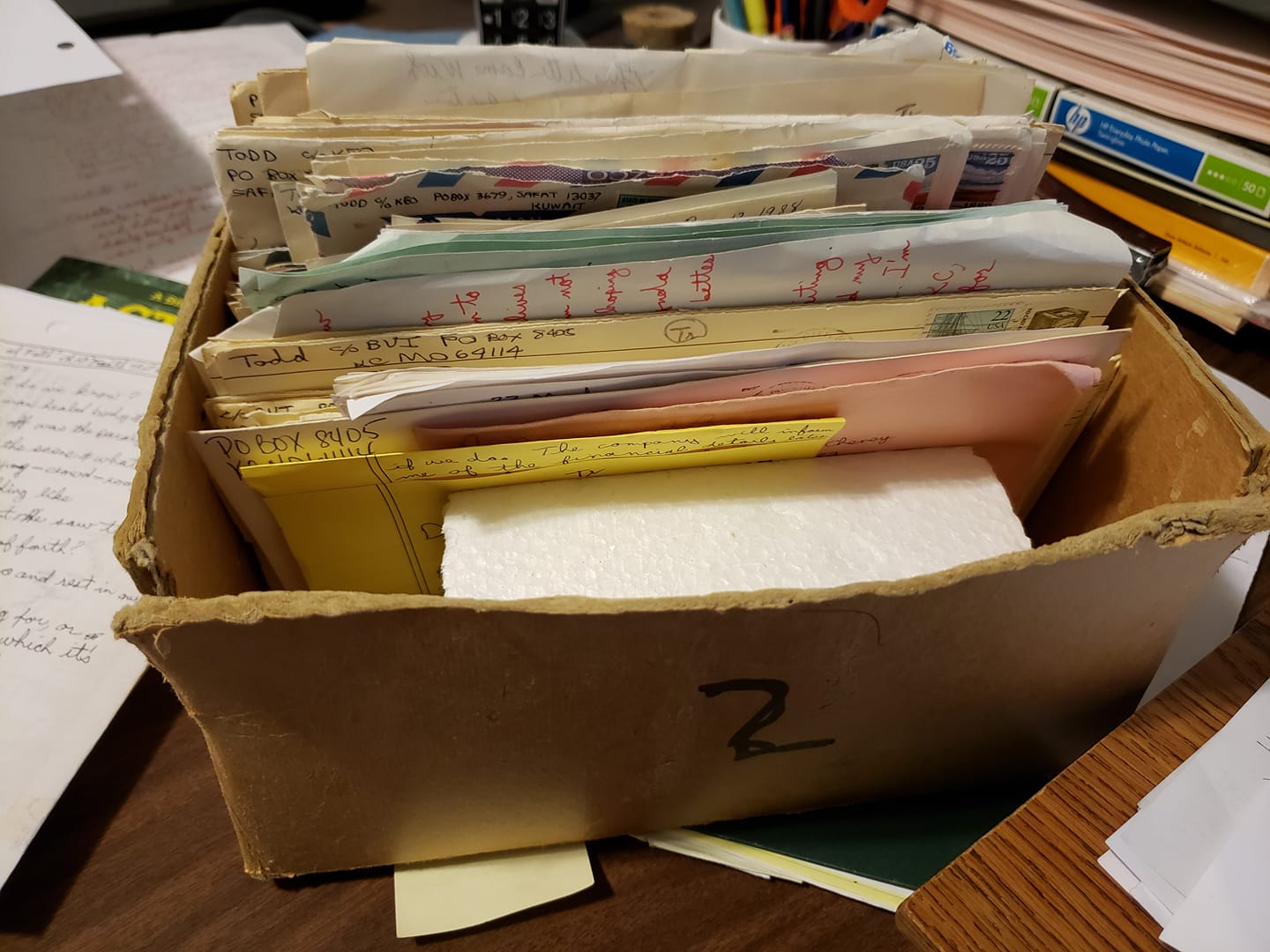
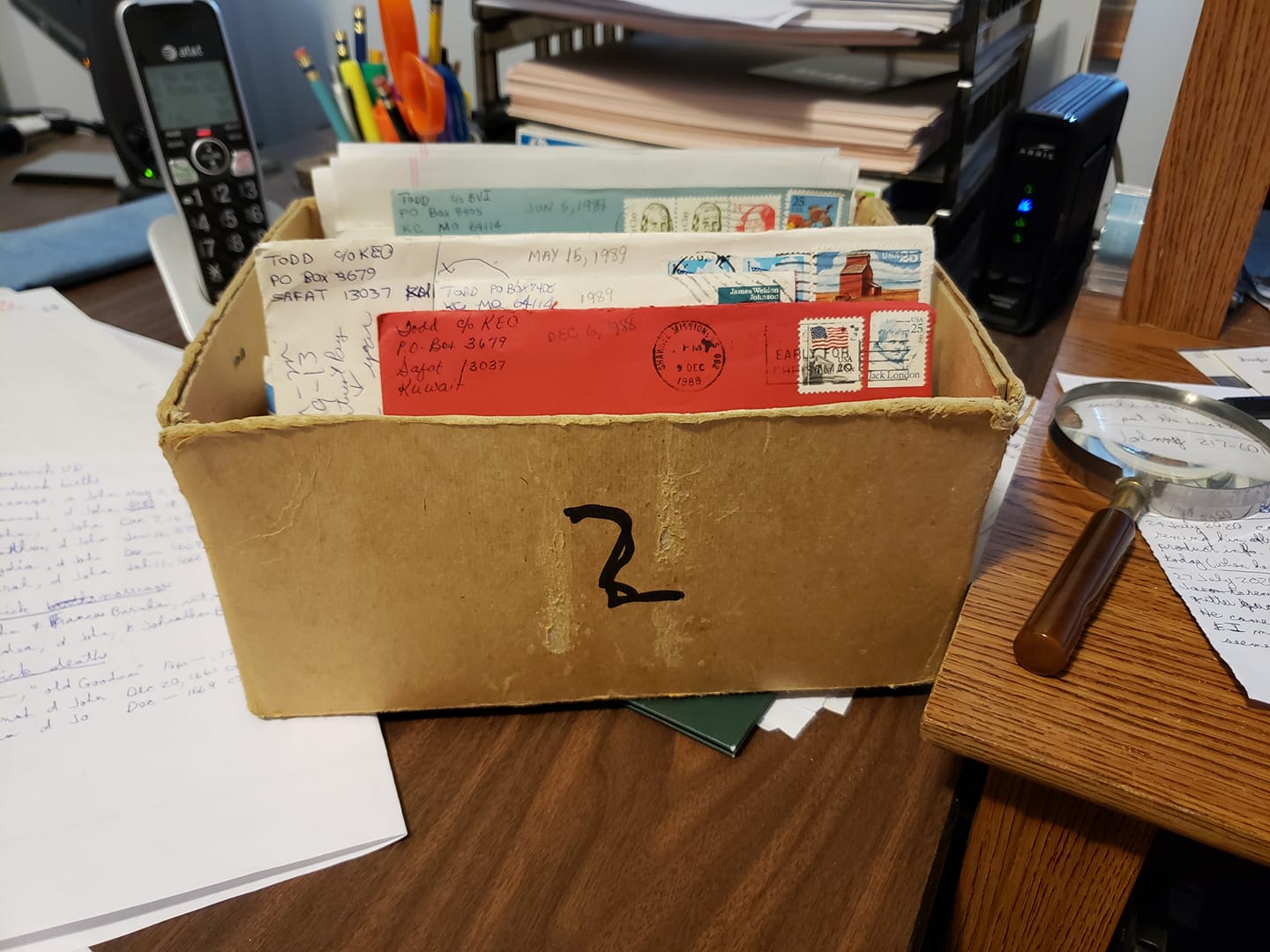
It may not look like 129 letters, but they are all there, collated by date after transcription. Now I need to figure out a better way to store them.

As regular readers of this blog know (all two or three of you), I love letters. I have a sizeable collection of published letter collections, and from time to time I pull one out and read it. Right now I have Volume 1 of The Collected Letters of C.S. Lewis on my work table in The Dungeon, and am trying to get in the habit of reading one or two of his letters every day. In fact, having not read one yesterday or today, I’m going to interrupt writing this post and will read a couple, then come back…

…okay, letters read, and I’m back. I’ve never understood this fascination of mine with letters, but it’s there.

As it turns out, my own house is littered with letters—letters that I’ve sent over the years. When we moved to Saudi Arabia in 1981, we had no telephone in our flat. Using the phone at the office was not terribly convenient, so we wrote letters: to my Dad, to Lynda’s mom and dad, to grandparents, and a few to siblings or friends. When we moved to Kuwait in 1988 after four years back in the States, at first we didn’t have a phone, so again we wrote letters. We got a phone at some point, perhaps nine months after we got there, but, with international calls being very expensive no matter which side of the ocean they originated on, we still wrote letters to the same people. The recipients of those letters, our parents at least, kept them, and later gave them back to us (or we found them in their possession upon their deaths).

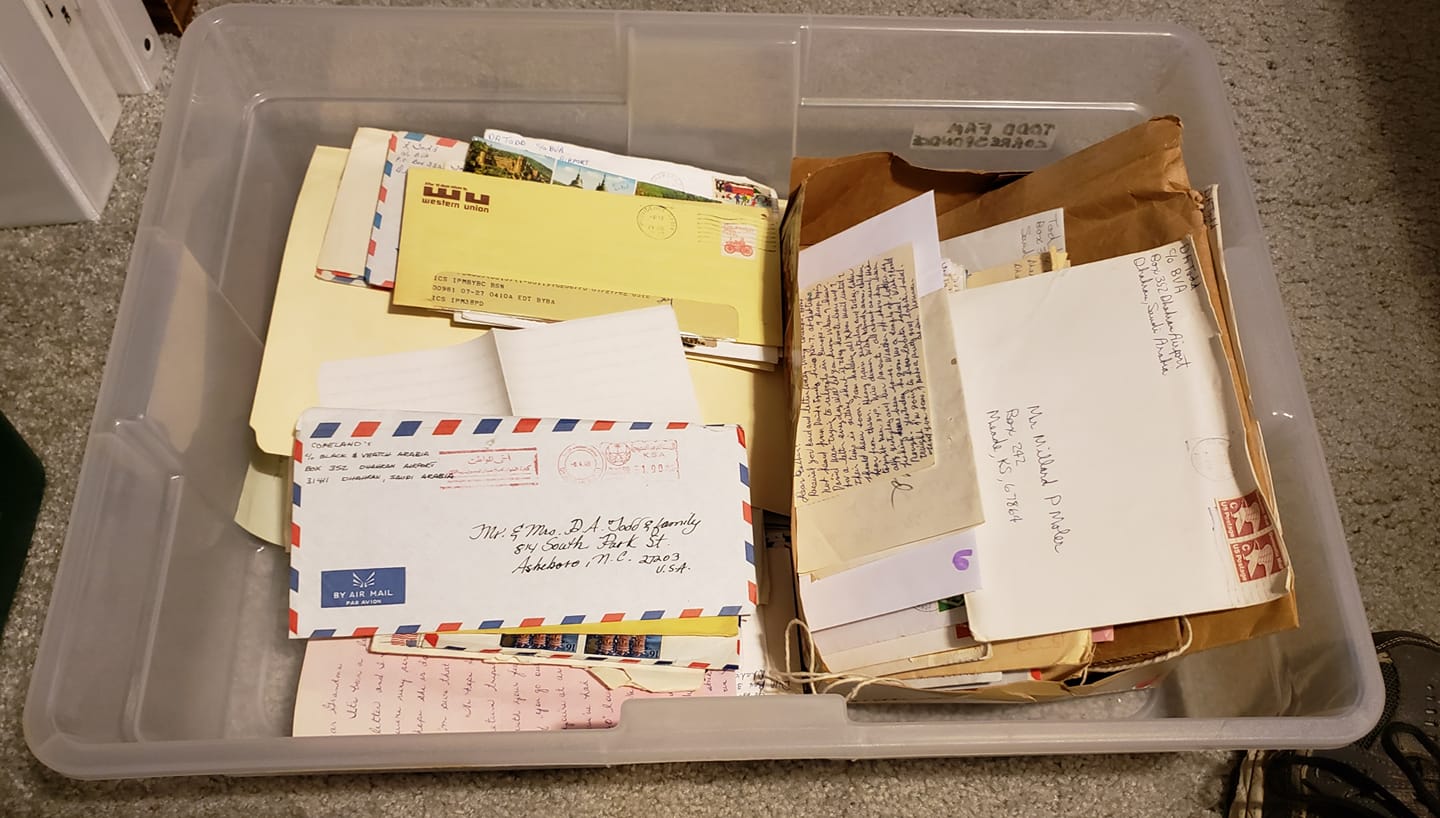
The Saudi letters will be an even bigger challenge. For now they can stay in their bin, awaiting my attention at some future date (measured in years, not months).

Now we have those letters. When we moved to this house in 2002, with some space to lay things out and organize papers, I began to “gather” these letters into boxes and bins. They all went into a plastic bin at first. I started transcribing a few of the letters from the Saudi years, but put it aside and have no idea where that computer file is. Perhaps I’ll find it. But no matter because I didn’t have more than ten of them transcribed.

Two months ago, when I began going through my mother-in-law’s papers, looking to downsize/declutter after her death, I found a plastic sack with some letters we had sent her. These were a surprise. That caused me to find the bin and put them in it. Then I thought, perhaps I should separate the Saudi years letters from the Kuwait years letters. So I did that. Then I thought, wouldn’t it be neat to get back to transcribing these? Since I didn’t know where my Saudi years computer file was, I decided to do the Kuwait years.

So on July 19, 2020, at 11:07 a.m., I created a computer file and transcribed a letter. Before that, of course, I had pulled them out of the bin and collated them by date. I’ve read enough letter collections by now that I knew pretty much what to do. The next day I transcribed another, and the next day another. This went on for a while. Occasionally I might do two letters a day, or even three, if they were short (as many of mine were to my dad).

Then, somewhere around mid-August, finding myself enjoying the transcription, I decided to just make that my work for a while. I began typing for all my time in The Dungeon that wasn’t taken up by stock trading or book marketing or promotion. I spent several hours a day transcribing. As I did, I saw holes in the letters for some month and people, especially to my wife’s dad. I know we wrote more to him than the number I found. I went hunting in the house. He tended to discard the envelopes and put letters into notebooks. I found them in a box, and found another ten or so letters we’d written to him. I think many to him are still missing, and perhaps with a little more digging I’ll find more.

Most of the letters I found around the house are ones we sent back to the States. I did, however, find a few letters we received. Since we returned to the USA for vacation right before Iraq invaded, we were able to go back only after the Gulf War. Our villa was a mess, we had many things to ship back more important (so I thought at the time) than letters, so we must have trashed most of the incoming letters. I don’t remember any of that, but the lack of having them makes me think that’s what happened. The incoming letters that I did find I also transcribed.

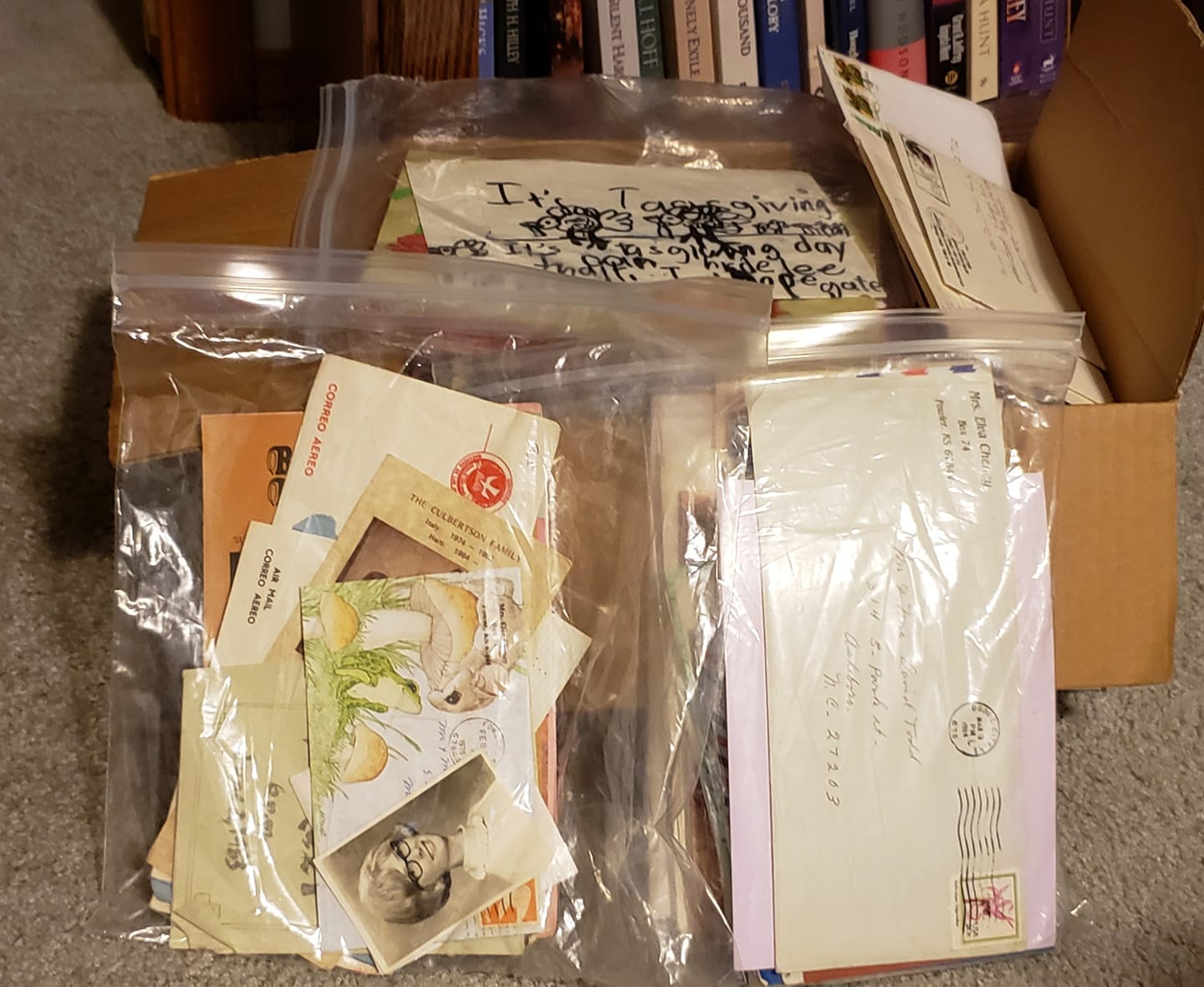
This box has other letters and miscellanies, not necessarily from overseas years. Yet, I need to go through it. Maybe I’ll find the missing Kuwait years letters in it.

Tuesday morning I typed the last two, incoming letters just after the Iraqi invasion from my father-in-law. The record is now as complete as I can make it. It’s 129 letters and postcards, 145 typed pages, just under 84,300 words—then length of a medium-sized novel. I have some editing out to do, and I think the final word count will be around 82,000. To this I will add commentary, footnotes, historical perspective. We have numerous photos with which to illustrate this, probably covering all the events mentioned. For the most part the photos are all in one place in the storeroom in a clearly marked box.

So what’s next? At some point I hope to add the commentary and perspective, and to illustrate this with photos. I hope to turn it into a book (‘t’will be around 300 pages, I think), not for publication, but to print off a few nicely-bound copies via my Amazon KDP account, and present them to our children and grandchildren. I wouldn’t offer it for sale. Who would want to buy it? Very few people are like me and love letters. And my lack of notoriety works even more against it ever being in demand. No, I’ll have the copies printed, pull it back to draft status, and leave it there should I ever need a few more copies.

As for the letters from the Saudi years, they will have to wait. I really need to get back to my regular writing and publishing schedule.

Book Review: “More”

Two—or at most three—stars is the most I can give this.

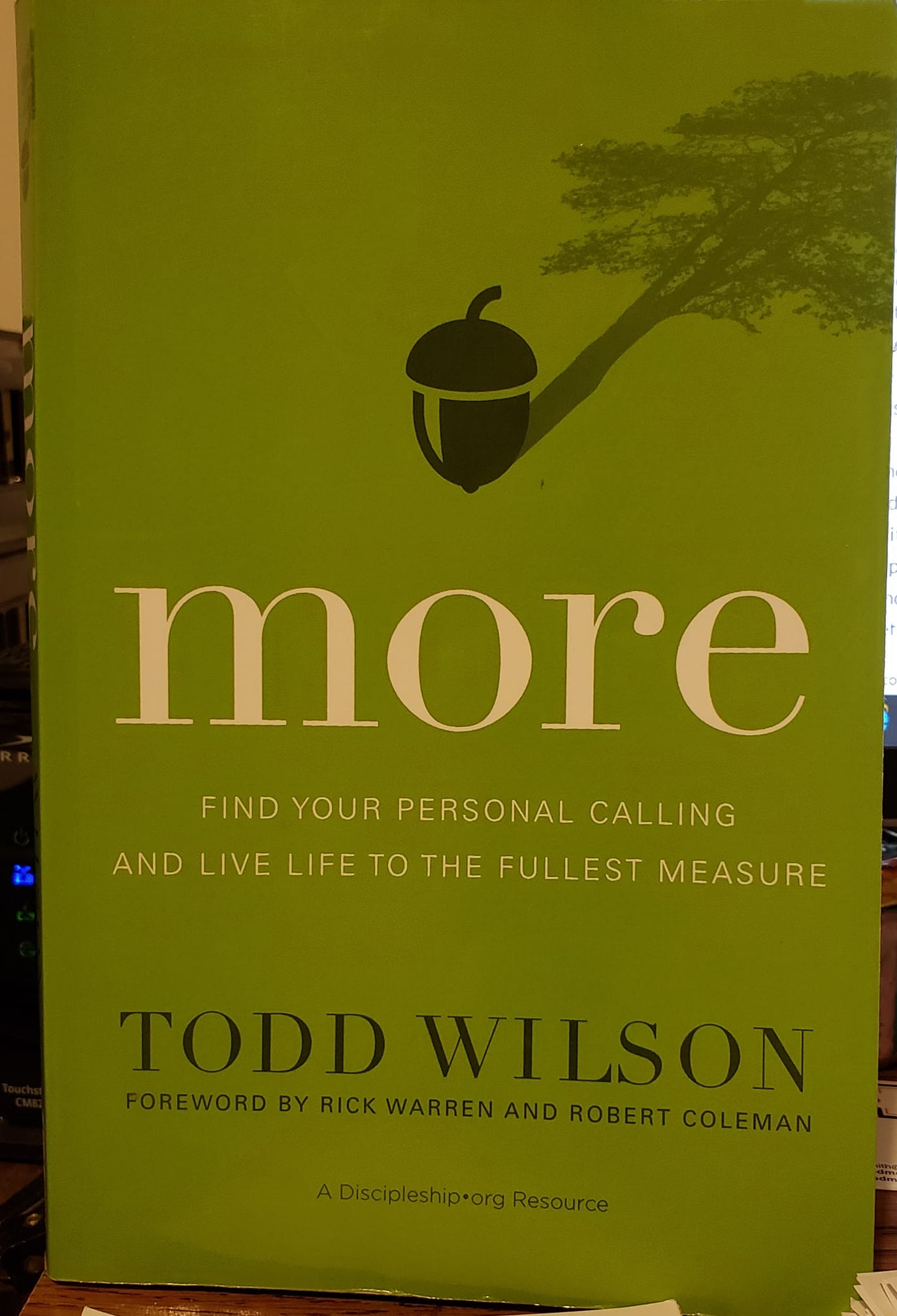
Some time ago, in early in 2020, our church did an all-church study of the book More: Find Your Personal Calling and Live Life to the Fullest Measure (2016, Zondervan) by Todd Wilson. The pastor preached on it and adult Life Groups were to study it. We were in the midst of the study of my book, Acts Of Faith, but decided to interrupt that and do the all-church study instead. I can’t be specific on the dates, as I can’t find all my teaching notes nor the little sheet I recorded my reading dates on. Maybe I saved all I had.

The book stemmed from conversations Wilson (who was a nuclear engineer who entered the pastorate and currently is an author of Christian ministry books, and a speaker) had with with a successful business man who didn’t feel fulfilled. That man wondered “Is this all there is? What is my purpose? What should I be doing to have the biggest impact?’

I found the book to be tedious. Wilson presents a formula, complete with diagrams. Those diagrams concern our “Be-Do-Go”. “Be” is our identity/design. “Do” is our mission/purpose. “Go” is our mission field/position. For each of these we primary or general calling and a secondary or unique personal calling. The general calling is something common to all Christians, and the unique calling is what God as specifically called each of us to do on earth in His kingdom.

Each week we were to do certain exercises and fill in a chart as we gained understanding on the general calling and tried to figure out our unique calling. I found those charts almost juvenile and had trouble asking our Life Group to fill them out. Consequently, I told them what the book wanted them to do and suggested the see if it worked for them. It didn’t work for me, though I’m not sure why.

With Wilson being an engineer I can understand why he reduces his teaching to diagrams. I kind of do the same. And you would think I would embrace his approach and love the book. But I don’t and didn’t. I won’t say I hated it, but for some reason it came up short with me. It was nicely organized and well written. You knew where he was going and he got there in a reasonable amount of time. It’s a fairly easy read. It’s just not my kind of book, that’s all I can say. I haven’t reviewed it on Amazon, and may or may not. If I do, I’ll give it only two stars, or maybe three.

Yet, it will stay on my shelf, for the possibility exists that I’ll read it again in a few years. Perhaps in a second reading it will seem better to me.