When it was time to read “Pride and Prejudice”, I found one on the shelves in the living room, where my old, collectables are.
I know many of you have long ago read Pride and Prejudice by Jane Austen. Our son said he read it every year for a number of years. Well, both my wife and I had somehow not read it.
In early May the movie came on TV and we watched it. This was the 2005 version with Keira Knightly, Matthew Macfadyen, and Donald Sutherland. We found the story difficult to follow. Part of this was the English accents; part the overlapping talking by multiple characters in rapid-fire succession; part the sometimes low volume of the voices, such as when the Bennet girls were talking at balls. So, after watching the movie, we decided to read the book aloud in the evenings. We read from an older copy that has been in my family many years. Charles Westcott (“Uncle” Charlie), a good friend of my great-grand uncle David Sexton, gave it to my mother in 1934, according to the inscription. I don’t know if it originally had a dust jacket, but it doesn’t have one now.
This one was published in 1934 and was given to my mother by Charles Westcott, a good friend of her great uncle, David Sexton (who I’m named after).
I’m glad we read it. Reading aloud is slower than reading silently. It took us twenty sittings over a month and a half to complete it. While the language is somewhat archaic, it is a classic that everyone should read. It has become a cultural icon. While I had heard of the title for years without thinking much about it, my attention was first drawn to it by the mentions in the movie You’ve Got Mail. Of course, I didn’t really understand what the Hanks and Ryan characters said about it. Next time I see that movie, I should understand it better.
Not a super old copy. Well, I guess 86 years old is fairly old. But it’s in good condition. I think I’ll keep it.
I don’t think there’s much point in my digging deeply into this classic, analyze the writing, or critique the plot and character development. Pride and Prejudice is much loved by millions. It has stood the test of time, and will be read and loved for at least another century. I hope to read it again sometime in the future. And to see the movie again. We watched it a second time right after reading the book. We were able to follow the plot, but I would really like to understand more of the dialog. Darn those British accents. Darn those silly little girls who all talk at once in hushed giggles. I fear I’ll never be able to understand it all.
This particular book is a keeper. It’s not exactly a collectable, as it’s a little too new, and it looks to have been somewhat of a mass-market hardback. But, it’s in excellent condition. To misquote Harry Potter, the binding is not fragile. It goes back on the shelf, this time next to Sense and Sensibility for easier future findability. I need to re-read that one some day.
I’m interrupting my planned posting schedule, once again, due to a health concern. This time it’s me, not the wife. Yesterday, after a quick, early-afternoon trip to the pharmacy for some needed meds, a huge wave of tiredness came over me. I was unable to do any writing, nor did I feel like doing my afternoon reading in the sunroom. I sat, caught up on e-mails and Facebook (i.e. wasted time), but had not gumption to do much else. Heated up some supper and dished out some already prepared dessert.
Then, around 7 p.m. or so, I noted “weakness” in my left arm. I don’t know how else to describe it. No pain, just weakness. Since heart attacks and strokes are sometimes first indicated in the arms, I paid attention all evening to how it felt. Took a low-dose aspirin. No change. Didn’t feel like doing our reading aloud. Went to bed early, around 10:30 p.m.; no change. Prayed. Got up after half an hour to sit in my chair, figuring I’d better stay awake to monitor it. Prayed. Fell asleep at some point.
Woke up around 1:00 a.m. and felt much better. Barely any feeling of weakness in my arm. Went back to bed and slept well. Up around 6:00 a.m. with just a twinge of the same weakness. Decided to go about my business, but not go outside for my early morning yardwork. The extended darkness due to heavy cloud cover, with thunder rumbling from storms to the west, helped convince me to just get my coffee and go to The Dungeon.
So far I’ve transcribed three letters (two were almost duplicates of one from before) from our Kuwait years into the Word file. That’s now up to 92 pages and over 50,000 words. It looks like about 25 more letters to go, though I’m not sure I’ve found all the ones we have.
Meanwhile, the weakness in my arm is almost gone. I’m wondering now if I did something yesterday to slightly injure it. I’ll take it a little easy today. At least typing doesn’t seem to bother it. Maybe I can add 1,000 to 1,500 words to my novel. And, re-do my now-in-a-shambles blogging schedule.
Lincoln and Darwin. I can think of books and articles galore. Alas, they will never be written.
Dateline 9 Aug 2020:
I take a break from my regular blogging plans for a post to discuss a new phenomenon about my writing life and career. Well, it’s not much of a career, what with the few sales I have, but I’ll still call it a career.
I began this year starting each month posting my goals, and at the end of the month (or start of the following) posting how I did relative to my goals. This ended as life went in unpredictable directions and other pursuits pushed writing mostly aside for a while. I see light in life’s tunnel, however, and am close to getting back to my novel-in-progress.
So what is the new thing that has popped up that’s worth a blog post?
One of the things I’m trying to do to reduce clutter and downsize our possessions is look through the magazines we have accumulated and saved but probably never read. On shelves in the basement storeroom are between 750 and 1,000 magazines. That doesn’t include the National Geographics, which are probably another 500. I looked through these recently, counting a portion then estimating the total count on hand. I could be off by a hundred, I suppose.
Why do we have all of these? The Geographics are sort of understandable. Accumulated in the 1990s, all used, mostly from yard sales, we have about twenty years complete and many, many duplicates. I want to read these, as NG is a class magazine, very educational. When I inventoried these about ten years ago and discovered we had more duplicates than full years, I put them in inventory and kept them on the shelves. Yes, shelves, for we had enough NGs to fill three shelves, the duplicates taking up close to two of them. I suppose I thought I would have a use for them, perhaps in my writing. But now I see that I don’t, so I will be getting rid of them. Hate to simply trash them, so I hope to find a place to donate them or maybe sell them.
But I prate. Most of the other magazines on the shelves are not keepers in my mind. I’m not sure where Lynda stands on that. A few may be of value, and a few are keepers (such as the many years of WW2 history magazines my dad accumulated; I’d like to read them some day). These take up another two shelves. I would love to see those gone before long.
So many good things in this issue, I should read it again. I may do that before it goes to recycling.
But I need to get to my point. I looked in my closet about two weeks ago, and my eyes were drawn to an upper shelf. There, tucked between notebooks, were a few magazines. “What are these” I said out loud. I pulled them out. One was the September 2007 issue of The Writer. I obviously picked this up at a bookstore. I’ve been reading it slowly, an article a day. While I’m gleaning much good information and many tips from it, once finished to recycling it will go. The other was a 2009 issue of Smithsonian Magazine. The cover story had to do with Abraham Lincoln and Charles Darwin, who were born on either side of the ocean on the same day in 1809; it was a 200th anniversary issue.
I took this mag to the sunroom and have been reading it along with a book during my afternoon reading time. The magazine is excellent, the articles all of a high quality and educational. One was about channel/river pilots who guide large cargo ships from the ocean into the mouth of the Columbia River, a dangerous transit. As I was reading, an idea for a novel about this came to me. Another article followed the Freedom Riders and what had happened to many of them since those days of their brave actions. Immediately an idea for a novel, and an article, came to me. The magazine had several other interesting articles—plus, of course, the highlighted articles about Lincoln and Darwin. With each article a writing idea jumped out of the pages.
I finished the magazine Saturday afternoon. I left it on my book pile table when I left the sunroom, but that was an oversight. The next time I go back out there the magazine will also go straight to the recycling box.
How can I do this when I could use the magazine as the basis for books or articles?
Very simply, I have made the decision that I have enough writing ideas, for book-length works, in the queue that I shall never run out of ideas. If God gives me strength enough of mind and body to write for another twenty years (when I turn 88), I shall never run out of ideas. If I keep up my recent writing history of two books a year for twenty years I will not run out of ideas. If I up my production to three books a year and am able to go twenty-five years I will not run out of ideas. Why, therefore, should I accumulate more ideas?
The new ideas may, perhaps, be better books that what I already have lined up. Maybe, but I don’t think I will shift to new things until I finish the things already programmed.
I see the many ideas for writing projects I’ve accumulated as being similar to the great number of possessions in our house and directly analogous to the more than a thousand magazines on shelves. Much has to go. Writing ideas may be a single sheet in a notebook, or a computer file in the cloud, rather than bound paper on a shelf, but they are still clutter, and I’m at the point in life where I don’t need to add possessions, I need to reduce them.
So, good book or article ideas, I’m sorry to do this, but I am suppressing you. I’m driving you out of my mind. I’m not adding you to a notebook or file. Sorry, but you’re gone. Now, I ask God to give me the strength to reduce the clutter of ideas and see many of them become books.
A racist act in progress. Sorry that I couldn’t find the photographer’s name to give proper credit, but hope they would find this use acceptable.
And, after a fair number of posts about racism, talking about the difference between racism and racist acts, about the existence of latent racism, I’m finally at the point of discussing racism itself. If you remember, in prior posts I have differentiated between racist acts—things done or said in the open—and racism—the condition of the heart that gives rise to racist acts.
This may be splitting hairs. Others may not see the difference. I do, however, because I think the way to combat them, to eradicate them, is different. Racist acts can be legislated against. When implementation of laws fails, steps can be taken to improve things. That’s not necessarily easy, but a path forward exists.
But racism, the condition of a person’s heart that may be held inside for long periods and only infrequently give rise to racist acts. How do you combat that? How do you change a person from the inside out? How do you convince them 1) that those with a different skin color are human; 2) they have equal natural rights endowed on them by God; 3) that your inner condition of racism will someday come out with a (or many) racist act(s); and 4) they can change if only they want to.
I’m sure someone will respond that I’m crazy. People can’t change, and they sure can’t change on their own. I would reply that’s true. My own belief is that only God can change the heart. Many people don’t believe in God, or don’t think of Him as a personal God who interacts with people. Would those people say that a racist can’t change? I don’t think so, at least not all people who live without a belief in a personal God believe that.
That brings us to a question of what our role is in combating racism. If God is the one who actually changes the heart, does that leave me out of the equation, or do I have a role to play? If so, what is that role?
I’ve thought a lot about this, and believe my role is to move people to a place where God can change them. How do I do this? As I said briefly in a prior post, by example, education, and persuasion. I may not be qualified in each of those. I may have one out of those I can do well. Maybe I can educate someone as to equality and the lack of difference in the person simply because of skin color. Maybe, after that education, I can persuade them that they can and should change. Their heart won’t change because of my words, but maybe they will think about it, move a little closer to God, and be in a place where he can change their heart.
What about change by example? I hope, hope, hope I was a good example to my children of a person who is not a racist. I hope that is continuing with my grandchildren. But, I have many more people I can persuade than just those. With the corona virus self-quarantine/reduced activities, chances for in-person interaction are greatly reduced, but they are still there. Included in those might be a few opportunities to model acceptance of people of all races.
Social media gives a chance for interaction, however. In fact, right now that’s perhaps the main chance. I have lots of chances to model full acceptance of all races as equal, as endowed by God with the same rights I am endowed with. To my way of thinking, the main contribution I can make to any discussion is calm reasoning. Someone on either side of the racial divide commits a racist act on social media (which, of course, is limited to speech). I can pour water or gasoline on the situation. I can also ignore it, which I often do. But when I sense someone’s posts which seem benign enough are actually a mild racist act, I try to counter them with calm reasoning.
I’ve done that a couple of times in the last three or four days. It’s a first attempt with each of the individuals. I don’t know that my words did any good. But it’s a first attempt. I’ll make another attempt and then another. At some point I’ll make my calm reasoning a little stronger. Maybe they will be nudged a little closer to the One who can work a change in them. That’s my goal. I think that I’m happy with my efforts, though thus far they are too few. We’ll see how this works going forward.
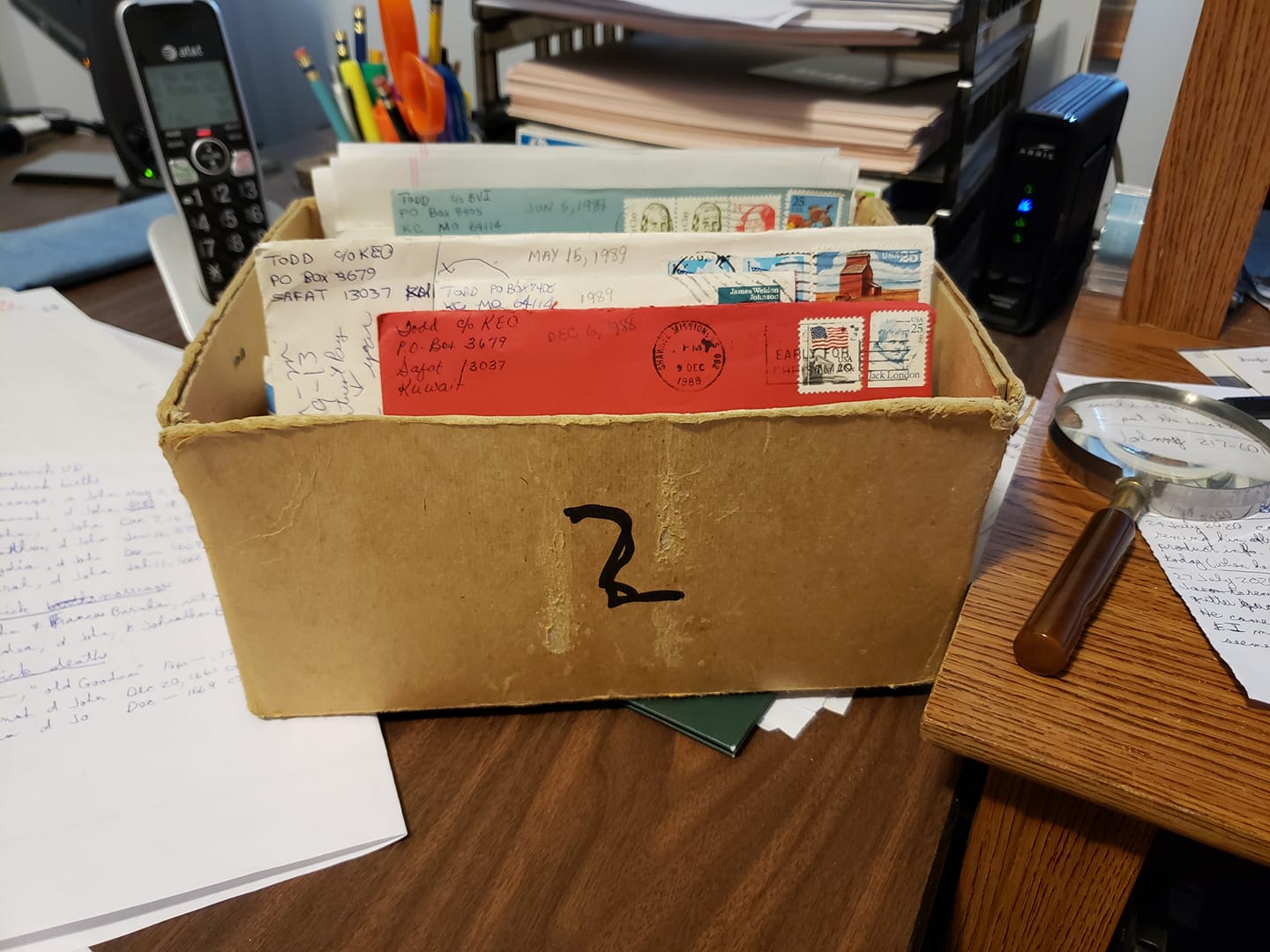
So far I’ve transcribed 2/3 of the letters in this box, and they run to 31 typed pages (the box is not full). Edit: The letters originally in this box are all transcribed. Many more are added and I’m just starting on those.
When I made my blog post on Friday, I had intended on the post for Monday to be the next in my series on racism, moving on from how to combat racist acts to how to end racism. But that’s not happening due to a change in plans.
You see, on Friday, while working in the storeroom, moving a smallish box of books, I caught my leg on a trunk on the floor and took a tumble forward. I dropped the box of books as I was going down to free up my hands to brace against the fall. I did this on another box of books that was on the floor in front of me.
A fall is never good, but I was glad this was a minor one. It’s the first one in the house, my several others having been outside. I tried to scoot a stick out of the road while walking and went down. I slipped on leaves in the woods and went down. I slipped on a slick driveway and went down. I slipped on an icy driveway at that neighbors and went down hard. That was in February 2018, and I haven’t fully healed from that. Otherwise, the falls outside didn’t do much damage. An hour or so after those others I was back about my tasks. I figured the one in the basement would be the same.
This plastic bin has more incoming letters than outgoing. Most are not from our overseas years. We will have a hard decision of what to do with them.
Alas, I soon after went upstairs to fix lunch and thought to myself, “Why is my knee hurting so much?” Then I remembered: I fell fifteen minutes ago. Ah, well, no big deal. I took an Aleve, ate lunch, then went to the sunroom to read. While there, my knee kept hurting. I looked down at it to check for swelling and saw that my leg was bleeding, down near the ankle. Obviously that came from raking across the trunk as I went down. Naturally it was my leg with the bad knee that I caught on the trunk.
I cleaned and bandaged the wound with a gauze pad and went back to my afternoon activities. Slowly my knee got worse, the pain being in unusual parts of the knee. And my leg started hurting below the knee all the way down from the ankle. Not the abrasion, which I could barely feel, but the shin and calf. It felt muscular, not skeletal. I was certain it wasn’t a break. Muscles and tendons or ligaments had suffered trauma. Just sitting in my reading chair in the living room was painful—as was lying on the floor on my stomach. Another Aleve didn’t do anything.
Slowly it got worse as evening wore on, the main pain being in the lower leg, not the knee. I went to bed a little early but couldn’t sleep. I used a topical muscle rub that may have helped some. But an hour and a half of tossing and turning caused me to move to my reading chair, then out to the sunroom. Eventually I was tired enough to sleep through the pain. But that was at least an hour after I took a hydrocodone pill.
Ah, this one had the Saudi and Kuwaiti year letters besides the 25 or so I started with. I see hours of enjoyable transcribing ahead.
Obviously my normal heavy yardwork on Saturday was out. I took it easy, reading, and transcribing letters. Same for Sunday, with some on-line church and Life Group thrown in. Came Saturday evening and I thought the leg felt better. Come the night and the pain was as bad as Friday night. I finally went to The Dungeon and laid back in the recliner. Finding a comfortable position was still hard, but I think I slept a little better than on Friday.
What does that have to do with my intended blog post? With my leg in more or less constant pain, I didn’t think I would be able to concentrate on the important topic of ending racism. So you have this fluff piece instead. The letter transcription was an enjoyable diversion. I completed the 28 letters I found a few weeks ago in an unexpected place in my mother-in-law’s things, all letters to her from our Kuwait years, all but a couple from Lynda to her mom. While I shouldn’t have, I decided to drag out the larger bin that has letters from Saudi and Kuwait. Actually, I had to pull three different bins/boxes off the shelf to find the rest of the letters from the Kuwait years. I will consolidate all of them into a single box, properly label it with large, black lettering, and put it where I’ll never have to hunt for it again.
Letter transcribing doesn’t get the weeds pulled, or cut posts for the completion of the fort I’m building with the grandkids, or trim the bushes in the front yard. It doesn’t burn off the pounds I so definitely need to lose. It doesn’t get my novel-in-progress back to where I actually see progress. It provides great satisfaction for me, however. And it stirs the memory, as I read through things I experienced and documented but now don’t actively remember.
As of Sunday evening the text file of letters was up to 49 pages and just under 30,000 words. So far fewer than half the Kuwait letters are transcribed, and the Saudi letters are untouched. This will be a long project, most likely multi-year. What will be produced in the end is not yet clear. But at least I see hours and hours of what I would call oddball satisfaction for the transcriptionist.
Tuesday, July 28, 2020. A most interesting day, and perhaps typical of the jumbled life I live right now.
You’d think life would be simple, being retired and mostly staying at home due to the corona virus pandemic. You’d be wrong, however. I suppose the reason is in part that I have too many interests. Let me catalog some events from the day.
So far I’ve transcribed 2/3 of the letters in this box, and they run to 31 typed pages (the box is not full).
I woke around 6:15 to see my digital alarm clock flashing. Must have been a power failure in the night, probably momentary but enough to reset the clock. I got up and weighed and checked my blood sugar. No change in weight (still at the lower end of the range I’ve been bouncing around in). My blood sugar was 81, a good number. The day before my new doctor’s nurse called to convey the doctor’s follow-up comments on recent blood work. All was normal, except iron, which is a little low. Since the nurse didn’t mention the reduction in insulin dose that the doctor said, and since that reduction wasn’t in the printed office visit summary they gave me, I told the nurse what my blood sugars had been with the lower dose—the same as they had been with the higher dose. She said she would tell the doctor. Fifteen minutes later the nurse called back and said the doctor wanted me to reduce my sugar further by a couple of units.
But that happened on Monday. I’m talking about Tuesday. It was raining at 6:15, which meant I wouldn’t be able to go outside for my morning yardwork. Instead, I went into the sunroom and just rested for 30 minutes. I then got up, dressed, got my morning coffee, and went down to The Dungeon for my normal work. Everything seemed very normal. I read devotions, prayed, recorded my health info, checked my book sales, opened my stock trading programs, then checked my e-mail. And the first surprise came.
I had an overnight e-mail from a man with Royal Australian College of General Practitioners. They wanted to use a photograph from this blog for training purposes; would I let them know how to acquire the rights to do so. Wow, this was strange. I spent 15-20 minutes trying to figure out if this was legit. I found web pages for that organization and it all looks legit, except the man’s name was nowhere on it. He’s in an administrative position, however, and they don’t list any administrators on the site. So I sent him an e-mail to try to verify that it’s a legitimate claim.
Shortly after this an e-mail came from Amazon, confirming my order for $543 and change. Except I have no orders outstanding with Amazon. I compared the e-mail with the one from my last order. They looked much the same but there were telltale differences. So I contacted Amazon, confirmed it was most likely a phishing attack, forwarded the e-mail to them for investigation, and went back to my normal business.
Normal business on a weekday includes stock trading. I placed a trade and it filled. Good work. Then, instead of working on one of my books, I began transcribing letters from our Kuwait years. Have I discussed this before on the blog? I can’t remember. I won’t go into it much now except to say that morning I transcribed three letters. That brings the total transcribed to sixteen. In the Word file they run to 24 pages. I have ten more to go in this box, and dozens more in the main box. These are just some I found lately going through my mother-in-law’s things as part of our decluttering effort. They will be added to the large plastic bin (30 x 24 x 6) full of other letters from our Kuwait and Saudi years, all waiting to be transcribed. I also managed to do a little over a half mile on the elliptical.
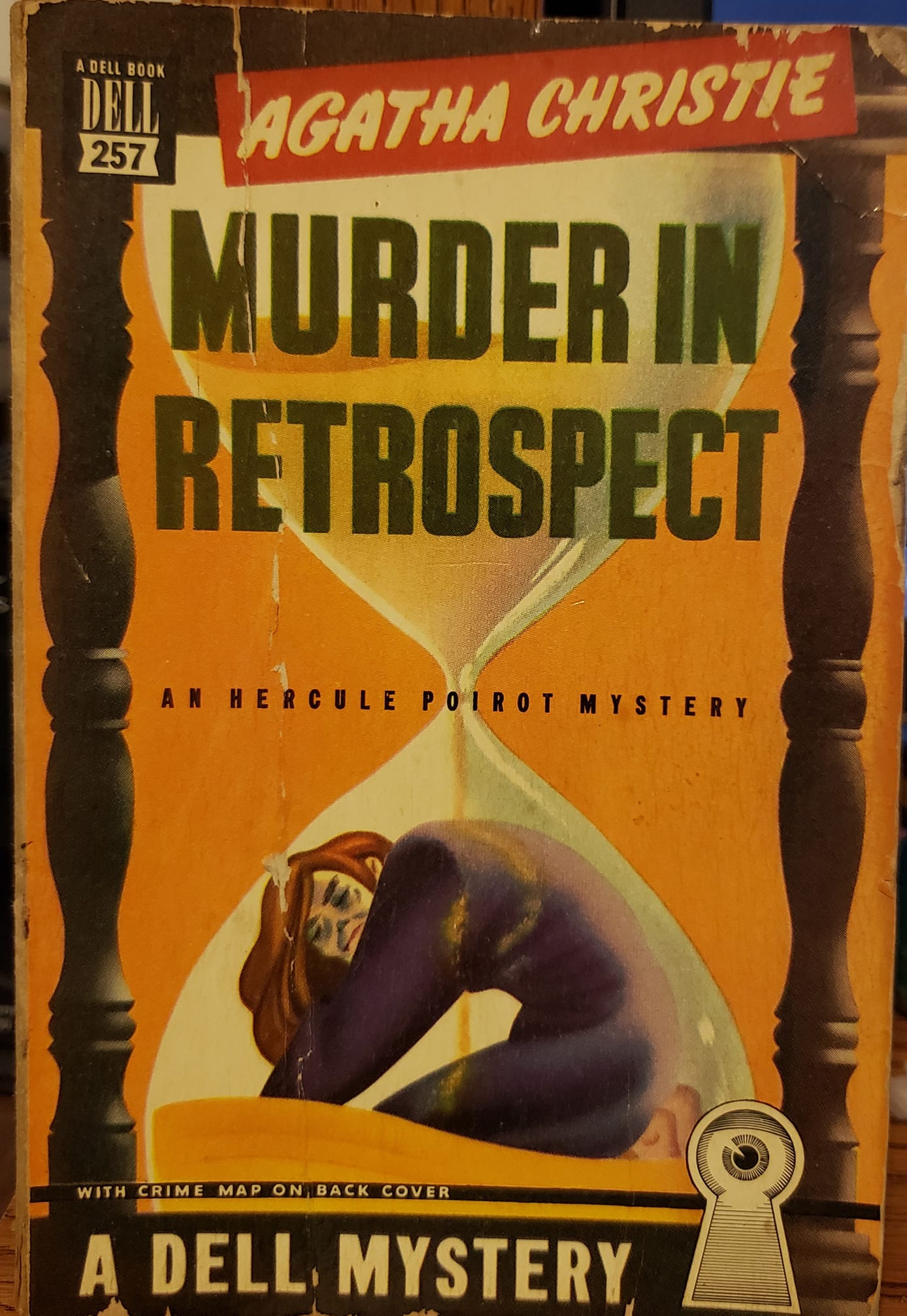
That got me to lunch time. From that point on the day seemed more or less normal. I made a quick run to the nearby Wal-Mart pharmacy for a couple of prescriptions, had some reading time in the sunroom since the day was cool enough. The wife and I did our evening reading in an Agatha Christie mystery. Normal seemed good.
Throughout the day I was careful of what I ate, though I wouldn’t say I dieted. Yet, when I weighed Wednesday morning I was at my lowest weight in over two months. I followed a similar eating regimen on Wednesday and we even lower on Thursday. This was while reducing my insulin dose (per doctor’s orders) and seeing only a small increase in my blood sugar. Maybe my health is improving.
As I finish this post on Thursday afternoon, I have a generally good feeling about where things stand. A good felling and outlook is…well… good. Bring on Friday. Bring on the isolated weekend. I might even get some time to work on a book or two.
My prior posts in this series have laid out a case, however correct or incorrect, that racism and racist acts are two different things, the latter springing from the former, and that many people who are racists don’t realize they are racists. Needless to say, we ought to be eradicating racism from our country. We ought to be eradicating racist acts from our country. We all who detest racism ought to be engaged in the process of eradication. And, not everyone will have the same role in the eradication.
Now I come to a discussion of how we accomplish that eradication. First, what do we do about racist acts?
We have laws on the books against racist acts. Housing and employment cannot be denied on the basis of race. The right to vote has been established by law and regulation without consideration of race. Other laws have been enacted, supported by regulations. Enforcement efforts exist at the state and Federal level. Court cases have backed-up most of these laws and regulations.
Are they perfect? I’m sure they aren’t. We can always take a look at our laws, many of them passed in the 1960s, and see how they can be strengthened. That’s a job for lawmakers at different levels of government. For them to know this is needed they need the input of those tasked with implementing the laws and regulations. They need input from those who have been on the receiving end of racist acts. From the data received the legislators can make informed decisions on how to strengthen that which is intended to prevent racist acts.
But even if the laws and regulations are made perfect, their implementation will probably not be perfect because they will be implemented by imperfect people—people who may or may not be racists, or may be latent racists. What will correct this? Policies by institutions and businesses will help. These policies must be well written, widely disseminated, and fully explained to those who must abide by them. Each of those steps have lots of room for imperfection, and constant vigilance is needed by those who work with the policies and those who manage the policies.
This diligence is obviously needed at all levels of law enforcement. Officers and administrators much watch to see that racist acts don’t creep in, almost unrecognized, such that suddenly the law is being administered in a racist way. Again, administrators need feedback to know that their diligence isn’t sufficient.
Feedback. What do I mean by that? It can be data, data such as “unarmed blacks are three times more likely to be killed in an encounter with police than are unarmed whites.” Both races sometimes get killed. The numbers of unarmed men who are killed by police are small (maybe 30 people per year for all races), but the disparity is real. Such data needs to be gathered, examined, and lead to changes in administration. Yes, data is important feedback.
What other type of feedback? How about protests? Protests are a way to bring lack of equal enforcement to public notice so that something can be done about it. Administrators, no matter how well-intentioned, how well-trained, how diligent, are fallible. They can easily miss something going on during their watch. A protest can alert them to this. A protest can also generate public awareness that will put pressure on administrators to correct unlawful situations. This can apply to businesses as well as government.
This covers racist acts. Correct laws and regulations properly implemented and acidulously watched should put an end to racist acts. As a nation we aren’t there. Plus, that’s only part of the problem. We still have racism to deal with. That will be the subject of the next post in this series.
The second of three books in the Bible Code series. I just learned that the author died in June 2020.
Having finished reading another book aloud (which I haven’t reviewed yet, but will), I suggested to Lynda that we next read Bible Code II. I did this because we had read Bible Code 1 years ago, the sequel was sitting next to it, and I thought we could read the second and put both out for sale or donation. She agreed, and we read it.
The author, Michael Drosnin, has taken the computer work of Israeli mathematician Dr. Eliyahu Rips and written popular books about a hidden code in the Hebrew version of the Bible. The first book dealt with codes in the Torah, the first five books of the Old Testament, also called the books of Moses. The second book extends into the entire Old Testament. In the first book, Drosnin explained that the Hebrew text of the Torah as settled. No one disputed the exact arrangement of letters and words. However, as he explained in BC:2, that isn’t the case with the rest of the Old Testament. Some Hebrew text is disputed.
How does the code in the Bible work? You skip letters on a fixed pattern and see what results. Skip every other letter. Do the letters then brought together form a word? No? Skip two consecutive letters, putting every third letter together instead of every other. Maybe those, somewhere in the continuous string of letters that make up the O.T., form words of phrases. Sometimes you look for the words forwards in the text, sometimes backwards, sometimes diagonally.
With hundred of thousands of words and even more letters, you have an almost infinite number of possible skip patterns, you have many, many places to look for encoded words. Isaac Newton was convinced such a code and spent years trying to find it. Dr. Rips, however, had computers. He figured out how to put the skip pattern in a table, then search the table for recognizable words. He found many such words, words that seemed to predict world events long after the Bible was written. In Bible Code 1 Drosnin described the process. In Bible Code II he expanded on it. As a control, they tried the same thing with other books of a similar lengths, and learned that these books did not form words or phrases in similar skip patterns in any meaningful way.
The conclusion: The Hebrew Old Testament contains a code that predicts future events. Who wrote the code? To the secular Drosnin that is unknown. To the devout Dr. Rips it had to be God.
The problem is that most events found in the code are found after the event happened. G.W. Bush is elected president? Break out your computer, search for “Bush” with an infinite number of skip patterns and you’ll find it. A few times, however, an event was found before it happened. The code seemed to predict the assassination of Israeli Prime Minister Yitzhak Rabin in 1995, and was found in 1994 and communicated to Rabin. The assassination happened—in 1995.
In the Bible Code 2, published in 2002, six years after the first book, the main premise is that a nuclear holocaust was going to happen; it would start in Jerusalem and result in annihilation of the Israelis and the Palestinians. Like other coded events, it was tied to a year, in this case 2006.
Yes, 2006. Fourteen years ago. A major part of the book was a warning that we must somehow prevent this from happening. In 2002 world conditions looked awful. Iran was angling to get the bomb. The Palestinians were in the midst of the second Intifada and Israel was aggressively resisting. The 9/11 attacks were fresh on everyone’s mind. We seemed to be in the age of terrorism in a new way.
Yet, no nuclear holocaust occurred in 2006, of in 2007, or in 2008, or any year since.
Is the Bible code real? I have no idea and have no way of judging if Rips and Drosnin are doing something valuable of are engaged in a well-meaning smoke-and-mirrors error. I do know that Drosnin’s work receives lots of criticism.
Should you buy the book and use your valuable time reading it? Probably not. It’s somewhat boring and quite repetitive. It’s actually a quick read since much of the book is diagrams of the code, in Hebrew with English translations. I intend to do a little investigation from my reading chair and see what these gentlemen have said in the intervening years. And see what others are saying about the Bible code and its validity. If there is a Bible Code III, however, I for sure won’t be reading it.
If you want to look at this further, Wikipedia has an excellent article on the Bible code.
We are in the dog days of summer, 2/3 of the way through July. It’s been in the 90s here for the last two weeks, and the 15 day forecast currently shows nothing but 90s. During this time I am busier than ever. Hence, I’m a little late with this blog post. What’s keeping me busy? Consider this.
In late June we had the tree guys here to cut back the trees away from the house before we get the new roof. To save a little, and because I try to keep the lots on either side of me neat, I had them just drop the branches to the ground and I would do the cleanup. I’m doing that now, an hour a day first thing in the morning, before the heat ramps up. Very tiring, but it’s a task that shows immediate results. I’m also finding lots of branches long and straight enough to cut to length for the final posts to finish the fort (more on that in another post).
Stock trading is busiest on Mondays and Fridays. Today I planned out and entered two trades, both of which filled. Now, fully invested, I get to sit back a little and see what the market does.
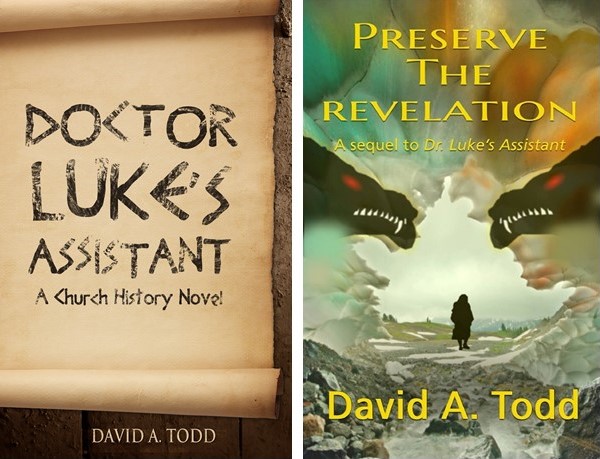
I’m in the midst of an on-line class/program to learn about advertising on Amazon. It includes six one-hour videos, five one-hour live sessions, a two-hour long webinar, and lots of homework. I’m finding it challenging, though I am learning something. I have three ads up, of three different types. They are for my book Doctor Luke’s Assistant. I’m behind watching the videos and creating ads, but I feel good about where I am. The program runs through next Monday so I have a lot of time to catch up.
Our de-cluttering/downsizing effort continues. When I look at the mess in the living room, with piles of greeting cards and letters sent to my mother-in-law over the years (and some sent to us), and in the dining room at the boxes of new greeting cards and note cards covering almost all the dining room table, I despair of ever completing it. The storage room is cleaner and better organized—and a little emptier. But if we can’t find a way to get rid of those brought upstairs, if they just get re-boxed and taken to the basement again, we are barely any better.
My hourly work for my former company happens to have ramped up in the last two to three weeks. The income is good, but the time it takes isn’t. I could refuse any or all assignments, but this work may go away almost entirely around October, so I hate to turn the work down right now.
Lynda and I have increased our reading time together. In the evening we will read perhaps 20 pages aloud from some book, then two chapters from the Bible. It’s enjoyable time. I plan on choosing some of these books with de-cluttering in mind, books we can read and discard/sell/donate afterwards.
I’ve had some things to do for Life Group at church, trying to lead the class into making decisions about meeting times and whether we will begin to meet in person soon, and if so, when and how. This doesn’t take a lot of time, but it’s another stick on the camel’s back.
You can see I haven’t had much time to think about this blog, or about writing. Is this a temporary period of busier than usual busyness? I hope so. Once I get past this brush clearing, get the contractor set up with the new roof and get it done, and once we can get a little breathing space on the de-cluttering, once the ad class is over and I have five to ten ads running, maybe I’ll be able to devote more time to my book and my blog. Hopefully I’ll be able to devote enough time this week to make my Friday post as the net one in my racism series.
Oh, yes, as of yesterday, blackberry picking season is over. That frees up three to four hours a week.
Some racism is obvious, and some people know they are racists in their hearts. Some know they commit racist acts. A couple of encounters I had with racists years ago were with people in this category. They are like drivers who purposely speed. They know the speed limit but have decided they will not be governed by it. When caught speeding, they are typically defiant and unremorseful, sorry for getting caught but not for speeding.
But I believe some people who are racists don’t realize they hold racist beliefs. They rarely commit racist acts. When they do it is most likely to be spoken racism, not some physical act. They are like drivers who generally follow the speed limit generally but are often careless and drive had a speed that is comfortable even though they exceed the speed limit. When caught speeding they are remorseful, but may not believe they were really speeding.
I call people who don’t realize they are racists “latent racists”, and their brand of racism is “latent racism”. This is my own definition. I’m sure there’s a more formal, official term for this, but I don’t know what it is.
I like the term latent racism. I developed it from a term used in the HVAC industry that I encountered many years ago when I did structural design of buildings. The HVAC guys were talking about “latent heat”. I asked what it was, and they said it was the heat that bodies give off just as a matter of living. It had nothing to do with the sun. For designing heating systems, they could take advantage of latent heat; but for designing air conditioning they had to overcome latent heat in addition to the sun’s rays.
Latent racists don’t realize they are racists. Somewhere in the past, perhaps from parents, other relatives, or acquaintances, they saw racism modeled. They never made a conscious decision to look down on someone not of their color, but their subconscious absorption of racist examples cause them to feel that way about people of a different color. They won’t commit a racist act, other than racist statements might pop out of their mouths from time to time.
That time in North Carolina that I wrote about in a prior post was active racism, by young white men who said if whites would just band together “we can keep the blacks in their place.” Despicable. These are the type of people who carry torches in homage to Confederate statues.
But I can think of other times when I’ve encountered racism by people who don’t realize they are being racist. I want to be careful how I word this so as not to identify anyone. An older man in the church once said, in my presence, that he was organizing the neighborhood to “keep the Hispanics out” by making sure no one selling their home dropped the price to a threshold at which Hispanics would buy. This is actually a good man and, I’m sure, doesn’t see himself as racist. Keeping the racial homogeneity of the neighborhood was not, to his way of thinking, racist. He was a latent racist committing a latent racist statement in front of me. Whether he actually did what he said—organize the neighborhood—I don’t know. It wasn’t long after that I lost contact with him.
That may not be the best example of latent racism. Let me give another example, being equally vague about the circumstances and the person. This person said to me, during the 2016 presidential campaign, “Do you think Hillary will have her black people with her [at that event]?” I was shocked, for this was a godly person. I realized this person had grown up in an area where there were no people of color, had never (or almost never) lived around or even been around people of color. Obviously, with a statement like that there was racism in the person’s heart, but I don’t think the person even realized it.
Or, another example, being equally vague, of someone connected with a school district, began spouting off how the blacks won’t learn, the Hispanics won’t learn, you can’t teach them, they won’t behave, etc. etc. I got angry that time and said something and got the person to stop. This person, if you asked him/her, would say they were not racist, yet they clearly were.
I should add that, of late, I have seen an awful lot of latent racist statements on social media, people saying things they don’t realize are racist. If you confronted them they would say, “That’s not racist, I’m not a racist.” They might even say, “There is no racism.” Coming to a conclusion that there is no racism is, I believe, a sign that a person is a latent racist.
Why am I going on about this? I’ve been building up to a conclusion about how I think we should deal with racism but I felt I needed to set the stage of how I see racism. If we are going to combat it we have to understand it. How does a person become a latent racist? I think obviously by example of others, both open racists and latent racists. It’s learned by “osmosis”, not by active teaching.
So, I’m at the end of my post. And I’m pretty much at the end of setting the stage, explaining the problem. In my next post in the series, I’ll start talking about what I see are solutions to the problem. I don’t know if that will be in my next post or if I will have to take a little more time to pull it all together.