All posts by David Todd

Back to Editing

Tuesday evening I went back to editing on my book Documenting America: Civil War Edition. I finished the first round of edits about ten days ago, and decided to let it sit awhile, to give me a fresh perspective. That time passed, and so I decided it was time to edit. I have the book out with a beta reader, who I told not to hurry on it, as I wouldn’t be publishing it till sometime in July.

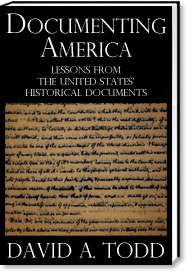
This isn't the cover—just a temporary mock-up graphic for this post.
This isn’t the cover—just a temporary mock-up graphic for this post.

As I looked at the book, I decided to take a slightly different approach to this round of edits. Each chapter is organized like this. It’s built around an historical document from the Civil War era. I write a lead-in paragraph, briefly setting the scene. The original document comes next, usually heavily edited down to a reasonable amount to read. After the document comes two pieces of my writing, which together are usually shorter than the document excerpt. In the first bit, I do a little explaining of the document or of the issues it is involved with. In the second bit I try to tie the document to an issue we are facing today. My purpose for that is to show that things may not have changed as much as we think they have.

During my first round of edits, I realized that the early chapters, which were written in 2014, and the later chapters, written in 2017, had significant differences between them. The 2014 chapters make reference to world events that were hot topics then, but which, to some extent, have faded from the front pages. The 2017 chapters make appropriate references to current world events.

But, does this not show a weakness in the book? If I refer to events that don’t seem as important now as they seemed in 2014, maybe they really aren’t worth mentioning at all. I need to think about this.

So, to bet back to my editing approach. I decided in this round of edits I would just read the words I wrote, not the documents I edited. That way I get through them a whole lot faster. In three days I read and edited my words in 17 chapters. Only 12 to go, so I should finish those by Sunday.

I’m hoping that reading these parts close together, and quickly, will give me greater insight into what changes I should make, if any. It may be that I’ll leave it about as is, and add some explanation in the Introduction about the times of writing.

Either way, I’ll finish it by Sunday, then do another read-through of the excerpted documents, and see if there’s anything else I can cut for readability while not destroying the integrity of what the document says.
A Whole Lot To Do

Well, I just finished the typical busy weekend. Yard work wasn’t too bad. I cleared the last of the leaves away from the backyard. With grandkids to visit soon, I wanted one less place for snakes to hide. Next weekend I’ll take the leaf blower and clear the stragglers out. In the front yard I sprayed for weeds, and picked up sticks. That’s a never-ending task, as the three large trees in the front yard like to keep me busy.

We made the usual shopping run. My wife came too this week, as she’s wanting to do some new things in the kitchen and wanted to make sure the grocery cart was properly filled. She also bought some herbs to plant, and some larger tomato plants. That will be work for this week.

The waterline in our street was leaking, we noticed when we came back from the store. I could see that it had already been reported (based on markings on the pavement). The repair crew was there in an hour or two, tried the simple repair, which didn’t work, so had to shut the water off. We were without it for five hours, as it turned out to be a very bad line break. It was around 9 in the evening when we got it back. I spent the afternoon doing a lot of filing of financial papers, including culling some old files. The evening was mainly straightening some things up inside, and reading. Thus ended a full day.

Sunday was Life Group (I didn’t have to teach) and church. After lunch I walked 5K, in just over an hour. I felt okay about that, given the hills in our area. That afternoon, Lynda and I went to a couple of stores for some clothes purchases ahead of vacation. I found what I needed, but she didn’t. In the evening I got the checkbook entries up to date (still have to add it), but otherwise mainly read. It was a good way to wind down.

So here it is, Monday morning. Rather than have a sense of accomplishment for what I got done this weekend, I have a feeling of dread of all I have to do today and over the next couple of days. Here’s a partial list:

  • Lab work at the doctor’s office this morning
  • Call in prescriptions
  • Pay company credit card bill
  • Call the IRS about the letter I received from them this weekend, a non-so-good letter
  • Pay the last bill from my procedure in January
  • Double-check on our reservations for Branson, since I’ve never received the confirming e-mail
  • Plant the herbs; figure out a place for the tomatoes
  • Begin the many little things in the house needed to be done before guests come next weekend
  • Get by the store (probably tomorrow) to pick up the prescriptions along with diabetic supplies
  • Order the one item I couldn’t find at the store, and hope it comes within a week, which is when I need it by

That’s enough on the to-do list. I need to get a few of them done before I think through everything that needs to be done. Needless to say, writing is on hold for a while. I’m ready to do the next round of edits in Documenting America: Civil War Edition, but will wait a couple of days to do that. Plus, it’s out with a beta reader, and I’ll want to incorporate his comments when I next work on it. I won’t be messing with stock trading much this week, and maybe not next week either. I won’t be working on much else, writing-wise. The main pages on my website are in desperate need of an overhaul, but I don’t see me getting to that for about a month.

Life is busy. I guess that’s good, though I’d go for a little less busy right now, if I could.

Historical Conflict About the Battle of Gettysburg

Gettysburg, a three-day battle, was had the most casualties of any Civil War battle.

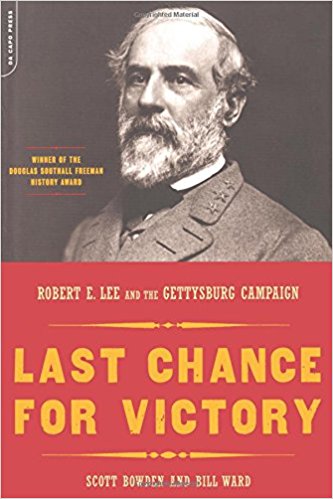
As I wrote my Civil War history book, the battle of Gettysburg consumed one chapter. The documents I used were: a letter from Confederate General George Pickett to his wife after the battle; and the official battle report of Confederate General Robert E. Lee.  I also read, about three years ago, part of a book titled Last Chance for Victory. This is written by two historians from Texas, who concentrated on the Confederate strategy and battle execution.

When I read this (well, part of this), I didn’t yet have my documents decided upon. I mainly read it to get an overview of the battle, about which I had known nothing, and to see what references the authors used, figuring it would be from among those references that I would select the source documents. That worked well, and I did get a fair number of suggestions for source documents.

Now, having finished the book, and having recently finished reading a different book, I decided to return to LCFV and finish it. I’m in the midst of it, having finished almost 400 pages, with another 200 or so to go.

Lee's gamble of marching north, to take the pressure off Virginia, and to force the North to end the war, didn't pay off. This book suggests it came very, very close.
Lee’s gamble of marching north, to take the pressure off Virginia, and to force the North to end the war, didn’t pay off. This book suggests it came very, very close.

I will eventually write a full review if it. But what I wanted to do with this post is talk about historical interpretation. As I’m reading LCFV, and not being a military tactics person, knowing relatively little about military strategy, and not being a military historian, I’m much dependent on what those more knowledgeable than me say. But, yesterday, I went to the Amazon listing for LCFV, and read through the 70-odd reviews, as well as the 50 or so comments on the reviews. I got an eyeful.

Many said the book was great, and it was about time an honest book had been written from the Southern perspective. Others, including some who appeared to be professional military historians, as well as guides at the Gettysburg National Military Park, took issue with LCFV, saying it whitewashed Lee’s mistakes in planning the battle, and in leading his subordinates on the execution. Wow. So many opinions, so little time to digest them.

Perhaps the truth lies somewhere in between. Perhaps I’ll have to read more about Gettysburg (I have another book in-house). But I have no intention about becoming an expert on this battle, or any other battle. I want to know what happened. I want to direct my readers to some original source documents, and maybe spur them on to research in other source documents, and to draw conclusions for themselves.

I realize that isn’t going to happen a whole lot. People are content to read history books, where the author(s) mainly quotes snippets from the sources, tells the reader what he’s concluded, and suggests the reader does the same. I don’t want to do that with my books. I want to help the reader get an introduction to the many (thousands) of source documents, and hope they dig a little deeper into whatever part of the Civil War interests them.

That’s as much as I can hope for.

Latest Book—First Round of Edits Complete

Not ten seconds before I pulled up my administration page here, I finished the first round of edits on my latest book, Documenting America: Civil War Edition. I’ve spoken about it before on this blog. I can’t remember how much I’ve spoken about the specifics.

Documenting America
I wouldn’t call it a smash hit, but I’ve had a few sales of “Documenting America”.

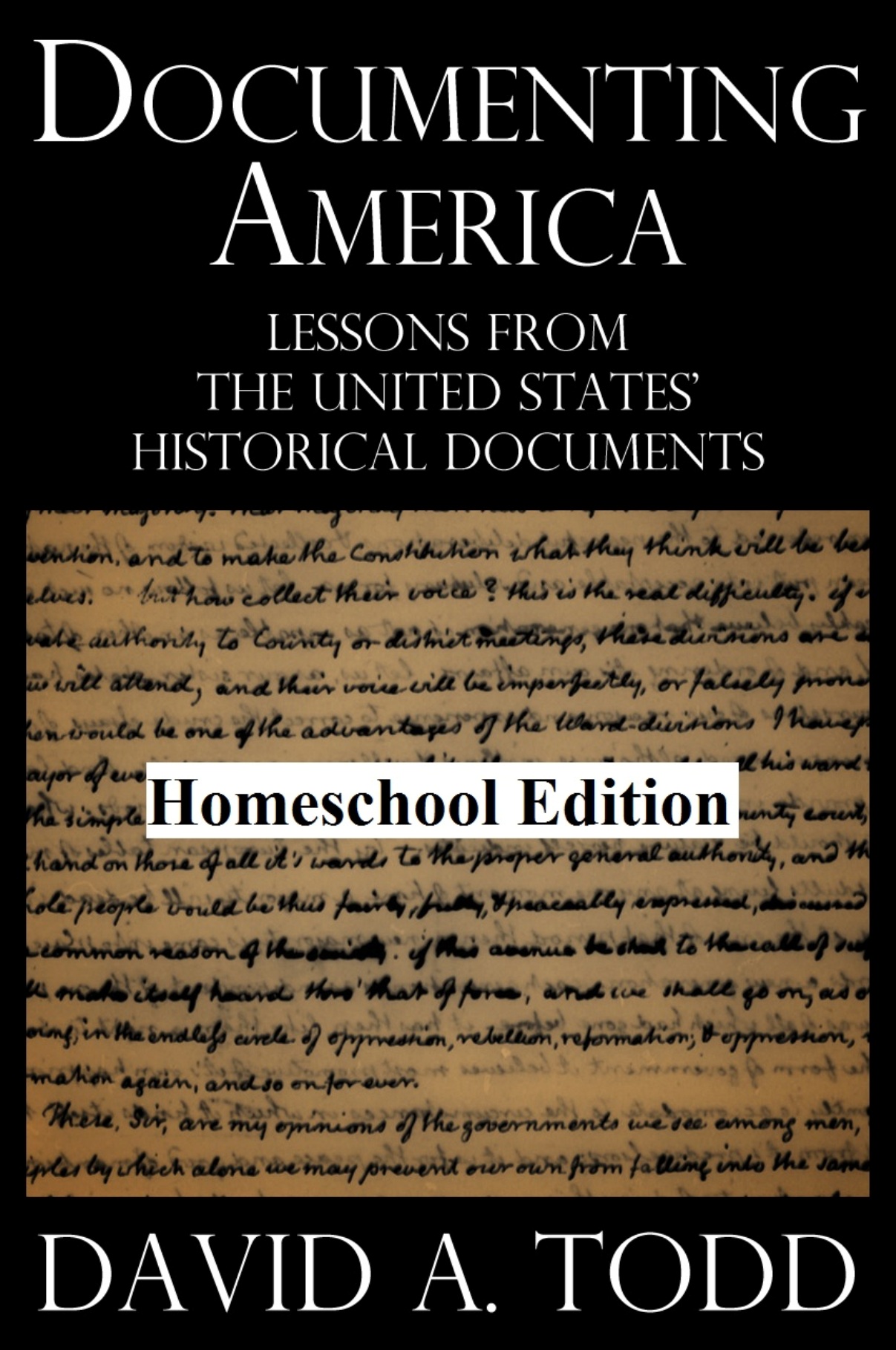
In 2011 I published Documenting America: Lessons From the United States’ Historical Documents. Then in 2012 I added a homeschool version of it. In that book I took documents from a variety of eras in

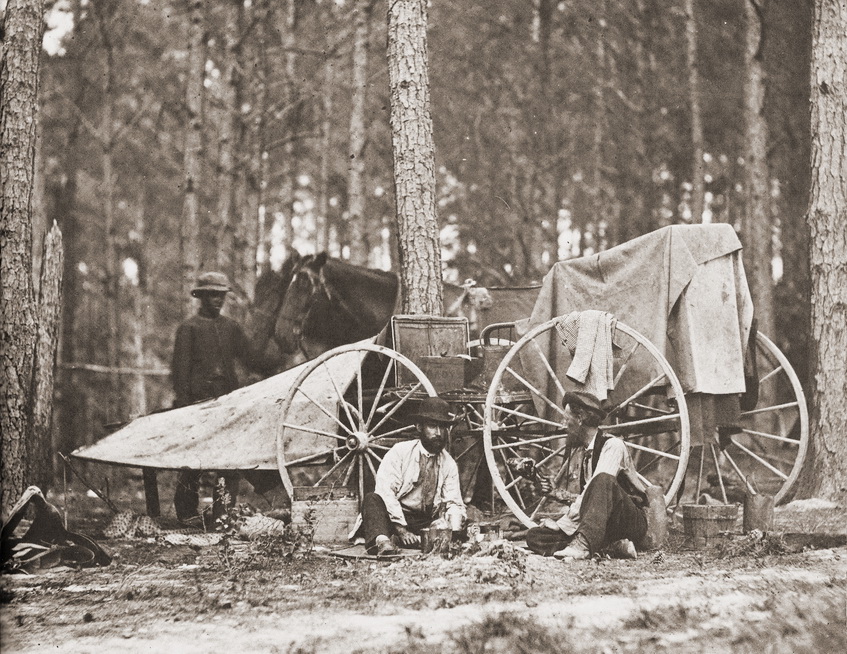
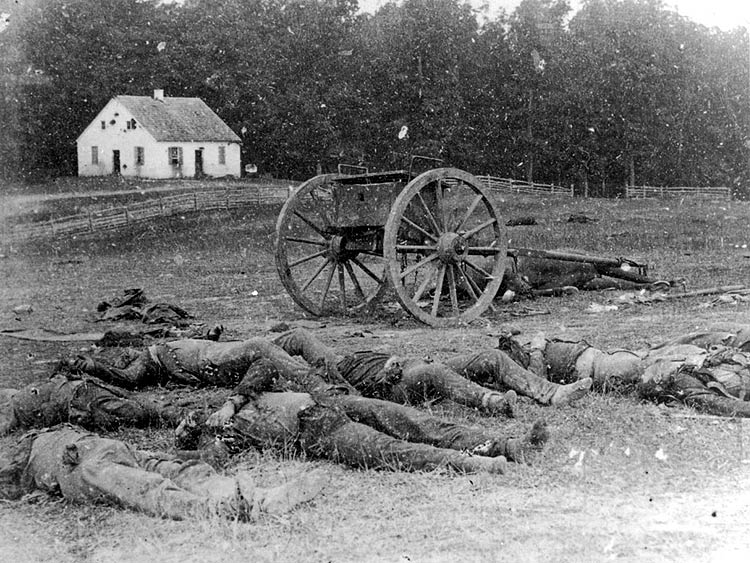
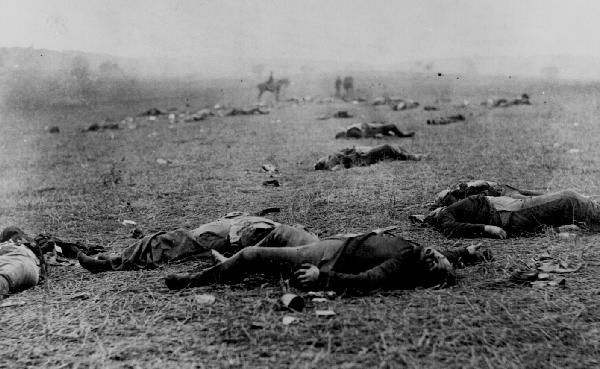
Mathew Brady did such a good job of capturing the Civil War in photos.

US history, excerpted them, commented on their historical significance, then tied them to an issue in our country at that time. My goal was to get people interested in reading original source documents, rather than just trust history books to give an accurate historical picture.


As I wrote that, I realized I could do that with a whole series of books. I had the whole of a four hundred year span to choose from for the next book. I decided to go with the Civil War. The format will be the same: choose a document; excerpt it; give historical context; tie it to a current issue. I found the writing more difficult, as writing about several military battles made differentiating those battles difficult. But I was able to persist, and completed the book about three weeks ago, having started it in 2014 but then laid it aside. This first round of edits left me pleased with it. At the risk of breaking my arm patting myself on the back, I think it does a good job of bringing historical documents to life. And, I think my historical context and issues comments are fine. I’ll do another round of edits, of course, but perhaps only one more. My guess is I’ll be publishing this in July.

Now, I’m going to paste in the Table Of Contents, so you can see what exactly is in the book.

1. A Merciless and Fearful Retribution: The firing on Fort Sumter, in the Charleston Mercury, April 13, 1861

2.  I Appeal to All Loyal Citizens: Executive orders and Proclamations issued by President Lincoln from April 15 to April 27, 1861

3. The Lamentable and Fundamental Error: Jefferson Davis address to the C.S.A. Congress, April 29, 1861

4. Interests of Transcendent Magnitude: Jefferson Davis address to the C.S.A. Congress, April 29, 1861

5. Exhaustion of All Peaceful Measures: Abraham Lincoln address to the USA Congress, July 4, 1861

6. Ballots the Rightful Successors to Bullets: Abraham Lincoln address to the USA Congress, July 4, 1861

7.  Shattered and Panic-Stricken: The Battle of Bull Run, in the New York World, July 21, 1861

8. The Wondrous Chain of Providence: Southern Presbyterian Church minutes, late 1861

9. His Virtues and His Merits: J.S. Rock Speech before the Massachusetts Anti-Slavery Society, Jan 23, 1862

10. Not Hastily, But Deliberately: Abraham Lincoln on Compensated Emancipation, March 6, 1862

11. Show Yourselves Worthy: Various Orders and Reports about the Battle of Shiloh, April 6-7, 1862

12. Be It Enacted: The Homestead Act, May 20, 1862

13. Disappointed and Deeply Pained: Horace Greely, editorial in the New York Times, against the conduct of the war, Aug 19, 1862

14. Worthy of a Better Cause: Report on the Peninsula Campaign, Stonewall Jackson, Aug 25-27, 1862

15. Such a Gigantic Scale: Wartime Finances in the North, October 1862

16. Sore Tongued and Fatigued: Various correspondence and reports, Sep 7-Nov 5, 1862

17. What Defeats Our Best Plans?: General Sherman on the press and wartime security, Feb 18, 1863

18. Instruments of Despotism: Vallandigham’s address at Cooper Union, Mar 7, 1863

19. The Peril of his Government: Lincoln re: habeas corpus, June 12, 1863

20. Merited a Better Fortune: General John H. Forney, Siege of Vicksburg Battle Report, July 10, 1863

21. On That Blood-Soaked Field: General George Pickett, letter to his wife, July 6, 1863; General Robert E. Lee, Gettysburg Battle Report, July 31, 1863

22. Repugnant To My Feelings: Louis Agassiz, letter on the fate of the freed Negro, August 9, 1863

23. When The War Trumpet Sounded: James Gooding, letter to Lincoln on equal pay for Black soldiers, Oct 12, 1863

24. Steps to a Great Consummation: Abraham Lincoln address to Congress on reconstruction, Dec 8, 1863

25. Unwise, Impolitic, Unconstitutional: A.H. Stephens on Habeas Corpus in the Confederacy, March 16, 1864

26. A Windrow of Dead Men: On the Wilderness campaign, May 1864

27. A Full Load of Responsibility: Sherman’s March to the Sea, November 1864

28. Unsurpassed Courage & Fortitude: Horace Porter’s account on Appomattox, Apr 1865; General Robert E. Lee’s final order to his troops, Apr 10, 1865

29. This Cup of Liberty: Abraham Lincoln’s Last Public Address, Apr 11, 1865

Thinking About Race Relations

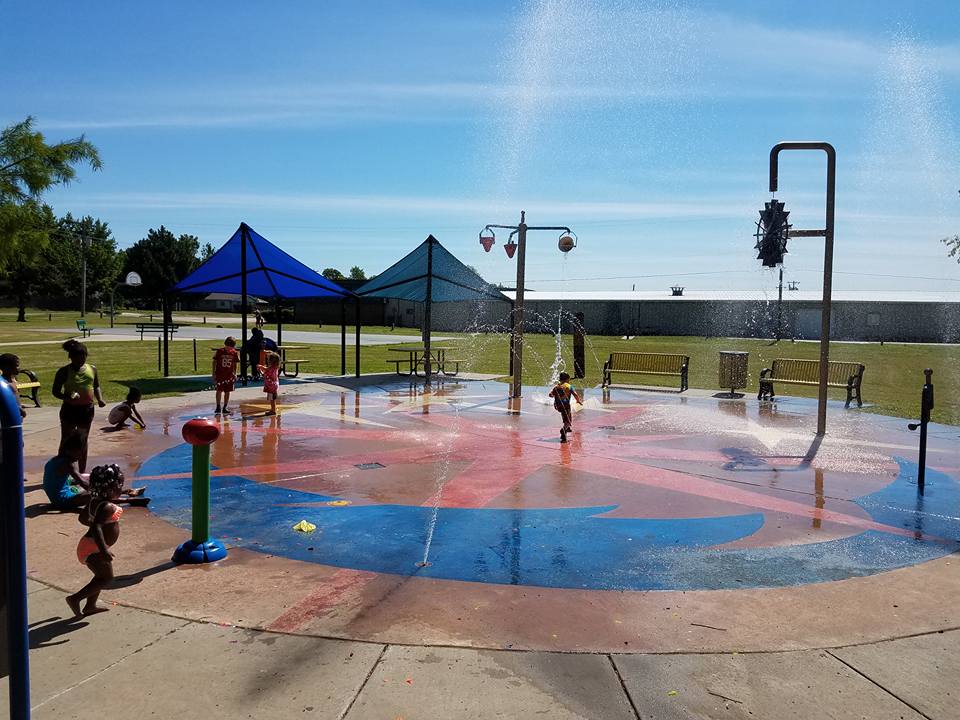
At the spray park on Memorial Day, there was no black or white—only people having a good time.

This past weekend, a four-day weekend for me, we went to Oklahoma City to be with our daughter and her family. We had missed a birthday weekend for two grandchildren earlier in the month, so we sort of made up for it with this weekend. Our time was full of typical holiday weekend stuff. I even slept out in a tent in the backyard one night with the three older grandkids.

One bad things that happened: When I woke up from a Sunday afternoon nap, sitting in a chair on their patio, with my head back against a pillar, my knee was hurting really badly. No reason for it. I didn’t trip, didn’t wrench it. Within three days it was back to normal, which includes some underlying pain until I get it replaced. Very weird. That’s actually not part of the story, but I thought you might be interested.

The story is my observations at the local spray park on Memorial Day. This is a neat park, across the street from the grandkids elementary school. We got there around 10:30 in the morning. No other cars were there, and the water wasn’t going. I thought perhaps the park was closed. However, I soon found out you turn the water on by rubbing your hand over a sensor. The water runs on a timer, and must be restarted every five minutes or so. I thought that was nice, with no wasted water. That’s quite good.

Within 15 minutes, other cars began arriving. Within an hour, the parking lot was half full and the park was awash with kids, of all ages, having a great time with the different jets, with spray guns and water balloons. In the two hours we were there, I didn’t see anyone hurt. We left there with three happy, but tired, kids, and two tired adults.

That’s not much of a story, you say, not worthy of a blog post. No, but let me finish. On this weekend, for reading material, I brought the printed first-draft of my work-in-progress, Documenting America: Civil War Edition. I started reading/editing it Sunday afternoon. I made good progress despite my nap and my knee. I was reading chapters I’d written almost three years ago, chapters about the early days of the Civil War, when the Union and Confederacy were laying out their war aims. Soon I’ll be reading later chapters. In all of these, race is a factor.

Race, first as in slavery, then as in segregation, all with the belief that the black race was inferior to the white race, and thus bondage for them was the normal condition. Short of that, segregation was next best. As I wrote in the book, the source materials I had to go through to write this were painful to read, and painful to write about. We’ve sure come a long way as a nation. I’m not saying we’ve come as far as we should, or can, but I’m glad for what progress we have made.

Which brings me back to the spray park. We were the first family there that day. The second family was a black woman with four children. Later conversation revealed one was her child, three were nephews or nieces. The third and fourth families were black. The fifth family was white. After that I lost count, or rather didn’t bother to count, because I didn’t really care. I was so happy that the white and black race can mix like that. When the park was quite well populated, I’d say the races were pretty well balanced. No one seemed to care. Splash and play  feels about the same for whites as it does for blacks.

I thought of how fifty or sixty years ago, spray parks like this would have been segregated, and wouldn’t have been built in black neighborhoods at all. Yes, we have made progress.

I’ll get through this round of edits, print it again, and read it again. I’d say I’m a little more than a month away from having a finished book, ready for publication. The pain of reading the old, racist materials will pass. Hopefully the words I added to the source words will make a difference with someone, and will improve race relations just a little. That’s what I hope for.

Money and Creativity

I regularly read two publishing industry blogs to keep up with the news and opinions. One is Between The Lines, the blog of the Books & Such Literary Agency. This agency serves the Christian booksellers market, and could be considered closely aligned with the trade (sometimes called traditional) publishing model. Their five agents rotate through the week with a daily post. The other blog I read is The Passive Voice. This is by a lawyer who re-posts and sometimes comments on news from the publishing industry. This blog is closely aligned with the self-publishing model. Both blogs have a community of readers/commenters, and I comment at both blogs from time to time.

Creativity comes in many sizes. Sometimes it even comes inside the box.

Being part of the self-publishing industry, I tend to be more in agreement with TPV than with BtL. I keep reading the latter, however, because I want to keep up with news and trends in the other side of the industry. I’ve tried other blogs, but find BtL as easy to read, and it provides an adequate sampling of what I’m looking for.

So, all that said, I recently read this on the BtL blog:

“The need for money is the bane of art. Oh for the days of good old-fashioned patrons of the arts. Writing for the paycheck is the fastest way to kill a career. Each book needs to be better than the last, if we’re to build over time.”

This irks me. “The need for money is the bane of art.” How? How is commercial viability a bad thing, but whatever is not commercially viable a good thing? Commercial viability (a.k.a. artists making money off their art) indicates people are willing to pay to own or use the art. This, in turn, is a reflection of what society believes is good art. The inability of an artist, by which I mean anyone who does artistic things as a career, which would include writing, to sell his art indicates that society doesn’t believe he’s producing good art. Who is a better judge of what art is good: society, or the artist who produces it?

The writer of that phrase is implying that the need to produce art that society will accept as good and pay for somehow compromises the artist’s creativity. Follow the supposed train of thought by the artist: I need to feed myself and my family. No one’s buying the art that I produce, even though I think it’s good. But they are buying that [genre of book; type of painting; method of sculpture; etc.]. So maybe I should just emulate that artist and produce art I don’t this is good so I can feed my family. I guess I won’t be able to produce the stuff that I think is good but which society apparently doesn’t think is good.

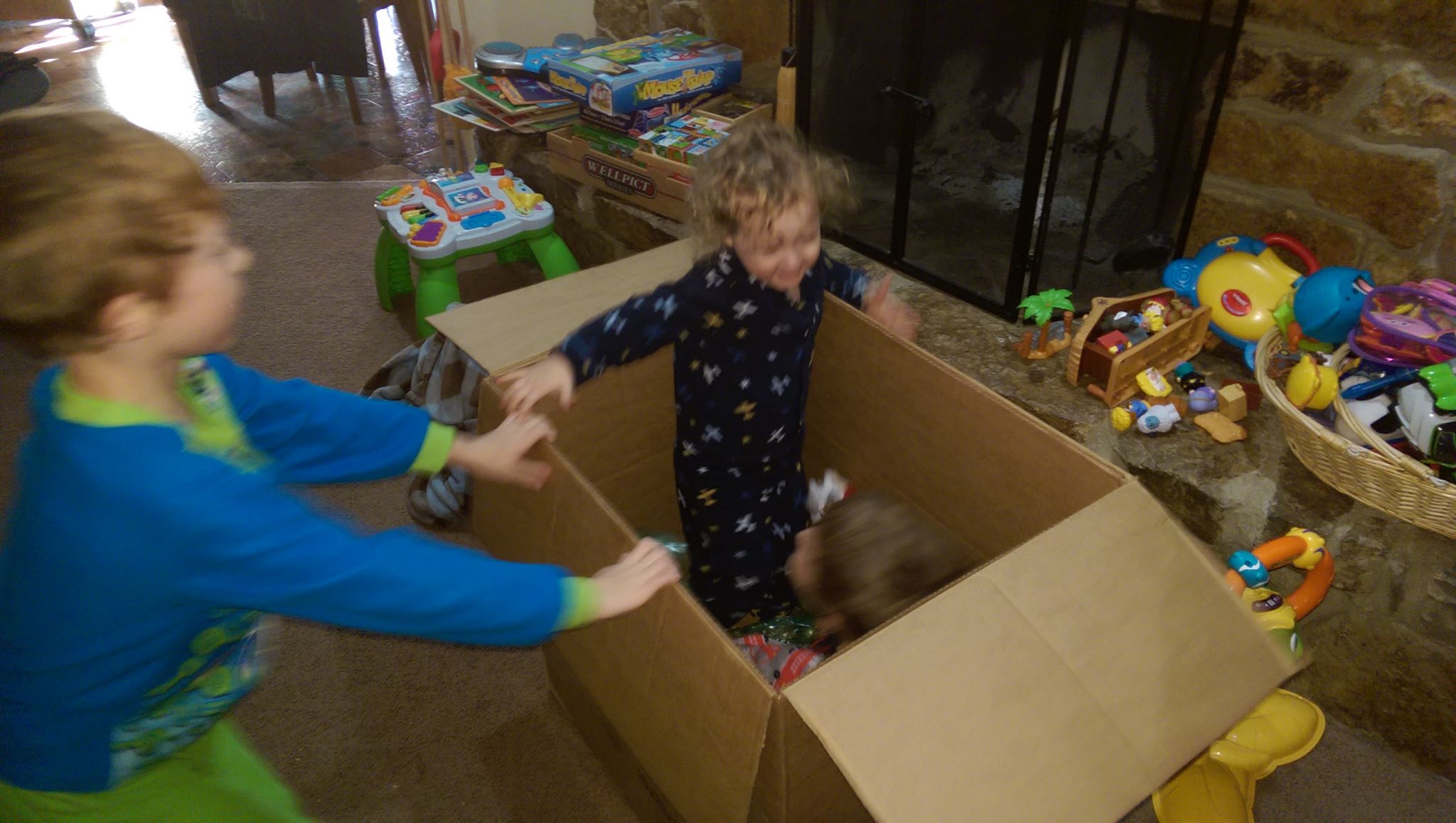
Kids know. Sometimes playing inside the box is better than all those toys outside the box.

What’s the solution to this? The original poster said, “Oh for the good old-fashioned patrons of the arts.” Their solution: For the artist to find a source of Other Peoples’ Money, to allow them to produce art they believe is good, even though no one wants it. And this is supposed to free the artist to produce whatever they believe is good. This is supposed to advance the arts, to produce stuff that people think isn’t worth paying for?

I could go many ways with this. Is artistic creativity really stifled by having to produce art that people want to buy? Cannot an artist be creative while staying “inside the box” or “between the lines”, or within the range of commercial viability? I think they can. I’ve said often before that my favorite type of poetry is formal poetry. Give me a sonnet, a ballad, a haiku, or a cinquain any day. Give me those constraints, and I’ll produce something with artistic creativity. Inside-the-box creativity is equally creative as outside-the-box creativity.

It always amazes me that people want to pigeon-hole creativity by saying it can only happen outside the box, and that it can’t happen on the lines. It’s funny that, in wanting the maximum artistic freedom, they say creativity can only happen one way. Once again, I reject that. I believe my creativity is best released by being presented with boundaries, and, since my art is the written word, finding words that do something new and different within the boundaries.

That’s my opinion, and I’m sticking to it. Any comments?

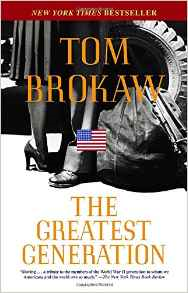
Book Review: The Greatest Generation

I'm glad I finally pulled this from my reading pile and read it. Time well spent
I’m glad I finally pulled this from my reading pile and read it. Time well spent

Back in 2012, when I was writing The Candy Store Generation, I went looking for books about generational identity. Of course I was familiar with Tom Brokaw’s The Greatest Generation. As I did my study, I found that just about everyone had adopted Brokaw’s appellation to that bunch of Americans born between 1900 and 1924. Some extend it all the way to 1939 or so, but Brokaw is clearly talking about those who experienced the Great Depression and led the effort in World War 2, or who fought in it. Yes, many born after 1924 also fought in it, as teenagers. I wouldn’t argue against including them.

As I was studying, I picked up a used copy of TGC, read enough of it to be able to pull some information from it, then set it aside and went back to higher priority stuff on my reading pile. After finishing A Generation of Sociopaths, I decided the more opportune time had come. I found TGC in my reading pile, and went through it in a little more than two weeks.

It’s an excellent book, and its place in the history of America’s story won’t be enhanced or diminished because I review it. The reading is easy, and Brokaw does a good job of weaving short bios of men and women who served in the war into the war story itself. He doesn’t stop there. He tells us something of their lives before and after the war. In some cases  the post-war story was much longer than the description of the war service.

I do have a few criticisms, however. Almost everyone described in the book was an officer. A few began as enlisted men, then were promoted in the ranks. I would have liked to have learned something more about the experiences of the dogfaces in the battle line. Then, the field of journalism is over-represented among the stories. In the part about famous people who served in the war, such as politicians and CEOs, he pulls almost half of them from the ranks of famous journalists. I suppose that’s understandable, given that Brokaw is a journalist. He would of course have more contacts in his own field, and would have an easier time getting those stories, and a greater interest in them. Still, knowing more about a few policemen, construction workers, bus drivers, and factory workers would have been nice.

One the other hand, Brokaw does a nice job of covering issues of racial prejudice, in the country and the military, as well as the limited opportunities for women to serve. He does this in a non-critical way, yet makes it clear he wishes it had been otherwise, and is glad that progress has been made in both areas. I thought this part of the book was very, very well done.

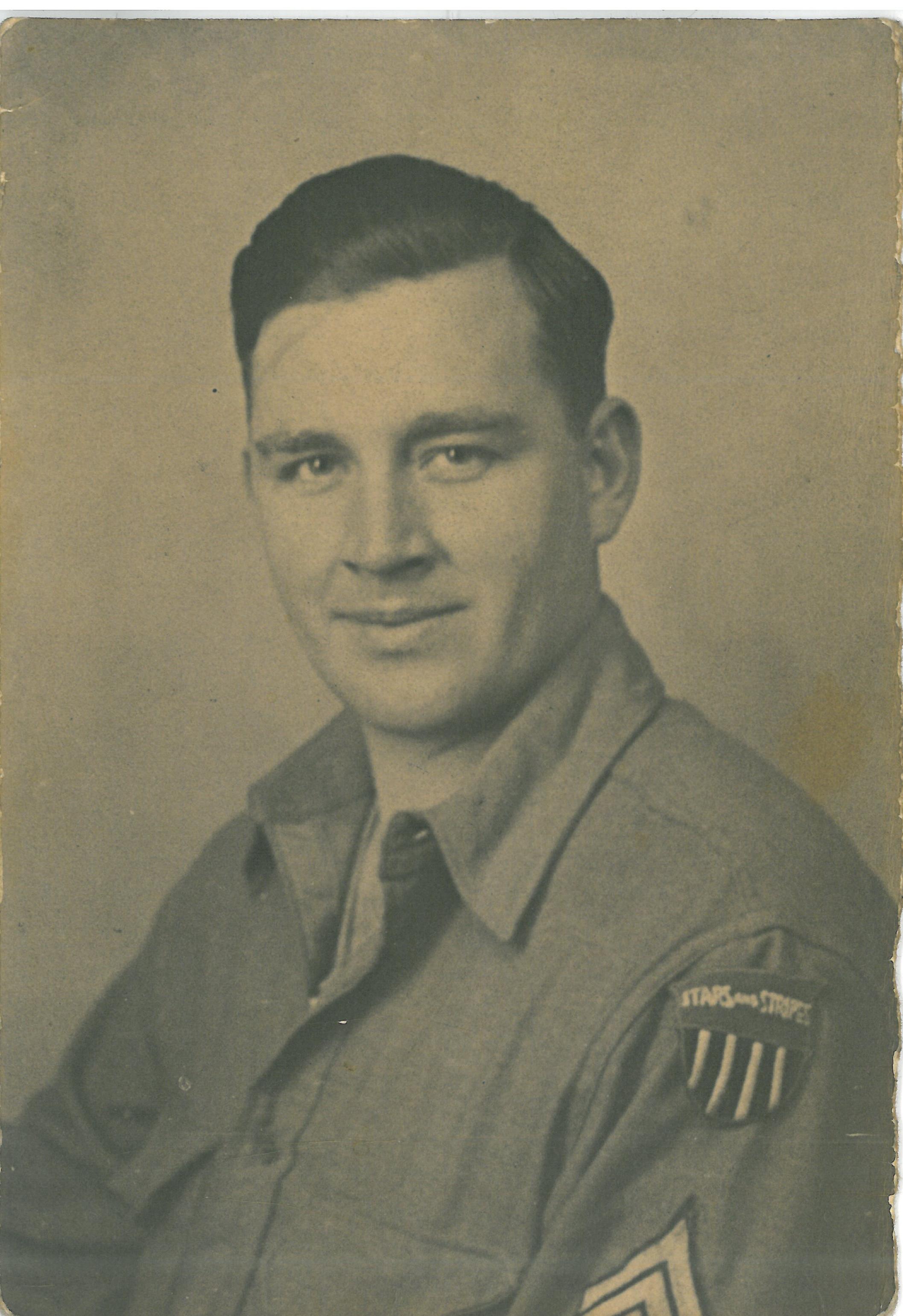
Thinking again about the officers vs enlisted men, or the famous vs the obscure, I offer up my dad as an example. He started out the war as a dogfaced private. Shipped first to England then to North Africa, he wasn’t in the first wave. He was scheduled to be in the invasion of Italy, but was pulled off the LSI in Tunis at the last minute to go work the Stars and Stripes, setting type for them—his pre-war occupation. His service the rest of the war was for his fellow soldiers, getting the news to them, helping them to keep up morale.

A wartime portrait, probably 1944. HIs "Stars & Stripes" insignia shows.
A wartime portrait, probably 1944. HIs “Stars & Stripes” insignia shows.

Dad was closely associates with Bill Mauldin, the cartoonist. For a good amount of time they were in the same S&S office, I think in Italy, but for sure in southern France, and at the end of the war. Mauldin is famous for his Willie & Sam cartoons, of two common privates who found humor in war situations. It’s said that General Patton didn’t like those cartoons, for they showed soldiers who were not our best. Yet, the S&S brass must have realized the soldiers loved them, for the cartoons continued.

My dad played a part in this, as Mauldin often had Dad pose for him. Most likely another soldier was involved as well. I can’t look at a Willie & Sam cartoon and help but wonder, “Did Dad pose for that one? Is that a drawing of Dad?” Dad spoke of Bill often, yet I don’t believe they had contact after the war. After Dad died in 1997, I thought of trying to find Mauldin to let him know, but never did. He died in 2003, the same age as Dad.

I’ve rather gotten off the track here, haven’t I? This is supposed to be about TGC, not my dad. I thought of it because, in the last chapter, Brokaw touches on Mauldin’s work at S&S during the war. That made me think of Dad, and since I was already thinking Brokaw had somewhat shortchanged the enlisted man, made me further think it would have been nice to have had Dad’s story in that, or one of the other 8 million like him.

If you haven’t read TGC, I recommend you do so. It will give you a greater appreciation for those who came before us, and in some cases were our parents. I’m starting to reduce my library, and am being more selective about the books I keep. This one I’m keeping, however. Hopefully Lynda will want to read it. I don’t expect I’ll read it again, but you never know.

On Confederate Civil War Monuments

After I published "Documenting America: Lessons From the United States' Historical Documents", I also published a home school edition of it.
After I published “Documenting America: Lessons From the United States’ Historical Documents”, I also published a home school edition of it.

The book I’m currently writing, Documenting America: Civil War Edition, is currently sitting on a chair in our kitchen, waiting for me to get back to it. I finished it about ten days ago, and I’m letting it sit a while, giving me space and perspective, before I start the editing process. I anticipate the editing will take two or three weeks. Then publishing tasks can begin.

Meanwhile, the Civil War is back in the news. Several Civil War monuments are being removed in the City of New Orleans. These are monuments to Confederate leaders, such as Robert E. Lee, Confederate General. This follows several other places where similar monuments have been removed.

I have mixed feelings about this. Since the reason the states that formed the CSA withdrew (i.e. seceded) from the USA was because they wanted to preserve slavery, those monuments are in essence to those who wanted to preserve slavery. Those descended from slaves naturally are appalled that, in the 21st Century, we are still honoring those who enslaved their ancestors. Those who weren’t descended from slaves, but who align with those who brought pressure for abolition, are also appalled. I think I understand their concerns.

On the other hand, some say those monuments don’t mean the same today as they did when they were first erected. Now, they are simply recognition of those who loved their country, even if their views of what that country did were misguided. They say: Would you also removed monuments to George Washington and Thomas Jefferson, both slave owners from the south? They have a good point. Washington and Jefferson didn’t take part in rebellion. Oh, wait, they did: rebellion against England. But, that was a good rebellion, working for a government that would protect the natural rights of man, a.k.a. God-given rights. So that’s different.

It won't belong before I start work on the cover for this next "Documenting America" book. I hope to get a good photo from a nearby Civil War battle field.
It won’t belong before I start work on the cover for this next “Documenting America” book. I hope to get a good photo from a nearby Civil War battle field.

I have a different view of it. Those monuments have become history books in their own right. By destroying the monuments, we are destroying history books, and trying to expunge history. Is this a good thing?

At one time I thought, “History is history. It is what it is: just a bunch of facts, and dates, and actions by people that happened, and are passed down to those who didn’t experience them.” Then I started writing about history. And I read much by others, both history books and how-to-write-history books. And I learned that how a historical event is treated in a book depends on how the writer does his research and puts the book together. Facts are facts, but you can ignore some and over emphasize others. You can twist some into your opinion mold and make them say something different than what another writer will say about the same fact.

So history isn’t really history. All history is interpretation of what happened in the past. Sometimes it comes with an agenda. Sometimes it comes with a preconceived notion that the historian has been able to make sure you see in the work, causing you to think “Oh, sure, it’s obvious that’s how it was.” However, if you read a book by Historian A instead of Historian B, you would get a completely different picture. I wish it wasn’t so. I wish history was history. But, alas, it’s not.

Back to the Confederate monuments. They represent a dark time in our history, a time when a few white people thought they had the right to enslave a bunch of black people, and to go fetch more black people through an illegal trade. The monuments were meant to honor that dark time. Now we know better. Why not use that to our advantage, keep the distasteful monuments, and use them for a different purpose?

Imagine this, with the monuments still standing. You’re in New Orleans, with your young children or grandchildren. You come across the monument of Robert E. Lee. Your child asks, “Who’s that man up on that horse?” What a great teaching moment that is. “He’s a man who thought it was okay to enslave people simply because they were of a different race. He might have been a good man at heart, but his actions were to perpetuate a way of life that had one race the masters and one race the slaves. This monument was once put up to honor him, but now we know it’s here to help us to never forget just how evil that practice was.”

Now THAT would be a great moment. That would be a great monument. Turn its purpose on its head and make it mean the exact opposite of what it was intended for 140 years ago, or whenever it was erected. How much better that would be than removing it.

The old cliché goes, those who don’t learn history are doomed to repeat it. Well, those who expunge history won’t learn from it. As a result, we may not learn the evils of slavery as we should. Slavery won’t return, I don’t think, but what other evil practice may happen as a result of us not having that history before us, right in our face, forcing us to confront that dark past?

It’s something to think about.

Friday Snuck Up On Me

So here it is Friday morning. I’m in my quiet time at work, the hour between 7 and 8 a.m. that I call my time. I get in early to beat the traffic, heat up my breakfast (I bring 5-day’s worth on Monday), grab my first cup of coffee, and then have a quiet time at my desk. I read a chapter in the Bible, and pray, then go through various writer/writing sites on the internet. If I have any stock trades on, I also check the pre-market conditions. Then, I’m ready to start my workday.

Usually I have an idea for a Friday blog post by Tuesday. I think I did get an idea on Tuesday, but didn’t write it down. Then the week became full. Every day I had meetings, and people needing help on projects, and meetings—I guess I already said that. And I had construction specifications to write, something I enjoy doing but which tends to take a fair amount of brain power.

So, I came home every day pretty much exhausted, both of mind and body. I fixed supper (mostly heating up leftover and adding something to it), and then found it hard to concentrate on doing anything. I kept up on paying bills, wrote letters to my two oldest grandsons, and read some each night in my current read, The Greatest Generation. But I spent no time on a blog post, and had no return of the idea from Tuesday, and no new idea germinate.

I also had two after-work functions this week. Wednesday was a Vision Summit at church, related to our current building project and capital campaign. I missed it a couple of Sundays ago, being prepared to teach Life Group only to have no one show, as they were all at the Vision Summit. Then, last night, the Chamber of Commerce’s monthly “Business After Hours” event was at our office, which we also made an open house. Our remodeling is done, we spiffed up the place, and over 100 people came. It was hot and crowded in our break room, where the people and hors d’oerves were. I took a couple of clients on a tour of the office. Ate more than I should have, and got home around 7:00 p.m.

At that point I collapsed in my reading chair for almost an hour, alternately dozing and doing nothing. Went to The Dungeon, but couldn’t concentrate on anything, so came back upstairs to read. Kept looking at weather radar, because a line of storms was coming toward us, out of Oklahoma. Went to bed around 11:15 p.m., after packing my lunch for today. No sooner had I gone to bed than the phone rang. It was an emergency services auto-call (to which we’re subscribed), saying we were in a tornado warning.

And not just one warning, but two overlapping tornado warnings. So I got up, turned on a local TV channel that had gone to all weather reporting, and watched. The storm moved quickly, but radar didn’t show the “hook” pattern that you typically get when tornados form. It was a straight wall coming toward us. The TV news folks said that threat was starting to diminish. At places west of us, the winds were strong, but no one reported actual rotation. Still it’s hard to tell that at night, so I stayed up till 12:15 a.m., till it was clear if we would have to rush to the basement or not. It turned out to be not, a non-event. So I went to bed, fell asleep quickly, and slept soundly till I woke up with a start and checked the bedside clock: 5:57, three minutes before the alarm would go off. I got up and started my day.

Now here I am, it’s time to start my workday, and I still have no idea for a blog post. So I’ll wrap this up, and try to come up with something for my Monday post, instead of random blathering about my week.

No Post Today

After a busy weekend, I don’t really have time to make a post today.

Friday night I was able to get another chapter done in Documenting America: Civil War Edition.

Saturday was full of yard work, filing of papers, updating of checkbooks, shopping for groceries, and so many tasks that tucker a 65-year-old fellow out.

Sunday was church, of course, followed by lunch at home (rather than take the wife and mother-in-law out into the restaurant chaos that comes every Mothers Day), followed by reading and a nap. Followed by writing time in The Dungeon.  I managed to get two more chapters done in the book. That leaves only one to go. I had hoped to complete all three this weekend, but that was a bit much with all I had going on.

By the time I completed the second chapter on Sunday, I had no time to write a blog post. My mind was mostly fried at having to somehow pull those three chapters together over three days. I couldn’t decide what to blog on next. So, instead of deep insight from me on some burning issue, you get this non-post post, a mere 214 words.

Happy Mothers Day, belated on Monday, for all moms reading this. I hope it was a great one.