All posts by David Todd

Wisdom from Dad: Track Your Finances

Post #2 in my Wisdom from Dad series

About 1934
About 1934

My dad was strongly shaped by the Great Depression. Born in 1916, he went to school only through 8th grade. If he entered school at the normal age we think of today, and progressed on schedule, that would mean he “graduated” about 1930. The worst of times was yet to come, but it was pretty bad that year, with no hope for relief in sight.

At some point Dad went to work for “Old Man Angel”, on his farm in East Providence, probably in the Riverside area. Dad said he earned “a dollar a day plus my dinner.” I’m not clear, so long after Dad told me that, whether this was the job he got after he left school, or if perhaps this was a summer job while he was still in school. I don’t know if that matters. He worked five full days a week, plus a half day on Saturday. What did he do with his $5.00? Took it home, gave $4.50 to his mother for support of the family (he had four younger siblings), then went to Labby’s store. There he took his 50 cents and bought his treat with it. He alternated between as many grapes as 50 cents would buy, or as much ice cream as it would buy. He sat outside the store and ate the grapes or ice cream.

This is the story Dad told, more than once. I believe him. Dad didn’t stay out of school. He soon entered trade school to learn the trade of linotype operator. Hot lead machines that set the type for newspapers or magazines. I’m not sure how many years this school might have been. Dad learned his trade and learned it well. As soon as he graduated from trade school, he went to work at

At his linotype machine in Europe, between 1943 and 1945

the Delmo Press in Pascoag, R.I., working there until he went in the army for World War 2, and for a brief time after the war till he went to work for the Providence Journal.


My guess is Dad probably graduated from trade school around 1933 or 1934. This was now some of the darkest days of the Depression. No doubt Dad felt himself fortunate to have a job, and to keep it. They say the Depression shaped the Greatest Generation into being a frugal lot. My dad was an extreme case of this. The young man of 1936 would not have sat outside Labby’s store and eaten 50 cents of anything in one sitting. He would have denied himself any treat and put the 50 cents in the bank. He was that way until he died in 1997. After Mom died and we kids were out of the house, he lived cheap.

How cheap? I could write post after post of how he lived. I’ll give two examples. He did the coupon thing at the grocery store. I imagine he’d love the couponing shows we have now. But, not only did he use many coupons, he tracked his savings, writing down how much he saved and keeping a running total each calendar year.  On our phone calls he would often say what his current amount saved for the year was. In true frugalness, he didn’t keep this on a pad of paper. Pads were something you bought new. Dad would never be so extravagant as to do that. No, he took envelopes he received in the mail—bills or junk mail—slit them open, and used the inside and back of the envelope to keep his tally.

The other example was how he would look for dropped change on the ground, usually when he walked his dog. He knew where to look. At the gas station he looked around the air pump and vacuum machine. “Especially after the snow melts,” he told me. Around the newspaper box was another place. It always surprised him how people could drop money and not be bothered to bend down, search for it, and pick it up. But other people’s carelessness was his gain. And, he tracked how much money he found on the ground—and wrote it and added it, you guessed it, on the back of an envelope.

That was all introduction. With us kids, our allowance started when we were 8 years old (I think he started my younger brother a little younger, with a smaller amount). At 8 we received 25 cents a week. It wasn’t a gift. We did chores for that. It doubled every two years, so that at 10 we received 50 cents, at 12 a dollar, at 14 two dollars, and at 16 the whopping sum of $4.00 a week. It stayed there so long as we were in school, even if we had a job. As soon as we left school, the allowance stopped.

As soon as we received the allowance, we had to keep track of our money. Dad made each of us three kids matching banks, just different enough that we could tell which one was ours. Each Thursday, which was his payday, we had to present our “accounts,” and, if the total in our little notebook didn’t add up to the amount of money in the bank, we would not receive our allowance.

You think I’m joking? Not one bit. Week by week, year by year, for eight years, we kept our accounts, and Dad checked them. If we had a discrepancy, we made sure to find it first, figure out if we had bought something we’d forgotten to write down, and wrote it. Each entry had to have a date. Now, before you think Dad was hard on us, I think he often relented when our money didn’t add up. He would help us to remember where it went. Or, if we lost money, he would allow us to write “lost” and an amount, recalculate, and give us our allowance, with a promise to do better next time.

When we reached 16, and our allowance went to $4.00 a week, we no longer had to account for our funds to get our allowance. Dad wrote in our books, something like Your 16 now. If you haven’t learned how to handle your money by this time, I can’t help you any more. And, he added encouragement to be frugal, responsible, and disciplined in our approach to money.

I can’t tell you how happy I am that Dad put us through this discipline. I won’t say I’ve done it as rigorously now as I did when the every-Thursday reckoning came around. But I still track my funds. I still balance my checkbook. If the amount is off by even a penny, I search until I find the mistake. I keep a spreadsheet of every non-cash purchase, but including cash withdrawn, and put them into categories, add them up. If they don’t match the total in the checkbook, savings, and H.S.A. account, I have to find the discrepancy. I kind of wish I had saved my account notebooks (they were small—the kind that fit in a shirt pocket—and my bank. They would be nice keepsakes now.

I wonder if my biggest failure as a parent was that I didn’t keep this discipline with my children. Of course, for a time their accounts would have been in dinars and fils, rather than dollars and cents, but, hey, it’s still money. Maybe, even without this, I transferred some sense of the right way to be disciplined with money. I hope so.

My Church History Fiction Series

Kindle Cover - DLA 3
“Doctor Luke’s Assistant” is available for most e-reader devices

My first novel—and book—was Doctor Luke’s Assistant. Begun December 2000 and finished January 2003, I intended for this to be a stand-alone book. I had a story to tell, a story that came to me as a result of years of Bible study and a couple of years of daydreaming. Never did I think I would someday try to have a writing career. I had a story to tell, nothing more.

But, as I started to shop DLA for publication, I soon learned that publishers didn’t want to publish a book. They really want to publish a writer who wants a career as a published author. That meant I had to have another book. And then another, and another, till infinity, death, or the apocalypse. I went back to brainstorming.

The next books that came to me were my first baseball novel and my poetry book. Nothing came to mind concerning a follow-up to DLA. Nothing at first, that is. Eventually the brainstorming came back to it, and I thought of another book, a sequel. Thus Preserve The Revelation was born. The idea came to me probably around 2009-2010; I don’t remember exactly. For sure it was by 2012. PTR would feature Augustus, the point-of-view character from DLA. He would be called to help the apostle John write his gospel, then later The Revelation. It would involve his sons in kind of a torch-passing event. This sequel was on my radar and in my mind for those several years. Finally the circumstances were right to write it, beginning last October and ending January 14th. It’s currently waiting for me to come back to it and edit it, then publish it.

As I thought about PTR, and the need to have a constant supply of books for the publishing mill (even though by this time I had decided to go the self-publishing route), and, as I read various documents preserved from early church history—something I do for enjoyment and edification, other possible books in the series came to me. To explain exactly what I mean by this, I need to briefly describe a little more about DLA for those who haven’t read it.

The premise behind DLA is that Luke goes to Judea to write a biography of Jesus. He hires Augustus, a Jew from a family that has given up on Judaism and embraced Roman ways, to assist in the research. The story is told from Augustus’ point of view: the research, the writing, the troubles with both Jewish and Roman authorities. In the end the gospel of Luke is written, though it’s nothing like what was originally intended.

So the story is how a lowly clerk/scribe, called an amanuensis back then, should have a big impact in telling Jesus’ story. That’s the same theme carried into PTR, with Augustus and his sons playing the same role, with similar results. As I brainstormed more books, I realized the number of documents in early Christianity, documents which survive in whole or in part, or which are referenced by just slightly later documents, is large. How large? In just the First Century and the first half of the Second Century, potentially eight to ten over and above the scripture. To the end of the Second Century might add that many more, and more and more as each century progresses. In the first four centuries I would probably have 100-200 documents to choose from.

I eventually developed a plan for the series from this. At present, the plan is for only eight books, taking it from the early New Testament era to the middle of the First Century. Here’s a list of the books in chronological order. Given that the first book is a prequel, I’m obviously not planning on writing these in that order.

  • Adam Of Jerusalem: Backstory for Augustus’ family. The document(s) in question will be those thought to be the sources for Matthew and Luke in writing their gospels, the Passion Narrative and “Q” (Jesus’ sayings/teachings). Time frame: 39-40 A.D. Main character: Adam, Augustus’ father. His decision to leave Judaism and embrace Roman ways will be part of the story.
  • Doctor Luke’s Assistant: Explained above. Time frame: 63-66 A.D. Main character: Augustus
  • The Sayings: The writing of the Didiche, the sayings of the apostles. Time frame: 70 A.D. Main character: Augustus
  • Preserve The Revelation: Explained above. Time frame: 95 A.D. Main characters: Augustus and his sons
  • The Corinthian Problem (tentative title): The writing of “1st Clement”, an epistle written in Rome to the church in Corinth. Time frame: about 100 A.D. Main characters: Augustus’ sons, Adam and Daniel.
  • Ignatius of Antioch: The story of Ignatius being marched from Antioch to Rome, to his martyrdom, and the epistles he wrote during this trip. Time frame: 111 or 112 A.D. Main character: Augustus’ son Daniel
  • The Heretic: The story of Marcion, a Christian of the day whose views were eventually determined to be heresy. Time frame: 140 A.D. Main character: uncertain at this time. It may be one of Augustus’ descendants, or may be another family of scribes—or both.
  • The Martyr: The story of Polycarp, especially his being martyred. This story will actually tie in with Preserve The Revelation. Time frame: 150 A.D. Main character: uncertain, but one of Augustus’ descendants.

Some of the dates above are approximate. I’m writing this blog post from memory of past research. Oh, and a ninth book from this era might be The Shepherd.

So eight (or nine) novels planned at the moment. One written and published; one written and awaiting publication. Four I’ve been thinking of for at least three years. And three that came to mind in the last six months. That ought to keep me busy for a while, especially when all my planned books in other genres are factored in. If I get most of these eight or nine written and published, I’ll have time enough to extend the series to the next hundred years of church history.

Writer Interview: A.D. Vick

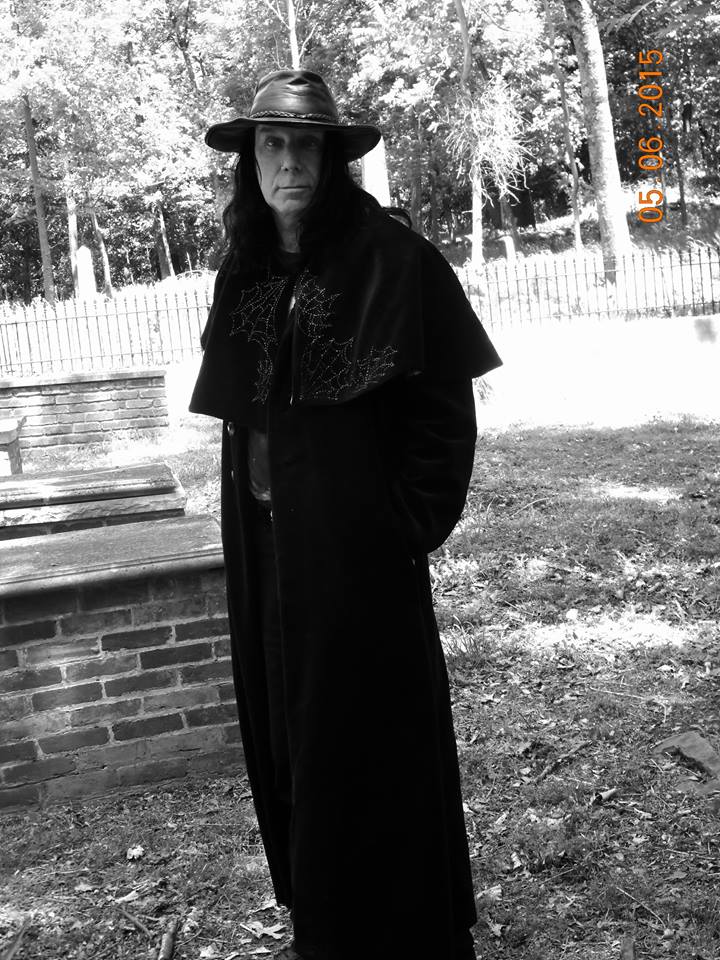
Al VickEvery family probably has a writer or two in it. Previously I’ve interviewed a first cousin who is a writer and who’s published her books. Today is an interview with another cousin, in this case a second cousin, A.D. Vick. A.D.’s dad and my dad were first cousins. They spent a lot of time together growing up, and were in touch regularly as adults. It helped that our two families attended the same church, the Vicks sitting right behind the Todds on the first and second pews, left side.

A.D. is the oldest of three children, and three years ahead of me in school. We saw a lot of each other before college years, even at the shore in summers. I remember visiting his grandfather (my great-uncle) a number of times while his family was there also.

A.D. was from Providence, Rhode Island. In the late 1970s he moved to Fayetteville, Arkansas, and has lived there ever since. I got to northwest Arkansas in 1991, but didn’t know he was 30 miles down the road from me, something I learned in 1997. It wasn’t until May 2016 that we saw each other, though through the miracle of Facebook we had reconnected earlier than that.

At some point I learned A.D. was a writer. His tales could be considered part of the goth subculture, that…well, I think it’s best now to let this be in his own words.

You state you are part of the Goth Culture. But many people don’t really know what that is, or they think of it as a teenage phase. Can you give us a quick summary of what it means to be Goth?

Vick: Modern goth culture grew out of the post-punk movement during the early 1980s in Great Britain. The music that came to be called goth rock and dark wave had a darker feel to it than the better-known new wave that enjoyed a lot of popularity at the time. If the goth culture has a theme song, it would have to be Bela Lugosi’s Dead, by Bauhaus.

Goths in general, see beauty in darkness and accept darkness as a part of life. Yes, many enjoy the macabre, like to spend time in cemeteries (as do I) and enjoy dark fashion, which exists in great diversity. We are a harmless lot however, and would rather spend time reading, watching horror movies, drinking tea in graveyards, or writing poetry than causing any trouble.

Contrary to belief, there is no age limit to goth. While there’s little doubt that for some teenagers, goth is just a phase, many embrace the culture for a life time. It’s who they are.

Al Vick book thumbnailYou have a book out, Tales of Dark Romance and Horror. Tell us a little about it. How did you come to write it?

Vick: I see Tales of Dark Romance and Horror as sort of a documentary on my writing style. The book contains 12 short stories and one novella. I’m a romantic at heart and most of the material in the book reflects that. Still, I can look at the work contained within its pages as a reflection of my evolution as a writer.

My greatest literary inspiration is Edgar Allan Poe. I can vividly remember being stretched out on my bed reading his fiction as a child, and I firmly believe that it was he who inspired me to stay firmly in the realm of the short story. Other inspirations include H.P. Lovecraft, Anne Rice, and Charles de Lint.

I can still remember being taken somewhere with my parents as a child and at times, sitting and writing fiction to amuse myself. I always enjoyed writing and have indulged myself in many different aspects of that craft over the years. Still, I really like using grammar and punctuation creatively, which is something you simply cannot do if you’re doing technical writing, for example. So, between my love of fiction, my enjoyment of the macabre, and my love for romance and the creative use of language, I decided to write the book.

Are the stories stand-alone, or are they part of a series?

Vick: Some is part of a series and some is stand-alone. Three stories comprise my Raven series. Raven is a dead woman who comes back to this reality from the land of the dead to meet with her love, who still lives in the flesh, and to play violin in a metal band. Then, there’s my Sea Haven series, which I place on North Carolina’s outer banks. These two stories center around a couple of goth women who are best friends and the last of what was once a thriving culture in their locale. There are two other stories contained in the book that belong to my A Fall From Grace series. This is vampire fiction.

Even though the other stories are stand-alone, there are ways in which some of them intersect. For example, both my Raven series and the novella Rosalie center around a fictitious town I call Fox Grove, which I place in Newton County, Arkansas. The characters differ but I like using that locale.

Give us an idea of a typical plot. Take one story and walk us through it.

Vick: My style seems to be evolving and I’m not sure that there is a typical plot. The one constant, however, is that most of my material involves a mix of both romance and horror. So, I would like to use Night of the Harvestmen, which made me the 2014 Writer’s Workshop winner at Horror Addicts Dot Net.

The story, which is told in the first person, opens with the protagonist shouting with glee as he watches his house burning down. After the opening scene, the plot flashes back to a seemingly chance encounter he has with a young woman on a street in North Charleston, South Carolina. The lady has an incredible effect upon him and it takes days for him to get over her; this, even though nothing of significance took place between them.

Our hero returns to his rural home to find that he must deal with an infestation of harvestmen (daddy long legs), which seem to be gaining control of his house. After a week or two of battling with them, his abode is finally free of them. A friend reminds him that there is a goth music festival coming up on the weekend; and after battling the harvestmen for so long, he’s excited about attending. Upon his arrival, he spots the same lady he’d briefly encountered in North Charleston. They hit it off and she goes home with him. Our hero has found the love of his life and is in bliss until something goes terribly wrong.

What’s in store next? Are you working on more stories, or another book?

Vick: I’m currently working on a story called The Arrival of Narkissa Laveau. This is to be the last story I’ll  write for a new book. This new publication will be smaller than the first and will contain seven stories. Still, I feel that it would be advantageous to get a second book published. While I haven’t settled on a title for this upcoming publication, I’ve arranged for someone to do a bit more art work for it and I have a picture that I believe will serve as an excellent cover photo. I hope to publish by the end of winter or early spring.

Al’s book can be found at Amazon.com:

Tales of Dark Romance and Horror [at Amazon]

2017 Writing and Publishing Plans

So, as stated in my last post, 2016 was a dismal year for book sales. And, actually, I had only one new item published in 2016, plus a couple of re-dos, and one print book added to an e-book that was already out. But now it’s 2017. Time to make new plans to feed old hopes. We’re 16 days into 2017, and I’ve already made progress.

I’m going to give two lists. The first is the new material I hope to work on this year, without regards to priority. The second is a sort of to-do list for the first few months. I can’t really see beyond that right now. I’ll need to update that to-do list based on what I actually achieve. I might do that quarterly.

Here’s the first list.

  • Finish my novel-in-progress, Preserve The Revelation, and publish both as an e-book and in print. When the year started I was about 80 to 85% done (best guess).
  • Finish my non-fiction book-in-progress, Documenting America: Civil War Edition, and publish both as an e-book and in print. I believe I’m about 40% done with this.
  • Finish my workplace humor novella-in-progress, The Gutter Chronicles: Volume 2, and publish both as an e-book and in print. I think I’m around 30% done with this.
  • Write a new story in the Danny Tompkins short story series. I think this will be the last. But, then, I also thought that about the last one. I’ve put a few words on paper, but haven’t yet typed anything.
  • Write a new story in the Sharon Williams Fonseca series. While this series hasn’t sold, I want to stick with it for a while. I know where in the world the next story will take place, but a plot hasn’t yet come to me.
  • Finish Carlyle’s Chartism Through The Ages, a non-fiction work. It’s close to 80% complete, but the last 20% is going to be a killer.
  • Continue working on Thomas Carlyle Chronological Composition Bibliography. I’m not sure how close I am to finishing. I plan on working on it a little each morning at work. Perhaps I’ll finish it some day, perhaps not. I’m going to plod away at it for a while.

Here’s the second list. Some of these will have target dates, some won’t. The order is approximately first to last, though with plenty of overlap.

  • Jan 1: Begin reading for research for Documenting America: Civil War Edition. I achieved this. I’m reading a little almost every day for this.
  • Jan: Complete the first draft of Preserve The Revelation. I actually did this Saturday, Jan 14, at 8:10 p.m. It’s now with a beta reader while it simmers for a week or two before I tackle the edits on it. However, don’t think I’m ahead of schedule on this. My original goal was to finish it in 2016. I came close, but missed it.
  • Jan 31: Edit Doctor Luke’s Assistant and republish it. I re-read this in 2016 with an eye toward making edits in it. I’m ready to go with typing. This schedule should be doable.
  • Feb 15: Edit Preserve The Revelation once
  • Feb 28: Edit Preserve The Revelation again, which I hope will be the final edit.
  • Mar 15: Publish Preserve The Revelation. Much must be done for this to happen, some of which I’ve already set in motion.
  • Apr 1: Publish Headshots as a print book. I’m unclear of where I stand with this. In 2016 I edited and re-published the e-book version of this. I don’t remember how I did my edits, whether to a master file or to the e-book file. I’ll know more when I get back to this, probably early to mid-March.
  • Apr 2: Resume writing on Documenting America: Civil War Edition. Actually, I hope to write some on this much sooner than that. But I’ll be satisfied with not doing so until early April. My guess is I’ll have two months of writing to do on it.
  • Blog on a regular Monday and Friday schedule. I’ve already missed a couple of those. I’ll be satisfied if I have 40 to 50 blog posts for the year.

So, that’s my first quarter to-do list. How close I’ll come to achieving it the posts of this blog must tell. Stay tuned.

2016 Book Sales

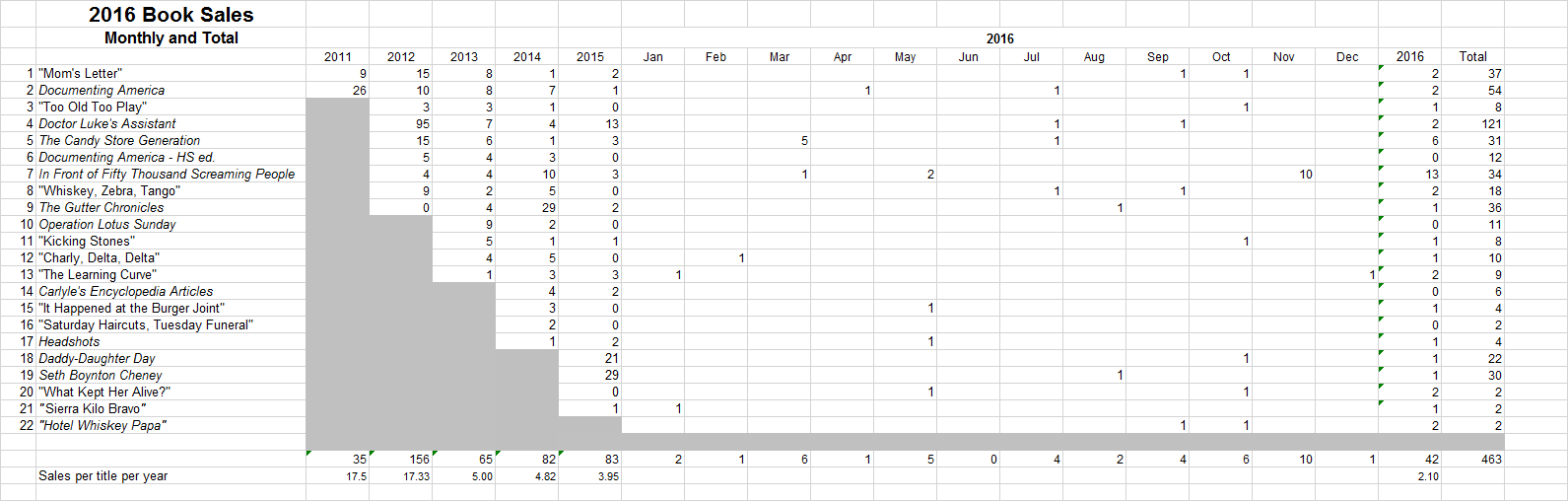
All markets have not reported for December 2016, but it’s time to report sales for 2016. Here’s the table.

2016 Book Sales
2016 Book Sales

So, you can see that sales were dismal in 2016. The fourth quarter picked up a bit, mainly sales of In Front of Fifty Thousand Screaming People. I published the print version in October, and promoted it on Facebook. Sales of it were dismal, but less dismal than my 21 other published items.

25 sales were at Amazon, 11 were through other stores where I sell via Smashwords, and 5 were self-sales. So my sales at Amazon were where the big drop occurred. Ever since they rolled out Kindle Unlimited, my sales there have been dropping.

I also had four or five e-books/stories bought and returned. In other words, fully 10 percent of all the books I sold were returned. That’s really depressing.

But, I shall be carrying on, writing and publishing, in 2017, in the hopes that someday, someway, with someone(s), my books/stories will catch on.

Busy Writing`

Well, I haven’t started 2017 very well in terms of blog faithfulness, have I? I’m trying to establish and keep a Monday and Friday posting schedule. Clearly, since this is my first post in 2017, I missed the first Monday and first Friday.

Yesterday I worked hard on my novel-in-progress, as I had Saturday. Between the two days I added just short of 6,000 words. As I wrote on Sunday, I remembered the blog and made a note to carve out some time to write a post. Alas, I didn’t do so.

Part of the problem is knowing what to write. I need to do a summary of 2016 post, for book sales, and maybe another one for writing progress. I’m waiting, however, on Smashwords to report possible late 2016 sales. I’m not expecting any, but I’ll wait for a little while. I can write a summary of my writing at any time, and will try to do that before long.

Then, I’m brainstorming a “publishing plans” post for 2017, as I’ve done for every year. I’m close to setting my annual goals, after which I can write that post. I think it’s going to be a week or so before I do.

So, for today, I’ll just mention current writing work.

As I said, I got back to work on Preserve The Revelation this weekend. The last time I’d written on it was Dec. 26. I had been thinking much about it in the interim, and had worked out some plot lines. So I was hoping the writing would go well, but, since getting back into it after a break is hard, I wasn’t sure. It turned out it did go well. I got away from the minutia of the travels of my protagonist, and began the last big external conflict. The last conflict he goes through will be internal. I’ve brainstormed that a little. I’m now down to the last 5,000 words I would say. That will make it an approximately 77,000 word book; shorter than I had figured, but not too short for the genre. If I can add 500 to 750 words several nights this week, I’ll be finished with it next weekend.

In the evenings, after I finish writing, I’m reading in two different books on the Civil War. This is research for my (currently) abandoned work, Documenting America: The Civil War Edition. I estimate I brought it to about 40 percent done in 2015, when I started struggling with it, and laid it aside. When I finish my current work-in-progress, I figure on shifting to that and trying to finish it. I think I can do it. It will be part of my 2017 publishing plan.

The other thing I’m doing is spending a half hour or so each morning, of my quiet time at work, building my Thomas Carlyle Chronological Composition Bibliography. I’m currently working in August 1840. My sense is that most of the hard work is behind me. From this point on Carlyle wrote mainly longer works, more easily traced and documented. He has a few miscellaneous things, but they are limited, and prior researchers seem to have them well documented. The hard part is over. I’m going to keep working on this. With luck, I’ll be able to publish it in 2018.

That brings my few readers up to speed with my current writing. I’m also planning a couple of writer interviews over the next month, so hopefully you’ll see those posts.

Finding Beauty

backyard-18-dec-2016
Our backyard; 18 Dec 2016

Tomorrow I will turn 65. There’s not much beauty in that age anymore. It used to be that you  could retire at 65 with full benefits. Alas, the “Normal Retirement Age” for my birth year is 66. And, of course, since retirement is more a question of money than of age, I figure on working till I reach 67.

This week my brother-in-law has been with us, as we prepared for the trip to Oklahoma City that we’re currently on. He’s staying behind at our house with his mom, my mother-in-law. He, his mom, and my wife, when they get together, talk about the hometown and who’s alive, who’s dead, where someone lived and moved to, who so and so is, etc. It’s interesting to listen to, but I can’t participate much. I know some of the names, as I’ve been in the family over forty years now, but I’m still not a full participant in those conversations.

Anyhow, at some point this last week, one of them (I think my mother-in-law) said, “What a dreary place western Kansas is.” [approximate quote] I’ve heard that before from her, and from her children. In the past I’ve said I find much beauty in the stark plains of Kansas, but this time I said nothing.

It’s true, however. I do find much beauty in the prairie, even the high plains, where the trees are few, vegetation limited, lakes mostly absent, the riverbeds mostly dry, and the towns ten to twenty miles apart. I got my first glimpse of the Kansas prairies in 1974 when I made the short drive from Kansas City to Lawrence. But, that’s eastern Kansas, which even then was seeing development. I had my introduction to the central Kansas Flint Hills area in May 1975 and western Kansas in October 1975. I loved both areas. They have a stark beauty. Perhaps, had I grown up there, I would feel differently. But as one who married into a Kansas family, I found it beautiful.

So, this got me to thinking about the beauty of the world—really of the universe—in its many locations. Having grown up in the eastern megalopolis, I was always amid a manmade environment. When I made my drive west in 1974 to take up my job and residence in Kansas City, I couldn’t believe the beauty of the endless mountain chains in Pennsylvania. Driving through Akron I found beauty in the tire plants on both sides of the Interstate, a different built environment than I was used to. Central Ohio, Indiana, and Illinois each had their own kind of beauty, mostly rural as seen from the (then) relatively new interstate highways. Missouri was an eye-opener, as for the first time in my life I saw frontage roads, seeing three or four miles from one hill peak to the next, and I found it all beautiful. A few months later and I added Kansas to the list of the USA’s beautiful places.

Years later came Saudi Arabia, Europe, North Carolina, Kuwait, several countries in Asia, then Arkansas. And in each place I found a different kind of beauty. The deserts I found beautiful. The dense hardwood forests of Arkansas and the mixed hardwood-softwood forests of North Carolina were equally beautiful. At some point I made the first of several trips to New York City. There, in the concrete jungle, I found beautiful architecture and other things to admire.

So what am I saying? That beauty is in the eye of the beholder? Maybe, at least a little. I think though, rather, I’m saying that you find beauty by looking for beauty in your circumstances. Those circumstances might require you to redefine what beauty is. Which is a good thing, I think. I’ve done that several times in my life, and may do so again some day.

I don’t know that I’ll be able to find beauty in every situation, every location. But I’m up for trying.

A Long Weekend

The house is decorated for Christmas; though, the Christmas tree could use another string of lights. I’ll look at that later this morning.

Menus are not fully planned; though Christmas day we’ll eat at a nearby retirement home, the one my mother-in-law lived at before she came to live with us. I bought a turkey, which we’ll have on Monday. I’ve got to have a second turkey dinner cooked at home this year.

My new computer hook up is complete! Shortly after Thanksgiving I bought a new laptop to replace my ancient desktop. Our IT guy said to buy a docking station so that I could hook up my extra monitors and easily take my laptop when I needed to go. I couldn’t get it all to work. Yesterday at work he walked me through the procedure. Last night I did it, and poof! It’s all working. So I have three monitors looking back at me. Blog on the left, spreadsheet in the middle, stock chart on the right. When I begin my day’s writing activities that will be on the right. I think. I’m still trying to figure out what’s best. I’m not quite done with all the computer hook-ups. I still have the printer to work on. Hopefully today I’ll get that set up. It’s a wireless printer, and supposedly I just plug it in, turn it on, and all my computer will be able to recognize it and print to it. We’ll see.

So, as you can tell I’m at home today. And I will be on Monday, both holidays for the company. A four day weekend is just what I needed, as I was becoming melancholy and lethargic. Some time away from the routine should do me good. My wife returned from Oklahoma City last night, which is good. My brother-in-law is driving in today. So the Christmas gathering will be complete. Not much to do today. Maybe a little grocery shopping. I even cleaned the house pretty good yesterday, so there’s not much cleaning to do.

Hopefully I’ll get to take a walk today, although rain is almost upon us, so we’ll have to see. Hopefully I’ll be able to find time to write 1000 or 2000 words in my novel. That would be grand. Doing so each day of the weekend would be grand as well.

I’m in The Dungeon, and hear stirring up above, so think I’ll head upstairs, get another cup of coffee, and be sociable. I’ll be back.

A View of Christmas Past: The Nativity Scene

bumpkins-manger-scene-croppedBack in December 2010, I started this series, intending to do a post each year, or many a couple, around Christmastime about my memories of childhood Christmases, maybe linking that to how times have changed. I didn’t do a good job with my series. I made two posts in 2010, then not another one until last year. Time to resume telling about Christmases past.

Long past? No, my past.

One of the things our family did, which perhaps was unique, was how we did the nativity scene. We called it the manger back then, or perhaps the crèche, not the nativity scene. That term entered our family much later, but I’ll use it now since that’s what most folks call it.

This was, perhaps, the first Christmas decoration to go up in the house. Last year I wrote about our tradition of progressive decorations. Well, the nativity was one of the first to go up, two or three weeks before Christmas. But it had only animals in it. I remember a cow, a donkey, a horse, and some sheep. Maybe we had a shepherd too (can’t remember), but probably it was just the stable and animals. So where were Joseph, Mary, and the baby Jesus?

They were somewhere across the house. Joseph and Mary were, that is. They were enroute to Bethlehem, to the stable. Every day they moved a little closer. I think the nativity was placed on the closed sewing machine table in the dining room. If so, Mary and Joseph were somewhere in the living room. But baby Jesus wasn’t with them. He wouldn’t appear until Christmas morning.

Day by day the couple inched their way to Bethlehem. Obviously the geography of the Holy Land wasn’t a factor. Focus on the journey, not accuracy, was the intent. Eventually they made it to Dad’s desk, also in the dining room, then to the Windsor chair next to the sewing machine, then finally, on Christmas eve evening, they arrived at the stable. Christmas morning Dad or Mom would bring out the baby, and one of us would put it in the empty feed trough. And a couple of shepherds would arrive, along with their sheep (three, if I recall correctly). And I think we added an angel as well, on top of the stable. What about the wise men, you ask?

They also appeared on Christmas day, but not at the nativity. They started a long ways away from the stable, and started their trek there, which would end on January 6, Epiphany. The next day the nativity would be put away with the rest of the decorations.

So for one brief day, the nativity scene was complete. This was a lot of fun for us kids. And I think it helped us to better understand the dynamics of the story. Rather than have a static scene of all participants, we had a moving story that we participated in. We never actually read the Christmas story, ever, on that morning. But we understood what was going on.

What about in adult years? I think I tried this a year or two when we lived in North Carolina. We had a large, older home, with lots of territory between Nazareth and Bethlehem, and between lands to the east and Bethlehem. But the tradition never got going. Maybe all the relocations we made made this impossible. Not every place we lived would have worked for a moving nativity. Plus, the nativities we had didn’t have as many moving parts.

Now, with just me and the wife, and now the mother-in-law, in the house, it seems unnecessary. So the manger sits, all participants in place, as if it were Epiphany. The photo above is of how it looks this year, on our new console TV converted into a table. It’s pretty, even if it’s not historically accurate.

Author Interview: Lori Ericson

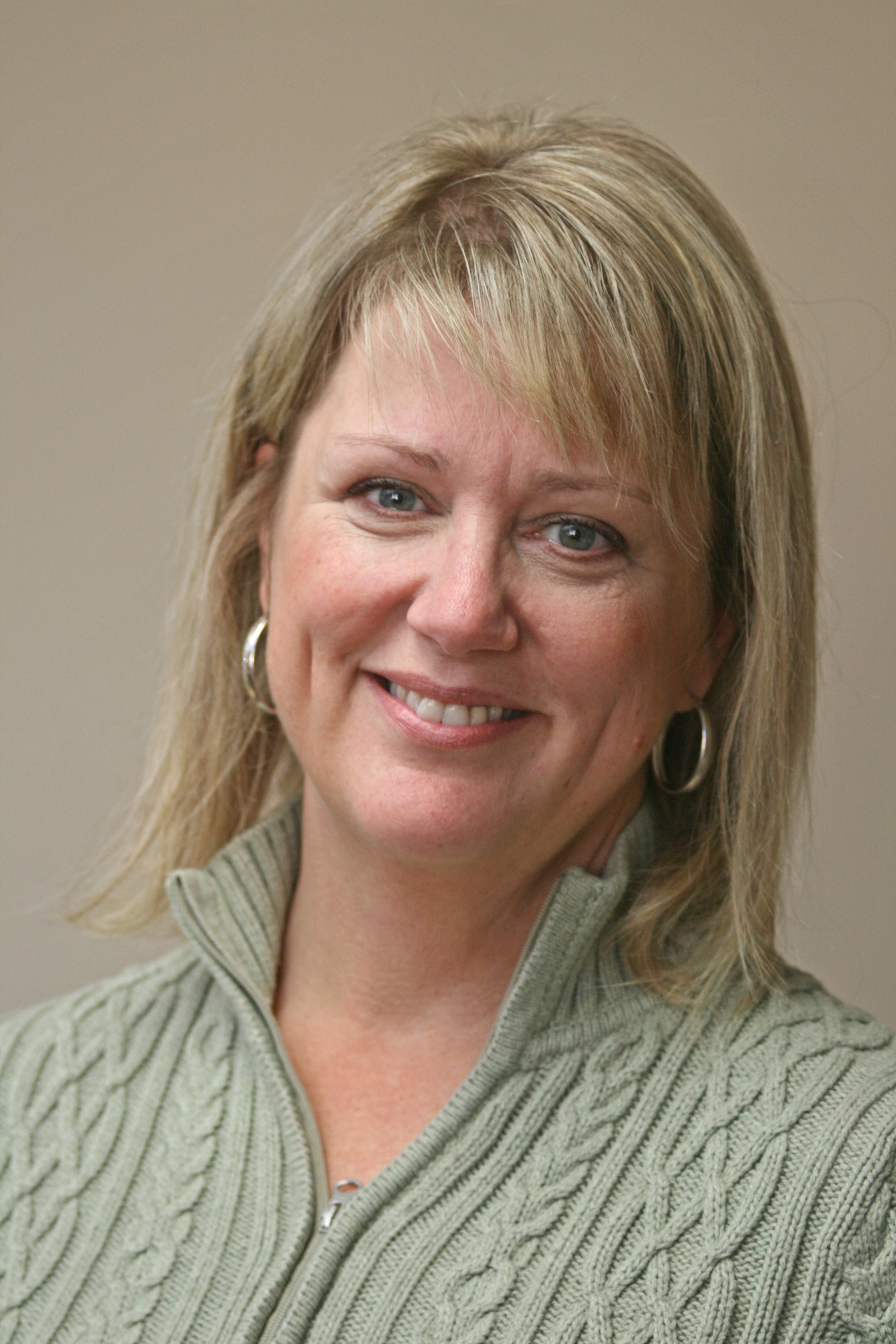
I may have two college degrees, but sometimes I have trouble putting two and two together. I’ve been Facebook friends with author Lori Ericson for a couple of years (I think), having “met” through some FB writing groups for this neck of the woods. I was also aware of Lori Ericson, city planner for the City of Rogers, Arkansas. Since I don’t deal with cities much any more, in my capacity as corporate trainer, I hadn’t actually worked with Lori the planner. But I knew about her, and knew others in our company worked with her.

Lori Ericson
Lori Ericson

Well, we had Lori and some other people in to our office a couple of weeks ago to hold a panel discussion for us on the city planning process. While everyone was here, having lunch right before the session, I heard someone say something about Lori’s books. As an civil engineer who hopes to be a writer when he grows up, my ears perked up. While the panel discussion was going on I looked for Lori the author on my phone, and found her. I discovered we were Facebook friends. I’d just never realized this is the same Lori. And, checking her out in Linked In, I discovered we live kind of close to each other.

Okay, that’s much too long of an explanation/introduction. Lori has two novels published, and has had some short stories anthologized. But she has many more writing credits than that. So on with the interview.

Lori, your bio indicates you held positions as a print journalist for a number of years. Now, however, you work as a city planner by day and a creative writer by night. Why the change?
I saw changes in the newspaper business that didn’t match the type of journalism that I wanted to do. As a newspaper reporter for 20 years in Northwest Arkansas, I had covered planning issues in both Benton and Washington counties and knew the basics of the field. So, it was a good fit for me when I saw the opening. The change also gave me a chance to concentrate on my dream of becoming a novelist. It was hard to come home and write at night or on the weekends when I’d been writing all day as a journalist. 
So, the bug to write creatively bit you, as it did me. I was diagnosed incurable around 1999. You?
I wanted to be a writer when I was a child. I read a lot and wrote short stories since I was in elementary school. Then in junior high they did some testing, asked us about our dream job, etc. I said I wanted to be a writer. The school counselor pushed me toward journalism, saying I’d need to make money. I didn’t know how true that was! I joined the school newspaper and then majored in journalism and English in college. 
Tell me about your first novel, A Lovely County. What is the genre? Give us a teaser of what it’s about.
a-lovely-county-frontA Lovely County is a thriller/mystery. It’s about a reporter in the Ozarks who has moved back to her hometown after being fired at a statewide daily newspaper. Now working for a weekly paper, she stumbles across a big story when a young boy’s murder turns out to be at the hands of a serial killer. Reporter Danni Edens struggles to beat the competition to the story and redeem her career while she’s out trying to sort out the facts of possible corruption at the county jail. All the while, she’s also dealing with her mother’s mental illness and rumors that could hurt the reputation of her family-owned cemetery. 
And now, you have a newly released novel, A Lovely Murder. Is it a sequel? Tell us about it.
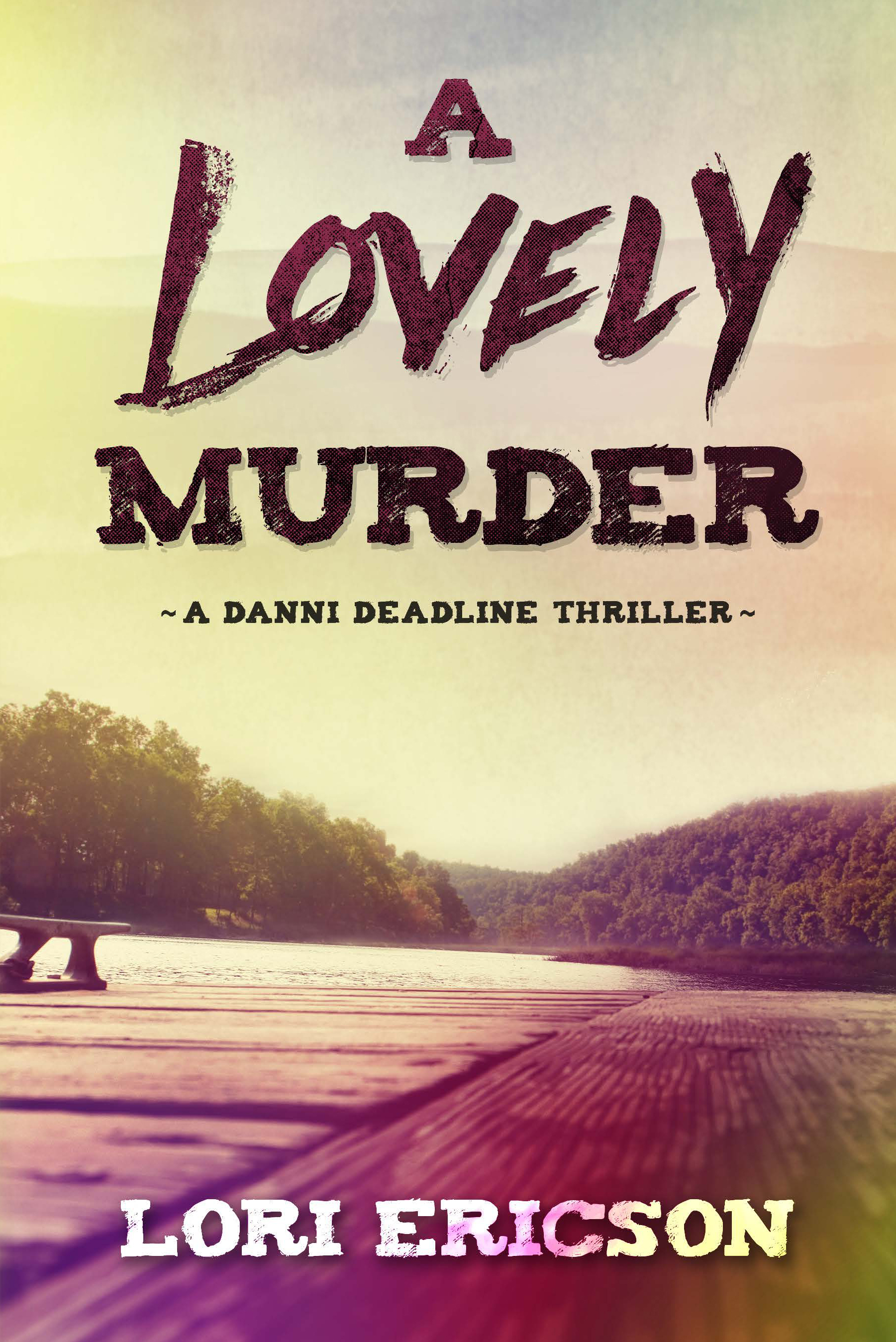
lovelymurder_front-copyYes, A Lovely Murder is a sequel, but it can stand alone as well. Here’s the jacket brief on it: 
Life is finally coming together for reporter Danni Edens. Her mother’s mental illness seems to be under control, her career is taking off after a major setback, and she’s found love.
But a mistake from her past comes back to rob her of that newly found happiness and possibly more.
As Danni struggles with the biggest loss of her life, the challenges start piling up. She fights to keep her grief at bay while searching for the killer who took her fiancé, but soon realizes the culprit wants more blood. Her vehicle is deliberately sabotaged causing a wreck that injures her best friend. Then she’s accused of murder and forced to defend herself. All the while, more bodies are piling up.
How can she prove her own innocence, protect her family and friends, and rebuild her life when a killer lurks? Will she lose all she holds dear, including her dream of a happy future? Or even her life?
What’s in store for the future? If you’ve released novel 2, you’re probably well into novel 3, and planned novel 4.
 
A Lovely Grave is in the works and set for release late 2017. It involves the investigation into the disappearance of young women, most of them students at the state university. Danni Edens has finally made the leap back to a daily newspaper, but struggles with some sexual harassment may have her wishing she was still working at the weekly, even though she’s proving her worth as a reporter by beating everyone to the punch on the facts of biggest crime spree to hit her Ozarks hometown in years. 

Lori’s books are available at Amazon and other places, including directly from her publisher. Be sure to check them out. Here’s a link to her Amazon author page: https://www.amazon.com/Lori-Ericson/e/B00S5MJGM8

And here’s a link to her web page: https://loriericson.com/