Some Significant Decluttering

The storage area for Christmas decorations, opposite The Graveyard, is in slight disarray this time of year.

I’ve written about decluttering before. It’s an on-going process here at Blackberry Oaks (the name I’ve given to our property, a name no one else in the family seems to like or is willing to adopt). Most of what we’ve done is relatively minor stuff: getting rid of a few empty boxes; taking garage sale stuff that didn’t sell to the thrift store; etc.

Last week and into the weekend, however, I did something a little more major. In our basement storeroom is a dark nook, set off from the rest of the storeroom by a 6-foot long job in the concrete wall and two book cases at right angles to it, is an area I have never had a name for, but which I think I’ll dub The Graveyard.

At the front of The Graveyard were two boxes with Christmas wreaths and another box of some candle holders. Behind it was a stack of computer boxes. The Apple boxes I knew had our old C-II from the Kuwait years. The other boxes I wasn’t sure what was in them. Then, there were a couple of large cardboard boxes. One I knew was for our first digital TV, the 32-incher we bought in 2008 and were still using. I guess we kept that thinking that if we ever moved, it might be best to pack the box back up in the original container. Yeah, that’s a good reason to keep the box. It’s out of the way.

Well, as we had our family Christmas over Thanksgiving, our son bought us a new digital TV. It’s a smart TV, 49-inches, yet it takes only a little more footprint and square footage than the old one. The box for this one went to the garage. We’re still trying to learn how to use the smart TV, but that’s a story for another post.

Last week, around Monday, I took a look at The Graveyard and decided we could do without that old TV box. We would be going by the recycling center the next day, so I decided it was time to let go of it. As I pulled it out, I saw that we also had the box from the TV stand for that old TV, a stand that it once again sits on in The Dungeon, waiting to be hooked up. Well, obviously I didn’t need to keep that. Both of those boxes went up to the garage, into the minivan, and, the next day, to the recycling center along with the new TV box and some other stuff.

How freeing that was! Much of our clutter is empty boxes, saved for whatever reason we need them.  But these particular boxes clearly had no future use.

Much better organized. Smaller, all items showing. Now need to get rid of the Apple 2C. Any takers?

But there, in The Graveyard, I also found, not just our old Apple computer, but an equally ancient desktop, perhaps also from Kuwait. I’ve been slowly giving up the old computers for recycling, after having someone get the data off of them. I thought I knew where they all were, so finding this one buried behind unneeded boxes was a surprise. It’s now moved to a place where I stage getting rid of computers. Also back there was a dead printer—dead because whatever computer it was used with is no longer in service. It’s also moved to the electronic recyclables staging area.

Once these things were removed, I was able to organize the few things left to be where I can see them. I gathered all the loose wreaths and hung them.  Also, I was able to move the free-standing bookcases back a little further into The Graveyard to make that space smaller and make the main part of the storeroom bigger. You can see what the result was.

Decluttering is far from over, In fact, in some ways it’s seems we’ve just begun the task. But this feels good. Real good. Next will be the remaining old computers and other electronics. Then, what’s next? Maybe some real stuff will depart this household.

Looking at One Person’s View On Impeachment

I write this on Thursday, December 19, 2019, for posting on Friday.

Yesterday, the House of Representatives voted to impeach President Trump. Passions are running high on both sides. One FB friend I never would have suspected is FOR impeachment, mainly on the charge of obstructing Congress. I have debated him on FB, saying the president has no obligation to cooperate with those who are trying to remove him from office.

In past similar situations, thinking mainly of Nixon, he also defied Congress. Congress took him to court and asked that the SCOTUS fast-track the process. In compliance with the court, Nixon handed over the subpoenaed items, they showed he had indeed committed crimes, and he would have been impeached had he not resigned.

That’s not what Congress has done here. They have subpoenaed Trump for documents and witnesses. These have not been produced. Rather than go to court to have them enforced, they just impeached him.

In the debate with my friend on FB, another friend said Trump had already committed impeachable offenses and he offered a video of Robert Reich from April 5, 2017 as proof. While I have no respect for this former Cabinet member, I decided to listen to his video to see if I may have overlooked anything. Reich suggests four impeachable offenses at that time, with a fifth one brewing. Let’s look at them

One: Trump is “unfaithfully” executing his duties as president by accusing his predecessor, President Obama, of undertaking an illegal and impeachable act, with absolutely no evidence to support the accusation.

Sorry, Mr. Reich, but no one appointed you of what is or is not faithful or unfaithful execution of office. It is unfaithful execution to criticize your predecessor? Give me a break. This is ridiculous.

Two: The Constitution forbids government officials from taking things of value from foreign governments. But Trump is making big money off his Trump International Hotel by steering foreign diplomatic delegations to it. And will make a bundle off China’s recent decision to grant his trademark applications for the Trump brand, decisions Chinese authorities arrived at directly because of decisions Trump has made as president.

Is Trump “steering” business to his hotel? Or are foreign delegations using it because it’s a good venue in Washington DC? Is Trump donating the profits from that hotel to charity? Hardly impeachable. And, as to China, has any president in the last 100 years been tougher on China than Trump? Reich, your argument doesn’t hold up.

Three: Trump’s ban on travel into the U.S. from 6 Muslim countries, which he initiated, advocated for, and oversees—violated [the free exercise of religion clause].

The courts struck down that travel ban and it wasn’t enforced. How can it be impeachable when Trump complied with the court? Again, Mr. Reich, that’s ridiculous. I also point out (since you don’t seem to know this), that there are some 30 Muslim majority countries. If travel from individuals of six of those were banned, then travel from individuals from 24 of them was allowed. That’s hardly against the free exercise of religion.

Four: Trump’s labeling the press the “enemy of the people” and choosing whom he invites to news conferences based on whether they’ve given him favorable coverage, violates [the freedom of the press provision of Amendment 1].

What Reich is saying is the president cannot criticize the press. How did this criticism prevent them from doing their job? It didn’t. They were still free to publish. He denied them an audience. Guess what, Mr. Reich, the First Amendment doesn’t grant the press an audience. The president is free to give interviews to whom he wants to.

Five: Evidence is mounting that Trump and his aides colluded with Russian operatives to win the 2016 presidential election—which Reich says meets the definition of treason.

Reich was so wrong on this, where to begin? Several investigations failed to find the alleged collusion. The evidence mounted against this. If this took place, it happened while Trump was a candidate. Do you really think a president can be impeached for things he did before he was president? I think not.

I’ve never liked Reich, never thought he had the country’s best interests at heart. Now I’m sure of it.

Thoughts On Impeachment: Original Sources

One of my copies of the Federalist Papers. Yes, I bought it used, to have at the office. This copy stays in the sun room; my other stays in The Dungeon.

As we deal with impeachment of the president in 2019, we have few precedents to base a position on. Impeachment has happened only twice, and would have occurred one other time had not the president resigned.

What is an impeachable offense? What was on the Founders’ minds at the Constitutional Convention? How would they approach it today? The place I always turn first on Constitutional issues is the Federalist Papers. What did Madison, Hamilton, and Jay have to say concerning this?

A well-constituted court for the trial of impeachments is an object not more to be desired than difficult to be obtained in a government wholly elective. The subjects of its jurisdiction are those offenses which proceed from the misconduct of public men, or, in other words, from the abuse or violation of some public trust. They are of a nature which may with peculiar propriety be denominated political, as they relate chiefly to injuries done immediately to the society itself. The prosecution of them, for this reason, will seldom fail to agitate the passions of the whole community, and to divide it into parties more or less friendly or inimical to the accused. In many cases it will connect itself with the pre-existing factions, and will enlist all their animosities, partialities, influence, and interest on one side or on the other; and in such cases there will always be the greatest danger that the decision will be regulated more by the comparative strength of parties, than by the real demonstrations of innocence or guilt.

The delicacy and magnitude of a trust which so deeply concerns the political reputation and existence of every man engaged in the administration of public affairs, speak for themselves. The difficulty of placing it rightly, in a government resting entirely on the basis of periodical elections, will as readily be perceived, when it is considered that the most conspicuous characters in it will, from that circumstance, be too often the leaders or the tools of the most cunning or the most numerous faction, and on this account, can hardly be expected to possess the requisite neutrality towards those whose conduct may be the subject of scrutiny.

Federalist #65, by Alexander Hamilton

I don’t find this particularly helpful. Or, rather, it’s helpful, but not very comprehensive. Impeachment is a political process. Because the president is immune from being charged criminally while president, so that he/she wouldn’t be continuously harassed in office, impeachment by the House, trial by the Senate—resulting either in acquittal or conviction, resulting in removal from office, and then charging and trial by the courts. That’s the process, but for what can the president be impeached? I just went through the entire Federalist Papers, searching for “impeach” and other related terms. I’m surprised at how little is included. They include much discussion of why the Senate is the right body for impeachment trials. But, as far as discussions on what is and what is not an impeachable offense, I find very little, except what I’ve quoted above from Federalist #65.

An additional source is James Madison’s notes on the Constitutional Convention. I just went through those notes, looking for discussion on what is impeachable, and I found this.

The clause referring to the Senate, the trial of impeachments agst. the President, for Treason & bribery, was taken up. Col. MASON. Why is the provision restrained to Treason & bribery only? Treason as defined in the Constitution will not reach many great and dangerous offences. Hastings is not guilty of Treason. Attempts to subvert the Constitution may not be Treason as above defined. As bills of attainder which have saved the British Constitution are forbidden, it is the more necessary to extend: the power of impeachments. He movd. to add after “bribery” “or maladministration.”

Mr. GERRY seconded him.

Mr. MADISON So vague a term will be equivalent to a tenure during pleasure of the Senate.

Mr. Govr. MORRIS, it will not be put in force & can do no harm. An election of every four years will prevent maladministration.

Col. MASON withdrew “maladministration” & substitutes “other high crimes & misdemeanors agst. the State”

On the question thus altered

N. H. ay. Mas. ay. Ct. ay. N. J. no. Pa. no. Del. no. Md. ay. Va. ay. N. C. ay. S. C. ay. Geo. ay.

James Madison, Notes on the Constitutional Convention, for September 8, 1787

 This gives us a little more to go on. The original clause on impeachment was for treason and bribery. Mason of Virginia wanted to add “maladministration” as a reason for impeachment. What, exactly, is maladministration? I interpret it to mean “doing a bad job” or “not doing a good job”. In other words, incompetence or malfeasance.

The summary of the debate, somewhat spare in Madison’s words, was that maladministration would never in fact be used as a reason for impeachment, and the correction for maladministration is elections.

Facing rejection of his motion, Mason changed the motion to add “other high crimes & misdemeanors”. In other words, for crimes other than treason and bribery. This seems to me to be more or less the same as felonies and misdemeanors—things that would result in being charged in criminal court if not the president.

Others think the word “high” applies to both crimes and misdemeanors. If that were the case, the bar would be a little different than my interpretation.

The question now comes down to whether the impeachment of the current president meets the constitutional definition. Alas, I’ve already exceeded a reasonable word limit for a blog post, and will have to answer that in a future post. I may post earlier than my normal schedule.

A View of Christmas Past: Wrapping Paper

Unlike my parents, we don’t have a dedicated space for stashing reused paper for future use.

I don’t know how many families made this a practice. Possibly every family who had parents who came of age in the Great Depression did this. I’m talking about re-using wrapping paper from one year in future years.

Yes, wrapping paper used to wrap gifts. For children.

Our storeroom shelves have many Christmas decorations, but not re-used wrapping paper.

As far back as my memories go, which might be to 5 or 6 years old, we always unwrapped our gifts in a way that minimized damage to the wrapping paper so that it could be used again. We gently slid a finger under the Scotch tape, removing it with the hopes of not damaging the surface it had been attached to, then folded it underneath the paper so the loose end wouldn’t do more damage. Do this with every piece of tape on the package. Remove the paper. Set it aside. Take some time with the gift. Go on to the next one. Repeat.

By the end of the day, the papers were all stacked and brought to the basement and put on a shelf.

On the other hand, we have plenty of Christmas decorations we no longer use. Will have to clear them out someday.

The next year, whenever anyone, parent of child, wrapped a present, they went first to that shelf in the basement and looked for a used piece of paper. Try to get one that’s not bigger than you need, and of course not smaller. Use it again. Go on to the next present.

The new tradition. Who put a wooly mammoth in my Christmas village?

Year after year this was our practice. I imagine each year our parents bought at least one new roll, but mostly we used the old paper. Sometimes you would be given a gift on Christmas day and recognize the paper. “Oh, I remember last year I used this paper to wrap….” Each year some papers would get smaller and smaller as you trimmed away damaged places or—heaven forbit—you couldn’t find a piece the right size and used one way too big and cut it in two.

Even ribbon and bows were reused in my childhood. We still do that with bows, but not ribbon.

This was actually a fun part of our Christmas traditions.

Of course, I wasn’t able to continue that into adult life. Oh, I still unwrap gifts in that manner, but I never forced my children to do the same. I tried, and to some extent they did it. But we didn’t have a whole shelf in the basement or storeroom dedicated to used Christmas paper.

Time marches on. We have new traditions now when the kids come home. There’s the hidden Chex Mix that they have to find somewhere in the house if they want to have any. The last few years there’s been the Christmas village that has all sorts of toys added to it. Grandpa protests, but not too hard. It started years ago when our oldest grandchild added a toy rock to the village, and it’s expanded from there. The last year or two I hid that toy rock, but not too much hidden. They found it and added it to the village.

Christmases past, present, and future. Memories were and are being made, and recalled and enjoyed over and over.

Publishing and Writing Side-by-Side

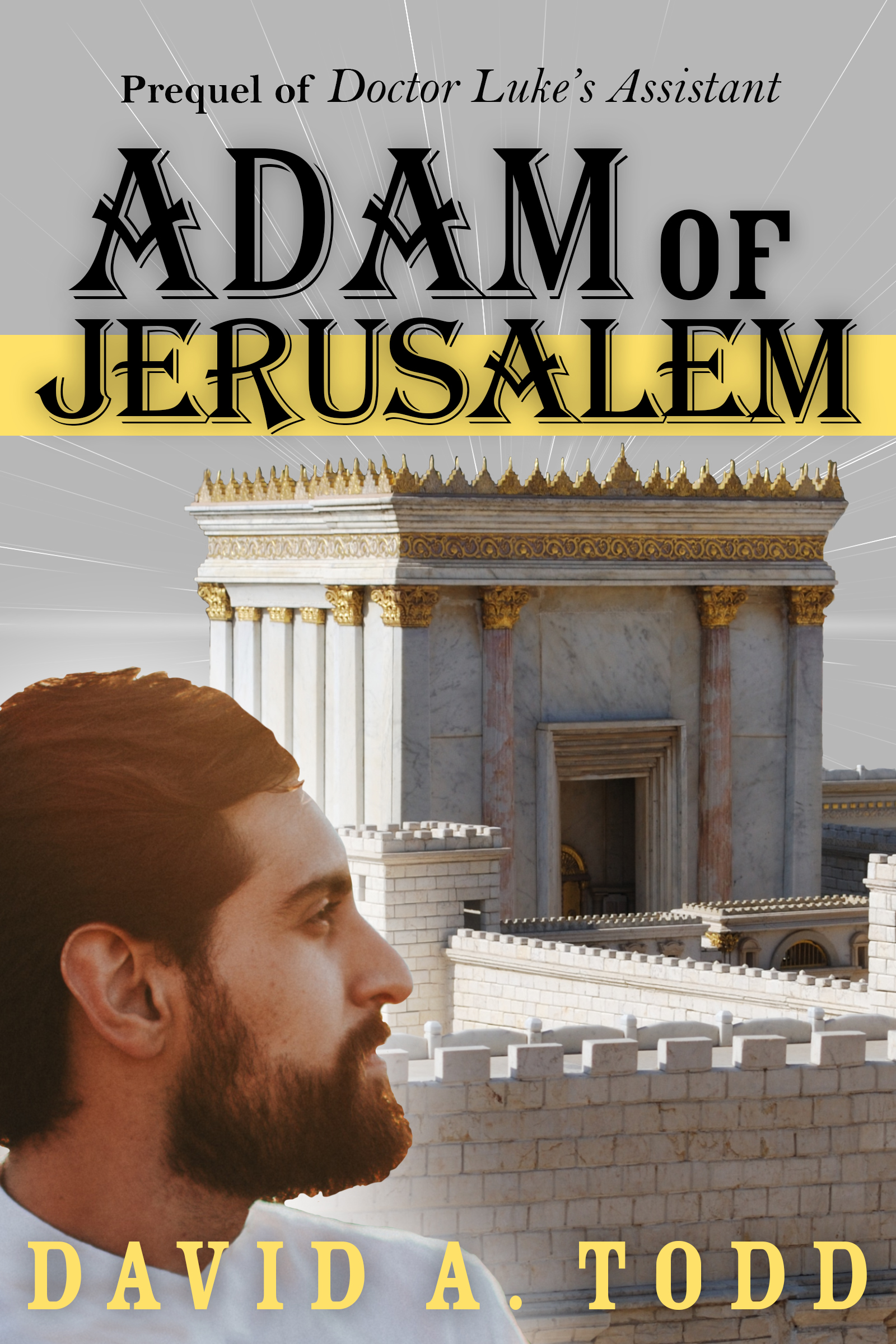
The e-book cover for this was easy. At present I’m not planning on issuing a print book.

Well, I missed another blogging day. Yes, I missed last Friday. That’s two Fridays in a row. I tell you, miss it once and it can become a habit. I’ll break that habit this coming Friday.

For now, I’ll just tell a little of my current activities.

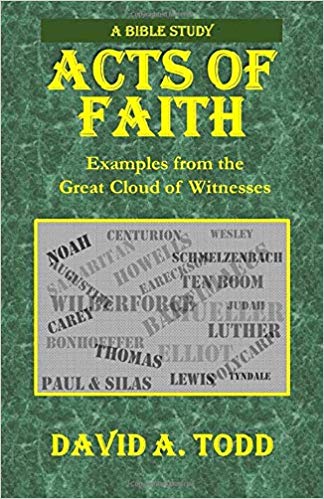
Today is the day to publish the Leader’s Guide for Acts Of Faith. I made the cover on Friday, finished the editing on Saturday, made one minor tweak yesterday, and let it sit for the night. As soon as I finish this I’ll go to Amazon KDP and do the publishing tasks. Hopefully it will be available for sale before the end of the day, though perhaps tomorrow.

I’ll make the cover for the print edition of the prequel of this look much the same. Delete “Again” and change the photo.

Then, tomorrow I’ll work on my friend Bessie’s book. I did her second book for her earlier this year. Her first book, however, is available from the publisher only as an e-book. She has people in the church who want a copy. At my prompting, she obtained a license from the publisher to make do a print book edition of her own. I have already gone through the text for errors. I think I built the Table of Content, but will check on that. The cover will follow the lines of the last book and should be simple—except print book covers are never simple for me. Publishing it may not be doable on one day.

Salzburg and environs are so nice, with quaint things to see and do—but not when you’re following Sharon Williams Fonseca.

After that, I shift to writing tasks. My short story, “Tango Delta Foxtrot”. It’s now at 5,300 words and is well along with the story. I don’t have a specific word goal, and I didn’t plan out the plot. To keep it from getting boring I need to wrap it up. I may work on that some in the evenings. I did so yesterday evening, incorporating comments from my critique group. I’m not finished yet with that, so may make working through those comments my evening task for a few days. Wednesday or Thursday I hope to be adding words to the story.

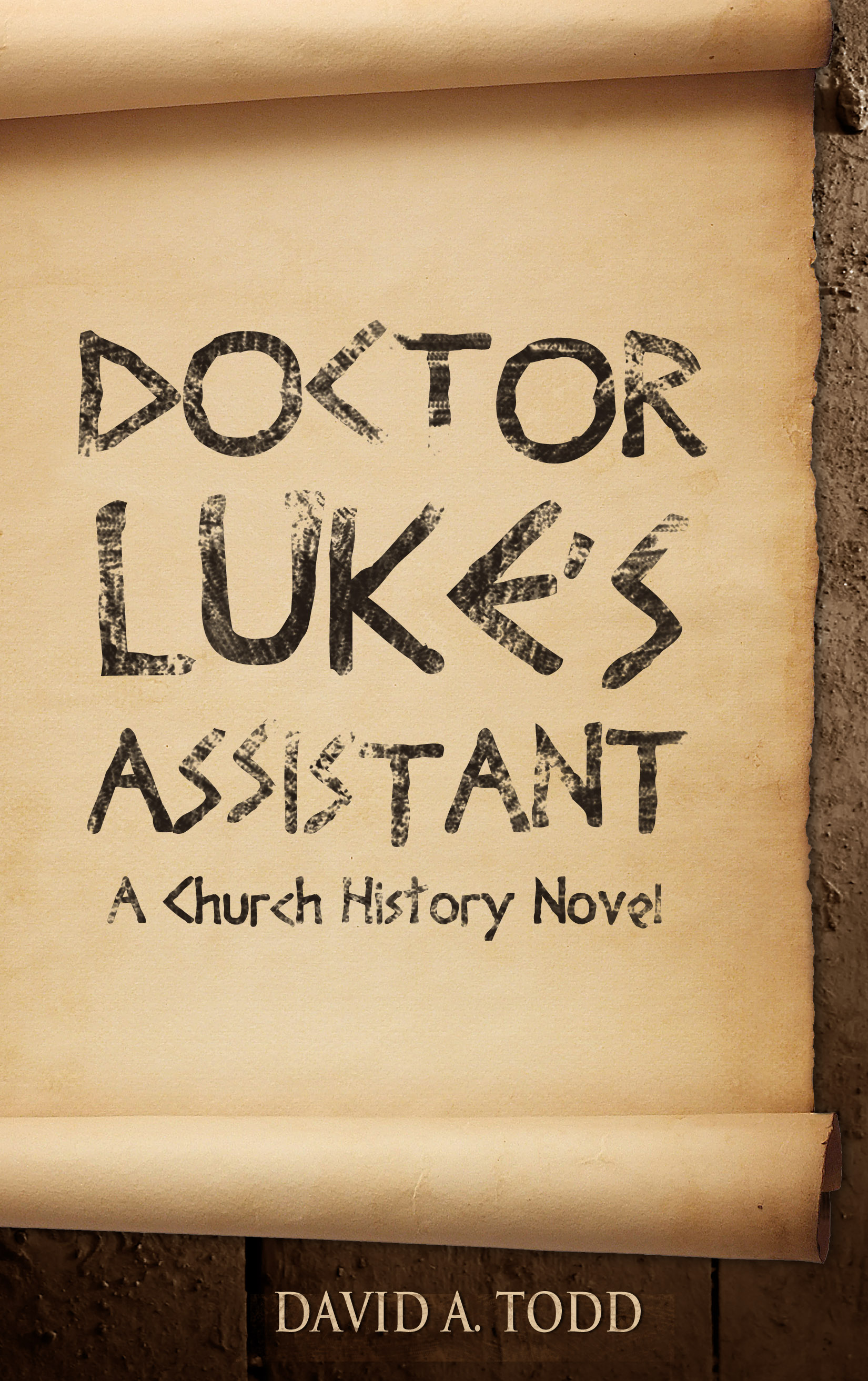
Meanwhile, I sold a couple of copies of Acts Of Faith at church yesterday, and last Friday a paperback copy of Doctor Luke’s Assistant sold at Amazon. That bring my sales for the year up to 131, my second-best year so far. About 75 of those are self-sales of books from inventory, and 69 are of books I published this year. That’s good news. I hope to continue the up-trend next year.

Now Between Holidays

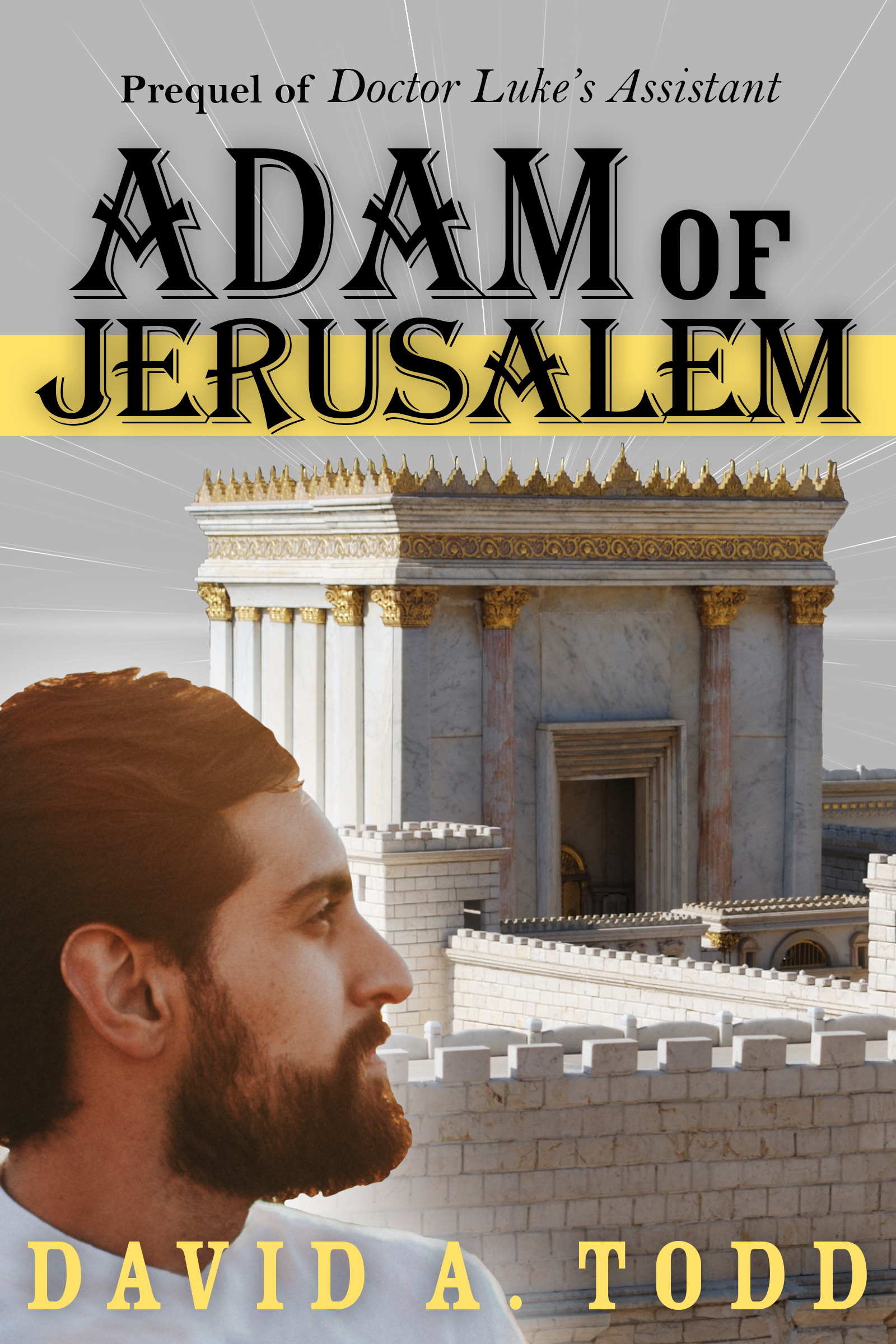
Had an on-line sale of this one day, then two days later had another, plus one of the prequel. I’m hoping it means someone bought it, not realizing it was the second in the series, liked it, bought the first, then convinced someone else to buy it.

Thanksgiving is over. Well, almost over. My sister is still in town, and we’ll get together again this afternoon and evening. Our full household, however, is back to two, just me and the wife. We have much after-company work to do yet, but the yesterday we took our rest, and this morning is normal routine. Tomorrow or Wednesday will be full routine.

I gave up writing work during this time, except for a little editing in the Leader’s Guide for Acts Of Faith. I rarely went to The Dungeon since two Saturdays ago.

But, now it’s time to get back at it. Complete editing of the Leader’s Guide is step one. Simultaneous with that I’ll be reading for my critique group, Scribblers and Scribes of Bella Vista. I have two pieces to read to get ready for the meeting Wednesday evening. Plus, I need to send out again for critique my short story, “Tango Delta Foxtrot”. I haven’t written any more on it, but still have a few pages of it to read to the group.

I’ll make the cover for the print edition of the prequel of this look much the same. Delete “Again” and change the photo.

Next, I’ll get back on publishing tasks for Bessie Black’s first book, Once Upon An Island. It was a work-for-hire, but she received a license to self-publish it as a print book since it’s gone out of print. I’ve already done most of the formatting. I want to read it through once more to look for typos. I figured out what we’d do for the cover. I hope to publish that for her before the end of the year, which looks very doable.

The other thing that has surprised me recently has been some unexpected on-line sales. I had two sales of Headshots and one of In Front Of Fifty Thousand Screaming People, as well as one of Acts Of Faith. Those came about a week ago over a three day period. It’s nice to see sales at the same time from both the back list and new items. I hope this will be a trend.

So, back in the saddle, for three weeks at least, before the next holiday interruption comes.

Book Review: Mere Christianity

This will go in my permanent C.S. Lewis collection which, unfortunately, is far from complete.

Well, I finally did it: got through Mere Christianity by C.S. Lewis. It only took me 48 years to do it. That’s a bit of an exaggeration. I first learned of the book when several of my friends were reading and speaking well of it during our sophomore year in college. I was a nominal Christian at the time and had never heard of C.S. Lewis, the whole Narnia thing having passed me by in the 1950s. I marked this as a book I should read.

Over the years, beginning in 1975 when I read The Screwtape Letters, I came to know Lewis better and better. Mere Christianity eluded me, however, or I avoided it. Then my co-teacher of our adult Sunday school class thought this might be a good book to have a lesson series on. I picked up a copy and started reading it. I bogged down a couple of chapters in, and set it aside.

A couple of months ago I asked if my co-teacher had a biography of Lewis I had loaned him. He returned it along with a copy of Mere Christianity, saying he was pretty sure I had loaned that to him as well. I couldn’t find a copy in my house, so I accepted it as my own.

I read it in 15 sittings in October and early November. I didn’t find it all that hard to read, and wondered why I bogged down on previous readings. Lewis has a different way of looking at things and describing them in non-church language.

The contents of this book were adapted from radio broadcasts Lewis made during World War 2. Lewis went on the BBC to provide information and comfort for a war-weary land. In the Preface to this book, he explained his purpose.

…I have thought the best…service I could do for my unbelieving neighbors was to explain and defend the belief that has  been common to nearly all Christians at all times.

He also explained what wasn’t his purpose.

…I offer no help to anyone who is hesitating between two Christian ‘denominations’. You will not learn from me whether you ought to become an Anglican, a Methodist, a Presbyterian, or a Roman Catholic. This omission is intentional.

Why did Lewis decide to make his broadcasts in this manner?

…the questions which divide Christians from one another often involve points of high Theology or even ecclesiastical history…

And Lewis achieved this in the book. He talked about “mere” Christianity, or, perhaps another way to understand it is Christianity stripped of everything that divides us. leaving only what unites us. The examples of this in the book are many, and I’ll not give them here.

Lewis is considered an intellectual, which was probably the reason I delayed so long to read this, thinking it would be difficult to understand. It really wasn’t. The first few chapters deal with moral codes that are common to all cultures. Where do they come from? Lewis concluded that the universality of these codes was evidence that they came from God, an important discovery on his road first to theism then to Christianity.

If you haven’t read this, I urge you to do so. It was excellent, and will help any Christian better understand the faith.

For this book, there’s no question that this will become part of my permanent library. I don’t think I’ll reread it immediately, but will someday.

Book Review: Rainer Maria Rilke: Letters to a Young Poet

This isn’t the volume I read, but I don’t have my camera right now to take a photo of it. Same book, different wrapper.

Some time ago, I picked up the book Rainer Maria Rilke: Letters To A Young Poet somewhere. When I picked up the book from my reading pile recently to read it, I found a receipt in it dated 9/21/2009 for $0.99 plus tax from the Goodwill store in Andover, Kansas. We used to stop at that store occasionally, so I assume that’s when I bought it. It’s been in my reading pile in my closet for a long time.

I bought it because I love reading letters, and I love poetry. What would be not to like? I don’t know much about Rilke, other than having heard his name in poetry/literature circles, and, after reading this, I still don’t know much about him. The first letter is dates February 17, 1903, when Rilke was just 27, so he appears to have gotten some notoriety early in his life as a writer and poet.

A younger man, Franz Xaver Kappus, also an erstwhile poet, had written to Rilke, apparently asking for advice and passing along some poems for Rilke to critique. Rilke wrote back, their correspondence being in German. He declined to provide the requested review of Kappus’ poems, instead talking about his life as a poet, and giving the young man advice of what he could expect.

As I read these letters, I didn’t come away with much advice as to writing poetry. It did give some insight into Rilke’s life. Although, it almost appears that Rilke was playing the role of the unreliable narrator. To read the letters, he was always sick, always moving around, and never able to work, even finding it difficult to sit and write letters. From these letters I got the impression that Rilke’s best and productive days as a writer were already behind him at age 27 to 34.

That wasn’t true, however. A quick study of his life shows that Rilke had a number of books published during the years these letters were written, books of both poetry and prose. It’s true he moved around a lot, as he sought places most conducive to his frail health and his writing. I think each of the ten letters in the book came from a different place.

I’m glad I bought the book and finally, after allowing it to sit for ten years, read it. However, except for the measure of enjoyment and distraction it gave me it wasn’t all that useful. Now I have a decision to make: does it go into my library or do I donate it to a thrift store?

In favor of keeping it, as I said at the outset, I love reading letters and I love poetry. I should keep it. I wouldn’t know where to place it on the shelves, in my collection of volumes of letters or in my poetry collection. It’s not poetry, so I suppose it would go under letters. The question, though, is will I ever read it again? Did I find enough value in it to ever take it back off the shelf and re-read it? I can’t predict the future, of course, so who knows what I might want to read in twenty years. I have enough un-read books in the house already that I won’t have a need to re-read anything. From that perspective only, it should go.

Then there’s the decluttering factor. As we have been getting ready for our Thanksgiving gathering this week, we have once again become acutely aware that we have way too much stuff. Things need to go. Wednesday I took a load to Helping Hands, our favorite thrift store. With that load taken, I see no dent in the amount of clutter.

So, I’m afraid this 123 page volume, slim as it is, will soon find its way back to another thrift store and there await rescue by someone else who likes either letters or poetry or both. May it give pleasure to someone again.

Book Review: The Oxford Inklings – revisited

Read it in 2014-15 and gave it 5 stars; re-read it in 2019 and haven’t changed my mind.

Four years ago I read The Oxford Inklings and posted a review of it. I put this book on the shelf and forgot about it. Forgot that I even had read it, though in the back of my mind I knew I had that book somewhere in my library.

Lately, with my interest in C.S. Lewis enhanced—not that I ever lot interest in him, but from time to time it bubbles to the top of my thoughts and I have to read a book by or about him. Well, after having trouble a while back trying to find something from a Lewis book to go into Acts Of Faith, I realized I needed to consolidate my Lewis books into one place. As I was doing that, almost accidentally I saw The Oxford Inklings hiding in a place I never would have expected it. I looked at it and couldn’t tell if it had ever been read. So I took it up to the sun room and decided I would read it right away.

I remembered a story late in the book, or thought I did. If I get to that part and that story is in there I would know I had indeed read this. Rather than look ahead and try to find that, I decided to just read it straight through and wait until I came.

As I read the book, it seemed new to me. Although I thought I had read it before, reading it now I felt like it was a new book. Had I read it or not? I found it gave me good information. I was about to say no, I hadn’t read it before. As I got close to the end, it began to feel familiar.

At last I came to the period that described Lewis’ declining health, and there was the scene I remembered. Yes, I had read it. Obviously I hadn’t retained it as much as I should have.

I see I gave the book 5 stars before. I stand by that. It does a good job of describing the Inklings and how the group revolved around Lewis more than the others. Members came and went. The three with the most time in the group were Lewis, J.R.R. Tolkien, and Lewis’ brother Warren. Others were there for a few years, or for a longer time but not attending each time they met. A few didn’t write and were there just to critique.

We aren’t the Inklings yet, but we are helping each other improve and move our writing forward.

Their goal was to make their writing better. They read works and received criticism on the spot. Back then easy means of printing and copying weren’t available, so their criticism was through listening and commenting. How different it is now. Our writing group, Scribblers and Scribes of Bella Vista, has the advantage of receiving works ahead of time and taking time to read and make comments in writing. We also read and comment at our monthly meetings (soon to be twice a month), but typically have copies of what others are reading.

But, I must go back to the book and close. If you’re interested in C.S. Lewis, J.R.R. Tolkien, their books, their circles, how writers go about their business, this is an excellent read. I highly recommend it—again.

A Busy Day With A Twist

Writing the Leader’s Guide for this has taken more time than writing the book, and it’s just as long.

Here it is Friday evening, and I’m just now getting to my post for today. I have three book reviews backed up, but I haven’t felt like writing those posts yet. They take a little more time to write, and with other things going on I didn’t feel like taking that time.

Today was very busy. I started at the computer, with my end-of-week stock trading tasks. At the same time I was putting finishing touches on the leader’s guide for Acts Of Faith. There may be one chapter that I need to do just a little more work on, but, except for that chapter, I believe I’m done. Over the weekend I’ll re-read it, add that little bit of stuff, and it will be done.

After that I went outside to continue clearing downed tree trunks away from the lot south of us. Midway through my first saw cut my left baby toe started hurting, suddenly and badly. I thought I must have done something to break my toe. I couldn’t work without pain, so I sat down on the tree trunk and pulled my shoe off to find a nail through it. It wasn’t stuck in my toe, but I couldn’t tell if it had punctured it or not.

I had wanted to work about an hour and a half, but I decided to cut it off at an hour. I got a lot done after the nail incident. I knew, however, I needed to get inside and find out what I’d done to my toe. I soaked my feet in Epsom salts, then looked at it and had my wife look also. Neither of us could find a puncture mark. Still, I contacted my doctor about it. My last tetanus shot was eight years ago. I heard back from the nurse and she said yes, I needed to get the shot.

We had to go pick up our newer van from the body shop, and I had to go by Lowe’s to return a light and pick up the right one. After that I went by the pharmacy and got the shot. They say it’s going to hurt for up to three days, but so far no pain. Nor does my toe hurt. I think that the nail, while it punctured my sneaker, didn’t puncture the skin.

So now it’s evening. We’re done with supper and watching a little tv. I’m about to get us some dessert (probably some fruit). I hope to read a little later.

One thing I learned recently, that just really came to my consciousness today, was that writing the Leader’s Guide for Acts Of Faith has been significantly more time consuming than writing the Bible study was. It’s also almost as long as the Bible study, both in words and page length. I don’t know how long it will now take me to get it to market, but I hope in a week for the e-book. I hadn’t planned on issuing it as a print book, but perhaps I will. I’ll have to think about that.

Author | Engineer